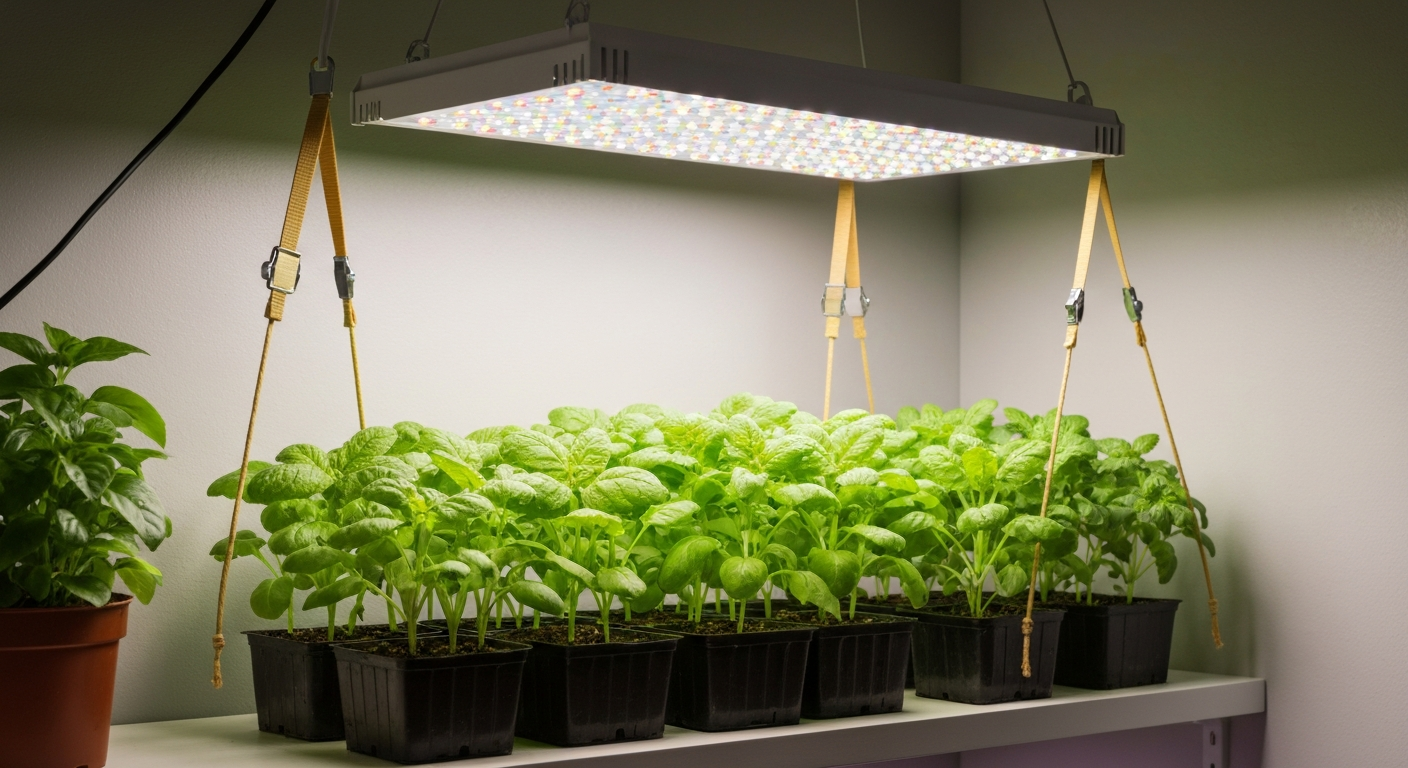
No, grow lights should not be on all the time. For outdoor growing, you can also use grow lights, but you still need to follow a proper light schedule instead of running them nonstop can i use grow lights outdoors. If you find yourself wondering about leaving a grow light on 24/7, the safer approach is to stick to a timer-based light schedule instead. Most indoor plants need 12 to 16 hours of light per day and at least 6 to 8 hours of darkness. Running lights around the clock wastes electricity, stresses many plants, and can actually trigger problems like yellowing leaves, poor flowering, and disrupted growth. A simple plug-in timer set to 14 to 16 hours on, 8 to 10 hours off is all most home growers need.
Should Grow Lights Be On All the Time? How Long to Run
Marcus Holloway
3 Jun 2026
Why plants don't want light 24/7
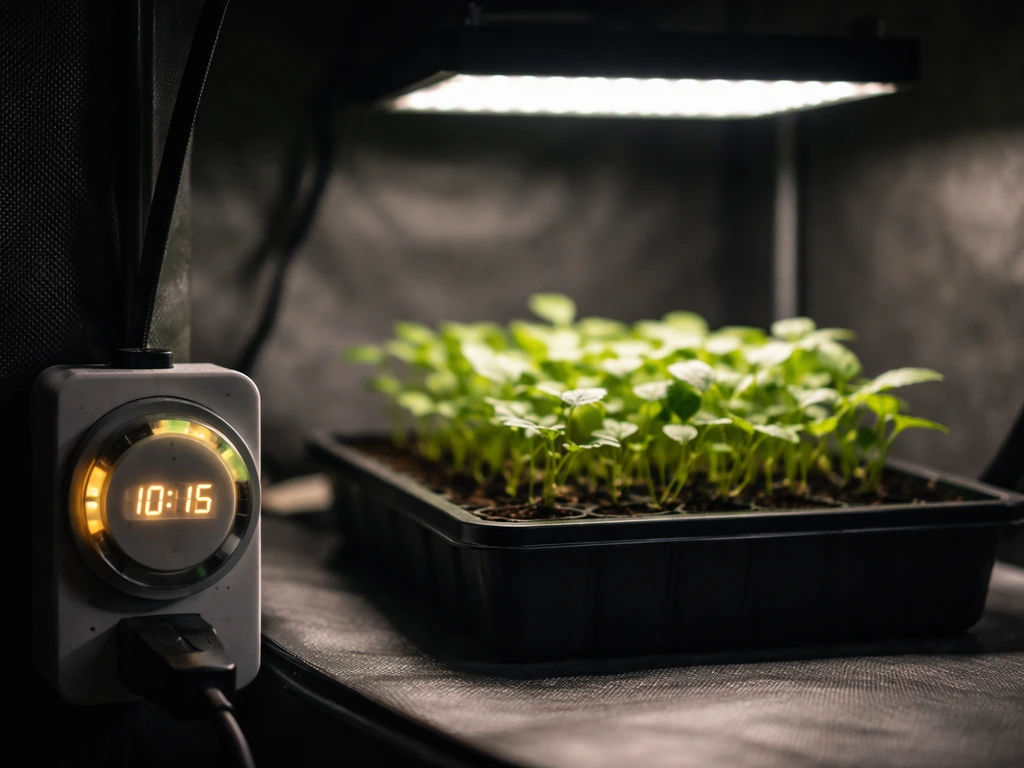
Plants aren't just solar panels. They have an internal clock called a circadian rhythm that organizes daily processes including photosynthesis, metabolism, and flowering. That clock expects a regular cycle of light and dark, and when you mess with it by running lights all night, things go wrong.
Researchers studying continuous light have documented something called continuous-light injury (sometimes written as CL-injury): leaves turn yellow and chlorotic, growth slows, and plants show senescence-like symptoms. Tomatoes, peppers, and cucumbers are especially prone to this. The problem isn't just too much energy hitting the leaves. It's that light during phases where the plant's biology expects darkness actively disrupts normal function. Illinois Extension puts it plainly: do not expose plants to more than 16 hours of light, because they need a rest period.
Flowering is another place where this matters a lot. Plants fall into three categories based on how day length affects blooming: short-day plants (which need long uninterrupted darkness to flower), long-day plants (which flower when nights are short), and day-neutral plants (which flower regardless of photoperiod). Poinsettias, for example, need 15 hours of complete darkness every day to trigger flowering. Even a brief interruption from a hallway light can delay the whole process. If you leave grow lights on all the time with short-day plants, you might never see a single bloom.
How many hours per day to actually run your lights
The right number depends on what you're growing and what stage it's in. Here's a practical breakdown based on extension service recommendations and manufacturer guidance:
| Plant type / stage | Recommended hours per day | Notes |
|---|---|---|
| Seedlings (vegetable starts) | 16 to 18 hours | High light demand early on; produces stocky, sturdy transplants |
| Herbs and leafy greens (hydroponic or pot) | 12 to 14 hours | Less demanding; too much light rarely adds much benefit |
| General houseplants | 12 to 16 hours | Start at 14 hours and adjust based on how plants look |
| Short-day flowering plants | 10 to 12 hours (with 12+ hours darkness) | Critical for triggering bloom; never run lights all night |
| Long-day flowering plants | 14 to 16 hours | May benefit from extended light to push flowering |
If you're not sure where to start, 14 hours on and 10 hours off is a safe default for most common indoor plants. Iowa State Extension says lights can be on for as little as 10 hours and no more than 16 hours a day for home growers, which gives you a pretty clear range to work within.
One thing worth knowing: light duration and light intensity are connected. A University of New Hampshire Extension fact sheet explains this using Daily Light Integral (DLI), which is basically the total amount of light a plant receives in a day. If your grow light is mounted high and delivering lower intensity, you might need more hours to hit the same DLI. A light at 8 inches above seedlings might only need 8 hours to deliver enough light, while that same light at 20 inches might need 16 hours. So "how many hours" isn't a one-size-fits-all number. It depends on your light's intensity and how far away it is.
When leaving lights on longer is actually okay
There are a few situations where running lights on the longer end (or even briefly past 16 hours) isn't a disaster:
- Day-neutral crops like lettuce tolerate long photoperiods well and won't suffer from 16-hour schedules
- Very early seedlings (first few days after germination) can handle 16 to 18 hours without the photoperiod sensitivity issues older plants have
- Short stretches of extended light (a day or two due to a forgotten timer) won't ruin most plants
- Some commercial greenhouse growers use night-interruption lighting to manipulate flowering in long-day plants, which technically means some light hits during the dark period, but it's controlled and intentional
What's not okay: running lights continuously (24/7) on anything sensitive to photoperiod, leaving lights on 24 hours expecting faster growth, or assuming more light always equals better results. That logic doesn't hold up in practice. Questions like whether you can leave grow lights on 24/7 come up a lot, and the answer is almost always: you can, but you probably shouldn't. If you’re wondering can you leave grow lights on 24/7, the short answer is that plants usually do better with a regular light and dark cycle.
Setting up a timer (this is the most important thing you can do)
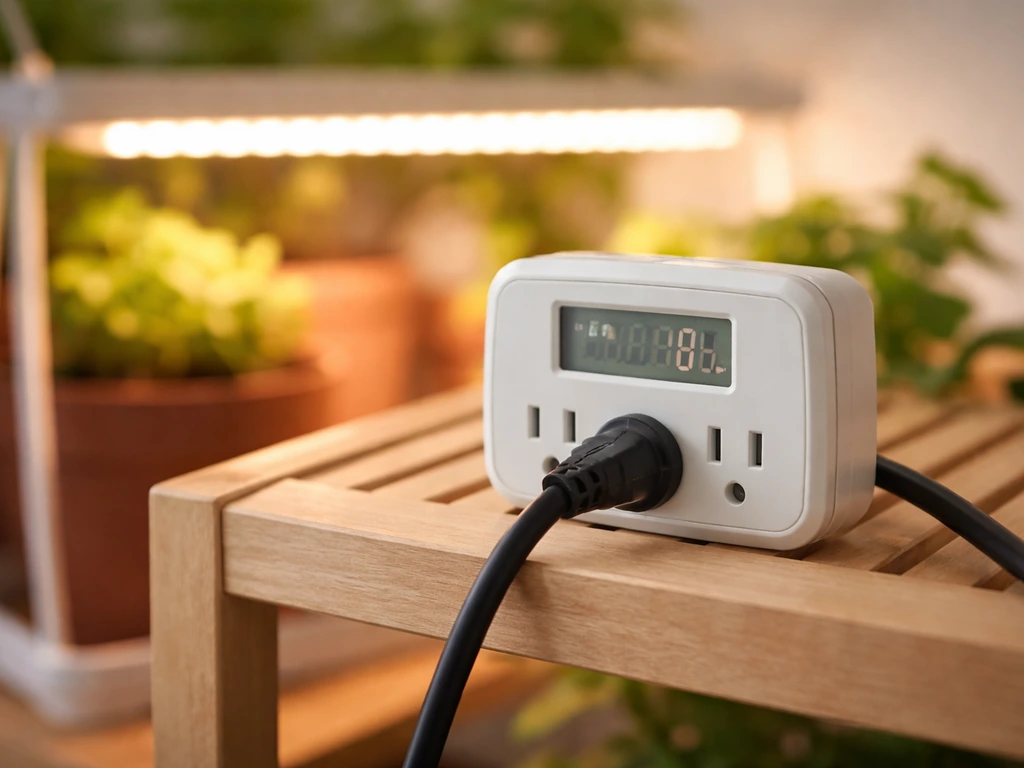
Manually turning grow lights on and off every day is a recipe for inconsistency. Plants respond to regular, predictable light cycles, and missing by an hour or two every day adds up. A plug-in mechanical timer costs around $10 to $15 and is one of the best investments you can make for your setup.
- Pick a consistent on-time that works for your schedule. Many growers run lights from early morning through evening (for example, 6 a.m. to 10 p.m. for a 16-hour cycle).
- Plug the timer into the wall outlet, set your on/off times, then plug the grow light into the timer.
- Double-check that the timer's amperage rating matches or exceeds your grow light's draw. Most timers handle 15 amps, which covers almost all home grow lights.
- Start at 14 hours on for most plants. Run that schedule for one to two weeks before adjusting.
- Watch your plants. Leggy, stretched stems usually mean not enough light or too few hours. Yellowing or crispy leaf edges can mean too much light or too many hours. Adjust accordingly.
If you want more control, a smart plug with a scheduling app works well and lets you adjust timing from your phone without reprogramming a dial timer. Either way, consistency matters more than which device you use. Spider Farmer's own manual for their SE3000 light specifically recommends using a timer and running about 16 hours per day for young seedlings. That advice applies broadly regardless of brand.
Adjusting as plants grow
Growth stage matters. Seedlings can handle 16 to 18 hours because they're pushing hard to establish. UMN Extension recommends stage-based photoperiods such as “Seedlings: 16 to 18 hours per day” and “Hydroponic lettuce and herbs: 12 to 14 hours per day.”. Once plants are in a steady vegetative phase, 14 to 16 hours usually covers it. If you're trying to trigger flowering in photoperiod-sensitive plants, you may need to drop down to 12 hours or even less. Think of timer adjustment as part of the growing process, not a one-time setup.
Heat, safety, and electricity costs of running lights longer
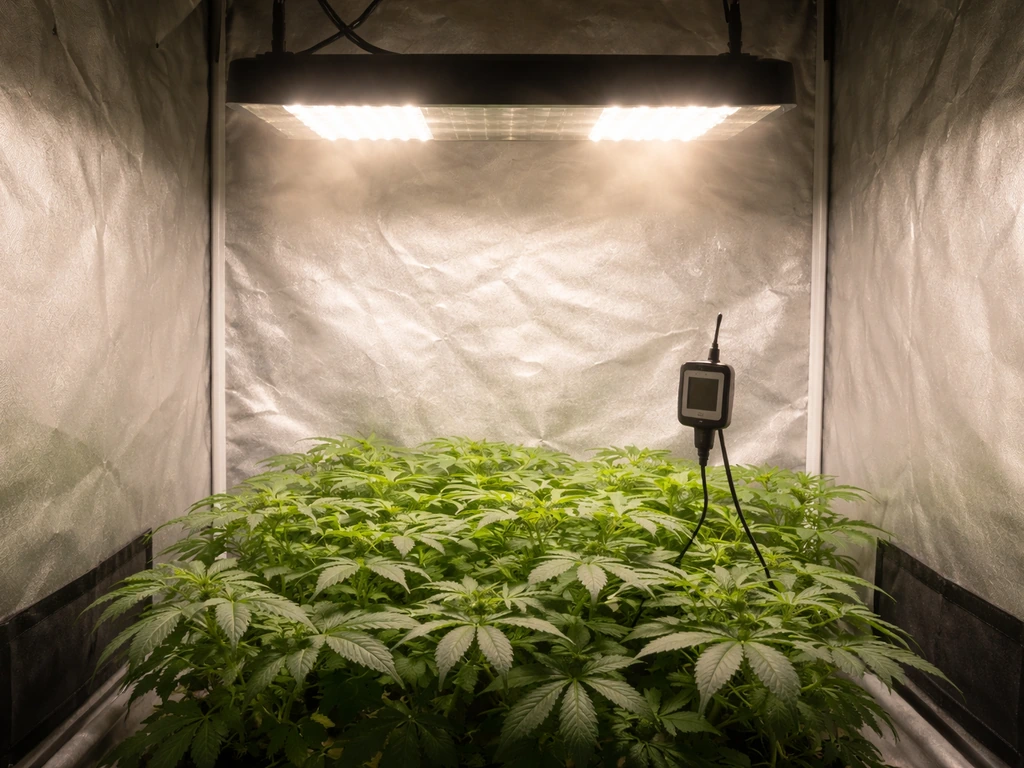
Running a grow light 24/7 instead of 14 to 16 hours a day adds real costs and real risks. If you're wondering should grow lights be on 24/7, the short answer is no for most plants, and most growers should stick to a timed on and off cycle. Let's cover both.
Heat buildup
Modern LED grow lights run much cooler than older HID or fluorescent fixtures, but they still produce heat. Continuous operation in a small enclosed space (a grow tent, a closet, a shelf) can push temperatures above the comfortable range for most plants. Most grow light specs list an operating range up to around 104°F, but your plants will suffer well before that. If your grow space feels noticeably warm after a few hours, a dark period is actually giving both the plants and the equipment a break.
Electrical safety
Grow light manuals consistently include the same basic safety guidance: don't place the light face-down on a surface, keep it away from flammable materials, unplug before moving or cleaning, and don't run cords under rugs or through doorways where they can be damaged. If you're using a timer or smart plug in a garage, bathroom, or basement, check that those outlets have GFCI protection, which is a code requirement in many of those locations and protects you from shock if there's ever a moisture issue. Home Depot summarizes NEC guidance on GFCI requirements and notes that outdoor receptacles need GFCI protection to help protect against shock, which is relevant when a grow setup uses outdoor or weather-exposed outlets check that those outlets have GFCI protection.
Electricity costs
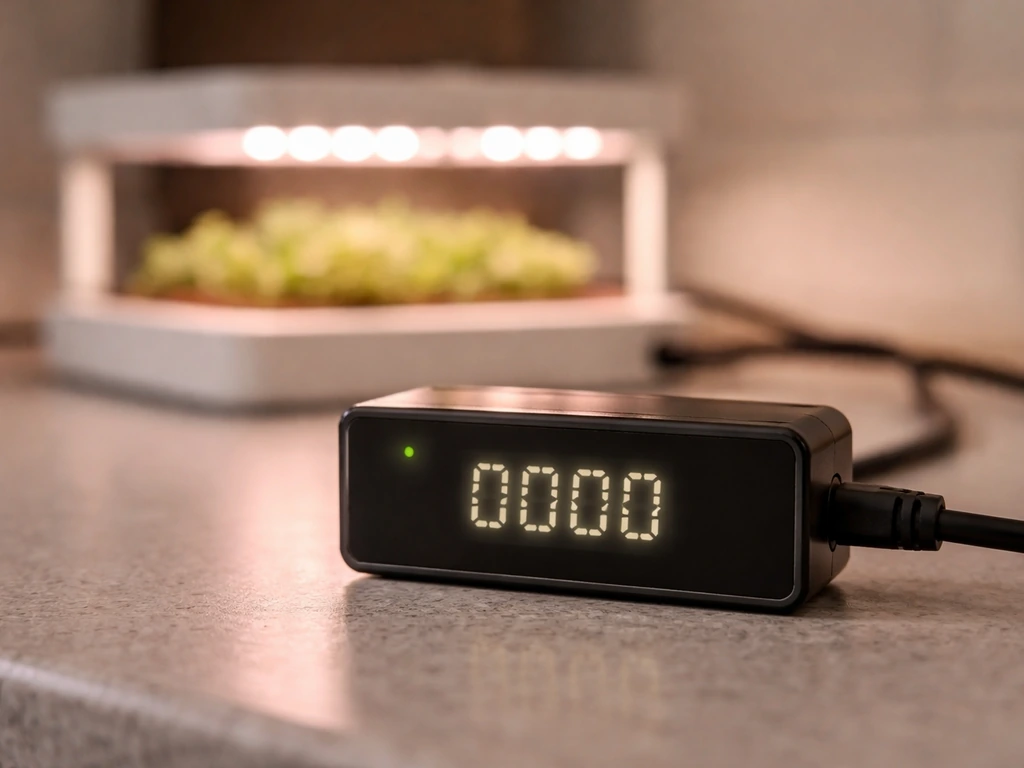
The math is straightforward. Cost equals watts divided by 1,000, multiplied by hours per day, multiplied by your electricity rate per kWh. A 100-watt LED running 16 hours a day uses 1.6 kWh daily. At a typical US rate of about $0.16 per kWh, that's roughly $0.26 per day or about $93 per year. Run that same light 24/7 and you're looking at 2.4 kWh daily and around $140 per year, a 50% jump in electricity cost with no benefit to the plants. Scaling that up to a 300-watt or 500-watt fixture makes the difference even more significant.
The takeaway is simple: leaving grow lights on all the time costs more money, adds more heat, puts more hours on the fixture, and doesn't help your plants grow faster or better. A well-timed 14- to 16-hour schedule gives you better results with less waste. Set a timer, watch how your plants respond, and adjust from there. That's really all there is to it.
FAQ
What should I do if I accidentally leave my grow lights on overnight?
If it happens once, most plants will recover, especially if you return to the normal on and off cycle immediately. For photoperiod-sensitive plants, avoid repeat nights off-schedule, since even small interruptions to long uninterrupted darkness can delay flowering.
Is 18 hours on and 6 hours off ever a good idea?
Sometimes, for vigorous seedlings and fast establishment, but it should not become your default for every stage. If your plants show signs like stretching, yellowing, or slow growth during the “on” period, reduce hours or adjust intensity rather than pushing longer photoperiods.
Can I use the same timer schedule for both seedlings and mature plants?
Usually not. Seedlings often do fine toward the higher end (around 16 to 18 hours), while established vegetative plants commonly do better around 14 to 16 hours. If you mix ages, consider separate lights or staggered schedules so each group gets an appropriate cycle.
How do I know whether I need more hours or more intensity?
First check how far the light is from the canopy and whether the manufacturer’s recommended mounting height is being followed. If intensity is low because of distance, add hours, but only up to the normal maximum range. If the light is already close and plants still look underfed, increase intensity (or lower distance) before extending beyond about 16 hours.
Should I always give plants a full “dark” period, or is dim light at night okay?
For most plants, complete darkness is best, and for short-day plants it is critical. A dim hallway light can still count as light interruption, so it’s safer to keep the entire grow area dark during the scheduled off period.
Do LEDs and fluorescent lights require the same on and off schedule?
The schedule often starts similarly, but the required hours differ because intensity differs by fixture and mounting height. Two lights can both be “set for 16 hours,” but the plant receives different Daily Light Integral depending on brightness, distance, and reflector design.
If my timer runs the lights for 16 hours, do I still need to worry about heat?
Yes. Even with correct timing, heat can accumulate in enclosed spaces. Make sure the grow area temperature stabilizes within your light’s operating comfort range within a few hours, and use the dark period to help cooling rather than relying on it to fix overheating.
Can I use a smart plug, but still keep schedules consistent?
Yes, and it can actually help. The key is to avoid manual changes and to use a repeatable daily schedule that matches your target on/off hours. If your phone app is set to “randomize” or there are time zone adjustments, turn that off so the cycle stays consistent.
What’s a common mistake when using grow light timers?
Using the timer to “make up” for insufficient light without changing anything else. If plants are stretching or pale, increasing hours beyond what your light can deliver at the current distance usually won’t fix the problem. Instead, confirm mounting height, check the bulb or LED output, and ensure the DLI is in the right range.
Is it safe to leave grow lights on longer than 16 hours for flowering plants?
For many photoperiod-sensitive bloom triggers, going beyond the normal maximum can interfere with dark period requirements. If you are trying to trigger flowering, follow the plant’s photoperiod needs closely, and avoid exceeding the target darkness interruption window, especially for short-day species.
Next Articles
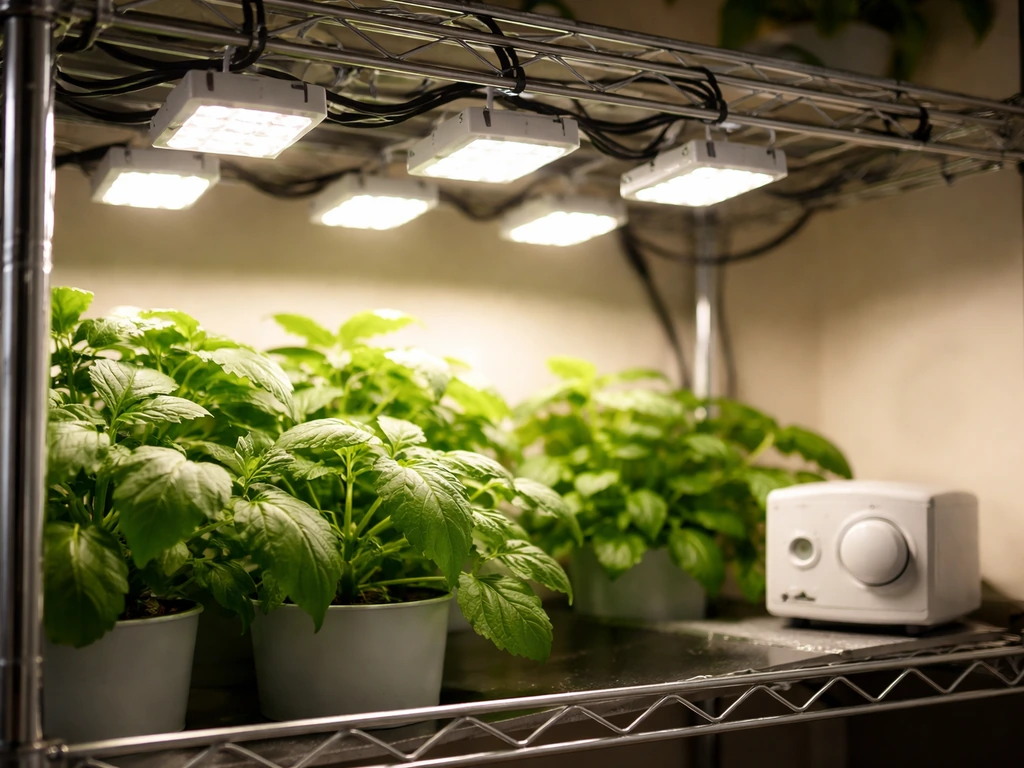
Can You Leave Grow Lights On 24/7? Safety and Schedule Tips
Find out if you can leave grow lights on 24/7, plus safe schedules, timer tips, and fixes for stress or overheating.
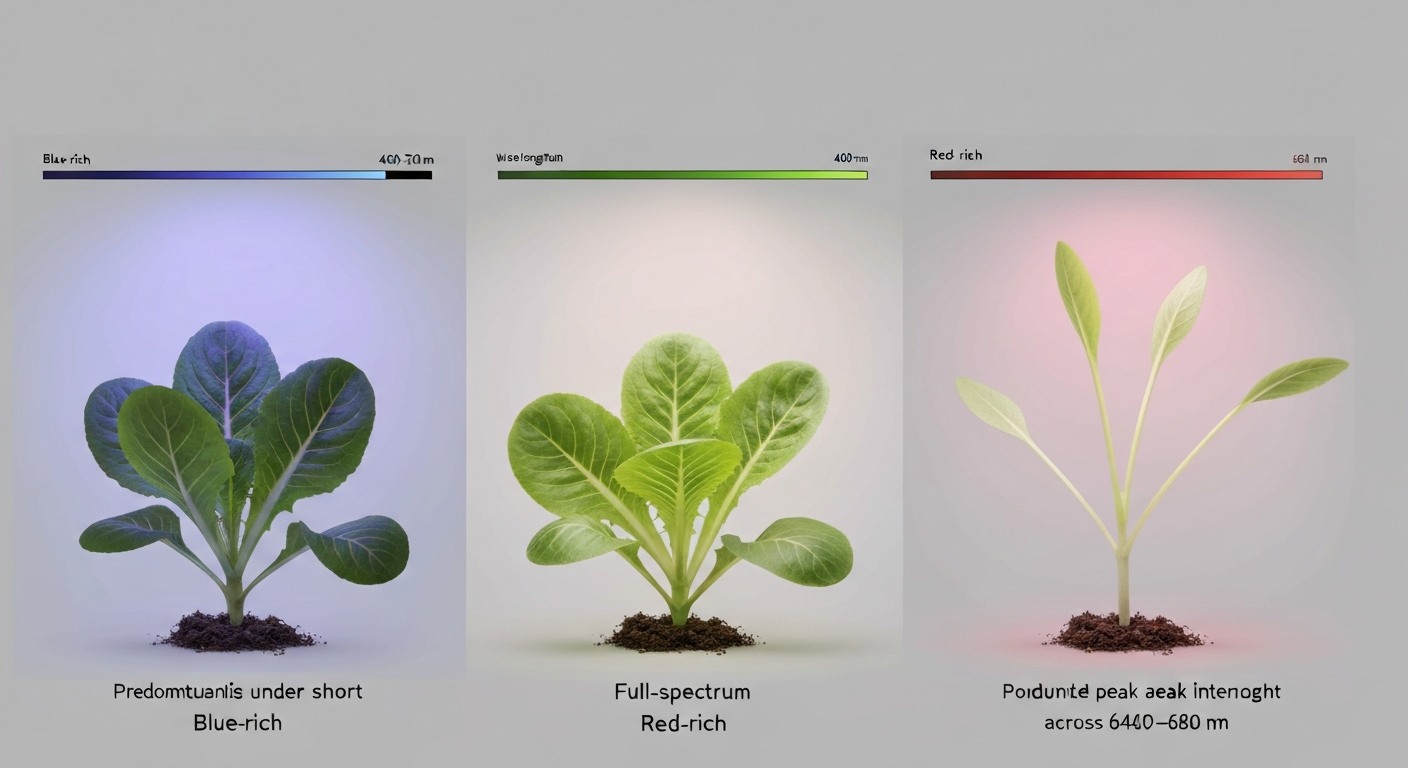
Why Do Plants Grow Best in Blue Light? Science & Practical Guide
Explore why blue light boosts vegetative growth, ideal blue:red ratios, PPFD, photoperiods, fixtures, and setup tips.
What Artificial Light Will Grow Plants: Best Lights Guide
What artificial light will grow plants: practical guide to LED, CFL, HID spectra, PPFD targets, setup, cost & tips.