Yes, you can absolutely run grow lights at night instead of during the day, and your plants won't care one bit about the clock on your wall. What plants respond to is the total number of light hours they get in a 24-hour period, not whether those hours fall at 10am or 10pm. As long as you hit the right number of hours and protect the dark period that flowering plants need, running your lights overnight works just as well as running them during the day. If you're wondering whether you should turn off grow lights at night, the key is still meeting the plant’s required total light hours and protecting any uninterrupted dark period for flowering.
Can I Use Grow Lights at Night Instead of Day?
Marcus Holloway
5 Jul 2026
Why the clock time doesn't matter (but hours do)
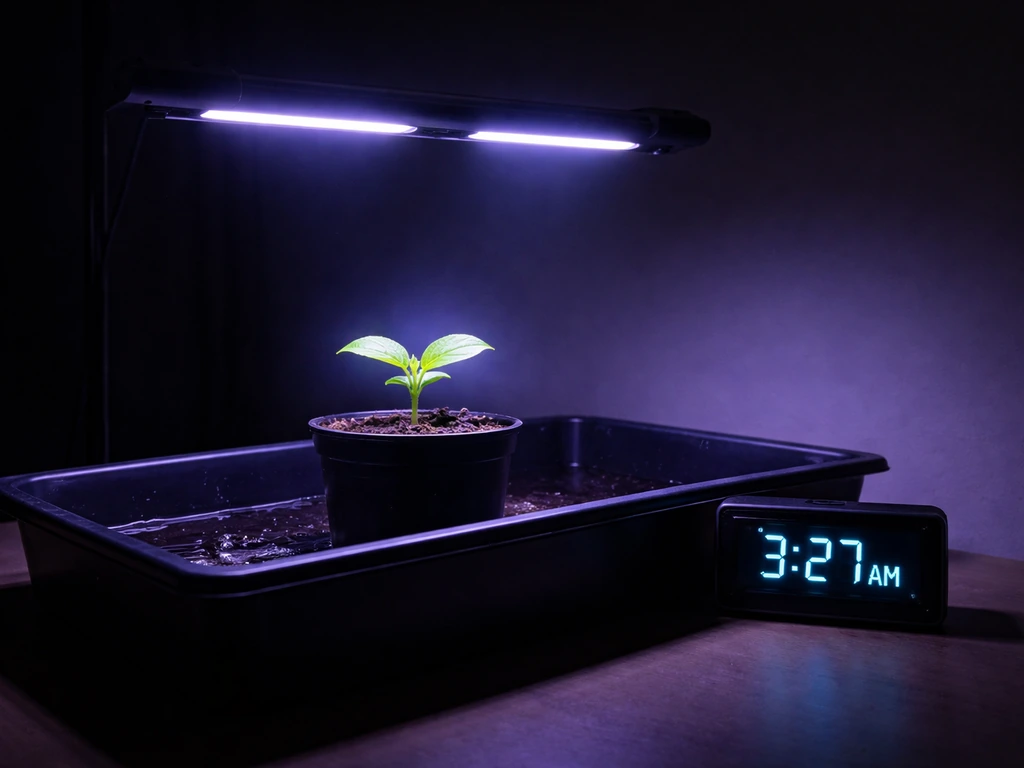
Plants don't have a watch. What they track is light duration: how many hours of light they receive per 24-hour cycle. University of Minnesota Extension makes this explicit, defining photoperiod simply as the number of hours of light in a day. So if your seedlings need 16 hours of light, it genuinely doesn't matter whether that window is 6am–10pm or 8pm–12pm the next day. The biology is the same.
There's one important nuance worth knowing. Flowering plants (think poinsettias, chrysanthemums, Thanksgiving cacti) are actually sensitive to the length of their dark period, not the light period. A short-day plant like a poinsettia needs a long, uninterrupted stretch of darkness to trigger flowering. Research on Xanthium found that an uninterrupted dark period of 9 hours or more is needed to build up enough flower stimulus. If you accidentally break that dark window with a light on in the room, the plant can miss its cue entirely. So if you're shifting lights to nighttime, just make sure your flowering plants still get their required dark stretch without interruption.
How to choose your timing based on the plants you're growing
For most leafy plants, herbs, seedlings, and vegetative crops, timing is almost entirely flexible. You're just chasing a daily light dose, and you can deliver that dose any time you want. For flowering and fruiting plants, you need to think a bit more carefully about where your dark period falls and whether any ambient light in the room might interrupt it.
Night operation makes a lot of practical sense for some setups. If you're in a hot climate or running lights in a warm room, shifting lights to nighttime can lower your daytime temperatures significantly. Some growers also run lights at night to take advantage of cheaper off-peak electricity rates. And if your grow space shares a room with people during the day, night timing keeps it out of the way.
| Plant type | Light hours needed per day | Dark period sensitivity | Night timing okay? |
|---|---|---|---|
| Seedlings | 16–18 hours | Low | Yes |
| Leafy herbs and greens | 14–16 hours | Low | Yes |
| Houseplants (general) | 12–14 hours | Low to moderate | Yes |
| Long-day plants (lettuce, spinach) | 14–18 hours | Needs long light | Yes, with consistent schedule |
| Short-day plants (poinsettia, mum) | 8–12 hours light | Needs 9+ hours uninterrupted dark | Yes, but protect dark period carefully |
| Fruiting crops (tomatoes, peppers) | 16–18 hours vegetative / 12 hours fruiting | Moderate | Yes, adjust as needed |
Light schedule recommendations by plant type
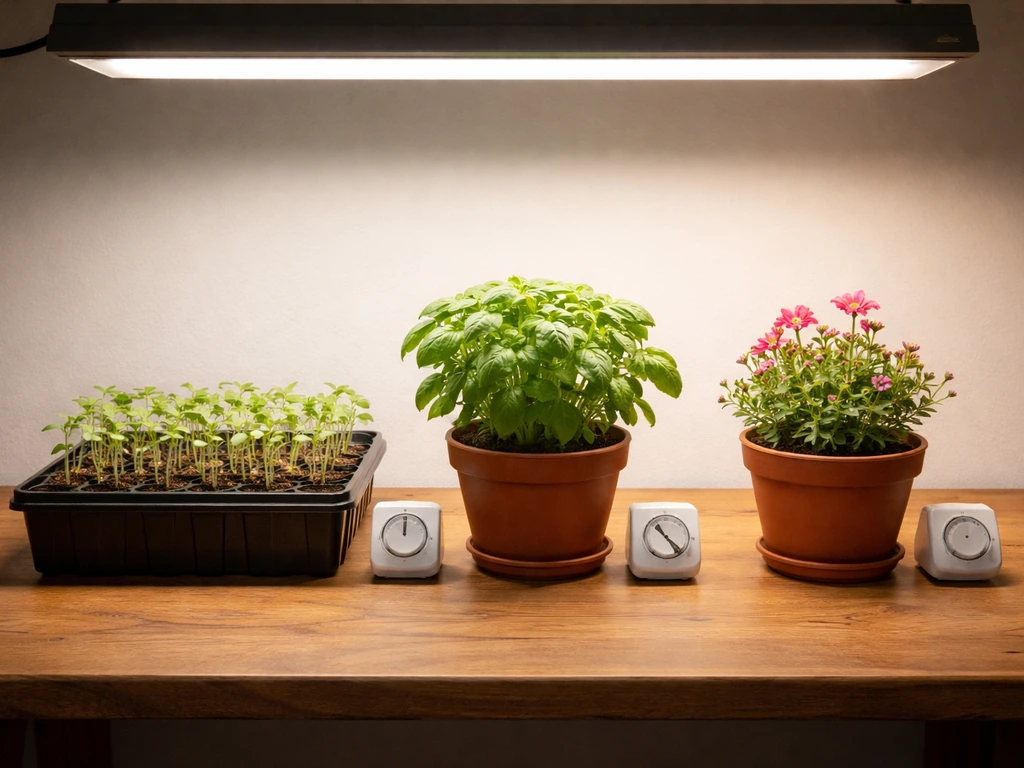
Here are practical hour targets to work from, whether you're running lights during the day or overnight. These are well-established ranges backed by extension research from Cornell, UMN, UNH, and the University of Maine.
- Seedlings and young transplants: 16–18 hours per day. This is the most common recommendation across extension sources, and it gives young plants the energy they need to establish quickly.
- Leafy greens and herbs (basil, lettuce, parsley): 14–16 hours per day works well for most.
- General houseplants: 12–14 hours per day is usually enough for maintenance and moderate growth.
- Short-day flowering plants (poinsettia, Christmas cactus, chrysanthemum): 8–12 hours of light, with the remaining 12–16 hours as uninterrupted darkness.
- Fruiting and flowering crops (tomatoes, peppers, cannabis): 18 hours during vegetative phase, then shift to 12 hours once you want to trigger flowering.
The underlying concept tying all of this together is Daily Light Integral (DLI): the total dose of photosynthetically active light your plant receives over 24 hours. DLI is calculated by multiplying light intensity (measured in PPFD, or micromoles per square meter per second) by duration in seconds, then converting. The practical takeaway is that intensity and hours are interchangeable to a point: if you move your light closer and boost intensity, you can run it for fewer hours. If you hang it higher or dial it down, you'll need more hours to deliver the same dose.
Adjusting intensity and distance when running lights at night
Shifting to nighttime doesn't automatically mean you need to change your intensity or mounting height, but it's a good moment to double-check your setup. The same DLI principles apply regardless of what time the light runs.
For seedlings, Cornell Cooperative Extension recommends positioning LED fixtures about 8–10 inches above the plants. At that distance with a decent LED panel, you're delivering enough intensity that 16 hours will hit your DLI target comfortably. UNH Extension gave a clear illustration of the trade-off: a tested LED bar mounted 8 inches above a crop only needed 8 hours per day to hit its DLI requirement, but when raised to 20 inches it needed 16 hours to deliver the same total dose. That's a direct reminder that height and run time are linked.
For vegetative growth, you're typically targeting 100–500 PPFD at the canopy. For flowering and fruiting, aim for 400–1,200 PPFD depending on the crop. General LED mounting guidance from Home Depot's product documentation suggests 16–30 inches as a working range depending on fixture type and plant stage, but always check your specific light's documentation and look for signs of stress in your plants.
If you're running lights at night specifically to reduce heat buildup during the day, you might find you can run at slightly higher intensity without temperature stress, since room temps tend to drop at night. Just keep an eye on canopy temperature and don't let it fall below around 65°F for warm-season crops.
Safety and real-world concerns
Heat and moisture
LED grow lights run much cooler than older HID or fluorescent setups, but they still produce heat. In an enclosed space like a tent or closet, that heat builds up whether lights run day or night. Make sure you have adequate ventilation, especially overnight when you're not around to notice a temperature spike. If your setup is in a humid area (like a basement), be aware of moisture around electrical connections. UL's safety guidance distinguishes between fixtures rated for dry vs damp locations, and most standard grow lights are designed for dry environments. Condensation near ballasts or driver units is a fire risk, so keep things dry and don't let moisture pool near fixtures.
Eye safety
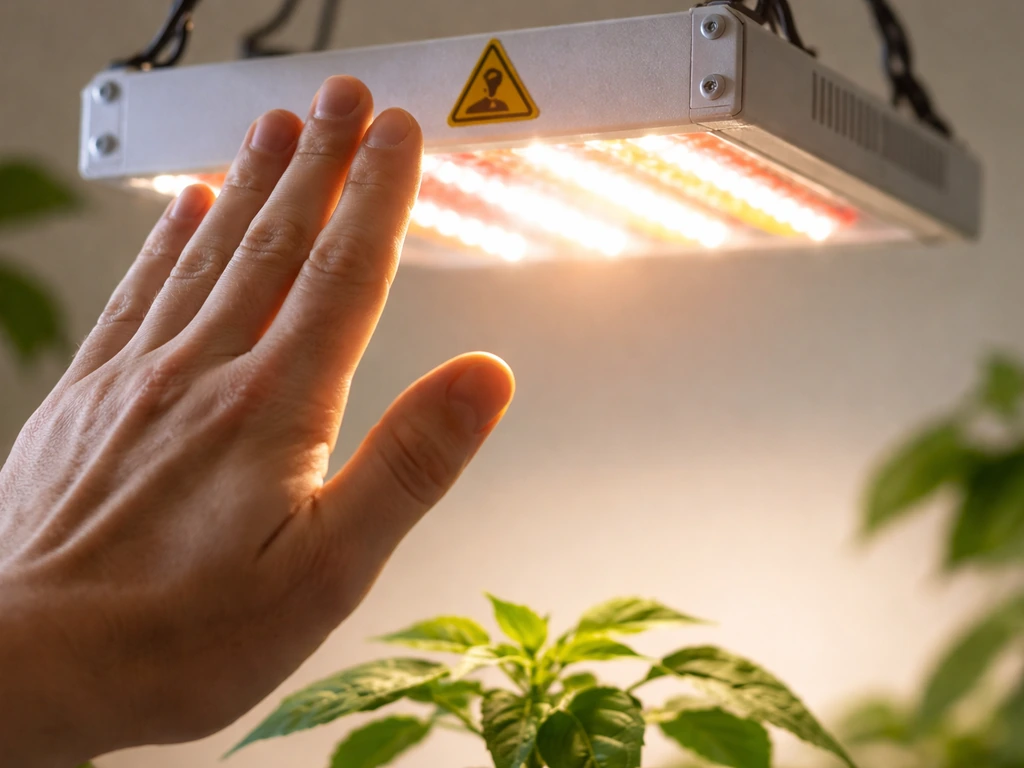
Don't stare directly into LEDs, day or night. Multiple manufacturers explicitly warn that direct viewing at short range can cause eye damage. This is especially easy to forget when you stumble into a room at 2am and the lights are blasting. A quick fix: don't put your face near the canopy when lights are on, and if you need to work under them, look to the side rather than up. Growing under LEDs won't give you a tan and won't cause cancer, but direct high-intensity light at close range can hurt your eyes.
Your own sleep
This is the one concern that actually does matter if your grow setup is in or near your bedroom. Harvard Health and NIH research are consistent: exposure to bright light at night, especially blue-rich white or full-spectrum LEDs, suppresses melatonin and disrupts your circadian rhythm. If your grow lights are in a separate room with a door you can close, this isn't an issue. If they're in your bedroom or an open space near where you sleep, you'll want to plan your schedule so the lights are off during the hours you're actually sleeping. If you are wondering whether grow lights should be on 24/7, focus on meeting the required photoperiod and protecting any uninterrupted dark period rather than keeping them lit nonstop should grow lights be on 24/7.
If you're growing in a tight space and can't avoid some light exposure, red-dominant lights have the least impact on sleep. Sleep Foundation notes that blank" rel="noopener noreferrer">dim yellow, orange, or red-toned lights have little impact on circadian rhythm and are generally better night lighting choices than blue-rich light. CDC and NIOSH guidance notes that red light has no effect on the circadian clock, and the Sleep Foundation confirms that dim red or amber light barely affects melatonin. That said, Sleep Foundation notes that if red light is too bright, it can still disrupt sleep, so the mitigation is to blank" rel="noopener noreferrer">keep it dim. That said, even red light at high intensity can disrupt sleep if it's bright enough, so keep it dim if you're running lights in a room where people sleep.
What to expect from plants, and how to troubleshoot
If you get your hours and intensity right, plants grown under nighttime lights should perform identically to plants grown under daytime lights. There's no inherent growth penalty for running lights at 11pm instead of 11am. If you’re wondering about keeping grow lights on 24 hours, it’s usually better to follow the light-duration needs of your specific plants instead of running nonstop. Most growers who switch to overnight operation notice no change in growth rate, color, or health.
When things go wrong, the cause is almost always a schedule or intensity problem, not a timing problem. Here's how to diagnose the most common issues.
- Leggy, stretched seedlings: Not enough light hours or intensity. Try adding 2 hours to your schedule, lowering the fixture 2–3 inches, or both. This is the most common seedling problem and has nothing to do with running lights at night.
- Leaf burn or bleaching near light source: Light is too close or intensity is too high. Raise the fixture by a few inches and look for improvement within a few days.
- Flowering plants not flowering: If you have a short-day plant, check that the dark period is truly uninterrupted. Even a brief light leak from a hallway, phone charger LED, or streetlight through a window can reset the clock. Seal up light leaks in your grow space.
- Slow overall growth with no obvious symptoms: Check your total daily hours against the recommendations above. Most indoor setups underestimate how many hours plants actually need, especially in spaces with no natural light contribution.
- Wilting despite watering: Could be root zone heat from a nearby ballast or driver running all night. Feel the soil temperature and make sure your light's driver/heat sink isn't sitting directly on the pot or soil surface.
How to automate and monitor your schedule
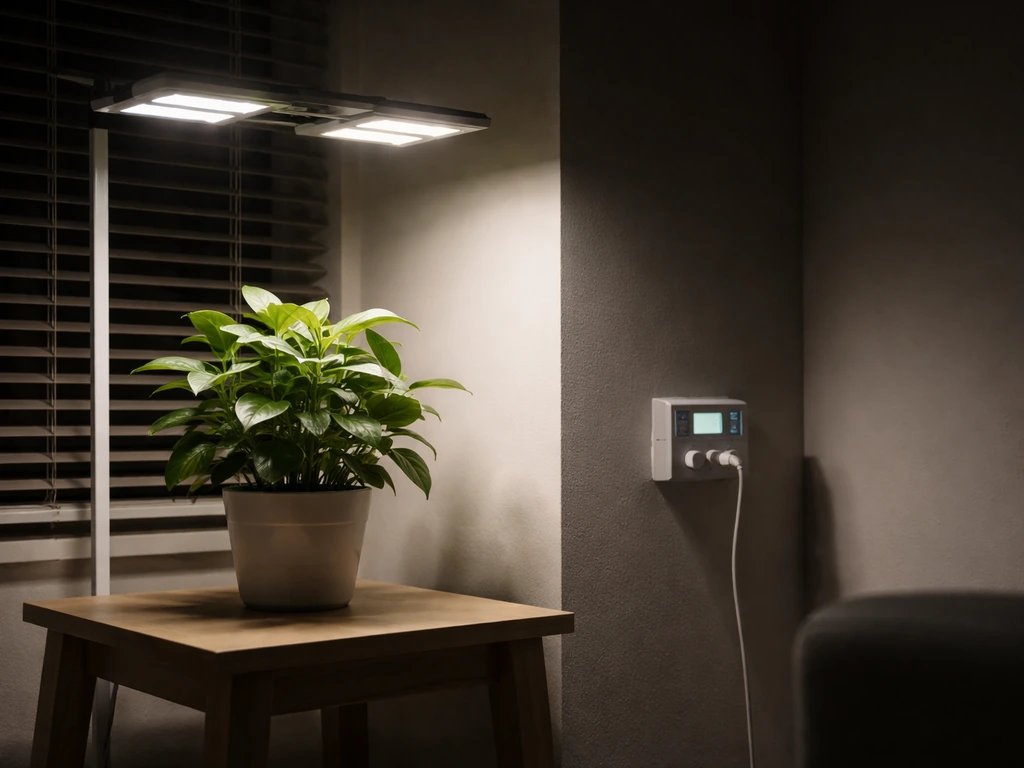
A plug-in mechanical or digital timer is the single most useful thing you can add to a grow light setup. Set it once, and your plants get consistent hours every day without you having to remember. For a nighttime schedule, just dial in the on and off times you want. Most timers available for under $15 at any hardware store handle this fine. Digital timers are worth the small extra cost because they let you set multiple on/off windows if you want to experiment with split photoperiods.
If you want to go a step further, a basic environmental monitor that logs temperature and humidity overnight is genuinely useful. Running lights in a closed space at night means you're not there to catch a heat spike or a humidity problem. A cheap Bluetooth sensor that logs to your phone lets you check the overnight conditions the next morning and adjust ventilation or light schedules before problems get out of hand. Before you run grow lights outdoors, make sure you account for weather exposure, waterproofing, and how much natural daylight they will add or replace overnight conditions.
For anyone managing multiple lights or a more serious grow setup, smart plugs with scheduling apps give you remote control and power monitoring. You can see exactly how many hours a day the lights are running and adjust on the fly without touching the physical timer. This kind of automation is directly relevant if you're also thinking about questions like whether to leave grow lights on 24/7 or whether plants need any dark period at all, both of which involve the same basic trade-off between light dose and rest time.
The bottom line for your next step: pick a consistent schedule that hits the right hours for your plants, plug your light into a timer set to that schedule, and run it for a week. Check your plants for stretch, burn, or color changes and adjust from there. The clock time is genuinely the last thing you need to worry about.
FAQ
If I run grow lights at night, will I need to change the photoperiod (hours on) for my plants?
You only need to match the plant’s required photoperiod for the 24-hour cycle. If the crop needs 16 hours of light, keep it at 16 hours whether that window is daytime or overnight. The only time you’d change it is if you were previously miscalculating hours, for example using a timer that isn’t actually controlling the full light-on time.
My flowering plant needs a long dark period, but the room gets some ambient light at night. Does that count as breaking the dark period?
It can. Even if your grow light is off, significant light from windows, LEDs, or lamps can reduce the uninterrupted darkness the plant experiences. To be safe, block stray light during the dark window (dark curtains or a reflector panel) and keep only the required darkness for the length your plant needs.
How can I tell if my nighttime light schedule is causing too much or too little total light?
Watch for DLI-related signs over several days, not hours. Too little light often shows slow growth and stretched stems (especially in seedlings), while too much can cause leaf tip burn, dark clawing, or bleaching depending on spectrum and temperature. If you can measure PPFD, compare your target, otherwise adjust by changing either distance or duration, then reassess after a full week.
Can I split the photoperiod (for example, 8 hours on at night plus 8 hours later) instead of using one long block?
For many leafy crops, split schedules can work because they still deliver the same total light hours and DLI. However, for short-day or flowering plants, splitting can be risky because it may interrupt the uninterrupted dark requirement. If flowering is the goal, test carefully and keep a single continuous dark block for that plant.
Will running lights overnight make my plants “sleepy” or affect their growth rhythm?
Plants do not need to “sleep” in the way humans do. What matters is meeting light dose and providing the dark period required for flowering induction. Growth rhythm issues usually come from incorrect total light, wrong intensity at canopy level, or stress from heat or humidity, not from the time of day you ran the lights.
Is it safe to leave grow lights on at night when I’m not home, or should I use a specific safety setup?
Use a timer or smart plug, but also plan for heat and electrical safety since issues can develop overnight. Ensure proper ventilation for the tent or closet, check that fixtures are rated for dry versus damp areas, and avoid condensation near driver or ballast units. A logged temperature and humidity sensor can catch problems before morning.
Do LEDs become a sleep problem if the lights are far from the bedroom but the glow leaks into the room?
Light spill still matters, even if you are not directly under the canopy. Use light blocking (closing the door, adding a blackout curtain, or using reflective shielding) during your sleep period. If you cannot fully block it, consider dim red or amber for the sleep window, but keep in mind that intensity can still disrupt sleep if it is bright enough.
How close should I mount lights if I switch to nighttime, and does night operation change the mounting height rules?
Mounting height guidelines do not change just because it is nighttime. You still need the correct intensity at canopy level, then deliver the required duration to hit your DLI. If you previously mounted based on daytime settings, recheck canopy distance and adjust hours or height together to avoid under- or over-feeding light.
If nighttime is cooler, can I run lights at higher intensity to compensate?
Sometimes, yes. Cooler room temps can reduce heat stress, which can let you increase intensity without overheating, but you still must watch canopy temperature and plant symptoms. Also remember that higher intensity may require more precise control, since you may unintentionally overshoot DLI and cause light stress.
What’s the most common mistake people make when switching lights from day to night?
The most common issue is “accidentally changing the total hours” due to timer settings, daylight saving adjustments, or forgetting that you are also losing time to manual toggling. Another frequent mistake is neglecting the uninterrupted dark requirement for flowering crops. Use a mechanical or digital timer, then verify it with a simple check of your actual on-off hours for a few days.
Should I run different crops at the same nighttime schedule if they have different light needs?
It’s usually better to separate schedules or use individually controlled fixtures, because different crops may need different photoperiods and different DLI targets. If you must use one schedule, choose the compromise that meets the most light-sensitive plants, but expect reduced performance for crops that need either longer darkness or more total light.
Next Articles
Should I Turn Off Grow Lights at Night? A Simple Guide
Learn if grow lights should turn off at night, ideal dark period, schedules by plant stage, and timer tips to prevent st
Can You Leave a Grow Light on 24/7? Safe Schedules
Learn when you can run grow lights 24/7 safely, how photoperiod affects plants, and ideal schedules by plant type.
Can I Leave Grow Lights On 24 Hours? Safe Tips
Can you leave grow lights on 24 hours? Learn risks, best light cycles, and safe schedules for healthier indoor plants.