Technically you can leave a grow light on 24/7, but for most plants you really shouldn't. The sweet spot for the vast majority of indoor plants is 14 to 16 hours of light followed by a genuine dark period. Running lights around the clock stresses most plants, can trigger visible damage like yellowing or bleached leaves, and doesn't actually speed up growth the way you'd expect. There are a few narrow exceptions, but 'more light equals faster growth' is one of the biggest misconceptions in indoor gardening.
Can You Leave a Grow Light on 24/7? Safe Schedules
Marcus Holloway
16 Jun 2026
Why plants actually need darkness
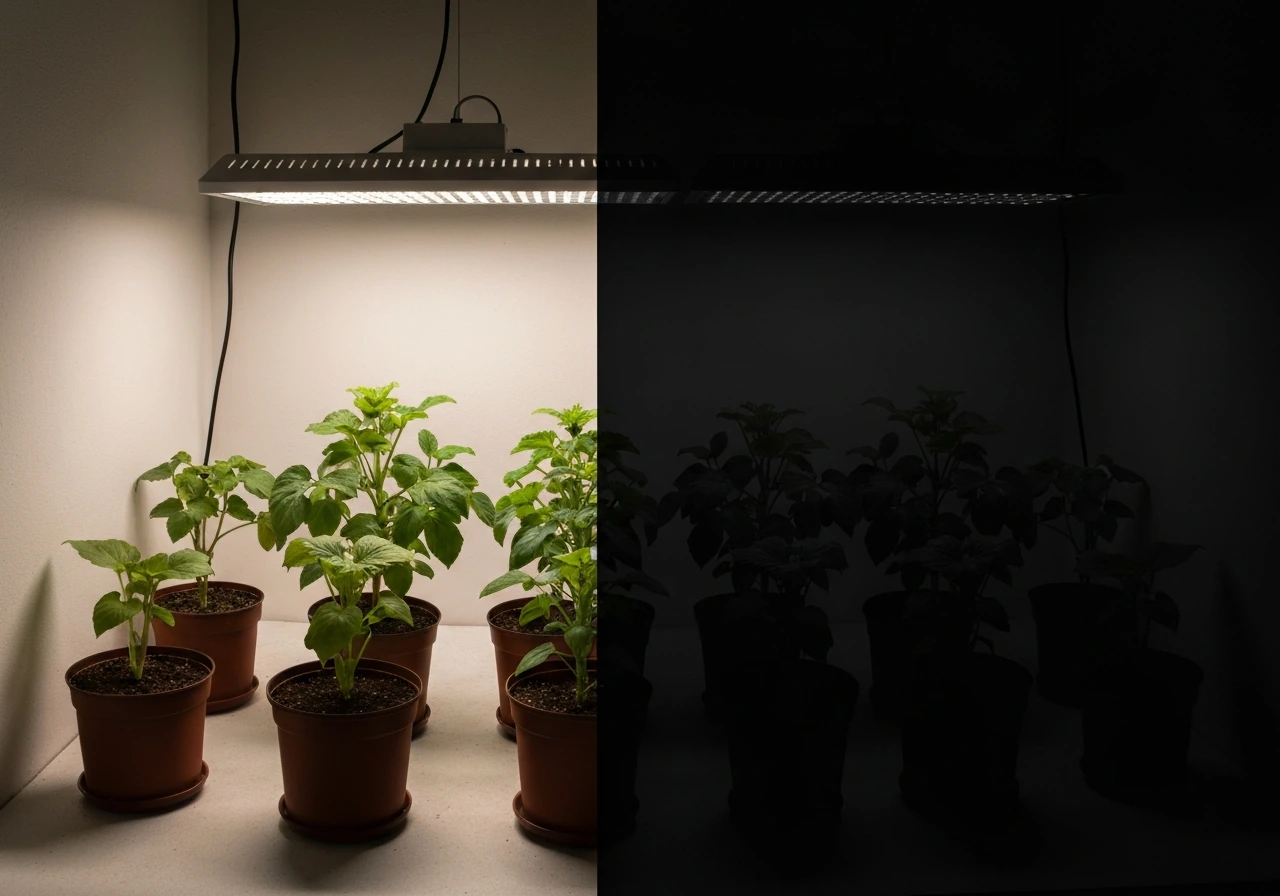
Plants aren't solar panels that just convert light into output indefinitely. They have internal clocks, literally called circadian rhythms, that govern when they open their stomata (the tiny pores that exchange gases and water vapor), when they run certain metabolic processes, and when they prepare for the next day's photosynthesis. Research on Arabidopsis shows that circadian timing controls stomatal opening in anticipation of daybreak, meaning the plant is actively preparing before the lights even come on. Strip away the dark period and you disrupt that timing entirely.
The dark period is also when plants move sugars, repair cellular stress from photosynthesis, and, for many species, trigger the hormonal signals that lead to flowering. Photoperiod, which is simply the number of hours of light a plant receives in a 24-hour window, is the primary cue plants use to know what season it is. Some plants, like poinsettias, kalanchoe, and Christmas cactus, are so sensitive to this that even a brief interruption in their required dark period can prevent flowering entirely.
What actually happens when you run lights 24/7
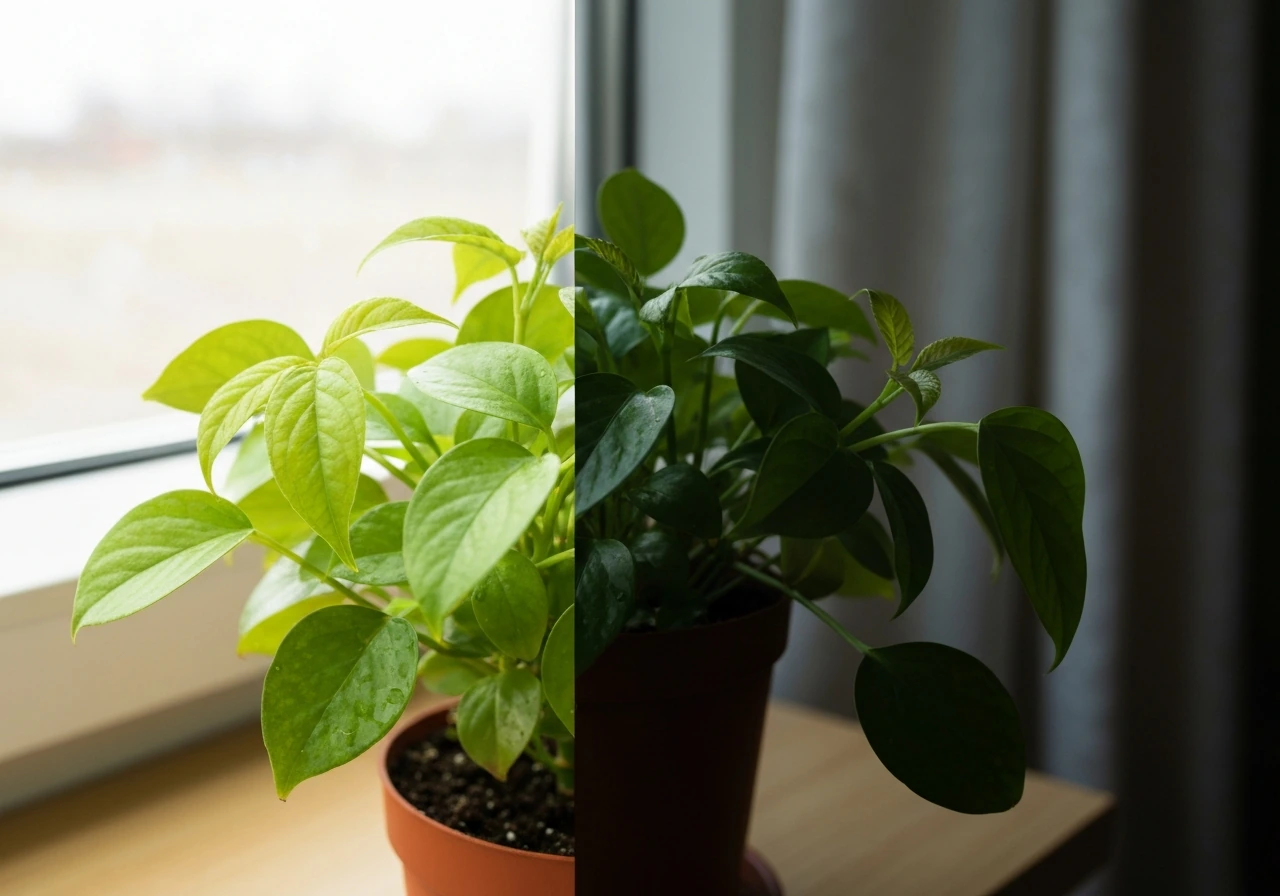
The most well-documented problem with continuous lighting is leaf chlorosis, a yellowing or mottling that shows up because the plant's chloroplasts are essentially being overworked without recovery time. Tomato plants are particularly sensitive to this, and research published in Nature Communications found that continuous light can cause mottled chlorosis and necrosis severe enough to kill the plant. A separate study found that using a diurnally varying light intensity (ramping up and down rather than constant output) reduced that chlorosis compared to flat 24-hour lighting.
Beyond the visible damage, you'll often see a paradoxical growth slowdown. The plant's stomata stop cycling properly, which throttles CO2 intake and photosynthetic efficiency. The plant isn't resting, but it isn't thriving either. On the safety side, running any electrical fixture continuously means more heat buildup, more wear on the driver and diodes, and a higher cumulative fire risk. High-intensity LEDs run cooler than HPS or fluorescent setups, but they still generate heat at the driver, and anything mounted close to flammable materials over long periods is a concern worth taking seriously.
The narrow cases where 24/7 can work
Some species genuinely tolerate or even benefit from continuous light. Nasturtium showed higher leaf production and better light use efficiency under 24-hour lighting in one controlled study. Pepper plants didn't develop chlorosis under continuous light and actually had higher chlorophyll content compared to a 12/12 schedule. Certain lettuce varieties are also frequently grown under near-continuous light in commercial hydroponic settings. These are the exceptions, not the rule, and even in commercial operations the setups usually involve alternating red and blue LED spectra and carefully controlled temperature variation to prevent circadian disruption.
Light schedules by plant type
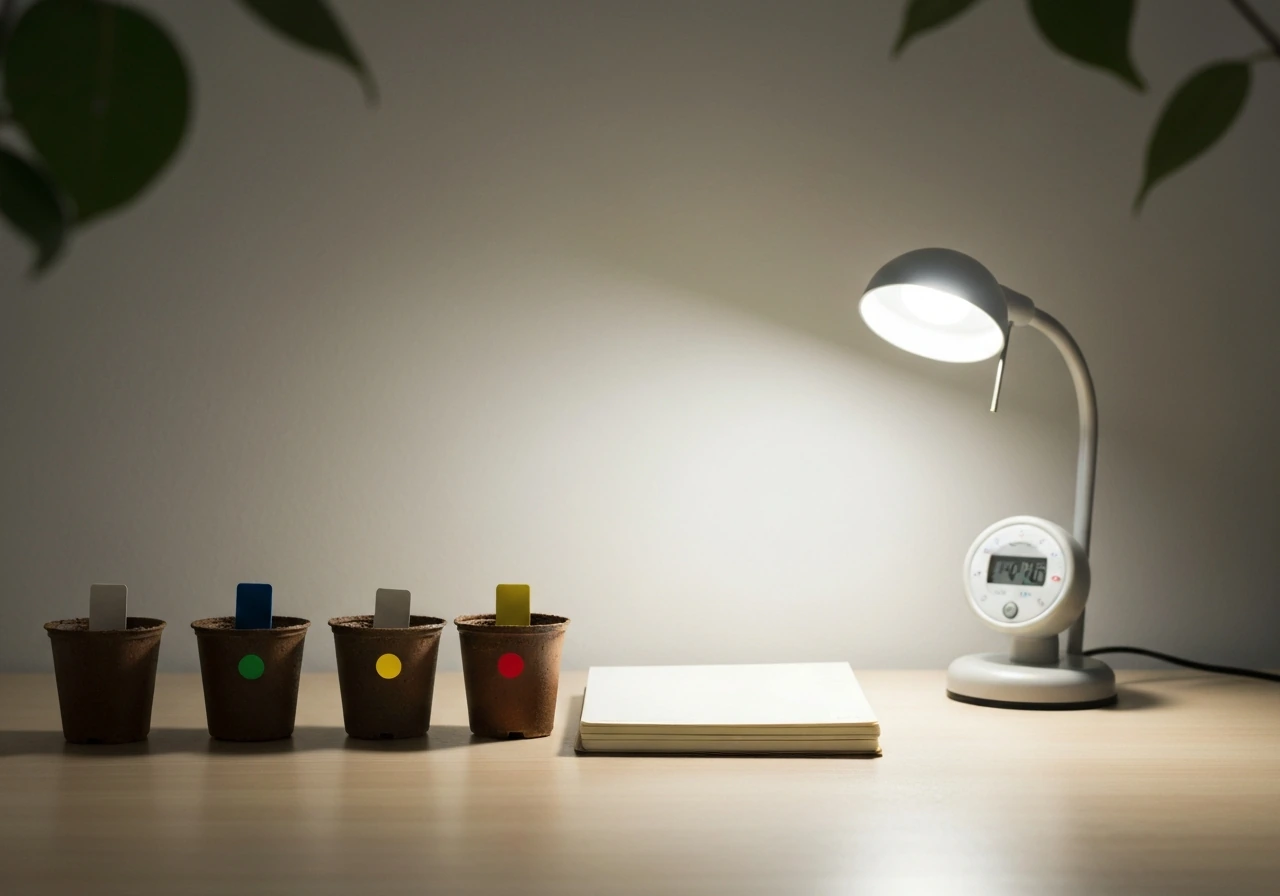
Different plants have genuinely different needs, and lumping everything together is where most beginners go wrong. Here's how to think about it by category.
| Plant Type | Recommended Daily Light Hours | Notes |
|---|---|---|
| Seedlings (vegetables) | 14–16 hours | UMN Extension recommends 12–16 hrs; University of Vermont suggests up to 18 hrs for seedlings at 65–75°F. Keep lights 1–2 inches above tops. |
| Foliage houseplants | 12–14 hours | Most tolerate a wide range. Match intensity (PPFD) to the plant's light category, not just duration. |
| Herbs (basil, mint, parsley) | 14–16 hours | Herbs are light-hungry and respond well to longer days. Avoid 24/7 to prevent bolting stress. |
| Flowering plants (general) | 12–14 hours | Most flowering plants need a consistent dark period to produce blooms reliably. |
| Short-day flowering plants | 10–12 hours light, 12–14 hours dark | Poinsettia, kalanchoe, Christmas cactus require long uninterrupted darkness to trigger flowering. Even room light during the dark period can interfere. |
| Lettuce and leafy greens | 14–18 hours | Can tolerate longer photoperiods; some cultivars manage 20 hours without issue. |
| Pepper and eggplant | 16–18 hours | Research shows these handle longer photoperiods better than tomatoes. |
For seedlings specifically, the University of Maryland Extension recommends keeping light on for 14 to 16 hours a day and positioning the tops of seedlings just 1 to 2 inches below the fixture. The logic there isn't just duration: it's about delivering enough total photosynthetically active light (measured as Daily Light Integral, or DLI) without burning young tissue. A light mounted farther away needs to run longer to deliver the same DLI. University of New Hampshire Extension actually quantifies this: a light bar at 8 inches away might only need 8 hours to hit a seedling's target DLI, while the same light at 20 inches away might need 16 hours to deliver the same dose.
Safety and setup if you're running lights for long stretches
Even if you're not running 24/7, running lights 16 hours a day means your fixture is on for a long time, and there are a few things worth doing right from the start. If you're wondering whether you can use grow lights outdoors, you still want to plan around weatherproofing, power safety, and heat management can i use grow lights outdoors.
If you're aiming for a longer stretch like leaving grow lights on, use a timer and keep the photoperiod in the 14 to 16 hour range for most plants. Heat is the biggest practical concern. LED grow lights generate most of their heat at the driver and heat sink, not the diodes themselves, but that heat still needs somewhere to go.
Make sure there's airflow around the fixture, don't pack it tightly into an enclosed cabinet without ventilation, and check that nothing flammable (cardboard trays, plastic domes, fabric pots) is sitting directly under or touching a hot driver. FEMA's fire safety guidance is straightforward: keep anything combustible away from lamps and light fixtures.
On the electrical side, grow lights should run on a dedicated outlet or circuit if you're using multiple high-wattage units. Avoid daisy-chaining power strips. Use a timer: it removes human error from the equation entirely, keeps your schedule consistent (which plants actually benefit from), and reduces the chance of lights running longer than intended. If you are wondering can i leave grow lights on 24 hours, the short answer is that most plants do better with a set light and dark cycle rather than continuous lighting. A basic mechanical outlet timer costs a few dollars and pays for itself in plant health and peace of mind.
- Use a mechanical or digital outlet timer set to your target photoperiod
- Ensure at least 6 inches of clearance between the driver/heat sink and any surface or object
- Don't run extension cords at full capacity for prolonged periods: check the wattage rating
- Check light mounting hardware periodically if you're running heavy fixtures for weeks on end
- If growing in a tent or cabinet, include a small fan to circulate air around the canopy and fixture
What to do instead: building a schedule that works
The practical approach is to start with a 14 to 16 hour photoperiod for most plants, then adjust based on what you see. If you're thinking about using grow lights at night instead of day, the key is still to keep a true dark period so your plants' circadian rhythms and flowering signals stay on track use grow lights at night instead of day.
If leaves look pale, bleached at the tips, or the plant seems stressed despite good watering, try shortening the photoperiod by an hour or two and see if it recovers over a week. If growth is slow and the plant looks stretched or leggy, you may need more light hours or more intensity, not necessarily both.
Duration and intensity work together: Iowa State Extension frames this well by pointing out that the real metric to optimize is PPFD (the actual photon flux hitting your plants, measured in µmol/m²/s) combined with hours, which gives you DLI.
A simple DLI calculation can guide your decisions: DLI equals roughly 0.0036 multiplied by your PPFD reading multiplied by your light hours per day. A seedling typically needs a DLI of around 6 to 10 mol/m²/day. If your light meter shows 250 µmol/m²/s at canopy level, running it for 14 hours gives you a DLI of about 12.6, which is solid for most young vegetables and herbs. If your PPFD is much lower, say 100, you'd need to either run longer or move the light closer rather than just leaving it on all day.
Quick adjustment guide based on plant response
- Yellowing leaves or bleached patches: reduce light hours by 2 and check that the fixture isn't too close
- Leggy, stretched stems reaching toward the light: increase hours or lower the fixture to increase PPFD at the canopy
- Flowering plants that won't bloom: check whether they're short-day plants needing 12 or more hours of uninterrupted darkness
- Seedlings damping off or growing slowly: confirm temperature is 65–75°F and light is within 1–2 inches of the tops
- Leaves curling or looking scorched at edges: reduce intensity first (raise the fixture), then consider shortening the photoperiod
Whether you're also wondering about running lights strictly at night instead of during the day, or thinking about whether to turn lights off at night entirely, the core answer is the same: plants care about total light duration and consistency, not which hours of the clock those happen to fall on. Pick a schedule, set a timer, and stick to it. That consistency is more valuable than any attempt to squeeze in extra hours.
FAQ
If I accidentally leave my grow light on overnight, will it ruin my plants immediately?
Usually not. A one-time extra hour or two typically won’t cause irreversible damage, but repeated disruption of the dark period can stress plants and interfere with flowering cues for photoperiod-sensitive species. If you notice yellowing, bleaching, or slowed growth, reset to a consistent 14 to 16 hour schedule and a real dark period from then on.
What signs tell me my plant is getting too much light for the hours I’m running it?
Look for leaf chlorosis (yellow mottling), pale or bleached leaf tips, and a general stress look despite adequate watering. Also watch for leggy growth, which often means the light intensity or PPFD at the canopy is too low, not that you need 24/7 lighting.
Is it safer to run a grow light 24/7 at lower intensity instead of full brightness?
Not necessarily. Lower intensity can reduce chlorosis risk, but without a dark period you still disrupt circadian timing and can still stress plants. The article’s circadian and flowering points still apply, so it’s usually better to keep a photoperiod (often 14 to 16 hours) rather than remove darkness entirely.
Do seedlings really need the same dark period as mature plants?
Yes, seedlings still benefit from a daily dark period. The key seedling adjustment is delivering the right total light dose (DLI) without overexposing tender tissue, which often means starting with 14 to 16 hours and positioning the fixture close enough to hit target PPFD.
Can I use a blackout curtain or room covering instead of turning the light off?
Yes, that can help if your goal is to preserve darkness. Make sure the plants get true darkness, not stray light from indicator LEDs, door openings, or reflections. Even brief light interruptions matter for species that rely on strict photoperiod cues.
If my plants are not growing, should I just extend the light hours?
Often the first step is diagnosing intensity at canopy level (PPFD) and calculating DLI, not automatically adding more hours. If PPFD is low, moving the light closer or raising output can be more effective than running longer, because there is a point where extra duration just increases stress risk.
Will continuous light help flowering plants, or will it prevent blooming?
For many plants, continuous light can actually prevent proper flowering because photoperiod uses darkness as an important seasonal signal. If you are trying to trigger blooms for sensitive species, stick to the required dark period and established photoperiod timing.
How far should I keep LEDs from the canopy if I’m trying to maximize safety and avoid bleaching?
Use distance to manage DLI and avoid overexposure, then verify with PPFD if possible. As a rule from the article, farther placement generally requires longer runtime to reach the same light dose for seedlings, so rather than raising the hours to extremes, adjust distance and time to hit target DLI.
Is a timer always necessary, or can I just turn the light on and off manually?
A timer is strongly recommended because it prevents human error and keeps the schedule consistent, which plants actually benefit from. If you go manual, be prepared for drift from the ideal dark period, especially if your household routine changes.
What’s the biggest electrical or fire safety mistake when running grow lights for long periods?
Running fixtures in ways that increase heat and wear, like daisy-chaining power strips, using non-rated cords, or enclosing hot components without airflow. Also avoid placing flammables near the driver or heat sink, and ensure the fixture has ventilation around it.
Next Articles
Can I Leave Grow Lights On 24 Hours? Safe Tips
Can you leave grow lights on 24 hours? Learn risks, best light cycles, and safe schedules for healthier indoor plants.
Should Grow Lights Be On 24/7? Best Schedules for Plants
Know when grow lights should not run 24/7, best daily schedules by plant type, safe timing, distance, and troubleshootin
Should Grow Lights Be On All the Time? How Long to Run
Answer whether grow lights should run 24/7 and how long to use timers based on plant needs, growth stage, and safety.