Run your grow lights for 14 to 16 hours per day for seedlings. That's the sweet spot recommended by most university extension programs, and it's what I use for nearly everything I start indoors, from tomatoes to peppers to herbs. Set the timer, leave it alone, and your seedlings get a consistent day-night cycle that mimics a long summer day without overdoing it.
How Long Should Grow Lights Be On for Seedlings?
Marcus Holloway
20 May 2026
Default daily light schedules for seedlings
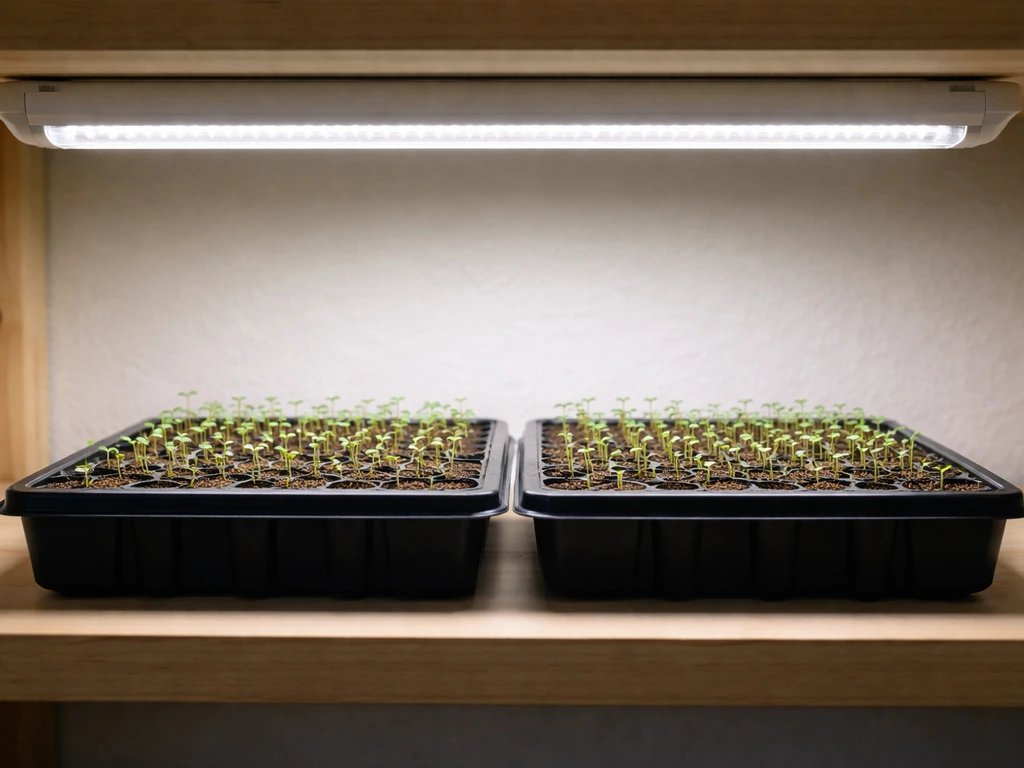
The general guidance from extension programs across the country lands in a pretty tight range. UMN Extension recommends 16 to 18 hours per day for seedlings specifically. UMD Extension puts it at 14 to 16 hours. UNH Extension suggests 18 hours for seed starting. Illinois Extension draws a firm ceiling at 16 hours, cautioning that plants need a rest period and shouldn't be lit longer than that. If you average all of that out, 14 to 16 hours is the practical target for most home setups.
Why does the range vary? A lot of it comes down to how bright your light actually is. A weak shop light needs more hours on to deliver the same energy as a stronger LED panel. But if you don't know your light's output, just default to 16 hours. It works reliably for most seedlings under typical home grow setups.
| Source | Recommended Daily Hours |
|---|---|
| UMN Extension (seedlings) | 16–18 hours |
| UMD Extension (vegetable seedlings) | 14–16 hours |
| UNH Extension (seed starting) | 18 hours |
| Illinois Extension (upper limit) | No more than 16 hours |
| NCSU Extension (general fluorescent) | 12–18 hours |
The bottom line: 16 hours on, 8 hours off is a solid default that fits comfortably within every credible recommendation. Don't stress over whether it should be 15 or 17. Consistency matters more than precision.
Germination is a different situation
Before seedlings exist, you have seeds. Seeds usually do not need light to germinate, but the timing changes once seedlings start emerging. And seeds are different. Most vegetable seeds don't actually need light to germinate. They need warmth and moisture, not a photoperiod. So during the first few days while you're waiting for sprouts, you don't necessarily have to run your lights at all, at least not for the seeds themselves.
That said, there are a couple of practical reasons to keep the lights on during germination anyway. First, some seeds do require light exposure to trigger germination (lettuce is a classic example). Second, if you're using lights as a gentle heat source to warm the soil surface, running them makes sense even before anything sprouts. USU Extension notes this scenario specifically, pointing out that inexpensive fluorescent shop lights can serve as both a light and a mild heat source during germination.
My own habit is to run the lights on the same 16-hour timer even before germination, mostly because I don't want to mess with the schedule and because I often have multiple trays at different stages under the same fixture. The moment seedlings poke up, you want light ready for them immediately. A seedling that stretches for even a day or two before you notice it has emerged is already a weaker plant.
Once you see cotyledons, treat those seedlings exactly like the rest: 14 to 16 hours of light per day, lights positioned at the right distance, timer running consistently.
Hours aren't the whole story: intensity and distance matter too
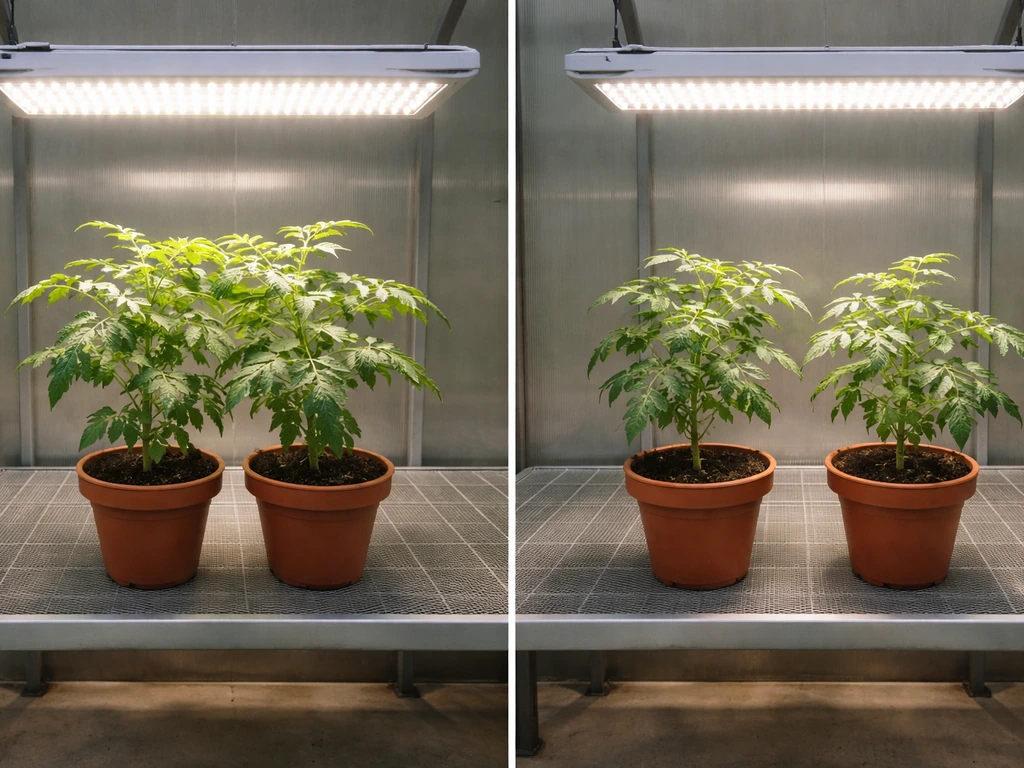
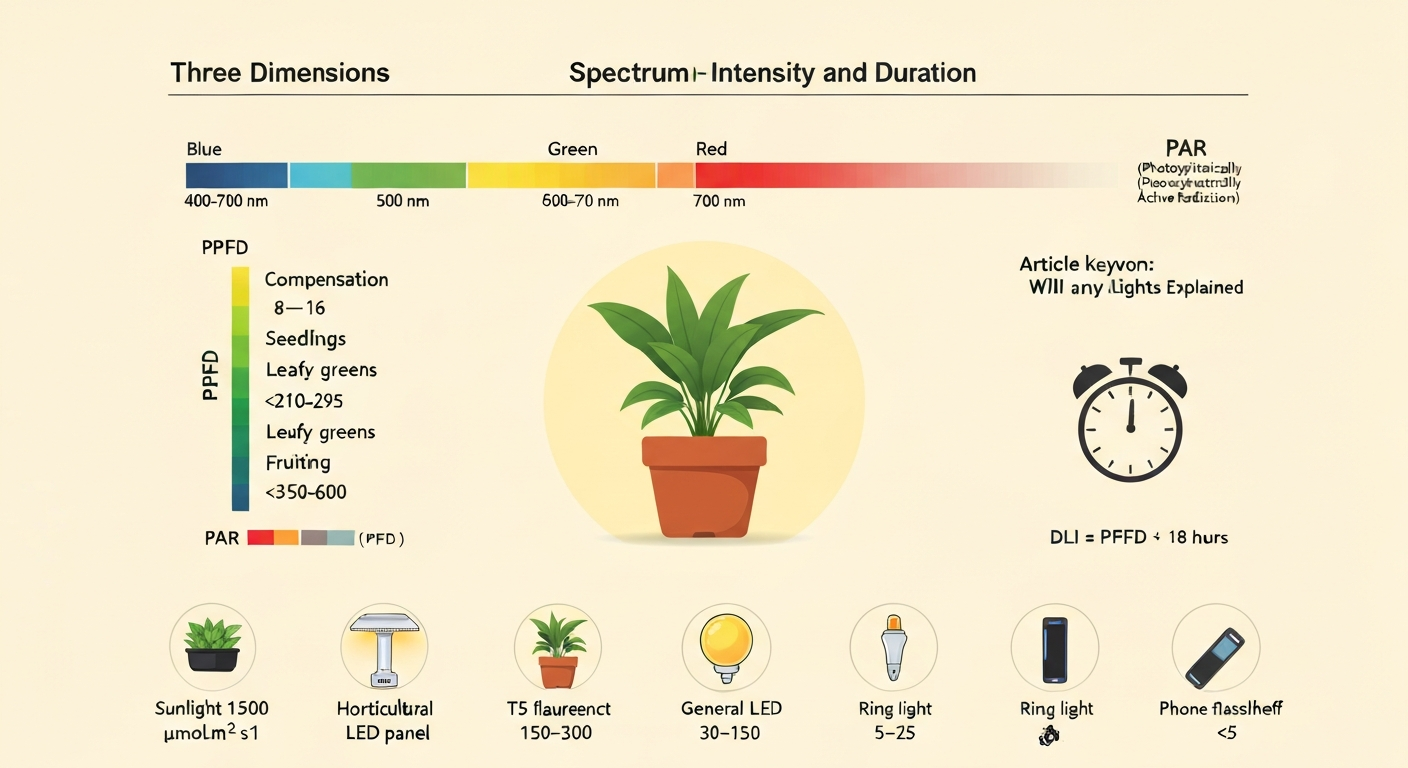
Here's the part a lot of beginners miss. Running your lights for 16 hours means nothing if the light is too far away or too dim. What actually matters to the plant is the total amount of light energy it receives per day, a concept called Daily Light Integral, or DLI. DLI is the product of light intensity (measured in micromoles per square meter per second, or PPFD) multiplied by hours. More intensity means you can run fewer hours and still hit a good DLI. Less intensity means you need more hours to compensate.
As a rough example: a light delivering 200 PPFD for 16 hours a day adds up to roughly 12 mol/m²/day, which is solidly in the useful range for seedlings. Drop that intensity by half and you're delivering half the energy, even if the timer says 16 hours. That's how seedlings end up leggy even when the light schedule looks right on paper.
For newly germinated seedlings, you don't need a blazing powerful light. Starting at a PPFD range of around 100 to 200 µmol/m²/s is appropriate, ramping up as true leaves develop. What keeps intensity in the right range is distance. Both UNH Extension and UMD Extension are specific about this: keep fluorescent lights 6 to 12 inches above seeds and transplant tops 1 to 2 inches from the fixture. If you're using LEDs, check the manufacturer's recommendations because the distance varies more widely.
The practical takeaway: if your light is weak or positioned too far away, you can compensate somewhat by adding an extra hour or two. If your light is strong and close, you may only need 14 hours. But don't try to fix a fundamentally inadequate light by running it 20+ hours. You'll hit the point of diminishing returns and plants still need darkness.
Timing, timers, and keeping a consistent light cycle
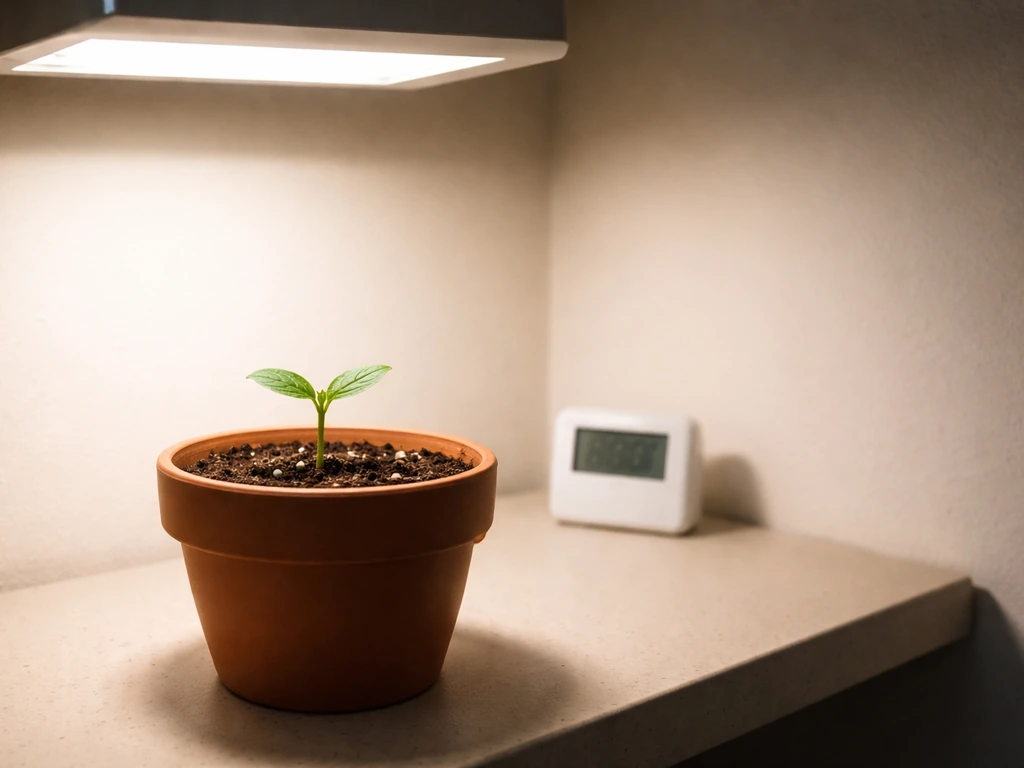
Consistency is genuinely important here. Plants respond to regular day-night cycles, and irregular lighting can stress them or interfere with growth. USU Extension specifically recommends using a wall timer to automate your indoor lighting schedule, and that's the single best piece of equipment advice I can pass along. A cheap mechanical outlet timer costs a few dollars and eliminates the habit of forgetting to turn lights on or off.
Set your lights to turn on in the morning and off in the evening so the "day" period aligns roughly with your own schedule. There's no hard biological reason seedlings need lights on from exactly 6am to 10pm versus 8am to midnight, but keeping it consistent from day to day is what matters. Avoid running lights through the night and off during the day, since this can occasionally cause confusion for day-length-sensitive plants, though for most common vegetable seedlings it's less of an issue.
Whatever you do, give seedlings at least 6 to 8 hours of uninterrupted darkness. All plants prefer a dark period each day for best growth, and going beyond 16 hours of light isn't doing them any favors. Illinois Extension puts a hard cap at 16 hours for this reason. The dark period isn't wasted time; it's when a lot of plant processes consolidate.
How to tell if your light schedule needs adjusting
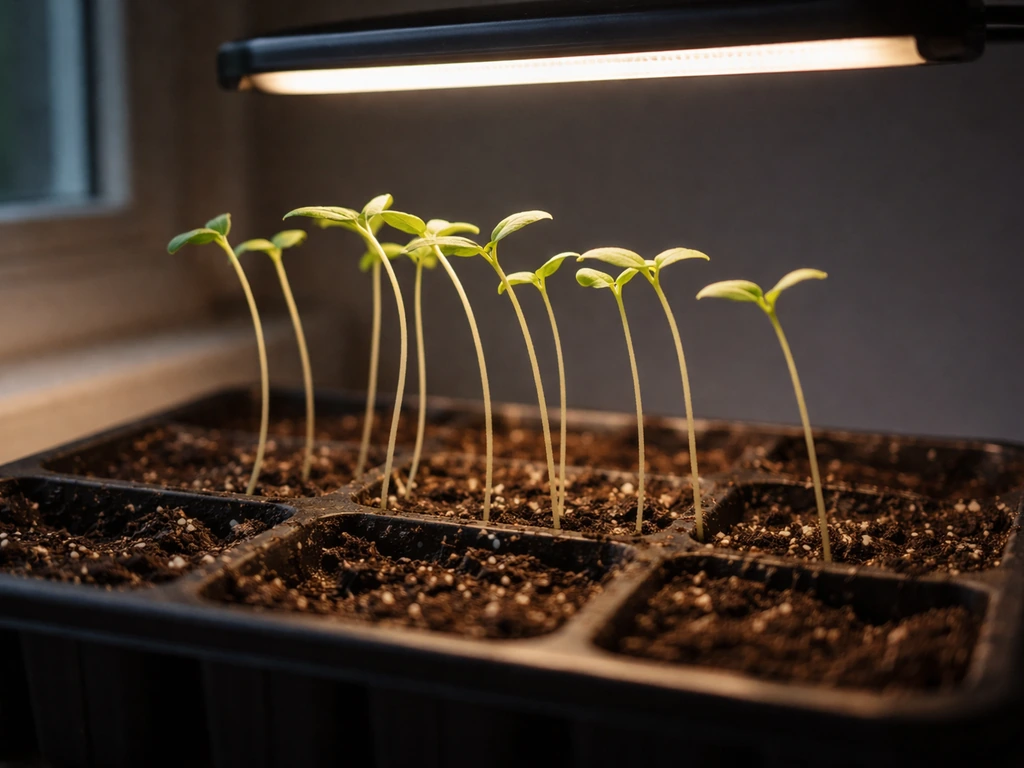
Your seedlings will tell you a lot if you know what to look for. The most common signal that something is wrong with your light setup, whether it's duration, intensity, or distance, is legginess. Leggy seedlings are tall and spindly with long stretches of bare stem between leaves. They look like they're reaching for something. They are. This is called etiolation, and it means the plant isn't getting enough light energy. UMN Extension directly links insufficient light to this kind of weak, stretched growth.
Legginess is most often a light intensity or distance problem rather than a pure duration problem, but if you're already at 14 to 16 hours and the seedlings are still stretching, adding another hour or two (up to 16 to 18) while also lowering the light closer to the plants is the right move. If leggy seedlings keep showing up even then, the fixture itself may not be powerful enough for the task.
There's also a less obvious culprit worth knowing about: if you're starting seeds under a plastic humidity dome and leaving it on too long after germination, the heat buildup can push seedlings into rapid, weak growth that mimics etiolation even when the light is adequate. If you start seeds under a plastic humidity dome and leave it on too long after germination, the heat buildup can make seedlings grow too fast and become weak even if light is adequate. Vent the dome once sprouts emerge and remove it entirely within a day or two.
Signs you need more light (or longer hours)
- Stems are thin and tall with long gaps between leaves
- Seedlings lean heavily toward the light source even when it's directly overhead
- Leaves are pale green or yellowish instead of a rich, dark green
- Plants look floppy and can't hold themselves upright
Signs you may be overdoing it
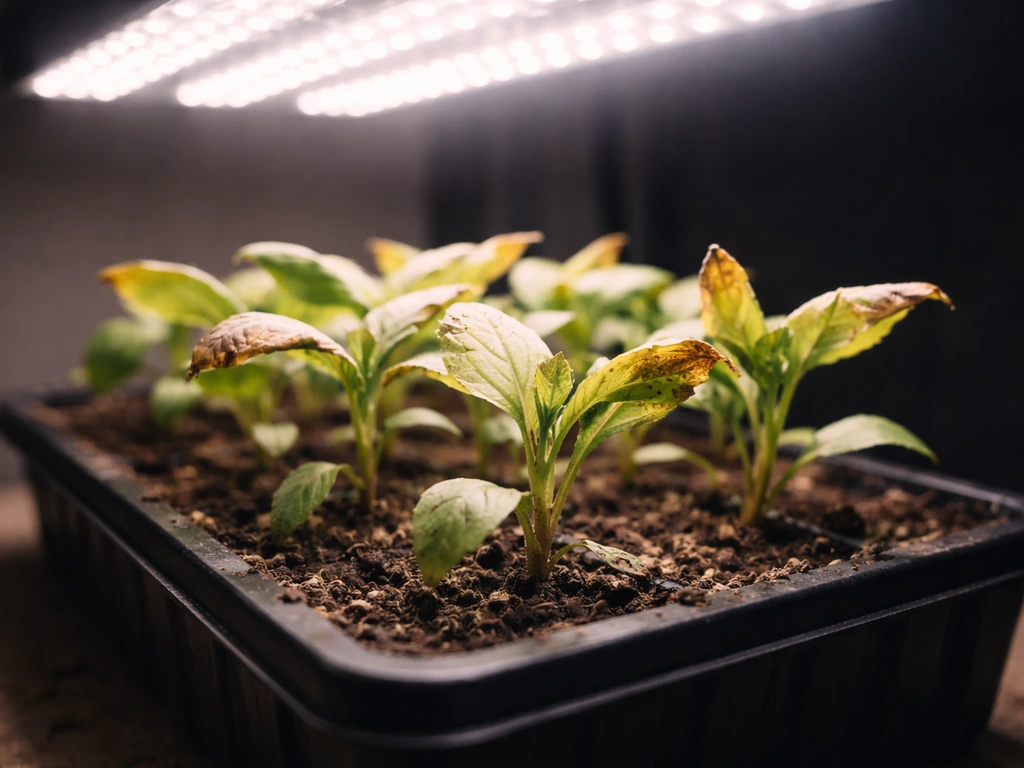
- Leaf edges turning brown or crispy, especially closest to the light
- Leaves curling upward or looking bleached in the center
- Soil drying out extremely fast due to heat from the fixture
- Slow or stunted growth despite adequate watering and fertilizing
If you're seeing signs of too much light, first try increasing the distance between the fixture and the plants before you reduce hours. Light burn from proximity is more common than damage from a well-positioned light running 16 hours.
Safety and practical setup tips for running grow lights indoors
Running grow lights indoors for 14 to 16 hours a day is completely routine and safe when set up sensibly. A few practical things are worth keeping in mind to make the experience smooth and avoid common problems.
- Use a timer: plugging your light into an outlet timer is the single most important setup step. It keeps the schedule consistent without any daily effort and prevents accidental 24-hour light exposure if you get busy or forget.
- Check the heat output: some fixtures, especially older T12 fluorescents or high-wattage LEDs, can warm the air and soil noticeably. Keep your hand at plant level to feel whether the heat is excessive. Most modern LED panels run cool enough that this isn't a major issue.
- Don't run lights on extension cords that aren't rated for continuous use: lights running 16 hours a day are on constantly. Use a surge-protected power strip or outlet rated for the wattage you're drawing.
- Raise the fixture as plants grow: seedlings grow fast. A light that's at the right distance today may be touching the canopy in a week. Build in a way to adjust height, whether that's S-hooks on wire shelving or an adjustable hanging system.
- Keep the light surface clean: dust on fluorescent tubes or LED panels can reduce output meaningfully over time. A quick wipe-down every few weeks keeps output where it should be.
- Think about your electricity use honestly: 14 to 16 hours a day is a significant daily run time. A 40-watt LED running 16 hours a day uses about 0.64 kWh per day. For a small seed-starting setup that's trivial, but if you're running multiple large fixtures, it adds up.
When to start reducing light hours
As seedlings get bigger and you approach transplant time, you'll start the hardening off process, gradually exposing plants to outdoor conditions over about two weeks. During this period, seedlings begin spending real time in actual sunlight, so your indoor grow light schedule becomes less critical. You can start shortening the indoor hours during this transition, running lights only on days when seedlings are brought back inside, or dropping to 12 hours as outdoor exposure increases.
Penn State Extension recommends a gradual multi-day transition to full sun, and USU Extension suggests spreading the process over two weeks with gradually lengthening outdoor intervals. As that outdoor time grows, the grow light's job is essentially done. Once seedlings have grown sturdy enough, you can start backing off the hours under the grow lights and rely more on natural daylight Once your plants are getting several hours of direct outdoor sun daily. There's no need to keep running a 16-hour light schedule once your plants are getting several hours of direct outdoor sun daily.
The short version: 14 to 16 hours per day from germination through transplant, backed by a timer, with the light positioned close enough to actually matter. Watch your seedlings, adjust if they tell you something is off, and don't overthink it. Watering needs often change under grow lights, so it's worth understanding how often to water seedlings in that setup how often to water seedlings under grow lights. This is one of those things that sounds complicated but is really just: set the timer, keep the light close, and let the plants do their thing.
FAQ
Should I run grow lights 24/7 until seedlings sprout?
No. Even during germination, plan on a daily dark period (typically 6 to 8 hours). If you keep lights on all day, seedlings can still stretch, and you remove a rest window plants use for normal growth processes.
Do all seedlings need the same light hours?
No. Most common vegetable seedlings fit the 14 to 16 hour range, but crops with different growth habits may respond differently. If you see leggy growth, it’s usually a light intensity or distance issue, not a need to add more hours.
What if my seedlings are already leggy, should I just add more light hours?
Usually adjust placement and intensity first. Raise or lower the fixture to hit the recommended PPFD range (or follow the distance guidance for your fixture type), then add at most an extra hour or two if needed, staying within about 16 to 18 hours.
How do I know my light schedule is correct if I cannot measure PPFD?
Use distance as your first control and time as your second. Keep fluorescent fixtures roughly 6 to 12 inches above seeds and LEDs close to the manufacturer’s stated range. Then confirm by observing stem thickness and leaf positioning over 2 to 3 days.
Can I run the lights longer if I lower the distance between the light and the seedlings?
It’s better to fix one variable at a time. Reduce distance to improve intensity, then keep the photoperiod in the 14 to 16 hour window. Extending beyond 16 hours while also increasing intensity often hits diminishing returns and can still stress plants.
Is 8 hours of darkness always enough?
It’s a solid baseline. Aim for at least 6 hours uninterrupted darkness, and 8 is a common sweet spot. If you have a short night because of your schedule, seedlings may respond with weaker or stretched growth even if the light duration looks “close.”
Should I use a continuous on/off schedule or can I split the lights into two shorter periods?
For seedlings, continuous daily lighting is usually simpler and more reliable. Splitting can work for some setups, but intermittent cycling can make it harder to maintain consistent total energy, especially if you’re not measuring intensity.
What time of day should I run the lights, morning to evening or night to morning?
Match the lights to your daily routine so it stays consistent. Many growers run lights during daylight hours and off at night, but the key requirement is regularity and an uninterrupted dark block, not the exact clock time.
Will a humidity dome affect how seedlings respond to grow lights?
Yes. If you keep a dome on too long after sprouting, heat buildup can cause fast, weak, stretchy growth that mimics low-light etiolation. Vent promptly after emergence and remove the dome within a day or two to separate heat effects from light effects.
How quickly should I expect seedlings to show improvement after adjusting light distance or hours?
Give it a couple of days to see clear changes in stem strength and leaf position. If they’re still stretching after you correct distance and keep the day length consistent, the fixture may be too weak or insufficiently intense for your tray size.
Do I need to change light hours when hardening off starts?
Yes, usually gradually. As seedlings get real outdoor sun, the grow light becomes less important. You can shorten indoor hours before full transplant, often down toward 12 hours as outdoor exposure increases, then rely more on natural light once they get several hours of direct sun daily.
Should I keep the lights on during transplant hardening if plants go outside during the day?
Often no. If seedlings are outdoors and receiving direct sun for part of the day, you can usually turn the indoor grow lights off during that outdoor window to avoid over-accumulating total light energy and to keep conditions consistent.
Next Articles
What Artificial Light Will Grow Plants: Best Lights Guide
What artificial light will grow plants: practical guide to LED, CFL, HID spectra, PPFD targets, setup, cost & tips.
Will Any Light Grow Plants? Guide for Indoor Growers
Can any light grow plants? Clear yes/no, science-backed light specs, setup tips, and which household lights work.
What Type of Light Do Plants Need to Grow Indoors
Pick the right grow light indoors by spectrum, brightness, and placement so plants grow well, bloom, and stay healthy.