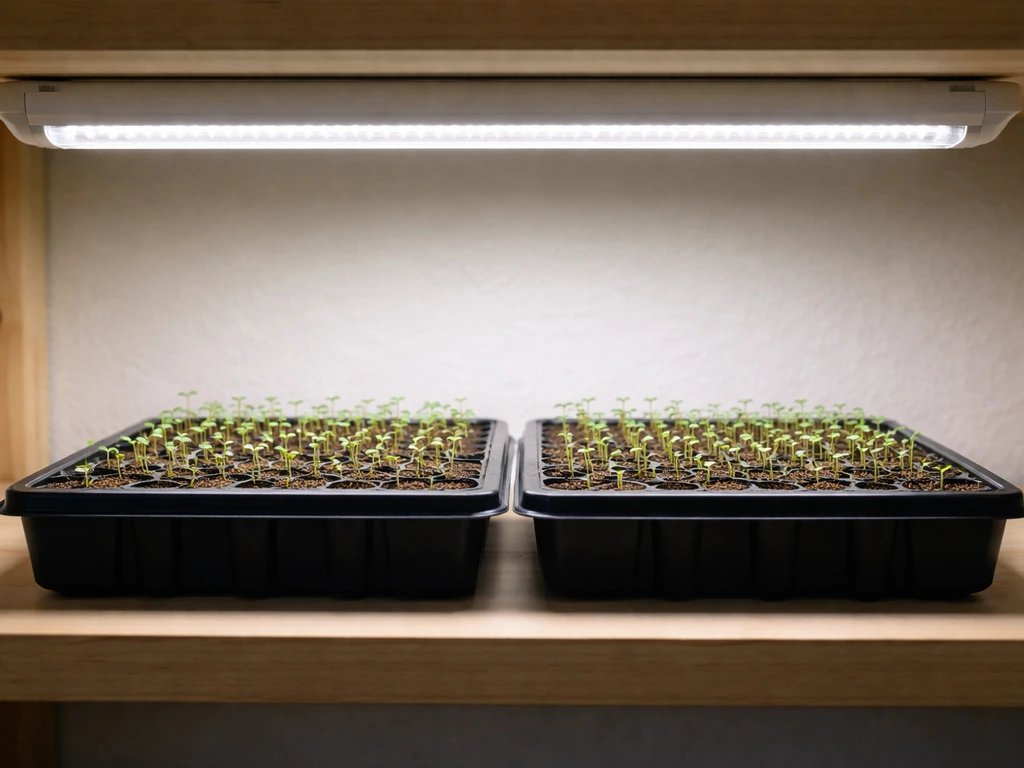
Turn on your grow lights the moment you see the first sprout break the soil surface. Not a day later. That tiny seedling is already reaching for light, and if it doesn't find enough, it will stretch itself tall and thin trying to get some, and leggy seedlings are notoriously hard to recover from. If you're growing seeds that require light to germinate (like lettuce), you can actually run the lights from day one, before the sprout even appears.
When to Turn On Grow Lights for Seedlings: Schedule
Marcus Holloway
13 Jun 2026
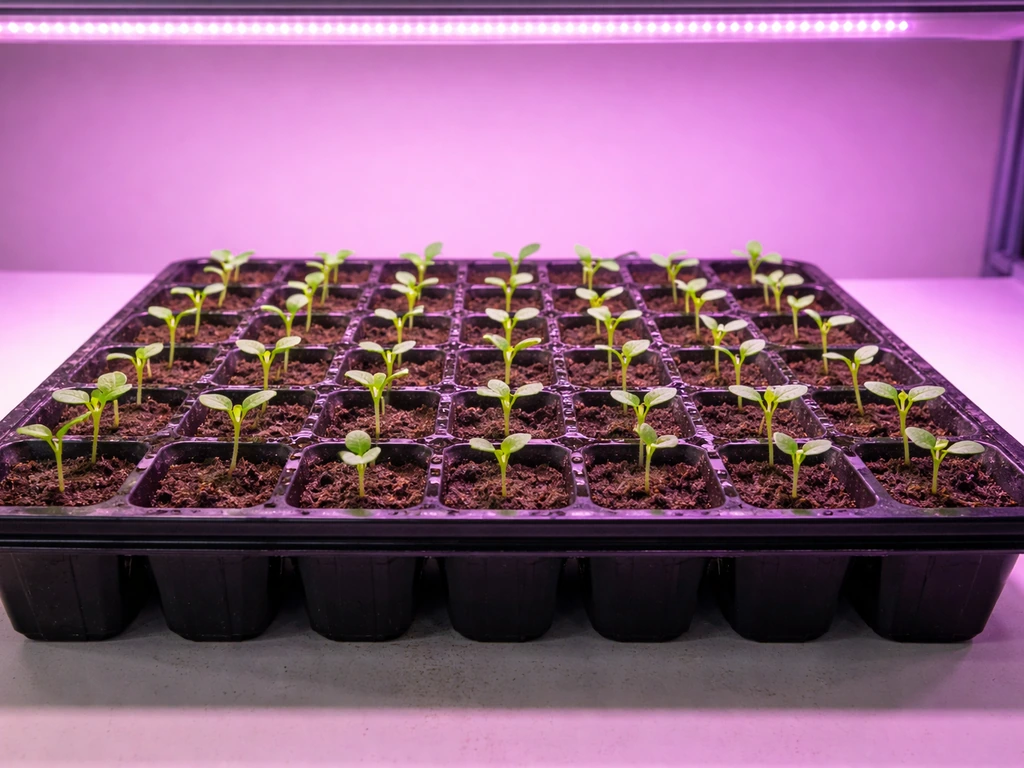
How long should seeds be under a grow light? Most gardeners keep the lights running through the early seedling stage, starting at germination and continuing about 14 to 16 hours per day. UMN Extension recommends that, when using supplemental lighting, seedlings generally need about 12 to 16 hours of light each day [Most gardeners keep the lights running through the early seedling stage, starting at germination and continuing about 14 to 16 hours per day. ](https://extension.
umn. edu/planting-and-growing-guides/starting-seeds-indoors). For everything else, tomatoes, peppers, herbs, flip the switch as soon as germination happens.
Exactly when to start the lights: seed to sprout
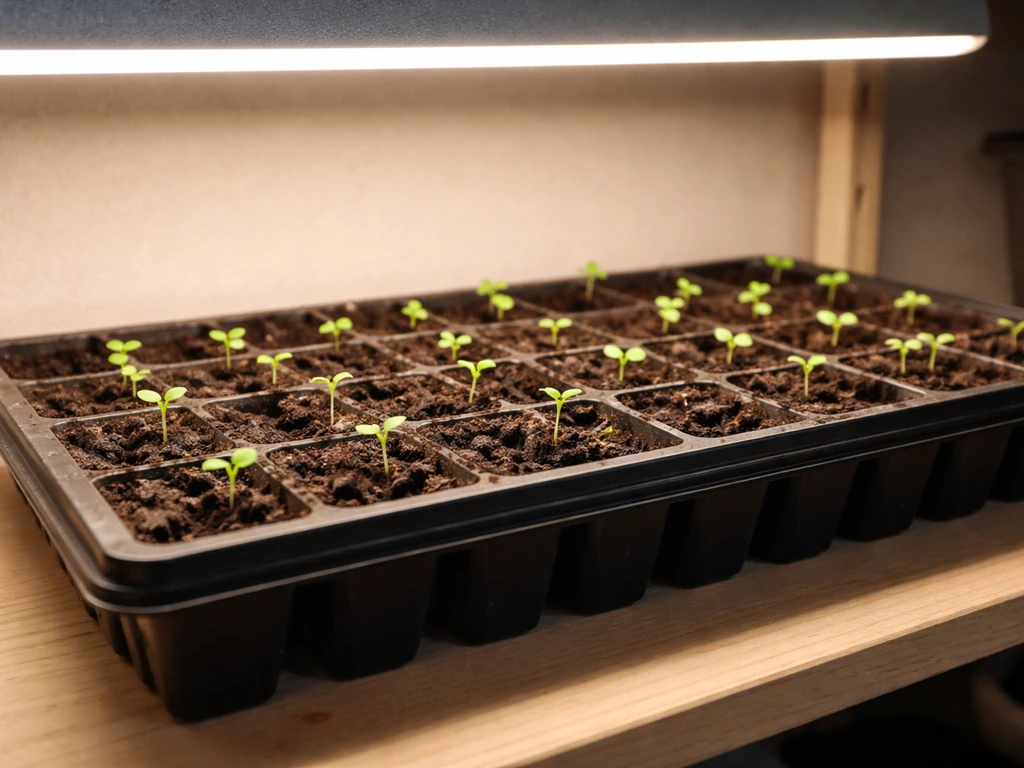
There are two stages where timing matters: germination and early seedling growth. Most seeds don't need light to germinate, they just need warmth and moisture. So for crops like tomatoes, peppers, basil, and most vegetables, you can keep the light off until you see a sprout. The moment that first loop of stem pushes up, start the light immediately.
Some seeds are different. Lettuce, for example, actually needs light to trigger germination. For those, run the grow light from the time you sow the seeds. It won't hurt anything, and it ensures those light-sensitive seeds get the signal they need to sprout. When in doubt, check the seed packet, if it says 'surface sow' or 'needs light to germinate,' start your light right away.
If you've transplanted seedlings you bought from a nursery or received from a friend, turn the grow light on immediately when you bring them indoors or move them to your indoor setup. If you are wondering about when to remove seedlings from grow lights, the best time is right after they are hardened off and ready for their next growing stage turn the grow light on immediately. They're already past the germination stage and need consistent light to keep growing well.
The one mistake I see most often: people germinate seeds on top of the fridge or under a heat mat, the sprouts emerge, and then they leave them in a dim corner for a few extra days while they 'get everything set up.' Those few days are exactly when leggy stretching starts. Have your lights ready before germination happens so you can act immediately.
How many hours a day: your light schedule
For most vegetable and herb seedlings, aim for 14 to 16 hours of light per day. The University of Minnesota Extension puts the range at 12 to 16 hours, and in my experience, the middle-to-upper end of that range (around 14 to 16 hours) gives you the sturdiest seedlings. As a rule of thumb, most seedlings do best with about 14 to 16 hours of light per day how long should plants be under a grow light.
Twelve hours tends to work for seedlings that get some natural window light as a supplement. If your grow light is their only source, lean toward 16 hours. Once you have the right light schedule, watering consistency matters too, so aim to keep the soil evenly moist (not soggy) as seedlings grow under the lights how often to water seedlings under grow lights.
Always give seedlings a dark period. Running lights 24 hours a day is tempting when you want fast growth, but plants use the dark period to process energy and regulate their development. Stick to 16 hours maximum for most crops, and let them rest for 8 hours.
Use a timer. This is not optional. Inconsistent light schedules stress seedlings and make it nearly impossible to diagnose problems. A basic plug-in mechanical timer costs a few dollars and removes all the guesswork. Set it and forget it.
- Most vegetable and herb seedlings: 14 to 16 hours of light, 8 hours of darkness
- Seedlings with supplemental window light: 12 to 14 hours may be enough
- Light-loving crops like tomatoes and peppers: stay closer to 16 hours indoors
- Low-light crops like lettuce: 12 to 14 hours is usually fine
- Always use a timer to keep the schedule consistent
How high to hang the light: distance and positioning
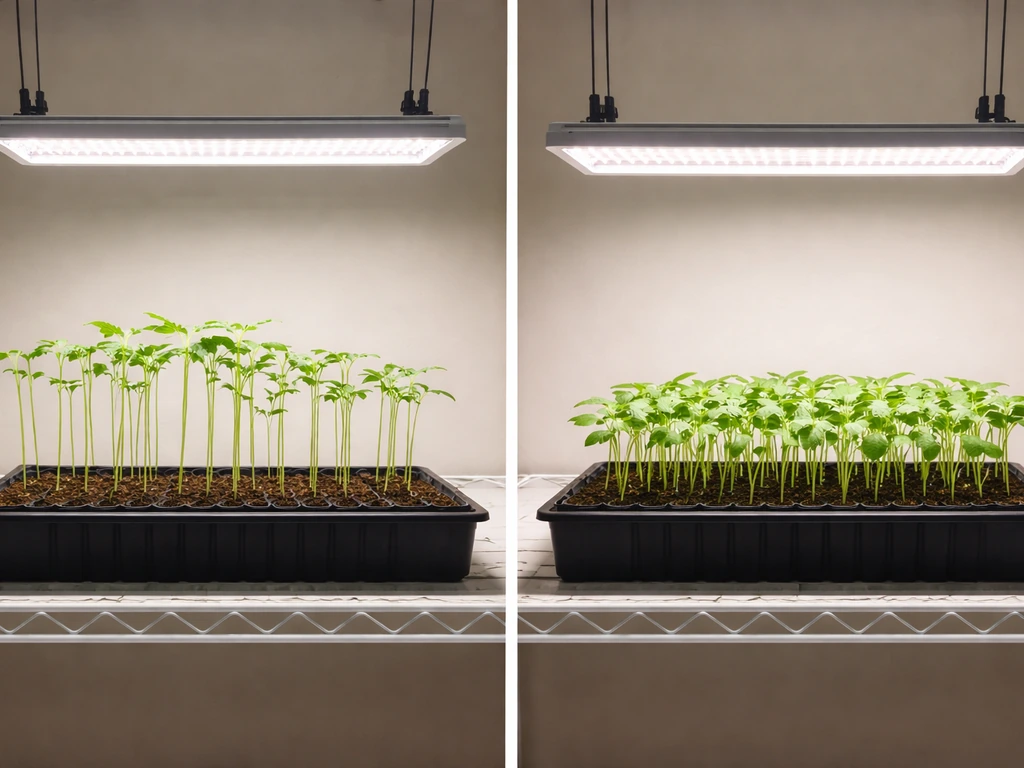
Distance is where most beginners get it wrong, and it causes more leggy seedlings than any other factor. The light needs to be close enough to actually deliver useful intensity. A light hung two feet above seedlings in a dim basement is essentially decorative.
For LED grow lights (the most common type people use now), start with the light positioned 4 to 6 inches above your seedlings for a lower-wattage panel, or 12 to 18 inches for a more powerful full-spectrum LED. Check the manufacturer's recommendation for seedling stage specifically, because the numbers vary by fixture. Weak fluorescent shop lights, like old T8 tubes, need to be within 1 to 2 inches of the seedling tops to do much good, and even then the University of New Hampshire Extension notes you may need to run them for around 22 hours a day to hit a useful light level. That's why modern LEDs are so much more practical.
As your seedlings grow, raise the light to maintain the same distance from the tops of the plants. Don't let seedlings grow into the light, that causes heat stress and burned leaf tips. Check the height every few days when growth is fast. A simple chain or rope hanging system makes this easy to adjust.
- Position your LED panel at the manufacturer's recommended seedling distance (typically 12 to 18 inches for mid-range LEDs)
- For weak fluorescents, get within 1 to 2 inches of seedling tops
- Check every 2 to 3 days and raise the light as seedlings grow
- Watch for bleaching or yellowing at the tops (too close) and stretching (too far)
Light intensity and what wattage actually means for seedlings
Wattage is a measure of electricity use, not light output, but it's still a useful rough guide for buying decisions. For seedlings, you don't need the most powerful light on the market. A mid-range LED panel rated at 45 to 100 watts actual draw (not 'equivalent' wattage, which is marketing language) covers a standard seed-starting tray well. The key quality metric is PPFD, photosynthetic photon flux density, which measures how much usable light actually hits your plants. Seedlings generally do well with a PPFD of around 200 to 400 micromoles per square meter per second. Most reputable LED grow light brands publish this data.
If you're not ready to go down a technical rabbit hole, here's the practical rule: if your seedlings are stocky and the stem between leaf nodes is short (about 1 to 2 inches between sets of leaves), your intensity is good. If stems are long and stretched between leaves, the light is either too far away, too weak, or not on long enough. All three are fixable.
Leggy seedlings are one of the most common issues with indoor seed starting, and inadequate light intensity is almost always the cause. University of Maryland Extension specifically notes that increasing light intensity and improving positioning keeps seedlings stocky and strong. If you've already got leggy seedlings, move the light closer first, then extend your daily hours if needed, and consider burying the leggy stem deeper when you transplant.
How to tell if something's off: symptoms and quick fixes
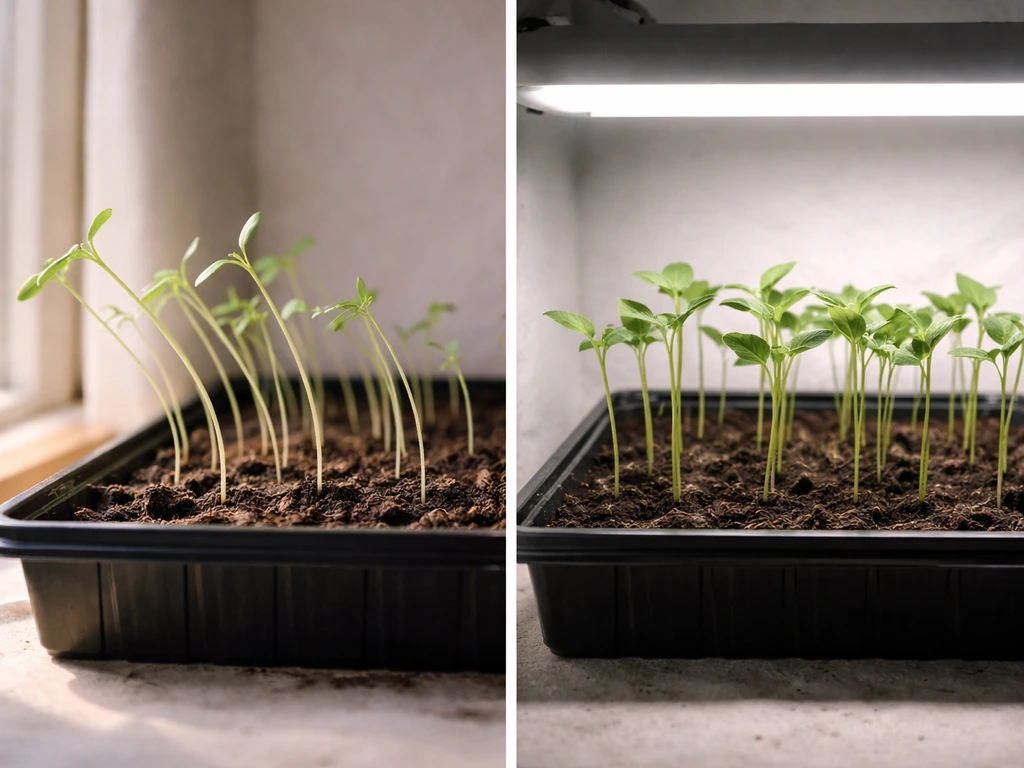
Your seedlings will tell you pretty clearly when the lighting is wrong. Here's what to look for and what to do about it.
| Symptom | Likely Cause | Fix |
|---|---|---|
| Long, thin stems stretching toward the light | Too little light intensity or too few hours | Lower the light or increase daily hours up to 16 |
| Pale or yellowing leaves on new growth | Too little light overall | Lower light closer to seedlings and check your timer is working |
| Bleached or white patches on top leaves | Light too close or intensity too high | Raise the light a few inches and watch for 48 hours |
| Brown or crispy leaf tips | Heat stress from light being too close | Raise the light and check for heat buildup above seedlings |
| Seedlings stunted with dark green, thick leaves | Too much light or too many hours | Reduce to 14 hours and raise light slightly |
| Uneven growth across the tray | Light not centered or covering the full tray | Reposition light or rotate the tray every few days |
Leggy growth is by far the most common complaint, and it almost always comes down to light being turned on too late, positioned too high, or run for too few hours. The fix is usually one of those three things. Act quickly when you notice stretching, seedlings that get severely leggy early on rarely catch up fully.
Common mistakes to avoid and basic safety tips
The most common beginner mistakes
- Waiting too long to turn on the light — even one or two days of post-germination dimness causes stretching
- Hanging the light too high and expecting it to work like the sun
- Relying on a south-facing window as the only light source (window light is almost never enough for healthy seedlings indoors)
- Not using a timer and running lights inconsistently
- Running lights 24 hours a day thinking more is better
- Never adjusting light height as seedlings grow taller
Heat and safety with modern LEDs
Modern LED grow lights run much cooler than older HID or incandescent bulbs, but they still produce some heat. Always check the temperature at canopy level (the tops of your seedlings) rather than at the bulb itself. A simple hand test works: hold your hand at the height of the seedling tops for 30 seconds. If it feels uncomfortably warm, the light is too close or the room needs better airflow. Small seedlings in enclosed spaces (like a plastic humidity dome) need special attention because heat builds up fast.
On the eye safety question: grow lights, especially full-spectrum LEDs with a strong blue component, are uncomfortable to stare at directly and can cause eye strain. Don't stare into them. Most people checking on seedlings once or twice a day have nothing to worry about, but if you're spending extended time working directly under the light, a pair of UV-protective safety glasses is a cheap and easy precaution.
Make sure your light fixture is rated for the humidity levels in your growing space. Seed-starting areas often have humidity domes and misting, and water and electricity don't mix. Use fixtures designed for indoor growing, keep cords organized, and plug into a grounded outlet. A timer with surge protection is worth the small extra cost.
What to expect as seedlings progress
With lights on from the moment of germination, a consistent 14 to 16 hour daily schedule, and proper positioning, you should see noticeably compact, sturdy seedlings within the first week or two. Stem nodes will be close together, the stems themselves will be thick enough to stand upright without flopping, and leaf color will be a healthy medium to deep green.
As you approach transplant time (typically 6 to 10 weeks after germination for most vegetables), you'll need to harden off your seedlings before moving them outside. This means gradually exposing them to outdoor conditions over 7 to 10 days, starting with an hour or two of outdoor time in a sheltered spot and working up to full outdoor exposure. During hardening off, you'll naturally reduce grow light time as outdoor exposure increases, and eventually you'll stop using the grow light altogether once they're ready for the garden.
The whole point of a grow light at the seedling stage is to replicate what strong natural light would do: give you compact, healthy transplants that hit the ground running when they go outside. Get the timing right from sprout to soil, and you'll be planting out seedlings that look like they came from a professional greenhouse.
FAQ
What should I do if my seeds sprout at night or on a weekend and I do not have the lights ready yet?
If you catch sprouts and the lights are still off, turn the grow light on as soon as you can, ideally within the same day. Going a few hours late is not ideal, but it is the multi-day delay that most often produces severe stretching. In the meantime, keep the sprout area warm and evenly moist, since weak, cold sprouts also elongate faster.
Can I use a grow light 24 hours a day to get sturdier seedlings?
Usually no. Seedlings need a daily dark period for normal development and to avoid stressing them. For most crops, keep the photoperiod at 16 hours or less, then provide about 8 hours off. If you really want faster growth, adjust intensity or distance first, not by extending light to 24 hours.
How do I know whether my problem is light intensity or that my seedlings are getting too warm or too cool?
Legginess can come from insufficient light, but temperature swings can mimic it. Check canopy temperature at seedling top level, and use a simple hand test (30 seconds) to judge warmth. If the lights are correctly positioned and the temperature is stable, but stretching continues, increase usable light by lowering the fixture or raising daily hours within the 14 to 16 hour range.
My seedlings look fine after starting, but start stretching after a week. Should I change when the lights turn on?
More often the light distance has drifted upward as plants grow, or the timer schedule is being shortened. Raise the light to maintain the same gap to the canopy and confirm the timer is still delivering the intended 14 to 16 hours. Only consider adjusting the schedule after you verify distance and that the fixture is actually on during the full photoperiod.
What if my timer is on but the light seems to cycle, dim, or flicker?
Do a quick verification test: turn the light on manually and observe for steady output, then check that the timer is rated for the fixture type and wattage. Flicker or inconsistent output can cause uneven growth and complicates troubleshooting. Replace the timer if it is an old, lightweight model that cannot handle LED drivers well.
Should I reduce grow light time once seedlings have their first true leaves?
Not automatically. Many seedlings continue best with the same 14 to 16 hour schedule through the early seedling stage. The main timing change usually comes later, during hardening off, when outdoor exposure increases and you gradually shorten indoor light time until you stop using it.
Can I use grow lights for seeds that are sown very deep or covered with soil?
You can, but light timing still depends on the seed type. If the packet says light is required to germinate (surface sow or light-sensitive), do not bury those seeds deeper than recommended, because darkness in the soil prevents the light signal even if the grow light is on. For most seeds that do not need light to germinate, covering depth mostly affects emergence timing, while the key light switch point is still the first sprout.
How close should I place the light if I am using a fluorescent shop light instead of an LED?
Fluorescents generally need to be much closer to provide useful intensity. The practical approach is to keep them within about 1 to 2 inches of the seedling tops and ensure you reach an effective daily photoperiod, which often ends up closer to the long end of common schedules. If you cannot keep the fixture that close safely, switch to an LED designed for seedlings.
What is the safest way to handle cords and power if I use humidity domes or mist the seedlings?
Keep all electrical connections and power strips away from misting zones and moisture runoff, and route cords so they do not hang over wet trays. Use fixtures rated for the growing environment, plug into a grounded outlet, and consider a timer with surge protection. Also allow for airflow inside domes, since heat and humidity together can raise risk even with cooler LED systems.
If I already have leggy seedlings, will increasing light hours alone fix them?
Often you need to do at least two things: improve intensity by lowering the fixture to the correct canopy distance, then correct the photoperiod within the 14 to 16 hour range. Extending light without fixing distance usually does not fully correct stretching. When transplanting, burying the leggy stem deeper can help stabilize the plant, but severely leggy early seedlings may not fully catch up.
Do I need to supplement natural window light, or can I rely only on grow lights?
Either can work, but your schedule may need adjusting. If window light supplements the seedlings, you can sometimes use closer to the lower end of the 14 to 16 hour target. If the grow light is the only meaningful light source, lean toward the higher end. Watch for stretching or slow, pale growth, then adjust distance and photoperiod.
Next Articles
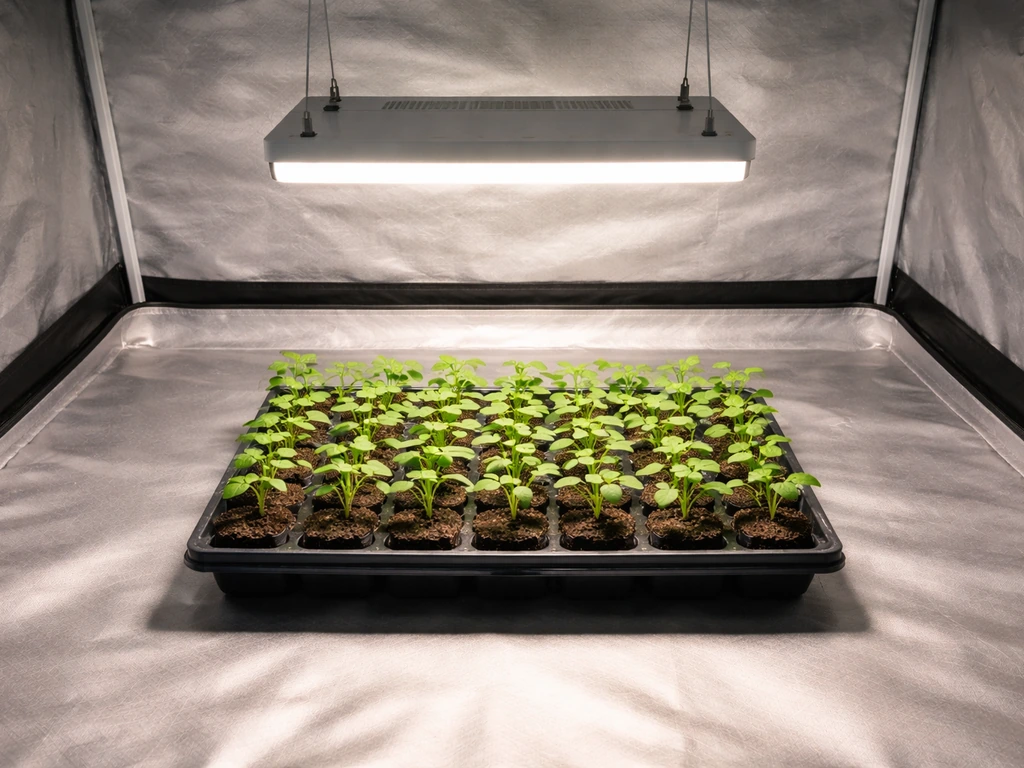
How Long Should Plants Be Under a Grow Light?
Get indoor grow-light timing by plant stage with starter hour ranges and rules to fix under or overlighting.
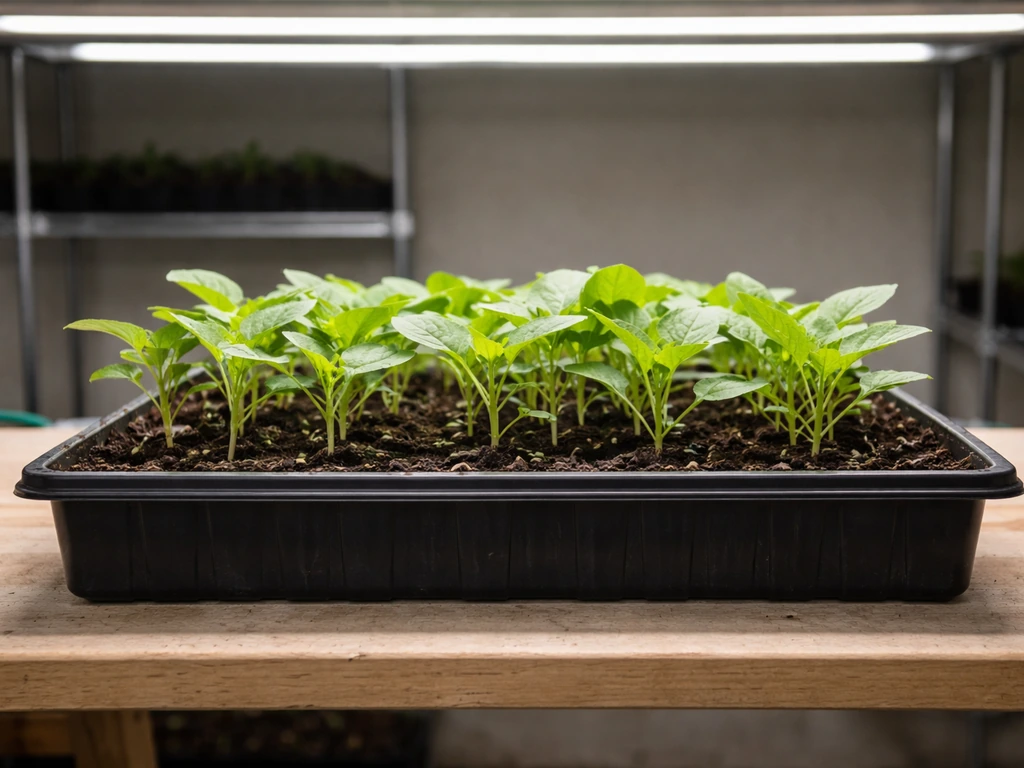
When to Remove Seedlings From Grow Lights: Timing Guide
Move seedlings off grow lights when they have true leaves and sturdy stems, then harden off to avoid legginess.
How Long Should Grow Lights Be On for Seedlings?
Get the right grow light schedule for seedlings, including germination timing, hours to run, and signs to adjust duratio