
Stop using grow lights for seedlings when they have access to enough natural light to sustain healthy, compact growth on their own. That usually means one of three things has happened: your seedlings are ready to move outdoors and have been hardened off, they're getting consistent direct sun through a south-facing window, or they've reached transplant size and will be going into the ground within a week or two. There's no universal calendar date. The right time is based on what your seedlings are doing and what light source they're moving to next.
When to Stop Using Grow Lights for Seedlings Checklist
Marcus Holloway
23 Jun 2026
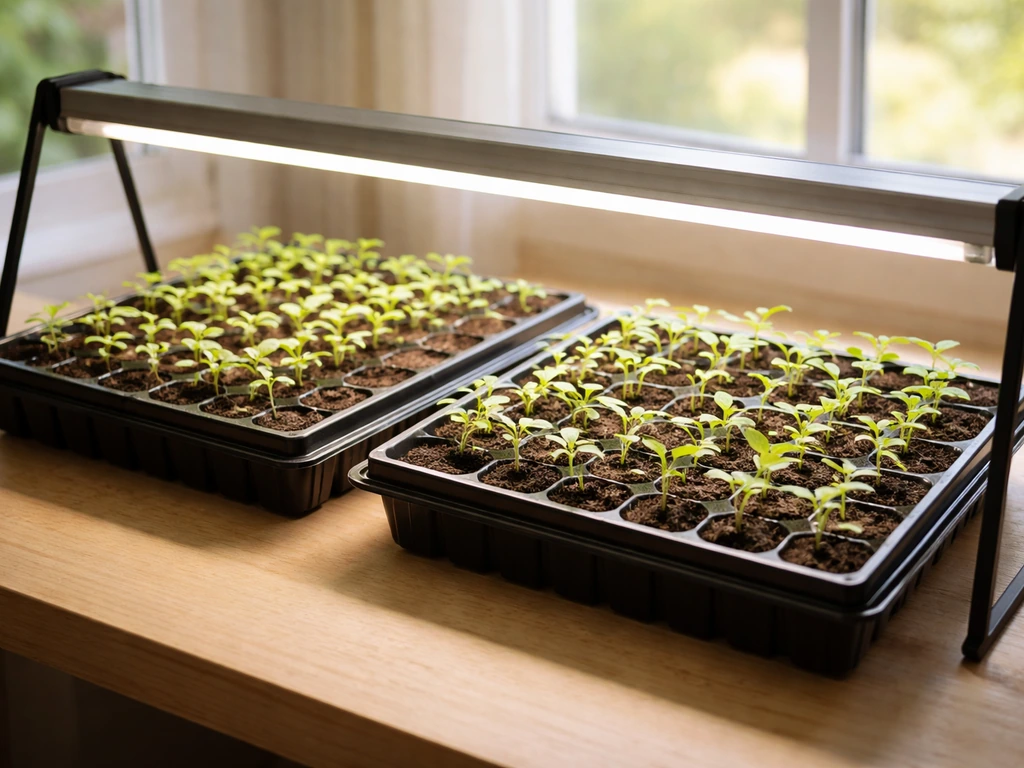
The simple rule: stop when your seedlings have a reliable light source to replace the grow light
Grow lights exist to fill the gap between what a window or the sun can provide and what seedlings actually need. So the question isn't really about age or height. It's about whether the next light source is good enough to keep growth on track. Most seedlings need somewhere between 12 and 16 hours of light per day, and even a decent south-facing window often falls short of that indoors, especially in late winter or early spring. If you need a clear answer for when to turn on grow lights for seedlings, use the specific light needs for your crops and how bright your current window or outdoor light is. Once you're confident that natural light will deliver that consistently, whether through a window during long summer days or direct outdoor sun, you can cut the grow light off.
The practical checklist looks like this: seedlings have two or more sets of true leaves, stems are thick enough to stand on their own, internode spacing is short and compact (not stretched), leaf color is a healthy mid-to-dark green, and you have a confirmed outdoor or window spot that gets real, consistent light. If all of those boxes are checked, you're ready to start the transition.
Signs your seedlings are getting enough light (and signs they're not)
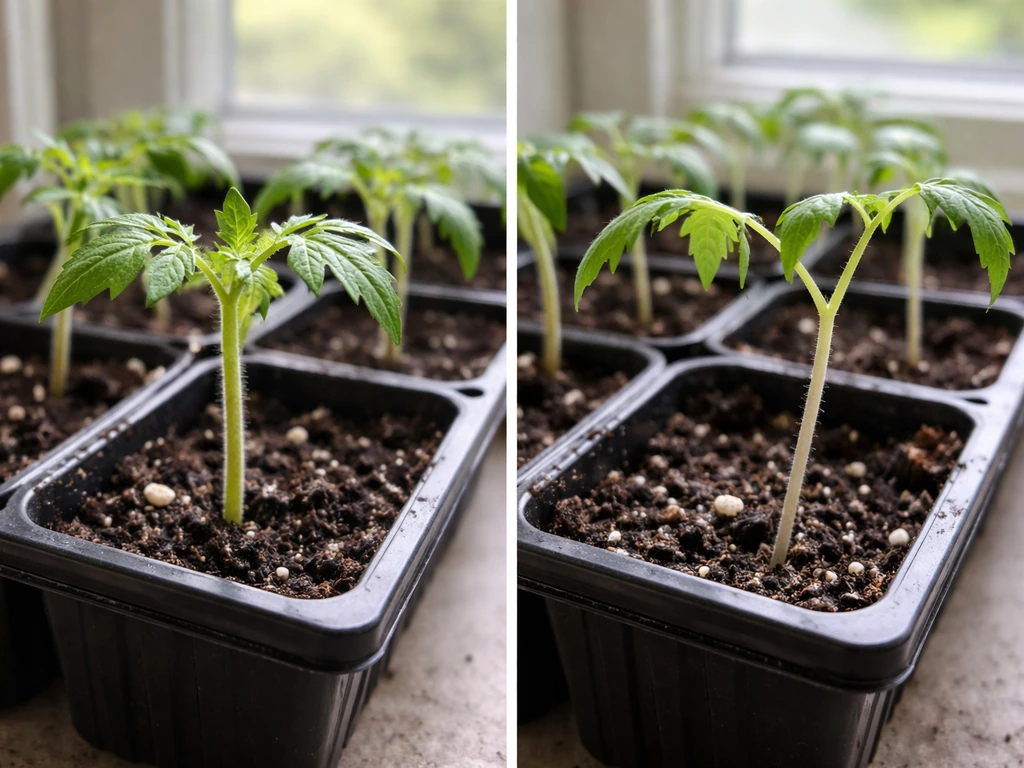
The most reliable way to know a seedling is getting adequate light isn't checking a timer. It's looking at the plant itself. A well-lit seedling looks sturdy and compact. The stem is thick relative to the plant's height, leaves are a rich green, and new growth appears at a steady pace. The nodes (the spots where leaves emerge from the stem) are close together, meaning the plant isn't stretching toward a light source.
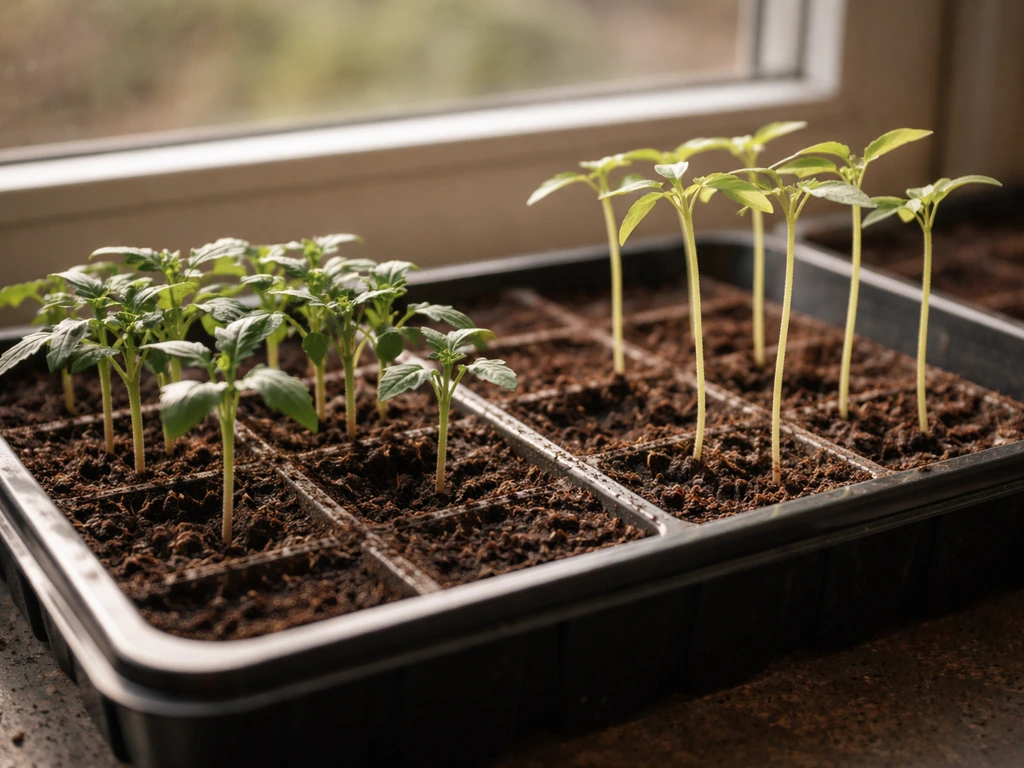
A seedling that's struggling with light tells a different story fast. Pale or yellowing leaves, especially on lower growth, are a common early sign. But the most obvious red flag is etiolation: long, spindly stems with wide gaps between leaves. That stretch happens because the plant is reaching for more light than it's getting. If you're seeing that under a grow light, the light is either too far away, running too few hours, or not bright enough. If you're seeing it after moving to a window, the window isn't cutting it and you need to go back to the light or find a better window.
| Sign | What it means | What to do |
|---|---|---|
| Compact stem, short internodes | Getting enough light | Continue current setup |
| Rich green leaves | Good light and nutrition | On track for transition |
| Pale or yellow-green leaves | Too little light (or nitrogen issue) | Move light closer or increase hours |
| Tall, spindly, stretched stem | Not enough light (etiolation) | Immediate fix needed: lower light, add hours |
| Bleached or white patches on leaves | Light too close or too intense | Raise the fixture a few inches |
| Slow, almost no new growth | Insufficient light or temperature | Check both light duration and room temp |
Timing by growth stage: from germination to transplant
Seeds don't need light at all until they sprout. Once the seed coat cracks and the first cotyledons (those initial seed leaves) push up, the clock starts. From that moment until the seedling has its first set of true leaves, you want the grow light on for 14 to 16 hours a day and positioned close, roughly 2 to 4 inches above the tops of the seedlings for fluorescent or T5 fixtures. This is not the time to be conservative with light.
Once true leaves appear and the seedling is actively growing, you're in the main seedling phase. This runs until the plant reaches transplant size, which varies by species but is usually somewhere between 4 and 8 weeks after germination for most vegetables. Once you are within that transplant window and the seedlings have a reliable next light source, you can remove them from the grow lights and finish the transition when to remove seedlings from grow lights. During this phase, 14 to 16 hours a day is still a solid target. Some sources push higher, with University of New Hampshire Cooperative Extension even recommending up to 22 hours per day for sun-loving plants under fluorescents, though 16 to 18 hours is a practical sweet spot for most home setups. The University of Vermont Extension recommends seedlings get 16, 18 hours of light per day and using adjustable fixtures so you can change the light distance as plants grow blank" rel="noopener noreferrer">16–18 hours of light per day.
The final phase is the two-week window before outdoor transplanting. This is when you start backing off the grow light intentionally and transitioning to natural light. You don't go cold turkey. More on the exact steps below.
Plant-specific differences worth knowing
Not all seedlings have the same light appetite. Tomatoes, peppers, and most sun-loving vegetables want maximum light right up until they go outside and will show leggy growth quickly if they get shortchanged. Herbs like basil fall in the same camp. On the other end of the spectrum, lettuces, spinach, and cool-season greens are more tolerant of lower light and can often transition to a bright window earlier without drama. If you're starting flowers from seed, annuals like petunias and marigolds want full sun treatment, while others like impatiens can handle less.
How to transition off grow lights without shocking your seedlings
The transition from grow lights to natural light, especially to outdoor sun, is the part where most people mess up. Seedlings grown indoors under artificial light haven't developed the same leaf structure or UV tolerance as plants that have been outside from the start. Put them directly into full outdoor sun and you can literally bleach and sunburn the leaves within a few hours. The fix is hardening off: a gradual, deliberate exposure process that usually takes 7 to 14 days.
- Days 1 to 3: Move seedlings to a sheltered outdoor spot with bright shade or indirect light for 1 to 2 hours, then bring them back inside under the grow light for the rest of their light period.
- Days 4 to 6: Extend outdoor time to 3 to 4 hours, still in indirect or dappled light. You can start reducing grow light hours slightly, dropping from 16 down to 12 to 14 hours.
- Days 7 to 9: Move to a spot that gets some direct morning sun (gentler than afternoon sun) for 3 to 4 hours. Bring in before strong midday sun. Reduce grow light to 8 to 10 hours or skip it on sunny days.
- Days 10 to 12: Increase direct sun exposure to half a day. Grow light is now optional backup for cloudy days or short days.
- Days 13 to 14: Full outdoor sun exposure for most of the day. Grow light off. Plants are ready to transplant.
If you're transitioning to a window rather than outdoors, the same principle applies, just more slowly. Start by putting the seedling near the window with the grow light still running, then gradually shift more of the light load to the window over a week or two. A south-facing window in summer can work well. A north-facing window almost never will, and an east- or west-facing window can work for lower-light plants but will likely leave sun-loving seedlings stretching again.
Light schedule and settings in the final weeks before stopping
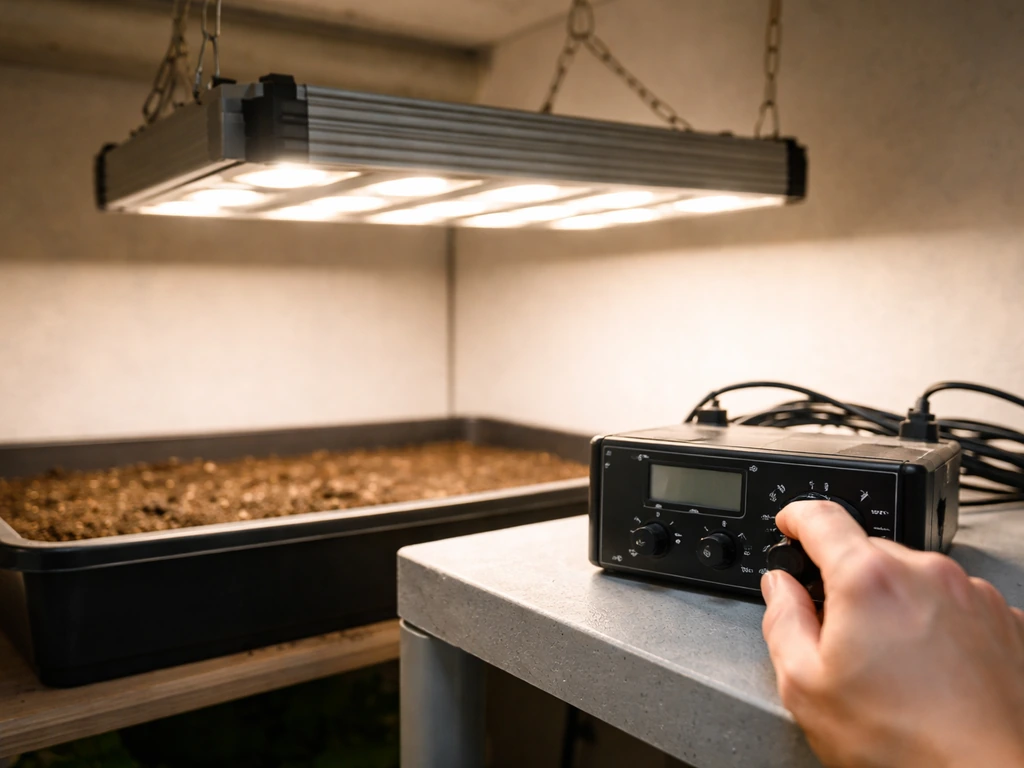
Two to three weeks before you plan to turn off the grow light, start dialing back. If you've been running 16 hours a day, drop to 14, then 12 over the course of a week. If you want a clear answer on how long seeds should be under a grow light, start with the daily schedule used for germination through the early seedling stage, then adjust based on how the plants respond 16 hours a day. This isn't strictly necessary for plant health the way it is for animals, but it prevents you from going from maximum artificial light to zero overnight, which can cause temporary stress responses in sensitive seedlings.
At the same time, start raising the grow light fixture gradually. blank" rel="noopener noreferrer">If you've been keeping fluorescents 2 to 4 inches above the canopy, move them to 6 to 8 inches, then 10 to 12 inches over the final week. This reduces intensity in a way that mimics the lower light of transition, and it gives you a chance to see whether the seedlings respond with any stretching. If you are also wondering how long should plants be under a grow light, the goal is the same: keep them under enough intensity long enough to avoid stretching before you start the transition off the fixture. If they do start to stretch as you raise the light, you know they're not ready to be weaned off it yet.
LED grow lights work the same way but often have dimmer controls, which lets you reduce intensity directly instead of just raising the fixture. If yours has that feature, use it. Dropping intensity by 25 to 30 percent over the final two weeks while simultaneously adding outdoor hardening time is a clean, controlled way to stop.
What to do if you stopped too early (leggy, pale, or stalled seedlings)
If you turned off the grow light and your seedlings start looking worse within a few days, trust what you're seeing. Leggy, stretched growth after a transition almost always means the replacement light source isn't strong enough. The seedling is literally reaching for more light. Pale or yellowing leaves suggest the same thing. These aren't signs of disease or nutrient deficiency in most cases. They're the plant telling you it needs more light immediately.
The fix is simple: put the grow light back on. Don't try to push through it by hoping the plant adjusts. Seedlings at this stage grow fast, which means they can also decline fast. Get the light back on for a week or two, then try the transition again more gradually. This time, extend the hardening-off period and make sure the outdoor or window spot you're moving them to is actually delivering meaningful light, not just ambient brightness.
If leggy growth happened while you were still running the grow light, that's a different problem. The fixture might be too far away or running too few hours. Bringing it back down to 2 to 4 inches and bumping back up to 14 to 16 hours usually fixes it within a week. You can read more about this in a deeper look at why seedlings get leggy under grow lights, which covers the spectrum and intensity side of things in more detail.
A few safety things worth knowing before you shut it all down
If you've been running grow lights in your home and wondering whether they're doing anything to you, the short answer is almost certainly not. Standard LED and fluorescent grow lights used for seedlings don't emit meaningful UV radiation. You won't get a tan from them, and there's no credible evidence they pose a cancer risk from normal indoor gardening use. The light levels are relatively low compared to direct sunlight, and the UV output of most grow lights (especially LEDs and T5 fluorescents) is negligible.
Heat is worth paying more attention to than UV. Older HID (high-intensity discharge) fixtures can run hot enough to dry out seedling trays quickly and stress plants if they're too close. LEDs run much cooler. If your lights feel hot when you hold your hand at canopy level for 10 seconds, they're probably too close regardless of what type they are. The water loss under bright, warm lights is also real, and seedlings under grow lights often need more frequent watering than you'd expect, something worth keeping in mind during the final weeks before transition. Seedlings under grow lights typically need watering more often than you might expect, so check the soil often and water when the top layer starts to dry more frequent watering.
Eyes are worth protecting if you're working close to high-output LEDs for extended periods. A quick look at your plants is fine. Staring directly into a bright LED fixture for minutes at a time isn't a great habit, the same way looking directly at a very bright light of any kind isn't comfortable. Simple UV-protective glasses solve this if you're doing extended adjustments or photography near the light. For casual daily checking, it's a non-issue.
The short version if you want a quick reference
- Stop grow lights when seedlings are moving to a light source that delivers at least 12 to 16 hours of good direct or bright indirect light per day.
- Don't stop abruptly: spend 7 to 14 days hardening off before full outdoor exposure or final light removal.
- Watch for compact growth, thick stems, and rich green leaves as your readiness signals.
- Leggy or pale growth after stopping means the replacement light isn't enough. Go back to the grow light and try again more gradually.
- Reduce grow light hours and raise the fixture (or dim it) over the final 1 to 2 weeks before fully stopping.
- Windows alone often aren't enough for sun-loving seedlings like tomatoes and peppers unless they're getting 6 or more hours of direct sun per day.
- Grow lights used for seedlings are safe for home use. Heat management and consistent watering matter more than UV concerns.
FAQ
How can I tell if my “window light” is really strong enough before I turn the grow lights off?
Before you stop the grow light, confirm your replacement light source delivers direct sun, not just room brightness. A quick check is to hold your hand where the seedlings sit, if you cannot feel meaningful warmth or see crisp shadows when the sun is out, the window may not be strong enough and the seedlings will likely stretch within days.
What should I do if my seedlings are not fully ready but I think I need to stop the lights soon?
Do not stop all at once if you still have any sign of stretching, slow growth, or pale lower leaves. Instead, either keep the grow light running at a reduced schedule (for example, cut the hours gradually) or raise it less aggressively, then re-evaluate after 5 to 7 days to avoid a setback right before transplant.
Can I stop grow lights early if seedlings seem “almost” ready, and how do I recover if it goes wrong?
Yes, and it is often necessary for sensitive crops. If you are seeing etiolation during the first few days after turning lights off, the fastest remedy is to restart the light, return it to the correct height, and then restart hardening with smaller reductions (smaller day-to-day changes and longer overall transition).
Does it change when to stop grow lights if I’m hardening off outdoors in shade first?
If you are moving to outdoor shade first, you can usually shorten grow light time compared with jumping straight to full sun, because bright shade is a middle step. Still, use plant response, not the calendar, and keep the grow lights on until new growth remains compact and the next leaf set keeps its color.
If I only have a north-facing window, when should I stop using grow lights?
Yes, especially with different orientations and seasons. North-facing windows are typically too weak for many sun-lovers, so you may need to extend grow light use longer or choose an east or west window that gets stronger morning or afternoon sun, then continue gradual weaning.
My seedlings look pale after I dialed back the light, is that nutrient deficiency or light shortage?
If you are seeing pale or yellowing leaves after reducing light, treat it as a light shortage until proven otherwise. Then check the fixture height and schedule, because many people lower intensity without realizing they also reduced total effective hours, leading to rapid, visible decline.
Is it better to reduce hours or reduce intensity when preparing to stop grow lights?
For most home setups, the safer approach is to keep lighting timed consistently so the seedlings get a predictable daily total, then adjust gradually before removing the fixture. Turning lights completely off overnight can add stress during the transition, especially for plants already showing minor stretching.
Can temperature or home lighting changes make me turn off grow lights too early?
Yes. If you use blackout curtains, strong blinds, or run air conditioning that cools trays near the fixture, the effective “window light” and growth rate can drop even if the seedlings look fine one day. Recheck after any changes in your home conditions, and restart gradual hardening if growth slows or stems begin to elongate.
What are the best signs that it is time to stop the grow lights even if seedlings look healthy right now?
If your seedlings are under grow lights but you do not see leggy growth, you still might be running more than enough, but you should only stop when the next environment supports the required daily light. Watch specifically for node spacing tightening and steady new growth after you begin the transition.
If my seedlings are leggy, can more watering or fertilizer fix the problem enough to stop grow lights?
No, not for the purpose of stopping them from stretching. Plants can show improved color briefly if you correct watering, but etiolation and long internodes reflect insufficient light intensity and or duration. Water adjustments help, but they do not replace missing light when deciding when to turn the lights off.
Next Articles
How Long Should Seeds Be Under a Grow Light? Daily Schedules
Get exact daily hours for grow lights on seeds and seedlings, plus timing tweaks, intensity checks, and troubleshooting.
When to Turn On Grow Lights for Seedlings: Schedule
Know exactly when to start grow lights for germination and seedlings, set daily hours, adjust height, and fix leggy or s
How Long Should Plants Be Under a Grow Light?
Get indoor grow-light timing by plant stage with starter hour ranges and rules to fix under or overlighting.