
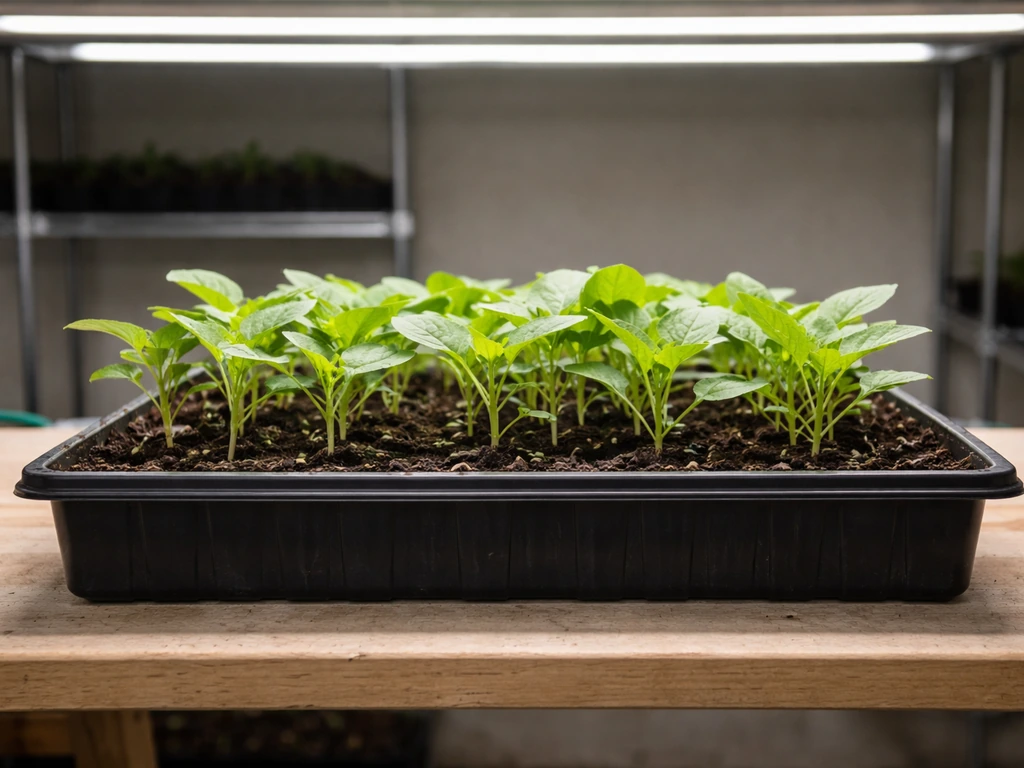
Once your seedlings have developed their first set of true leaves and are standing 3 to 4 inches tall with thick, green stems, they're ready to come off the grow light or move to a lower-intensity setup. For most vegetables and herbs started indoors, that window falls somewhere between 3 and 6 weeks after germination. You don't need to count down to an exact day though. The plant will tell you when it's time, and a few visual checks will make the call obvious.
When to Remove Seedlings From Grow Lights: Timing Guide
Marcus Holloway
21 May 2026
When seedlings are actually ready to leave the grow light
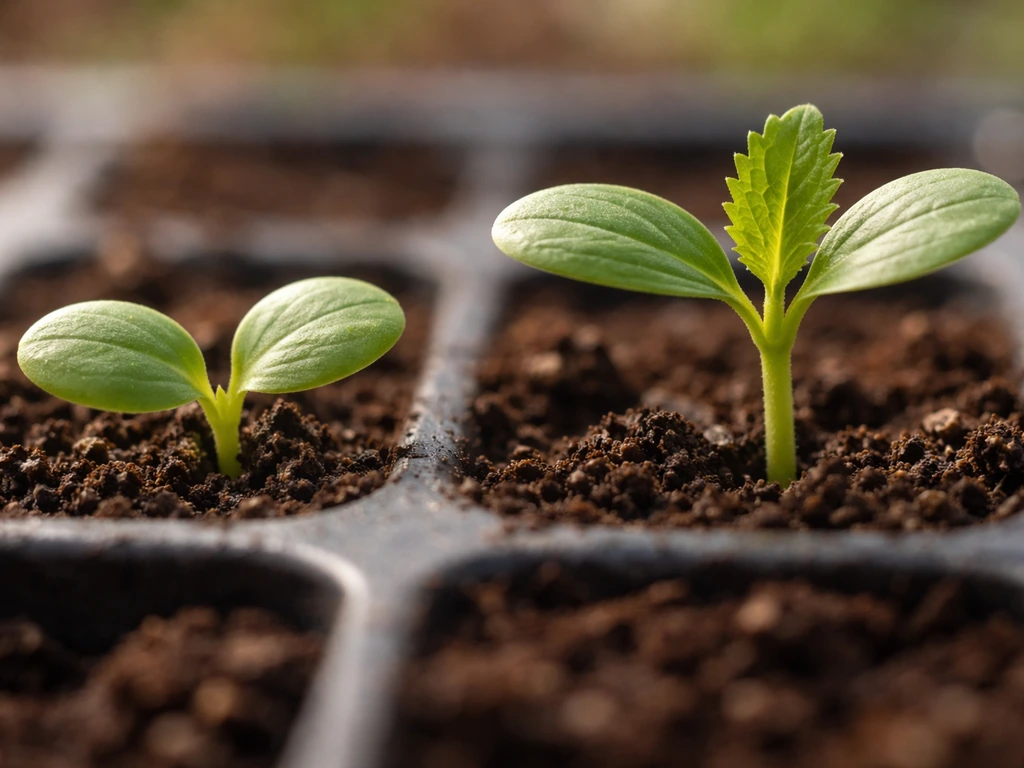
The clearest signal is true leaves. Seedlings first push out cotyledons, which are those small, rounded starter leaves that look almost identical regardless of species. True leaves come next, and they actually look like the plant. When you see that first set of true leaves fully open between the cotyledons, you're at the minimum threshold for transitioning off the grow light setup. UNH Extension calls this the ideal transplant timing, and the logic applies here too: staying in the seedling stage longer than necessary is when leggy, stunted growth starts creeping in.
If you're starting vegetables like tomatoes, peppers, or basil and plan to move them outdoors eventually, the grow light's job is essentially done once those true leaves are established and the stem looks sturdy. From there, the transition is about reducing dependence on the artificial light gradually, not shutting it off overnight.
What to look for: signs they're ready vs. signs to keep the light on
Use this as a quick checklist before you make the call. If most of the "ready" signs match, it's time. If you're seeing the "keep the light" signs, hold off and troubleshoot first.
| Sign | What it means | Action |
|---|---|---|
| First true leaves fully open | Seedling has moved past the cotyledon stage | Start transition off grow light |
| Stem is thick and stands upright on its own | Seedling has received enough light and is structurally sound | Ready to reduce light duration or intensity |
| Deep green color throughout | Healthy chlorophyll production, no nutrient or light stress | Proceed with transition |
| 3 to 4 inches tall, compact growth | Good light delivery, not stretching for more | Safe to begin hardening off |
| Pale green or yellow lower leaves | Light or nitrogen stress, not yet stable enough | Keep light on, check intensity and distance |
| Thin, floppy, elongated stem (leggy) | Not enough light delivered during growth | Increase intensity or duration before transitioning |
| Slow or stalled growth after true leaves appear | Could be low DLI, low temps, or overwatering | Diagnose before removing grow light support |
Age and photoperiod: what the timing actually looks like
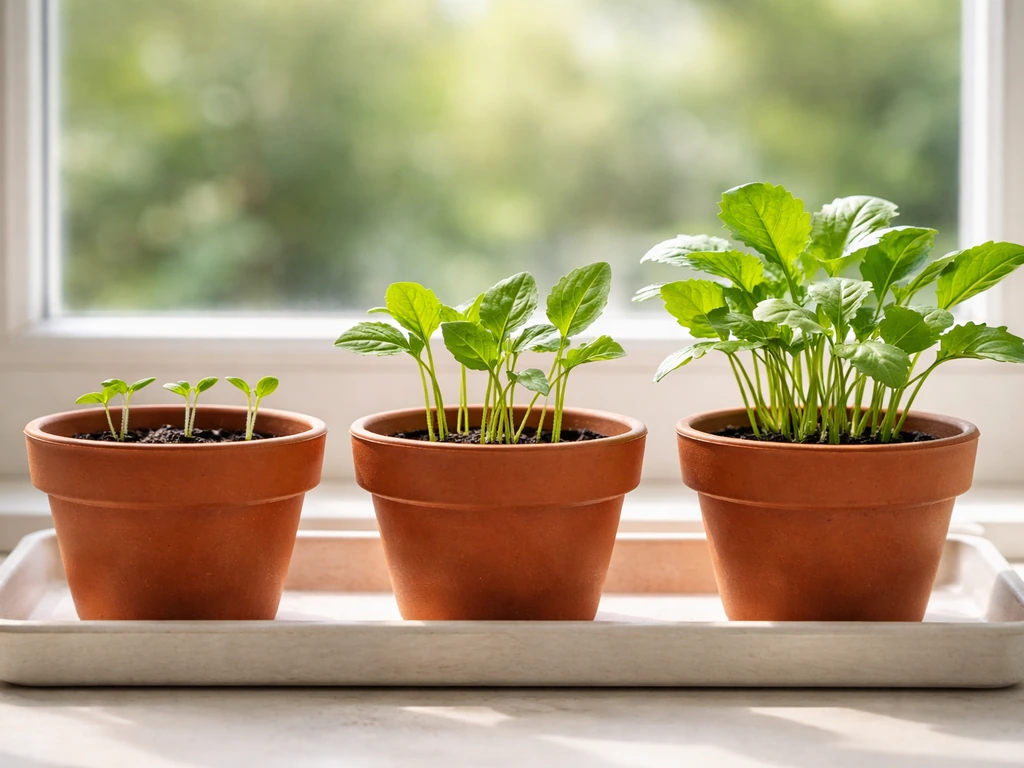
Most vegetable seedlings hit the true-leaf stage somewhere between 3 and 6 weeks from germination, depending on the species and how well you've managed temperature and light. Tomatoes and peppers tend to be on the slower end. Lettuce, herbs, and brassicas move faster.
During the seedling phase, you want to run the grow light for 14 to 16 hours per day. A common starting point is to keep the grow lights on for 14 to 16 hours each day while seedlings are building their first true leaves 14 to 16 hours per day.
Multiple extension programs, including UMN and UNH, land on this same range for good reason: it's enough to fuel strong growth without pushing plants into the kind of stress that comes from running lights around the clock. Once true leaves are established and you're entering the pre-transplant phase, you can start tapering the photoperiod down toward 12 hours as part of the transition process.
If you want specific timing, focus on the first true-leaf stage and start tapering the photoperiod before fully removing the light.
One thing worth understanding is that duration and intensity work together. UNH Extension’s fact sheet emphasizes using delivered light integral (DLI) as the decision rule, so reducing time under lights only works if the daily light integral stays high enough to protect growth quality.
A weaker grow light needs more hours to deliver the same total light energy (called DLI, or daily light integral) that a stronger light delivers in fewer hours. If you are trying to figure out how long seeds should be under a grow light, use your light strength and distance to estimate the hours needed to reach an adequate daily light integral DLI, or daily light integral.
UNH Extension points out that a tomato seedling might fill its light needs in about five hours under full sun, but could need 22 hours under a weak fluorescent tube. If you've been running a basic shop light for 14 hours and your seedlings look pale or stretched, they may still be light-starved even though the timer is set correctly.
How to transition seedlings off grow lights without stressing them
Going straight from 16 hours of grow light to a windowsill is a shock to the plant, even if the windowsill gets decent sun. Think of it like going from a heated office to standing outside in April. The shift needs to be gradual.
- Start by reducing your grow light photoperiod by 2 hours every 2 to 3 days. If you're running 16 hours, drop to 14, then 12, over about a week.
- Simultaneously, begin introducing the seedlings to ambient light from a bright window for short periods. An hour or two near a south-facing window is a good starting point.
- Watch the plants closely for 48 hours after each change. Pale new growth, drooping, or sudden leaf curl means you moved too fast.
- If you're eventually moving seedlings outdoors, Penn State Extension's guidance on hardening off applies here: start with 30 to 60 minutes of gentle outdoor light and build up over 7 to 10 days before full outdoor exposure.
- Once the seedlings are spending most of the day in natural light without stress symptoms, you can turn the grow light off completely.
The whole process doesn't need to be complicated. Most healthy seedlings handle the transition well over 7 to 14 days if you don't rush it. The plants that struggle are usually the ones that were already borderline before the lights came off.
Your light setup affects when you can make the move
Not all grow light setups deliver the same results, and the details of your setup directly affect how ready your seedlings are when you're thinking about transitioning them off. Two things matter most: how close the light is to the plants, and how many hours it runs.
For basic fluorescent or T8 shop lights, keep them within 12 inches of seedling tops. Any further and you're not delivering enough light intensity, and the plants will stretch toward the source. UNH Extension is specific about this: to hit a useful DLI for sun-loving seedlings under T8 shop lights, you need to keep the lamp less than one foot from the tops of the plants and run it for around 22 hours a day. That's a long photoperiod, but it reflects how low-output those fixtures are compared to proper grow lights.
If you're using a dedicated LED grow light, the intensity is usually higher, and 14 to 16 hours at the recommended hanging height (typically 18 to 24 inches for seedlings, depending on the fixture) will do the job. UMN Extension suggests targeting roughly 150 to 250 µmol·m⁻²·s⁻¹ of PPFD for seedlings, which is a moderate light level that supports growth without burning tender tissue. If your light has a dimmer or intensity setting, that's a useful tool for tapering down before you remove the light entirely.
If you're not sure how your setup is performing, check the seedling stems. Compact, thick, dark green growth means the light is working. Thin, pale, reaching growth means something is off, and you should fix the distance, duration, or intensity before thinking about removing the light.
When seedlings look off: leggy, pale, or stuck
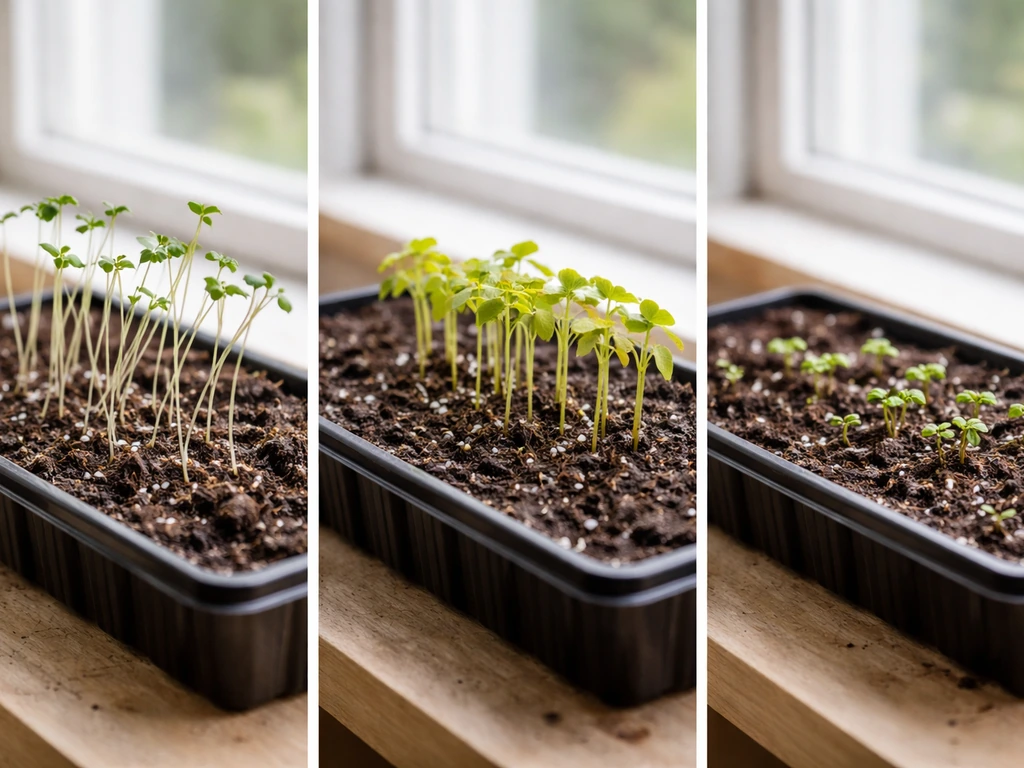
These are the three problems that show up most often, and they almost always point back to light delivery before you start blaming anything else.
Leggy seedlings
Long, thin stems that flop over are the classic sign of insufficient light. The plant is stretching toward whatever light it can find. UMN Extension describes this plainly: when plants lack light, they turn pale and become leggy. If this is happening, don't remove the grow light yet. Move the light closer (staying within the safe distance for your fixture), add a couple of hours to the daily photoperiod, or upgrade to a higher-output fixture. Once you see compact new growth coming in, then you're back on track for transitioning.
Pale or yellowing seedlings
Pale green or yellow coloring, especially in older lower leaves, can mean insufficient light, nitrogen deficiency, or both. UMN Extension notes that lower leaves fading to pale yellow along with thin stems and slow growth often points to nitrogen stress, but low DLI makes the problem worse. MSU Extension research confirms that growing seedlings under a DLI below 10 mol/m²/day significantly reduces plant quality. Before pulling the light, try adjusting its position and confirming you're running it long enough each day. If the color problem persists after a week of corrected light exposure, a diluted liquid fertilizer dose may help, but go light since seedling roots burn easily.
Stalled or slow growth
If seedlings just seem stuck and aren't progressing toward true leaves at a normal pace, check temperature first (seedlings like 65 to 75°F), then check moisture levels (overwatering is common), and then re-evaluate light. University of Maryland Extension flags the habit of trying to "hold back" seedlings under poor light as a real problem: low-light conditions don't pause growth, they degrade quality. Leaving seedlings under inadequate lighting for too long produces weaker plants that struggle after transplanting.
After the grow light comes off: making sure they're still getting enough light
Once you've transitioned seedlings away from the grow light, the work isn't over. Most indoor window setups deliver significantly less light than even a modest grow light, so you need to be intentional about where the plants end up.
A south-facing window is your best option indoors in the northern hemisphere. East- or west-facing windows can work for shade-tolerant plants but will be marginal for sun-loving vegetables like tomatoes and peppers. North-facing windows are generally not enough for seedlings that came off a grow light.
Here's how to check if your window light is cutting it after the grow light is gone. Watch the plants for 5 to 7 days and look for these signals:
- Continued steady growth with new leaves unfurling at a consistent pace means the light is adequate.
- Stems starting to lean sharply toward the window means they want more light than they're getting. Rotate the pot daily and consider supplementing with even a couple of hours of grow light if needed.
- New leaves coming in smaller or paler than the old ones is a red flag for insufficient light post-transition.
- No growth at all after 10 to 14 days under window light, combined with pale coloring, means the window alone isn't working and you should bring the grow light back as a supplement.
Also reassess your watering routine after the light comes off. Seedlings under grow lights often need more frequent watering because they dry out faster, so adjust your schedule as conditions change watering routine. Seedlings under grow lights often dry out faster due to the heat and airflow from the fixture. Without that, the soil holds moisture longer and overwatering becomes a more common mistake. Stick your finger an inch into the soil before watering and only water when it feels dry at that depth.
If you're heading toward outdoor transplanting, keep in mind that the hardening-off process (introducing seedlings to outdoor conditions gradually) is a separate step from removing the indoor grow light. Removing the grow light is about reducing artificial light dependence. Hardening off is about preparing plants for wind, temperature swings, and direct sun. Do both, but treat them as distinct stages and don't try to compress them into a single week if you can help it.
FAQ
What if my seedlings still look small, but the cotyledons are starting to look “done”? Should I remove the grow lights?
Don’t remove the lights just because a calendar date has arrived. Use the first fully opened true leaves (between the cotyledons) as the trigger, then confirm the stems are getting thicker and more upright. If stems are still thin or the plants are pale, keep lighting on and troubleshoot distance, photoperiod, or fixture strength first.
Can I remove grow lights early if I’m worried about “too much light” or heat stress?
If you’re seeing leggy growth, pale color, or very slow progress, leaving lights on longer is usually safer than removing them. Make changes in small steps, for example increase daily hours by 1 to 2 and move the fixture closer (within the safe distance for your model) before you taper off.
How fast should I transition if I plan to move seedlings to a windowsill?
Aim for a gradual taper over about 7 to 14 days by reducing photoperiod (example, shifting toward around 12 hours before you fully remove it). Going from long photoperiod under lights straight to a windowsill can cause a noticeable slowdown or wilting even if the window gets decent sun.
If my timer is set correctly (like 16 hours), why would seedlings still stretch?
Not necessarily. A weak or far-hanging light can require far more hours to reach enough daily light integral, so “timer set to 14 to 16 hours” may still under-light the plants. Check stem thickness and color, then adjust either light distance or daily hours based on how the seedlings respond.
Should I remove grow lights at different times for different seedling trays?
Some seedlings can handle the change faster, but the key is whether they are light-ready. If most plants have true leaves that are fully open and new growth is compact, you can taper sooner. If only a few are ready, you can stagger removal by moving the healthiest trays first and keeping the rest on full intensity a few more days.
How can I tell whether my seedlings are being stressed by too little light versus too much light?
If they are burned, your first move is to lower light intensity or increase distance and reduce photoperiod temporarily, because stress from excess intensity is different from stress from too little light. Watch for crisp or bleached spots (more typical of too much intensity) versus pale, stretched growth (more typical of too little light).
After I remove the grow lights, how long should I wait before deciding it was a mistake?
Use the first true-leaf stage for timing, but still verify with a quick 5 to 7 day check after removal. If the seedlings become paler, stretch again, or stall, the window likely isn’t delivering enough light, so reintroduce grow lighting or move them to a brighter window/location.
If seedlings look pale when I taper lights, should I fertilize right away?
Seedlings rarely need any “feeding” decision solely to justify keeping lights on or removing them. If color is pale after you correct light delivery for about a week, then consider a diluted liquid fertilizer approach, because nutrient uptake depends on light and overfertilizing can harm tender roots.
Does removing grow lights count as hardening off?
Don’t combine hardening off and removing grow lights into one step. Removing the artificial light reduces total light and is about light dependence, while hardening off gradually prepares seedlings for wind, temperature swings, and direct sun. You can do both, but treat them as separate schedules.
Can I taper down using a dimmer instead of shortening the daily light hours?
Yes, but it depends on your goals and fixture capability. Many LED systems support tapering using the dimmer, which can be smoother than changing distance. Taper by lowering intensity or photoperiod first, then remove entirely once true leaves are established and the seedlings respond with compact new growth.
Next Articles
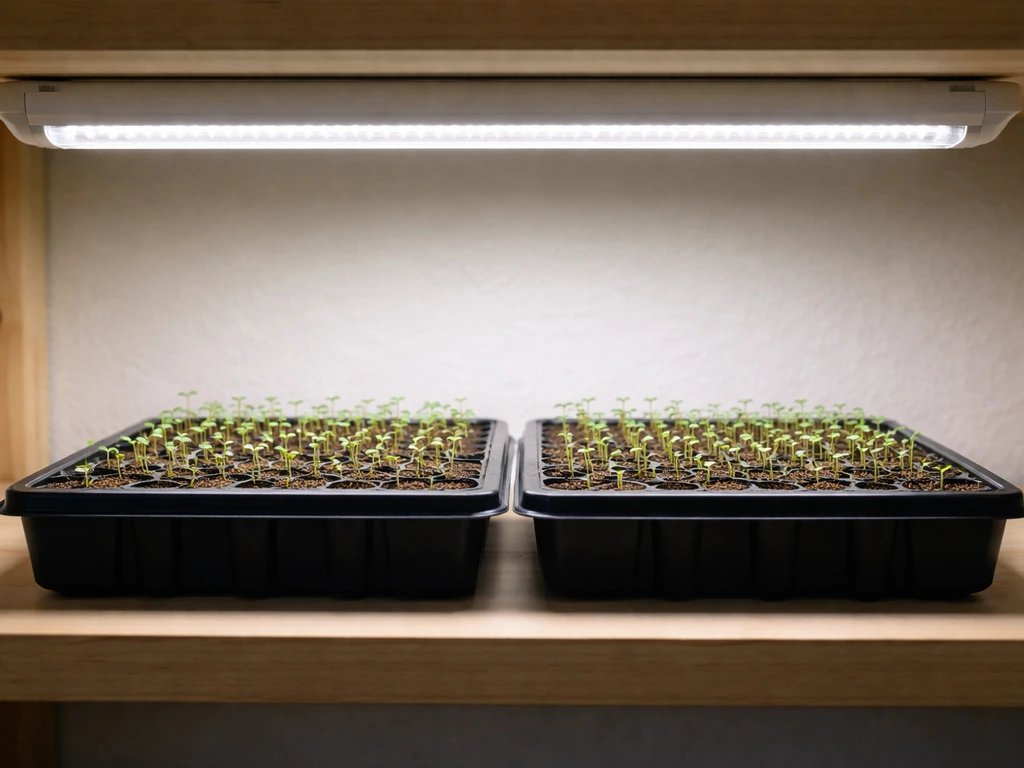
How Long Should Grow Lights Be On for Seedlings?
Get the right grow light schedule for seedlings, including germination timing, hours to run, and signs to adjust duratio
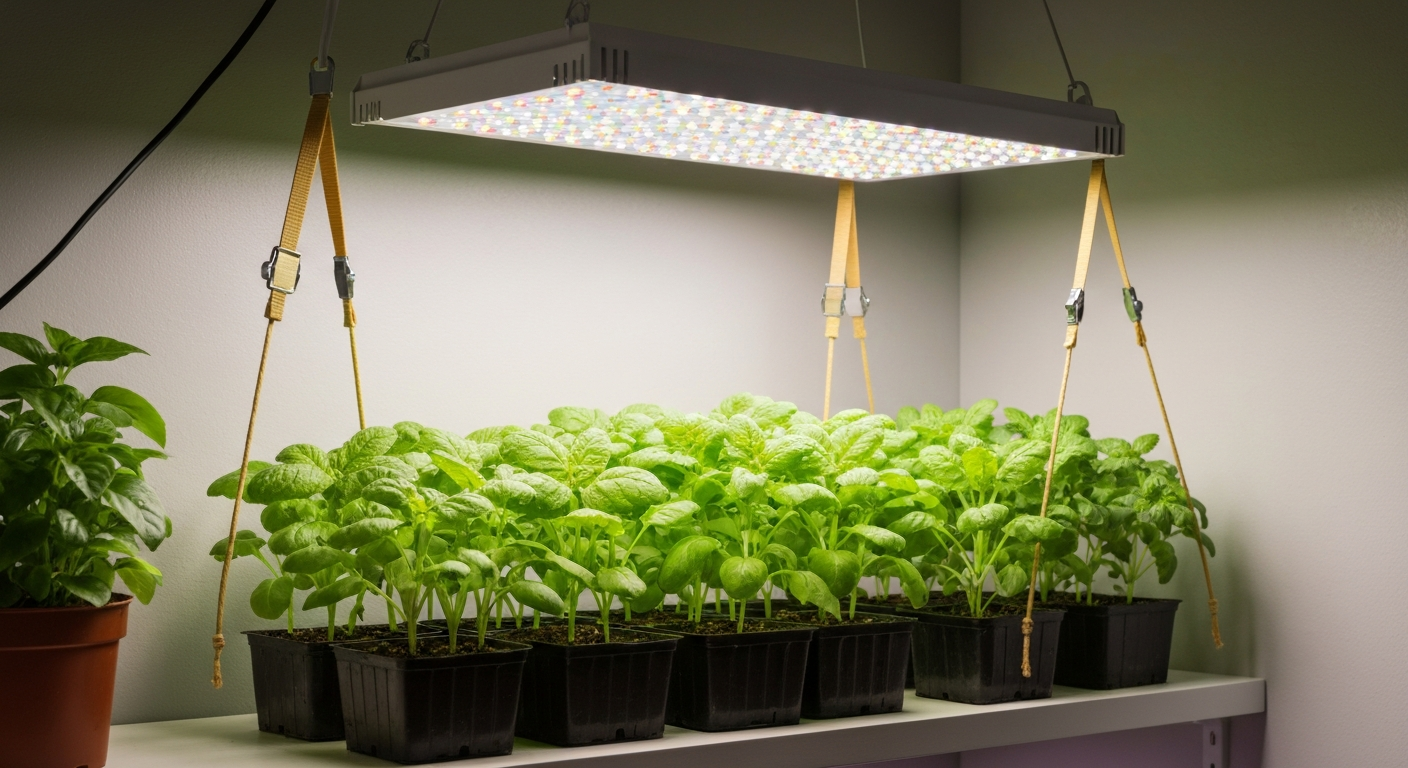
What Artificial Light Will Grow Plants: Best Lights Guide
What artificial light will grow plants: practical guide to LED, CFL, HID spectra, PPFD targets, setup, cost & tips.
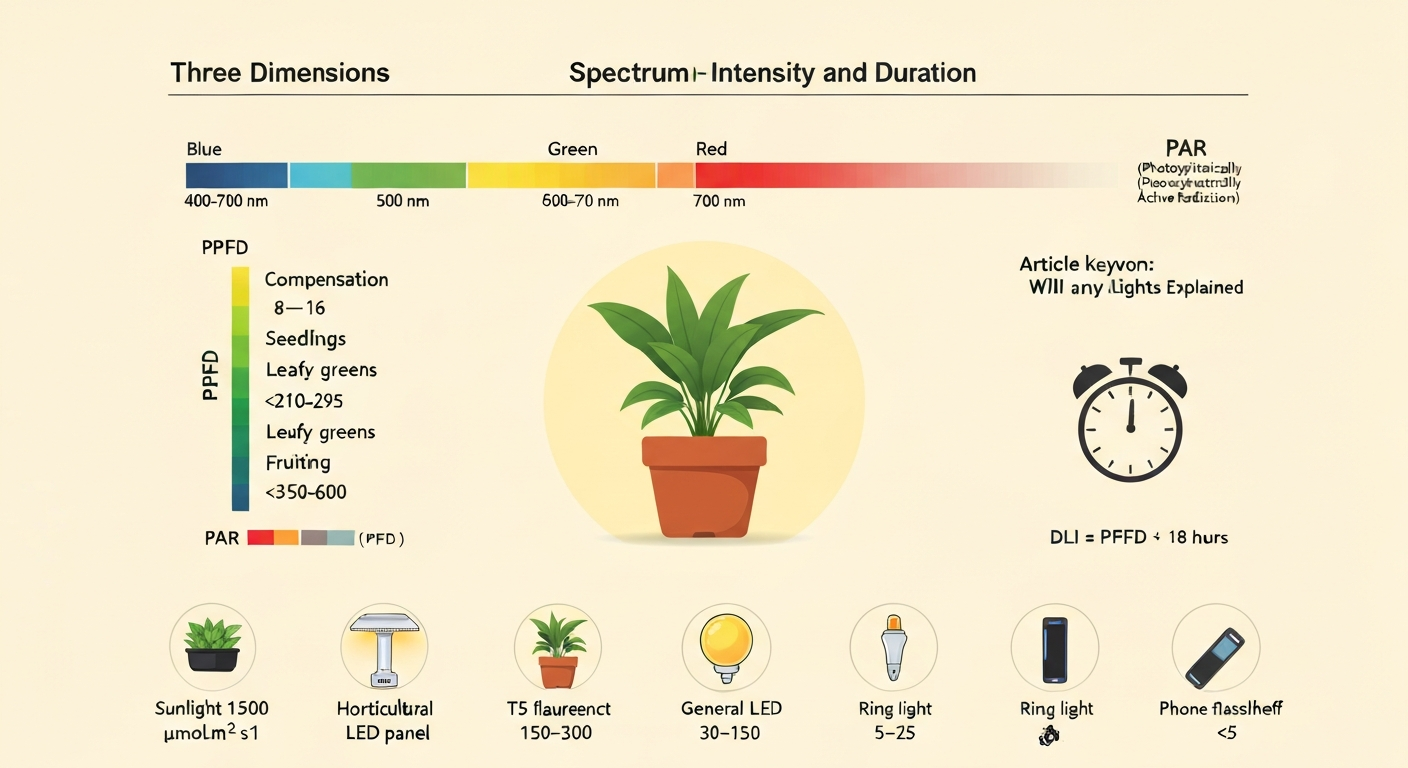
Will Any Light Grow Plants? Guide for Indoor Growers
Can any light grow plants? Clear yes/no, science-backed light specs, setup tips, and which household lights work.