Plants need light in the 400–700 nm range, which scientists call photosynthetically active radiation (PAR). Plants use light mainly in the 400, 700 nm photosynthetically active radiation (PAR) range when photosynthesizing (leiweb.
What Type of Light Do Plants Need to Grow Indoors
Marcus Holloway
28 May 2026
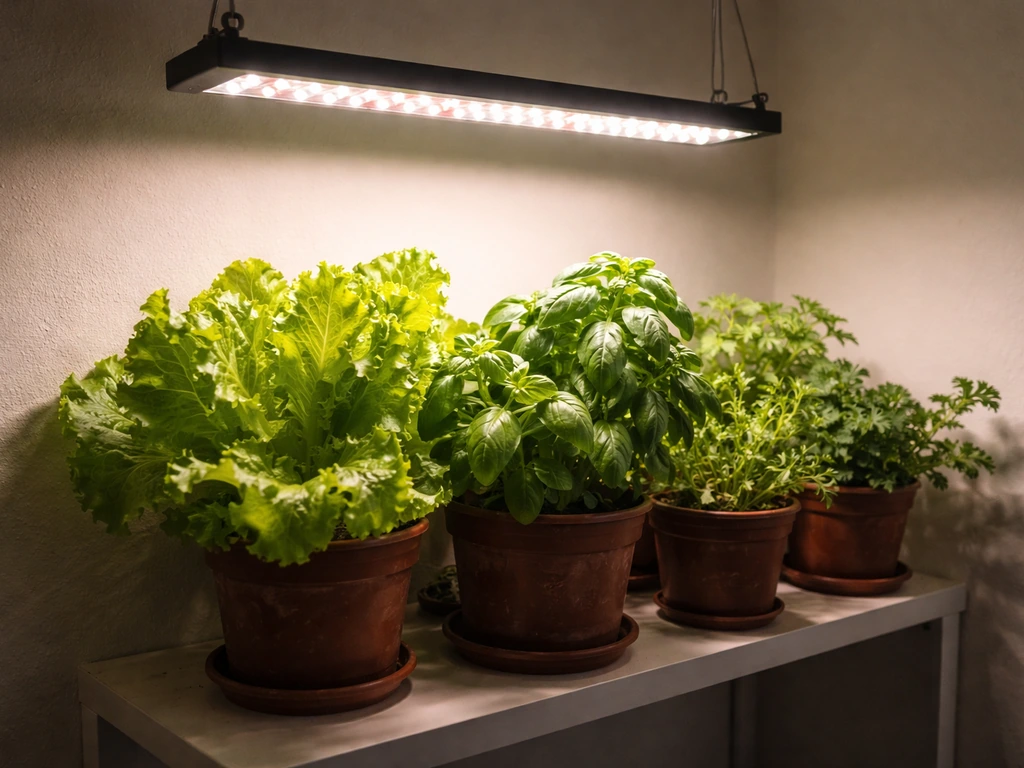
org). Within that range, blank" rel="noopener noreferrer">blue light (roughly 400–500 nm) drives leafy, compact growth, and red light (roughly 630–700 nm) triggers flowering and fruiting. For most indoor gardeners, a full-spectrum LED grow light that covers both ends does the job for almost any plant, any goal. If you are wondering what artificial light will grow plants, start with a full-spectrum LED that covers the full PAR range and provides the right daily timing.
If you want a one-sentence shopping answer: get a full-spectrum LED, hang it 12–24 inches above your plants, and run it 14–16 hours a day for seedlings or 10–12 hours for established houseplants.
What plants actually need from light
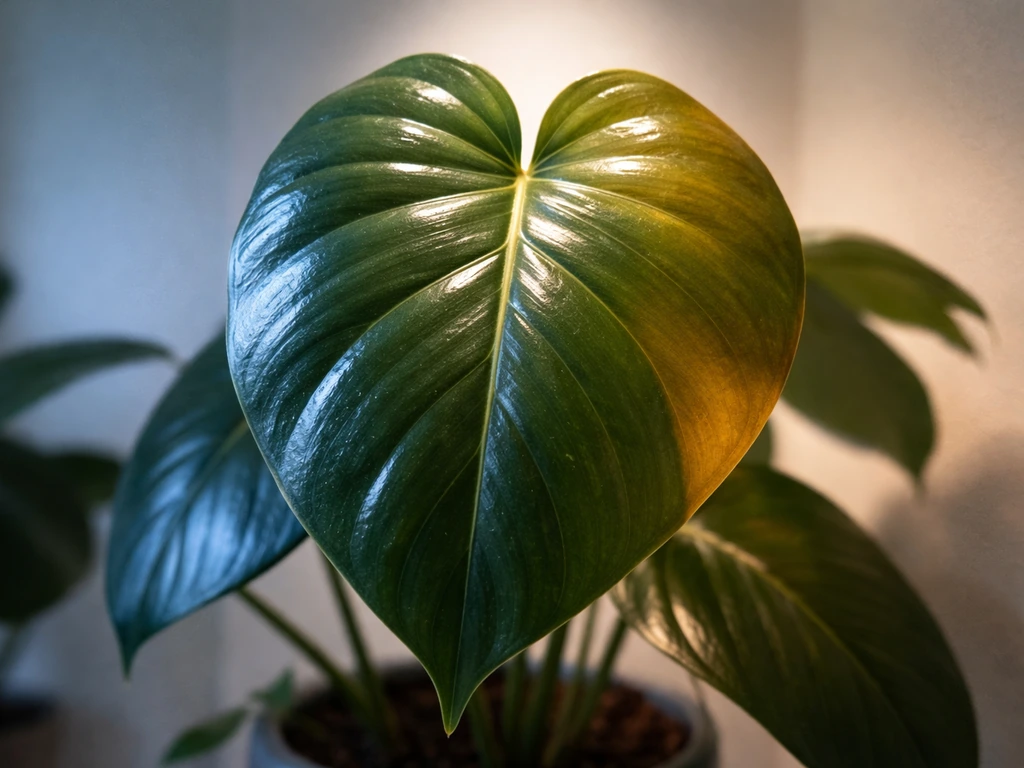
A plant does not care whether light comes from the sun or a bulb. A plant growth light can work for almost any indoor setup as long as you match the spectrum, intensity, and timing to your plants grow light. What it cares about is the right wavelengths hitting its leaves in enough quantity and for enough time each day. Three things matter: spectrum (which wavelengths), intensity (how much light energy), and duration (how many hours). Get all three roughly right and your plant grows. Miss one badly and it struggles regardless of the others.
Most houseplants, herbs, and vegetables need somewhere between 8 and 16 hours of light per day depending on the species. Low-light plants like pothos or snake plants sit at the lower end. Fruiting crops like tomatoes or peppers push toward the top. The key is consistency. A plant that gets 14 hours of good light every day beats one that gets 18 hours some days and 6 on others.
The light spectrum: blue, red, and why full-spectrum works
Plants have dedicated photoreceptors tuned to different parts of the light spectrum, and understanding them makes choosing a grow light much less confusing. Cryptochromes and phototropins are blue-light receptors that absorb light roughly between 400 and 500 nm. A plant photoreceptor mapping approach quantifies major photoreceptors using spectral bands and defines wavelength segments for blue (400, 500 nm), red (600, 700 nm), and far-red (700, 800 nm) [photoreceptor wavelength segments for blue, red, and far-red](https://pmc. ncbi.
nlm. nih. gov/articles/PMC7285096/). They control things like how leaves orient themselves toward light, how stems elongate (or don't), and how the plant manages its internal clock.
Phytochromes detect red and far-red light, roughly 630–750 nm, and regulate flowering, seed germination, and how a plant responds to shade. Both families of receptors need to be satisfied for a plant to develop normally.
That explains why old-school grow lights often looked purple or pink. They combined a spike of blue LEDs with a spike of red LEDs to hit both photoreceptor groups cheaply. It works, but it is not the only way. Modern full-spectrum LED grow lights emit a broad, white-looking light that covers the whole PAR range, including blue, green, and red. They tend to be less efficient watt-for-watt than a tuned blue-red light, but they are easier to live with, better for inspecting plant health (you can actually see what color your leaves are), and they cover any plant type without guessing.
Blue-heavy light is ideal when you want compact, bushy growth and healthy foliage. Think seedlings, herbs, and leafy greens. Red-heavy light pushes plants into flowering and fruit production, so it matters more during the reproductive stage. Far-red light (700–750 nm) is a bonus rather than a requirement for most home growers. It can speed up flowering and improve light penetration through a canopy, but standard full-spectrum LEDs provide enough of it that you do not need to shop specifically for it unless you are running a serious indoor garden.
Which grow light type should you actually buy
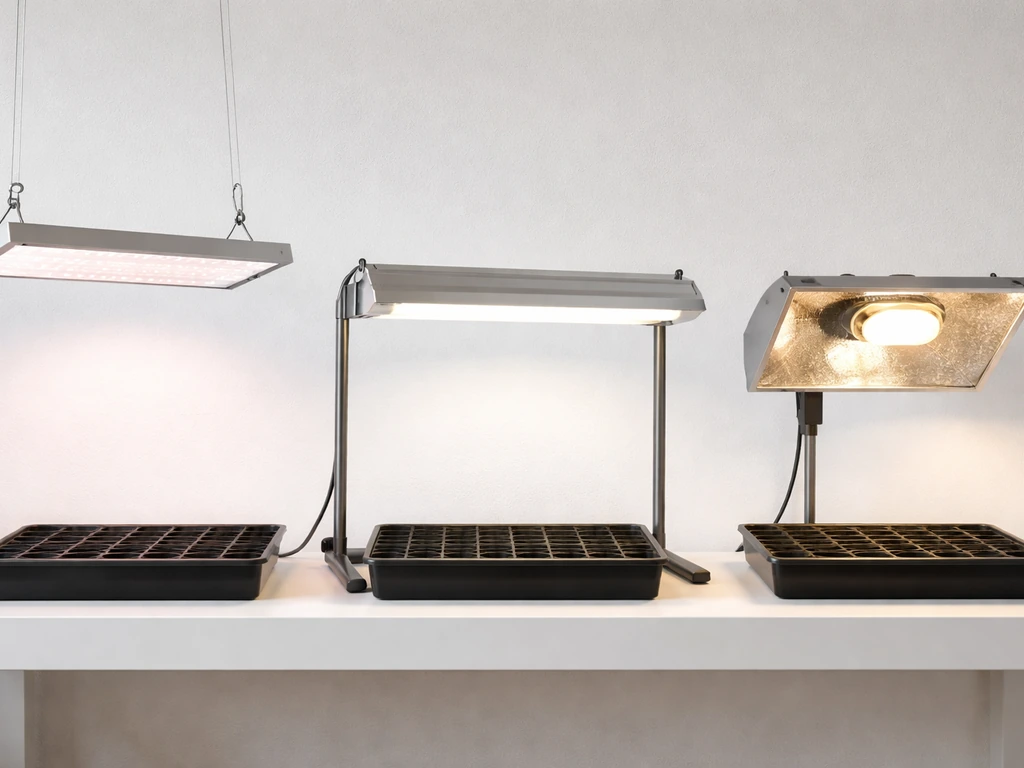
There are three main categories worth knowing about. LEDs dominate the current market for good reason. Fluorescent and CFL lights are older but still useful in the right situation. HID lights (high-intensity discharge, including metal halide and high-pressure sodium) are mostly for serious indoor farming and probably overkill for home use.
| Light Type | Best For | Energy Use | Heat Output | Upfront Cost |
|---|---|---|---|---|
| Full-spectrum LED | All-purpose, any plant, any stage | Low | Low | Medium to high |
| Blurple LED (blue+red) | Budget growth, herbs, seedlings | Low | Low | Low |
| T5/T8 Fluorescent | Seedlings, low-light plants, cuttings | Medium | Low-medium | Low |
| CFL (compact fluorescent) | Single plants, small spaces, seedlings | Medium | Medium | Very low |
| HID (metal halide / HPS) | Large indoor grows, fruiting crops | High | High | High |
For most people reading this, a full-spectrum LED panel or bar light is the right answer. They run cool, use less electricity than fluorescent or HID, last 50,000 hours or more, and work across every growth stage without swapping bulbs. Brands like Mars Hydro, Spider Farmer, and Viparspectra make reliable entry-level panels in the $50–$150 range that handle a 2x2 or 2x4 foot growing area without issue. If budget is the main constraint, a T5 fluorescent shop light ($20–$40) does a solid job for seedlings and herbs, even if it is less energy-efficient long-term.
Picking the right light for your plant and your goal
The single most important question to ask before buying is: what are you trying to grow, and what stage is it in? If you are wondering what light spectrum weed needs to grow, the answer depends on the wavelengths that drive photosynthesis and the stage of growth. A seedling tray of tomatoes has different needs than a blooming orchid or a collection of low-light tropical houseplants.
- Seedlings and cuttings: prioritize blue-heavy or full-spectrum light, moderate intensity, 16 hours per day. A T5 fluorescent strip or a small LED panel works great here.
- Leafy greens and herbs (basil, lettuce, mint): full-spectrum LED or blue-leaning light, 14–16 hours. These plants are forgiving and rewarding for beginners.
- Fruiting and flowering plants (tomatoes, peppers, cannabis): full-spectrum LED with good red output is important. They need higher intensity too. Look for lights rated for a 2x2 or 3x3 footprint at the wattage specified.
- Tropical houseplants (pothos, philodendron, snake plant): almost anything works. Even a basic CFL or a modest LED can supplement low ambient light in a dark room.
- Succulents and cacti: they want high intensity and blue-spectrum light to stay compact. A strong full-spectrum LED prevents the stretching (etiolation) you get when they don't get enough light.
Intensity matters as much as spectrum for certain plants. A 15-watt LED panel works fine for a single pothos on a shelf, but you'll frustrate yourself trying to flower tomatoes under it. Check the manufacturer's coverage footprint and match it to your growing area. More on this in the setup section below.
Setting up your grow light properly
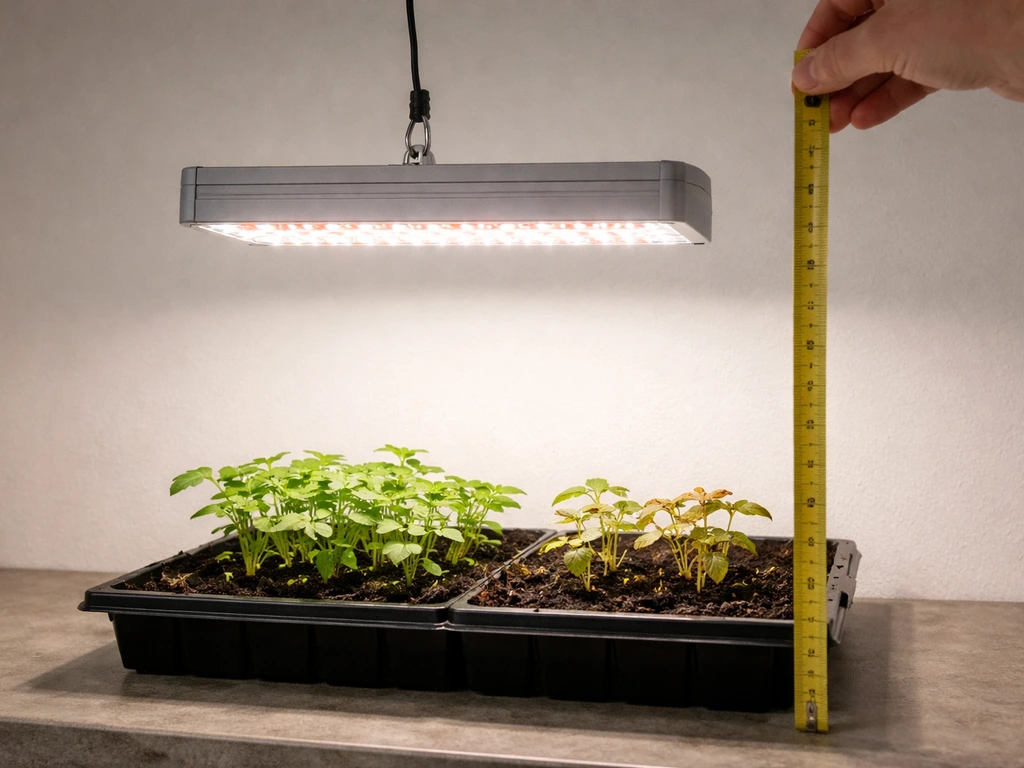
Distance from the plant
This is where most beginners get into trouble. Too close and you burn leaves. Too far and the light is too weak to do much. A good starting rule for full-spectrum LEDs: hang seedlings 18–24 inches below the light, established leafy plants 12–18 inches, and fruiting plants 12–18 inches or per the manufacturer's recommendation. Fluorescent lights can go closer, often 4–6 inches from seedlings, because they produce less intense light. Watch your plants for the first week. Leaf curling upward, bleached patches, or crispy tips mean too close. Stretching stems reaching toward the light mean too far.
Duration and timing
Use a timer. Seriously, it is the best $10 you can spend on your indoor garden. Plants benefit from a consistent photoperiod, meaning the same number of light hours every day. For most plants: seedlings get 16 hours on, 8 off. Leafy greens do well at 14–16 hours. Houseplants typically need 10–12 hours. Flowering plants (especially photoperiod-sensitive ones) need specific timing to trigger bloom, usually 12 hours on, 12 off. Running lights overnight sounds convenient but plants need their dark period. Skipping it causes stress and poor growth.
Intensity and coverage
Intensity is measured in PPFD (micromoles of photons per square meter per second). You don't need to memorize that. A practical shortcut: seedlings and low-light plants want roughly 100–300 PPFD, herbs and leafy greens want 200–400 PPFD, and fruiting plants want 400–800 PPFD or higher. If you are still wondering about brightness, PPFD is the practical way to dial in the intensity. Most LED panels list their PPFD in the specs. If you don't have a meter, use the manufacturer's recommended hanging height as your guide and adjust based on how your plants respond.
What to expect and mistakes that trip people up
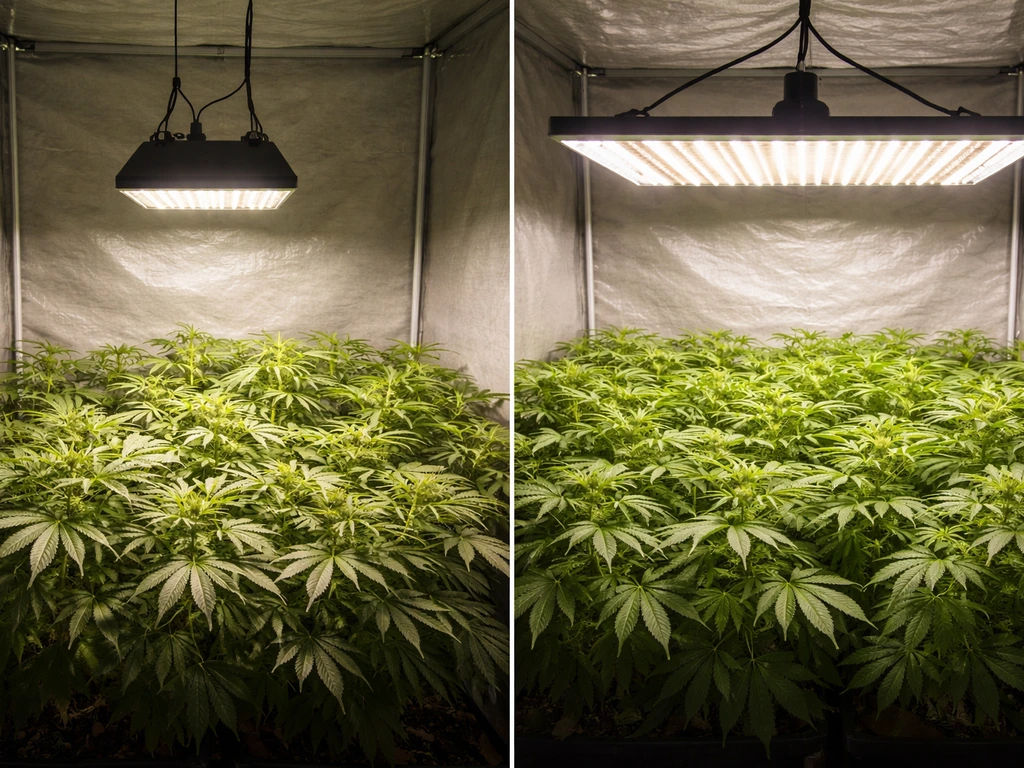
When your spectrum and intensity are right, you will notice compact growth, deep green color, thick stems on seedlings, and (for flowering plants) strong flower development. When something is off, the plant tells you. Leggy, stretched stems reaching toward the light mean not enough intensity or the light is too far away. Yellow leaves can mean too little light or the wrong spectrum. Bleached or burned patches mean too much intensity or the light is too close.
The most common mistake I see is buying a light that is too small for the space and then being disappointed with the results. A 45-watt LED panel from a discount site is not going to flower a 3x3 foot garden of peppers. Match the light to the job. The second most common mistake is inconsistent timing, either forgetting to turn lights off or varying the schedule day to day. Plants are creatures of habit. A timer solves this entirely.
One more thing worth mentioning: not every struggling plant needs more light. Overwatering, root-bound pots, and nutrient deficiencies all produce symptoms that look similar to light stress. Before adding another grow light, rule out the other usual suspects.
Grow light safety and common misconceptions
Grow lights will not give you a tan, and they will not cause cancer. Standard LED grow lights emit light in the visible spectrum (400–700 nm) and some infrared. They do not emit the UV-A and UV-B radiation that causes tanning or DNA damage in skin cells. Some specialized grow lights do include UV output to simulate full sunlight for very specific applications, but these are not standard consumer products and they are clearly labeled. The blurple or white light panel you buy for your herb shelf is not a UV lamp.
That said, staring directly into a bright LED panel is uncomfortable and not a great idea, especially for children. It's the same as staring into any bright light source. A simple rule: don't look directly into the light when it's on at full intensity. If you are working under the lights for extended periods, it's worth wearing sunglasses, not for radiation protection, but simply for comfort.
Heat is worth mentioning too. Modern LED grow lights run much cooler than HID or older HPS systems. Still, any enclosed space with a grow light running for 14–16 hours a day will warm up. Make sure your setup has airflow. Overheating stresses plants just as much as the wrong spectrum, and it can shorten the life of your light. A small fan in the room is usually enough.
Electricity use is real but manageable. A 100-watt LED running 16 hours a day costs roughly $0.50–$0.70 per day depending on your local rate. Over a month that's around $15–$20, which is often less than people expect. The crop of herbs or vegetables you grow can easily offset that cost, and efficient LEDs keep the bill lower than older technologies.
The short version before you shop
Full-spectrum LED grow light, sized for your growing footprint, hung at the right height, on a timer. That single setup covers 90 percent of home growing situations. Blue spectrum matters most for leafy growth and seedlings. Red spectrum matters most when you want flowers and fruit. Full-spectrum covers both without overthinking it. Start there, watch your plants, and adjust height and duration based on what they show you. Plants are pretty good at telling you what they need once you know what to look for.
FAQ
Does “full spectrum” automatically mean it is the right light for plants?
If a grow light says “full spectrum” but does not list PAR/PPFD or a recommended hanging height, it is harder to know whether the intensity is enough. For buying, prioritize stated coverage area (footprint), PPFD at specific distances (or a distance chart), and a consistent photoperiod. “Full spectrum” alone does not guarantee the light is strong enough to replace sunlight.
Can I use a normal LED bulb instead of a grow light?
Yes for most indoor setups, because plants respond mainly to the 400–700 nm PAR band and the daily light schedule. However, sunlight intensity changes by season and weather, so a bulb that seems bright to your eyes may still be too weak in PPFD. If you want results fast, match intensity using the light’s footprint or PPFD specs, not just brightness.
Do plants need green light, or is blue and red enough?
While green wavelengths contribute to photosynthesis, plants do not need “more green” specifically. Green often penetrates deeper into a canopy, but if the blue and red ends of the PAR range are weak, growth still slows. A practical approach is to use a true PAR-capable grow light (or a full-spectrum LED) rather than choosing solely on color temperature.
What happens if I leave grow lights on overnight?
Use a consistent dark period. For photoperiod-sensitive flowering plants, the on/off timing can determine whether they bloom. A timer prevents accidental overnight operation, and if you miss a cycle, resume the normal schedule rather than trying to “catch up” hours immediately.
How can I tell if my grow light is too close or too far?
Too-close lights usually show as bleached or crispy patches, leaf curling down or browning at the edges, and a plant that stops growing new leaves. Too-far lights more often cause leggy stretching, pale color, and slow development. When adjusting, move the light a small amount (a few inches) and reassess after 5 to 7 days.
My plant looks stressed, should I just add more light?
Not always. Some people add a light when the real issue is roots or nutrients, which can look like light stress. Before buying a second light, check for overwatering (wet soil and yellow leaves), root binding (roots circling the pot), and feeding adequacy, then confirm the timer schedule and that the light covers the whole plant area.
How do I know if my grow light is big enough for my space?
“Coverage footprint” matters as much as wattage. If a light is rated for a 2x2 area, placing it over a larger space leaves parts of the plants underfed in PPFD. For larger grows, use multiple smaller lights or a single larger panel sized to your exact footprint and follow the manufacturer’s distance guidance.
Will a grow light overheat my plants or my room?
Heat is usually less of a problem with modern LEDs, but enclosed cabinets, tents, and shelves can still raise air temperature. If leaves are wilting despite adequate watering, check room temperature and airflow. A small fan for circulation helps, and avoid placing lights in a sealed box without ventilation.
If I increase light hours, will plants grow faster?
For most home plants, increasing day length beyond the plant’s needs is not a shortcut. More hours can also reduce flowering cues for plants that require a true dark period. Adjust by stage, then fine-tune height and intensity rather than extending the photoperiod indefinitely.
What if I do not have a PPFD meter, how do I dial in the brightness?
If the product provides PPFD or PAR maps, use those. If it does not, hanging height becomes your main control, then “read” the plant response. The safest approach is to start at the recommended distance, observe for a week, and adjust gradually, because big jumps in distance can swing intensity dramatically.
Are seedlings more sensitive to light height than mature plants?
For seedlings and cuttings, power on light schedules can be intense, and the plant can bleach quickly if the distance is too small. Start at the higher end of the recommended distance, then reduce gradually. Also consider whether the seedlings are in a shallow tray versus individual pots, because leaves closer to the light experience higher intensity.
Do grow lights cause tanning or UV damage like the sun?
No, indoor grow lighting does not cause tanning or DNA-damaging effects from UV-A/UV-B the way sun can. Most consumer grow lights produce visible light in the PAR range, and any UV-capable product should be clearly labeled. Even so, avoid staring into high-output LEDs for comfort and eye strain.
Next Articles
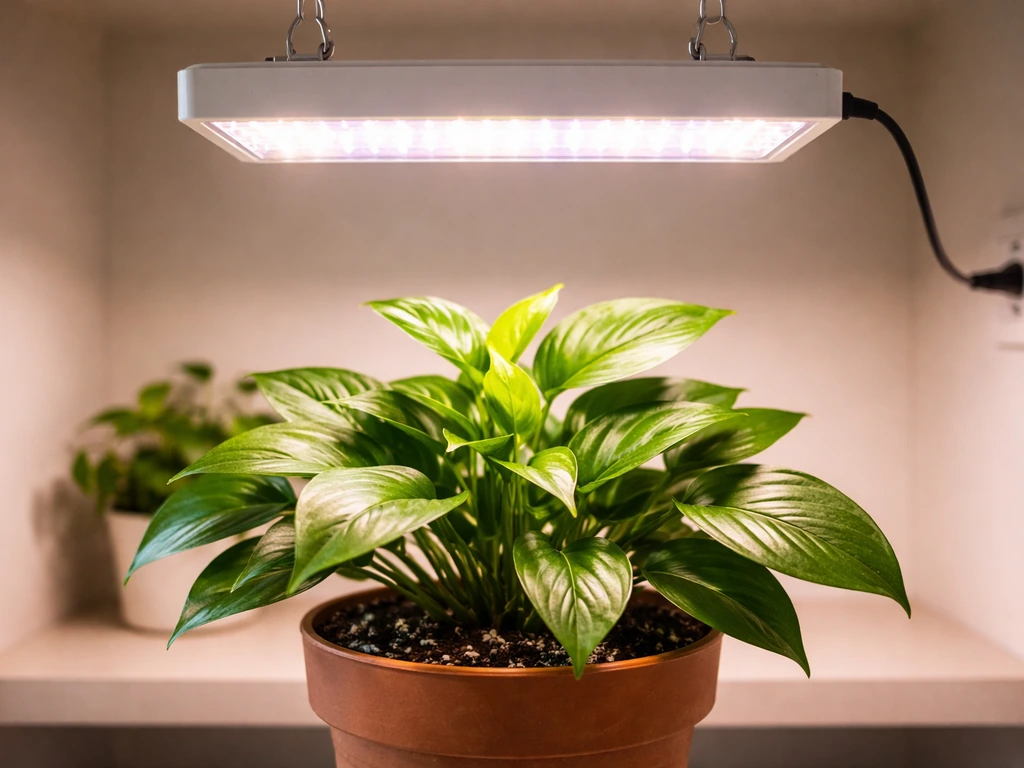
Does Plant Grow Light Work? A Practical Test Guide for Plants
Practical test guide to see if grow lights work, choose the right spectrum and setup, and troubleshoot weak results.
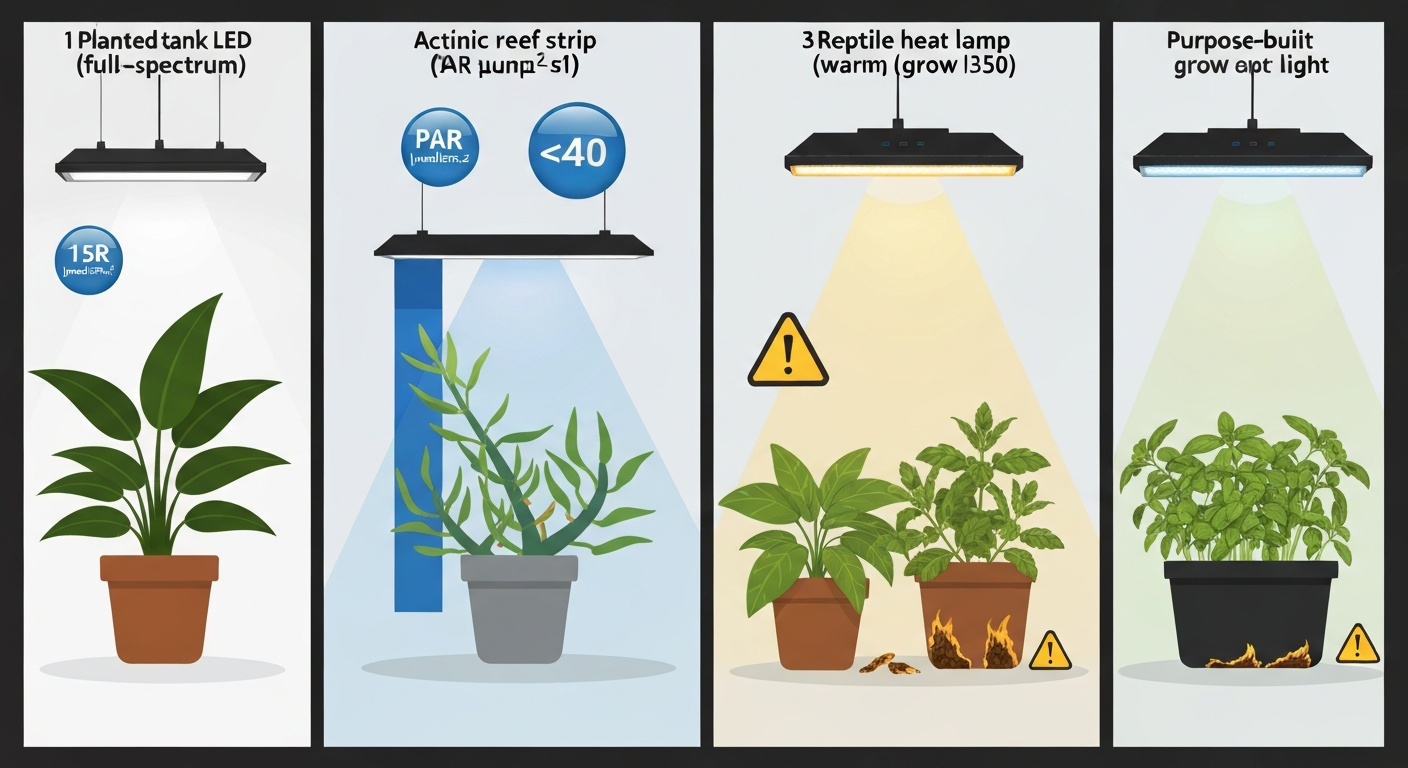
Can You Use Aquarium Lights to Grow Plants? Practical Guide
Can you use aquarium lights to grow plants? Clear verdict, PAR targets, fixture recommendations and setup steps.
Can You Grow Coral with LED Lighting? Reef Guide & Ranges
Can you grow coral with LED lighting? Clear verdict, PAR/PUR targets, fixture picks, setup, acclimation & trouble‑shoots