Yes, plant grow lights genuinely work. When you set them up correctly, they give indoor plants the light energy needed for real photosynthesis, not just keeping them alive in a dim corner. You can also ask whether a ring light can grow plants, since some people use them for indoor seedlings can a ring light grow plants. I've grown herbs, seedlings, and tropical houseplants under grow lights through entire winters with zero natural sunlight contribution, and the difference versus a windowsill is not subtle. Stems stay stocky, leaves stay dark green, and plants actually put out new growth instead of just hanging on. The catch is that 'works' depends heavily on the right light type, distance, and daily duration. Get those wrong and you'll wonder why your plant still looks miserable despite having a light pointed at it.
Does Plant Grow Light Work? A Practical Test Guide for Plants
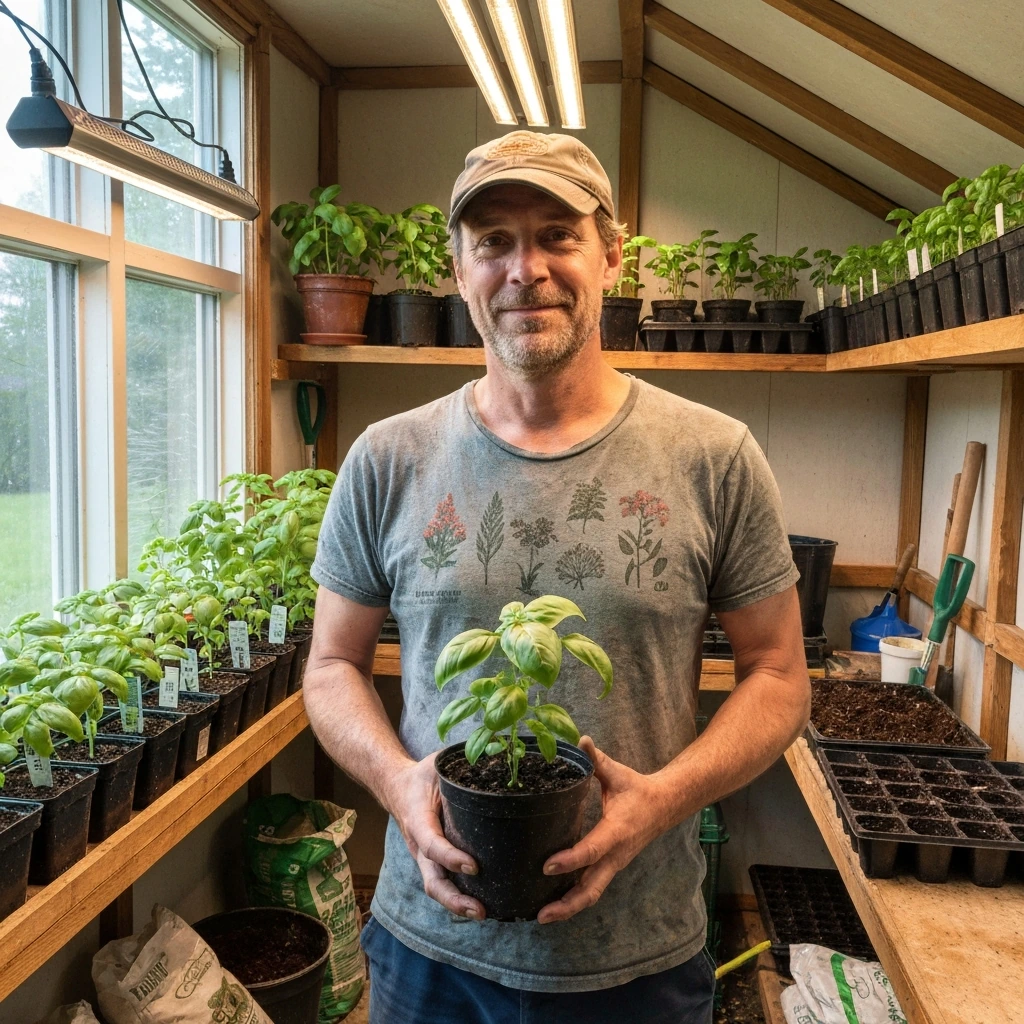
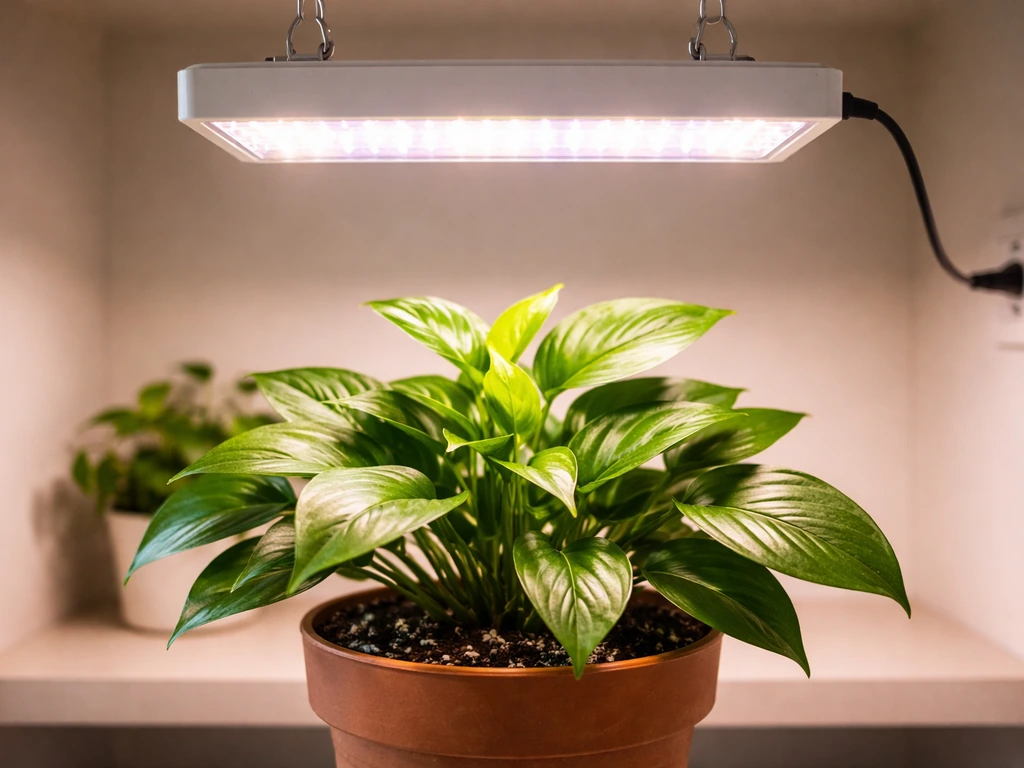
What 'working' actually looks like
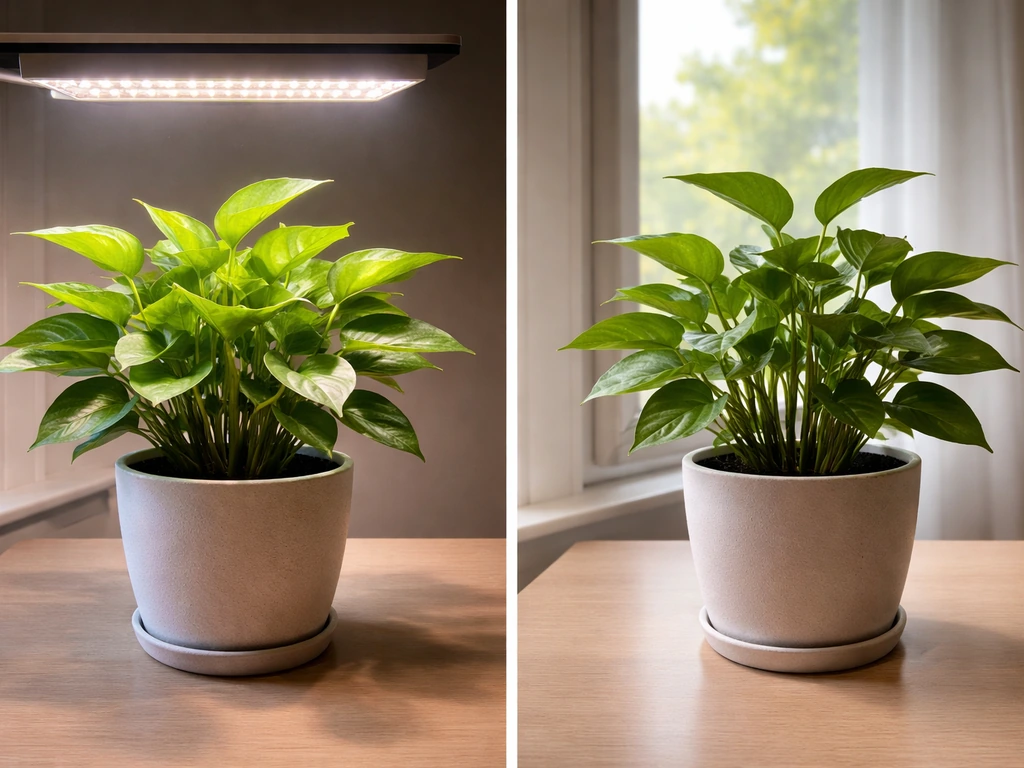
A grow light that's doing its job produces measurable changes in your plant: compact, sturdy stems, healthy leaf color, normal leaf spacing, and new growth at a reasonable pace. The opposite, what you see when light is insufficient, is pale or yellowing leaves (chlorosis), long spindly stems reaching toward any light source (called etiolation or going 'leggy'), and large gaps between leaf nodes. If your plant under a grow light looks like that, the light is either too weak, too far away, or not on long enough. A working setup eliminates those symptoms.
When grow lights make the biggest difference
The single biggest situation where grow lights go from 'nice to have' to genuinely necessary is winter. Days get short, the sun sits low, and even a south-facing window delivers surprisingly little usable light. University of Minnesota Extension has pointed out that sunlight through a window is often too weak for good seedling growth under any conditions, not just in winter. If you've ever tried starting tomato seeds on a windowsill in February and ended up with pale, floppy little plants that fall over, that's exactly what they mean.
Beyond seasonality, the type of plant matters a lot. In other words, the right light type depends on the plant, its stage of growth, and the spectrum needed for healthy photosynthesis. Seedlings of vegetables like tomatoes, peppers, and basil are light-hungry and will get leggy within days under poor light. Tropical houseplants like pothos and snake plants tolerate lower light, so they may not need a grow light urgently, but they'll grow faster and look better with one. That said, not any light will do, so choose a grow light based on the intensity and spectrum your plants need will any light grow plants. High-light plants like succulents, cacti, citrus, and most herbs genuinely struggle indoors without supplemental light. Flowering plants and fruiting plants need even more intensity to produce blooms and fruit.
Apartment growers with no south-facing window, basement seed-starting setups, and anyone using a grow tent for herbs or vegetables will see the clearest, most dramatic results from a proper grow light. If you have a bright, sunny south window and you're growing low-light tropicals, you might not need one at all.
Choosing the right grow light
LED vs. fluorescent vs. other types
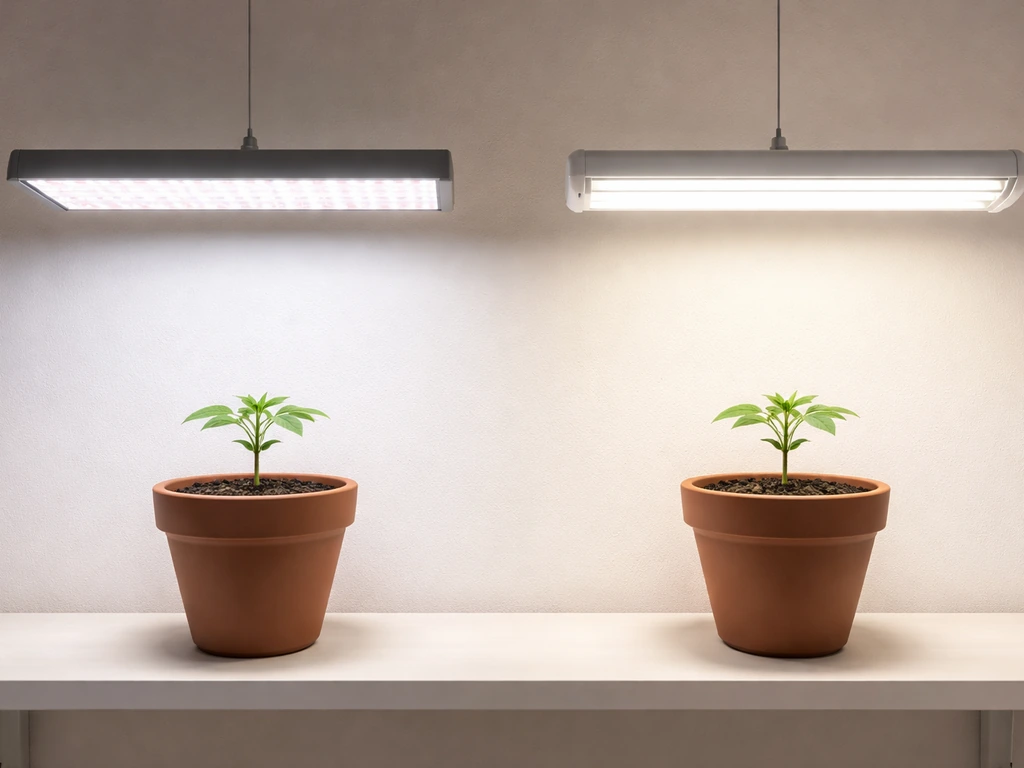
For most home growers today, LED is the right choice. Oklahoma State University Extension positions LEDs as the ideal lighting type for plant production due to their spectral flexibility and efficiency, and that matches my experience. They run cooler than older HID (high-intensity discharge) lights, use less electricity than fluorescents for the same output, and last a long time. T5 and T8 fluorescent shop lights still work well, especially for seedlings, but you need to hang them very close to the plants (less than a foot, sometimes closer) to deliver enough light, and you may need to run them for longer hours to compensate. HID lights like metal halide or high-pressure sodium are used in serious indoor growing but generate significant heat, cost more upfront, and are overkill for most home setups.
| Light Type | Efficiency | Heat Output | Best For | Typical Cost |
|---|---|---|---|---|
| LED | High | Low | All indoor plants, seedlings, fruiting plants | Moderate to high upfront, low running cost |
| T5/T8 Fluorescent | Moderate | Low-Moderate | Seedlings, herbs, low-to-medium light plants | Low upfront, moderate running cost |
| HID (Metal Halide / HPS) | High (but less efficient than LED) | High | Large indoor gardens, serious production | High upfront, high running cost |
| Incandescent / Standard Bulb | Very low | High | Not recommended for plants | Very low upfront, high running cost |
Understanding light spectrum (red, blue, and full-spectrum)
Plants use specific wavelengths of light through two main pathways. Photosynthesis runs primarily on the 400–700 nm range (called PAR, or photosynthetically active radiation). For the best results, choose a grow light with a spectrum that matches the wavelengths plants use for photosynthesis and growth 400–700 nm range. Separately, plants have photoreceptors called phytochromes that respond to red light (around 650–670 nm) and far-red (around 705–740 nm), and cryptochromes that respond to blue light (around 400–500 nm). These control things like stem elongation, leaf expansion, and flowering timing. In plain terms: red light drives photosynthesis and influences flowering, blue light keeps growth compact and triggers certain developmental responses.
Older grow lights were often 'blurple,' meaning a combination of red and blue LEDs only, which looked purple-pink. These work, but full-spectrum LEDs that include white light and a broader range of wavelengths tend to produce more balanced plant growth and are easier to use because you can actually see your plants' true color. University of Minnesota Extension notes that balanced or white-spectrum lights are suitable for most plants at any stage. For most home growers, a quality full-spectrum LED is the simplest, most reliable choice.
Setting up your grow light correctly
Distance from your plants
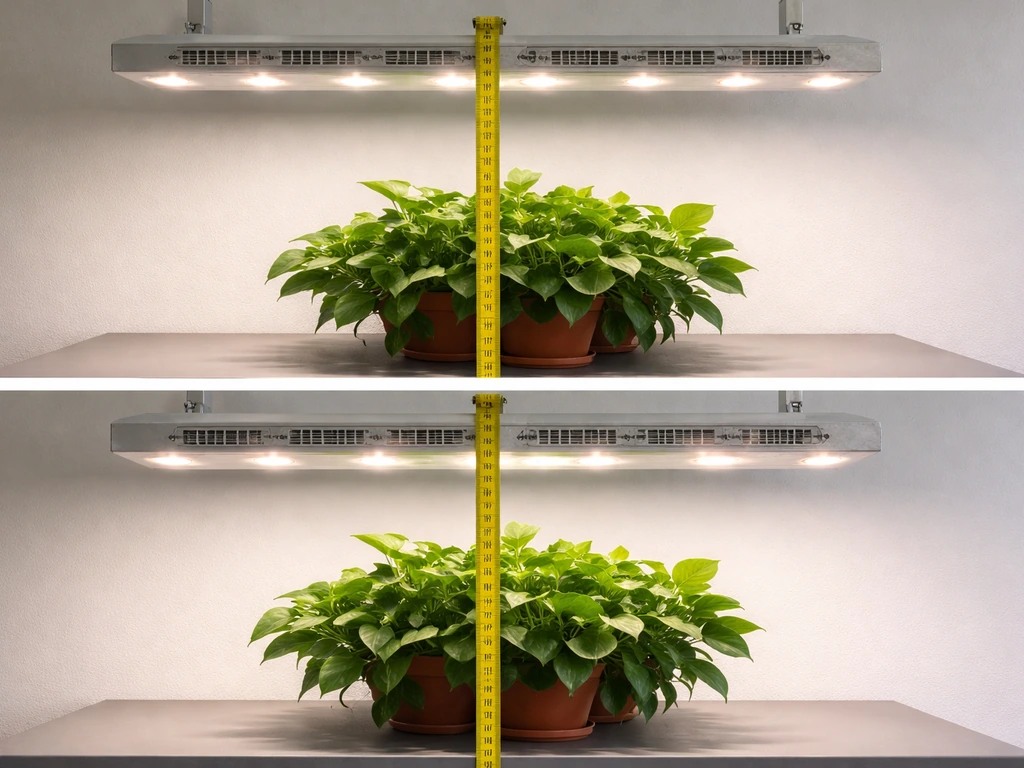
Distance is one of the most common reasons grow lights seem to 'not work.' Light intensity (measured in PPFD, or photosynthetic photon flux density) drops sharply as the fixture moves farther from the plant canopy. Hanging a light two feet above a plant that needs it six inches away is a recipe for leggy, light-starved growth. For seedlings, University of Maryland Extension recommends keeping the tops of the plants just 1–2 inches from fluorescent fixtures after germination. For LED panels, the manufacturer's recommended hanging height matters (usually listed in the specs), but a general rule is 12–24 inches for most full-spectrum LEDs over houseplants, and closer for high-light-demand plants and seedlings. Raise the light as plants grow to maintain that effective distance.
Intensity and coverage area
PPFD tells you how much light hits a square meter per second (measured in micromoles per square meter per second, or µmol/m²/s). Daily Light Integral (DLI) combines intensity with time: it's the total amount of useful light delivered over a whole day. For best growth, you want enough brightness to hit an appropriate DLI for your plant, not just a certain number of hours Daily Light Integral (DLI). A weak light run for a long time can match a bright light run briefly, in theory, but in practice your fixture needs to be strong enough to actually meet your plants' needs. Low-light houseplants generally do fine at 50–150 µmol/m²/s, medium-light plants like herbs and leafy greens want 150–400 µmol/m²/s, and sun-loving plants like tomatoes and peppers can need 400–600 µmol/m²/s or more. Don't just check the center of the coverage area, either: PPFD drops off toward the edges, so if you're growing multiple plants, make sure they're all within the effective footprint of the light.
How long to run your grow light each day
Most indoor plants need 14–18 hours of grow light per day to thrive under artificial light alone. University of Maine Extension recommends 16–18 hours daily for houseplants under artificial lighting, and University of Maryland Extension recommends 14–16 hours for seedlings. I use a simple outlet timer set to 16 hours on, 8 hours off, which covers most plants well without me having to think about it. Plants do need a dark period, so running lights 24 hours is not better and can actually stress some plants or interfere with flowering.
If your light isn't very powerful or you have it further from the canopy than ideal, running it longer (toward 18 hours) compensates somewhat by increasing the total DLI. That's actually why UNH Extension mentions some setups requiring up to 22 hours under weaker shop-light fixtures positioned close to seedlings. It's not ideal, but it illustrates how photoperiod and intensity work together. The cleaner solution is a stronger, better-positioned light.
Photoperiod also affects flowering. Some plants (like chrysanthemums and poinsettias) only flower when nights are long, while others (like many herbs and vegetables) flower when days are long. If you're growing something specifically for flowers or fruit indoors, matching the day length your plant expects is important, and it's worth looking into what your specific plant needs.
Troubleshooting: why your grow light might not be doing much
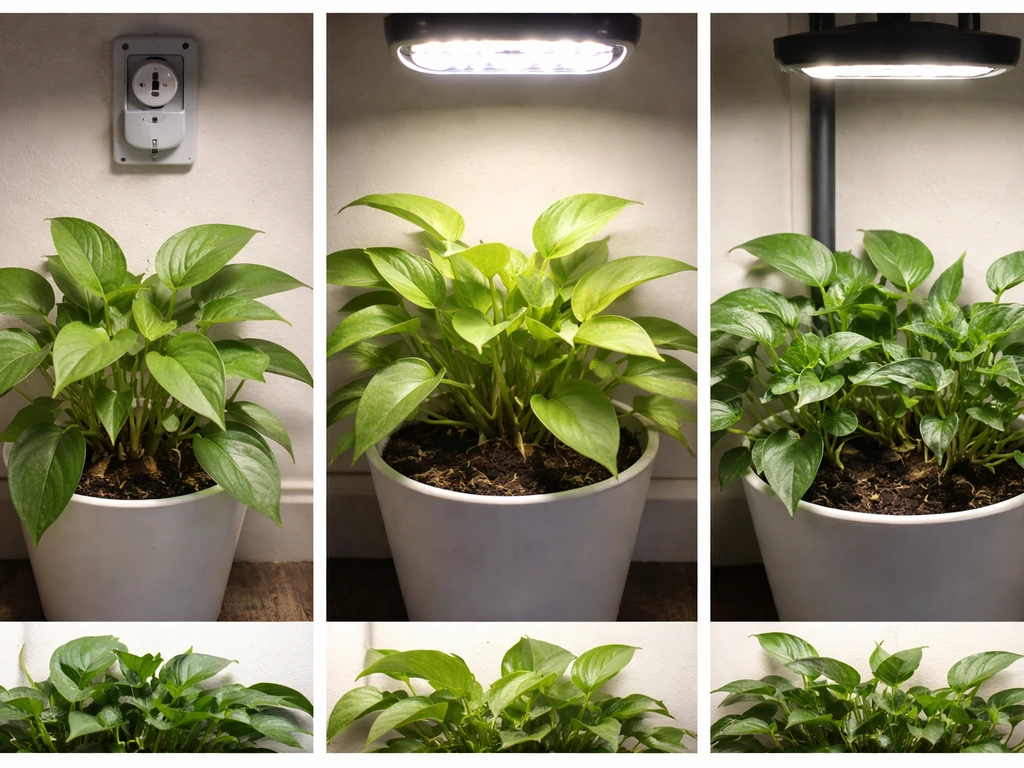
Most 'my grow light doesn't work' situations come down to a handful of fixable problems. Before assuming the light is defective, run through these:
- The light is too far away: This is the most common issue. Even a decent LED will underperform if it's hanging 3 feet above a plant that needs it 12 inches away. Lower the fixture or move the plant up.
- The light is too weak for the plant: A 10-watt desk lamp with a 'full spectrum' label isn't the same as a proper horticultural LED. Check the actual PPFD at your plant's distance, not just the wattage.
- You're not running it long enough: If you're running lights for 8–10 hours and wondering why growth is slow, bump it to 16 hours and see what changes.
- You're expecting results too fast: Real growth changes under improved lighting take 1–3 weeks to become obvious. Give it time before concluding the light isn't working.
- The plant has other problems too: Light deficiency and overwatering, underwatering, root issues, or pest damage can all cause overlapping symptoms like yellowing leaves and poor growth. Rule out other stressors.
- The light doesn't cover the whole plant: If only part of the canopy is in the effective footprint, growth will be uneven. Make sure your plants are centered under the fixture.
- Wrong spectrum for the growth stage: This is less common with full-spectrum LEDs but can matter with older red-only or blue-only lights. If you're using a very narrow-spectrum light, it may be limiting.
On the flip side, too much light is also a real thing. Bleached or washed-out leaf color, crispy edges, or wilting despite adequate watering can signal light intensity that's too high or a fixture that's too close. If you see these signs, raise the light or reduce the photoperiod slightly.
Do grow lights cause cancer, tanning, or other harm?
This comes up a lot and the answer is straightforward: no, standard plant grow lights do not cause cancer, and they won't give you a tan. The skin cancer and tanning risks associated with UV exposure are linked to UV-A and UV-B radiation, which are what tanning beds and direct sunlight emit in harmful amounts. Most horticultural grow lights, especially LEDs, emit almost no UV-A or UV-B. Their light is in the visible spectrum (400–700 nm PAR range), which is the same light you see from any lamp. The FDA is clear that UV-A and UV-B are the components linked to increased skin cancer risk, and grow lights are not UV sources in any meaningful sense.
That said, some specialized grow lights (particularly those designed to promote resin production in certain plants or UV-supplemented research lights) do include UV output. These are not typical home grow lights and will be clearly labeled. If you're using a standard horticultural LED panel from a reputable brand, UV exposure is not a concern.
Eye safety is worth a brief mention. Looking directly at a high-intensity LED panel for extended periods is uncomfortable and not smart, the same way staring into any bright light is a bad idea. Standard photobiological safety standards (IEC 62471) are used to assess optical radiation risks from lamps. In practice, just don't stare into your grow light. Indirect exposure while working near your plants is fine.
Simple safe-use tips
- Use a timer so lights run consistently and you don't accidentally leave them on 24/7.
- Check the fixture's heat output, especially with older HID lights or cheap LEDs, and make sure there's adequate airflow around it.
- Don't look directly into high-intensity LED panels.
- Keep electrical connections away from irrigation water and any splashing.
- Standard home grow lights are not a UV or cancer risk for humans in normal use.
Your practical starting point
If you want to get started today, pick a full-spectrum LED grow light sized appropriately for your space (look for a fixture with published PPFD data, not just wattage), hang it at the manufacturer's recommended height, set a timer for 16 hours on and 8 hours off, and give your plants 2–3 weeks to respond. Specification-sheet practices for horticultural lighting LED packages, including more standardized performance claims, are addressed in IEC 63403, which aligns with the idea of using published package specs such as PPFD blank" rel="noopener noreferrer">published PPFD data. That's genuinely all it takes for most home setups. From there, you can dial in distance and duration based on how your plants respond. If you're curious about the specific light spectrum your plants use, how brightness levels affect results, or whether a specific type of artificial light will do the job, those details are worth digging into as you get more comfortable with your setup. What artificial light will grow plants well is mostly about matching the right spectrum, intensity, and photoperiod to the plant’s needs specific type of artificial light.
FAQ
Do plant grow lights work through a window or with the window shut?
Yes, but the effect depends on how much usable daylight is already hitting the canopy. If sunlight is strong, the grow light may be redundant, and your “DLI” can become too high if you also run long photoperiods. If the window is blocked or curtains are used, the grow light effectively replaces natural daylight, so you should follow the same distance and hour guidance as if there were zero sun.
Does the wattage of a grow light predict whether it will work?
Not reliably. Wattage alone does not tell you how much usable light reaches the leaves. The more useful spec is PPFD (or an equivalent measured output), plus the fixture’s recommended hanging height. Two lights with the same wattage can deliver very different PPFD at the plant level.
How can I tell if my light is too weak without buying equipment?
Look for the classic “underpowered” signs mentioned in the article (leggy growth, pale or yellowing leaves, wide spacing between leaves). Also check whether new growth is slower than expected for the plant type and season. If symptoms improve after you lower the light and increase hours slightly, you likely needed higher PPFD rather than a different spectrum.
What if my grow light is strong, but only the middle plants look good?
That usually means the effective intensity footprint does not cover the whole area. PPFD falls off toward the edges, so plants near the perimeter get less light than the center. Either rearrange so plants sit within the high-PPFD zone, use a larger fixture, or add a second fixture for even coverage.
Should I use a dimmer or adjust brightness to make the light “work better”?
Only if the fixture supports dimming in a controlled way. If it does, start at the manufacturer’s recommended output and tune based on plant response, watching for stretching (too weak) or bleaching and crispy edges (too strong). If the light cannot be dimmed safely, changing distance is the safer adjustment.
Do grow lights work for flowering and fruiting plants, not just leafy growth?
Often yes, but flowering and fruiting are more demanding than vegetative growth, so you may need higher PPFD and more careful photoperiod matching for the plant. If your plant stays vegetative or produces poor blooms, the fix is usually not “more hours forever,” it is increasing intensity to the target range and confirming the day length your specific species expects.
Why do my seedlings get leggy even though the light is on a timer for many hours?
Most leggy seedling cases are insufficient intensity at the canopy. A common mistake is hanging LEDs too high above the tray, using a fixture with low PPFD, or placing the tray outside the brightest zone. Fix it by bringing the light closer, verifying recommended height for your exact model, and ensuring the timer is not accidentally delivering shorter days than intended.
Is it bad to run a grow light at night too, like 24 hours a day?
It can be. Plants do need a dark period, and continuous lighting can interfere with normal development and stress some plants. If you are trying to “compensate” for weak light, it is usually better to increase intensity or improve placement rather than eliminate the dark period.
Do I need to turn the grow light on only when I’m home?
No, you generally do not need manual turning. Most indoor setups work well with a simple outlet timer that maintains a consistent schedule (commonly 14 to 18 hours on for many home situations). Consistency matters because fluctuating photoperiod can confuse plants that rely on day length cues.
Can grow lights cause plants to burn if I accidentally leave them on longer?
Leaving a light on longer can raise total light exposure enough to cause stress, but the “burn” signs usually come from too much intensity at the canopy (distance too low) or excessive duration combined with high output. If you see bleaching, crispy edges, or wilting that does not match watering, raise the light or reduce the daily hours and watch the next new growth.
Do standard grow lights produce UV or harm pets like cats and birds?
Typical horticultural LEDs used for home growing are mostly visible-spectrum light and are not meaningful UV sources, so general skin-cancer and tanning concerns are usually not applicable. That said, eye safety is important, and for pets you should avoid letting them stare directly at high-intensity fixtures for long periods, and ensure the light is securely mounted.
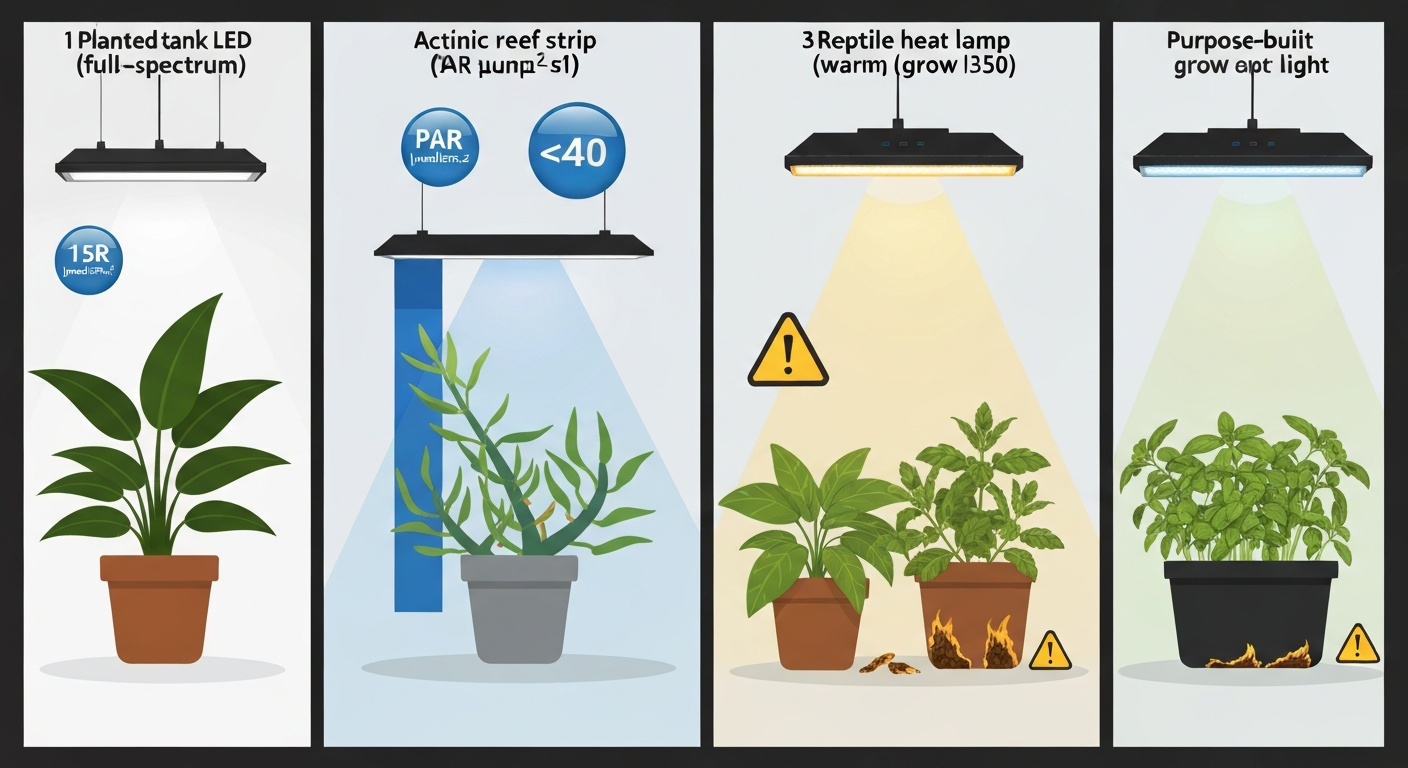
Can you use aquarium lights to grow plants? Clear verdict, PAR targets, fixture recommendations and setup steps.
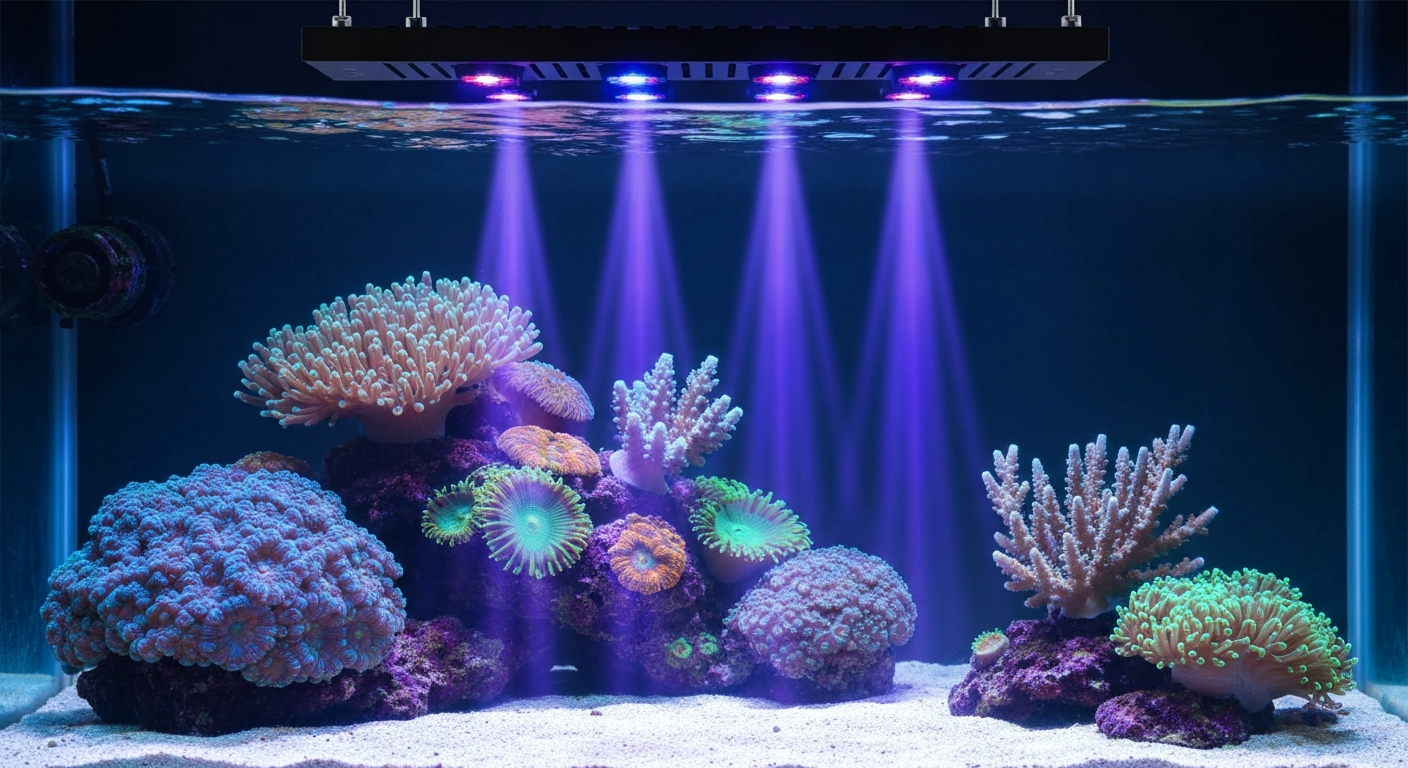
Can you grow coral with LED lighting? Clear verdict, PAR/PUR targets, fixture picks, setup, acclimation & trouble‑shoots
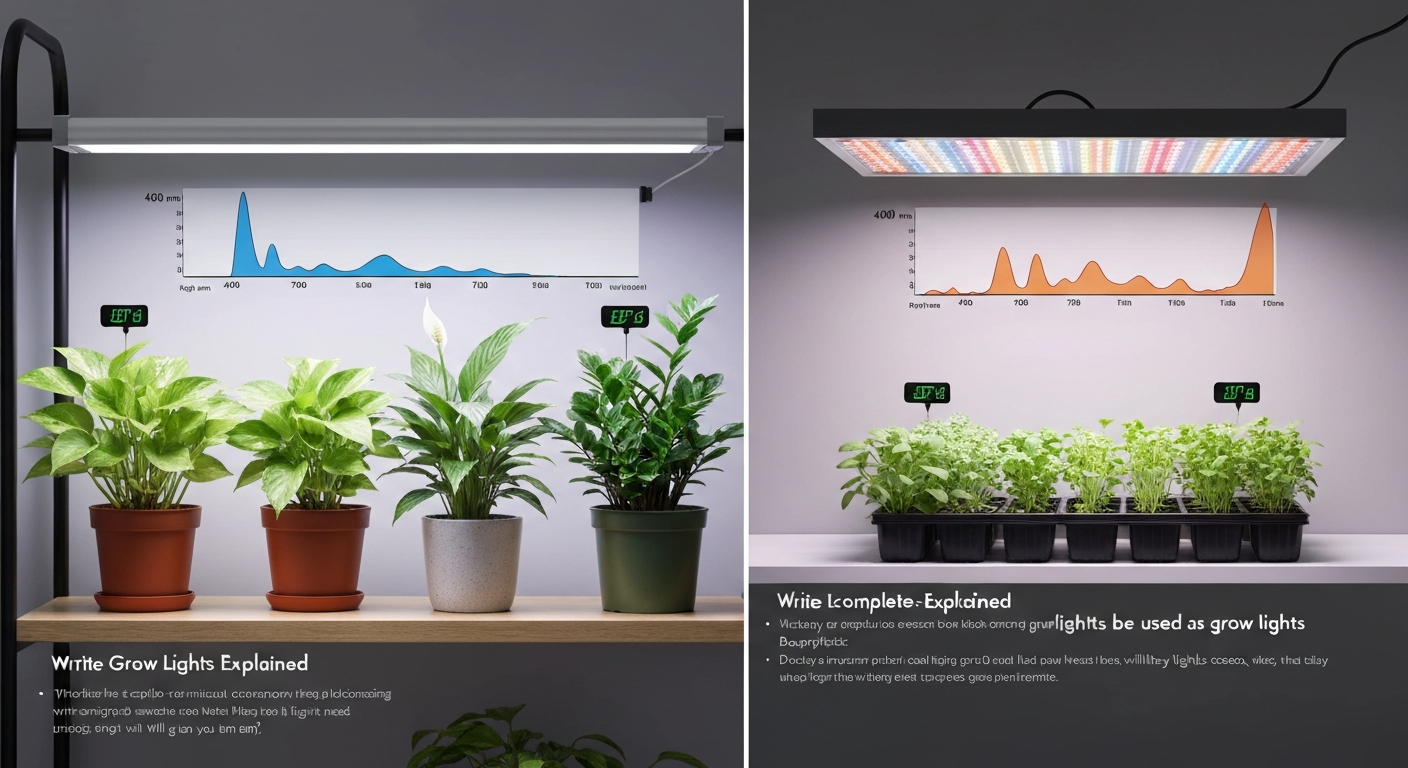
Can aquarium lights double as grow lights? Get a clear verdict, practical thresholds, setup tips, and when to upgrade.