Yes, aquarium lights can work as grow lights for certain plants, but with real limitations. A standard freshwater LED or T5 fixture will keep low-light houseplants alive and support undemanding aquatic plants reasonably well. Push beyond that, into herbs, seedlings, flowering stages, or reef corals, and most aquarium lights simply do not deliver enough photons in the right wavelengths. The answer is not a flat no, but it is a heavily qualified yes.
Can Aquarium Lights Be Used as Grow Lights? Verdict & Tips
Marcus Holloway
28 Jul 2026
Bottom-line verdict
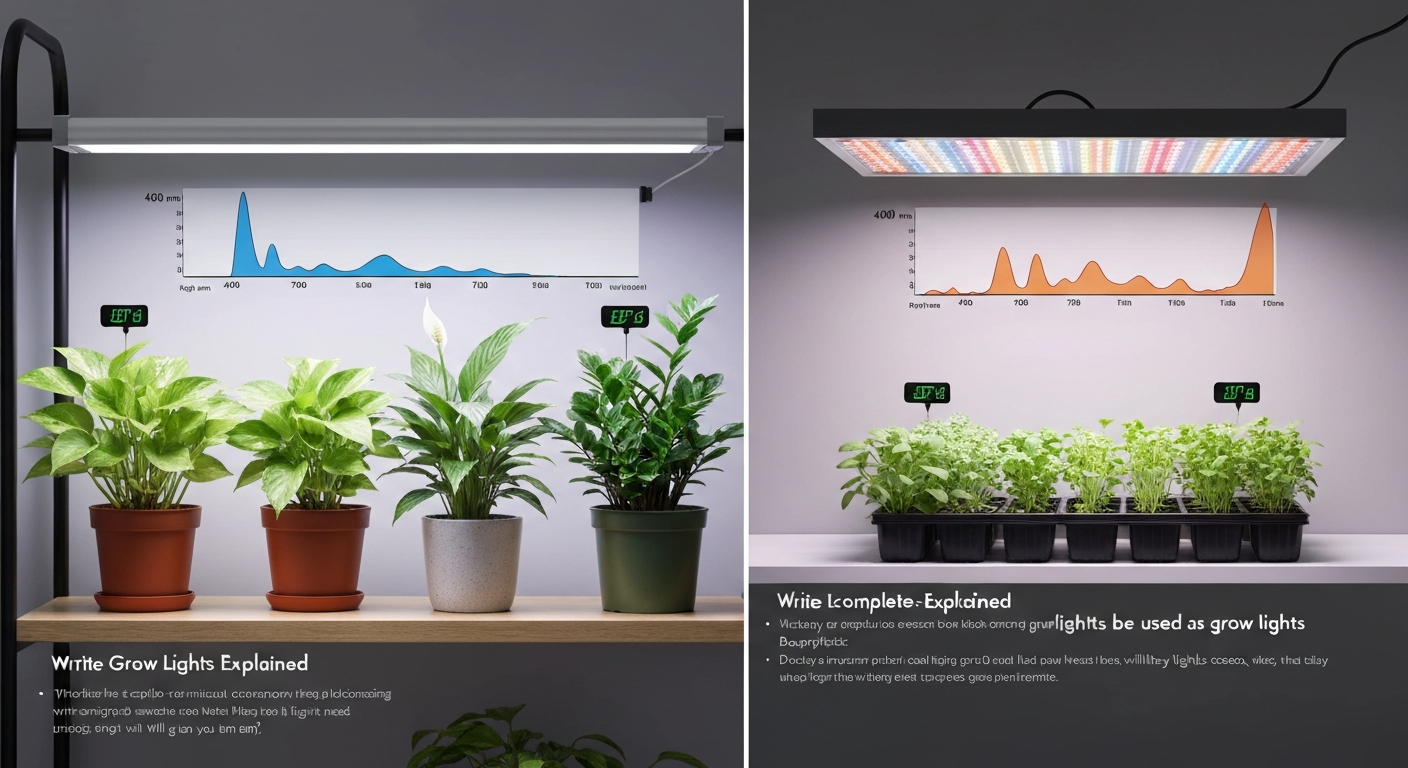
Aquarium lights and grow lights overlap just enough to be tempting but not enough to be interchangeable in most practical situations. A freshwater planted-tank LED running 8–10 hours a day can sustain pothos, peace lilies, ferns, and similar low-demand houseplants because those plants only need roughly 60–120 µmol·m−2·s−1 of photosynthetically active radiation (PAR). A reef fixture with strong blue/violet output is a poor match for most terrestrial plants because the spectrum is shaped around coral biology, not chlorophyll absorption peaks. A dedicated horticultural LED gives you precise control over spectrum, intensity, and photoperiod without guesswork. Repurposing is worth trying for low-stakes applications. For more practical examples and measurements, see the guide can you use aquarium lights to grow plants. For anything demanding, buy a purpose-built fixture and save yourself the frustration.
How plants and corals actually use light
Before comparing fixtures, it helps to know what plants and corals are actually measuring when they respond to light. There are four things that matter: spectrum, intensity (PPFD), photoperiod, and daily light integral (DLI).
Spectrum is the wavelength distribution of light from roughly 400 to 700 nanometers, which is the PAR window plants use for photosynthesis. Chlorophyll a and b absorb most strongly around 430–450 nm (blue) and 640–680 nm (red). Far-red at around 730 nm is outside the traditional PAR definition but influences flowering and morphology. Research has shown that adding far-red can meaningfully boost biomass in crops like lettuce. Corals run their symbiotic algae (zooxanthellae) on similar photosynthetic pigments, but they also have fluorescent proteins that peak in response to blue/violet light, which is why reef lights look so intensely blue.
Intensity is measured as PPFD (photosynthetic photon flux density) in micromoles of photons per square meter per second (µmol·m−2·s−1). This is the number that actually tells you how much usable light is hitting a surface. Correlated color temperature (CCT), expressed as Kelvin, is not intensity and does not tell you spectrum in any useful way. Two lamps marked 6500K can have completely different photon distributions across the 400–700 nm range. CCT is a perceptual descriptor for human vision, not a plant-relevant measurement.
Photoperiod is how many hours of light per day the plant or coral receives. DLI (daily light integral) combines PPFD and photoperiod into a single number: DLI = PPFD × hours × 0.0036. A plant receiving 150 µmol·m−2·s−1 for 12 hours gets a DLI of about 6.5 mol·m−2·day−1. Knowing your fixture's PPFD and your target DLI for a specific plant is the single most useful calculation you can do before deciding whether to repurpose a fixture.
Common fixture types: aquarium lights vs. dedicated grow lights
Aquarium fixtures
Freshwater LED bars and T5 fluorescent strips are designed primarily for visual aesthetics and background plant growth. They typically deliver a balanced white spectrum that looks natural over a tank. Reef and marine fixtures from brands like Ecotech Radion, AI Hydra, Orphek, and Kessil are a different beast: they emphasize narrow blue and violet peaks at 420–470 nm to stimulate coral fluorescence and support zooxanthellae photosynthesis. See our guide on can reef lights grow plants for more details. The SPD (spectral power distribution) charts for these fixtures show pronounced spikes in the blue channel with much less energy in the red region. That blue-heavy shape is not what most terrestrial plants want.
Dedicated grow lights
Modern horticultural LEDs, commonly called quantum boards or full-spectrum grow LEDs, are built to spread photons relatively evenly across 400–700 nm with emphasized peaks at around 660 nm (red) and sometimes 450 nm (blue). Many include a far-red channel at 730 nm. T5 plant tubes like the old Grolux-type phosphors have well-documented peaks at roughly 435 nm and 660 nm, which map almost directly onto chlorophyll absorption maxima. Metal halide fixtures produce a broad, intense output that has powered commercial horticulture for decades but run very hot and are less energy-efficient than LEDs.
Technical comparison: spectrum, intensity, PAR/PPFD, and color temperature
| Feature | Freshwater Aquarium LED | Reef/Marine LED | Horticultural LED | T5 Plant Tube | Metal Halide (HID) |
|---|---|---|---|---|---|
| Primary spectrum focus | Balanced white, some blue | Strong blue/violet (420–470 nm) | Broad PAR, red (660 nm) + far-red | Peaks at 435 nm & 660 nm | Broad full-spectrum |
| Typical PPFD at plant distance | Low-moderate (30–150) | Moderate-high (150–400+) | Wide range (100–1000+) | Moderate (100–250) | High (400–1000+) |
| Far-red (730 nm) channel | Rarely | Rarely | Often included | Some specialty tubes | Present in spectrum |
| Blue/red balance | Moderate | Blue-heavy, red-weak | Tuned for plants | Optimized for chlorophyll | Balanced, broad |
| Energy efficiency | Moderate-high | High (LED) | High (LED) | Moderate | Low |
| Heat output | Low-moderate | Low-moderate | Low-moderate | Moderate | Very high |
| Cost | Low-moderate | High | Low-high (varies widely) | Low-moderate | Moderate |
The critical point in that comparison is the blue/red balance row. Plants need both blue and red photons. Reef fixtures are engineered to deliver blue-dominant light, which means red-channel photons are scarce. Running a reef light over tomatoes or cannabis will give you a blue-starved red channel and likely produce elongated, poorly-developed plants. Freshwater LED bars are more balanced but often do not deliver enough total PPFD for anything beyond low-light species.
PPFD and photoperiod targets you actually need to hit
Here are the practical thresholds I work with. These come from extension horticulture guidance and aquatic plant community research, not manufacturer claims. Extension Gardener Handbook, NC State Extension (houseplant foot‑candle / light category table) provides typical indoor houseplant light categories with approximate PPFD and DLI equivalents used by extension horticulture guidance Extension Gardener Handbook — NC State Extension (houseplant foot‑candle / light category table).
| Plant Type / Stage | Target PPFD (µmol·m−2·s−1) | Photoperiod (hours/day) | DLI (mol·m−2·day−1) |
|---|---|---|---|
| Low-light houseplants (pothos, snake plant, peace lily) | 60–120 | 10–12 | 2–5 |
| Medium-light houseplants (most tropicals, herbs) | 120–200 | 12–14 | 5–10 |
| High-light houseplants (succulents, citrus) | 240–320 | 12–16 | 10–18 |
| Seedlings (germination to first true leaves) | 100–200 | 16–18 | 6–13 |
| Leafy greens (lettuce, spinach, basil) | 150–300 | 14–16 | 8–17 |
| Herbs (high production) | 200–400 | 14–16 | 10–23 |
| Tomatoes, peppers (fruiting) | 400–700 | 14–16 | 20–40 |
| Cannabis flowering (without CO₂) | 700–900 | 12 | 30–39 |
| Low-tech aquarium plants | 20–50 (substrate level) | 8–10 | 0.6–1.8 |
| Medium aquarium plants (most stem plants) | 50–120 (substrate level) | 8–10 | 1.4–4.3 |
| Demanding carpeting / red aquarium plants | 120+ plus CO₂ | 8–10 | 3.5+ |
| Soft corals | 50–150 | 10–12 | 1.8–6.5 |
| LPS corals | 75–200 | 10–12 | 2.7–8.6 |
| SPS corals (Acropora, Montipora) | 200–400+ | 10–12 | 7.2–17+ |
A few things stand out in that table. Low-tech aquarium plants and low-light houseplants occupy nearly the same PPFD range, which is exactly why a basic freshwater LED can serve both. Reef corals span a wide range depending on depth and species, mesophotic corals can photosynthesize at under 55 µmol·m−2·s−1 while SPS in shallow tanks need well over 200. Cannabis flowering targets are among the highest on the list, comfortably beyond what any basic aquarium fixture can realistically deliver.
When aquarium lights actually work fine
I have kept pothos, ZZ plants, and philodendrons under a cheap freshwater LED bar for over a year with no complaints from the plants. The light was mounted about 30 cm above the leaves and ran 10 hours a day on a timer. PPFD at leaf level was around 80–100 µmol·m−2·s−1, which put DLI in the 3–4 range, adequate for those species. This is the sweet spot for repurposing aquarium lights over plants.
- Low-light houseplants: pothos, snake plants, peace lilies, cast iron plants, ZZ plants, ferns in low-demand terrariums
- Seedling germination for low-demand species where you just need any light to break darkness
- Low-tech planted aquariums using Java fern, Anubias, mosses, and Vallisneria — these thrive at 20–80 µmol·m−2·s−1 and do not require CO₂
- Soft coral species in easy setups where you are running the aquarium light at moderate intensity and can achieve 50–150 µmol·m−2·s−1 at placement depth
- Supplemental fill light in rooms that already receive some natural light, where the aquarium fixture is just topping up the DLI
The key in all these cases is matching the fixture's actual PPFD output (measure it, do not guess) against the target in the table above, then setting photoperiod to hit your DLI. Aquarium lights work when the target is modest and the spectrum requirement is not strict.
When aquarium lights fall short
There are clear situations where repurposing does not work and trying anyway just wastes time and electricity.
- High-light houseplants and succulents: these want 240–320+ µmol·m−2·s−1 and most aquarium LED bars cannot deliver that at a reasonable hanging distance
- Herbs in production use: basil, rosemary, and cilantro pushed for fast growth need 200–400 µmol·m−2·s−1 with good red-channel coverage
- Fruiting vegetables (tomatoes, peppers, cucumbers): require 400–700 µmol·m−2·s−1 and far-red influence for fruiting — aquarium fixtures are completely outclassed
- Cannabis in flowering: needs 700–900 µmol·m−2·s−1 without CO₂ enrichment and a precise 12/12 photoperiod — no standard aquarium light can hit those photon levels over a meaningful canopy
- Demanding aquarium plants (red plants, carpeting species like Hemianthus callitrichoides): these need substrate PAR above 120 µmol·m−2·s−1 alongside CO₂, which pushes you into reef-grade fixture territory anyway
- SPS reef corals: require the specific blue-dominant SPD that reef fixtures provide, plus intensity that most repurposed freshwater fixtures cannot achieve
- Flowering and fruiting plant stages generally: the far-red channel and precise red/blue ratios that purpose-built grow lights offer make a real difference in flowering induction and fruit set
Using aquarium lights for cannabis, expectations and legal notes
I get asked about this often enough that it deserves its own section. The short answer is that a standard aquarium light will keep a cannabis plant alive in vegetative growth at low intensity, but it will not produce a meaningful flowering yield. Cannabis in flower wants 700–900 µmol·m−2·s−1 at canopy level. Most freshwater LED bars max out well below 200 µmol·m−2·s−1 at a reasonable hanging distance. A reef fixture can get closer on intensity but its blue-heavy spectrum is a poor match for the red-dominant light that pushes cannabis through flowering. You will get stretched, underdeveloped plants with poor bud development. If you are serious about growing cannabis, a purpose-built horticultural LED is the minimum practical starting point. The legal caution is straightforward: cannabis cultivation is subject to local, state, and national laws that vary enormously. Check your jurisdiction's regulations before growing, regardless of what lighting you plan to use. This site does not provide legal advice, and the equipment discussion here applies only where cultivation is lawful. See the detailed guide Can I use an aquarium light to grow marijuanas for more on cannabis-specific lighting expectations and legal considerations.
Running grow lights over aquariums, reef tanks, and reptile enclosures
The reverse question, can a grow light work over a fish tank or reef, comes up constantly, and it is more nuanced than people expect. See the guide Can I use grow light for aquarium for practical tips and compatibility notes. For a basic freshwater planted tank, a full-spectrum horticultural LED can work well because the broad PAR output supports plant growth and fish do not care much about spectral composition. The visual appearance will be different from a dedicated aquarium fixture (less shimmer, less blue pop), but the biology works.
For reef tanks, a standard grow light is a poor substitute for a reef-specific fixture. For more detail on LED suitability for corals, see the guide titled can you grow coral with led lighting. Corals need that blue/violet-heavy spectrum both for zooxanthellae photosynthesis and for fluorescence that indicates coral health. A grow LED running a warm-white or red-heavy spectrum over an SPS tank will suppress the visual fluorescence cues you rely on to spot stress, and the spectral mismatch may affect coral growth and coloration over time. Some hobbyists use grow lights as supplemental white or red-channel fill over a reef, layered under a main reef fixture, which is a reasonable workaround.
For reptile enclosures, the concerns shift further. Reptiles often need UV-A and UV-B wavelengths that neither grow lights nor aquarium lights typically provide. A grow light can supply visible spectrum and some warmth, but it will not replace a dedicated reptile UVB lamp for species that require it. See the guide can reptile lights grow plants for details on whether reptile UV and visible-spectrum fixtures are suitable for supporting plant growth. For a deeper discussion of whether can you use grow lights for reptiles, see our dedicated guide on using grow lights in reptile enclosures that covers UVB requirements, suitable lamp types, and welfare considerations. This is a case where repurposing creates a genuine welfare risk if the reptile's UVB needs go unmet.
Practical setup tips: distance, mounting, and photoperiod
PPFD drops off fast with distance. Most LED fixtures follow an inverse-square relationship: double the distance and you roughly quarter the intensity. For aquarium lights repurposed over plants, I recommend starting at 20–30 cm above the canopy, measuring PPFD, and adjusting from there. Always use a timer. Guessing at photoperiod is one of the most common mistakes I see, plants need consistency, not random on/off cycles. Set the timer, leave it, and only change the duration incrementally (no more than 30 minutes per week) if you are adjusting DLI.
- Mount the fixture at your starting distance (20–30 cm above canopy for most repurposed aquarium LEDs)
- Measure PPFD at canopy level using a PAR meter before placing plants
- Calculate your expected DLI: PPFD × hours × 0.0036
- Compare against the target DLI for your plant species
- Set a timer for your target photoperiod and leave it on that schedule
- Check plants weekly for signs of too much light (bleaching, curling, crispy tips) or too little (stretching toward the fixture, pale new growth)
- Adjust distance or photoperiod if needed, not both at the same time
Filling spectrum gaps: when to add supplemental lighting
If your aquarium fixture is delivering adequate PPFD but you suspect a spectrum gap, for example, a reef light running blue-heavy over a herb garden, the most practical fix is to add a supplemental red LED strip or bar. Inexpensive 660 nm red LED strips are widely available and can be clipped alongside an existing fixture to improve the red:blue ratio without replacing the main light. Similarly, if you are running a warm-white freshwater LED over plants that want more blue (seedlings especially benefit from blue light for compact, sturdy growth), a supplemental 450 nm blue strip helps. UV LEDs (380–400 nm) are sometimes added for trichome development in cannabis and for coral fluorescence in reef tanks, but they are not necessary for general plant growth and should be used with eye protection.
When layering lights, run them on the same timer unless you have a specific reason for staggered photoperiods. Inconsistent on/off cycles across multiple fixtures confuse photoperiod-sensitive plants. The combined PPFD from all sources should be measured together at canopy level, not assumed to be additive from individual fixture specs.
How to measure what your light is actually doing
This is the step most people skip, and it is the one that matters most. A PAR meter (quantum meter) is the essential tool. Apogee's MQ-500 full-spectrum quantum meter measures 0–4000 µmol·m−2·s−1 and is designed to give accurate readings from LED fixtures, which older sensors sometimes misread. Apogee MQ‑500 Full‑Spectrum Quantum Meter, product/spec sheet lists a 0–4000 µmol·m−2·s−1 measurement range and describes its full‑spectrum design with improved spectral response for LEDs Apogee MQ‑500 Full‑Spectrum Quantum Meter — product/spec sheet. LI-COR's LI-190R is the research-standard sensor with ±5% absolute calibration traceable to NIST. Either will give you a reliable PPFD number in about 10 seconds.
If you do not own a PAR meter, lux-to-PPFD conversion is an imperfect but usable shortcut. The conversion factor depends on the light source spectrum: roughly 0.0185 for sunlight, 0.0135 for cool-white fluorescent, and 0.0141 for metal halide. A basic lux meter is inexpensive, and Apogee publishes conversion tables for common source types. The problem is that smartphone light-meter apps are calibrated for human vision and are notoriously inaccurate for LED fixtures with non-white SPDs. Use a dedicated lux meter if you go that route, and treat the converted PPFD as an estimate with a margin of error of 20–30%.
If you want to know the actual spectral distribution, not just total PPFD, you need a spectroradiometer. Apogee's InSight handheld spectroradiometer reads 380–780 nm and reports PPFD directly. These are not cheap, but for anyone running a serious aquarium, reef, or plant setup, the data pays for itself quickly by preventing expensive mistakes. For most home hobbyists, a PAR meter plus the manufacturer's published SPD chart is enough to make a good decision.
Safety, heat, and long-term performance
Modern LED aquarium fixtures run cool enough that heat is rarely a problem for plants directly beneath them. The concern is more about fixture longevity when operated outside their designed environment. An aquarium LED running over a soil-filled planter is fine. A fixture designed for submersion that you run open-air may accumulate dust and have different thermal management characteristics than intended. Check the IP rating of any fixture you repurpose: IP65 or above means the unit is dust-protected and water-resistant, which is fine for plant use. IP67/68 fixtures designed for submersion can also be run externally without issue.
UV exposure is worth a brief mention. Standard aquarium LEDs do not produce meaningful UV-B output, so there is no tanning or skin risk from normal use. Reef fixtures sometimes include UV-A channels in the 380–400 nm range, which is not harmful at aquarium intensities but is worth noting if you are working close to the light regularly. UV-B sources designed for reptiles are a different category and should be treated with appropriate caution around eyes and skin.
On energy efficiency: LED aquarium fixtures are generally efficient, but they are not always as efficient as purpose-built horticultural LEDs because they have not been optimized for photon production per watt in the PAR band. A high-quality grow LED may deliver significantly more PPFD per watt than a comparably priced reef fixture, because the grow LED's spectral output is concentrated in bands plants actually use rather than in blue/violet channels weighted for visual aesthetics.
Cost vs. performance: repurpose or replace?
The honest cost calculation comes down to what you are trying to grow and what you already own. If you have a freshwater LED bar sitting unused and you want to keep pothos or ferns happy on a shelf, repurposing costs you nothing and works fine. If you are starting from zero and need light for herbs or seedlings, a purpose-built T5 plant light or entry-level horticultural LED will outperform any aquarium fixture at a similar price point. If you are looking at high-end reef fixtures priced at several hundred dollars or more, the question is even easier: that money buys very capable horticultural LEDs that will produce measurably better plant results.
The middle ground where aquarium repurposing makes genuine sense is this: you already own the aquarium light, you want to grow low-to-medium light plants, and buying a new fixture is not worth it for your use case. That covers a lot of hobbyists. Measure your PPFD, match it to your plant's target, set a timer, and you are good to go. The moment you start wanting faster growth, fruiting crops, or specialist aquatic plants, the cost of a dedicated fixture is justified by the performance gap.
Quick decision checklist
- What is my target plant or coral, and what PPFD range does it need? (Use the table above.)
- What is my aquarium fixture's actual PPFD at the distance I plan to use it? (Measure with a PAR meter or calibrated lux meter + conversion factor.)
- Does the fixture's PPFD meet the target? If yes, proceed. If not, can I close the gap by reducing hanging distance?
- Is the fixture's spectrum appropriate? Freshwater white LED: acceptable for most plants. Reef blue-dominant LED: not ideal for red-hungry terrestrial plants without supplemental red.
- What photoperiod do I need to hit my target DLI? Set a timer accordingly.
- Am I trying to grow cannabis? Check local laws before proceeding and recognize that most aquarium lights cannot deliver flowering-stage PPFD.
- Am I using this over a reptile enclosure? Aquarium lights do not supply UVB — a dedicated reptile lamp is required for UV-dependent species.
- If the answers above show a mismatch: what would a purpose-built fixture cost, and is the performance gap worth paying for?
Recommended next steps
Start by measuring. If you already have an aquarium fixture, take a PPFD reading at the distance you plan to use it before placing a single plant underneath. That number tells you immediately whether you are in the right zone. If you are under 60 µmol·m−2·s−1, the fixture is only useful for the lowest-light houseplants on very long photoperiods. If you are hitting 100–150 µmol·m−2·s−1, you have a workable light for a decent range of common houseplants and basic planted-tank species.
Run a four-week trial with one or two plants before committing your whole setup to a repurposed light. Watch for leggy stretching toward the fixture (not enough light or poor red coverage), bleaching or tip burn (too much intensity or too close), and slow or stalled growth (insufficient DLI overall). These signals tell you whether to adjust distance, photoperiod, or spectrum before investing more plants in the setup.
If you decide you need a purpose-built fixture, look for specifications that list PPFD at a stated distance rather than just wattage. Wattage is nearly meaningless as a performance indicator for modern LEDs. A fixture that states 300 µmol·m−2·s−1 at 30 cm gives you something concrete to compare against your plant's needs. For reef tanks, prioritize fixtures that publish full SPD charts so you can verify the blue/violet peak coverage your corals actually require. For reptile enclosures, confirm the UVB output index (UVI) is appropriate for your species, that conversation is different from the plant light discussion entirely and goes beyond what any aquarium or grow light typically provides.
FAQ
Bottom-line verdict — can aquarium lights be used as grow lights?
Yes — with caveats. Aquarium fixtures (especially freshwater planted and basic LED strips) can support many low‑ to medium‑light terrestrial and aquatic plants if their spectrum and intensity match plant needs. However, reef/actinic aquarium LEDs are often optimized for coral pigments (strong blue peaks) and may be suboptimal for many land plants and high‑light crops without modification or supplementation. For demanding crops (tomatoes, high‑yield herbs, cannabis flowering, SPS corals) purpose‑built horticultural, reef, or reptile fixtures are usually the better choice.
How do aquarium and grow LEDs differ technically (spectrum, CCT, SPD, color temperature)?
CCT (e.g., 6500K) only describes perceived white point and doesn’t reveal photon distribution. SPD (spectral power distribution) matters: horticultural LEDs typically provide a broad PAR continuum with boosted red (~660 nm) and sometimes far‑red (~730 nm). Reef LEDs emphasize blue/violet peaks (≈420–470 nm) for zooxanthellae and appearance. Aquarium freshwater planted LEDs often sit between these extremes and may include useful red/white channels. Always check SPD or manufacturer PPF/PUR charts rather than CCT alone.
What light measurements should I use to compare fixtures?
Use PPFD (µmol·m−2·s−1) measured with a PAR/quantum meter for 400–700 nm. DLI (mol·m−2·d−1) = PPFD × hours × 0.0036 helps plan photoperiod. Spectroradiometers produce full SPD and ePPFD/PUR if you need spectrum breakdown. Lux-to‑PPFD conversions are unreliable across spectra; measure PPFD whenever possible.
What PPFD/DLI thresholds map to plant categories (practical numbers)?
General indoor categories: low light ≈ 60–120 µmol·m−2·s−1; medium ≈ 120–200; high ≈ 240–320. Crop examples: leafy greens 150–300; herbs 200–400; tomatoes 400–700; cannabis flowering often targets 700–900 (unless CO₂ enriched). Use DLI planning: DLI = PPFD × hours × 0.0036.
What PPFD ranges are typical for planted aquariums and corals?
Planted tanks: low‑tech background plants ≈ 20–50 µmol·m−2·s−1 at substrate level; most stem plants ≈ 50–120; demanding carpeting/red plants often >120 and usually require CO₂. Reef corals: soft corals ≈50–150; LPS ≈75–200; SPS often 200–400+ depending on species and placement depth.
Can aquarium lights grow houseplants and herbs? Any recommended setups?
Yes for many houseplants and herbs. Use planted‑tank or full‑spectrum aquarium LEDs with measurable PPFD in the medium range (≥120 µmol·m−2·s−1) at canopy height for herbs. For seedlings and compact herbs, aim for 150–300 PPFD with 12–16 hour photoperiods (DLI target depends on species). Position fixture distance to reach target PPFD and add red-rich supplemental LEDs if growth is leggy or flowering is weak.
Next Articles
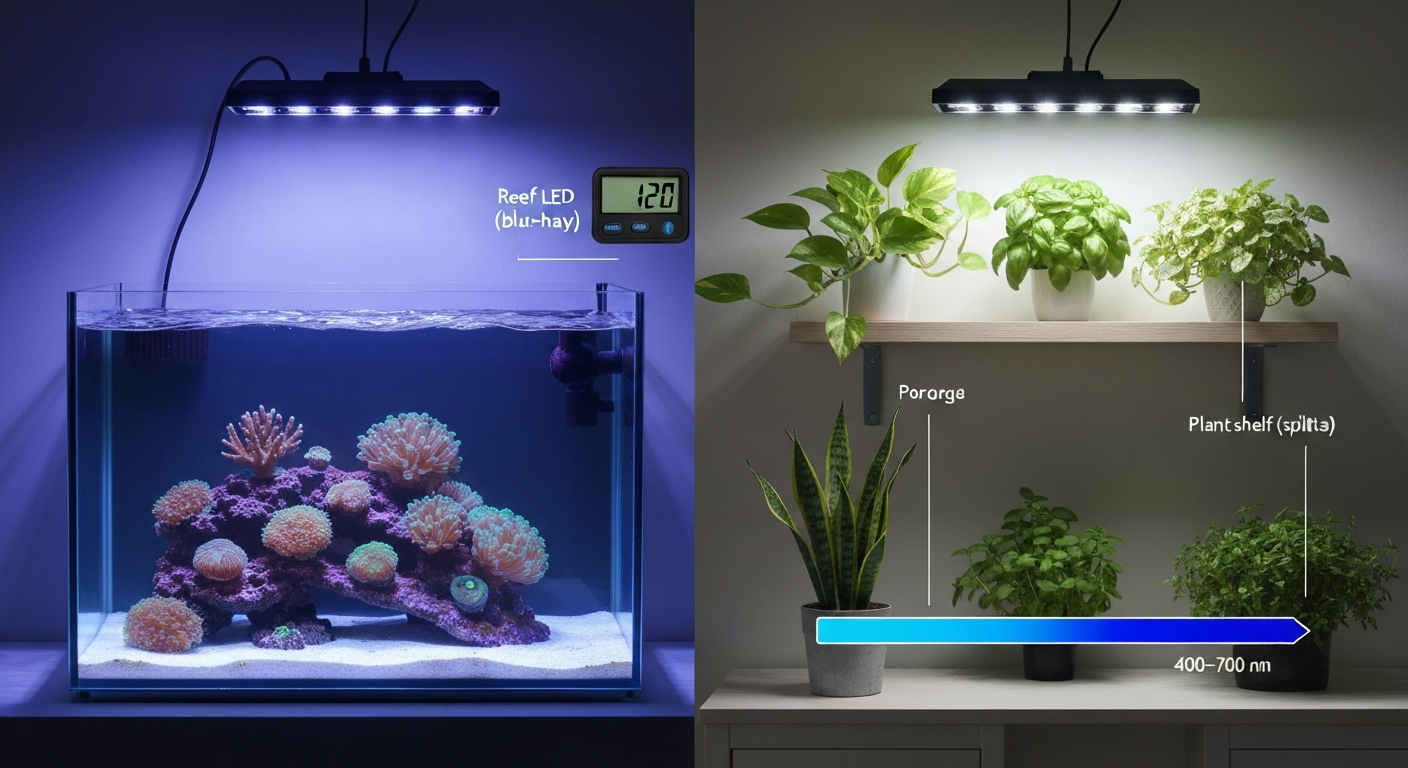
Can Reef Lights Grow Plants? Guide for Hobbyists & Growers
Can reef aquarium LEDs grow plants? Clear, evidence-based yes/no by plant type, PAR targets, retrofit & safety tips.
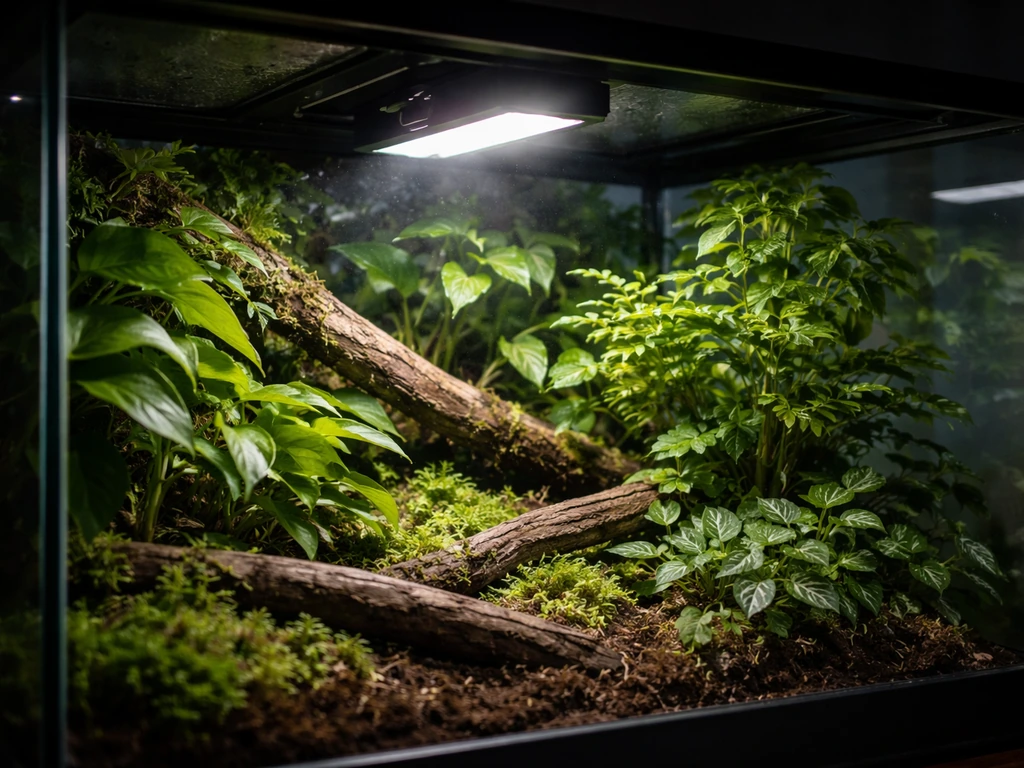
Can You Use Grow Lights for Reptiles Safely?
Yes, you can use some grow lights for reptiles safely with correct spectrum, distance, intensity, and timers.
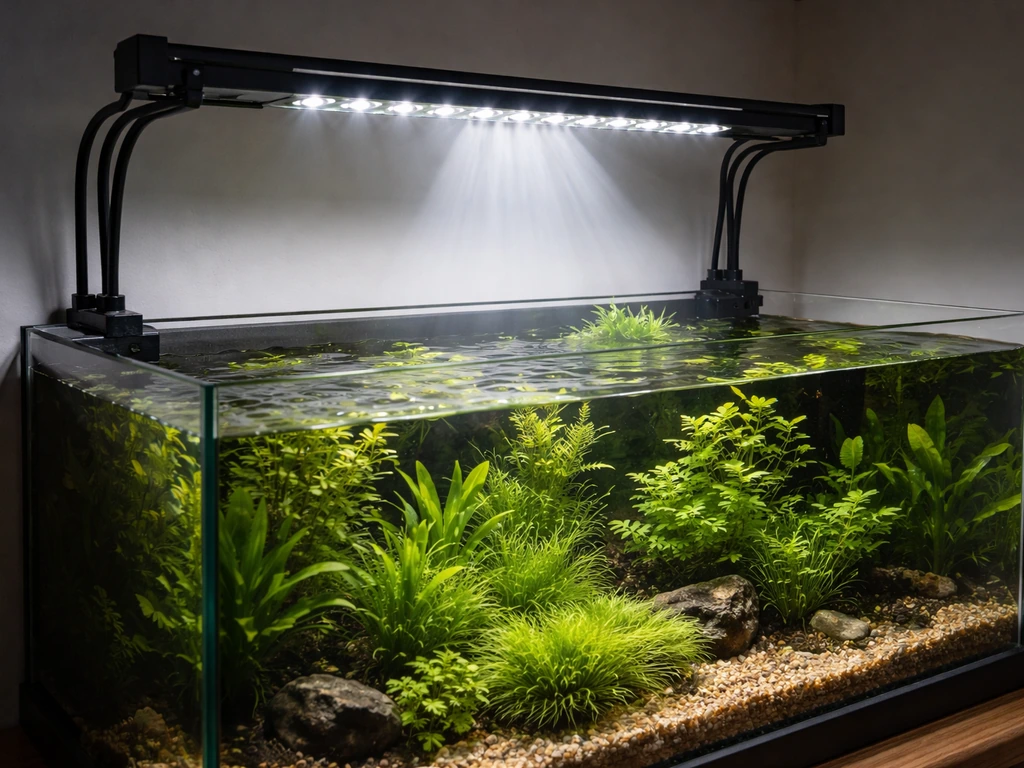
Can I Use a Grow Light for an Aquarium? LED Guide
Yes, you can use an LED grow light for an aquarium if spectrum, intensity, and waterproof mounting are right.