You can use a plant grow light inside a reptile enclosure, but only for one specific job: providing visible light to support live plants or general daytime illumination. It cannot replace a dedicated UVB bulb, and it will not supply the basking heat your reptile needs. Think of it as a useful addition to a complete lighting setup, not a shortcut that handles everything.
Can You Use Grow Lights for Reptiles Safely?
Marcus Holloway
15 Jun 2026
Is it safe to use grow lights around reptiles?
For the most part, yes, a standard LED grow light is physically safe to use near or above a reptile enclosure. The light itself is not toxic, and modern LED panels do not produce dangerous levels of heat at the fixture. What makes grow lights potentially problematic for reptiles is not the light itself but what it is missing. Most plant grow lights emit no meaningful UVB.
Frances Baines at Lafeber Vet explicitly warns against relying on non-reptile products for UVB adequacy, noting that some lamps sold under terms like 'full spectrum' or 'grow light' have never been tested for the UVB wavelengths reptiles need for vitamin D3 synthesis. A reptile kept under grow lights alone, without a proper UVB source, is at real risk of metabolic bone disease caused by vitamin D3 deficiency.
So the safety answer is: the grow light itself is not dangerous, but using it as your only light source is.
There is also a flicker consideration worth mentioning. Some lower-quality LED drivers use pulse-width modulation dimming that can introduce visible or near-visible flicker. Research on flicker suggests it can be stressful to animals (and humans) with high flicker sensitivity. If you are buying a grow light for an enclosure, choose a driver-quality brand or a fixture with a smooth, flicker-free power supply rather than the cheapest option on the market.
What LED grow lights actually do and do not provide
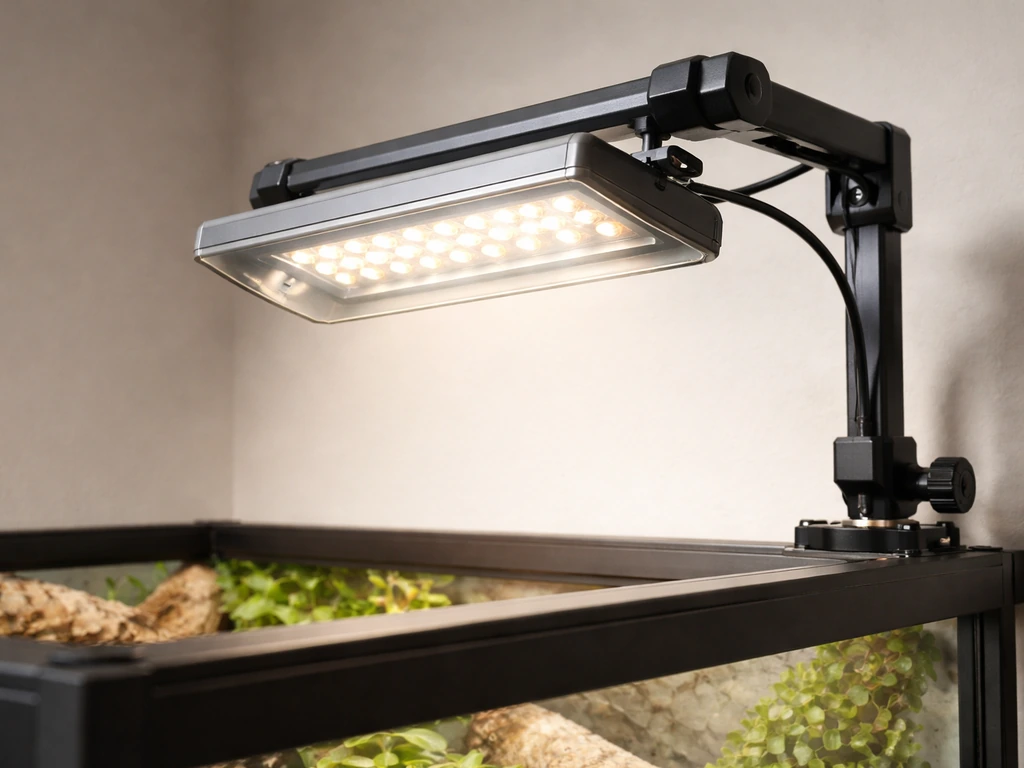
Plant-focused LED grow lights are engineered around photosynthetically active radiation, typically the blue (around 450 nm) and red (around 650 nm) wavelengths that drive plant growth. If you are wondering whether can aquarium lights be used as grow lights, keep in mind that plant and reptile lighting needs overlap but are not the same. Some 'full-spectrum' grow LEDs extend into green and white wavelengths, making them appear more natural.
A handful of grow LEDs include weak UV LEDs in the 365 to 400 nm UVA range to stimulate secondary metabolite production in plants. That UVA is not the same as reptile-grade UVB (280 to 315 nm), and it is nowhere near potent enough to trigger meaningful D3 synthesis in a reptile.
Zoo Med's own literature makes the distinction clear: their ReptiSun LED UVB products are specifically engineered to combine UVB, UVA, and visible-light diodes because ordinary LEDs alone do not cover UVB. Arcadia's ProT5 reptile system is built around a dedicated HO-T5 UVB lamp, not around grow-light technology. These companies are not being overly cautious. They are reflecting the reality that plant-grow spectra and reptile-lighting spectra are designed for very different biological needs.
| Feature | LED Grow Light | Reptile UVB Fixture (e.g., ReptiSun T5, Arcadia ProT5) |
|---|---|---|
| Visible light / daylight simulation | Yes | Yes |
| UVA output | Sometimes (weak) | Yes (intentional, measured) |
| UVB output (280–315 nm) | No | Yes (core feature) |
| Supports D3 synthesis in reptiles | No | Yes |
| Drives plant photosynthesis | Yes | Partially / not primary purpose |
| Basking heat production | No | No (separate basking bulb needed) |
| Tested for reptile safety | No | Yes |
The practical takeaway: a grow light can sit alongside your UVB fixture and basking bulb to boost plant growth in a bioactive vivarium or to give a lush, natural-looking daytime appearance. It just cannot stand in for either of those other components.
Picking the right spectrum, intensity, and fixture
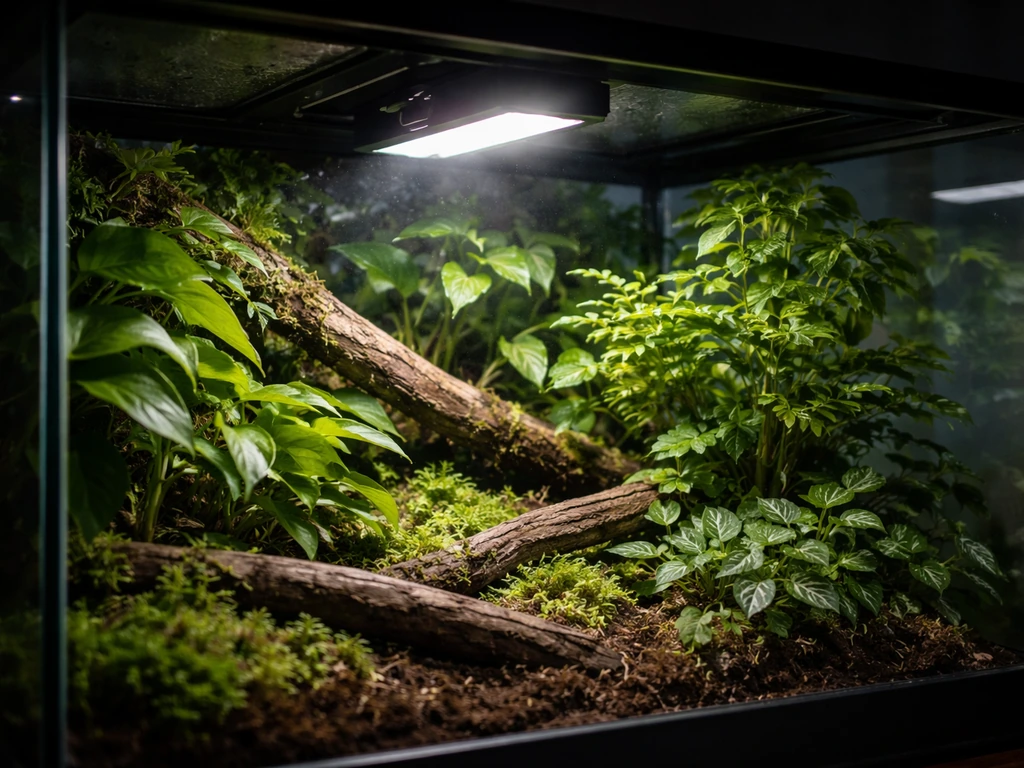
If you have decided to add a grow light to a planted vivarium, choose a full-spectrum white LED or a balanced red-blue LED rather than a blinding purple 'blurple' panel. The purple panels are optimized for plant growth efficiency in grow tents, not for a space where a reptile lives. A natural white-spectrum grow light is easier on your reptile's eyes, easier on your own eyes when you check on the animal, and generally more pleasant to live with.
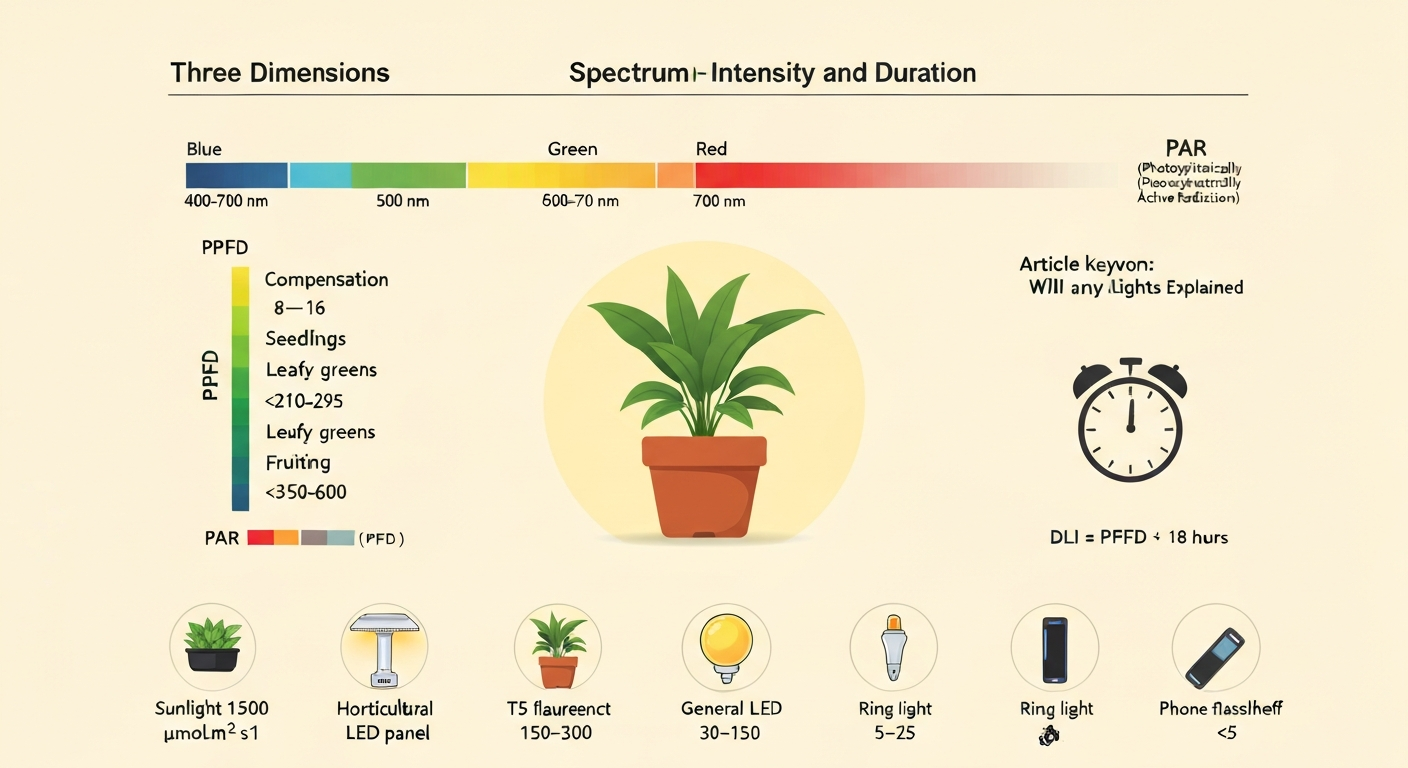
For intensity, moderate is better than maximum. You do not need 1,000 PPFD (micromoles per square meter per second) to keep ferns, pothos, and bromeliads alive inside a vivarium. Most terrarium plants are low to medium light plants that do well in the 100 to 300 PPFD range. A compact LED bar or panel rated for small grow areas (think 1x1 to 2x2 feet) is usually plenty. High-output grow panels designed for cannabis cultivation will overshoot your needs, drive up enclosure temperatures, and stress both the plants and the animal.
Spectrum-wise, avoid grow lights that advertise significant UVB output unless that product has been specifically tested and rated for reptile use with published UVI readings. As Lafeber Vet's guidance notes, some products have created 'small circles of extremely intense UVB' that can cause skin damage. A plant grow light claiming UV output is an unknown quantity, not a measured reptile-safe dose.
How to set up the fixture correctly
Distance from the enclosure
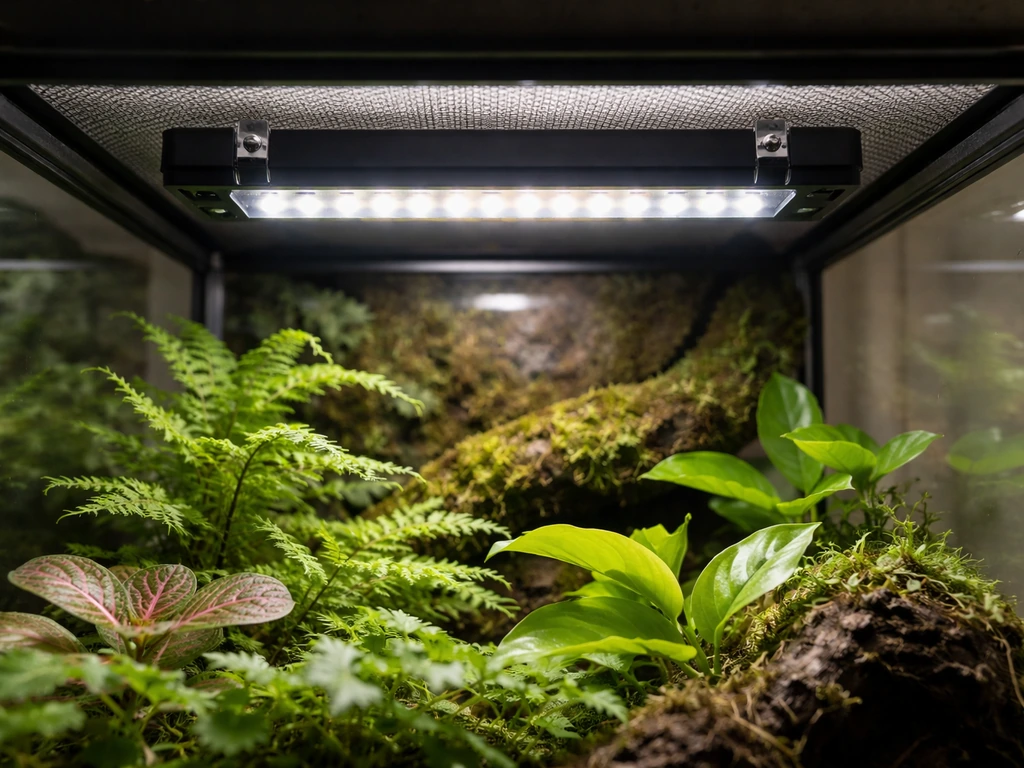
Mount the grow light above the screen top or inside the enclosure where the manufacturer's instructions allow. Zoo Med’s T5 HO terrarium hood documentation also notes that lamp distance and placement must be considered when determining the lamp’s effective output for the enclosure lamp distance/placement must be considered when determining the lamp’s effective output. For most compact LED grow bars, 6 to 12 inches above the plant canopy delivers adequate light without excess heat buildup. Check the actual temperature at the substrate level with a digital thermometer after an hour of operation. If temperatures at the warm end of the enclosure are climbing above what your species requires, raise the fixture or reduce the intensity.
Photoperiod and timers
Most reptiles do well on roughly a 12-hour light and 12-hour dark cycle, though this varies by species and season. The important thing is consistency. Use a plug-in mechanical timer or a smart plug to automate your grow light on the same schedule as your UVB fixture. Zoo Med's own product guidance warns that incorrect photoperiods can disturb your reptile's sleeping patterns. Complete darkness at night matters. The grow light should go off at the same time as the UVB lamp, and nothing visible should be left on overnight.
If you want to replicate a natural dawn, you can run a low-wattage infrared heating element for 30 to 60 minutes before the grow light and UVB lamp kick on. Arcadia's LumenIZE guidance describes exactly this approach: starting heat early, then ramping in visible light and UV as the 'day' begins. It is not strictly necessary, but it is a thoughtful upgrade for more sensitive or naturalistic setups.
- Timer 1 (optional pre-dawn heat): basking or IR heat lamp on 30–60 minutes before lights on
- Timer 2 (daytime): grow light + UVB fixture on for 10–12 hours
- Timer 3 (optional dusk): basking heat off 30–60 minutes before lights out
- Nighttime: all visible lights off, use a non-visible heat source only if species requires overnight warmth
Risks to watch for and how to troubleshoot them
Heat buildup
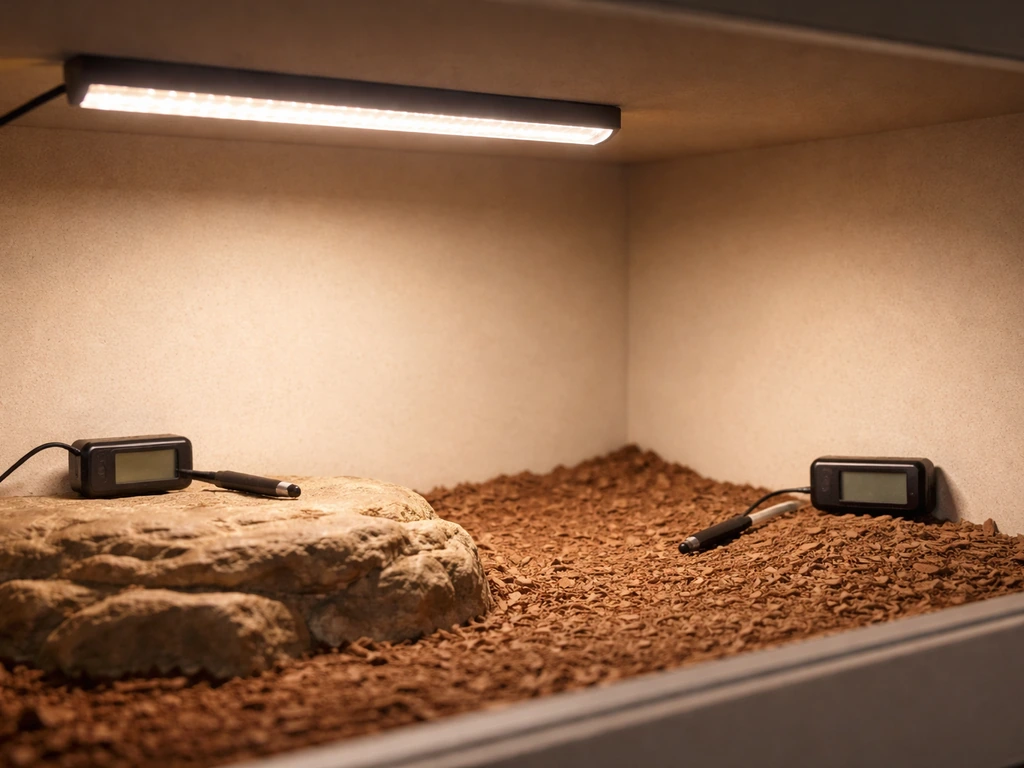
LED grow lights run much cooler than HID or fluorescent grow fixtures, but they still add some thermal load to a small enclosure. Monitor temperatures on both the warm and cool sides after adding the grow light. If the cool side is creeping up, raise the fixture, reduce run time, or swap to a lower-wattage LED bar. A digital thermometer with a min/max memory function is the fastest way to catch this problem.
UV and eye concerns
Standard plant grow lights do not produce reptile-harmful UV levels. However, very bright LED panels can cause eye discomfort for both you and your animal if aimed directly at them. Position the light to shine down on the plants and enclosure floor, not horizontally at eye level. Arcadia's own safety data sheets for reptile basking bulbs warn against looking directly at a lit tube. Apply the same common sense to grow panels: look at the lit plants, not at the diodes themselves.
Nighttime light leakage
Blue-spectrum light (which most LED grow lights emit heavily) suppresses melatonin production and disrupts circadian rhythms, a fact well-established in both human and animal research. If your timer fails or you leave the grow light on overnight, your reptile will experience the same kind of sleep disruption that staring at a screen before bed causes in people. Double-check your timer regularly and ensure the 'off' state is truly off, not dimmed.
Animal behavior signals something is wrong
- Hiding more than usual or avoiding the lit area: the light may be too intense or positioned awkwardly
- Lethargy or reduced appetite over weeks: evaluate whether the UVB fixture is working, not just the grow light
- Skin or eye irritation visible on examination: check for unexpected UV output from the fixture with a UV meter if possible
- Plants burning or bleaching: the grow light is too close or too intense; raise the fixture
What to realistically expect, and when to skip the grow light entirely
Adding a properly selected grow light to a planted vivarium will noticeably improve plant health, density, and color compared to running only a reptile UVB fixture. UVB fixtures are not optimized for plant growth spectra, so low-light plants that were barely surviving may actually thrive once you add a dedicated grow LED. This is the best real-world use case for combining the two.
What you will not get from a grow light: any meaningful UVB for your reptile, any basking heat, or any reduction in the need for proper reptile-grade equipment. If you are on a tight budget and have to choose between adding a grow light or upgrading your UVB fixture, upgrade the UVB fixture every time. Metabolic bone disease from D3 deficiency is a serious, preventable condition, and no plant-grow LED addresses it.
If your enclosure has no live plants, there is almost no reason to add a separate grow light. Your reptile UVB fixture already provides visible daylight-spectrum light. A grow light only earns its place when you are actively trying to grow plants inside the vivarium.
Better alternatives to consider
If you want a single fixture that handles both visible light and UVB, look at products like the Zoo Med ReptiSun LED UVB or Arcadia ProT5 systems. These are purpose-built to deliver measurable UVB output alongside good visible light, tested specifically for reptile safety. They cost more than a basic grow light but eliminate the need to run two separate fixtures and remove the guesswork about whether your UVB needs are actually being met.
It is also worth noting that this 'can you use one type of light for a different purpose' question comes up in other hobby niches too. People often ask similar things about aquarium lights for plant growing, reef lights for plants, or reptile lights for plants. If you are wondering whether reptile lights can grow plants, the same idea applies: specialty spectra matter, and one type rarely fully replaces the other reptile lights for plants.
Aquarium lights are generally designed for aquatic plants and do not provide reptile-appropriate UVB or basking heat, so they should not be relied on for that purpose. This same logic applies to aquarium lights: they may help with plant growth, but they cannot replace reptile-grade UVB or proper basking heat.
If you are trying to grow coral with LED lighting, the key difference is that corals need the right spectrum and intensity for photosynthesis, not just general “plant grow” output aquarium lights for plant growing, reef lights for plants. If you are wondering can i use grow light for aquarium use, make sure the spectrum and intensity match the specific aquatic plants you want to grow. You can use aquarium lights to grow plants, but you still need to match the intensity and light spectrum to the plants you are trying to keep alive.
That same idea applies to can reef lights grow plants, since reef-focused LEDs are tuned for aquarium needs rather than reliable plant growth in a vivarium reef lights for plants. If you are asking about aquarium use, a grow light can help aquatic plants, but it still needs to match the right spectrum and intensity for the tank setup aquarium lights.
In almost every case, the answer follows the same logic: specialty lights are optimized for their intended use, and they can often supplement but rarely fully replace what the other type provides.
Your next steps today
- Confirm your enclosure already has a functioning, correctly positioned reptile UVB fixture before adding anything else
- If you want to add a grow light for live plants, choose a full-spectrum white LED bar sized for your enclosure footprint, not a high-output grow tent panel
- Mount it above the plant canopy at 6 to 12 inches, then check temperatures at substrate level after one hour of operation
- Set a timer so the grow light runs on the same 10 to 12 hour schedule as your UVB lamp, and verify it cuts off completely at night
- Watch your reptile's behavior for the first two weeks: normal activity, basking behavior, and appetite are signs the setup is working
- If you want to simplify and skip running two fixtures, consider a reptile-specific LED-UVB combo unit instead
FAQ
If the grow light says “full spectrum,” can it replace reptile UVB?
Yes, you can use a grow light, but only as a daylight supplement, not as your UVB. If you do not have a reptile-grade UVB lamp (and the correct distance/output for your species), the risk of vitamin D3 deficiency remains even if the grow light is “full spectrum” and looks bright.
My grow light includes UVA, does that protect my reptile from metabolic bone disease?
Don’t use the advertised “UV” feature at face value. Plant grow lights that include UVA (often around 365 to 400 nm) do not equal reptile UVB (280 to 315 nm), so only accept it as UVB if it is explicitly tested for reptile use with published UVI/UVB measurements.
Will a grow light hurt my reptile’s eyes, or cause stress?
A simple way to avoid eye and stress issues is to position the fixture so you never view the LEDs directly while you are standing in front of the enclosure. Shine it down onto the plants and the basking zone, and use a diffuser or lower brightness if your reptile shows squinting or attempts to avoid the light.
What’s the safest way to schedule a grow light so it does not disrupt my reptile’s sleep?
Often, yes. Timers can fail or smart plugs can lose settings after power outages, leaving the light on overnight. Use a mechanical timer for basics, then double-check that “off” truly cuts power (not dimming), and consider a second independent check for at least the first week.
How bright should the grow light be for a vivarium, without overheating the enclosure?
For most plants, about 100 to 300 PPFD is enough, so start lower and observe. The real-world check is temperature and behavior: measure substrate temperature after an hour, confirm the basking spot still matches your species needs, and raise or reduce the fixture if the enclosure warm end climbs.
Can I run the grow light longer than the UVB cycle to help plants grow faster?
If your plants are already doing fine, you can likely reduce runtime instead of increasing intensity. For many setups, matching a 12-hour photoperiod like your UVB cycle is a practical starting point, then adjust seasonally based on plant needs and your reptile’s normal activity pattern.
How can I tell if my grow light has problematic flicker?
If your grow light produces noticeable flicker, that can be stressful and also makes it harder to judge actual timing. Prefer fixtures sold for stable lighting (not the cheapest grow-tent panels), and if possible choose one with a known smooth driver. If you see a flicker effect when filming with a phone camera, treat that as a red flag.
If the grow light warms the enclosure a bit, can it replace a basking bulb?
Yes, you still need to match temperatures and basking heat with a dedicated basking heat source. Grow lights typically add some heat, but they are not designed to provide the correct basking temperature or thermal gradient, so you must verify the warm side using a probe thermometer.
Where should I mount a grow light in relation to the plants and screen top?
If you are aiming it at live plants, a screen-top mounting is common, but always confirm placement per the manufacturer and then verify with measurement. Use a digital thermometer at the substrate level after the first hour, and do not guess based on the fixture’s power rating alone.
My grow light is designed for cannabis or large grow tents, is it still safe for a small reptile enclosure?
Use less “reach” and more control. Choose a smaller footprint fixture sized for your enclosure so the brightest part lands on the plants and the floor, not the animal’s resting zones. High-output panels designed for large grow tents often overshoot light levels and can push temperatures up in small vivariums.
Next Articles
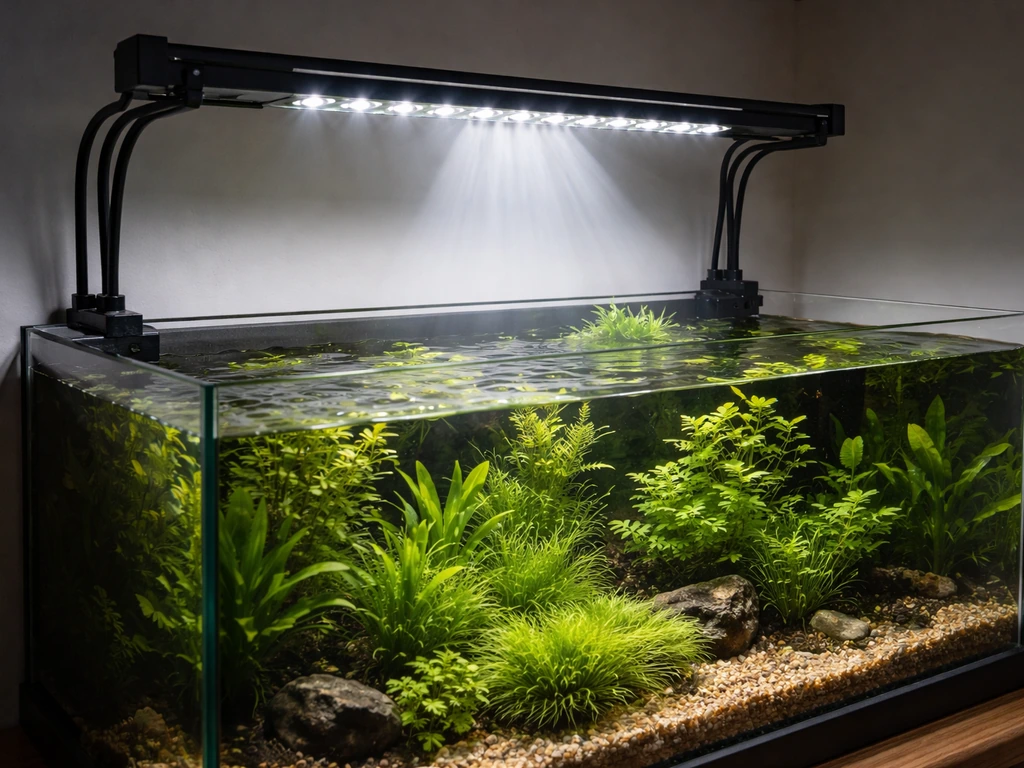
Can I Use a Grow Light for an Aquarium? LED Guide
Yes, you can use an LED grow light for an aquarium if spectrum, intensity, and waterproof mounting are right.
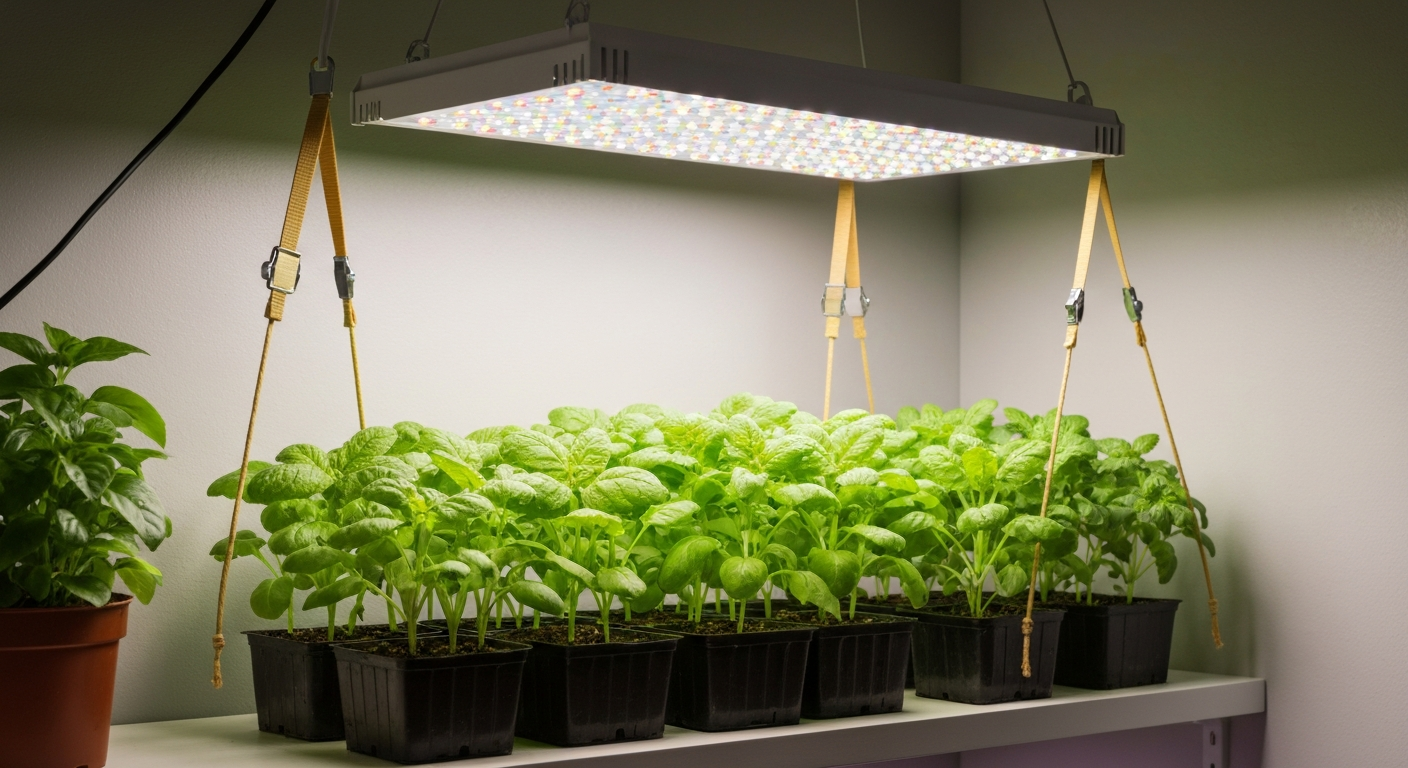
What Artificial Light Will Grow Plants: Best Lights Guide
What artificial light will grow plants: practical guide to LED, CFL, HID spectra, PPFD targets, setup, cost & tips.
Will Any Light Grow Plants? Guide for Indoor Growers
Can any light grow plants? Clear yes/no, science-backed light specs, setup tips, and which household lights work.