Yes, you can use a grow light for an aquarium, and if you already own a decent LED grow light, it will almost certainly work better for your aquarium plants than a cheap decorative fish tank light. The spectrum overlap between what plants need on land and what aquarium plants need underwater is real and significant. That said, there are a few things you need to get right: mounting height, daily run time, moisture safety, and intensity. Get those dialed in and your planted tank can genuinely thrive under a grow light. Get them wrong and you will either starve your plants or trigger an algae explosion that takes weeks to bring back under control.
Can I Use a Grow Light for an Aquarium? LED Guide
Marcus Holloway
11 Jun 2026
Why grow lights and aquariums are actually a pretty good match
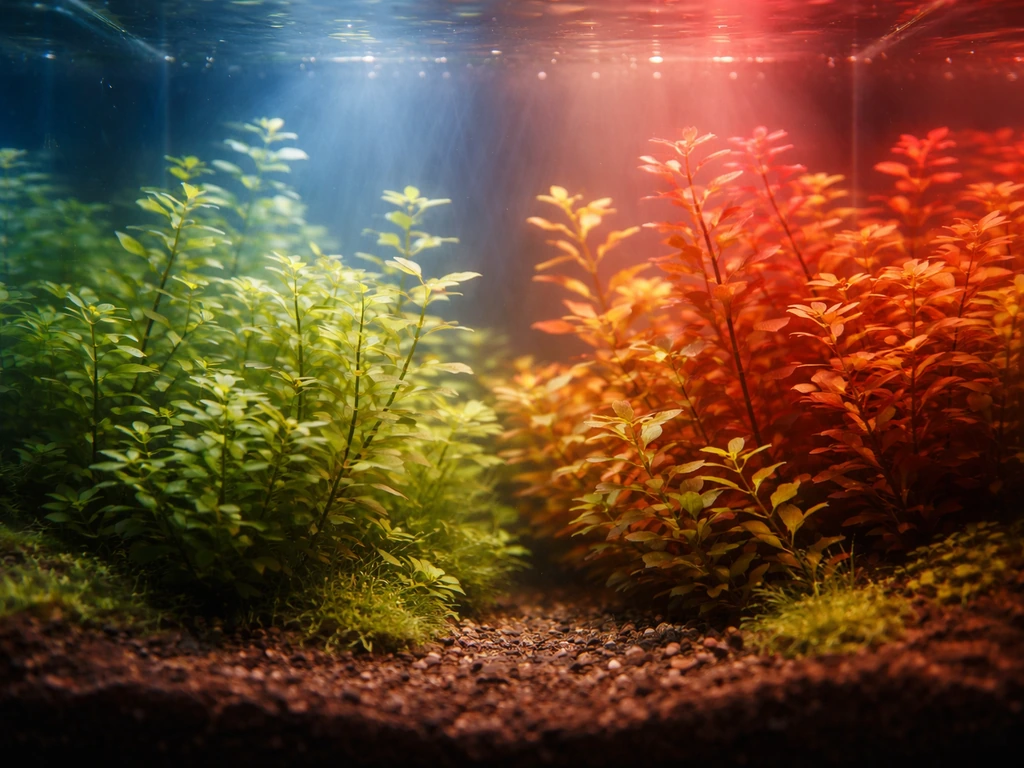
Aquarium plants photosynthesize the same way land plants do. They need blue wavelengths (roughly 430–470 nm) for vegetative growth and red wavelengths (roughly 640–680 nm) to drive the photosynthesis reaction efficiently. A full-spectrum LED grow light hits both of those ranges, which is exactly why it works in a tank. The water column does absorb and scatter some light, especially red wavelengths at depth, but for most freshwater planted tanks that are 12–18 inches deep, the loss is manageable. The bigger variable is intensity at the substrate, not the spectrum.
The metric that actually matters here is PAR, short for Photosynthetically Active Radiation, usually measured as PPFD (Photosynthetic Photon Flux Density) in µmol/m²/s. Think of it as a count of how many usable light particles are hitting a square meter of surface per second. What counts for your plants is the PAR reading at the substrate, not at the light source.
A grow light that looks blinding from the top of the tank might be delivering surprisingly little PAR at gravel level once you factor in distance, the glass lid, any tannins in the water, and the light's optics. This is why measuring or estimating PAR at the bottom of the tank is the right way to set up any aquarium light, grow light included.
What makes an LED grow light actually compatible with a tank
Spectrum
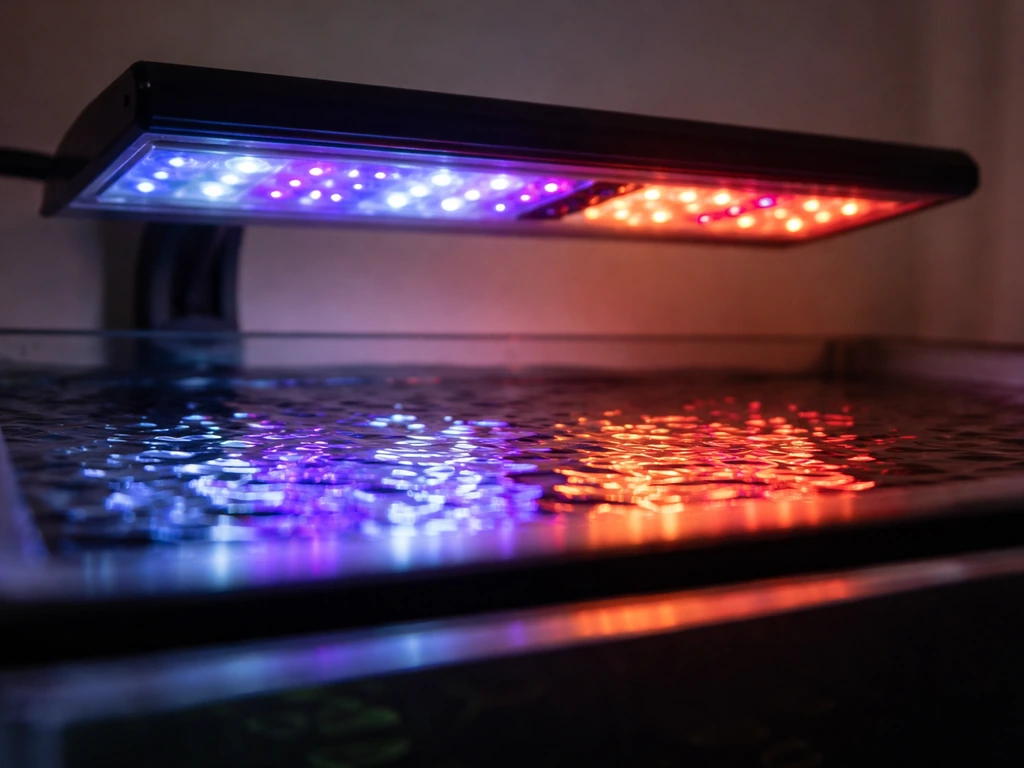
A broad-spectrum or full-spectrum LED grow light is what you want. The blurple (blue and purple) lights that are common in cheap grow-light kits technically provide the right wavelengths, but they make your tank look bizarre and make it nearly impossible to spot health problems in your fish or plants. A white full-spectrum LED that covers the 400–700 nm range, with peaks in the blue and red, is much easier to live with and gives you a natural-looking tank. If you have a grow light that includes a green channel too, that is a bonus: green light penetrates water better than red and helps fill in the mid-tank zone.
Intensity
This is where most beginners trip up. For freshwater planted tanks, the general PAR targets at substrate level are: low light (10–30 µmol/m²/s), medium light (30–50 µmol/m²/s), and high light (50–100+ µmol/m²/s). For example, one planted-aquarium guide translates low/medium/high into substrate PAR bands of about 20, 40, 40, 80, and 80, 120 µmol·m⁻²·s⁻¹, noting that errors can be large because of spectrum, water clarity, tannins, and reflections [PAR targets at substrate level are](https://en. aqua-fish.
net/articles/aquarium-lighting-guide-answers-pictures). Aquarium Light Guide: Choosing a Light For Your Planted Tank (Tank Territory) offers a practical PAR rule of thumb of low 10, 30 µmol/m²/s, medium 30, 50 µmol/m²/s, and high 50, 100 µmol/m²/s low (10–30 µmol/m²/s), medium (30–50 µmol/m²/s), and high (50–100+ µmol/m²/s). Low-light plants like java fern, anubias, and most mosses sit happily at the lower end.
Stem plants and carpeting plants that you see in Dutch-style aquascapes need the higher range. Many LED grow lights designed for a 2x2 or 4x4 tent footprint are quite powerful, and you will likely need to either dim them, raise them, or run them for fewer hours than you might expect. Running a high-power grow light at full blast over a small tank is one of the fastest ways to cause an algae crisis.
Heat
Modern LED grow lights run much cooler than T5 fluorescent or metal halide fixtures, but they still produce some heat. The concern is not usually the light warming the water directly. The more practical issue is that a grow light mounted close to the tank surface can reduce surface gas exchange or warm the air around the tank slightly. Keep at least 6–12 inches between the light and the water surface and make sure the driver (the power brick on most LED panels) has decent airflow around it. If your light has a built-in fan, do not obstruct it.
Setting it up safely over the tank
Mounting height
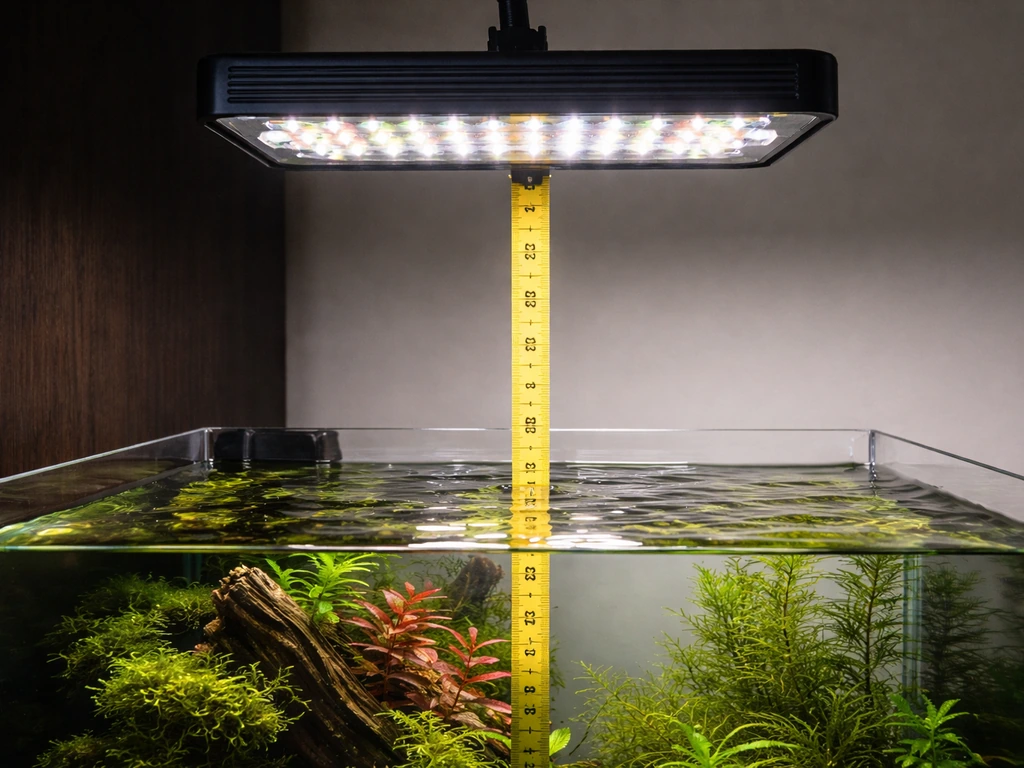
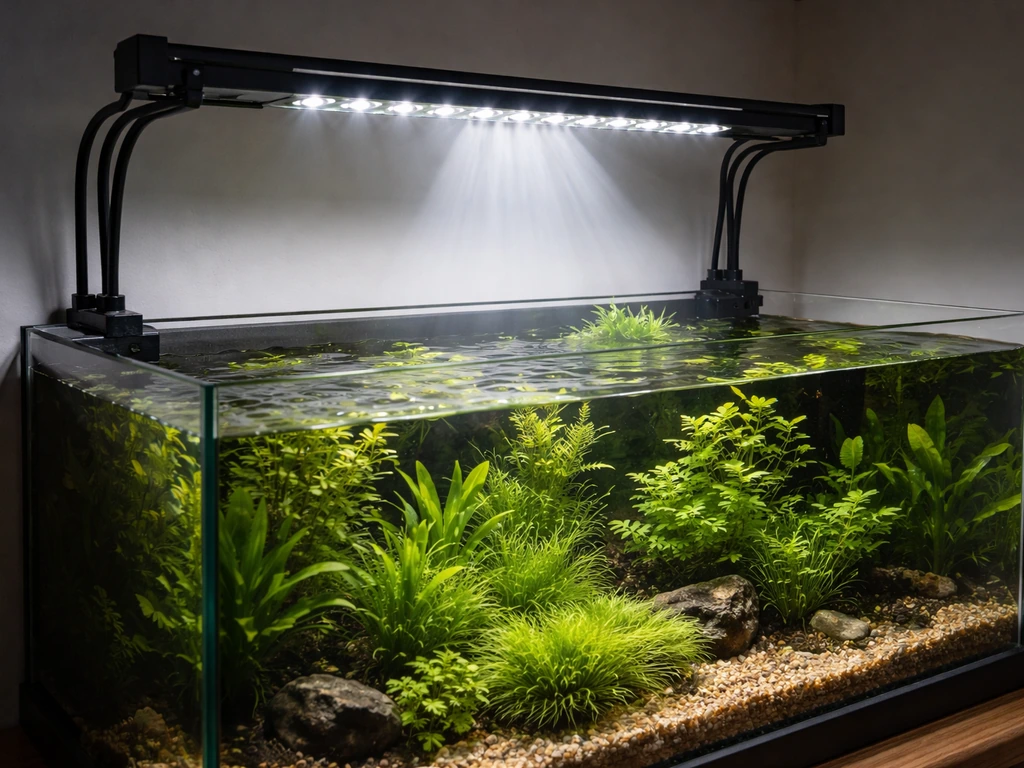
For a standard 10–20 gallon tank (roughly 12–16 inches of water depth), starting with the grow light about 12 inches above the water surface is a reasonable baseline. For a taller tank or a light with wide beam angles, you may need to raise it to 18 inches or more to get even coverage across the substrate without hot spots in the center. If your grow light only has a narrow beam, a taller mounting position helps spread it. You can use an adjustable light hanger, a DIY arm mount off the hood, or a simple light stand to get the right height. The goal is even illumination across the whole substrate, not a bright center and dim edges.
Waterproofing and moisture safety
This is the one non-negotiable safety item. Grow lights are not designed for wet locations. Aquariums splash, condense moisture on lids, and occasionally overflow. Do not mount a grow light so low that splash can reach it directly.
Do not let the power cord sit in pooled water. If your tank does not have a glass lid (and many planted tanks skip the lid to allow CO2 exchange), be especially careful about condensation rising up to the light housing. A light with an IP54 or higher water-resistance rating gives you a margin of safety, but most standard grow lights are not rated for moisture at all.
Using a glass lid between the light and the water surface significantly reduces the risk. Also: always plug your grow light into a GFCI outlet or a power strip with GFCI protection. This is not optional near water.
Using a timer
A timer is essential, not optional. Aquarium plants do not benefit from more than about 8–10 hours of light per day, and fish need a consistent light cycle for their own wellbeing. Manual switching is inconsistent enough to cause problems. A simple mechanical outlet timer costs a few dollars and is one of the best things you can do for a planted tank. Set it, forget it, and your plants and fish get a reliable schedule every day.
How long to run it and what good settings look like
The single most common mistake aquarium keepers make with any light (grow lights included) is running it too long. More hours does not mean more growth. It usually means more algae. A good starting point for most planted tanks is 8 hours per day. If you are battling algae, drop to 6 hours and see if it helps. If your plants are growing well and algae is minimal, you can nudge toward 9–10 hours. Going above 10 hours is almost never beneficial and is a reliable way to develop a green water or hair algae problem.
| Tank type | Target PAR at substrate | Recommended photoperiod | Grow light intensity setting |
|---|---|---|---|
| Low-tech, low-light plants (anubias, java fern, moss) | 10–30 µmol/m²/s | 6–8 hours/day | Low or heavily dimmed |
| Medium-light community planted tank | 30–50 µmol/m²/s | 8 hours/day | Medium, adjust with height |
| High-light planted tank (carpeting plants, stem plants) | 50–100 µmol/m²/s | 8–10 hours/day | Medium-high, CO2 usually needed |
| Algae-prone or recovering tank | 10–20 µmol/m²/s | 6 hours/day | Heavily dimmed or raised high |
If your grow light does not have a dimmer, you have two options: raise it further from the tank to reduce intensity at the substrate, or run it for fewer hours. Raising it is generally more effective because it also helps with even coverage. A lot of grow lights marketed for 4x4 tent footprints are simply too powerful at close range for a 20-gallon aquarium. That is not a dealbreaker, it just means you need to work with height and timer settings rather than dialing a knob.
If you want the best of both worlds and your light supports it, a "siesta" schedule works surprisingly well for planted tanks. Run the light for 4–5 hours in the morning, give a 2–3 hour break in the middle of the day, then run it for another 3–4 hours in the evening. Plants use light continuously during the photoperiod but benefit from the break in CO2 demand, and many hobbyists report that the siesta schedule reduces algae growth noticeably without sacrificing plant performance.
What results to actually expect
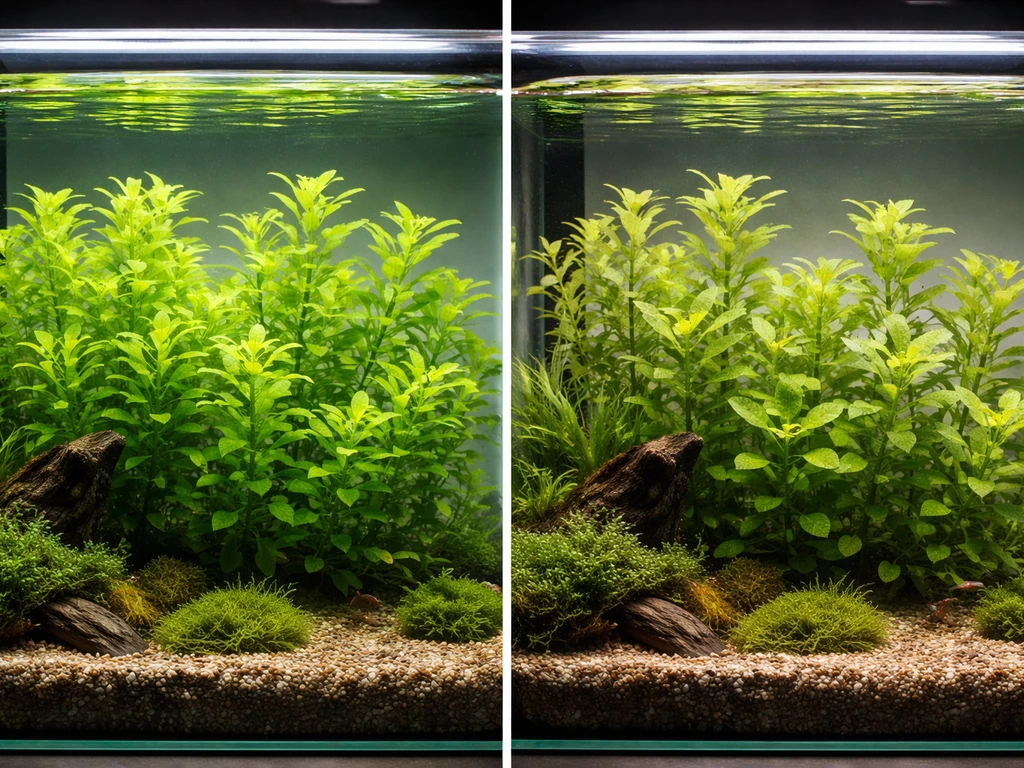
The good outcomes
With the right intensity and photoperiod, a grow light can make a planted aquarium look dramatically better than a basic fish-tank LED strip. Stem plants will grow faster and bushier, carpeting plants will spread more readily, and colors on high-light plants will deepen. Photosynthesis will be visible: you will see tiny oxygen bubbles streaming off leaves in good light (called pearling), which is one of the most satisfying things in the hobby. Java fern and anubias will stay healthy at low settings, and if you are dosing fertilizers and CO2, a grow light gives you the intensity to actually support that investment.
The likely downsides
Algae is the main risk. Green spot algae on the glass, green dust algae, and especially green hair algae all respond quickly to excess light. If you start seeing algae blooms within the first two weeks of switching to a grow light, the first fix is always to reduce the photoperiod or raise the light, not to add more plants or dose more fertilizer. Algae and plants are competing for the same light energy, and algae wins the short-term race almost every time if you give it too many hours.
Some fish and invertebrates can be stressed by very bright light, particularly if there are no shaded areas in the tank. Dense planting, floating plants, or driftwood with shadow areas helps. Shy fish like plecos or certain loaches will appreciate having somewhere to retreat. Shrimp generally tolerate brighter tanks as long as they have cover.
Troubleshooting when things go wrong
- Algae bloom within 1–2 weeks: reduce photoperiod by 1–2 hours, or raise the light 4–6 inches. Add fast-growing stem plants like hornwort to outcompete algae for nutrients.
- Plants melting or not growing: check PAR at substrate level. If you cannot measure it, try lowering the light 2–3 inches and see if growth improves after two weeks. Also check that you are dosing nutrients.
- Green water (water turns murky green): this is free-floating algae and usually means too much light combined with excess nutrients. Blackout the tank for 3 days (cover completely, no light) and reduce the photoperiod when you restart.
- Plants growing but yellowing: likely a nutrient deficiency, not a light problem. Add a complete liquid fertilizer and check your water parameters.
- Hot spots burning plant leaves near the surface: raise the light or use a frosted diffuser panel. Make sure the grow light is centered over the tank.
Common misconceptions and safety concerns worth clearing up
One question that comes up in grow-light communities generally is whether intense light from LED grow lights is harmful to people. The short answer is: staring directly into any very bright LED panel is a bad idea because of simple intensity, but standard LED grow lights do not emit significant UV in the ranges that cause sunburn or long-term skin damage. You are not going to get a tan from sitting next to your planted tank, and the cancer fears associated with grow lights are largely unsubstantiated for normal, indirect household exposure. The practical advice is just not to stare directly into the light when it is on, and to avoid having the light aimed at eye level where you normally sit.
The safety concern that is genuinely real around aquariums is electrical safety near water, which is a different thing entirely from the light itself being harmful. A GFCI outlet, cable management that keeps cords away from the water surface, and a glass lid between the light and the tank are the three things that actually matter. Also worth noting: a grow light with a separate driver (external power supply) tends to be safer to position near a tank than one with the driver built into the panel, because you can mount the driver well away from any moisture.
Another common misconception is that grow lights are always more powerful than aquarium lights and will inevitably cause algae problems. That is not true. Many commercial aquarium LED strips are actually quite bright, and some cheap ones are wildly inconsistent in their output. A good grow light with a dimmer and a timer, set up thoughtfully, can be more controllable and more effective than a mid-range aquarium fixture at the same price point.
If you are still deciding between a dedicated grow light and whether can aquarium lights be used as grow lights, the key comparison is controllability of spectrum, intensity, and your ability to manage photoperiod. The grow light is not the problem. Uncontrolled intensity and duration are the problem.
It is also worth noting the reverse question: can aquarium lights be used to grow plants outside a tank? Yes, you can use grow lights for many non-aquarium reptile setups too grow plants outside a tank. That topic comes up often in this space, and the answer is more nuanced, since most aquarium lights are optimized for aesthetics over raw PAR output. The grow-light-to-aquarium direction tends to work better than the aquarium-light-to-plant direction, precisely because grow lights are built around photosynthetic efficiency first.
The bottom line on using a grow light for your aquarium
A good LED grow light is a completely viable aquarium light, and in some cases it is a better choice than a light marketed specifically for fish tanks. The keys are: use a full-spectrum (not blurple-only) LED, get the intensity right for your plant types by adjusting height or using a dimmer, run it on a timer for no more than 8–10 hours a day, and take moisture safety seriously with a GFCI outlet and careful mounting.
If you are wondering about coral specifically, LED lighting can work, but you will need the right spectrum, enough intensity, and careful waterproofing and mounting. Start conservative on both duration and intensity, watch your tank for two weeks, and adjust from there. Plants growing and minimal algae means you have it right.
Many reptile keepers wonder if reptile lights can grow plants, and the answer depends on whether the light provides enough usable spectrum and intensity at the plant level. If algae takes off, pull back the light before you do anything else. That one habit will save you more frustration than any other piece of advice in planted aquarium keeping.
FAQ
Can I use a grow light if my aquarium is covered with a lid?
Yes, but you should only use it after you confirm the light can safely handle the lid-on setup (if you run a glass lid) and that you can reach the needed PAR at the substrate. Tents usually have reflective walls that increase usable light, while a bare aquarium setup often needs less height and a careful timer, so start at a lower intensity or fewer hours and adjust based on algae and plant growth.
What should I change first if algae starts showing up after switching to a grow light?
If your grow light has a dimmer or multiple channels, set it so the plants are getting the target PAR, not so the tank looks bright. If it does not have a dimmer, the safer adjustment order is first reduce daily hours, then raise the light, and only then consider changing spectrum or upgrading equipment.
Is it safe to mount a grow light inside the stand or close to the waterline?
You can, but most grow lights are not designed for direct, repeated splash. The practical approach is to keep the light above the splash zone, use a glass lid when possible, and route the power cord so no droplets can travel along it toward the driver or outlet. Also verify the driver location and airflow, since condensation is more likely to affect the power brick than the LED panel itself.
If I use a timer, do I still need to worry about turning the light on and off manually?
Use the timer, but also keep the light on a stable schedule, ideally with the same start time daily. Avoid turning it on and off manually throughout the day, since inconsistent photoperiod can make algae response harder to predict and can stress fish that rely on a consistent day-night rhythm.
How long should I run a grow light during the first couple of weeks?
A photoperiod that is too long causes the same problem even if the intensity is low. If you have a new setup, stick to 6 to 8 hours at first, then increase by about 1 hour only after you see stable plant growth and no early algae bloom.
Will a grow light always be better than a standard aquarium LED light?
Not necessarily. Many aquarium LED strips have limited usable output for plants, even if they look bright. The deciding factor is PAR at the substrate, so if you cannot measure PAR, you should rely on controllability (dimmer, uniform spread, timer) and start conservative with intensity and hours.
How do I know I set the grow light correctly for my tank?
Look for signs like pearling, healthy new leaf growth, and reduced algae on glass and substrate, then verify the tank is not getting a sudden algae surge within the first 1 to 2 weeks. If fish look stressed or the tank seems excessively bright, raise the light or reduce intensity, and if plants stall while algae grows, shorten the photoperiod before changing fertilizer.
Can a grow light harm my eyes or cause discomfort in the room?
For people sensitive to bright LEDs, the main issue is glare. Position the light so it is not aimed at eye level, and consider adding a shade hood or using a light diffuser designed for LED fixtures, as long as it does not block airflow or trap heat around the driver.
What if the light creates a bright spot in the middle of my tank?
Yes, especially if you want taller growth or more uniform spread across the substrate. For narrow beam lights, increase mounting height to reduce the hot spot in the center, then fine-tune with a shorter photoperiod or lower dimmer setting. If you notice dim edges, rather than increasing hours, consider adjusting height for better coverage first.
Are there any real electrical or moisture risks unique to using grow lights on aquariums?
Usually not. In an aquarium, most concerns are electrical and moisture-related rather than the spectrum itself. If you ever smell burning, see flickering, notice condensation near the driver, or have a wet cord situation, stop using it until you improve mounting and GFCI-protected power setup.
Next Articles
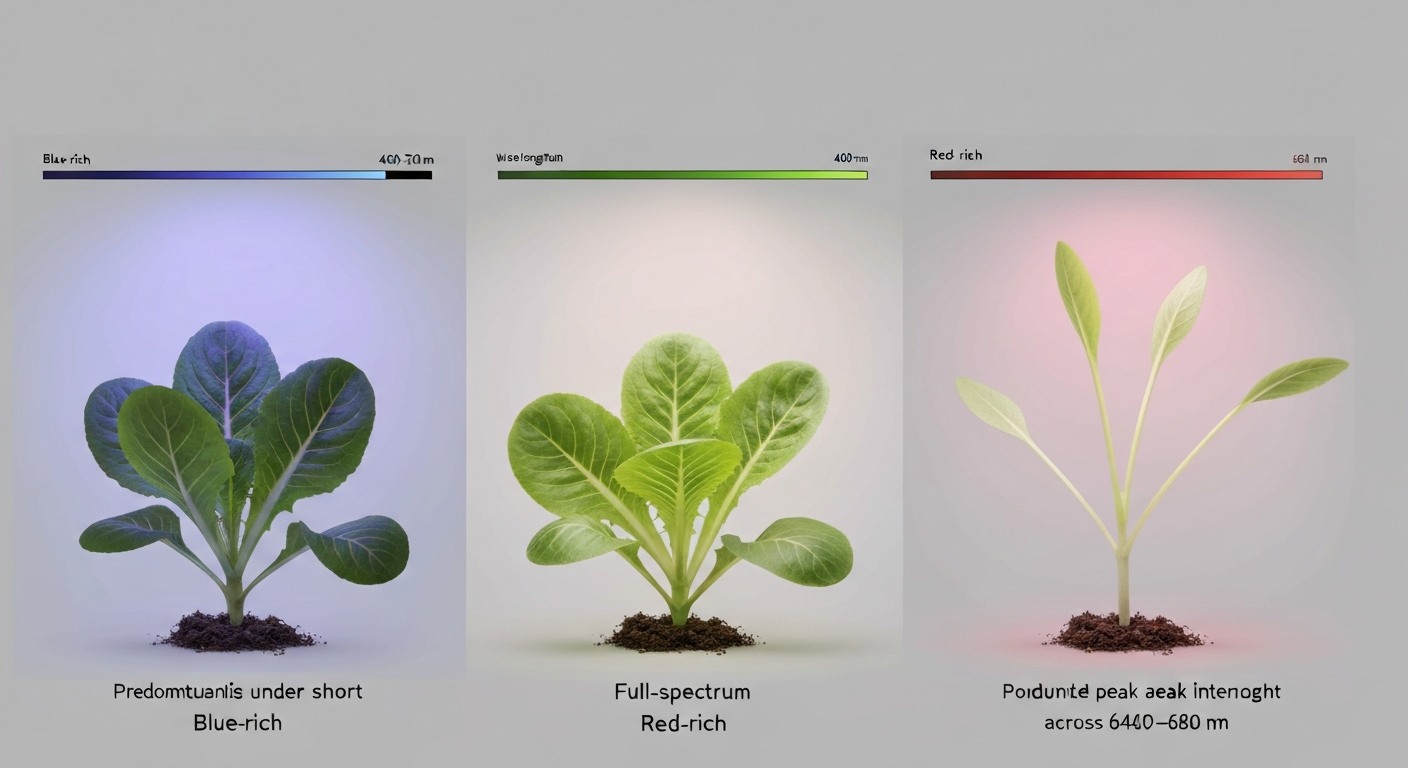
Why Do Plants Grow Best in Blue Light? Science & Practical Guide
Explore why blue light boosts vegetative growth, ideal blue:red ratios, PPFD, photoperiods, fixtures, and setup tips.
What Artificial Light Will Grow Plants: Best Lights Guide
What artificial light will grow plants: practical guide to LED, CFL, HID spectra, PPFD targets, setup, cost & tips.
Will Any Light Grow Plants? Guide for Indoor Growers
Can any light grow plants? Clear yes/no, science-backed light specs, setup tips, and which household lights work.