No, not any light can work as a grow light. Plants need light in the right color range (roughly 400–700 nm), at a strong enough intensity, for long enough each day. Related: if you are wondering about cheaper options like ring lights, the same checks apply, meaning you still need enough PPFD and a spectrum that covers the 400, 700 nm range for it to function as a grow light.
Can Any Light Be a Grow Light? What Works Indoors
Marcus Holloway
19 May 2026
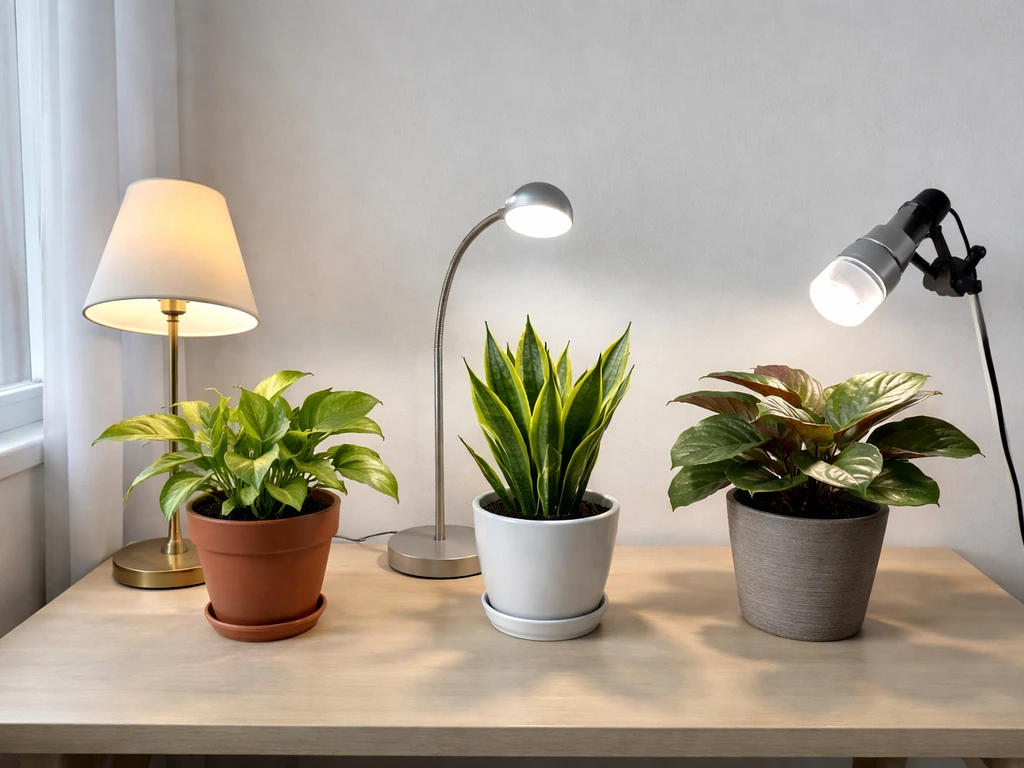
A dim incandescent bulb in the corner of your living room won't cut it, even if it's technically producing light. But a handful of common household lights actually can support plant growth when you use them correctly, and some surprisingly cheap options work better than purpose-built "grow" products that cost five times as much.
What "works" actually means for plant light
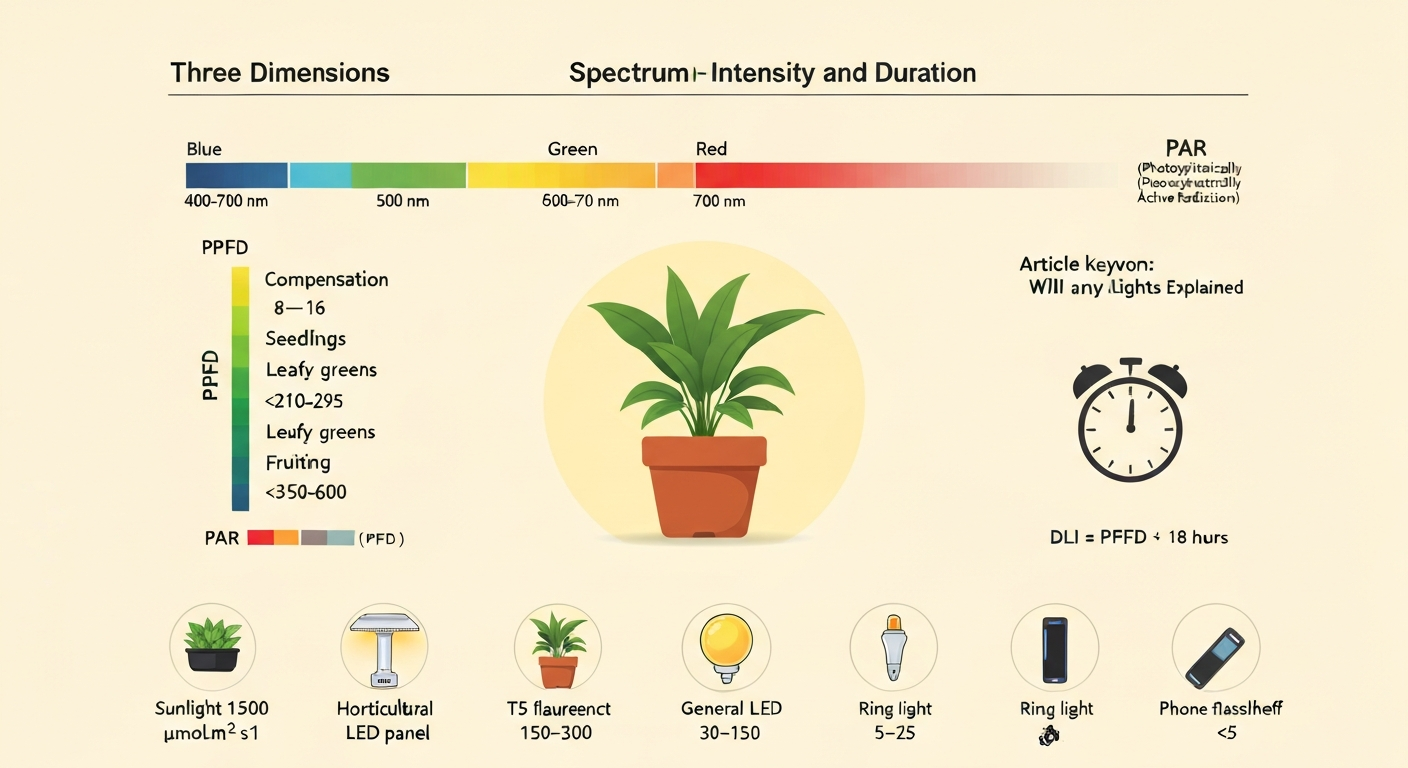
Plants don't care about brightness the way your eyes do. They care about photons in a specific energy range, delivered consistently. The unit that matters is PPFD (photosynthetic photon flux density), measured in micromoles per square meter per second (µmol·m⁻²·s⁻¹). Think of PPFD as the rate at which useful light photons land on your plant each second. Add up PPFD across the whole day and you get DLI (daily light integral), which is the total "dose" of useful light your plant receives. A light that looks bright to you but scores low on PPFD is essentially useless for plant growth.
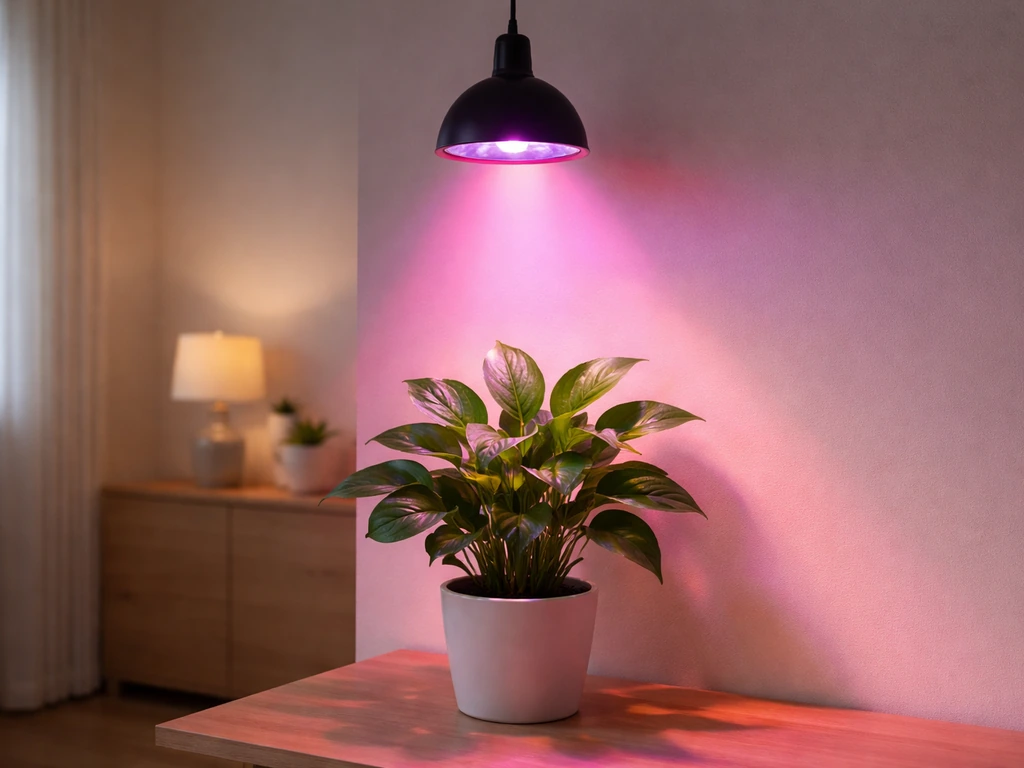
Spectrum matters too. Plants photosynthesize most efficiently in the red range around 660 nm and the blue range around 470 nm. That's why dedicated grow LEDs often look purple or pinkish: they're biased toward those two peaks. Green light (500–600 nm) isn't wasted either. NASA research found that adding green to a red-blue LED setup actually improved lettuce growth compared to cool white fluorescent alone. The takeaway: a broader, balanced spectrum is better than pure red/blue, and a light that skips most of the 400–700 nm range simply won't drive photosynthesis.
Lights that can actually work as grow lights
Here's where people are often surprised. Several common, affordable light sources can pull off real plant growth when positioned and run correctly.
T8 fluorescent shop lights
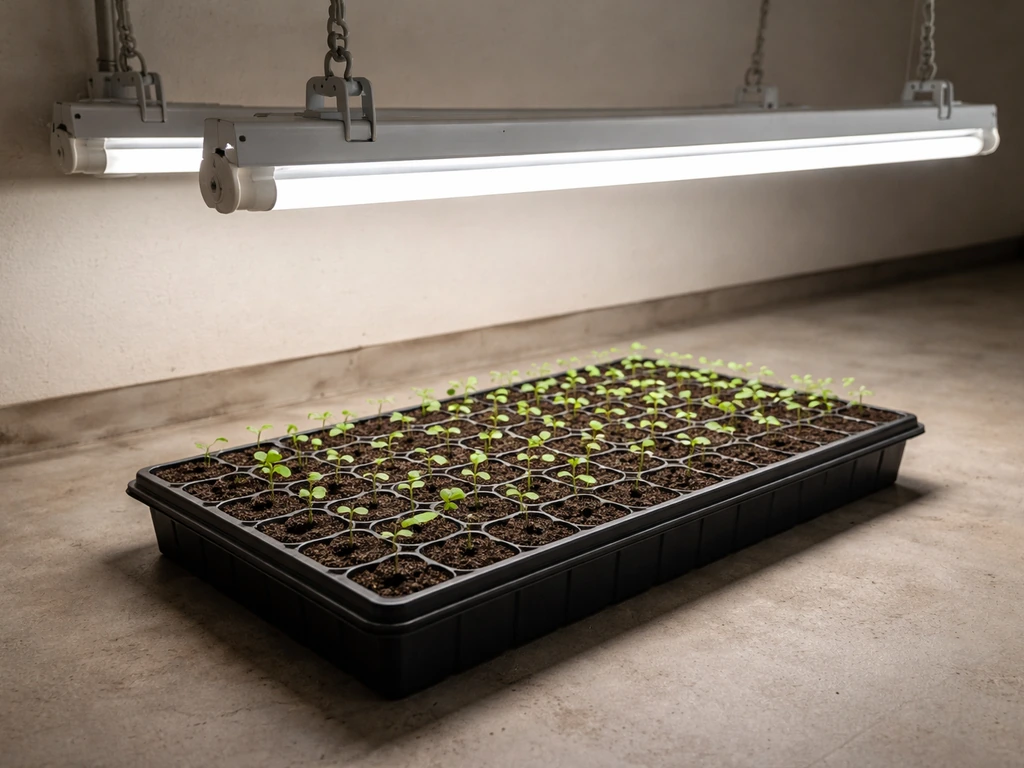
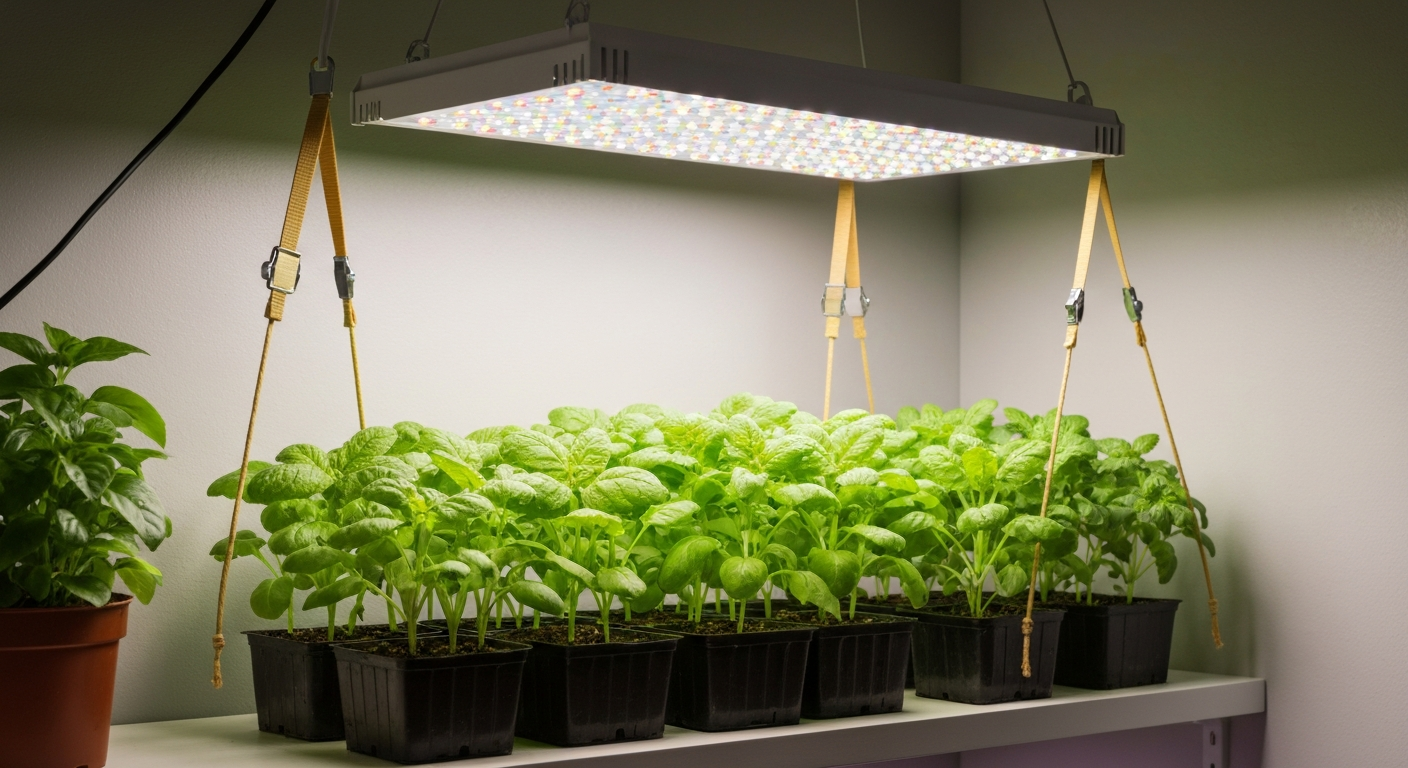
These are the classic "boring" lights you see in garages and hardware stores, and they're genuinely good for seedlings and leafy greens. The key condition: keep them less than one foot away from your plants and run them for around 22 hours a day. That sounds extreme, but it's what University of New Hampshire Extension recommends to achieve the DLI sun-loving seedlings need, because shop lights are not intense enough to hit the target at normal distances or with shorter photoperiods. Four-bulb T8 fixtures work especially well because you're stacking output. If you're starting seeds indoors in spring, this is a perfectly legitimate setup.
CFL bulbs
Compact fluorescent bulbs in the "daylight" 5000–6500K range can support low-light plants and seedlings, especially if you cluster several of them close to the canopy. They're cheap, easy to find, and don't run hot. The limitation is intensity: a single CFL over a pot isn't going to satisfy a tomato plant, but for herbs, propagation trays, or low-light tropicals, they're a reasonable budget option.
The limitation is intensity: a single CFL over a pot isn't going to satisfy a tomato plant, but for herbs, propagation trays, or low-light tropicals, they're a reasonable budget option, which is why CFL bulbs can be used as grow lights for modest needs. Related: daylight-rated CFL bulbs are a step up from warm-white CFLs because the spectrum skews more toward the blue end that drives vegetative growth.
Full-spectrum or "daylight" LED bulbs
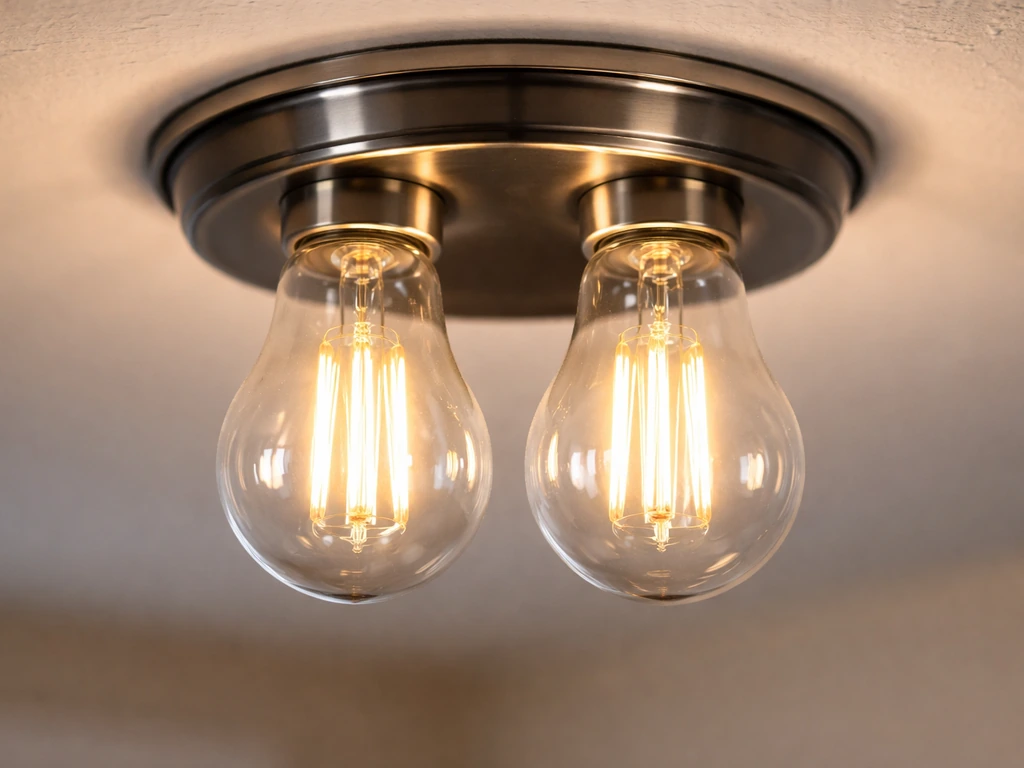
A standard LED bulb labeled "daylight" (5000–6500K) does emit light across a reasonable portion of the PAR range. For low-demand plants like pothos, snake plants, or peace lilies sitting near a window that gets limited sun, a nearby daylight LED can supplement effectively. It won't produce tomatoes or high-light orchids, but it works. The catch is intensity: these bulbs aren't designed to concentrate PAR output the way a purpose-built grow light is, so you need them close and you may need several.
Dedicated grow LEDs
Purpose-built LED grow panels are the most reliable option because they're optimized for PAR output, they're efficient, and they last a long time. A decent grow LED can deliver 400–800 µmol·m⁻²·s⁻¹ at the recommended distance, which covers the range that Oklahoma State University Extension identifies as supporting improved plant growth. They also run cool relative to their output, which matters for long photoperiods. If you're serious about growing fruiting plants or running a year-round setup, a real grow LED is worth the investment.
Lights that usually won't work well
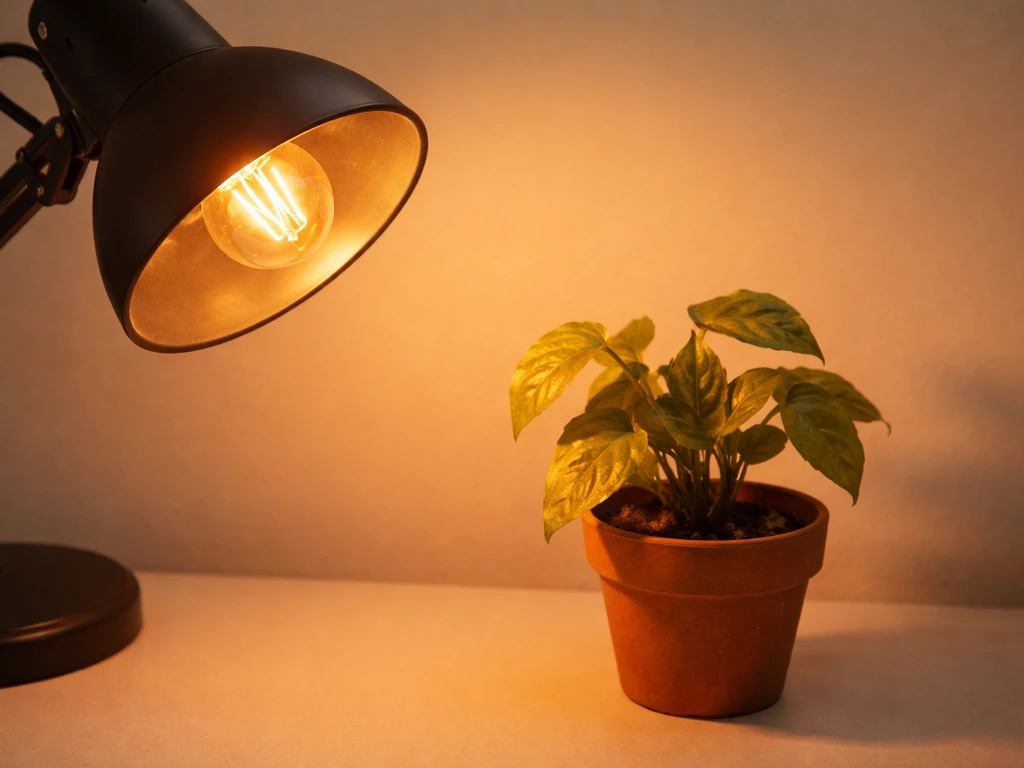
Some lights are genuinely not worth trying, and it helps to understand why so you're not wasting time troubleshooting a fundamentally broken setup.
| Light Type | Problem | Verdict |
|---|---|---|
| Incandescent bulbs | Extremely inefficient at delivering PAR; most energy goes to heat, not useful photons. Low PPFD output for the wattage used. | Not worth it |
| Warm white LEDs (2700–3000K) | Spectrum skews heavily toward yellow/red, very low blue output. Weak for vegetative growth and seedlings. | Poor choice |
| Halogen bulbs | Run very hot relative to PAR output, fire risk near plants, inefficient photon delivery similar to incandescent. | Avoid |
| Ring lights (photography) | Designed to flatter human skin tone, not deliver plant-usable photons. Low PPFD, wrong spectrum priority. | Won't work |
| Dim decorative LEDs / string lights | Far too low in intensity. Virtually zero PPFD at plant canopy level. | Useless for growth |
| UV tanning lamps | Emit UV outside the PAR range; dangerous to eyes and skin, not effective for photosynthesis. | Never use these |
The core reason incandescent and halogen bulbs fail isn't the spectrum alone. It's the ratio of heat to useful photons. Conversion tables from lighting engineers show that incandescent sources deliver very low photon output in the PAR range per watt, which means you'd need impractically high wattage (and heat) to hit any meaningful PPFD. Plants would roast before they'd thrive.
How to check whether a light will actually work for your plants
Step 1: Know your plant's PPFD target
Different plants need very different light intensities. University of Maine Extension gives a helpful breakdown by stage: seedlings and clones do fine under 100 µmol·m⁻²·s⁻¹, vegetative plants need 100–500 µmol·m⁻²·s⁻¹, and flowering or fruiting plants can use 400–1,200 µmol·m⁻²·s⁻¹ or more. Leafy greens sit in the middle, around 250–400 µmol·m⁻²·s⁻¹. This tells you how demanding your situation is before you pick a light source.
Step 2: Measure PPFD at the canopy
You don't need a $300 quantum sensor to get a ballpark reading. The Photone app (available for iOS and Android) uses your phone's camera sensor to estimate PPFD, DLI, and lux. It's not laboratory-grade, but for a DIY grow setup it's genuinely useful for comparing lights and checking whether you're in the right range. Hold your phone at canopy level, point the camera toward the light source, and see what number comes up. If it's well below your target, the light isn't working no matter how "bright" it looks to your eyes.
Step 3: Check the spectrum
Look at the color temperature and spectrum information on the bulb or product page. For plants, you want something in the 5000–6500K "daylight" range at minimum, or a light explicitly rated as "full spectrum" or listing PAR output. Lights peaking heavily in yellow or warm white territory (2700–3500K) are missing most of the blue wavelengths that drive photosynthesis and early growth. Dedicated grow lights should list their spectrum or show a PAR efficiency rating.
Step 4: Get the distance right
PPFD drops off fast as you increase distance from the light source. This is why positioning matters more than most beginners expect. T8 shop lights need to be within a foot of the canopy to be useful. Grow LEDs typically have a recommended hanging distance on the spec sheet. If you're improvising with household LEDs, start close (6–12 inches for seedlings) and watch for stress. Oklahoma State Extension also points out that overlapping the coverage areas of multiple fixtures helps avoid underlit corners and hotspots.
Setting up a light for your plants today
- Pick a light that matches your plant's stage. Seedlings and low-light plants: a 4-bulb T8 shop light or a cluster of daylight CFL/LED bulbs within 6–12 inches. Fruiting plants or high-light vegetables: invest in a purpose-built grow LED rated for your space.
- Set your timer. Most plants need 14–16 hours of supplemental light per day for active growth. If you're using a low-intensity source like shop lights for seedlings, you may need to push toward 18–22 hours to hit your DLI target.
- Measure your PPFD at canopy height using the Photone app before planting. Adjust the height of your fixture until you're in the target range for your plant type.
- Watch your plants for the first two weeks. Healthy growth means the light is working. Leggy, pale, stretching stems mean not enough light. Bleached or curled leaves at the top mean too much or too close.
- Adjust and document. Move the light up or down in 2-inch increments and recheck your PPFD. Once you find a setup that works, note the distance and timer setting so you can replicate it.
If you're just testing whether a given household light can carry the job, give it two to three weeks. That's enough time to see whether seedlings are developing normally or stretching (which is a clear sign of light deficiency). You don't need months of data to figure out a light isn't working.
Safety and realistic expectations
Heat and electrical safety
LEDs are your safest bet here. They run cool relative to their output, which means less fire risk near plants, pots, or growing media. Incandescent and halogen bulbs run hot enough to dry out soil rapidly and can be a fire hazard if they're close to plant material or fabric. ENERGY STAR notes that LED lifespan shortens as operating temperature rises, so even with LEDs, make sure fixtures have adequate airflow and aren't enclosed in a space that traps heat. For electrical setup, don't daisy-chain power strips or run multiple high-draw fixtures off a single undersized circuit. The CPSC advises against plugging high-heat devices into extension cords, and the same caution applies to overloaded grow light circuits.
The tanning and cancer myths
Standard grow lights (LEDs, fluorescents, shop lights) do not tan you and they don't give you cancer. These myths come from confusing grow lights with UV tanning equipment. The FDA is explicit that UV exposure from tanning devices raises skin cancer risk and can cause eye damage. But photosynthetically active radiation in the 400–700 nm range is visible light, not UV. Grow LEDs and fluorescents don't emit meaningful UV. You're not going to develop a tan from sitting under your seedling shelf. If a product is marketed as a "grow light" but emits strong UV, that's a red flag, not a feature.
What to expect from your plants
Realistic expectations matter. With a proper setup, you can grow healthy seedlings, herbs, leafy greens, and low-to-medium light houseplants year-round under artificial light alone. Fruiting plants like tomatoes and peppers are possible with a high-output grow LED but require more investment and management. Using a marginal light source (like household LEDs) will produce slower growth and may not be enough for fruiting stages, but it's genuinely fine for maintaining houseplants or starting seeds. The goal is to match the tool to the task.
Cheap bulbs and DIY repurposing: what's actually worth doing
If you want to repurpose what you already have before buying anything, here's how to think about it. Daylight-rated LED bulbs (5000K+) in a reflective shop fixture or clip-on reflector lamp work reasonably well for herbs and seedlings if you keep them within 6 inches and run them 14–18 hours a day. T8 or T5 fluorescent shop fixtures, which cost $20–40 at a hardware store, are a legitimate grow solution for seedlings and low-to-medium light plants when you run them correctly. A 4-bulb T8 within a foot of your seedling tray, on a 20-hour timer, genuinely works. These aren't workarounds; they're setups that extension services actively recommend.
What's not worth repurposing: desk lamps with warm-white bulbs, decorative Edison bulbs, ring lights (designed for cameras, not plants), or any incandescent fixture. The spectrum and intensity just aren't there, and you'll end up with leggy, struggling plants no matter how long you run them.
If you're questioning whether a specific light type can do the job (like shop lights, OTT lights, or regular LEDs), the answer always comes back to the same three checks: is the spectrum in the PAR range, is the PPFD high enough at canopy level, and are you running it long enough to deliver a useful daily light integral? For example, an OTT light can work as a grow light only if its spectrum supports PAR and its PPFD at the canopy is high enough for your plants OTT lights.
Regular lights can work for plants, but only if their spectrum is suitable, their PPFD at the canopy is high enough, and you run them long enough to meet the plant’s daily light integral needs regular LEDs. Shop lights and OTT lights can work as grow lights if their spectrum and PPFD are high enough at the canopy, and you run them long enough for your plants’ DLI target.
So if you're wondering whether can shop lights be used as grow lights, focus on PPFD at canopy height and a long enough photoperiod. For example, yes, you can often use grow lights as regular lights, as long as the light output and spectrum still meet your plants needs regular LEDs.
FAQ
Can I use a light that isn’t labeled “full spectrum” if I choose the right color temperature?
Yes, but only if the light meets both “quality” and “dose” requirements. If you want to use a regular warm-white or cool-white LED on a timer, check that its output includes enough PAR (400 to 700 nm) and that the PPFD is high enough at the leaf level to hit your plant’s DLI target over the day. A light can look bright yet still deliver too little PPFD when it sits farther from the canopy.
What’s the safest way to run multiple grow or repurposed lights together indoors?
Daisy-chaining is a common failure mode. Instead of plugging multiple fixtures into one shared power strip or extension, run each light on a properly rated circuit or use a single high-quality power strip that matches the fixture wattage and amperage limits. Also keep all cords and enclosures ventilated, because trapped heat reduces LED life and can dry media if bulbs run hot.
If my light is weak, can I fix it by leaving it on longer?
Yes, but it depends on plant stage and distance. If your light is close enough and strong enough to supply the needed PPFD, a longer photoperiod can work, but you can also overdo it (especially for seedlings and compact herbs) and cause stress or nutrient imbalance. Use a timer in small increments, for example add 1 to 2 hours at a time, and watch for stretching or leaf discoloration.
How accurate is a PPFD/DLI app like Photone for deciding if a light is enough?
Not reliably. Phone camera based apps like Photone are best for comparing setups, not for exact lab-grade PPFD. Treat them as “go, no-go” tools. If the estimate is far below your target, assume the light is insufficient, and re-measure after adjusting distance or adding fixtures, rather than trusting small differences.
Can a “daylight” bulb work without a purple grow spectrum?
For most budget setups, you do not need a full grow spectrum if the light still covers the PAR window and delivers sufficient PPFD. The practical approach is to aim for daylight (around 5000 to 6500K) or a “daylight” CFL, keep the fixture close, and verify output at canopy level. If a lamp’s spectrum is heavily missing blue and red ranges, it may support only low-light houseplants, not seedlings or fruiting plants.
How do I prevent hotspots and underlit corners when using household lights?
Yes, but the placement rules matter more than the bulb type. If the fixture is too far, PPFD drops fast and the plants closest to it may do fine while corners stay underlit. Use multiple overlapping fixtures or reflectors to even out the canopy, and check for uneven growth such as leaning, pale leaves on one side, or persistent “hotspot” zones.
Will one regular CFL or LED bulb be enough for tomatoes or peppers?
A single CFL or LED bulb can be fine for small starts, cuttings, or low-light plants, but it often fails for higher-demand crops like tomatoes because the PPFD at the canopy is usually too low. If you try one-bulb setups, keep the canopy very close and consider stacking or clustering several sources so the DLI accumulates. If plants stretch quickly, that is your cue the intensity is insufficient.
Can I grow plants under warm-white desk lamps if I can’t find daylight bulbs?
It can, but expect slower results and limited success depending on how “warm” the bulbs are and how close you can place them. Warm-white sources (roughly 2700 to 3500K) typically lack enough blue for strong vegetative growth, so you might get leggy plants and delayed development. If you must use warm bulbs, compensate by using more hours, keeping distance short, and monitoring stretch closely.
Do grow tents or reflective boxes make a weak household light work better?
Most “grow tent” problems are actually light distribution and heat, not the tent itself. Use the reflective surfaces to help spread light, but still verify PPFD at canopy level, and avoid fully sealing a setup with high heat. For long photoperiods, ensure airflow so the fixture does not run hotter than intended, which also protects electrical safety.
If a light is bright in lumens, doesn’t that mean it will be enough for plants?
No, because “brightness” for your eyes (lux or lumens) does not translate perfectly to the photon dose plants need. Two lights can look equally bright but have very different PPFD and spectral coverage. The reliable shortcut is measuring at canopy level (phone app as a rough check) and matching the photoperiod so the DLI reaches the target for your plant stage.
Next Articles
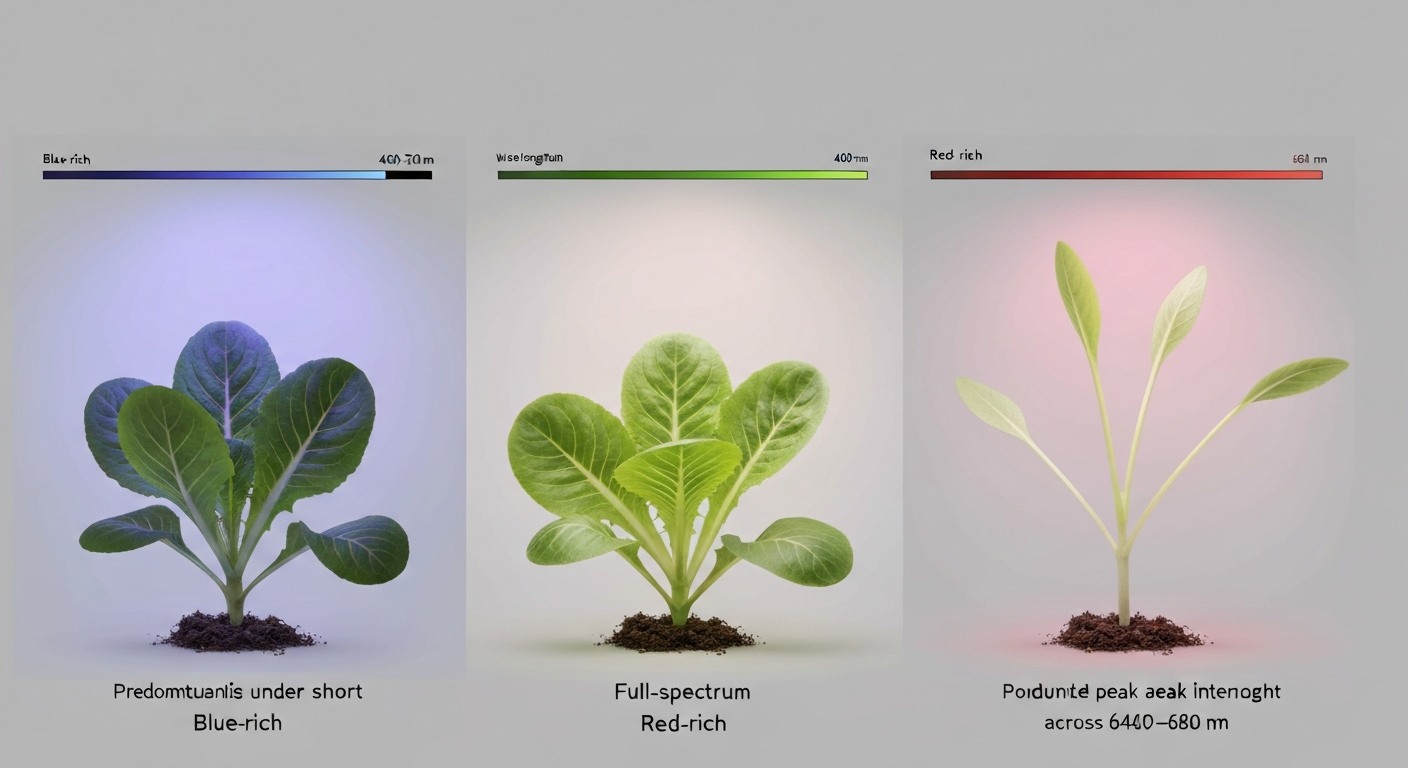
Why Do Plants Grow Best in Blue Light? Science & Practical Guide
Explore why blue light boosts vegetative growth, ideal blue:red ratios, PPFD, photoperiods, fixtures, and setup tips.
What Artificial Light Will Grow Plants: Best Lights Guide
What artificial light will grow plants: practical guide to LED, CFL, HID spectra, PPFD targets, setup, cost & tips.
Will Any Light Grow Plants? Guide for Indoor Growers
Can any light grow plants? Clear yes/no, science-backed light specs, setup tips, and which household lights work.