A regular light bulb can keep a low-light houseplant alive, but it won't do much for seedlings, vegetables, or anything that needs real photosynthetic fuel. The honest answer is: it depends on the bulb type, how close you place it, and what you're trying to grow. A standard incandescent bulb is basically useless as a grow light. A cool white CFL or a full-spectrum LED bulb can genuinely help low-light plants and even push seedlings along in a pinch. But none of them are a substitute for an actual grow light if you want strong, compact, productive plants.
Will a Regular Light Bulb Work as a Grow Light?
Marcus Holloway
26 Jun 2026
Will a regular bulb actually grow plants?
Plants need light in the blank" rel="noopener noreferrer">400–700 nm wavelength range, which scientists call PAR (photosynthetically active radiation). That band covers the blue wavelengths (roughly 400–500 nm) that drive leafy, compact growth and the red wavelengths (roughly 600–700 nm) that fuel flowering and fruiting. A regular household bulb may emit some light in those ranges, but how much useful light it delivers to your plant depends on its spectrum, its intensity, and how far away it sits. For a practical answer, it helps to compare what your bulb can deliver with the plant light levels discussed here can shop lights be used as grow lights. Wattage tells you about electricity use, not plant-usable light output.
The unit that actually matters is PPFD (photosynthetic photon flux density), measured in micromoles per square meter per second (µmol/m²/s). It tells you how many photons your plant is actually catching per second. A dim regular bulb three feet away might deliver 20–40 µmol/m²/s. A low-light houseplant like a pothos can survive around 50–100 µmol/m²/s. A seedling tray wants 200–400 µmol/m²/s, and fruiting crops can need 600 µmol/m²/s or more. So yes, some regular bulbs can hit the threshold for easy-going plants. If you want stronger results than a dim bulb can provide, you'll usually need to match the light intensity and daily light integral to the plant you're growing can regular lights be used to grow plants. Most can't hit what seedlings and vegetables need.
Not all regular bulbs are the same
When people ask "will a regular light bulb work," they usually mean whatever they already have at home. That could mean four very different things, and they perform very differently as grow lights.
| Bulb Type | Spectrum for Plants | Heat Output | Efficiency | Grow Light Potential |
|---|---|---|---|---|
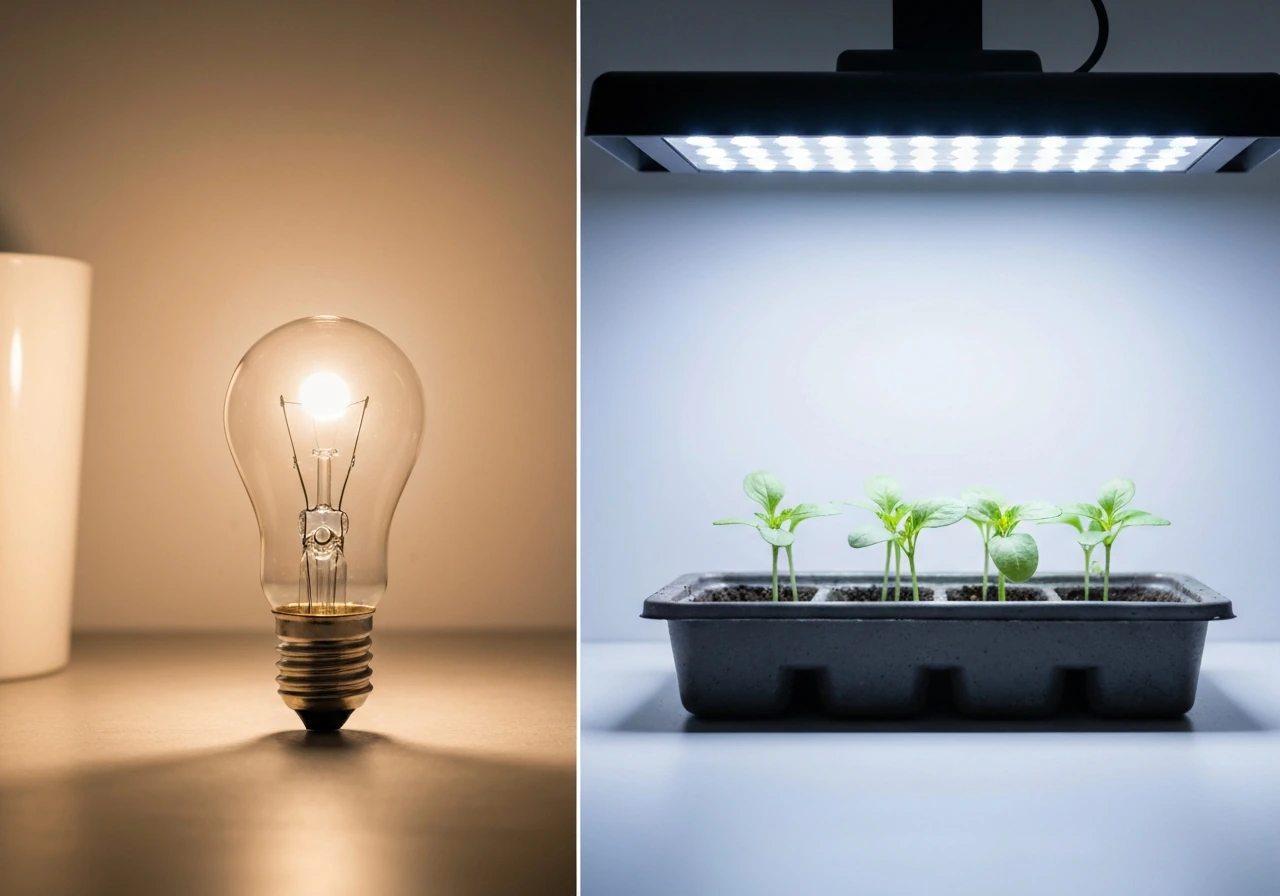
| Incandescent | Heavy in red/infrared, very weak in blue | Very high | Very poor | Poor — mostly heat, little usable light |
| CFL (compact fluorescent) | Decent blue output, moderate red depending on CCT | Low to moderate | Good | Fair — workable for low-light plants and seedlings |
| LED (standard household) | Varies widely; warm LEDs lack blue, daylight LEDs better | Very low | Excellent | Fair to good — full-spectrum or daylight LEDs are best |
| Halogen | Similar to incandescent, red-heavy spectrum | Very high | Poor | Poor — too hot, too inefficient |
Incandescent and halogen bulbs produce most of their energy as heat (infrared radiation), not visible light your plants can use. They burn hot enough to damage foliage at close range, and the spectrum skews so far into red and infrared that blue-light-driven growth is almost nonexistent. CFLs are a genuine step up: a 23-watt CFL rated at 6500K (cool white/daylight) produces a decent spread of blue wavelengths and enough overall output to support low-light plants. If you are wondering can CFL bulbs be used as grow lights, the key factors are their spectrum and whether they can deliver enough PPFD at your plant’s distance CFLs are a genuine step up. Standard LED bulbs vary widely, but a 10–15 watt "daylight" LED (5000–6500K correlated color temperature) delivers a reasonably balanced spectrum at low heat, making it the most practical regular-bulb option.
What your plants actually need from light
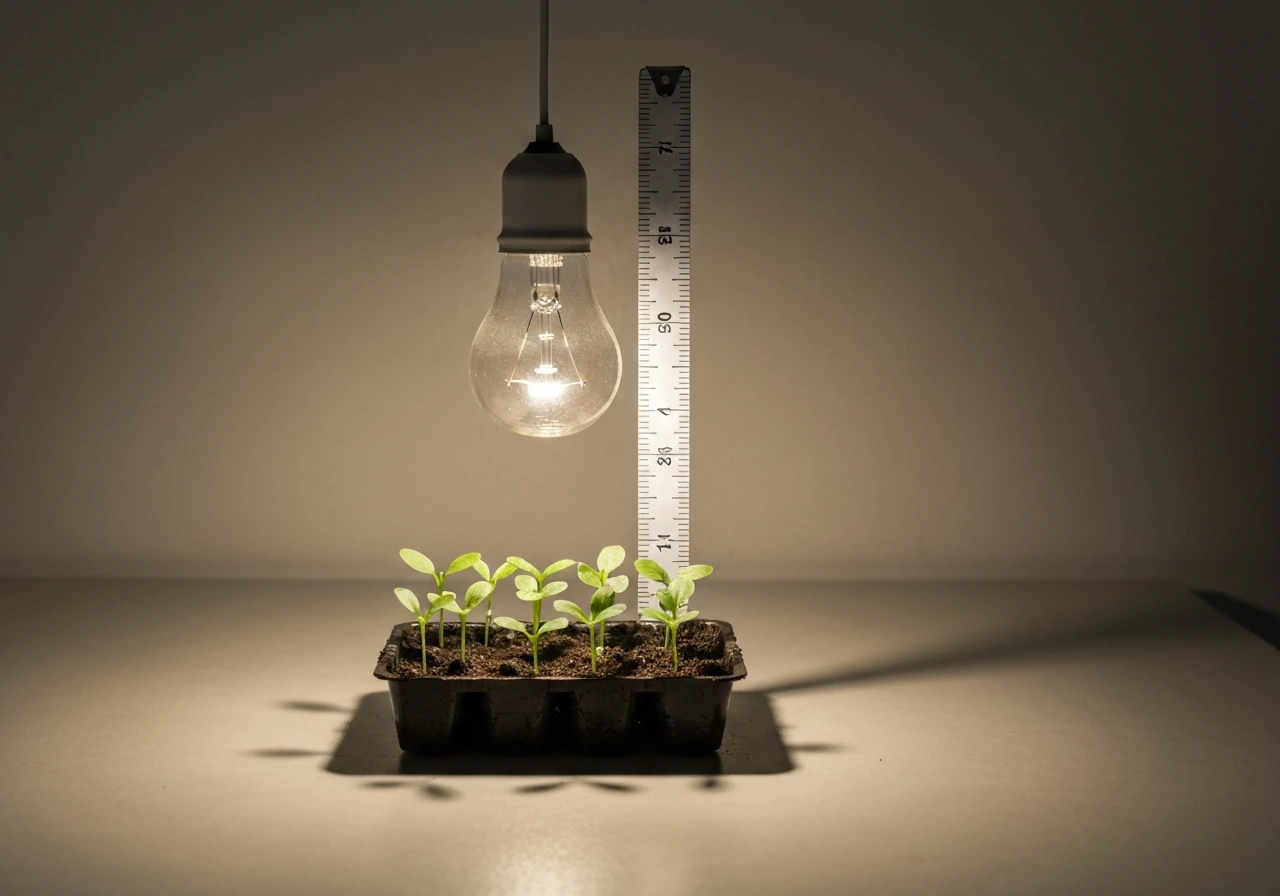
Beyond spectrum, intensity and duration are what determine whether a bulb is doing real work. University of Minnesota Extension research is clear that PPFD drops significantly as you move the light away from the source, so distance matters as much as wattage. A bulb that delivers 200 µmol/m²/s at 6 inches might only deliver 50 µmol/m²/s at 18 inches. That's the difference between a seedling growing well and a seedling stretching toward the light and falling over.
The other key concept is DLI, or daily light integral. It's the total photon dose your plant accumulates over a full day, measured in mol/m²/day. Purdue Extension research categorizes low-light crops at roughly 5–10 mol/m²/day, medium-light crops at 10–20, and high-light crops (fruiting vegetables, herbs for heavy harvest) at 20–30 or more. Even a decent regular bulb run for 16 hours a day may only deliver 2–4 mol/m²/day at a typical placement distance, which is barely enough for the most shade-tolerant plants.
Red vs blue vs full-spectrum: why it matters
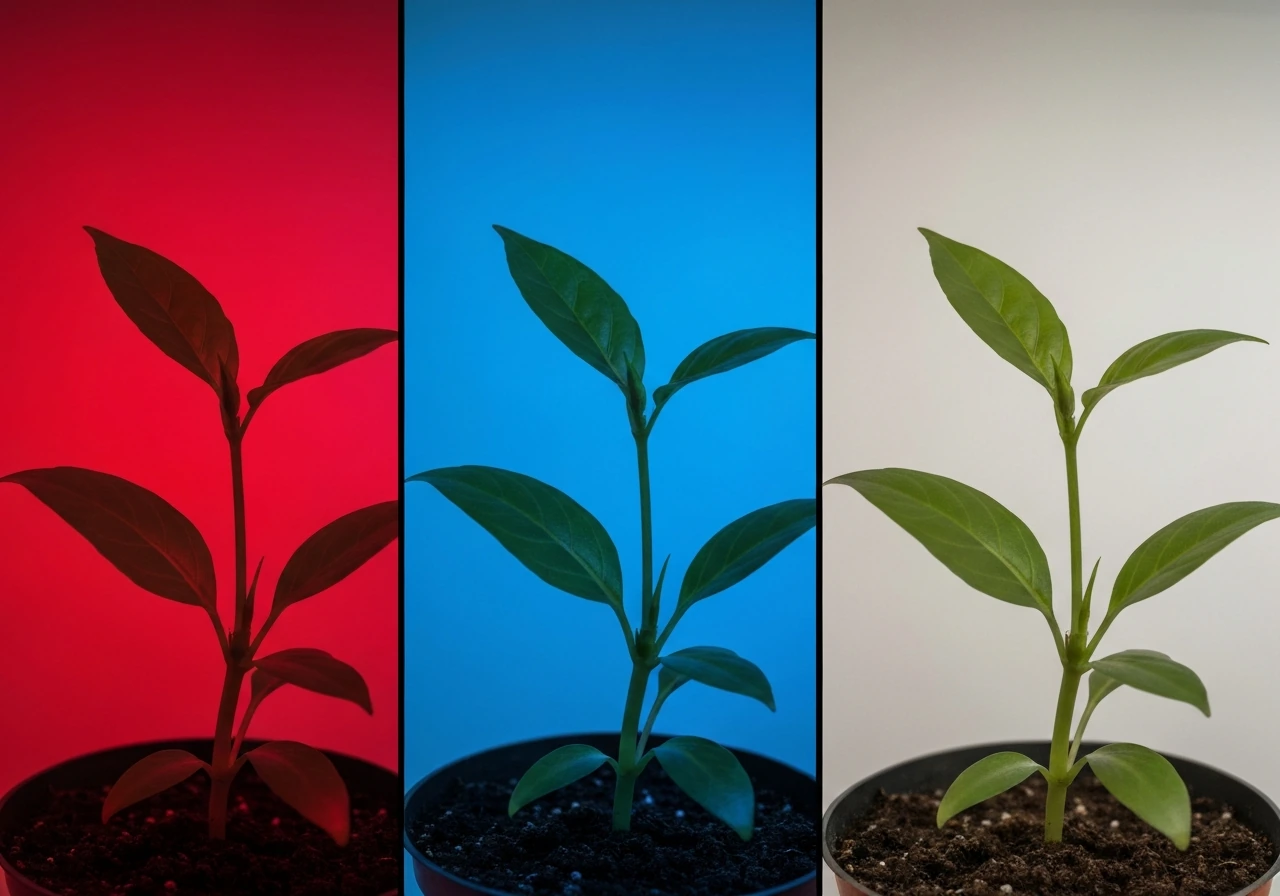
Plants use blue light for leaf development, stem strength, and compact growth habit. Without enough blue, seedlings stretch out and become leggy. Red light drives photosynthesis efficiently and is critical for flowering and fruiting. A good grow light delivers both. Warm-white regular LEDs (2700–3000K) lean heavily red and lack blue, which makes them better for flowering than for seedlings. Cool-white or daylight bulbs (5000–6500K) skew toward blue, which is more useful for vegetative growth. The University of Vermont Extension notes that natural daylight is around 6500K, which is a useful benchmark when picking a regular bulb for plant support.
When a regular bulb might actually work
There are real situations where a regular bulb does the job well enough, especially if you're not trying to grow food crops or push seedlings from seed to transplant. A ring light can work as a grow light for very low-demand plants, but it often lacks the intensity and full-spectrum balance you need for seedlings or fruiting crops ring light as a grow light.
- Low-light houseplants (pothos, snake plants, peace lilies, philodendrons): these plants evolved under forest canopy shade and genuinely only need 50–150 µmol/m²/s. A daylight LED or CFL placed 12–18 inches away can sustain them through a dark winter.
- Maintaining (not growing) seedlings for a week or two: if you're bridging a gap before outdoor transplant, a regular bulb close to the tray buys you time, though you'll see some stretch.
- Supplementing a window with low natural light: adding a daylight bulb next to a north-facing window can meaningfully increase the daily light a plant receives without committing to a dedicated fixture.
- Herbs used lightly for flavor rather than heavy harvest: basil, chives, and mint can get by under a decent LED for countertop use, though they won't be as productive as under a real grow light.
Where a regular bulb consistently fails: starting seeds for vegetables, growing tomatoes, peppers, or cucumbers indoors, keeping succulents or cacti from etiolating, or producing any kind of flowering/fruiting plant. An OTT light can be used as a grow light, but it may not provide the PPFD and DLI levels most plants need grow lights. These plants want far more light than a household bulb realistically delivers, and the signs of failure show up fast: pale color, stretched internodes, poor root development, and no flowers.
How to set it up if you're going the regular-bulb route
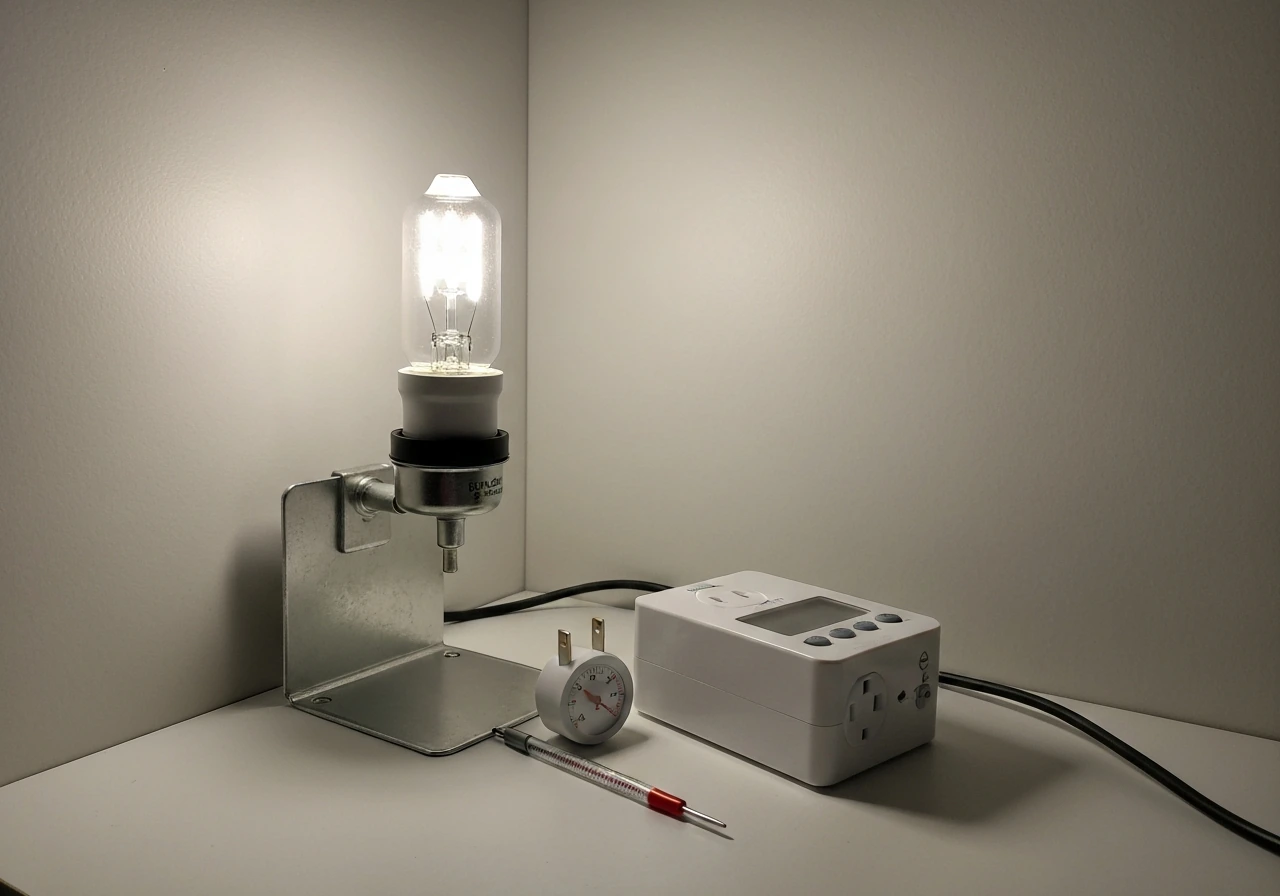
If you've decided to try a regular bulb, getting the setup right makes a big difference. Here's what to actually do:
- Pick the right bulb: use a daylight CFL (23–26 watts, 6500K) or a daylight LED (13–15 watts, 5000–6500K). Avoid incandescent and halogen entirely. Avoid warm-white LEDs unless you're trying to encourage flowering in a plant that's already getting other light.
- Get it close: place the bulb 6–12 inches above low-light houseplants and 4–8 inches above seedlings. Every inch further away cuts the usable light reaching the plant.
- Run it long enough: plants under supplemental indoor light typically need 14–16 hours per day. Use a simple plug-in timer so you don't forget. Consistency matters more than perfection.
- Use a reflective surface if possible: a white wall, a piece of white foam board, or aluminum foil behind the plant bounces stray light back toward it and meaningfully increases total photon capture.
- Watch your plants: healthy vegetative growth under sufficient light is compact and richly colored. If stems are stretching between leaf nodes (legginess), the plant is not getting enough light. Move the bulb closer, add a second bulb, or upgrade to a dedicated grow light.
- Check heat at the leaf level: hold your hand at the plant's height for 30 seconds. If it feels hot, the bulb is too close — especially relevant for CFLs.
Troubleshooting signs your setup isn't working
- Leggy, stretched stems reaching toward the light: not enough intensity or the bulb is too far away
- Pale or yellowing leaves on plants that were green before: insufficient light for photosynthesis, which can mimic overwatering symptoms
- No new growth for weeks: the plant is surviving but not growing — it needs more light or a longer photoperiod
- Leaves turning toward the bulb and staying there: normal phototropism, but very pronounced curling means the plant is desperate for more light from that direction
- Seedlings that flop over and have thin stems: classic light-starved seedlings — move the bulb much closer immediately
Safety and the myths worth clearing up
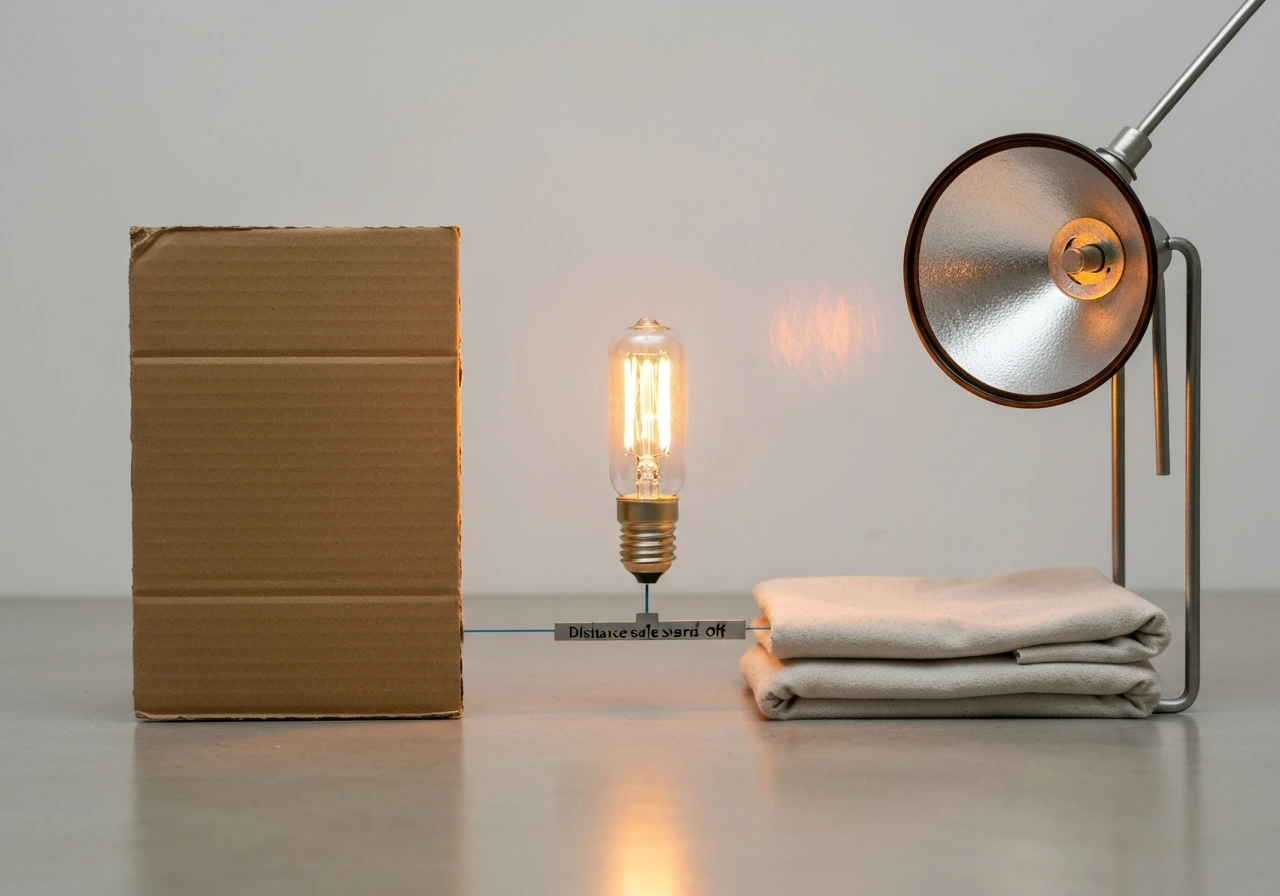
There are a few common fears that come up around using any kind of grow light, including regular bulbs. Most of them are overblown, and a couple are genuinely worth knowing about.
Heat and fire risk
Incandescent and halogen bulbs run very hot and are a genuine fire risk if placed too close to plants, cardboard, or fabric. They can scorch foliage at distances under 12 inches. CFLs and LEDs run much cooler. That said, any light fixture left on for 14–16 hours a day should be checked for heat buildup at the socket and any nearby materials. Use a fixture rated for the wattage you're running and don't use extension cords that aren't rated for continuous use.
Eye safety
Regular household bulbs don't produce the UV or high-intensity output that would require eye protection. You shouldn't stare directly into any bright light source, but a CFL or LED grow setup using regular bulbs poses no meaningful eye hazard for normal use. Dedicated commercial grow lights, especially high-intensity LEDs with UV diodes, are a different story, but we're talking about regular bulbs here.
Can grow lights cause cancer or give you a tan?
This question comes up a lot, and the answer for regular household bulbs is a straightforward no. Standard CFLs and LEDs produce negligible UV output. They don't tan skin and they don't carry a cancer risk from normal indoor exposure. Some specialized grow lights, particularly those designed to replicate full-spectrum outdoor sun for specific crops, include UV diodes, but household bulbs used as grow lights are not in that category. There's no reason to worry about health effects from a desk lamp or CFL clip light used to supplement your pothos.
What to buy instead if you want real results
If you've worked through the above and realized a regular bulb won't cut it for what you're growing, here's what to actually look for. The good news is that basic grow lights are cheap and simple now.
- LED grow bulbs in standard E26/E27 screw bases: these look like regular bulbs but are tuned for PAR wavelengths. They screw into any standard lamp. Look for ones that list actual PPFD at a given distance rather than just wattage. A 10–15W LED grow bulb can hit 150–300 µmol/m²/s at 12 inches, which is a real upgrade over a regular bulb.
- LED grow light strips or bars: these are inexpensive (often $15–40), easy to mount under shelves or over seed trays, and give you much better light distribution than a single bulb. Full-spectrum strips covering 380–740 nm are widely available and work well for seedlings and herbs.
- Spider-style or quantum-board LED panels: for serious seedling starting or indoor herbs and vegetables, a small panel (50–100W actual draw) covers a 2x2 or 2x4 foot area at useful PPFD levels. These cost $40–120 for entry-level but are genuinely effective.
- Full-spectrum CFLs marketed as grow lights: if you prefer CFLs, look for products that specify PAR output rather than just lumens. They're a budget-friendly middle ground but less efficient than LEDs for the same light output.
When comparing options, it's worth knowing that daylight CFL bulbs and daylight LED bulbs used as regular lights share some of the same spectral characteristics as entry-level grow products. Yes, in some cases you can use grow lights as regular lights, but it depends on the bulb’s spectrum and how much usable light it provides. The practical difference between a 6500K daylight bulb and a basic grow bulb often comes down to whether the manufacturer optimized the output for PAR wavelengths or for human-perceived brightness. A grow-specific bulb will usually deliver more plant-usable photons per watt. Similarly, if you're wondering whether shop lights or other standard fixtures can fill the gap, the answer depends almost entirely on the bulb inside them and how close you can position them.
The bottom line: a regular daylight CFL or LED bulb is a legitimate short-term or low-demand solution for shade-tolerant houseplants. For anything more demanding, a dedicated grow light, even a basic and inexpensive one, will save you the frustration of watching plants stretch, stall, and underperform. The investment is small and the difference in plant response is obvious within two to three weeks.
FAQ
How close do I need to place a regular LED or CFL for it to actually work?
Start close and raise slowly based on growth. If you do not have a PPFD meter, use practical cues, seedlings should not look pale, and they should stay compact, not stretch. A common starting point is 6–12 inches for CFL/LED, then adjust by observing leaf color and internode length after 7–14 days.
If I pick the right color temperature, will any “daylight” LED bulb grow seedlings?
Not necessarily. Even with 5000–6500K “daylight” labeling, bulb brightness and beam spread vary a lot, which changes PPFD at the leaf. Also, some LEDs are strong for human brightness but weaker in the PAR wavelengths plants use. Look for bulbs described as having a wider usable spread or use multiple bulbs aimed toward the canopy rather than one pointing at a single spot.
Can I run a regular light bulb for 24 hours to compensate for low intensity?
Usually no. Most plants need a dark period for normal cycling, and long photoperiods can waste energy without fixing low PPFD. If you are using a regular bulb, aim for roughly 12–16 hours for general growth, then increase duration only if plants respond positively and do not show stress.
Do regular bulbs create enough DLI for vegetables like lettuce or herbs?
Many will not. Regular household bulbs often deliver enough for shade-tolerant plants but fall short of medium to high light DLI targets. If you try anyway, treat it as “supplemental” light, add it to natural window light, and be prepared to use more bulbs or closer placement to reach the daily dose.
What signs tell me my regular bulb is not strong enough?
Watch for multiple symptoms together: pale or washed-out leaves, long gaps between leaves (stretched internodes), slow or stalled new growth, weak root development, and no flowering in plants that should bloom. If only one leaf is pale, it can be nutrient or watering related, but consistent stretch plus pale color points to insufficient blue-heavy light and PPFD.
Will a warm-white (2700–3000K) LED bulb help at all, or should I avoid it?
Warm-white can help flowering-oriented plants more than seedlings because it leans red, but it often lacks the blue needed for compact, sturdy growth. If you only have warm-white, use it after seedlings develop, or pair it with a cooler bulb to restore blue balance and reduce legginess.
Is it better to use a higher watt bulb or to put the bulb closer?
Putting it closer usually wins. Wattage mainly affects heat and electricity use, but distance drives how many photons reach the plant, PPFD drops quickly as you move away from the source. If you cannot get close enough safely, you likely need a different fixture rather than just more wattage.
Do CFLs and LEDs need to be in a specific direction or angle to work well?
Yes. Many bulbs have uneven beam patterns, and a narrow beam can create hot spots with low PPFD elsewhere. Keep the light aimed to cover the whole tray or pot area, and consider multiple bulbs or reflectors to improve distribution. If you notice one side of the plant leaning, it is often a coverage and angle problem.
Are UV worries real if I use a household CFL or LED near plants?
For normal desk-lamp style use, UV from standard household CFL and LEDs is not usually a meaningful concern. Still, do not place a bulb unshielded at eye level in bright setups, and avoid staring directly at any intense lamp for extended periods.
Is it safe to leave a regular bulb on all day with plants?
Generally safer with CFL and LED than with incandescent, but you should check heat buildup. Make sure the fixture is rated for continuous use, avoid under-rated sockets, and confirm nearby materials (fabric, cardboard, dry leaves) are not overheating. If the bulb or fixture is too hot to comfortably touch near the end of a long run, reposition or switch bulbs.
Should I use a regular bulb in a small grow tent or cabinet?
You can, but ventilation and coverage matter. In a closed cabinet, heat and humidity can build up, and reflective surfaces can change how light spreads. Make sure the bulb is mounted securely and that airflow prevents excessive heat, especially if you are using any incandescent or halogen source.
What is the fastest way to decide whether my regular bulb setup will work?
Run a short diagnostic cycle. Start seedlings or a test plant with your current setup for 10–21 days, take a photo at day 0 and day 10, and compare leaf color plus stem length against how you expect that species to grow. If you see persistent stretch or pale growth early, upgrade the light rather than extending the trial hoping intensity will “catch up.”
Next Articles
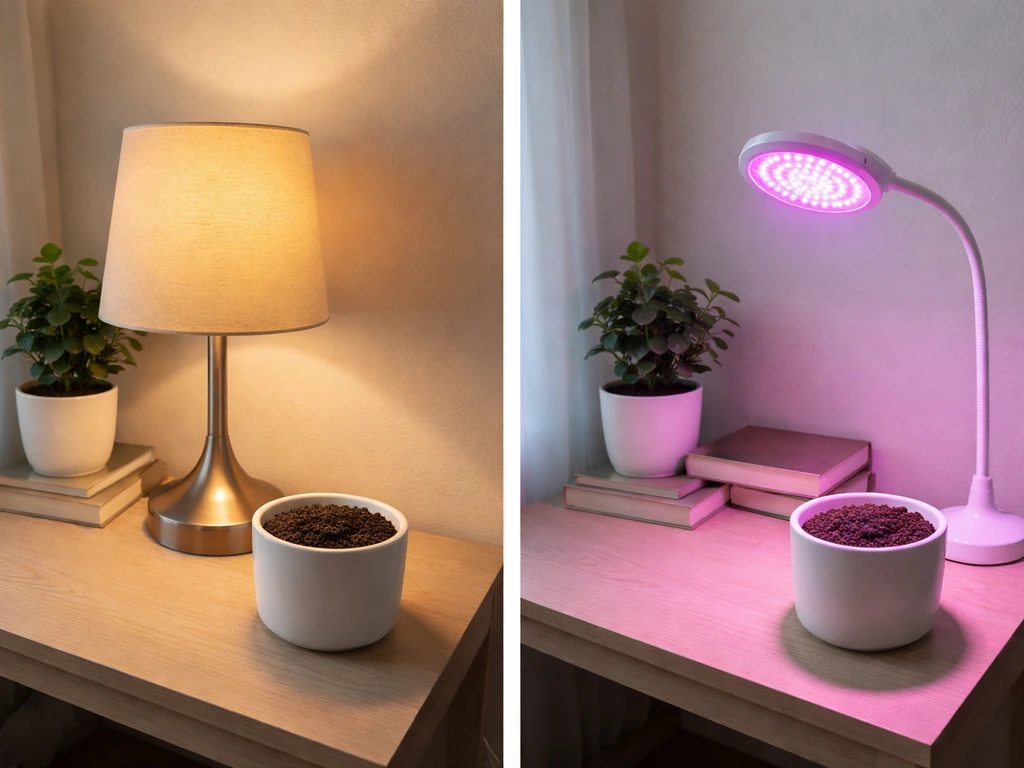
Can You Use Grow Lights as Regular Lights? (Yes, But)
Learn if grow lights work as regular lamps, key spectrum and PPFD vs lumens, and how to set distance safely for plants.
Can Any Light Be a Grow Light? What Works Indoors
See which household lights can grow plants indoors, what fails, and how to set spectrum, distance, and run time safely.
Why Do Plants Grow Best in Blue Light? Science & Practical Guide
Explore why blue light boosts vegetative growth, ideal blue:red ratios, PPFD, photoperiods, fixtures, and setup tips.