Yes, you can use a grow light as a regular room light, and in some cases a regular light can help plants grow. But there are real trade-offs in both directions. Grow lights tend to look weird in living spaces (think purple or harsh white glare), and most regular bulbs simply don't put out enough of the right light to keep plants thriving long-term. If you want a light that you can rely on for plant growth, focus on whether it can deliver enough plant-usable intensity (PPFD), not just whether it seems bright as a room light regular light. Whether the swap works depends on what you're asking the light to do, and for whom.
Can You Use Grow Lights as Regular Lights? (Yes, But)
Marcus Holloway
19 Jun 2026
Regular lights vs grow lights: what's actually different
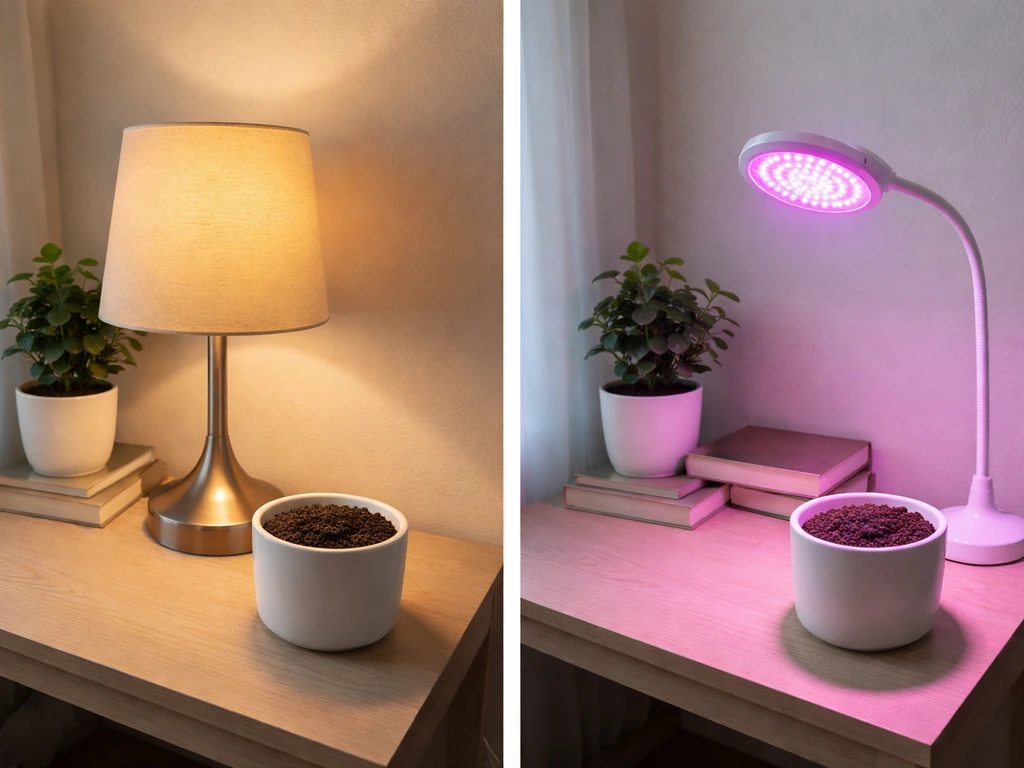
The core difference comes down to who the light is designed for. Regular bulbs, whether incandescent, CFL, or LED, are engineered to look good to human eyes. They're measured in lumens, which tracks how bright a light appears to us. Grow lights are engineered for plants, and plants don't care how bright something looks.
They care about specific wavelengths, especially blue light (around 400–500 nm) for leafy growth and red light (around 600–700 nm) for flowering and fruiting. The relevant measurement for plants is [PPFD (photosynthetic photon flux density), which counts the photons in the 400–700 nm range actually hitting a surface per second. ](https://en. wikipedia.
org/wiki/Photosyntheticallyactiveradiation) A lamp can be blinding to your eyes and nearly useless for a plant, or it can look dim to you but be pumping out exactly what a plant needs.
blank" rel="noopener noreferrer">Virginia Tech's extension program makes this point plainly: don't use lumens, watts, or lux to judge light for plants. Those units measure human perception, not plant nutrition. A 100W incandescent might produce 1,600 lumens and feel very bright, but it's heavy on yellow and green wavelengths that plants barely use. A purpose-built grow light producing fewer lumens might deliver two or three times the useful plant energy.
When regular lights can actually work as grow lights
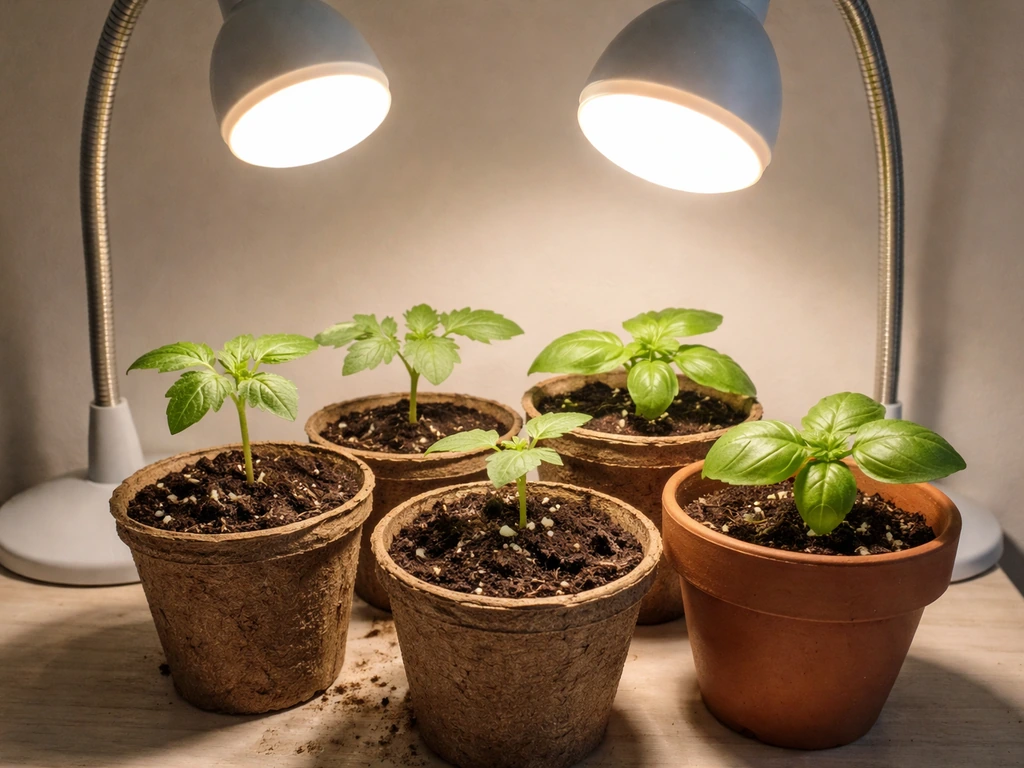
Here's the honest answer: regular lights can work for plants, but only under specific conditions. A dedicated grow light is usually the easiest way to dial in the right spectrum and PPFD, but the question is whether an OTT-style light can deliver enough for your plant can an ott light be used as a grow light. If you have low-light houseplants like pothos, snake plants, or ZZ plants, a standard daylight LED (5000–6500K color temperature) positioned close enough can provide meaningful supplemental light. These plants aren't demanding. They're not trying to flower or push aggressive vegetative growth, so a modest photon supply goes a long way.
Daylight-spectrum bulbs and full-spectrum CFLs overlap reasonably well with plant-usable wavelengths. They're not optimized the way a dedicated grow light is, but they're much better than a warm white bulb. If you’re wondering can daylight bulbs be used as grow lights, start with a daylight-spectrum or full-spectrum option and aim for enough hours for your plant’s needs. If you're in a pinch, using a daylight LED desk lamp to give a struggling houseplant a few extra hours of light is genuinely better than nothing. Just don't expect it to carry seedlings through germination or push a tomato plant to fruit.
Where regular lights fall short is with high-demand plants. Seedlings, herbs you want to grow fast, and anything flowering need serious PPFD levels, often 200–400 μmol·m⁻²·s⁻¹ for vegetables and much higher for flowering. Most household bulbs can't hit those numbers even when placed close to the plant. You'll get leggy, stretched seedlings reaching for light that isn't dense enough.
Can you use a grow light as your regular room light?
Technically yes, practically it depends a lot on the type of grow light. Full-spectrum white LED grow lights designed to mimic sunlight are the most livable. Some are genuinely pleasant to work under and render colors reasonably well. These are your best bet if you want one light doing double duty. Yes, using a grow light as your main room light can work well if it is full-spectrum and designed to be comfortable to live with.
Blurple lights (the purple-pink ones combining red and blue LEDs) are another story. They're effective for plants, but they make your room look like a disco from the outside and make everything inside look washed out and slightly alien. Colors look wrong, skin looks strange, and spending hours under them gets uncomfortable fast. They have a lower CRI (color rendering index), meaning they distort how colors appear to human eyes.
High-intensity HID or HPS grow lights used in serious indoor gardens are not practical as room lighting. They run very hot, draw serious power, and the light quality is harsh. Stick to LED grow lights if you want dual-purpose use.
What to actually look for when evaluating a light
Spectrum: blue, red, and full-spectrum
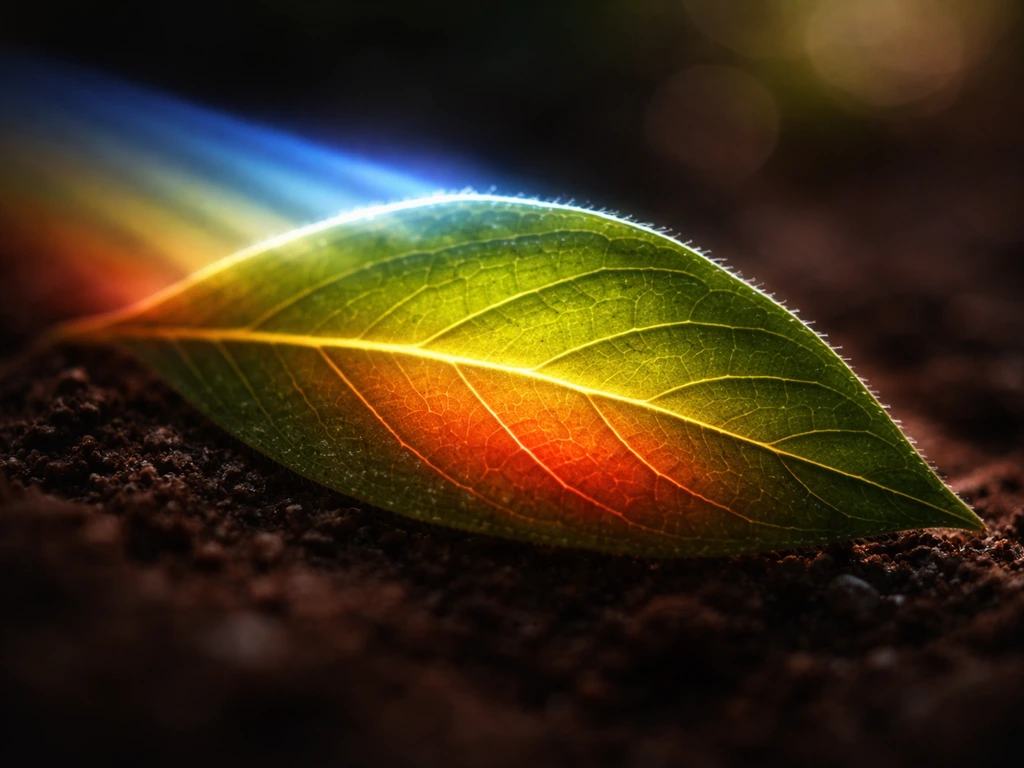
Plants use the full 400–700 nm PAR range, but blue light (400–500 nm) drives compact vegetative growth and red light (600–700 nm) drives flowering and fruiting. If you're growing leafy greens or seedlings, prioritize blue. If you're trying to flower a plant, you need red. Full-spectrum LEDs cover both and are the most versatile option for a mixed indoor garden.
Lumens vs PPFD: use the right number
For plant decisions, ignore lumens and look for PPFD, measured in μmol·m⁻²·s⁻¹. Good grow light brands publish PPFD maps showing output at different distances. A rough guide: seedlings and low-light plants need 100–250 μmol·m⁻²·s⁻¹, leafy vegetables want 200–400, and flowering plants push for 400–600 or higher. If a light only lists lumens and watts and nothing else, that's a red flag for plant use.
Color temperature for human comfort
If the light is going in a room you live in, color temperature matters for your comfort. Warm white (2700–3000K) is cozy but weak for plants. Cool white or daylight (5000–6500K) is much better for plant growth and acceptable for task lighting, though it feels a bit clinical. The sweet spot for dual use is usually a high-CRI full-spectrum LED in the 4000–5000K range. A grow light can also work as a regular light in many setups if you choose a full-spectrum LED with comfortable color quality high-CRI full-spectrum LED.
Practical setup: distance, placement, and hours
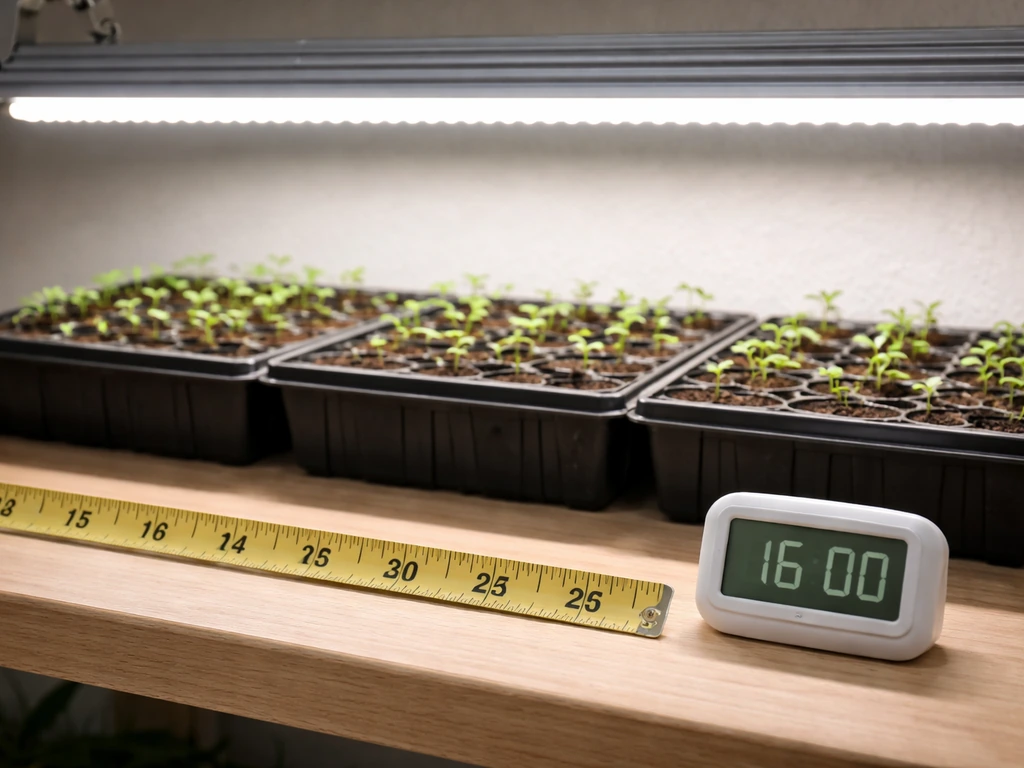
Distance is one of the most important variables and one of the most commonly ignored. Light intensity drops sharply as you move away from the source (following the inverse square law). A grow light delivering 400 μmol·m⁻²·s⁻¹ at 12 inches might drop to 100 μmol·m⁻²·s⁻¹ at 24 inches. Always check the manufacturer's PPFD chart for your specific light and target the distance that gives you the intensity your plants need.
For seedlings under a standard LED panel, 18–24 inches is a common starting point. For low-light houseplants under a desk lamp, 6–12 inches is more useful. For high-demand flowering plants under a powerful LED, you might stay at 18 inches but run the light at higher intensity.
Duration matters as much as intensity. Most plants need 12–16 hours of light per day under artificial conditions to perform well. Seedlings do well with 14–16 hours. Established leafy greens are happy with 12–14 hours. Flowering plants often need a specific photoperiod (12 hours light, 12 hours dark) to trigger blooming. Use a simple plug-in timer so you don't have to remember to turn it on and off. Running lights 24 hours a day is not better and can actually stress many plants.
| Plant Type | Recommended PPFD | Daily Hours | Light Distance |
|---|---|---|---|
| Seedlings | 100–250 μmol·m⁻²·s⁻¹ | 14–16 hours | 18–24 inches |
| Low-light houseplants | 50–150 μmol·m⁻²·s⁻¹ | 10–12 hours | 6–18 inches |
| Leafy greens/herbs | 200–400 μmol·m⁻²·s⁻¹ | 12–14 hours | 12–18 inches |
| Flowering plants | 400–600+ μmol·m⁻²·s⁻¹ | 12 hours (strict) | 12–18 inches |
Safety, heat, and the myths worth busting
Let's deal with the big fears directly. Most grow lights sold for home and hobby use will not give you a tan, cause skin cancer, or seriously damage your eyes under normal use. The concern about UV comes from the fact that some high-end grow lights include a small amount of UV-A to simulate sunlight more closely. But standard LED grow lights for home use emit very little UV. They're not sunlamps.
The relevant safety standard for lamp photobiological safety is IEC/EN 62471, which classifies light sources by risk group from RG0 (exempt, no hazard) through RG3 (high risk) based on things like blue-light hazard and UV output. IEC/EN 62471 groups light sources into risk groups such as RG0, RG1, RG2, and RG3 based on photobiological hazard potential, including blue-light hazard, and permissible exposure durations.
Most consumer LED grow lights fall into RG0 or RG1. That means casual exposure while tending your plants is not a health concern. Where you should be careful is staring directly into a very bright LED light at close range for extended periods, because intense direct light of any kind is hard on your eyes. Don't stare into the light.
That's the whole rule.
Heat is a more practical concern than UV. High-wattage HID and HPS lights generate serious heat and can stress or burn plants if placed too close. Modern LED grow lights run much cooler, but they still generate some heat. Keep an eye on the canopy temperature of your plants (aim for 65–80°F) and make sure there's airflow in the grow space. Touching a leaf that feels warm to the point of discomfort is a sign to raise the light.
What to expect by plant type, and how to troubleshoot
Seedlings
Seedlings are actually pretty easy to satisfy if you get them close enough to the light. The most common mistake is keeping the light too far away. When a seedling gets too little light, it stretches toward the source and becomes leggy: long, weak stems that can barely hold themselves up. If your seedlings look like they're reaching for the ceiling, lower the light or increase the hours. A proper grow light at the right distance produces short, stocky seedlings with tight internodal spacing.
Leafy greens and herbs
Lettuce, spinach, basil, and similar plants are the sweet spot for indoor growing under artificial light. They don't need extreme intensity, they grow fast enough to be rewarding, and they tolerate a wider range of spectrum and duration than flowering plants. A decent full-spectrum LED running 12–14 hours a day will produce genuinely harvestable greens. If growth is slow or leaves are pale, try moving the light closer before buying a new one.
Flowering and fruiting plants
This is where regular lights definitively don't cut it and where even budget grow lights often fall short. Tomatoes, peppers, and cannabis all need high PPFD and careful photoperiod control. Many flowering plants are triggered into bloom by the shift to a 12/12 light/dark cycle. If the light period isn't consistent or dark enough (even a little ambient light during the dark period can disrupt flowering), you won't get blooms. Use a timer, blackout any ambient light leaks, and don't cheap out on intensity. If your plants are flowering poorly or not at all, check the dark period first, then check your actual PPFD at canopy level.
Quick troubleshooting guide
- Leggy, stretched growth: light is too far away or intensity is too low. Move the light closer or run it longer.
- Pale or yellowing leaves: possibly too little light, or a nutrient issue amplified by weak light. Rule out light first by checking distance and hours.
- Leaf tips browning or curling: light may be too close (heat stress), especially with high-power LEDs. Raise the light a few inches.
- Plants not flowering: check the dark period. Any ambient light leaking in during the dark cycle can prevent flowering. Also check that your light has adequate red spectrum.
- Slow overall growth: calculate your daily light integral (DLI = PPFD × hours × 0.0036). Most vegetables want a DLI of 20–30 mol·m⁻²·day⁻¹. If you're well below that, increase intensity or duration.
- Room feels uncomfortable under grow light: switch from a blurple or cool-white LED to a high-CRI full-spectrum LED. Your plants won't notice, but you will.
FAQ
Can you use a grow light as your only room light all day, like a normal bulb?
Yes if it is a full-spectrum, high-CRI LED made for indoor comfort (often 4000K to 5000K). For plants, still aim for a controlled photoperiod like 12 to 16 hours rather than 24/7, and for you, consider dimming or using a timer to reduce eye strain from prolonged bright exposure.
If my grow light is giving plants enough PPFD, will it always look “dim” to humans?
Not necessarily. Some high-CRI full-spectrum LEDs can deliver strong PPFD while still looking reasonably bright and natural, because they produce more of the wavelengths humans perceive. Blurple or low-CRI styles can look dim or washed out even when the plant output is good.
Do I need to worry about UV if I’m using grow lights as regular lights indoors?
For most consumer home LED grow lights, UV exposure is typically low, and the bigger practical issue is not UV but glare if you stare at a bright LED up close. If you want extra peace of mind, choose a model that is intended for living spaces and avoid running very high-intensity lights directly at eye level.
Will a daylight LED bulb used like a desk lamp actually work, or is it too weak?
It can work for low-light houseplants and for supplemental light, especially if you place it close enough to boost intensity at the leaf. If growth stalls, the fix is usually distance and hours first, not switching color temperature, because intensity drops quickly as you move farther away.
Can you use regular bulbs to help flowering, or is red light mandatory?
Flowering plants usually need higher photon intensity than leafy houseplants, and many also benefit from sufficient red output around 600 to 700 nm. A cool or daylight bulb may support some bloom, but if you see no flowers, check both PPFD at canopy level and whether you have a true dark period, not just a brighter light.
How do I know whether a grow light is bright enough for plants if it only lists lumens and watts?
You cannot reliably tell. Lumens and watts reflect human brightness and electrical power, not plant-usable photons. Look for PPFD (usually in μmol·m⁻²·s⁻¹), or at least a PPFD chart at distances, otherwise you risk buying a light that looks fine but under-delivers to the canopy.
What’s the most common mistake when swapping from regular lights to grow lights?
Keeping the light too far away. Many people use the visual “brightness” cues and place the lamp where it looks right, but plant intensity can fall steeply with distance. Use the manufacturer’s recommended mounting distance or start with a shorter distance and raise it as the plants respond.
If my seedlings are leggy, should I increase the hours or bring the light closer?
Bring the light closer first if they are stretching with long, weak stems. Increasing hours helps if you are truly underexposed, but leggy growth often indicates the intensity at the canopy is too low, so distance adjustment usually fixes it faster.
Do I need to fully block darkness for flowering plants if I’m using the light in a living room?
Often yes. Even small ambient light during the dark period can reduce or delay blooming for photoperiod-sensitive plants. Use a timer and consider shielding around the plant during the dark phase if your room lighting or TV light leaks toward the canopy.
Can grow lights be harmful to pets or people sitting nearby?
Most home LED grow lights are rated low risk for casual exposure, but the main hazard is comfort and eye fatigue from staring at a very bright lamp. If you have pets that may chew fixtures or jump onto plants, add a physical barrier or raise the light to reduce contact risk.
Next Articles
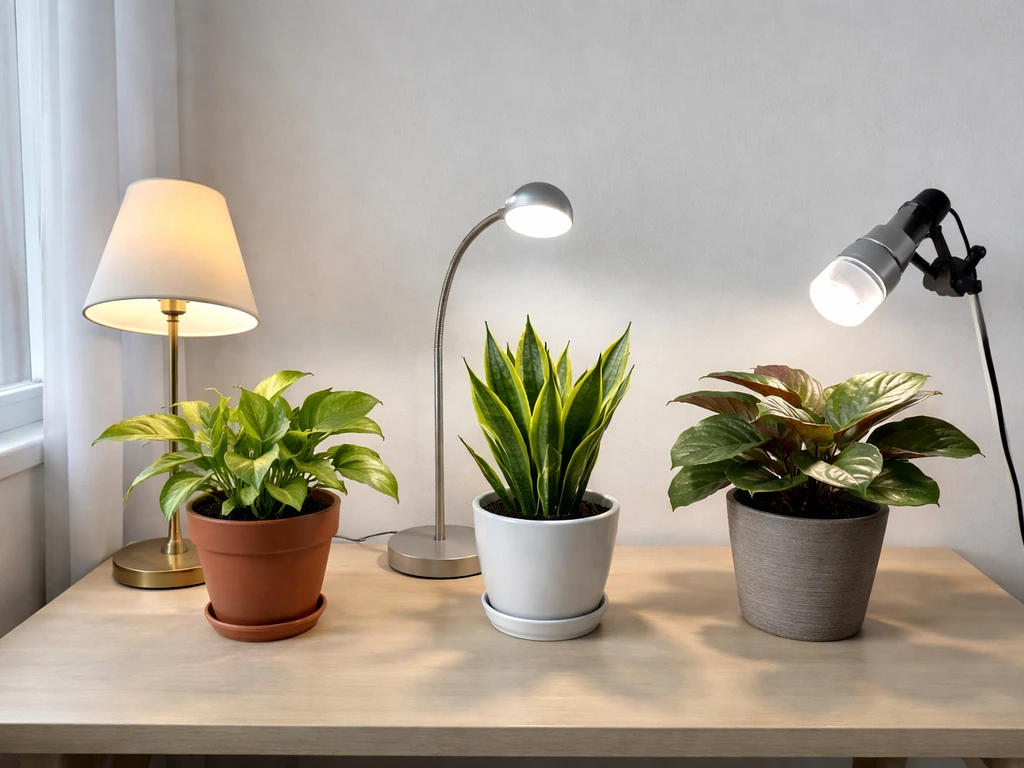
Can Any Light Be a Grow Light? What Works Indoors
See which household lights can grow plants indoors, what fails, and how to set spectrum, distance, and run time safely.
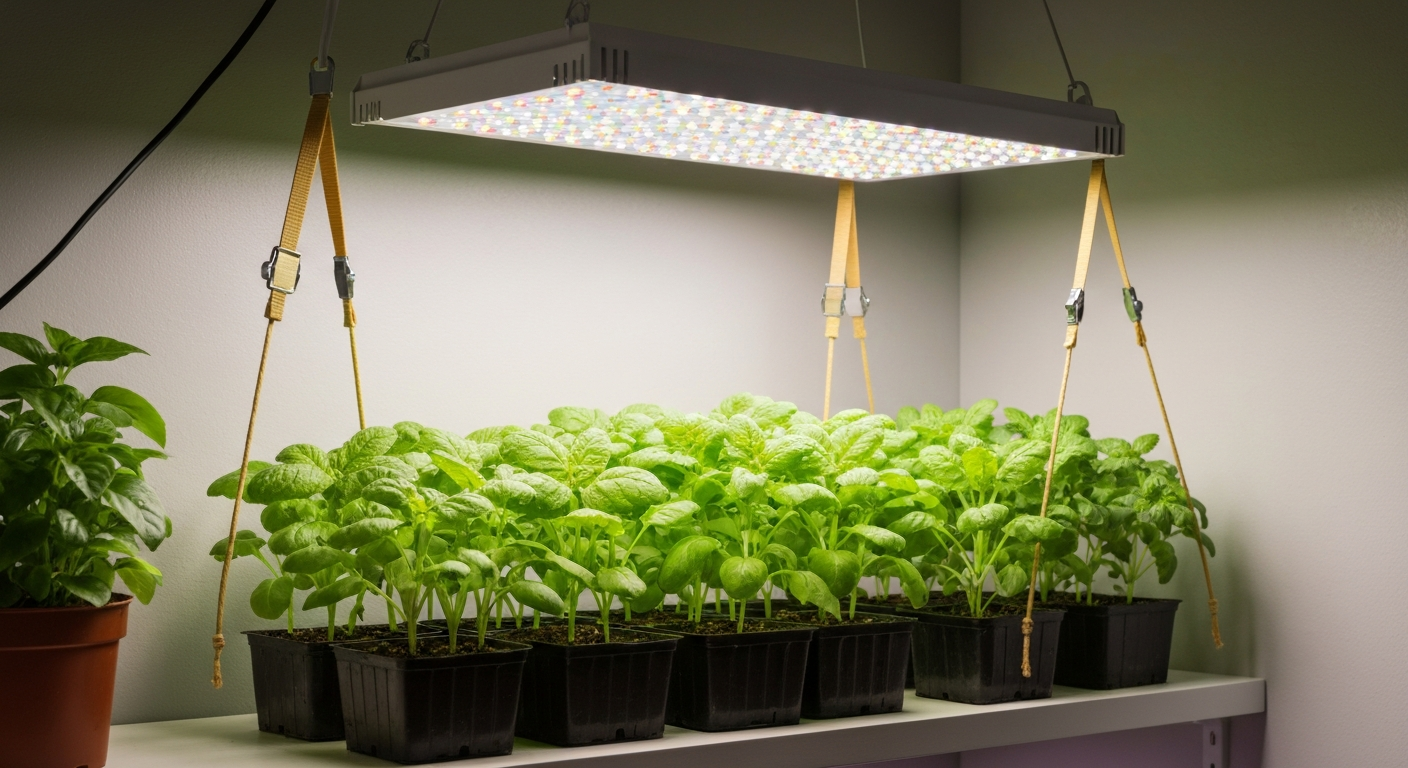
What Artificial Light Will Grow Plants: Best Lights Guide
What artificial light will grow plants: practical guide to LED, CFL, HID spectra, PPFD targets, setup, cost & tips.
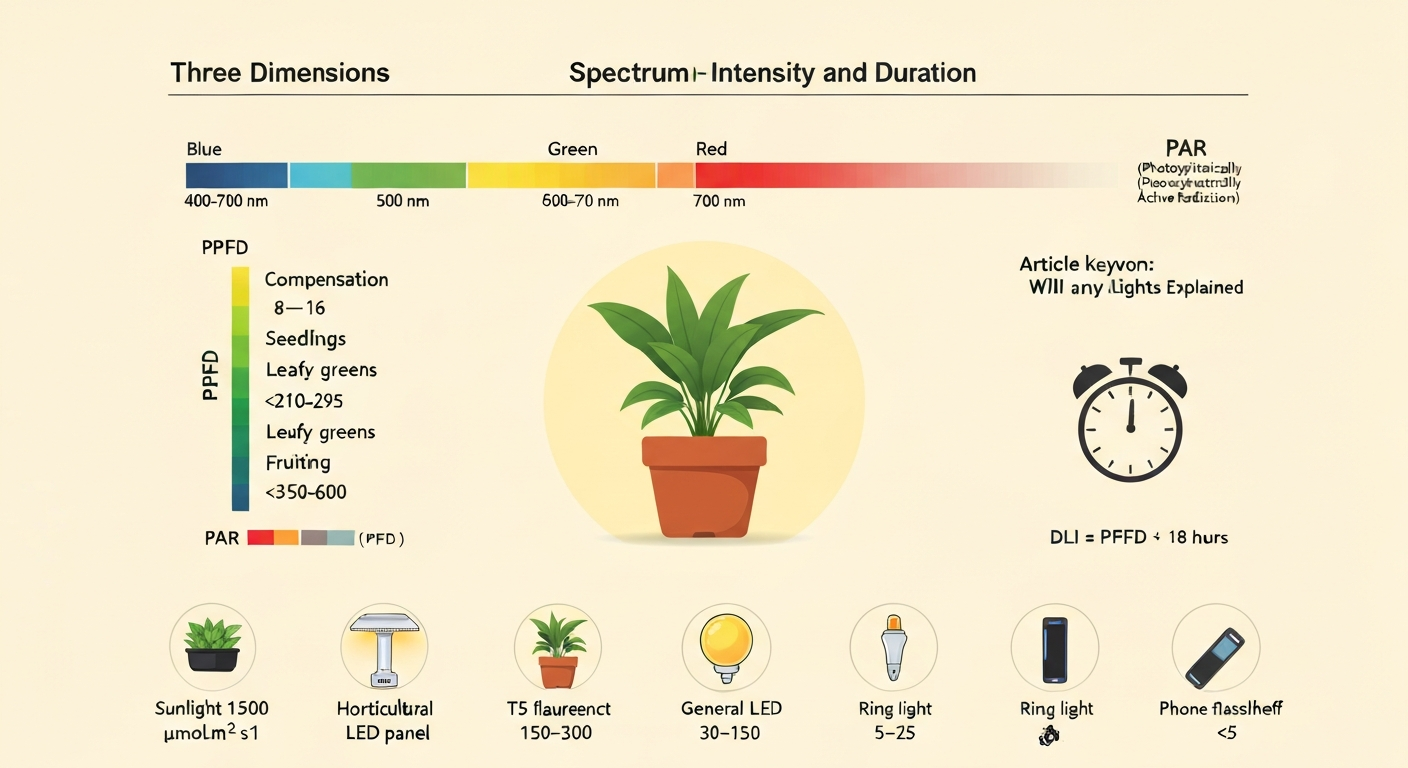
Will Any Light Grow Plants? Guide for Indoor Growers
Can any light grow plants? Clear yes/no, science-backed light specs, setup tips, and which household lights work.