A regular household lamp can help a plant survive, but it almost certainly won't make it thrive. The gap comes down to two things: spectrum and intensity. Most standard bulbs don't produce enough light in the wavelengths plants actually use for photosynthesis, and even when they do, the total output is too weak to drive real growth. That said, for a handful of low-light plants in a pinch, a decent LED desk lamp positioned close enough can absolutely keep things alive and even support modest growth. Knowing which side of that line your situation falls on is what this guide is about.
Can a Regular Lamp Help Plants Grow? What to Know
Marcus Holloway
18 Jun 2026
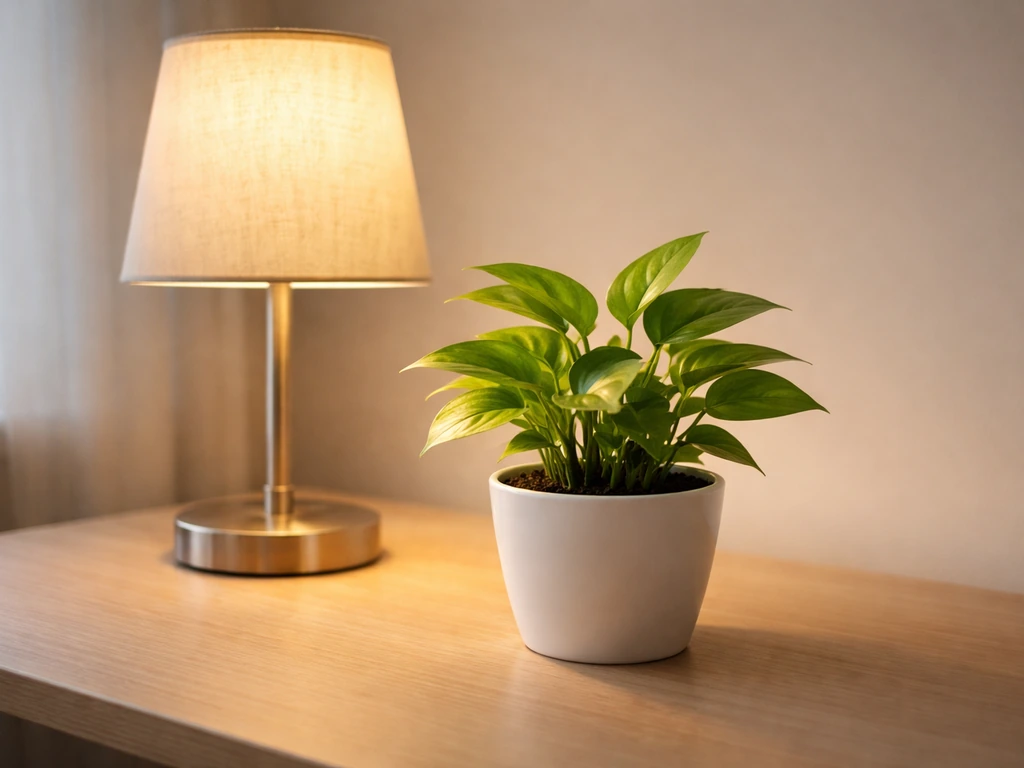
Regular lamps vs grow lights: the honest comparison
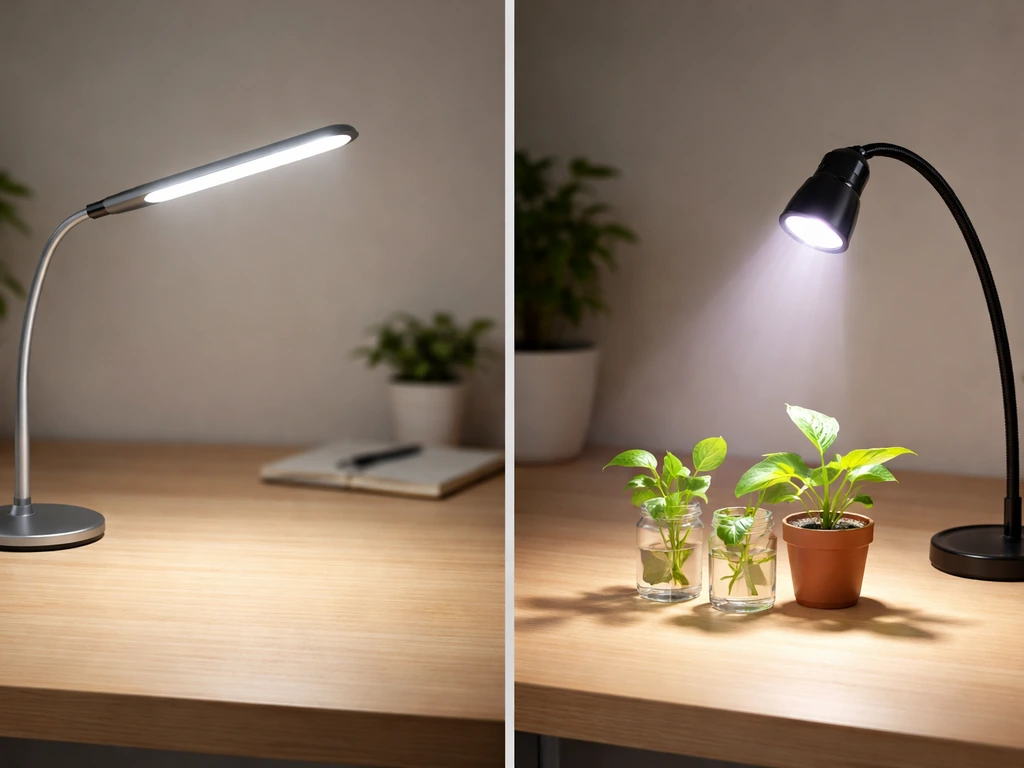
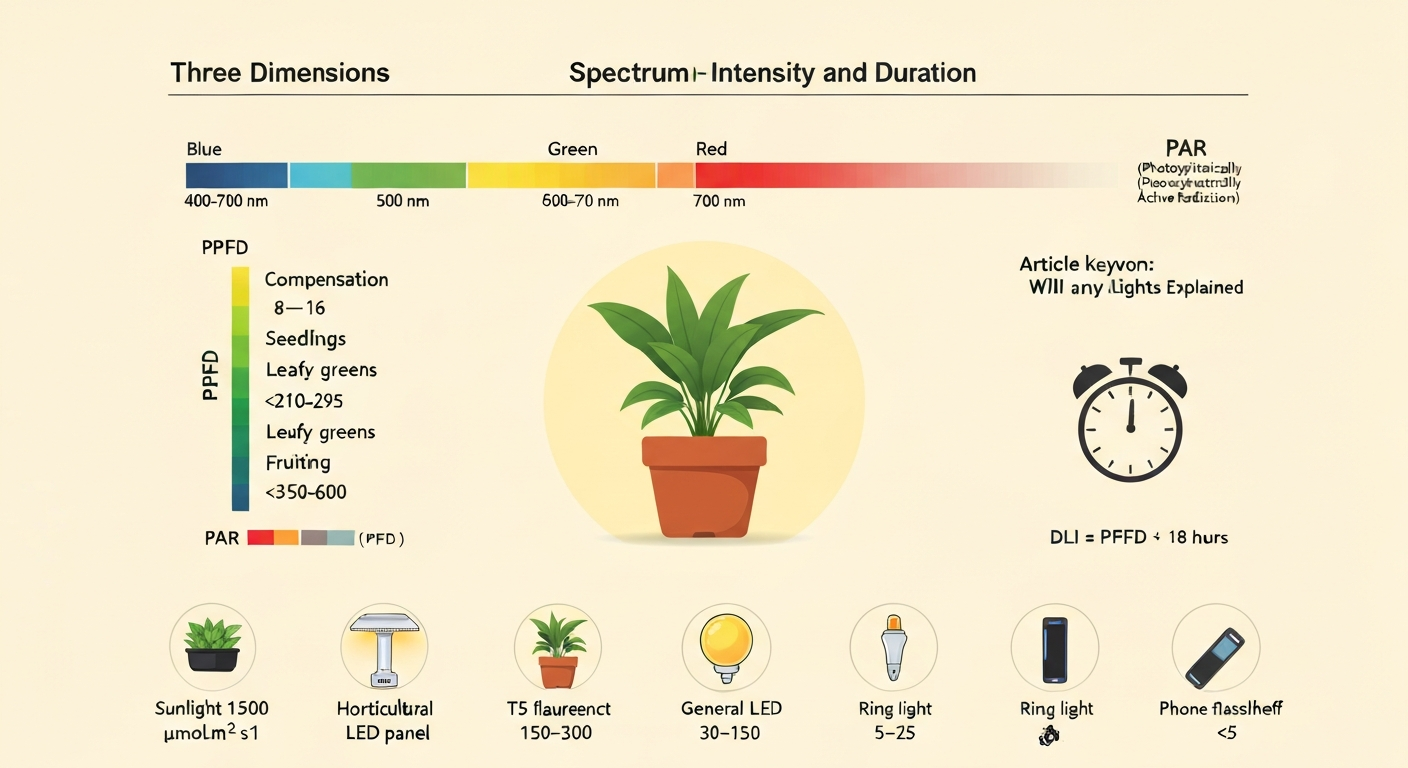
Plants photosynthesize using light in the 400–700 nm range, called photosynthetically active radiation or PAR. Within that window, they lean heavily on blue light (roughly 400–500 nm) for leafy, compact growth, and red light (roughly 600–700 nm) for flowering and overall photosynthetic efficiency. Grow lights are engineered specifically to hit those bands. But if you are wondering whether can sun lamps grow plants, the key is whether they deliver enough intensity in the right red and blue ranges Regular lamps vs grow lights. Regular lamps are not.
Incandescent bulbs are the worst offenders. Because of how LEDs are designed for plant wavelengths, do grow lights produce heat much less than incandescent bulbs incandescent bulbs are the worst offenders. Most of the energy they emit goes out as infrared heat, not visible or usable PAR light. What little visible light they do produce skews heavily red and orange, with almost no blue. That heat-heavy, blue-poor output makes them genuinely bad for plants, and keeping them close enough to help risks burning foliage. Old-school incandescents are effectively not worth trying.
CFLs (compact fluorescents) are a step up. They produce a broader spectrum and emit far less heat per watt, which is why they were popular for seedlings before LEDs became affordable. They still lack the optimized red-blue balance of a real grow light, but a "daylight" or "cool white" CFL at 5000–6500K placed close to a plant can deliver meaningful light to low-demand plants.
Modern LED desk lamps or LED bulbs in floor lamps are the best of the standard household options. A high-output LED with a daylight color temperature (5000K+) does produce some blue-range photons. The issue is intensity: most are simply too dim. A typical LED desk lamp might produce 25–75 foot-candles at plant level, which is barely enough for the most shade-tolerant species and falls short of what herbs, succulents, or anything remotely "sun-loving" actually needs.
| Light Source | Spectrum Quality for Plants | Heat Output | Intensity at Canopy | Verdict |
|---|---|---|---|---|
| Incandescent bulb | Poor (IR-heavy, low blue) | Very high | Low PAR per watt | Not recommended |
| CFL (daylight 5000K+) | Moderate | Low-medium | Moderate if close | Marginal for low-light plants |
| LED desk lamp (daylight) | Moderate | Very low | Low-moderate | Okay for survival, not growth |
| Dedicated grow light (LED) | Excellent (tuned red/blue) | Low | High and adjustable | Best option by far |
Why lamp light often falls short (and when it doesn't)
The core problem isn't just spectrum, it's intensity. Plants measure light in PPFD (micromoles of photons per square meter per second). The LI-COR radiometric measurement conversion primer explains how photon-based measurements like PPFD relate to other light measurement concepts such as lux, helping clarify why lux apps and meters are only approximate for plants [Plants measure light in PPFD](https://www. licor.
com/env/pdf/light/Rad_Meas. pdf). Even a low-light plant like a philodendron needs roughly 50–250 PPFD to grow properly. Herbs want 100–500 PPFD.
A typical LED desk lamp aimed at a plant from 18 inches away delivers somewhere in the 20–50 PPFD range at best. That math is brutal: you're at the floor of what even a shade plant can use, and nowhere near what anything remotely productive needs.
There's also the daily light integral (DLI) to think about. DLI is the total dose of light a plant gets in a day, and you calculate it as: DLI = PPFD x hours x 0.0036. If your lamp delivers 40 PPFD and you run it for 16 hours, the DLI is about 2.3 mol/m²/day. Most plants want at least 6–10 to do more than barely survive. You'd need to either dramatically increase intensity (get closer, use a brighter bulb) or run the lamp for an unrealistic number of hours. Neither fully solves the problem with a standard lamp.
Where regular lamps can genuinely work is with very low-light tolerant plants, in rooms that already get some ambient daylight, and when you treat the lamp as a supplement rather than a primary source. A ZZ plant or snake plant already does fine at 25–100 foot-candles. If your apartment gets a couple of hours of indirect window light plus a few hours under a bright LED lamp, you may actually be covering their needs.
If you're going to try it anyway: setup that actually helps
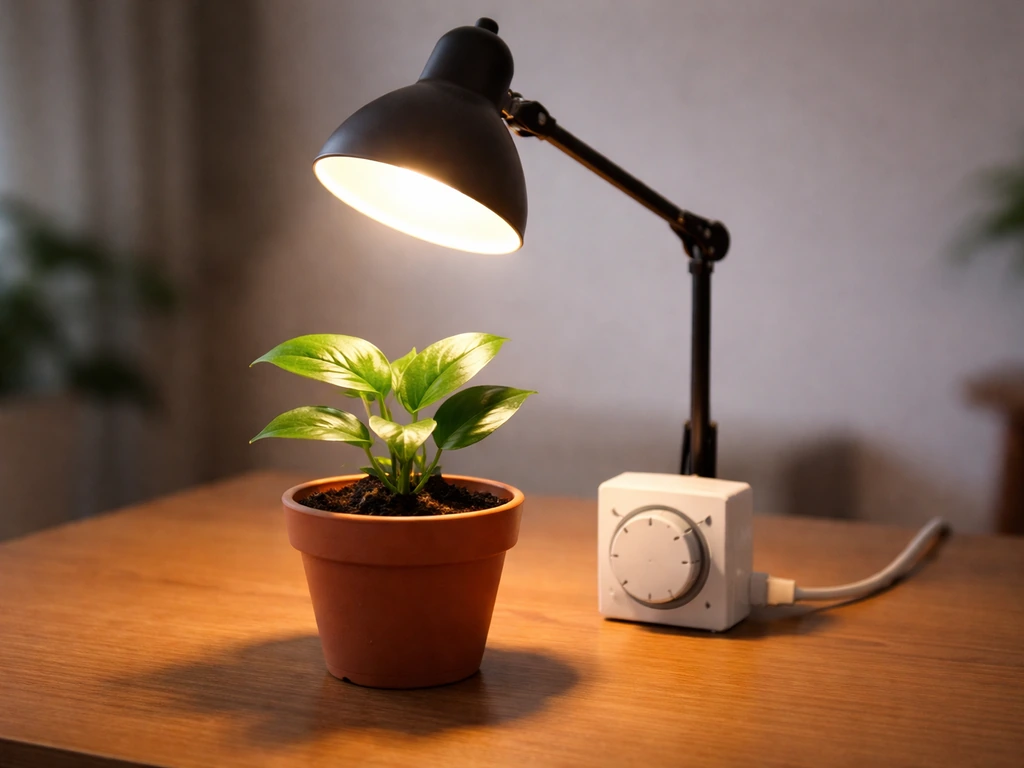
Distance is your most powerful lever. PPFD drops off fast as you move a light further away, so getting the lamp close matters enormously. For a CFL or LED desk lamp, aim for 10–14 inches above the plant canopy. That's the range where you'll actually be delivering meaningful light rather than ambient glow. Watch the plant: if leaves curl, look bleached, or feel crispy near the edges, back off a few inches. If stems start stretching long and leggy toward the light (etiolation), that's the plant telling you it's not getting enough and you need to get closer or run the lamp longer.
Duration matters just as much as distance. University of Maine Extension recommends 16–18 hours of artificial light per day for houseplants grown primarily under artificial lighting. That sounds like a lot, but it's how you compensate for low intensity with more total exposure time. A simple outlet timer costs about five dollars and removes all the guesswork. Set it and forget it.
Rotating plants every few days helps too, especially if your lamp only covers a small footprint. Plants will naturally angle their leaves toward the light source, and rotating them keeps growth even rather than producing a lopsided plant leaning permanently in one direction.
- Position the lamp 10–14 inches above the canopy, not across the room
- Use a daylight-spectrum bulb (5000K or higher) if you have a choice
- Run it 16–18 hours per day using an outlet timer
- Rotate the plant every 2–3 days for even light exposure
- Watch for leggy, stretched stems (not enough light) or leaf curl/bleaching (too much heat or intensity)
- Supplement with any natural window light you can get, even indirect
What to realistically expect by plant type
Low-light tolerant plants are your best bet under a regular lamp. ZZ plants, snake plants, pothos, and some philodendron varieties are genuinely adapted to low-light conditions, needing as little as 25–100 foot-candles. The University of Florida IFAS notes that its houseplant guidance categorizes low light as 25, 100 foot-candles, even for plants that may be grown under artificial conditions needing as little as 25–100 foot-candles. A bright LED desk lamp running 16 hours a day can keep these alive and looking decent, though growth will still be slow compared to natural light conditions.
Medium-light plants like peace lilies, spider plants, and most tropical foliage plants sit in a tricky middle zone. A regular lamp used as a supplement to ambient window light might keep them healthy. Used alone in a dark room, you'll likely see gradual decline: slower growth, pale leaves, and eventually a plant that's just holding on rather than growing.
High-light plants are where a regular lamp simply fails. Herbs like basil and cilantro want 100–500 PPFD and several hours of intense light per day. Succulents need full, bright light. Fruiting plants like tomatoes or peppers need even more. Under a regular desk lamp, these plants will stretch desperately toward the light, produce weak spindly growth, and eventually decline. If you are trying to grow pot indoors, a regular heat lamp will usually fall short for the light dose and intensity cannabis needs, so a grow light is a better bet. If this is what you're trying to grow, skip ahead to the grow light section below.
| Plant Type | PPFD Needed | Regular Lamp Result | Recommendation |
|---|---|---|---|
| ZZ plant, snake plant | 25–100 PPFD | Can survive and grow slowly | Workable with a bright LED lamp close up |
| Pothos, philodendron | 50–250 PPFD | Survival likely, growth slow | Supplement with window light if possible |
| Herbs (basil, mint) | 100–500 PPFD | Leggy, weak growth | Use a dedicated grow light |
| Succulents, cacti | 100–200+ PPFD (high quality light) | Poor color, stretching | Use a grow light or sunny windowsill |
| Tomatoes, peppers | 400–800+ PPFD | Failure to thrive | Proper grow light is non-negotiable |
Safety stuff worth knowing before you rig something up
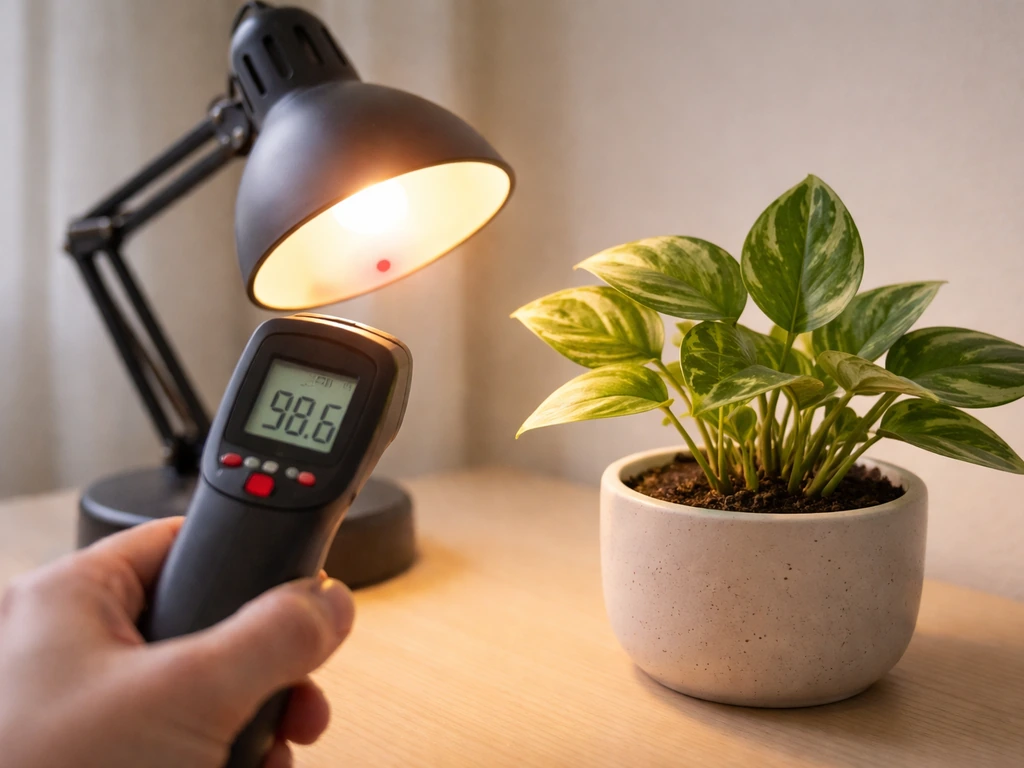
Heat is the main physical risk when using standard lamps near plants. Grow lights can keep plants warm in the sense that they may add some heat to the air around them, but the warmth is not the same as providing enough light for healthy growth. Incandescent bulbs get genuinely hot and placed 10–14 inches from dry leaves or potting mix, they're a fire hazard. This is one more reason to avoid incandescents entirely for this purpose.
CFLs and LEDs run much cooler and are far safer close to foliage, but you should still never drape cords over combustibles, use a lamp rated for higher wattage than the socket allows, or leave a lamp running unattended in a makeshift setup without checking it first. The U. S.
Consumer Product Safety Commission flags extension cord misuse and overloading as a common cause of electrical fires, so if you're running a lamp on an extension cord, make sure it's rated for the load.
On the UV and cancer front: standard LED desk lamps and grow lights do not emit meaningful UV radiation. The fear that grow lights cause cancer or that they'll give you a tan comes from confusing grow lights with tanning beds. Tanning beds use UV-A and UV-B emitters specifically designed to affect skin, which is a completely different category of device. Most LED grow lights emit in the visible red and blue spectrum. The American Academy of Dermatology notes that red-light LED devices are considered safe for home use and that research hasn't found red light to cause cancer. If you're shopping for a grow light, look for LEDs rated in the red/blue PAR range, and there's no sunscreen required.
One more thing: don't let a lamp run 18 hours a day in a lamp shade or enclosed fixture that wasn't designed for it. Heat buildup in enclosed spaces is how lamp fixtures fail or start fires. If you're rigging something up, use an open clip-on reflector fixture or a gooseneck that lets heat dissipate. If you want better results without switching to a grow light, you can also use mirrors to redirect and concentrate that reflected light onto the plant open clip-on reflector fixture. Check the fixture's maximum wattage rating and stay well under it.
When to just get a grow light (and how to pick one without overcomplicating it)
If your plants are anything other than the hardiest low-light varieties, a basic grow light is genuinely worth the upgrade. The good news is that entry-level LED grow lights have gotten very affordable, and you don't need to spend a lot to get something far better than a desk lamp.
For a single plant or a small shelf setup, look for a full-spectrum LED grow light that specifies its PPFD output, not just its wattage. Wattage alone tells you almost nothing useful about how much plant-usable light you're actually getting. A light that lists a PPFD of 400–800 µmol/m²/s at canopy distance is what you want for anything beyond low-light houseplants. Oklahoma State University Extension recommends that 400–800 PPFD range for productive plant growth under LEDs.
For sizing: a small bar-style or panel LED grow light covering a 1–2 square foot area costs $25–60 and will outperform any desk lamp for plant growth. Mount it 8–12 inches above the canopy for higher-light plants, or pull it back to 16–20 inches for low-light varieties (and compensate by running it longer). A University of New Hampshire Extension study found that mounting a grow light bar at 8 inches required only 8 hours per day to meet seedling DLI needs, while moving it to 20 inches required 16 hours per day for the same result. Distance and duration are always the two knobs you're adjusting.
If you're growing herbs, seedlings, succulents, or anything that needs serious light, the desk lamp experiment will eventually frustrate you. A dedicated grow light, even a cheap one, changes what's possible. It's the same logic as trying to charge a phone with a USB port on an old TV versus using a proper charger: technically both work, but one is always going to leave you wanting more.
Related setups worth knowing about include using desk lamps specifically for plants, heat lamps for warmth versus light, and sun lamps designed for plant growth, each of which solves a different piece of the puzzle depending on what your plants actually need. Heat lamps are mainly for warmth, so they are not a substitute for the light plants need to grow heat lamps for warmth versus light.
FAQ
If I already have some window light, can a regular lamp be enough for plants?
Maybe, but only as a stopgap. If the room already has regular indirect daylight and the plant is low-light tolerant, a bright LED lamp can keep it from declining, though growth will usually be slow and uneven compared with natural sun.
Is any regular bulb okay, or are some types clearly better or worse?
Incandescent bulbs are the worst choice because they waste most of their energy as heat and they are typically blue-poor. Even if you avoid burning the leaves by keeping distance, the light dose is usually too low for anything beyond hardier low-light houseplants.
How can I tell quickly whether my lamp is helping or not?
If the plant is stretching, reaching, or leaning toward the lamp (etiolation), treat that as “too little light.” Try moving the lamp closer first (within a safe distance for your fixture and plant), then increase daily hours with a timer rather than extending the lamp session randomly.
Can I use a lamp with a shade or enclosed fixture to grow plants?
Yes, but only if you can keep it close enough and run it long enough to raise DLI. A lamp shade often traps heat and reduces usable intensity at the canopy, so a “covered” desk-lamp setup usually underperforms and can become a safety issue.
What should I look for when choosing a regular lamp, wattage or something else?
Use a basic light output target, not just wattage. The article’s key decision aid is PPFD at canopy distance, so choose either a lamp that specifies PPFD or, for standard bulbs, assume you will not reach productive PPFD for herbs and sun-loving plants.
How often should I rotate plants under a desk lamp?
Rotate at a practical cadence, such as every 3 to 7 days, if your lamp covers only one side of the plant. This helps counter leaf and stem bending toward the light so the plant does not end up permanently lopsided.
Is running a lamp 16 to 18 hours a day always necessary?
For low-light plants, many owners land in the “supplement” range, but the safest method is to set a timer and observe. Start around 14 to 16 hours only if your room is not bright, then adjust based on signs like pale leaves, slow growth, or stress, rather than going straight to very long schedules.
Are LED and CFL lamps safe enough to leave on continuously?
Do not assume “cooler lamp” means “no risk.” LEDs and CFLs run cooler than incandescents, but cords can still overheat under misuse (for example, pinched cords, overloaded extension cords, or combustibles nearby), so follow the fixture’s wattage and electrical limits.
Would adding a mirror or reflector make a regular lamp work better?
Using mirrors can help you reclaim otherwise wasted side light, but it does not fix the biggest limitation of regular lamps, which is intensity at the canopy. If PPFD remains low, mirrors may reduce the gap slightly, but productive growth still likely requires a true grow light.
Can a regular lamp help me grow herbs or produce indoors?
A regular lamp can keep some low-light plants alive, but it is usually not reliable for fruiting crops because they generally need sustained high intensity for flowering and fruit set. If your goal is herbs, tomatoes, peppers, or similar, switching to an actual grow light is typically the better upgrade.
Next Articles
Do Grow Lights Produce Heat? How Hot LEDs Get and Tips
Yes, grow lights emit heat, especially LEDs. Learn how hot they get, safe temps, and how to measure and cool safely.
What Artificial Light Will Grow Plants: Best Lights Guide
What artificial light will grow plants: practical guide to LED, CFL, HID spectra, PPFD targets, setup, cost & tips.
Will Any Light Grow Plants? Guide for Indoor Growers
Can any light grow plants? Clear yes/no, science-backed light specs, setup tips, and which household lights work.