
Grow lights do produce some heat, but for most home setups they are not reliable heaters. A modern LED grow light will raise the air temperature in a small, enclosed space by a few degrees, and older HPS or HID fixtures can push it higher, but if your plants are sitting in a cold room, your grow light alone probably won't get them into the 65°F–80°F range most indoor plants need. Think of grow lights as tools for photosynthesis first and warmth second, and you won't be disappointed.
Do Grow Lights Keep Plants Warm? How to Measure Heat
Marcus Holloway
10 Jul 2026
What 'keeping plants warm' actually means
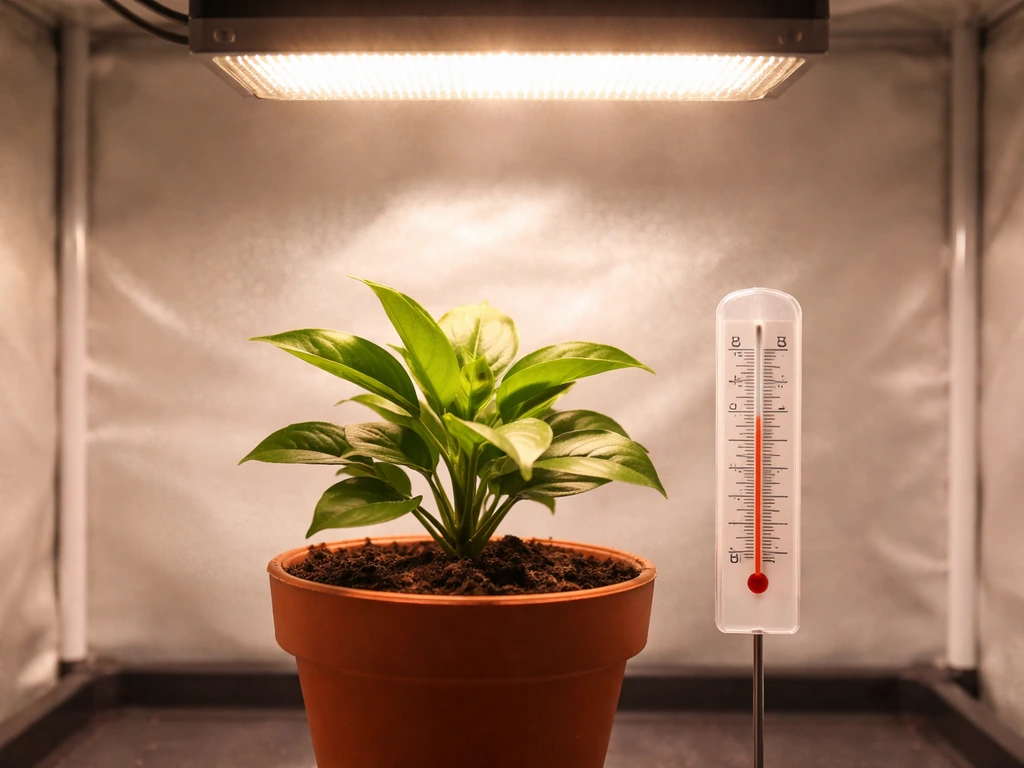
There are two different things going on when we talk about plants and warmth. The first is ambient air temperature, which is what your thermometer reads in the room. The second is leaf temperature, which can be a degree or two warmer or cooler than the surrounding air depending on what light source is shining on the plant. Most indoor plants want daytime air temperatures between 65°F and 80°F and nighttime temperatures around 10°F cooler. University of Georgia Extension puts the sweet spot at roughly 70°F–80°F during the day and 65°F–70°F at night. Drop below those numbers and you start seeing slower growth, leaf drop, or a spindly, stressed appearance. So when someone asks if a grow light keeps plants warm, the real question is: can it push both the air and the leaf into that target band?
The honest answer is: sometimes, partially. A grow light running for 14 hours a day in a small grow tent or cabinet can noticeably raise the ambient temperature inside that enclosed space. In a large open room, the effect is minimal. And whether we're talking about air temperature or leaf temperature matters too, because those numbers behave differently depending on the type of fixture you're using.
How different grow lights create heat (LED vs fluorescent vs HID)
Not all grow lights heat the same way, and understanding the difference saves a lot of troubleshooting headaches. The two main pathways are convective heat (warm air rising off the fixture and ballast) and radiant heat (infrared energy traveling directly from the bulb to the leaf, warming it on contact). LEDs mostly produce convective heat. They convert a high percentage of electrical input into light, and the remaining energy is released as warm air around the heatsink and driver. That warm air rises, mixes with room air, and raises ambient temperature slightly. What LEDs don't do much of is beam infrared radiation directly at your leaves.
HPS and MH fixtures (the HID family) work very differently. They emit a significant amount of near-infrared radiation, which travels through air and gets absorbed directly by leaf tissue. Research comparing HPS and LED at equal light intensity (PPFD) found that leaf temperatures under HPS ran measurably higher, with some studies reporting leaf temperature increases of up to 2°C (about 3.6°F) from radiant heat alone. That is not a huge number in absolute terms, but it can push a cold leaf into the comfortable zone, or push a warm leaf into heat stress territory. Fluorescent tubes, including T5 grow lights, fall somewhere in the middle. They produce less radiant heat than HPS but more than most LEDs, and their ballasts can get warm enough to raise localized air temperature, especially in enclosed seedling trays.
| Light Type | Primary Heat Pathway | Effect on Leaf Temp | Effect on Air Temp (Enclosed Space) | Typical Distance from Canopy |
|---|---|---|---|---|
| LED | Convective (heatsink/driver) | Minimal direct leaf warming | Moderate raise in small spaces | 7–24 inches depending on wattage |
| Fluorescent (T5/T8) | Convective (ballast + tube) | Low to moderate | Mild raise, stronger near ballast | Under 12 inches for seedlings |
| HPS / MH (HID) | Convective + Radiant (near-infrared) | Noticeable leaf temp increase (up to 2°C) | Significant raise, especially in tents | 18–36 inches or more |
Will your grow light actually raise the temperature enough? Realistic expectations
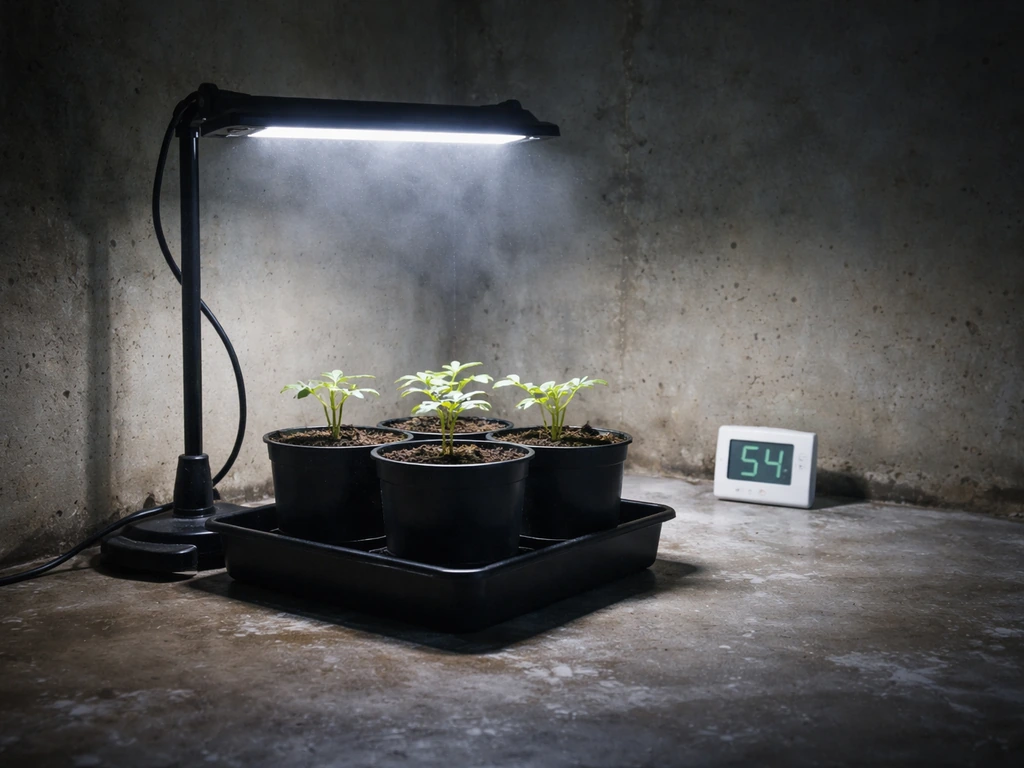
Here's where I want to be straight with you: if your growing space is already cold, say 55°F in an unheated basement or garage in winter, a single LED panel is not going to solve your heating problem. Can sun lamps grow plants is really about whether the lamp can supply enough usable light while staying within safe temperature ranges for your specific setup a single LED panel. It might nudge the temperature up a couple of degrees inside a tent, but that still leaves your plants far below the 65°F floor they need. A 600W HPS in a small tent is a different story. Growers using high-wattage HID fixtures in enclosed spaces often run into the opposite problem and need active cooling to keep temperatures down. The wattage of the fixture, the size of the space, and whether it's enclosed all matter enormously.
For most home gardeners using a modest LED panel or a strip of T5 tubes over a seed tray on a shelf, the warming effect is real but modest. It can help maintain temperature in a space that is already close to the target range. It cannot substitute for a heater in a genuinely cold space. If you're starting seeds, most germinate best at a consistent 70°F–75°F growing medium temperature, and extension guidance from Iowa State and UConn is consistent on this point: if your room is cold, a heat mat under the tray does the job a grow light cannot.
How to measure and troubleshoot when your plants are still cold
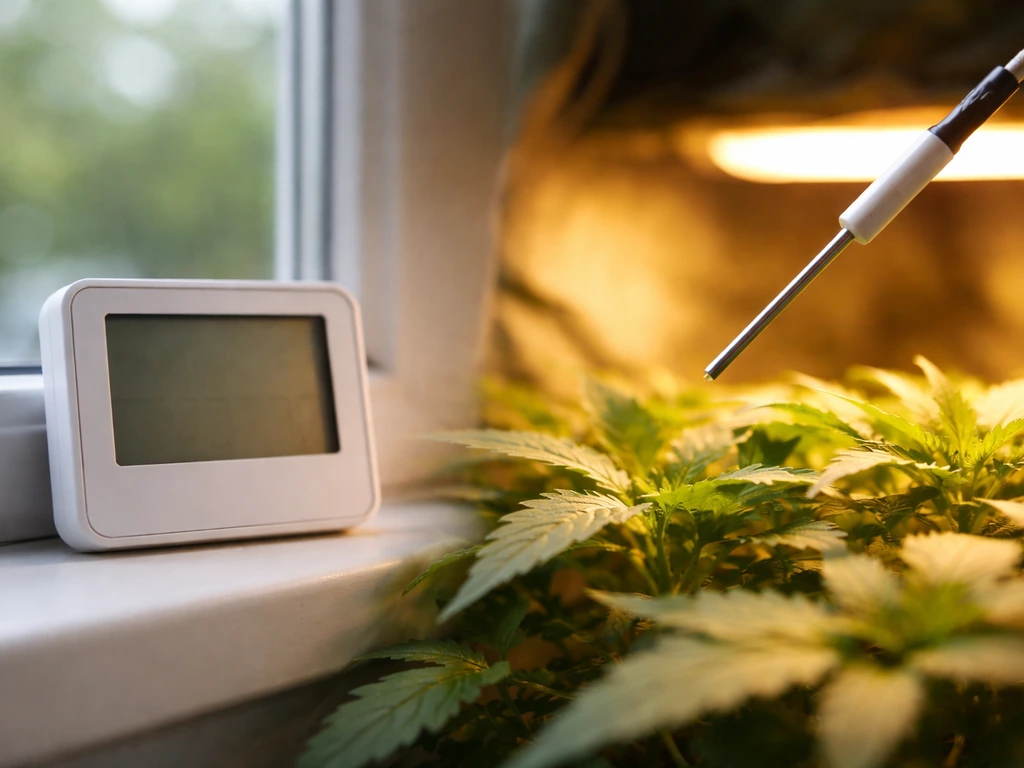
The first step is getting an accurate read on what's actually happening. A lot of growers misplace their temperature sensors and get misleading data. If you put a probe in direct light from the fixture, it will read artificially high because the sensor itself is absorbing radiant energy, the same way a plant leaf does. Place your thermometer in the shade just below the top leaves to measure true air temperature at canopy level. A digital min/max thermometer that logs overnight lows is worth every penny here because cold stress usually happens at night when the lights are off.
Once you know your actual temperatures, you can diagnose the real problem. If canopy-level air temperature is below 65°F during the day or below 55°F at night, the grow light alone isn't cutting it and you need supplemental heat. A desk lamp can help with light, but using it to raise plant temperature is usually limited compared with a purpose-built grow light or supplemental heat grow light alone isn't cutting it. If temperatures are in range but plants still look stressed (yellowing, slow growth, leaf drop), the issue is likely something else: overwatering in cool soil, poor airflow, or nutrient problems. Don't assume cold is the culprit without measuring first.
- Place a digital thermometer at canopy level, shaded from direct light, and check both day and night readings.
- Measure soil or growing-medium temperature separately with a probe or infrared thermometer. Cold roots hurt plants even when air temperature looks fine.
- If using a grow tent, feel the air near the floor and compare it to canopy level. Cold air pools at the bottom.
- Run lights for a full cycle and re-measure. Note how many degrees the space warms up over 6–8 hours of light-on time.
- If the temperature is consistently below 65°F, plan on adding a supplemental heat source rather than adjusting the grow light.
Practical ways to keep plants warm without harming them
If your grow light isn't doing enough warming on its own, there are several straightforward options. The most targeted one for seedlings and cuttings is a heat mat placed under the tray. Heat lamps can help indirectly by warming the air or the leaf area, but they are only effective if they keep your plants within the right temperature range heat mat. blank" rel="noopener noreferrer">Penn State Extension recommends pairing a heat mat with a thermostat controller to hold the medium at a steady 70°F–75°F without cooking the roots. University of Minnesota Extension adds a useful caution: don't plug heat mats into a light timer, because the temperature fluctuations caused by cycling on and off can stress plants more than consistent mild warmth.
For larger plants and established grow spaces, a small ceramic space heater with a built-in thermostat is a reliable solution. Some people wonder if a heat lamp can do the job, but it can easily create unsafe hot spots unless you manage distance and airflow ceramic space heater. Keep it on the floor of the tent or room so warm air rises through the canopy. Avoid placing it where it blows directly on plants, which can cause desiccation even when temperatures are right. Iowa State Extension highlights that cold or warm drafts are both stressors for houseplants, so airflow should be gentle and indirect.
Insulation matters too, especially at night. You can also use mirrors to redirect light toward your plants, which may help them grow more efficiently in cooler setups insulation matters too. A simple layer of bubble wrap or horticultural fleece around pots or over a seedling tray can reduce heat loss significantly when lights cycle off. If plants are near a window, move them away from the glass in winter. A cold window pane radiates cold air downward and can chill plants sitting right against it even when the room feels warm.
- Heat mats with a thermostat controller for seedlings and germination trays (target 70°F–75°F medium temperature).
- A small ceramic space heater with thermostat for grow tents or enclosed shelving.
- Insulating pot covers or horticultural fleece at night when the lights are off.
- Relocating plants away from cold windows, exterior walls, and floor-level cold drafts.
- Grouping plants together so they benefit from each other's transpiration and shared ambient warmth.
Safe distance, overheating risks, and airflow
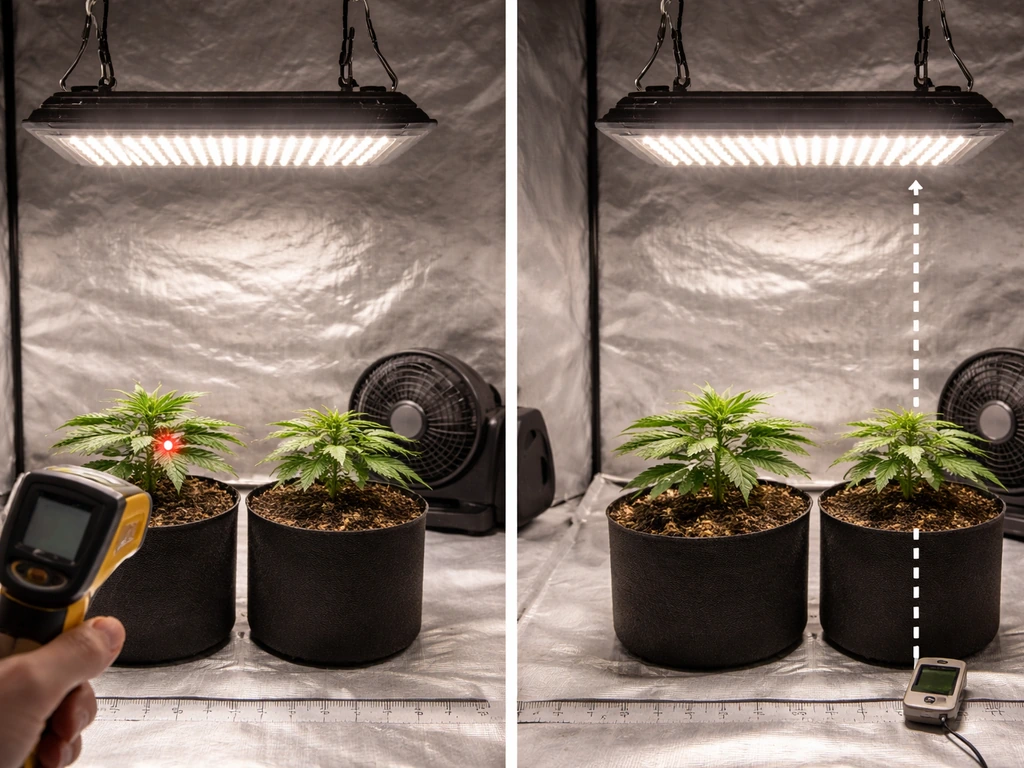
The flip side of 'my plants are too cold' is 'my grow light is scorching them,' and it's easy to create that problem if you move lights closer to add warmth. University of Vermont Extension notes that browning leaf tips and edges are a classic sign that a grow light is too close. UNH Extension recommends keeping fluorescent lights under 12 inches from seedling tops for good light intensity, but warns that the heat near the ballast can be intense enough that plants directly underneath may need more frequent watering and can actually burn. LEDs can generally sit closer than HPS because they produce less radiant heat, but even LEDs will bleach or burn foliage if you push them within a few inches of leaves at high wattage.
As a general starting guide, LED fixtures often work well at 12–24 inches above the canopy depending on wattage, T5 fluorescents at 6–12 inches, and HPS or MH fixtures at 18 inches or more. Barrina's own guidance for their T8 LED fixtures suggests around 20 inches for seedlings, 12 inches for vegetative growth, and 8 inches for flowering and fruiting stages. Those distances reflect both light intensity and heat management at the same time.
Airflow is the other piece people overlook. Good air circulation does two things: it prevents hot spots from building up directly under the fixture, and it strengthens plant stems through gentle movement. A small clip fan running on low is usually enough for a home shelf or tent. If you're using HPS lights (which are genuinely hot fixtures), active exhaust ventilation is not optional. Stagnant hot air above a canopy under HPS can spike leaf temperatures well above what the thermometer in the corner of the room suggests. If you're curious about how much heat different fixtures actually produce, the differences between LED and HPS are explored more deeply in the related discussion on whether grow lights produce heat, which covers the energy conversion side of this question in more detail.
The practical takeaway: treat your grow light as your plants' sun, not their furnace. Get the temperature right with a dedicated heat source, then position the light for good photosynthesis at a safe distance. That combination, measured and adjusted with an actual thermometer, will serve your plants far better than chasing warmth from a fixture that was never designed to provide it.
FAQ
How warm should the leaves be compared with the air when using grow lights?
Aim for air temperatures in the target band, and assume leaf temperature can differ by about a couple of degrees depending on the fixture. If air is already in range but leaves look stressed, the problem is usually not leaf heat, it is often watering, nutrients, or airflow.
Why does my thermometer show a higher temperature near the light even when plants look cold?
If the sensor is in direct light or sitting where radiant energy hits it, it can read hotter than the actual air around the canopy. Place the probe just below the top leaves in shade (not touching the fixture area) and confirm with overnight min/max readings.
Can I use a grow light timer to help plants stay warm at night?
A light timer does not add heat at night because the fixture is off. If nighttime temperatures drop below your target range, use supplemental heat (like a heat mat with thermostat or a properly controlled heater) rather than relying on the light schedule.
Do LEDs keep plants warm better than HPS?
LEDs raise ambient temperature mainly through warm air from the heatsink and driver, so warming is usually modest. HPS can warm leaves more because it emits more radiant energy, but it often requires active ventilation to prevent overheating.
Will placing a grow light closer warm plants faster, or is that risky?
It can warm leaves, but it also increases the risk of bleaching or tip burn. Use distance guidelines as a starting point, then adjust based on measured canopy conditions and signs of stress, keep LEDs farther than a few inches if you are running high wattage.
What if my room is cold, but my plants are still growing slowly or dropping leaves?
First confirm temperatures at canopy level. If temperature is in range, slow growth and leaf drop are often linked to cool root conditions from cold media, overwatering, low airflow, or nutrient imbalance, then address those before assuming the light is the issue.
Is a heat mat enough if my problem is cold air, not cold soil?
A heat mat helps most when the growing medium is cold, especially for seeds and cuttings. If the main issue is cold air around the canopy, you may need both a heat mat (for roots) and gentle air warming or insulation to prevent daytime and nighttime air from dropping too low.
Should I run a heat mat on the same timer as the grow light?
Avoid cycling heat mats with the light timer unless you use a thermostat that maintains a steady setpoint. Temperature swings from on/off cycling can stress plants more than consistent mild warmth.
Can a space heater make my grow tent too hot even if the thermostat is reading safely?
Yes, because heaters can create hot spots if airflow is poor or the heater blows directly toward plants. Use indirect placement, gentle circulation, and ensure the canopy-level temperature is what you measure and control, not just the room average.
How do I tell whether my stress is from cold or from overheating near the fixture?
Cold stress often shows as slowed growth and a generally weak, stressed look, especially when nights are too low. Overheating from close lights commonly shows browning at leaf edges or tips and rapid bleaching, then you should increase distance or improve ventilation.
What insulation tricks help with nighttime cooling without changing my lighting setup?
Use insulation over the seed tray or around pots (fleece or bubble wrap), and keep plants away from cold window glass. Even if the room air feels tolerable, radiant cooling from a window can chill plants when lights turn off.
Do I need active exhaust with HPS in a small room or tent?
Often yes, because HPS produces significant heat and stagnant air can spike leaf temperature above what a corner thermometer shows. Plan for ducted exhaust or at least a controlled fan setup, then verify with canopy-level measurements during the full light-on period.
Next Articles
Can a Regular Lamp Help Plants Grow? What to Know
Find out if a regular lamp can grow plants, what light it provides, and when to switch to a real grow light for results.
Do Grow Lights Produce Heat? How Hot LEDs Get and Tips
Yes, grow lights emit heat, especially LEDs. Learn how hot they get, safe temps, and how to measure and cool safely.
Why Do Plants Grow Best in Blue Light? Science & Practical Guide
Explore why blue light boosts vegetative growth, ideal blue:red ratios, PPFD, photoperiods, fixtures, and setup tips.