Black lights will not meaningfully help your plants grow. Incandescent light also does not deliver the right wavelengths and intensity to help plants grow well compared with proper grow lights incandescent light help plants grow. The UV-A wavelengths they emit (typically peaking at blank" rel="noopener noreferrer">365 nm or 395 nm) sit almost entirely outside the range plants use for photosynthesis. Most of your plant's growth energy comes from red and blue visible light, and a standard blacklight bulb delivers almost none of that. You can leave one running above your houseplants all day and see little to no improvement in growth. If you're trying to grow healthy indoor plants, you need a different tool entirely.
Do Black Lights Help Plants Grow? The Practical Answer
Marcus Holloway
2 Jun 2026
What a black light actually puts out
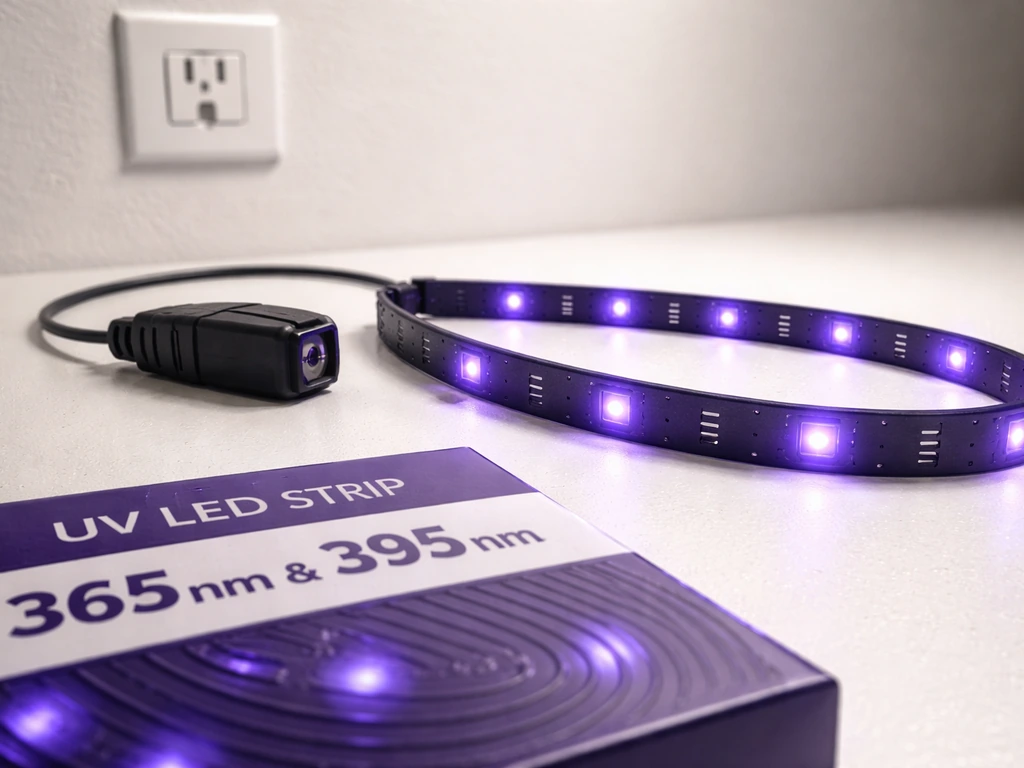
A "black light" is a UV-A source. When people say UV-A, they mean ultraviolet light in roughly the 320-400 nm range. Most blacklight bulbs and LED strips are specced at either 365 nm or 395 nm peak wavelength. That's the number you'll see on the package, and it tells you where most of the energy is concentrated.
The difference between those two common options matters visually but not much for plants. A 395 nm strip bleeds a small amount of energy into the visible violet range, so it glows with a dim purple hue. A 365 nm strip looks like a dull, faint bluish-white glow because almost all its output is below the range your eyes can detect. Neither one is producing meaningful amounts of the red or blue light that drives plant growth.
Blacklight products are specced by peak wavelength and irradiance at a set distance, not by PPFD (the metric that tells you how much photosynthetically useful light a source delivers). Spectronics UV-A (365 nm) inspection lamps are specified as UV-A products with [defined irradiance at a set distance](https://www. bergeng. com/mm5/downloads/spectronics/Spectroline-TRI365SBLC-Brochure.
pdf), rather than as grow lights measured by PPFD. That absence alone tells you everything about who these products are designed for.
Why plants mostly ignore UV and what they actually want
Plants photosynthesize using what scientists call photosynthetically active radiation (PAR), which spans roughly 400-700 nm. The two powerhouse ranges are blue light (around 400-500 nm) and red light (around 600-700 nm). Chlorophyll, the molecule doing most of the work, absorbs these wavelengths strongly. UV-A at 365 nm sits just below the PAR window. Even 395 nm, which technically grazes the edge of PAR, delivers so little usable energy compared to a dedicated grow light that any contribution is trivially small.
There are some nuanced situations where UV does interact with plants. Low doses of UV-A can trigger stress responses that affect pigment production, flavor compounds in herbs, and some aspects of plant morphology. Cannabis growers sometimes talk about UV supplementation for resin development, and researchers have studied UV effects on secondary metabolites. But these are supplemental effects on top of a full spectrum of PAR light, not a substitute for it. Running a black light over a light-starved plant won't trigger useful growth. It'll just stress the plant while leaving it hungry for real photosynthetic energy.
How to quickly test whether your current setup is working
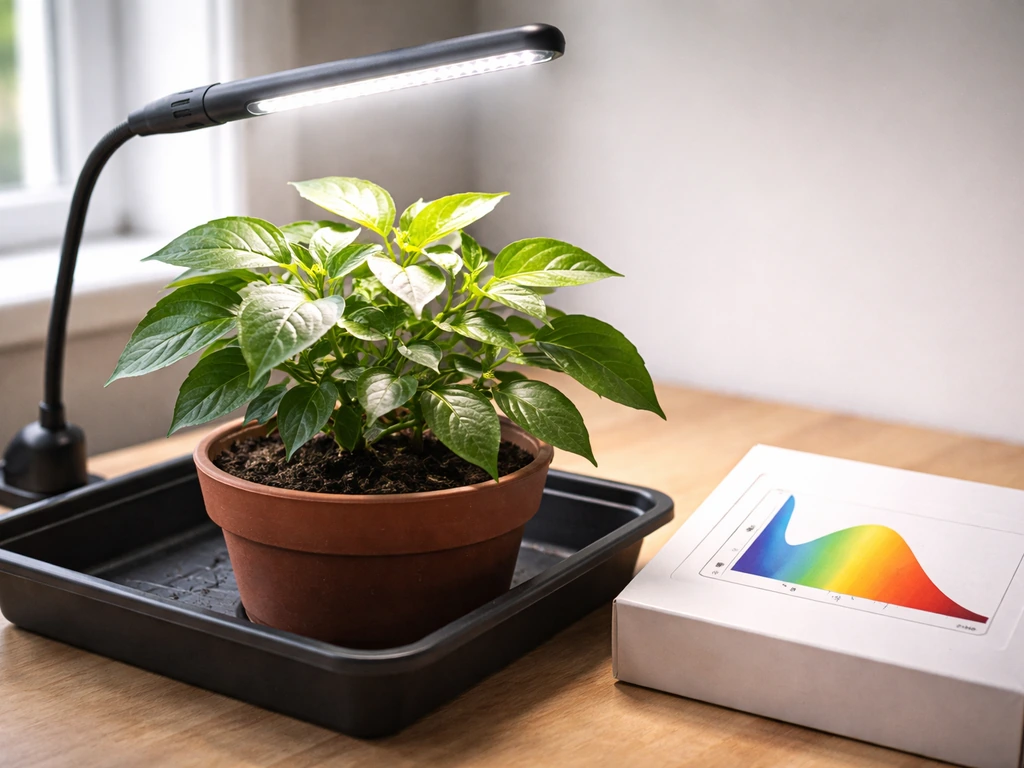
If you're already running a light over your plants (black light or otherwise) and want to know whether it's actually doing something, here's a fast practical check.
- Check the spectrum label. Look at the product packaging or listing. If the peak wavelength is listed as 365 nm or 395 nm and there's no mention of red/blue grow spectrum or PAR output, it's a UV lamp, not a grow lamp.
- Look for a PPFD rating. Proper grow lights list PPFD in micromoles per square meter per second (µmol/m²/s). If your light has no PPFD spec, it was not designed to grow plants.
- Check your plants at two weeks. After two weeks under a new light, seedlings should show compact, upright growth. If stems are stretching toward any nearby window or getting leggy, the light isn't delivering enough usable photons.
- Measure your distance. Most LED grow lights need to be 12-24 inches from the canopy to hit useful PPFD levels. Black lights have no meaningful grow-light distance rule because they're not delivering PAR at any practical distance.
- Track your photoperiod. Most foliage plants need 12-16 hours of good light per day. If you're running a black light for that duration and seeing no change, the problem is the spectrum, not the duration.
What to use instead
The good news is that proper grow lights have gotten cheap and genuinely good. You don't need anything fancy or expensive to grow healthy indoor plants. Here are the realistic options worth considering.
| Light Type | Best For | Rough Cost | Key Advantage |
|---|---|---|---|
| Full-spectrum LED grow light (red/blue or white) | Most indoor plants, seedlings, herbs, foliage | $20-$80 for small panels | Energy efficient, low heat, covers full PAR range |
| T5 or T8 fluorescent grow tubes | Seedlings, low-light plants, propagation | $15-$50 for a fixture | Even coverage, easy to find, good for wide trays |
| CFL grow bulbs (6500K or 2700K) | Small setups, single plants, supplemental light | $8-$20 per bulb | Fits standard sockets, no special fixture needed |
| UV-A black light | Party decoration, fluorescence effects, pest detection | $10-$30 | Not useful for plant growth |
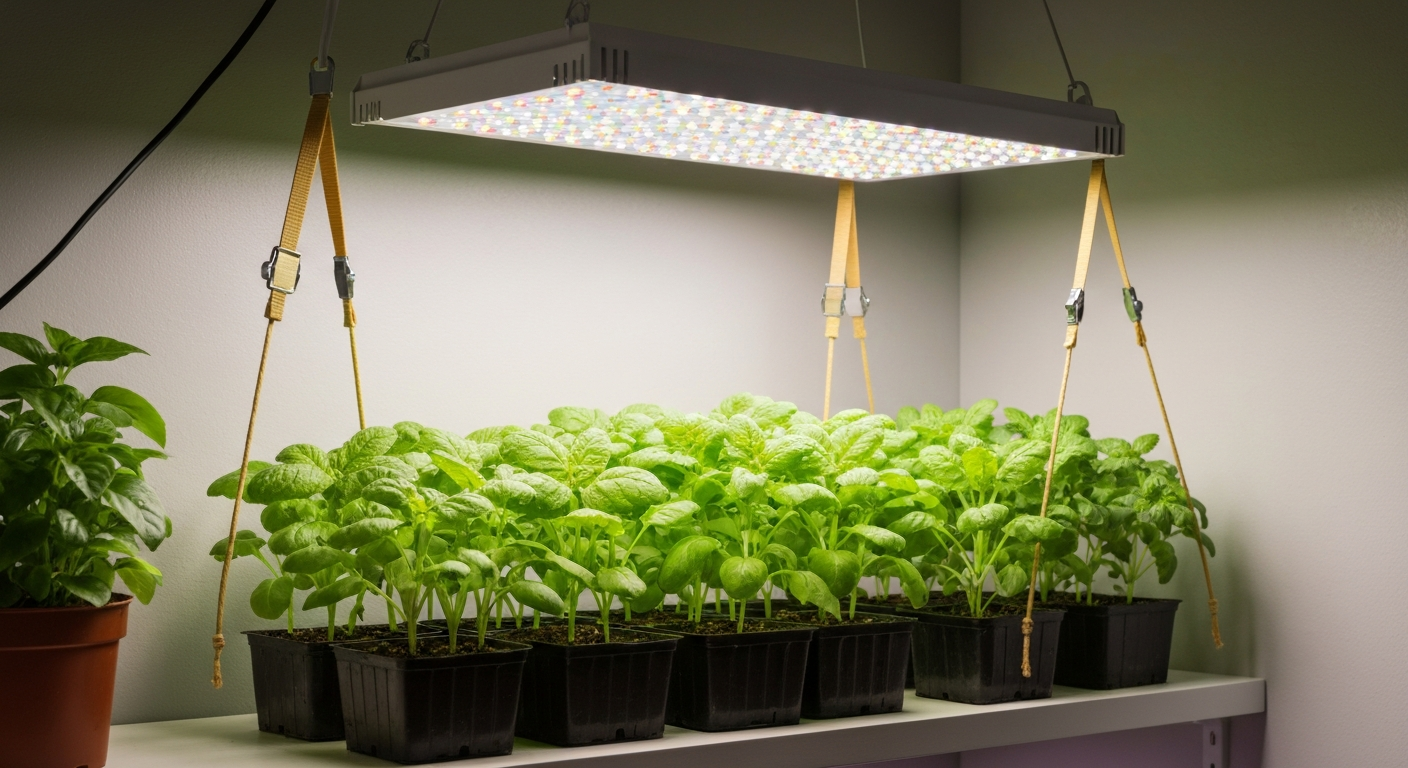
For most home gardeners, a simple full-spectrum LED panel in the $25-$50 range is the best starting point. Look for one that lists actual PPFD output and covers the red/blue spectrum. Hang it 12-18 inches above your plants and run it 14-16 hours a day for leafy plants, or 12 hours for fruiting or flowering plants. You should see measurable improvement in compact growth and leaf color within two to three weeks. This is a completely different experience from running a black light and wondering why nothing is changing.
If you're comparing options across common household light sources, it's worth knowing that regular incandescent bulbs and standard house lights also fall short for serious plant growing, though for different reasons than black lights. They emit more in the red/yellow range but typically lack the blue spectrum and intensity plants need. House lights are usually designed for visibility, not for providing the red and blue PAR that plants need for photosynthesis do house lights help plants grow.
The same logic applies to office fluorescent lights, which provide some PAR but rarely enough intensity for anything beyond the most low-light-tolerant plants. If you are wondering whether office lights help plants grow, the intensity and spectrum are usually the limiting factors rather than the bulb type alone office fluorescent lights. A dedicated grow light, even a modest one, outperforms all of these.
UV safety: what you actually need to worry about
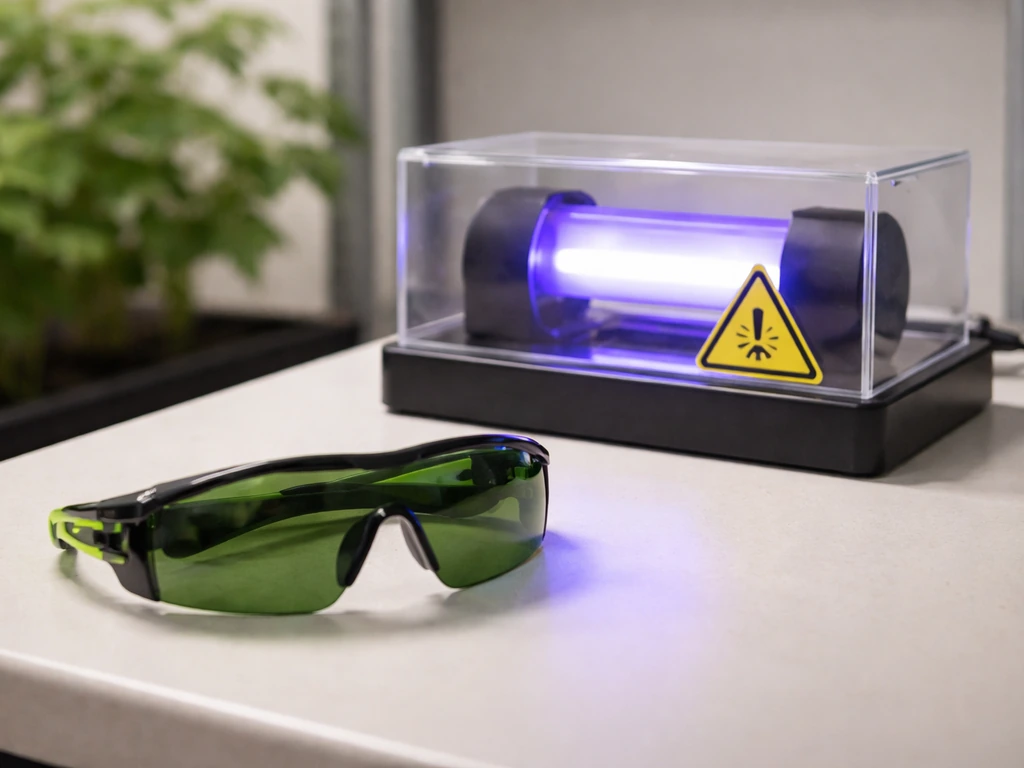
If you're using any UV-A light source, including a blacklight for any purpose, the safety rules are simple and worth taking seriously.
- Don't look directly into a UV-A source. UV-A can cause eye damage with repeated or prolonged exposure, and the damage accumulates over time without immediately feeling painful.
- Limit skin exposure. UV-A contributes to skin aging and can cause burns with sustained exposure, even though it's less intense than UV-B. It will not give you a useful tan, just potential irritation.
- Keep pets and kids away from active UV-A lamps. Animals and children are more likely to look directly at the light or sit under it for extended periods.
- UV-A does not produce significant heat, so burn distance rules that apply to HID grow lights don't apply here. But that also means there's no thermal benefit keeping you from placing it too close to people.
- If you're using a black light for pest detection (scorpions, fungus gnats, etc.) rather than plant growth, brief targeted use is fine. Just don't run it as an all-day ambient light source while people or pets are in the room.
For reference, proper LED grow lights also carry some precautions, particularly the high-intensity blue-heavy spectrum versions that can cause eye strain. But they don't carry UV-A skin risk the way black lights do. They're also not going to give you a tan or cause cancer from normal use, which is a concern that comes up surprisingly often and is worth putting to rest directly.
The misconceptions worth clearing up
"Black lights make plants glow, so they must be doing something for growth." This is probably the most common mental leap people make. The glow you see under a black light is fluorescence, a photochemical reaction where UV energy gets absorbed and re-emitted as visible light. It's a cool effect, but it's not photosynthesis. The plant isn't using that energy to grow.
"UV light is powerful, so it must be good for plants." UV is powerful in the sense that it's energetic enough to damage DNA, which is exactly why overexposure causes harm to both plants and people. In controlled doses, UV-A can trigger secondary metabolite production in some plants, but this requires a solid base of PAR light first. Dropping a black light into an otherwise dark or dim setup won't help. It'll just add UV stress on top of light starvation.
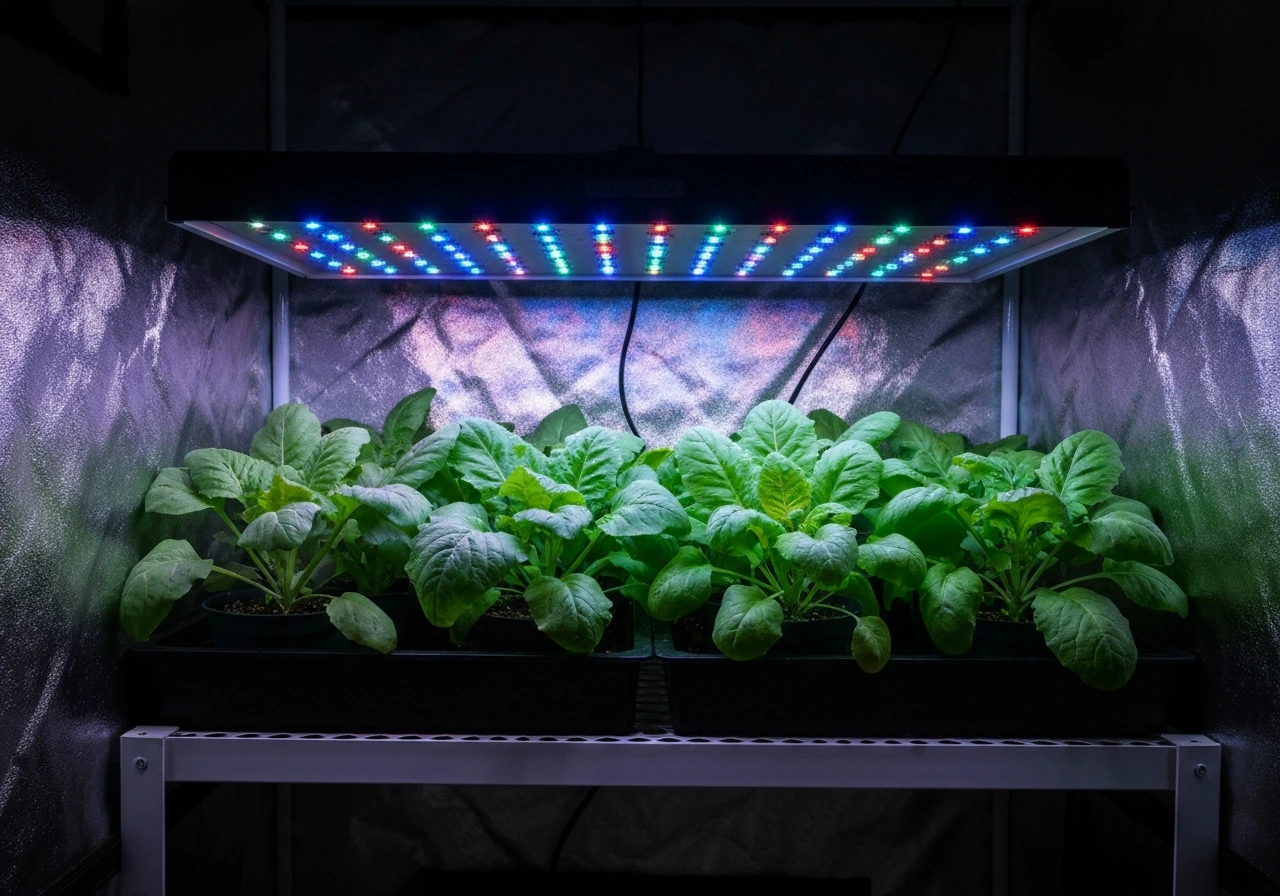
"I've seen people use purple grow lights, so maybe my black light is similar." Purple LED grow lights are not the same as black lights. Those purple panels combine high-intensity red LEDs with blue LEDs, both of which are in the PAR range. They look purple because red and blue mix visually. A 395 nm black light strip looks vaguely violet but is producing far less blue PAR energy and almost no red. They look similar to an untrained eye but perform completely differently.
"I just need to run it longer to make up for the spectrum gap." Duration can't compensate for spectrum. Running a black light 18 hours a day instead of 12 gives your plants 18 hours of nearly useless light instead of 12. The problem isn't time, it's wavelength. More hours of the wrong light won't move the needle.
What to actually do right now
If you already have a black light running over your plants and things aren't progressing, replace it with a basic full-spectrum LED grow light. You'll likely notice a difference in two to three weeks: more compact new growth, deeper green color in foliage plants, and stronger stems on seedlings. If you're in a very low-budget situation, a pair of 6500K CFL bulbs placed 6-8 inches above your plants will outperform a black light at a similar price point.
The bottom line is that the spectrum is what matters, and black lights simply don't deliver the right one for growing plants. If you're wondering can Philips Hue grow plants, the answer is that most Hue lighting alone will not provide enough focused red and blue PAR to reliably support healthy growth.
FAQ
If my plants look different under a black light, does that mean they are growing better?
Not reliably. Black lights emit mainly UV-A (around 365 or 395 nm), which sits outside the photosynthesis ranges plants use (400-700 nm). If your plants are not already getting strong red and blue PAR from another light, a black light alone will not drive meaningful growth, even if the bulb is left on for many hours.
Why does a 395 nm black light glow purple, yet still not help plants grow?
You cannot judge plant suitability by the color of the glow. A 395 nm black light can look violet, but the key factor is how much of the output lands in blue and red PAR. Most black lights provide minimal usable blue and red energy, so the appearance does not reflect photosynthetically useful light.
What should I compare on the label if I want to know whether a light will actually grow plants?
Use the light output metric, not the bulb label. Grow lights are usually evaluated by PPFD (photosynthetic photon flux density) at a specific distance. Black lights are marketed with peak wavelength and irradiance details aimed at UV effects, not PPFD, so you may not get enough PAR intensity where your plant canopy is.
Could UV-A ever be beneficial for plants, or is it always pointless?
Some UV-A can influence secondary compounds, stress responses, and morphology, but it is supplemental and requires a solid base of PAR. If you run only UV-A over a light-starved plant, you add stress without giving enough blue and red energy to support normal growth.
I already have a black light running. How can I tell quickly if it is actually helping?
If you want to test whether the black light is doing anything, switch to a proper grow light and compare outcomes over 2-3 weeks under similar watering and temperature. Look for measurable changes like tighter, more compact new growth, greener foliage color, and better stem strength, not just changes in fluorescence.
What are the practical safety precautions if I use a black light near plants indoors?
Yes, you can create a UV burn or eye risk. Wear eye protection and avoid looking directly at UV sources, and keep unprotected skin covered. Also, prevent stray UV exposure to people and pets in the room, since black light setup is often uncontrolled compared with grow-lamp enclosures.
If I replace my black light, how should I position and run the new grow light?
Replacing a black light with a full-spectrum LED grow light usually improves results, but distance and schedule still matter. If you place a grow light too far, you lose intensity, so start around 12-18 inches for typical home panels and adjust based on plant response and manufacturer guidance.
Can I fix a black light’s weak spectrum by running it longer each day?
Duration helps only if the light is actually delivering PAR. Running UV-A longer does not compensate for missing red and blue wavelengths, so you can end up with plants that are stressed but still underfed in photosynthetic energy.
How do I tell the difference between a purple grow light and a UV-A black light?
Purple-looking lights can be misleading. Many true purple grow lights use high-output red and blue LEDs, which are in the PAR ranges plants use. A UV-A black light looks similar to the untrained eye, but it is fundamentally different because most of its energy is outside PAR.
What should I do if I am on a tight budget and want better results than a black light?
CFLs and other non-UV visible grow solutions can outperform black lights at similar budgets because they provide real blue and red photons at usable intensity. If you cannot buy a dedicated LED, start with properly positioned CFLs and a simple timer rather than adding UV-A.
Next Articles
Do Regular Light Bulbs Help Plants Grow? What to Expect
See if regular bulbs can grow plants, which types work, how to set distance and hours, and what results to expect.
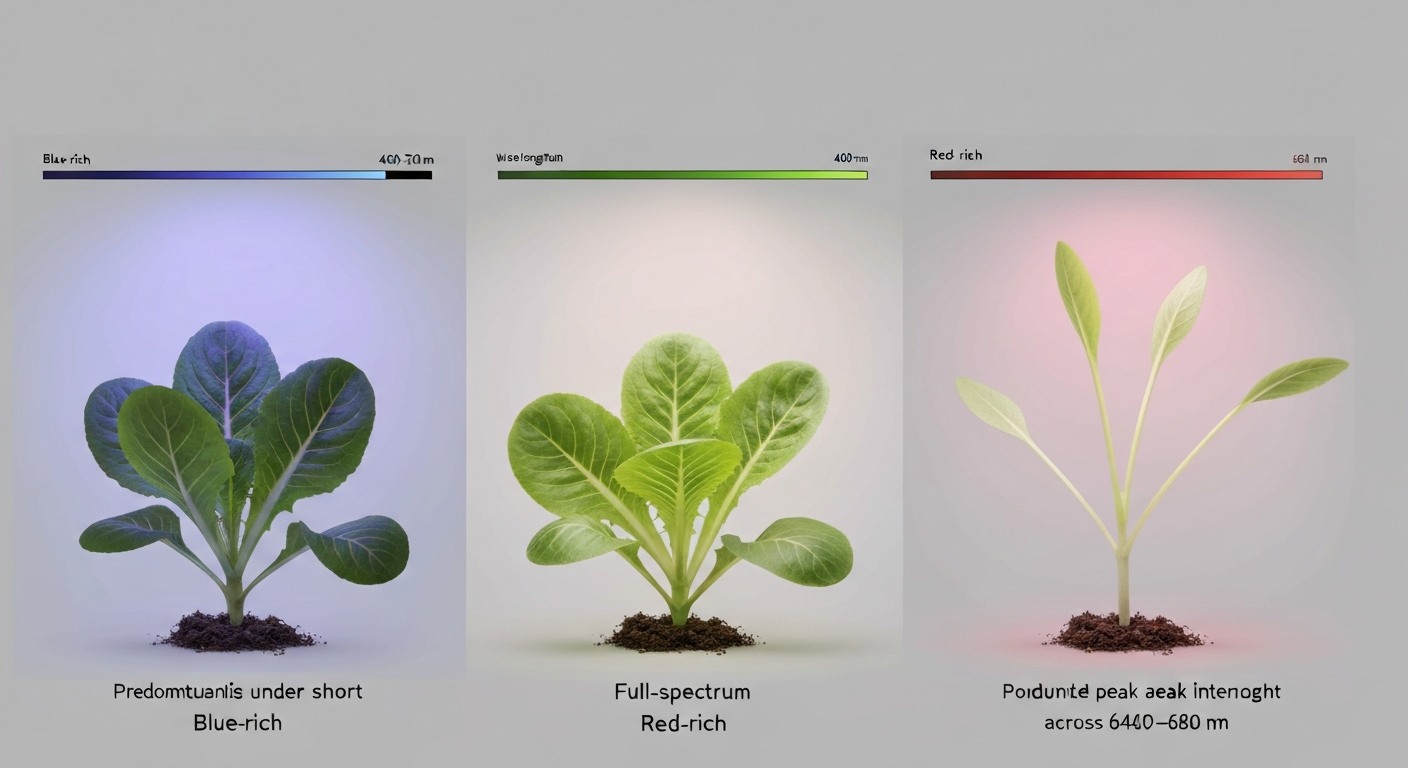
Why Do Plants Grow Best in Blue Light? Science & Practical Guide
Explore why blue light boosts vegetative growth, ideal blue:red ratios, PPFD, photoperiods, fixtures, and setup tips.
What Artificial Light Will Grow Plants: Best Lights Guide
What artificial light will grow plants: practical guide to LED, CFL, HID spectra, PPFD targets, setup, cost & tips.