Office lights can keep low-light plants alive, but for most houseplants and anything flowering or fruiting, they simply don't deliver enough usable light. For a related option, grow lights are designed to deliver the photon intensity and spectrum plants actually need, not just enough illumination for human comfort. The typical office overhead fixture puts out 300–500 lux at desk level, which sounds reasonable until you realize that plants measure useful light in PPFD (photosynthetic photon flux density, in µmol·m⁻²·s⁻¹), and the lux-to-PPFD conversion reveals office lighting usually lands somewhere between 5 and 30 µmol·m⁻²·s⁻¹ at plant height. That's enough for a pothos or a ZZ plant to survive, but it's not enough for a monstera to thrive, and it won't get you anywhere near what flowering or fruiting plants need.
Do Office Lights Help Plants Grow? What Works and What Doesn’t
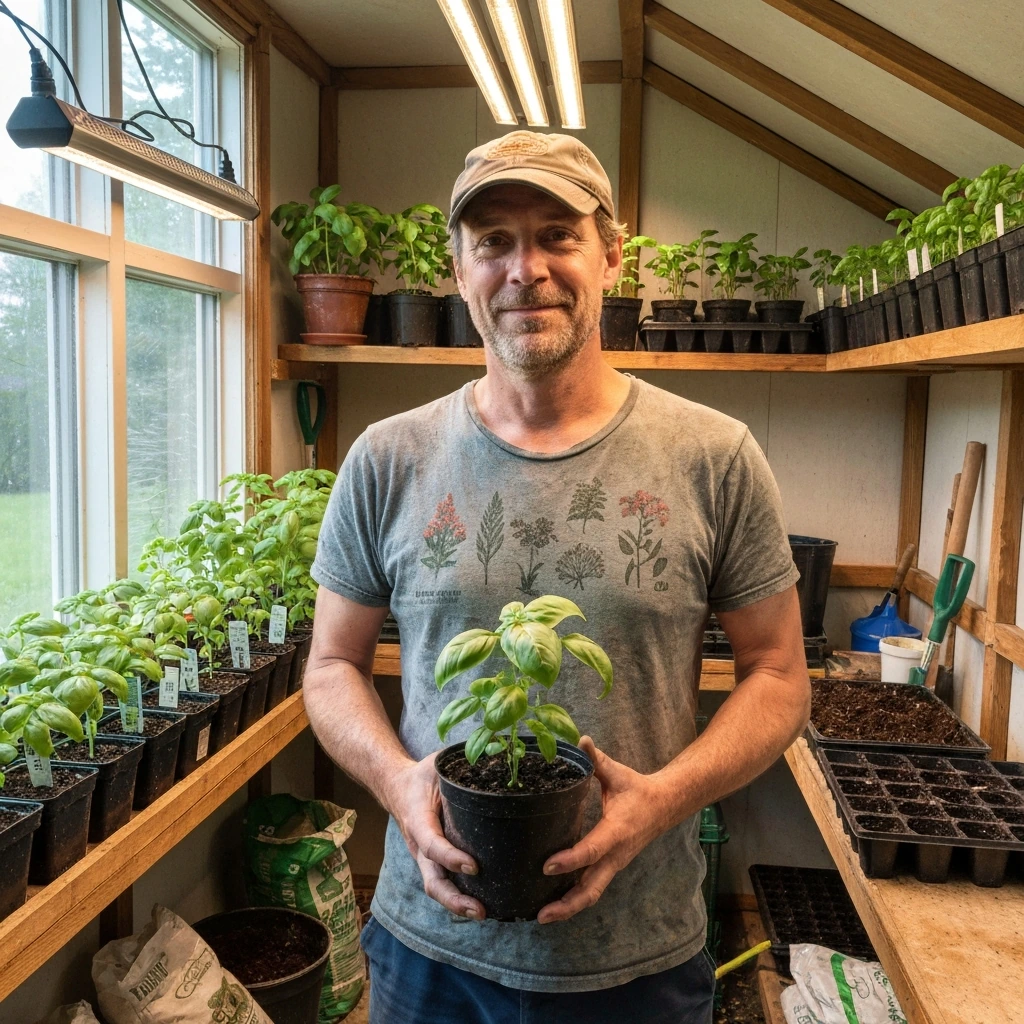
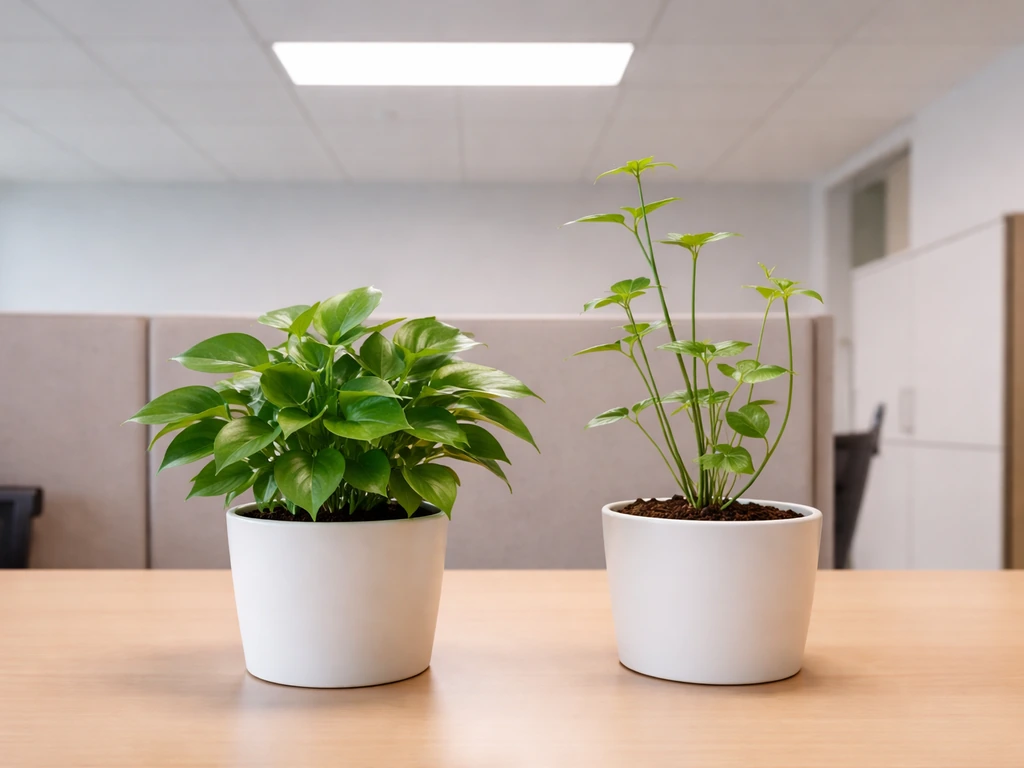
Office lights vs. true grow lights: the quick comparison
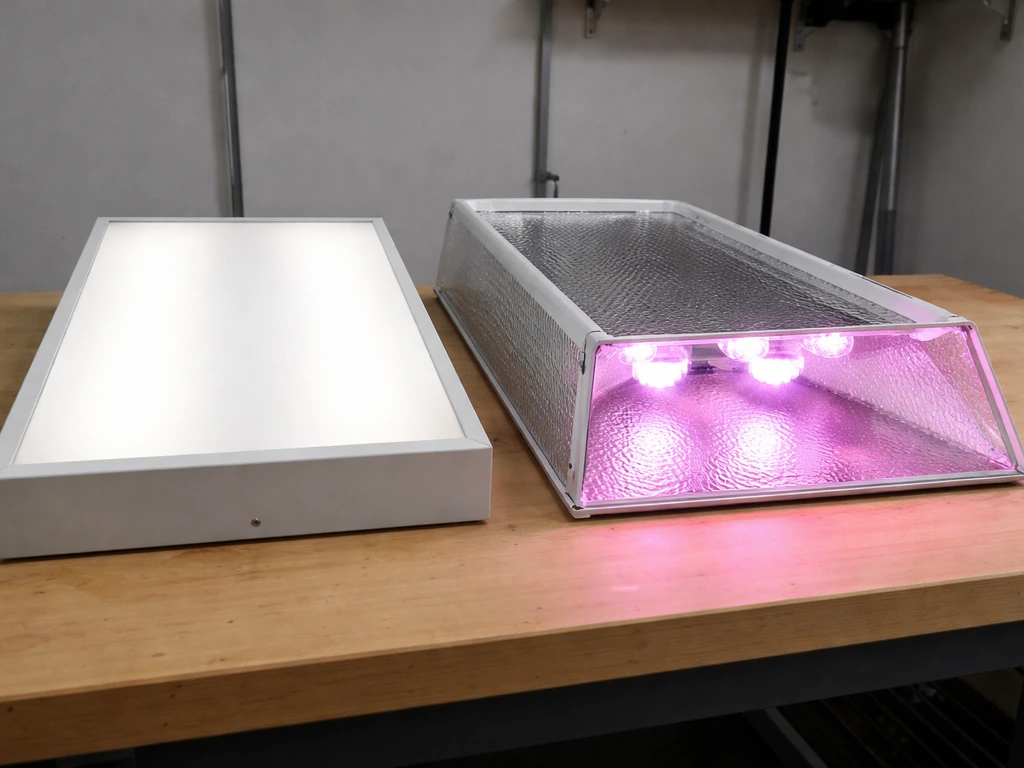
Before getting into the science, here's the practical split. Office lights are designed for human vision, not plant photosynthesis. They're optimized for lumens and color rendering so people can read documents comfortably. Grow lights are designed to deliver the specific wavelengths and photon densities that plants actually use. That difference matters more than most people expect.
| Feature | Typical Office Light | Dedicated Grow Light |
|---|---|---|
| Purpose | Human visual comfort | Plant photosynthesis |
| PPFD at plant height | 5–30 µmol·m⁻²·s⁻¹ | 100–800+ µmol·m⁻²·s⁻¹ |
| Spectrum | White (3000–4000K, limited red/blue peaks) | Tuned red (~660 nm) + blue (~470 nm) peaks |
| Distance to plant | 6–10 ft (ceiling mounted) | 6 inches to 2 ft (adjustable) |
| Photoperiod control | Building schedule, fixed | Timer-controlled, customizable |
| Best for plants | Shade-tolerant foliage only | Most houseplants, seedlings, flowers, food crops |
If your office has large south- or west-facing windows and the lights supplement actual sunlight, you may be in better shape than the numbers above suggest. But if plants are sitting under ceiling troffers with no window access, treat the office lights as ambient background noise for the plant, not a meaningful light source.
What plants actually need from light
Plants care about three things: intensity, spectrum, and duration. University of Maryland Extension frames it exactly that way, and it's the most useful mental model I've found. Get one of those three wrong and the plant will struggle even if the other two are perfect.
Intensity: PPFD and DLI
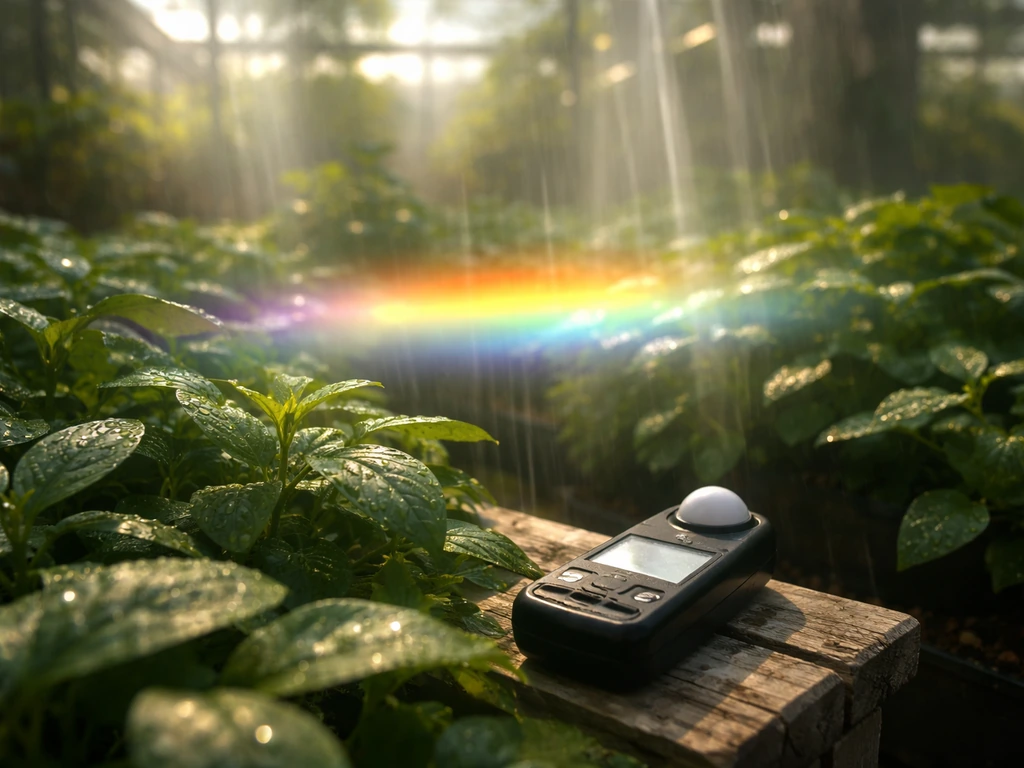
Intensity is measured in PPFD, which counts the number of photons in the photosynthetically active range (400–700 nm) hitting a square meter every second. Think of it like rainfall: lux tells you how bright it looks to your eye, PPFD tells you how much water actually hit the ground. A light that looks bright to humans can be starving a plant if it's missing the right photon wavelengths. Oklahoma State University Extension puts the ideal PPFD range for improved plant growth at roughly 400–800 µmol·m⁻²·s⁻¹, and that's for actively growing plants. Low-light plants can get by on less, but even they need more than what most office ceilings provide.
DLI (daily light integral) is just PPFD accumulated over the whole day. It's the total photon dose a plant receives in 24 hours. Oklahoma State University Extension gives rough DLI targets: low-light plants want 5–10 mol·m⁻²·day⁻¹, medium-light plants want 10–20, and high-light plants want 20–30 or more. An office delivering 15 µmol·m⁻²·s⁻¹ for 8 hours gives a DLI of about 0.43, which is catastrophically low for almost every plant category.
Spectrum: red, blue, and why white isn't enough
Plants use two main wavelength regions: blue light around 450 nm (detected by cryptochromes and phototropins) and red light around 660 nm (detected by phytochromes). Blue light drives compact, stocky growth and prevents the stretching you see in plants that aren't getting enough light. Red light drives photosynthesis and developmental responses including flowering. Office LEDs and fluorescent troffers are typically 3000–4000K white light, which is heavily weighted toward green and yellow wavelengths that look good to humans but carry relatively few of the red and blue photons plants prioritize. The result is that even if you boosted the intensity, the spectrum from a standard office troffer is still missing the specific peaks that get plants doing their best work.
Duration and photoperiod
Duration isn't just about logging more photon hours. Many plants use day length as a developmental signal, particularly for flowering. Photoperiod-sensitive species like poinsettias, kalanchoe, and Christmas cactus need specific light/dark ratios to bloom. An office on a 7am–6pm lighting schedule won't match those needs, and even for non-photoperiod-sensitive plants, a fixed building schedule means you can't extend the light period to compensate for low intensity. More hours is one lever you can pull to raise DLI, but only if you have control over the schedule.
What typical office lighting actually delivers
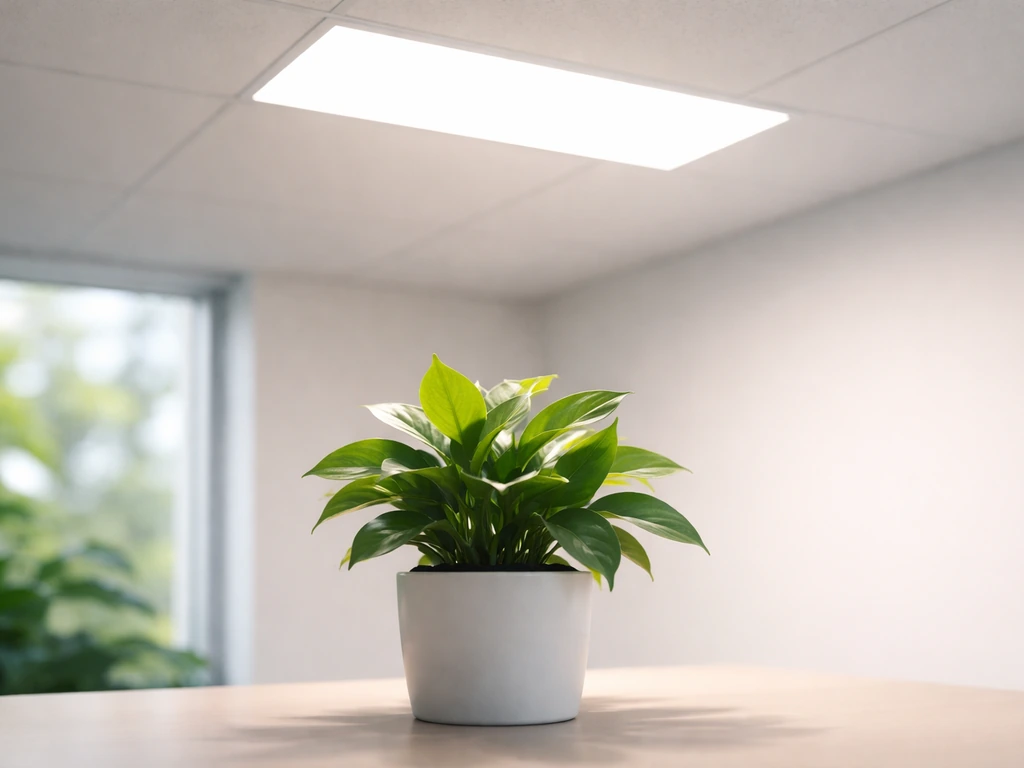
Standard office lighting targets 300–500 lux at workplane height, designed for reading and screen work. The most common fixture types are fluorescent troffers (T8 or T5 tubes), LED panel troffers in the 3000–4000K range, and recessed downlights. All of them share the same core problem for plants: they're ceiling-mounted (typically 8–10 feet up), they're optimized for human visual comfort rather than photon delivery to plants, and there's usually no way to adjust distance or scheduling independently.
Converting 300–500 lux to PPFD requires knowing the fixture's spectral output, since lux is weighted to human vision and the conversion factor isn't universal. For a typical cool-white LED office fixture, a rough conversion puts 400 lux at somewhere around 5–7 µmol·m⁻²·s⁻¹. For a warm-white 3000K troffer, the conversion skews differently because of the spectrum shift, but you're still in the same low range at plant level. Apps like Photone can estimate PPFD from your phone's camera (with a diffuser for better accuracy), and while they're not as precise as a professional PAR meter, they're close enough to confirm that office lighting is well below what plants need.
How to measure and set up light correctly for your plants
The single most useful thing you can do today is measure what light your plants are actually receiving, not what you estimate they're getting. Here's how to do it practically.
- Download the Photone app (available for iOS and Android). It uses your phone camera to estimate PPFD. For LED lights specifically, use a piece of white printer paper taped over the camera lens as a makeshift diffuser to improve accuracy.
- Hold the phone at the plant's canopy level, camera facing the light source, and record the reading. Do this in the spot where the plant actually sits, not under the brightest part of the fixture.
- Compare your reading to the plant's category: under 50 µmol·m⁻²·s⁻¹ is low light territory, 50–150 is still low but better, 150–400 is where most common houseplants start to actively grow, and 400–800 is where flowering and fruiting plants perform well.
- If you have the option, move plants closer to the light source. PPFD drops sharply with distance, so cutting the distance in half can roughly quadruple the light intensity. On a desk directly under an office troffer you'll get more than in the corner of the room.
- If you can control the light schedule (your own office, home office, or a space with smart switches), extend the photoperiod to 12–16 hours for foliage plants to offset low intensity and raise the DLI. Use an inexpensive plug-in timer.
One practical checkpoint: if your lux meter or app is reading below 200 lux at the plant, you're in survival-mode territory for all but the most shade-tolerant species. If it's reading 500 lux or above and you're directly under a fixture, some low-light plants will actually do reasonably well with extended duration to compensate.
When office lights aren't enough: signs and plant types
Plants will usually tell you they're not getting enough light before you need a meter to confirm it. The most obvious sign is etiolation: stems stretching long and thin, leaning toward any light source, and leaves spaced farther apart than normal. This is the plant spending stored energy to reach better light rather than using light to grow. You might also see pale or yellowing leaves (not from overwatering, but from genuine light starvation), no new growth for weeks or months, and flowers that either don't appear or drop before opening.
Research backs this up at the cellular level too. Studies on plants grown under indoor low-light conditions consistently show reduced leaf surface area compared to plants grown in adequate light, with some showing around a 30% reduction in leaf blade area when comparing very low light (around 15 µmol·m⁻²·s⁻¹) to better conditions (125 µmol·m⁻²·s⁻¹). That's not just a cosmetic issue, it's the plant physically unable to capture enough energy to develop properly.
Which plants can survive on office light (and which definitely can't)
- Likely okay under bright office lights: pothos, ZZ plant, cast iron plant, snake plant, peace lily, Chinese evergreen, heartleaf philodendron. These are genuine low-light survivors.
- Will struggle and slowly decline: most succulents and cacti, monsteras, fiddle-leaf figs, rubber trees, most ferns, orchids.
- Definitely won't thrive: any flowering or fruiting plants (tomatoes, herbs, African violets trying to rebloom), seedlings being started for outdoor transplanting, plants that need medium to high light.
- Special case (photoperiod-sensitive): poinsettia, Christmas cactus, kalanchoe. Even if you fix intensity, the building's lighting schedule probably won't match their day-length needs for flowering.
Mississippi State University Extension makes a point worth repeating: when plants consistently receive less light than they need, they draw down stored reserves to stay alive, and their health gradually declines even if they look okay for a while. Office lights don't kill plants quickly, they just slowly drain them.
Choosing a grow light if office lighting isn't cutting it
If your plants need more than office lighting can provide, the good news is that grow lights have gotten genuinely affordable and easy to use. You don't need a complex setup to get real results. Philips Hue bulbs can supplement lighting for plants, but they typically won't provide the intensity and spectrum most plants need to really grow real results.
LED grow lights
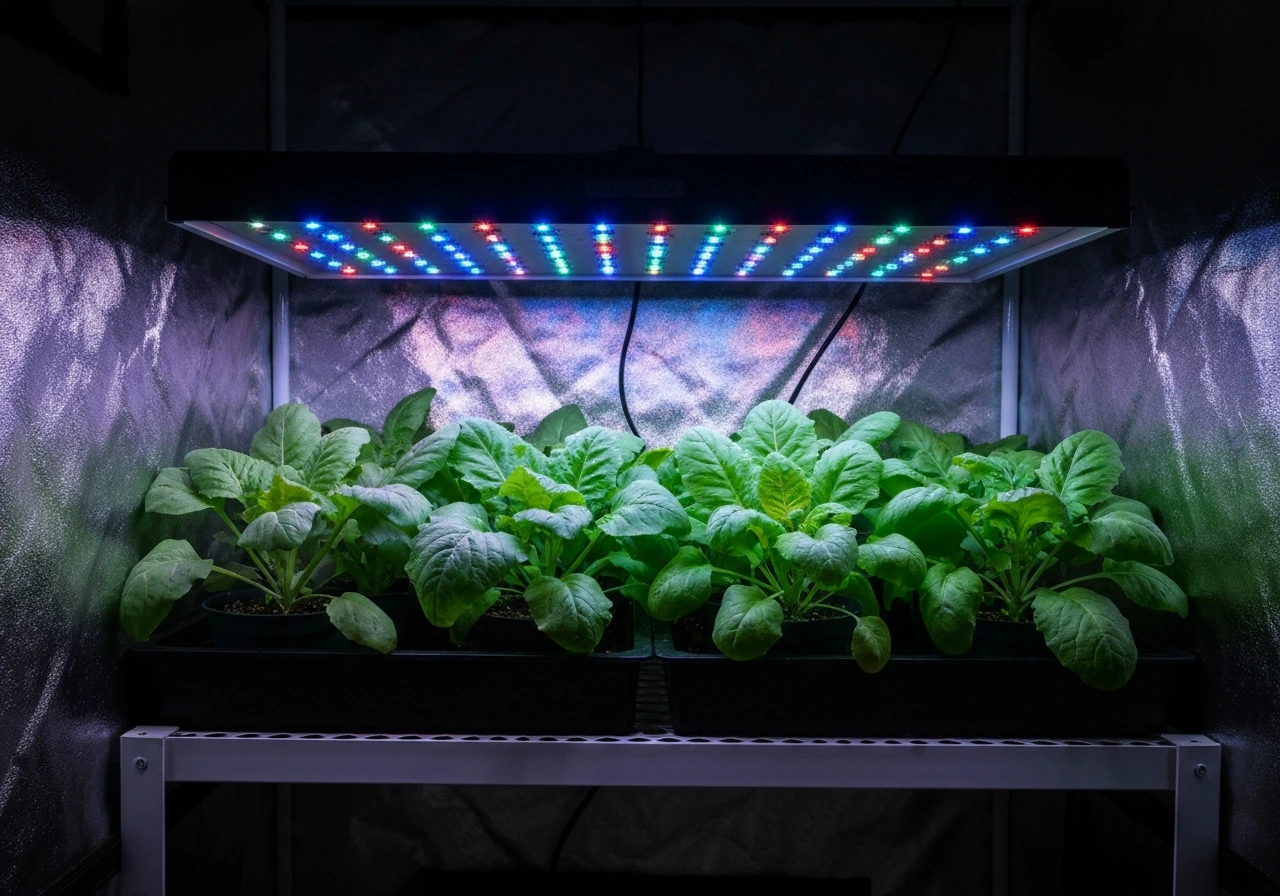
For most indoor plant situations, a full-spectrum LED grow light is the best starting point. Modern LEDs tuned for horticulture include red peaks around 660 nm and blue peaks around 470 nm, which directly targets the photoreceptors plants use most. They run cool, use less electricity than fluorescents, and the better ones include dimming and timer functions. For a single plant or small grouping on a desk, a clip-on or gooseneck LED panel in the 20–40W range (true wattage, not equivalent) positioned 12–18 inches above the canopy will deliver meaningful PPFD. For a shelf or propagation setup, a panel or bar-style LED designed for growing is more practical.
T5 fluorescent fixtures
T5 fluorescent shop lights are still a solid, budget-friendly option, especially for seedlings and low-to-medium-light foliage plants. Iowa State Extension specifically recommends a standard two-tube 40-watt fluorescent fixture positioned 6–12 inches from foliage for plants needing medium to high light. T5s produce a broad white spectrum that includes decent blue representation, and they're cheap to buy and replace. The main downside is heat (they run warmer than LEDs) and the fact that you need to keep them close to plants, which is easy on a shelf but awkward on a desk.
Combining office lights with a supplemental grow light
You don't have to replace office lighting, you can supplement it. A single clip-on LED grow light aimed at your plant desk alongside whatever ambient office light is already present can push a plant from survival mode into actual growth. The ambient office light isn't wasted, it's just not enough on its own. Think of the grow light as the main course and the office light as a side dish. Set the grow light on a timer for 12–14 hours per day and let the office lights do whatever they normally do.
Distance matters more than most people realize. Positioning a grow light 12–18 inches from the plant canopy and adjusting based on what you measure with Photone is far more effective than pointing a bright light from across the room. If plants show signs of bleaching or scorching at the leaf edges, the light is too close or too intense. If growth is still slow and leggy, move it closer or increase the duration. It's a simple dial to turn.
It's also worth noting that regular light bulbs, house lights, and even some smart bulbs like Philips Hue share the same fundamental limitation as office lights: they're built for human vision, not photosynthesis. Switching to a bulb with a higher color temperature won't solve the PPFD problem. When you're ready to step up, a purpose-built grow light is the right tool.
Safety and comfort: clearing up the common worries
If you've searched around grow lights long enough, you've probably come across questions about UV exposure, skin damage, eye strain, or cancer risk. Most of this concern is either misplaced or applies only to specific types of professional horticulture lighting, not the LED grow lights you'd use at home or in an office setting.
Do grow lights give you a tan or cause skin damage?
Standard LED grow lights for home use do not emit meaningful UV radiation. Tanning and UV-related skin damage require UVA and UVB wavelengths (315–400 nm), which are well below the 400–700 nm range that grow lights target. The FDA's UV radiation guidance and ICNIRP both focus their UV hazard warnings on sources that actually emit UV, like germicidal UVC lamps, high-intensity metal halide fixtures with UV leakage, and tanning beds. A typical horticultural LED panel sitting on your desk poses no UV risk and won't give you a tan.
Can grow lights cause cancer?
No, standard LED grow lights are not a cancer risk. UV radiation (particularly UVC and high doses of UVB) is the relevant carcinogen for skin cancer, and again, standard grow lights don't emit it. The FDA has flagged specific concerns about UV burns from high-intensity metal halide and mercury vapor lamps where the outer envelope is cracked or missing, but that's a completely different category of lighting. The LED panels sold for home growing operate entirely in the visible light spectrum and pose no greater risk than any other household light source.
Eye comfort and blue light
Some LED grow lights, especially ones running a heavy blue spectrum, can be uncomfortable to look at directly or work near for extended periods. This isn't a safety emergency, but it's a real practical annoyance. Photobiological safety of lamps is evaluated under the IEC 62471 standard, which categorizes optical radiation hazards by risk group. Photobiological safety for lamps is assessed using the [IEC 62471 risk-group framework](https://www.
baua. de/EN/Topics/Work-design/Safe-products/Electrical-products/LED), and exposure precautions should be considered based on the product's emitted spectra and intensity, especially for potential UV or blue hazards. Most consumer LED grow lights fall into low or exempt risk categories for normal use, meaning you're not going to damage your eyes by having one on a nearby shelf. That said, avoid staring directly into any LED grow light at close range, especially purple/pink ones with high blue output.
If you're working at a desk next to one all day, a warm-white LED with a more balanced spectrum is more comfortable than a pure red/blue 'blurple' panel.
Heat
Modern LED grow lights run significantly cooler than older HID (high-intensity discharge) or incandescent grow setups, but they still generate some heat, especially at higher wattages. For a desk or small office setup, a 20–40W LED panel isn't going to create a fire hazard or meaningfully heat the room. Just make sure there's airflow around the driver/heat sink and don't enclose the light in a tight space without ventilation. T5 fluorescents run warmer and should be kept a few inches away from any paper or flammable material, especially in a compact shelf setup.
FAQ
My plants are alive in the office, do office lights help them grow at all?
Sometimes, but only if the plants also get usable daylight from windows. If your desk is near a large south or west window, office overhead light can top up intensity enough to prevent starvation, but you still should verify at plant height (lux, app estimate, or PPFD meter) because ceiling fixtures alone rarely reach growth levels.
If office lights keep my plants alive, why won’t they help with flowering or fruiting?
Survival is the likely outcome for many plants flowering or fruiting. Even “bright” ceiling lighting is usually too low in PPFD, so you may see slow, leggy growth and no blooms. If your goal is new leaves, thicker stems, or flowering, treat office light as background unless you add a horticulture light and measure.
Can I compensate for low office-light intensity by leaving the lights on longer?
Yes, but the benefit depends on how much light the plants actually receive and how long the light runs. If you can set a grow light timer to 12 to 14 hours while keeping the fixture close to the canopy (about 12 to 18 inches), you can raise DLI substantially. Without scheduling control, a fixed 7 am to 6 pm building schedule can’t compensate for very low PPFD.
How reliable are phone apps for estimating PPFD (and what should I do to get better results)?
If you use an app, accuracy improves with a few steps: place the phone at the plant canopy height, aim it straight at the light source, and use a diffuser (the article notes Photone plus a diffuser). Still, the fastest decision aid is to compare relative readings, then confirm with a PPFD meter if you’re close to key thresholds.
What’s the right distance for a desk grow light, and how do I avoid bleaching?
Too close can cause bleaching or scorching at the leaf edges, even if the light is a “good” spectrum. Use the dial approach: start at about 12 to 18 inches, run the timer, then adjust distance based on the plant response, or check with a PPFD estimate so you do not guess.
If I switch from warm white to a higher color temperature office bulb, will plants grow better?
Color temperature alone does not solve the main problem, which is photon dose in the 400 to 700 nm range. A higher kelvin (for example, 5000K) may look brighter to you but often does not add enough red and blue photons for plant growth. You need intensity (PPFD) and a plant-oriented spectrum.
Would simply moving my plants closer to the ceiling lights fix the problem?
If the office light is genuinely low, moving plants closer to the fixture can help but only to a point, because troffers are ceiling-mounted and their output drops with distance and angle. For meaningful gains, a supplemental grow light positioned near the canopy is usually more efficient than relying on repositioning.
What are the best signs my office lighting is too weak for my plant?
Look for signs that match light starvation rather than watering issues. Etiolation (long, thin stems and wider leaf spacing), pale or yellowing leaves, slow or stalled new growth, and buds that drop before opening are strong clues. If you see those, measure at the plant height.
Do low-light plants eventually decline under office lighting even if they look fine at first?
Yes, within limits. Lower-light-tolerant plants may persist under office troffers, but they often run down their reserves over time, even if they look “okay” at first. If you want improvement (compact growth, faster leaf production), supplement and adjust for duration.
Can smart bulbs like RGB or Hue-style bulbs replace a grow light?
Not usually, because RGB or basic “smart bulbs” are designed around human color, not plant photon targets. They can help as a supplement, but typical smart bulbs still fall short on PPFD and may not provide strong enough red and blue peaks for good growth.
Are LED grow lights safe to use next to an office desk, and will they cause eye strain?
If you need to keep it safe and comfortable, avoid staring into high-blue “blurple” panels at close range and give the area some natural ambient lighting. Most consumer LED grow lights fall into low or exempt risk categories under IEC 62471 for typical use, but comfort matters, especially for long work sessions.
Do I need special ventilation or fire-safety steps when using a grow light in a small office?
Fire hazard is uncommon for a 20 to 40W desk panel, but you still should not enclose the light in a tight, unventilated space. Ensure airflow around the heat sink and driver, and keep T5 fluorescents a few inches away from paper or flammables because they run warmer.
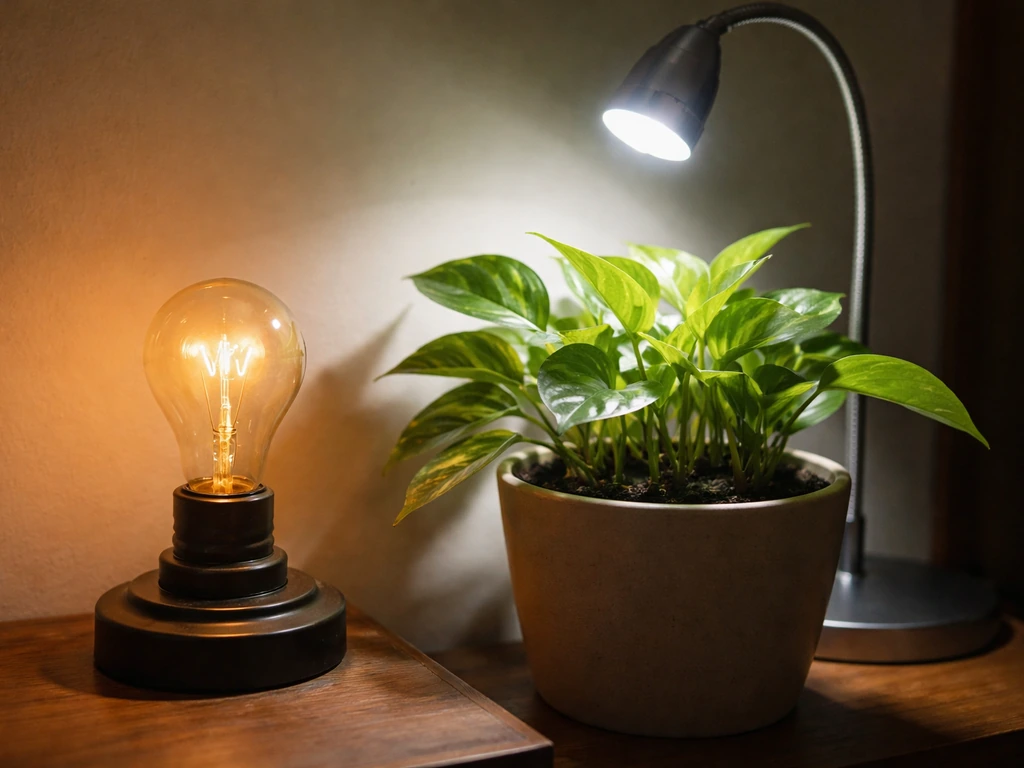
Incandescent bulbs rarely help plants grow well due to weak light for photosynthesis and high heat; use LEDs or CFLs ins
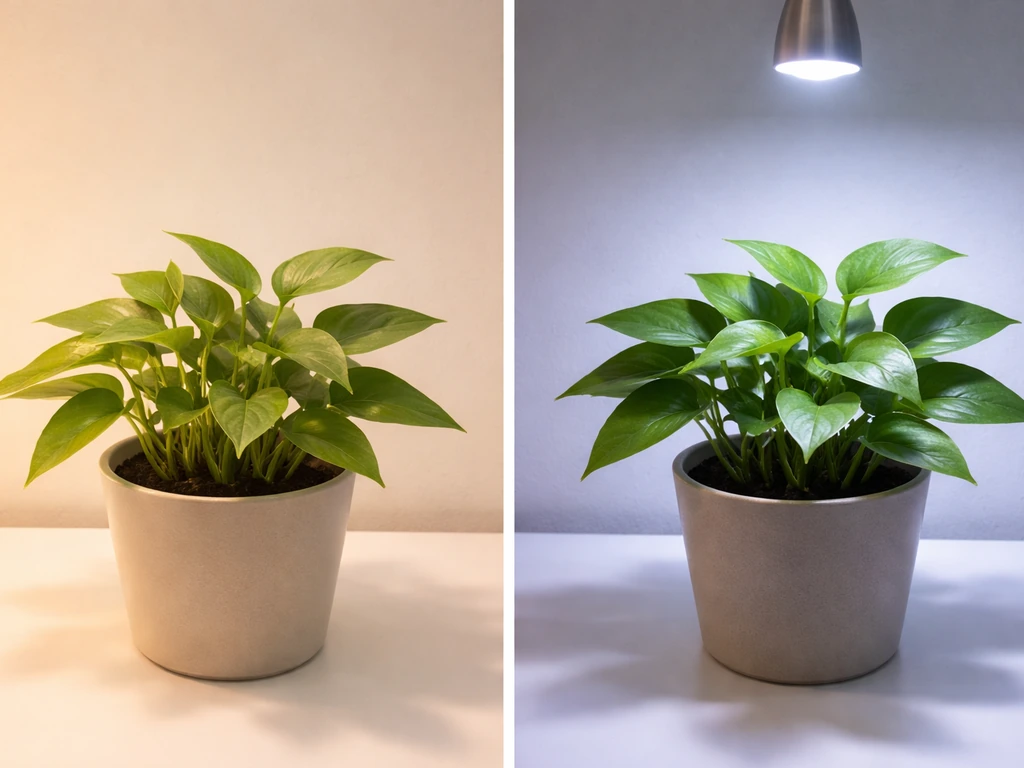
See if house bulbs help plants grow, when they fall short, and how to set proper spectrum, intensity, and timer grow lig
Debunks do black lights help plants grow, explains UV limits, safety tips, and better blue-red LED grow light options.