Incandescent bulbs can technically support some plant growth, but they do a pretty poor job of it. But if you are wondering specifically about Philips Hue, the same basic limits apply can Philips Hue grow plants. Most plants kept under incandescent light alone will survive for a while, but they'll grow slowly, stretch toward the light, and end up weak and leggy. Unless you're in a very specific situation, incandescent bulbs are not a reliable grow light, and most extension services and plant researchers agree they shouldn't be your first (or only) choice.
Does Incandescent Light Help Plants Grow? What to Know
Marcus Holloway
17 Jun 2026
Why incandescent bulbs fall short for plants
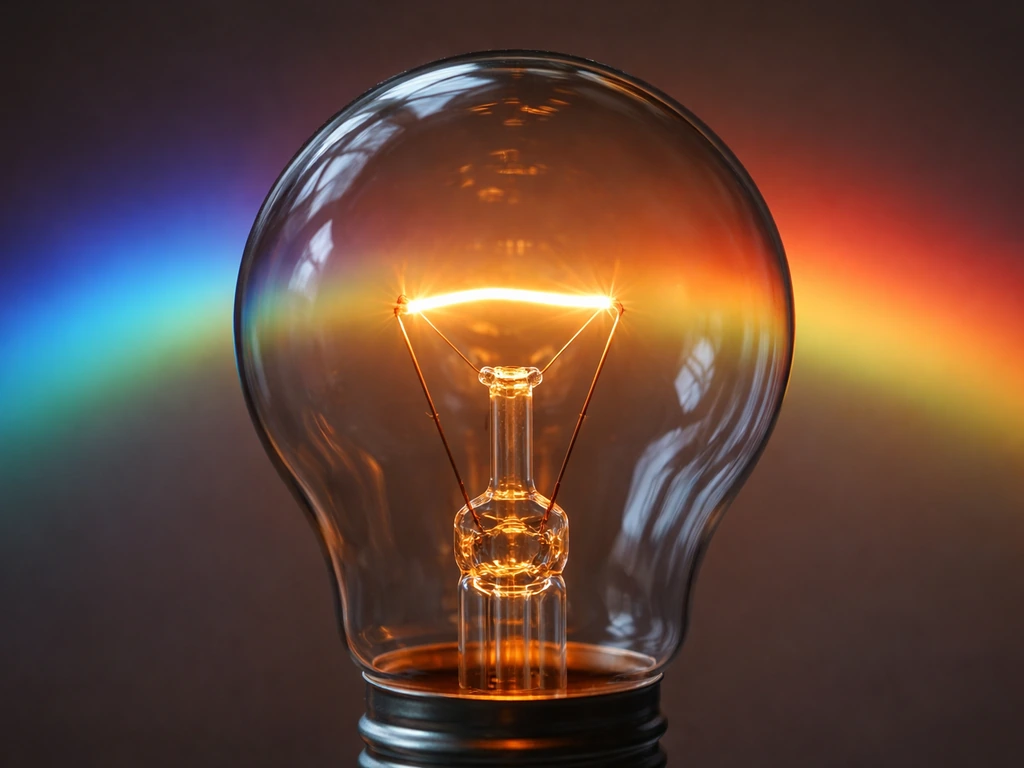
The core problem is efficiency, or rather the lack of it. An incandescent bulb works by heating a tungsten filament to around 2,000°C until it glows. That process converts less than 5% of the electricity consumed into visible light. The rest, more than 95%, radiates as infrared heat. So when you're running a 60W incandescent bulb, you're basically running a small space heater with a side effect of dim light.
The second issue is spectrum. Plants need light in the 400–700 nanometer range, what plant scientists call PAR (photosynthetically active radiation). This range covers blue light (400–500 nm), green (500–600 nm), and red (600–700 nm). Incandescent bulbs skew heavily toward the red and orange-red end of that range and produce very little blue light. Blue wavelengths are especially important for compact, leafy growth. Without enough blue, plants tend to stretch and get spindly. The University of Nevada Reno Extension specifically flags this imbalance as the reason traditional incandescent bulbs fall short for plant needs. UNR Extension also flags this spectrum imbalance in traditional incandescent and fluorescent bulbs as a key reason they fall short for plant needs.
Third: intensity. Even if the spectrum were perfect, a typical household incandescent bulb just doesn't put out enough photons where the plant can use them. A 40W incandescent is genuinely not very bright from a plant's perspective. Plants measure useful light in PPFD (micromoles of photons per square meter per second), not in the lumens or lux you'd see on a bulb package. Lux measures how bright something looks to human eyes, not how many plant-useful photons are actually hitting a leaf. The University of Missouri Extension is direct about this: incandescent lights are not particularly good as a single light source for plants.
What actually happens when you grow plants under incandescent light
Here's the real-world picture. If you set a plant under a standard incandescent lamp and leave it there as its only light source, you'll usually notice a few things within a week or two. The stems start reaching toward the bulb, getting taller but thinner. The internodes (the gaps between leaves) stretch out. New leaves may be smaller and paler than normal. This is etiolation, and it's the plant's response to not getting enough of the right light. It's essentially a stress response.
The University of Maryland Extension puts it plainly: incandescent bulbs give off more heat and less light than fluorescent tubes and will not produce good transplants on their own. If you're trying to start seeds or grow seedlings, this matters a lot. You might get germination, but the resulting plants will likely be weak and leggy before you ever get them in the ground. That’s why many people ask whether do house lights help plants grow, but incandescent bulbs are usually not the best way to meet plant light needs.
There is one niche where incandescent bulbs actually get used on purpose: research growth chambers. Scientists sometimes add incandescent lamps to lighting setups specifically to adjust the red-to-far-red ratio in controlled experiments. That's a very intentional, supplemental use, not a standalone grow light setup. Illinois Extension does note that for blooming houseplants you can use incandescent or specialty grow-light bulbs, but even there, intensity limitations still apply.
Heat is another practical problem. Many houseplants start showing stress symptoms above about 90°F (32°C), and a close-range incandescent bulb can easily create that kind of localized heat, especially in a small space or a container setup with limited airflow. Getting the bulb close enough to deliver meaningful light intensity often means getting it close enough to potentially stress or even scorch the plant.
If you already have incandescent bulbs and want to try anyway
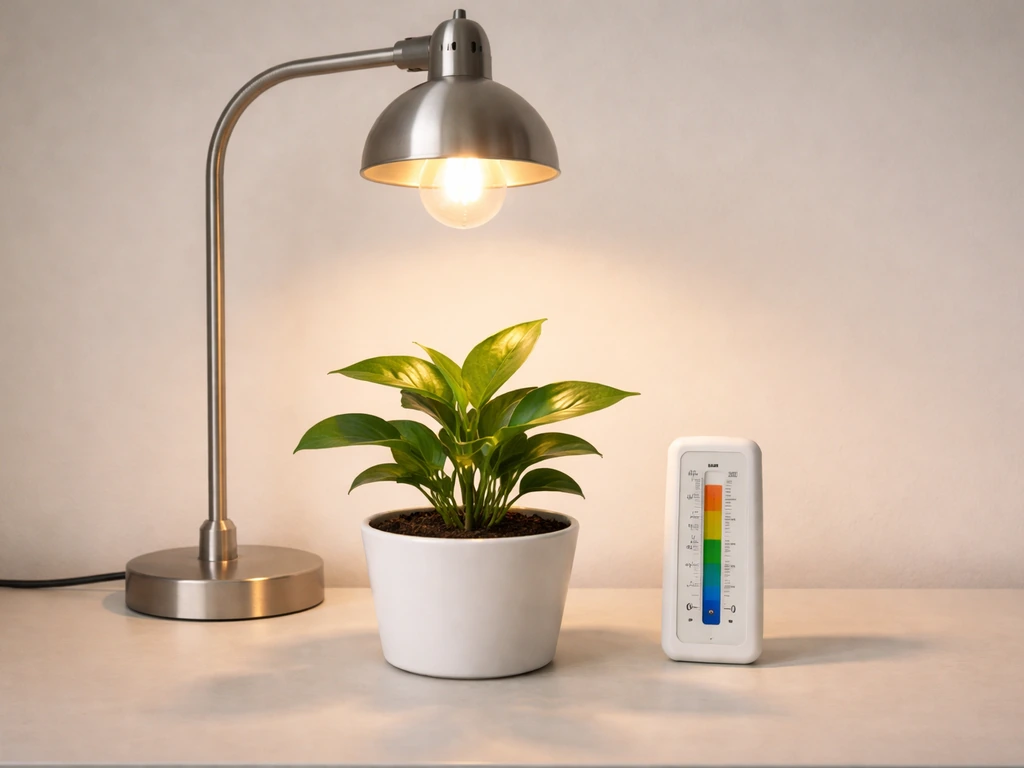
I get it. Sometimes you want to work with what you have. If you're going to experiment with incandescent bulbs, here's how to give yourself the best chance of seeing anything useful while avoiding the most common pitfalls.
- Use the highest wattage bulb that's safe for your fixture, typically 60W or 75W. More wattage means more total light output, even if the efficiency is still low.
- Position the bulb 12 to 24 inches from the top of the plant. Closer than 12 inches risks heat stress and leaf scorch. Farther than 24 inches and the already-weak light intensity drops too much to be useful.
- Run the light for 14 to 16 hours per day. Illinois Extension recommends not exceeding 16 hours because plants need a dark rest period. Set a timer so you don't accidentally leave it on around the clock.
- Check the temperature at the plant's canopy level with a simple thermometer. If it's consistently above 85–90°F near the leaves, move the bulb farther away or improve airflow.
- Watch for warning signs after 7 to 10 days: stems stretching noticeably toward the bulb, pale or small new leaves, and general limpness are all signs the plant isn't getting what it needs.
- Supplement with whatever natural window light you can. Even an hour or two of direct sun or bright indirect light will make a meaningful difference alongside incandescent supplementation.
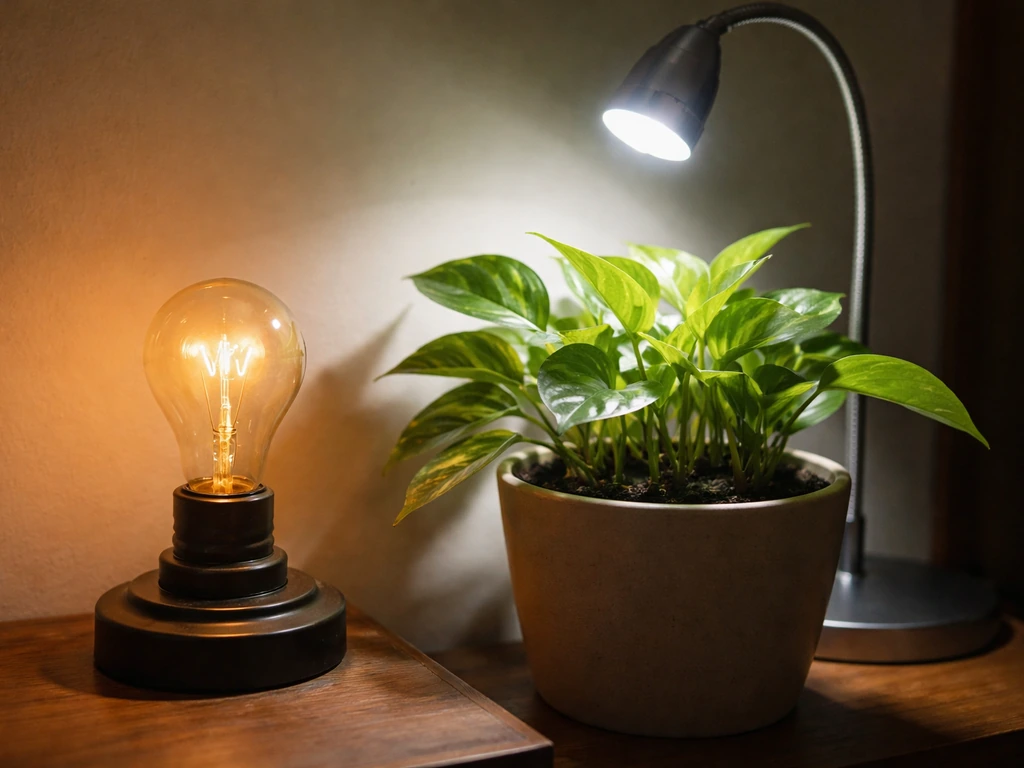
Be honest with yourself about what 'success' looks like here. If your plant stays alive and shows some new growth without dramatically stretching, that's a reasonable outcome. If you're hoping for lush, compact, vigorous growth, incandescent bulbs alone won't deliver that reliably. The plants that tend to handle incandescent supplementation best are low-light tolerant varieties like pothos, snake plants, or ZZ plants, because their baseline light needs are lower.
Better options that actually work
If you're ready to invest in something that delivers real results, you have a few solid options, and none of them are as complicated or expensive as they used to be.
LED grow lights
LED grow lights are the best overall choice for most home growers right now. They're energy-efficient, run cool, and the better ones are designed to deliver light in both the red and blue wavelengths plants actually use. Iowa State Extension specifically calls out LEDs made for plants as a strong option because they target the wavelengths beneficial for plant growth. OSU Extension even provides wattage guidance by grow space: for roughly one square foot, a modest LED in the right wattage range handles both low-light and moderate-light houseplants without issue. Look for LEDs labeled as grow lights, not just general-purpose bulbs, and check that they cover the 400–700 nm PAR range.
CFL (compact fluorescent) grow lights
CFLs are a budget-friendly middle ground. They produce more usable blue light than incandescent bulbs and run much cooler. Fluorescent and CFL lights have been a reliable choice for seedling starts and herb gardens for decades. The University of Maryland Extension recommends fluorescent tubes over incandescent specifically for starting seeds indoors. If you're in a tight budget and LED grow lights feel out of reach, a 6500K CFL (the daylight-spectrum version) placed 4 to 6 inches above seedlings is a solid step up from incandescent.
Full-spectrum LED panels and bars
If you want to get serious, purpose-built full-spectrum LED panels or grow bars are the go-to. These target the specific PAR range, often with adjustable red and blue ratios for vegetative versus flowering stages. They're what you'd use for starting seeds, growing herbs indoors year-round, or keeping high-light plants like succulents happy through winter. Position them based on the manufacturer's PPFD recommendations and pair them with a timer set to 14–16 hours for most plants.
| Light source | Spectrum for plants | Heat output | Energy efficiency | Best for |
|---|---|---|---|---|
| Incandescent bulb | Red-heavy, low blue | Very high | Less than 5% visible light | Almost nothing, occasional supplemental use only |
| CFL (6500K) | More blue, decent range | Low to moderate | Much better than incandescent | Seedlings, herbs, budget setups |
| LED grow light | Targeted red + blue PAR | Low | High | Most home growing situations |
| Full-spectrum LED panel | Full PAR range, tunable | Very low | Highest | Serious indoor growing, seeds to harvest |
It's worth noting that this question comes up in a few related forms too. Regular household bulbs (not specifically labeled as grow lights) and typical house or office lights share many of the same limitations as incandescent: they're designed for human vision, not plant photosynthesis. Regular household bulbs (not specifically labeled as grow lights) share many of the same limitations: they are designed for human vision, not plant photosynthesis. Even smart color-changing bulbs are primarily optimized for aesthetics. The pattern is consistent: if a light wasn't designed with the PAR range in mind, it's going to underperform for plants.
The bottom line and your next step
Incandescent light won't kill your plants outright, but it's not going to grow them well either. The combination of poor spectral balance, low usable light output, and high heat makes incandescent bulbs a frustrating and inefficient tool for plant growing. Black grow lights can be useful in some specialized setups, but they are not a reliable substitute for proper grow-light spectrum and intensity do black lights help plants grow. If you're experimenting with what you have on hand, follow the practical setup steps above and keep your expectations realistic. But if you're genuinely trying to grow healthy plants indoors, the single best move you can make is switching to an LED grow light designed for plants. They're widely available, reasonably priced, and they actually work. Start there.
FAQ
If I use incandescent light, how far should the bulb be from the plant to avoid heat stress while still helping?
Treat distance as a tradeoff. Bringing the bulb closer raises plant-usable intensity but also increases localized heat. A practical approach is to start with the bulb at the maximum distance that still noticeably improves leaf posture, then monitor leaf curl, wilting, and leaf burn. If you can, use a cheap thermometer at leaf height and keep the leaf-zone well below about 90°F (32°C), since symptoms often show above that threshold.
Can incandescent light at least speed up seed germination?
It might, but it is unreliable for strong, compact seedlings. Germination depends more on warmth and moisture than on high PAR, so seeds can sprout under many conditions. The problem starts after sprouting, when seedlings need enough blue and sufficient photon flux to avoid elongation. If you try incandescent-only, plan on promptly moving seedlings to a true grow light as soon as you see leaves.
Why do my plants look stretched and pale even when the bulb is on for many hours?
Etiolation usually means the plant is not getting enough usable blue light and total plant-relevant intensity, even if the room feels bright to you. Incandescents emit weak blue compared to plant needs, and they convert most electricity into heat rather than PAR. Increasing hours often worsens leggy growth because the plant keeps reaching for the light without getting the right spectrum and photon density.
Will a bright incandescent bulb in a reflector make it work better for plants?
It can help slightly by increasing light reaching the leaves, but it will not fix the fundamental spectrum imbalance and low efficiency. Reflectors mostly improve how much of the existing light is directed, not how many photons fall in the 400–700 nm PAR window. If you are already shopping for upgrades, a grow-labeled LED will usually outperform a high-watt incandescent plus reflector.
Do smart “color-changing” bulbs or RGB bulbs fix the incandescent problem?
They can improve spectrum if they can output meaningful blue and red in the plant-useful PAR range at adequate intensity. However, many are optimized for human color appearance, not for photon delivery, and they often dim heavily at the settings that might benefit plants. If you do use them, choose settings that heavily emphasize blue and red, and watch for continued stretching or slow leaf growth, which are signs intensity is still too low.
Is using incandescent light for part of the day better than using it all day?
Sometimes. If incandescent is only a supplemental light source, it may reduce how dark the plant gets and help maintain survival or gentle growth for low-light species. It will not replace the need for adequate PAR. A better strategy is to use a proper grow light for the main photoperiod, then use incandescent only as minor background support if necessary.
What types of plants are most tolerant if I only have incandescent light available?
Low-light tolerant houseplants are your best bet, such as pothos, snake plants, and ZZ plants. Even then, expect slower growth and possible stretching compared with grow-light conditions. If a plant is typically a bright-light plant (succulents, many flowering houseplants), incandescent-only lighting is much more likely to cause poor form and weak development.
How can I tell whether my incandescent setup is giving enough light, beyond “it’s alive”?
Use visual cues and, if possible, a measurement-based sanity check. Look for internode length (gaps between leaves), leaf color (paler can indicate low usable light), and whether new growth is compact versus tall and thin. If you can add a practical tool, compare outcomes after changing only one variable, like bulb distance or photoperiod, and keep notes so you can tell whether your “improvement” is real or just slower stress.
What photoperiod (hours per day) should I use if I must experiment with incandescent light?
Many plants do fine with a 14 to 16 hour light window for the daily photoperiod, but the key is getting enough plant-useful intensity during that time. If you see progressive stretching, reducing hours will not fix the spectrum problem, but it may limit how long the plant spends reaching for inadequate light. When possible, switch to a grow light that provides both blue and red PAR rather than relying on longer schedules.
Could the heat from an incandescent bulb actually harm my plant even if the light seems helpful?
Yes. Close-range incandescent bulbs can create a hot spot that stresses leaves even when growth looks like it is “reaching.” Watch for dry, crispy edges, leaf curling, and sudden wilting that appears after the bulb runs, especially in small cabinets or near windows where airflow is limited. If symptoms correlate with the bulb being on, increase distance, improve airflow, or stop using it as an active grow light.
Next Articles
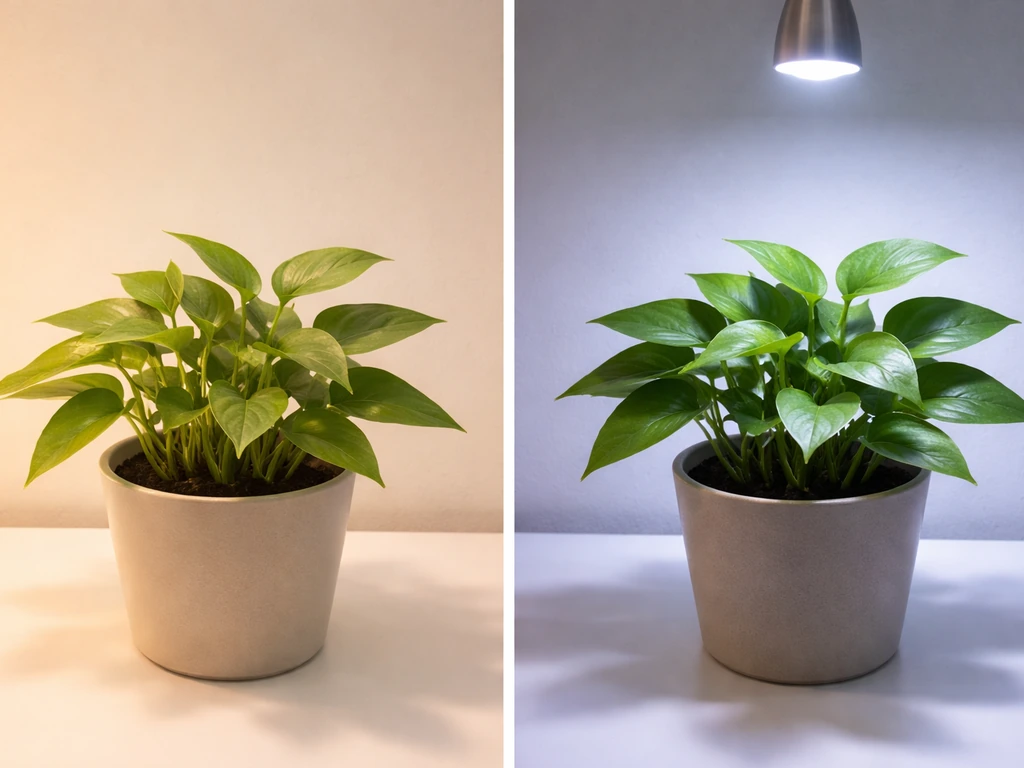
Do House Lights Help Plants Grow? What Works and What Doesn’t
See if house bulbs help plants grow, when they fall short, and how to set proper spectrum, intensity, and timer grow lig
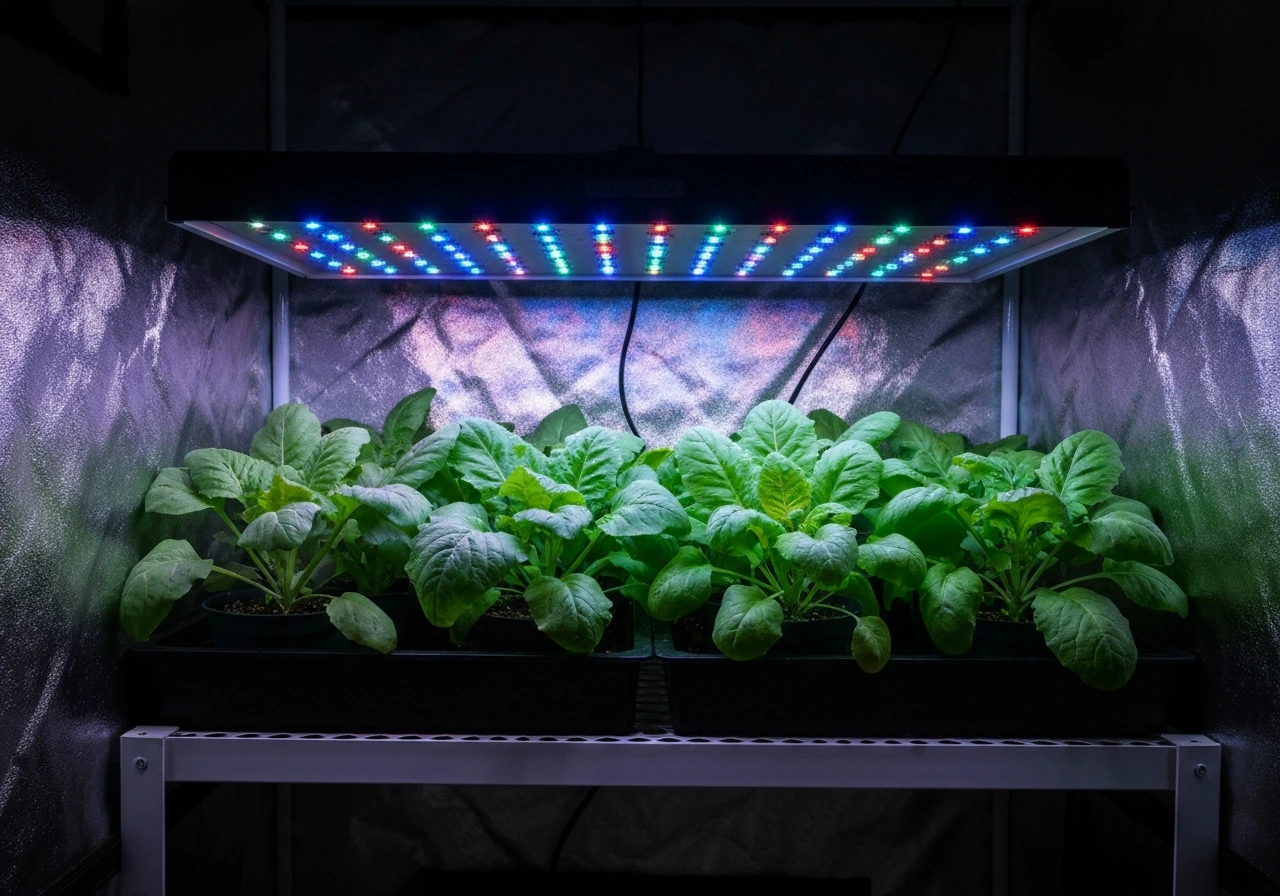
Do Black Lights Help Plants Grow? The Practical Answer
Debunks do black lights help plants grow, explains UV limits, safety tips, and better blue-red LED grow light options.
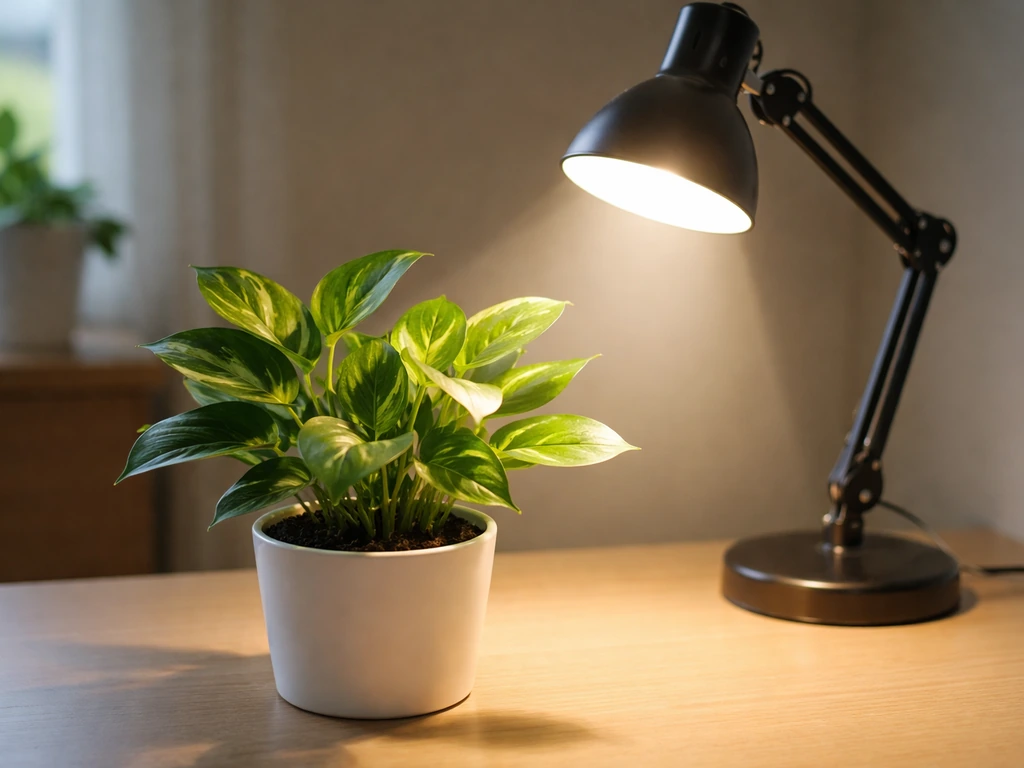
Do Regular Light Bulbs Help Plants Grow? What to Expect
See if regular bulbs can grow plants, which types work, how to set distance and hours, and what results to expect.