Regular house lights can keep some plants alive, but they rarely give most plants what they need to actually grow well. The light coming from a standard lamp or ceiling fixture is too dim, the wrong spectrum, and spread too far across a room to drive meaningful photosynthesis. Most plants placed under typical indoor lighting will survive at best, and many will slowly stretch, yellow, and decline. If you want real growth, you need a dedicated grow light, but the good news is that getting set up is cheaper and simpler than most people expect.
Do House Lights Help Plants Grow? What Works and What Doesn’t
Marcus Holloway
12 Jun 2026
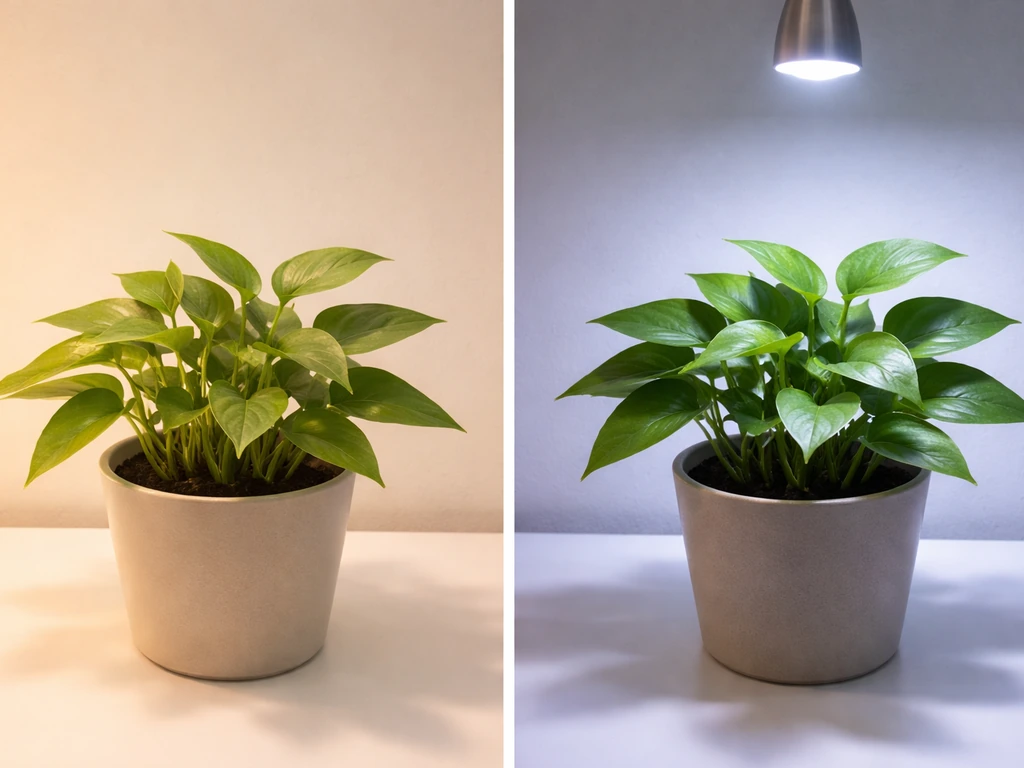
Why normal house lights usually aren't enough
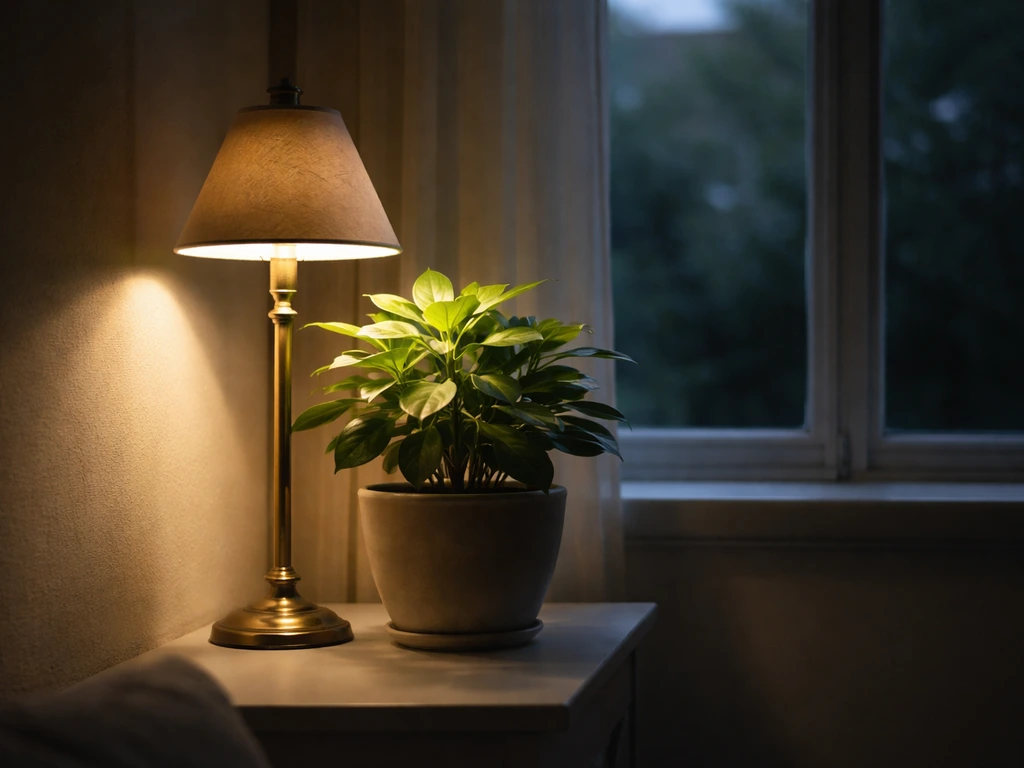
Here's the core problem: plants don't experience light the way we do. You might walk into a brightly lit room and think it feels plenty sunny, but that brightness is measured in lumens, a unit calibrated to human vision, not plant biology. Plants run on PAR, or photosynthetically active radiation, which is the slice of the light spectrum between 400 and 700 nanometers that actually drives photosynthesis. A bulb can look brilliant to your eyes while putting out almost nothing useful to a plant.
On a clear summer day, outdoor light reaches around 10,000 to 12,000 foot-candles. Most indoor environments land somewhere between 25 and 250 foot-candles, a fraction of what even shade-tolerant plants would experience outside. Standard bulbs are also placed overhead for room illumination, not positioned close to plants where the light intensity actually matters. And because light intensity drops off sharply with distance, a bulb that's 6 feet above your plant delivers a tiny fraction of what it would at 12 inches.
How plants actually use light
The metric that matters most for plant growth is PPFD, photosynthetically active photon flux density, measured in micromoles per square meter per second (µmol/m²/s). Think of PPFD as how many useful photons are landing on your plant's leaves every second. A low-light plant like a pothos might need around 50–150 µmol/m²/s to thrive. Herbs and vegetables often want 200–400 µmol/m²/s or more.
There's also a daily total to think about: the daily light integral, or DLI. DLI is just the running total of PAR your plant receives over a full day, expressed in mol/m²/day. You can calculate it simply: DLI = PPFD × hours of light × 0.0036. So if your grow light delivers 200 µmol/m²/s and runs for 14 hours, you're delivering a DLI of about 10 mol/m²/day, which is plenty for most houseplants and even some herbs.
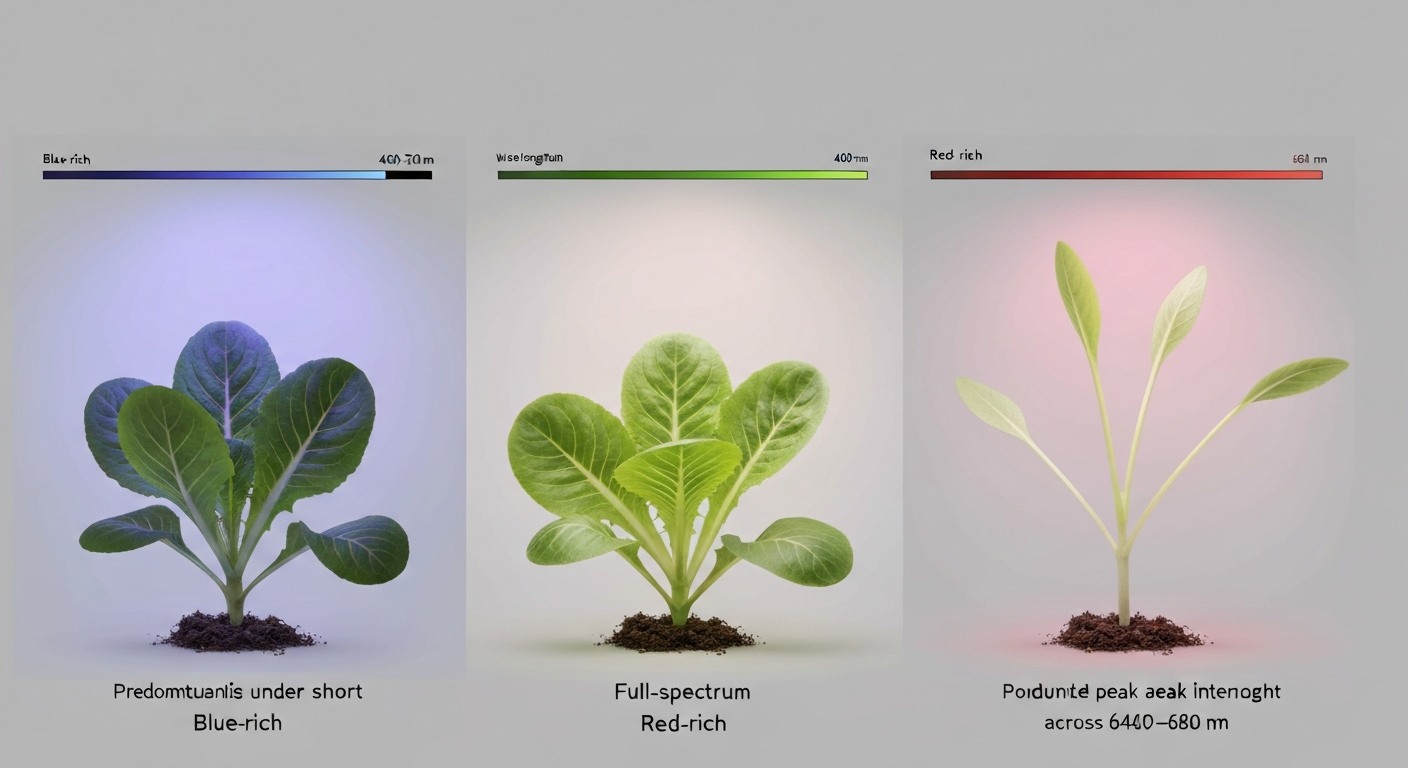
Spectrum matters too. Plants use blue light (around 400–500nm) for compact, leafy vegetative growth, and red light (around 600–700nm) for flowering and fruiting. Warm white LED bulbs lean heavily toward the yellow-orange range that looks good to us but skews away from what plants need most. Purpose-built grow lights are designed to hit the red and blue peaks plants prefer, either as a full-spectrum white LED or as those familiar purple/pink blurple panels.
What actually happens when you grow plants under house lights
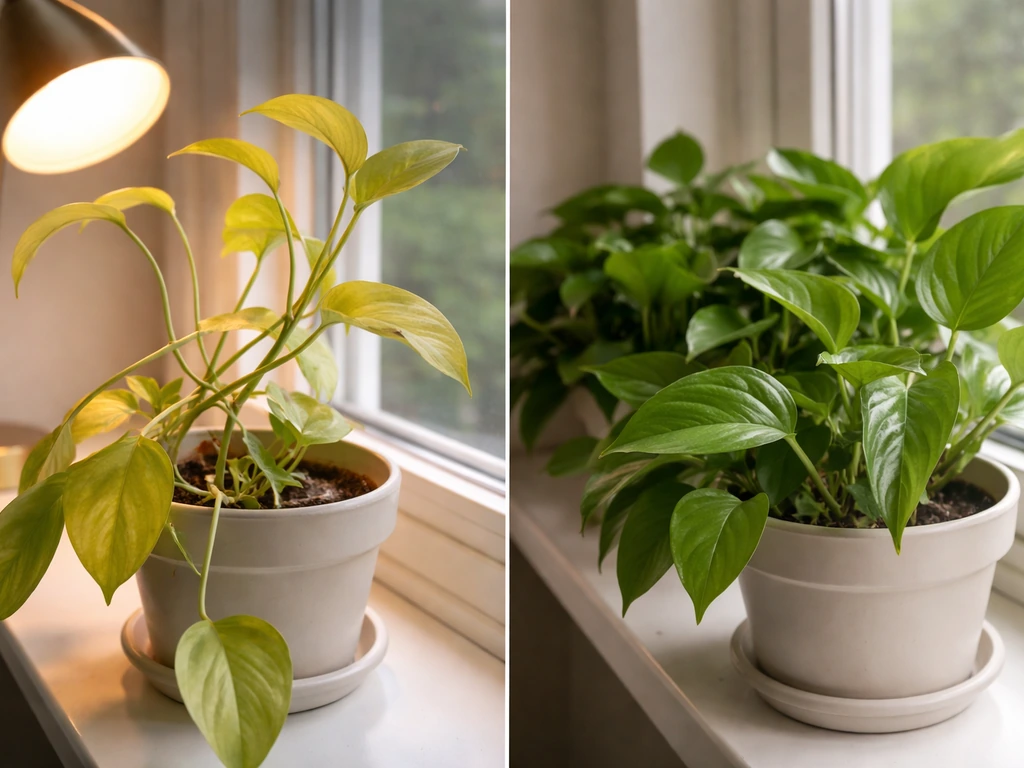
If you've tried keeping a sun-loving plant under a table lamp and noticed it looked fine for a few weeks then started looking sad and stringy, you've already seen this play out. The most common result is leggy growth, long, thin stems with wide gaps between leaves as the plant stretches toward any available light. This is the plant burning energy trying to find more photons, not thriving. It's one of the clearest visual signals that your lighting isn't cutting it.
Beyond leggy stems, you'll often see pale or yellowing leaves, reduced leaf size, dropped leaves, and no new growth for months. Starting seeds under house lights is especially unreliable, low light levels consistently produce weak, floppy seedlings that don't survive transplanting well. Plants that need moderate to high light (most vegetables, herbs, fruiting plants, and many flowering houseplants) will simply not perform under standard home illumination.
When house lighting can actually work
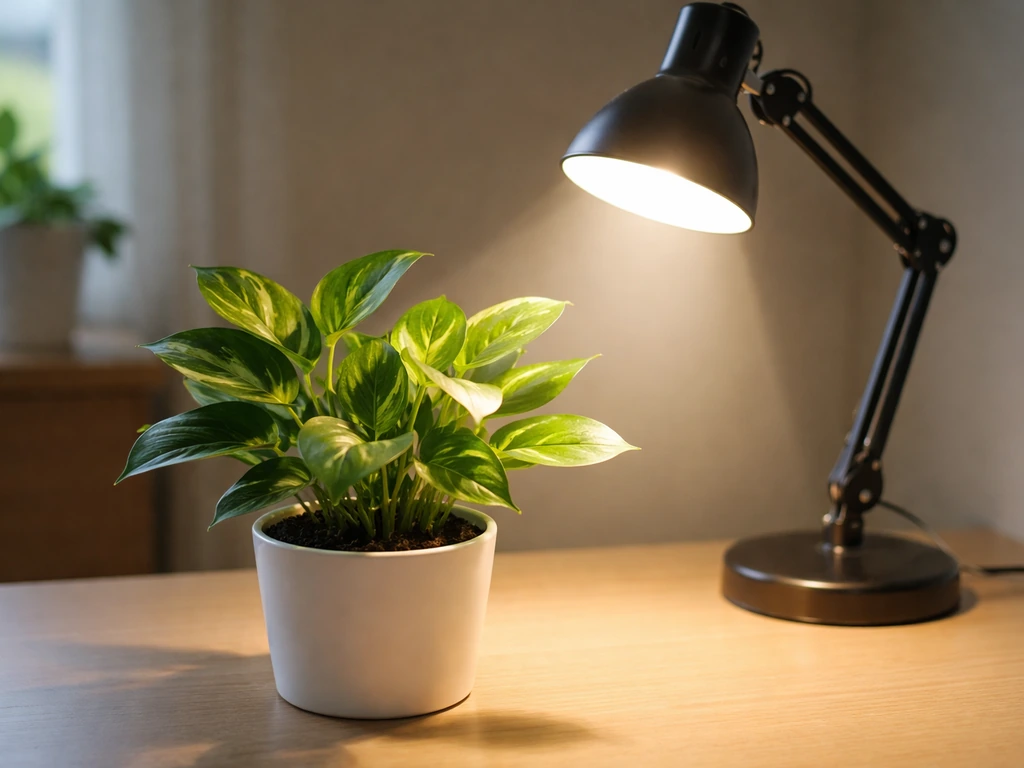
There are real situations where existing home lighting gives you a useful assist. In most cases, regular light bulbs do not provide enough plant-ready light to make plants grow well do regular light bulbs help plants grow. A few plant types are genuinely adapted to low-light conditions and can get by with ambient room light supplemented by whatever your fixtures provide. Think pothos, snake plants, ZZ plants, peace lilies, and certain ferns. These plants evolved under forest canopies where they rarely see direct sun, so they're efficient at using the little light available. They won't grow fast under house lights alone, but they can hold steady.
The other scenario where regular bulbs actually help is as a supplement to a decent window. If your plant gets 3 to 4 hours of natural light daily and you add a bright LED desk lamp positioned close to the plant for several more hours, you can meaningfully boost that plant's daily light dose without a dedicated grow light. This works best for low-to-medium light plants, not for sun-lovers or seed starting. If you're curious how regular light bulbs compare more broadly, that's worth exploring separately since different bulb types (incandescent, CFL, LED) vary a lot in their usefulness for plants. If you're specifically wondering about smart lighting, a popular option is whether can philips hue grow plants, since its spectrum and brightness may or may not be enough depending on your plant compare more broadly. Incandescent bulbs also tend to be inefficient for plant growth compared with purpose-built grow lights because their spectrum and intensity often don't deliver enough usable photons.
Choosing and setting up a real grow light
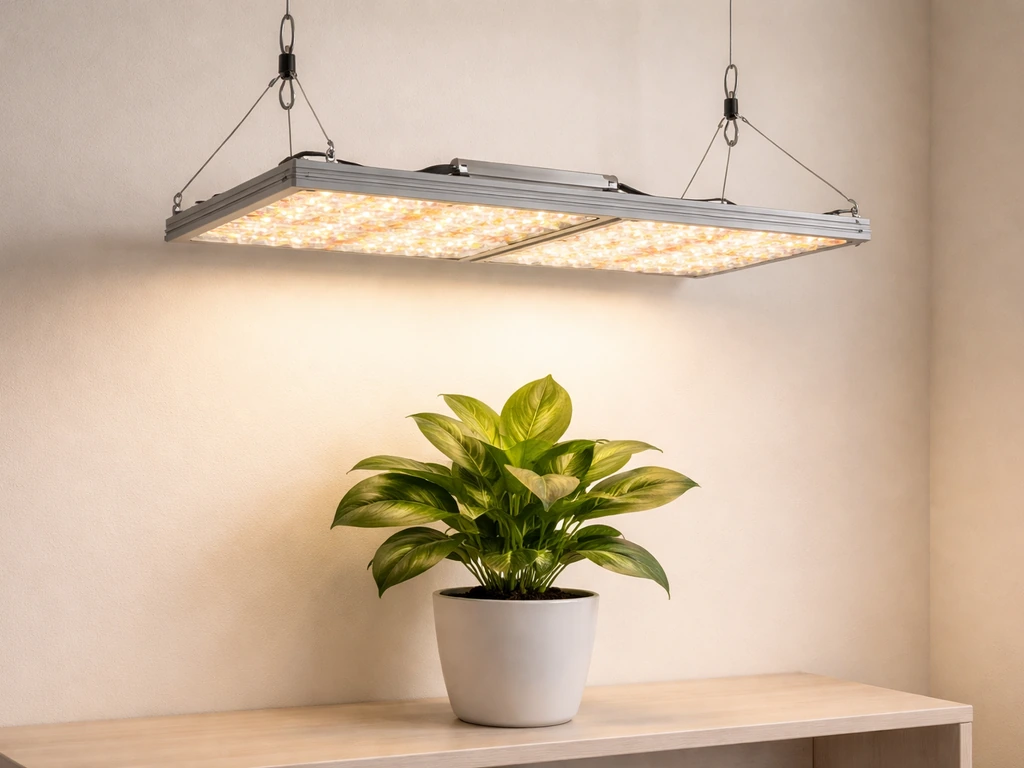
If your plants need more than house lights can offer, a proper grow light solves the problem quickly and doesn't have to be expensive. Here's what to focus on when choosing and positioning one.
Light type and intensity
Full-spectrum LED grow lights are the best default choice for most home growers right now. They're energy-efficient, run cool compared to older fluorescent or incandescent options, and are widely available. When shopping, look for actual PPFD specs rather than wattage alone, wattage tells you how much electricity it draws, not how much usable light reaches your plants. Target a light that delivers at least 150–200 µmol/m²/s at the canopy for low-to-medium light plants, and 300–500+ µmol/m²/s for herbs, vegetables, and seedlings.
Distance and placement
PPFD drops off fast as distance increases, so placement is critical. A panel that delivers 400 µmol/m²/s at 12 inches might only deliver 100 µmol/m²/s at 24 inches. Start with your light at the manufacturer's recommended distance, typically 12 to 18 inches for most LED panels, and adjust based on how your plants respond. Signs you're too close: bleached or curled leaf tips. Signs you're too far: stretching and slow growth. For seedlings, keep lights closer (around 4 to 6 inches for lower-intensity fixtures) to prevent that legginess.
Photoperiod and timers
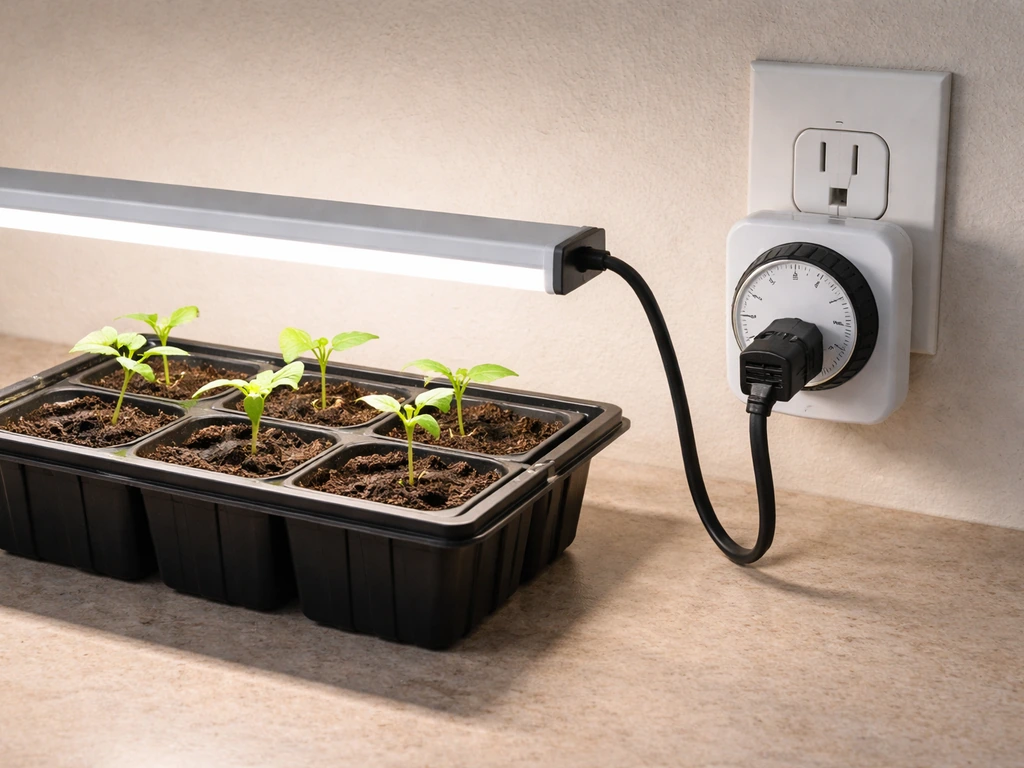
Running your light for 12 to 14 hours per day is a solid starting point for most houseplants and herbs. Seedlings often benefit from up to 16 hours. A cheap outlet timer (under $10) is one of the best accessories you can buy, it takes human error out of the equation and keeps your photoperiod consistent, which matters for plant health. Note that some plants are photoperiod-sensitive: short-day plants like chrysanthemums and poinsettias need longer dark periods to trigger flowering, so running lights 14+ hours may prevent or delay blooming in those species.
| Plant type | Recommended PPFD (µmol/m²/s) | Daily hours (photoperiod) | Light placement |
|---|---|---|---|
| Low-light houseplants (pothos, snake plant) | 50–150 | 12–14 hours | 18–24 inches from canopy |
| Medium-light houseplants (peace lily, orchids) | 150–250 | 12–14 hours | 12–18 inches from canopy |
| Herbs (basil, mint, parsley) | 200–400 | 14–16 hours | 8–14 inches from canopy |
| Vegetables and seedlings | 300–600+ | 14–16 hours | 4–12 inches from canopy |
Safety and common misconceptions
Grow lights get surrounded by a lot of unnecessary worry. Let's clear up the most common concerns directly.
Will grow lights give you a tan or cause cancer?
Standard LED and fluorescent grow lights do not emit significant UV radiation, so they won't tan or burn your skin. The UV concern is real for some specialized UV-emitting grow lamps used in certain commercial setups, and any grow lamp with a missing UV-blocking cover or plate can increase UV exposure risk to eyes and skin. But for the full-spectrum LED panels most home growers use, UV output is minimal. The EPA and FDA both confirm that UV exposure can cause eye injuries and raise skin cancer risk at high doses, but those risks don't apply to typical consumer grow lights used in a home setting. If you're working with a lamp for extended periods, keeping a reasonable distance is enough.
Heat and electrical safety
LED grow lights run much cooler than old incandescent grow lamps, which put out significant heat and could stress plants placed too close. That said, the U.S. Department of Energy has flagged fire hazards from using LED bulbs in fixtures they're not rated for, so always make sure your bulb wattage and type match the fixture you're using. Use a dedicated power strip or outlet, don't daisy-chain extension cords, and check that any fixture you buy meets safety standards (UL-listed products are evaluated for electrical and optical safety including photobiological risk).
Is it safe for pets?
Most standard grow lights are safe around pets in normal use. The same commonsense rules apply: keep cords secured so cats don't chew them, make sure lights are mounted stably so they can't be knocked into water, and don't position intense lights at a pet's eye level for long periods. There's no specific toxicity or radiation concern for household pets from typical LED grow lights.
Troubleshooting: when your plants still aren't growing
If you've added a grow light and your plants still look stalled or stressed, light might not actually be the limiting factor anymore. Work through this checklist before assuming you need more light.
- Measure your actual PPFD. A PAR meter or quantum sensor tells you exactly how many useful photons are reaching your plant's canopy. Many cheap lux meters are inaccurate for plant purposes because they measure human-perceived brightness, not PAR. PPFD meters start around $30–50 for basic models and give you real data.
- Check your DLI. If your PPFD reads fine but plants are still struggling, calculate your DLI (PPFD × hours × 0.0036). A low-light plant getting 100 µmol/m²/s for only 8 hours has a DLI of about 2.9 — too low for most plants. Extend your photoperiod to 12–14 hours to fix this.
- Rule out watering and root issues. Overwatered plants show many of the same symptoms as light-starved plants: pale leaves, stunted growth, drooping. Before blaming the light, check that your soil isn't soggy and roots aren't rotting.
- Check for nutrient deficiency. Plants under grow lights in containers deplete nutrients faster. Yellowing between leaf veins, purpling stems, or pale new growth often points to a nutrient issue rather than a light issue.
- Evaluate light coverage. A single small panel placed off-center will leave half your plant in relative darkness. Make sure the light covers the full canopy, or rotate your plants regularly.
- Reconsider your light distance. If leaves closest to the light look bleached or have brown tips while lower leaves are stretching, you've found a distance problem — raise the light a few inches at a time until symptoms stop.
One more thing worth knowing: office lights and some specialty bulbs like Philips Hue smart bulbs occasionally come up as grow light alternatives. They can have marginal use for very low-light plants in the same way regular house lights do, but they share the same fundamental limitations, they're designed to illuminate rooms, not drive plant photosynthesis at the intensity plants actually need. If you want results you can actually see, a purpose-built grow light is the straightforward path forward.
FAQ
Will plants grow under regular LED bulbs if I keep them on all day or 24/7?
Most plants still need a day-night cycle, even if the light is bright enough. Run most houseplants about 12 to 14 hours, and only push longer for seedlings. 24/7 usually increases stress because plants also rely on darkness for normal growth processes and, for photoperiod-sensitive species, it can prevent or delay flowering.
How can I tell whether my setup is too dim versus too hot or too close when using a lamp instead of a grow light?
Too dim typically shows up as slow growth and stretching (leggy, spaced leaves). If the issue is proximity-related from light intensity, you often see leaf-tip bleaching, curling, or scorched looking edges. Heat stress is less common with LEDs, but if your lamp feels warm, check distance and consider adding a small fan for airflow.
Do incandescent bulbs help more than LED house bulbs for plant growth?
Incandescent bulbs can put out more total light energy, but they’re usually inefficient for plants because they waste a lot of power as heat and still may not deliver enough PAR at the leaf. For growth targets, wattage alone is not reliable, so look for PPFD from the fixture or choose a purpose-built LED grow light.
Is a “cool white” or “daylight” bulb better than a warm white bulb for plants?
Cool and daylight bulbs often shift more output toward the blue range, which can support more compact growth than warm-white. That said, even the best color temperature for room illumination usually misses the PPFD and placement requirements, so it still tends to produce slow or leggy growth compared with a real grow light.
Can I use window light plus a regular desk lamp instead of buying a grow light?
Yes, if the plant is low-to-medium light tolerant and you can provide consistent added hours. Position the desk lamp close enough to matter, because intensity drops with distance quickly. Keep it modest for seed starting and sun-loving plants, since they often need higher PPFD than a typical desk lamp can deliver.
What should I do if my plant survives under house lights but doesn’t grow much?
First confirm it isn’t simply low-growth genetics for that species, then adjust exposure before adding more intensity. Try rotating the plant weekly, raising light time to a consistent photoperiod with a timer, and moving it closer to the light source. If it still shows stretching, pale leaves, or no new leaves, you’ll likely need a grow light to reach useful PPFD.
Are smart bulbs like Philips Hue ever enough to replace a grow light?
They can be enough for low-light plants that only need survival and minimal improvement, especially if you run them for long, consistent periods. They usually fall short for herbs, vegetables, and seed starting because the PPFD at the canopy is often not high enough. If you try them, treat results as supplemental and confirm with plant behavior, not brightness to your eyes.
Do I need to worry about UV from household or grow lights?
Typical home LED grow lights and standard LEDs are not a meaningful UV source, so UV risk is generally not the main concern. UV becomes relevant mainly with specialized UV-emitting lamps or if a UV-blocking cover is missing, so avoid DIY modifications and keep covers intact.
If my plants are stretching, how far should I move the light or adjust the schedule when using a regular lamp?
Legginess usually means the plant isn’t receiving enough usable photons. As a first step, move the light closer to the leaves and increase daily exposure with a timer, rather than only extending time while keeping distance the same. If you still see stretching after adjustments, the lamp likely cannot reach the needed PPFD.
Can I use a grow light only at night to extend “sun time,” or do I need it during a specific part of the day?
Plants respond mainly to total daily light, not the exact clock time, as long as the light-dark cycle is consistent. Use a timer to avoid accidental changes, but keep the schedule stable. For flowering plants that depend on day length, the exact timing relative to darkness can matter, so match the target photoperiod for that species.
Next Articles
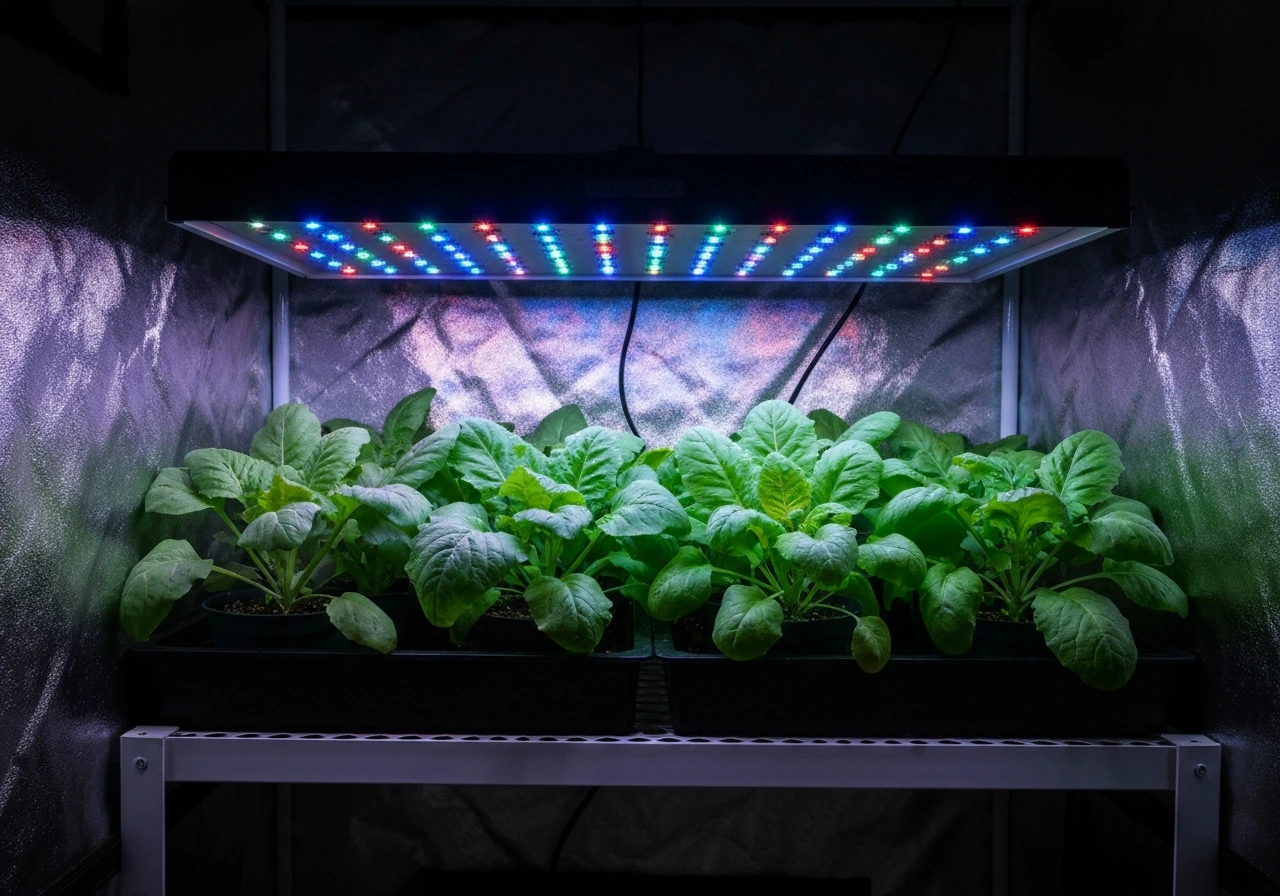
Do Black Lights Help Plants Grow? The Practical Answer
Debunks do black lights help plants grow, explains UV limits, safety tips, and better blue-red LED grow light options.
Do Regular Light Bulbs Help Plants Grow? What to Expect
See if regular bulbs can grow plants, which types work, how to set distance and hours, and what results to expect.
Why Do Plants Grow Best in Blue Light? Science & Practical Guide
Explore why blue light boosts vegetative growth, ideal blue:red ratios, PPFD, photoperiods, fixtures, and setup tips.