Regular light bulbs can help plants grow, but only under the right conditions and only for certain plants. A daylight LED bulb (5000K–6500K) placed close enough to a low-light houseplant can absolutely keep it alive and even support modest growth. But if you're trying to grow tomatoes, herbs under a kitchen cabinet, or seedlings that need to bulk up fast, a standard household bulb will probably leave you with leggy, pale, struggling plants. The honest answer is: it depends on the bulb type, how you set it up, and what you're trying to grow.
Do Regular Light Bulbs Help Plants Grow? What to Expect
Marcus Holloway
16 May 2026
What plants actually need from light
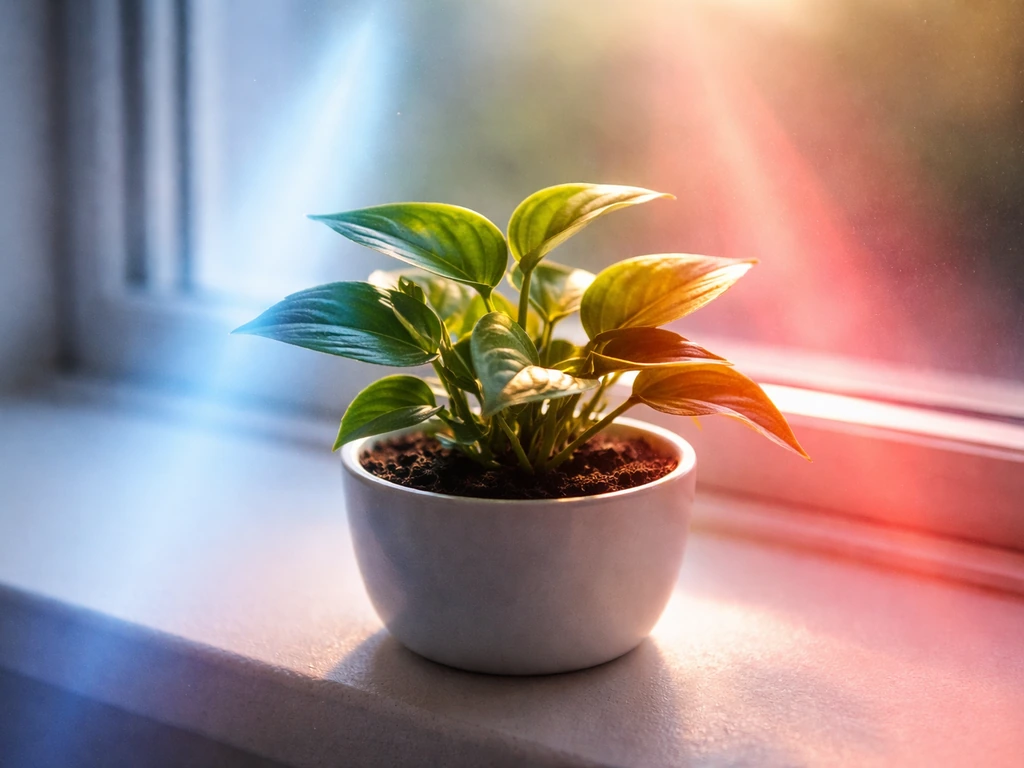
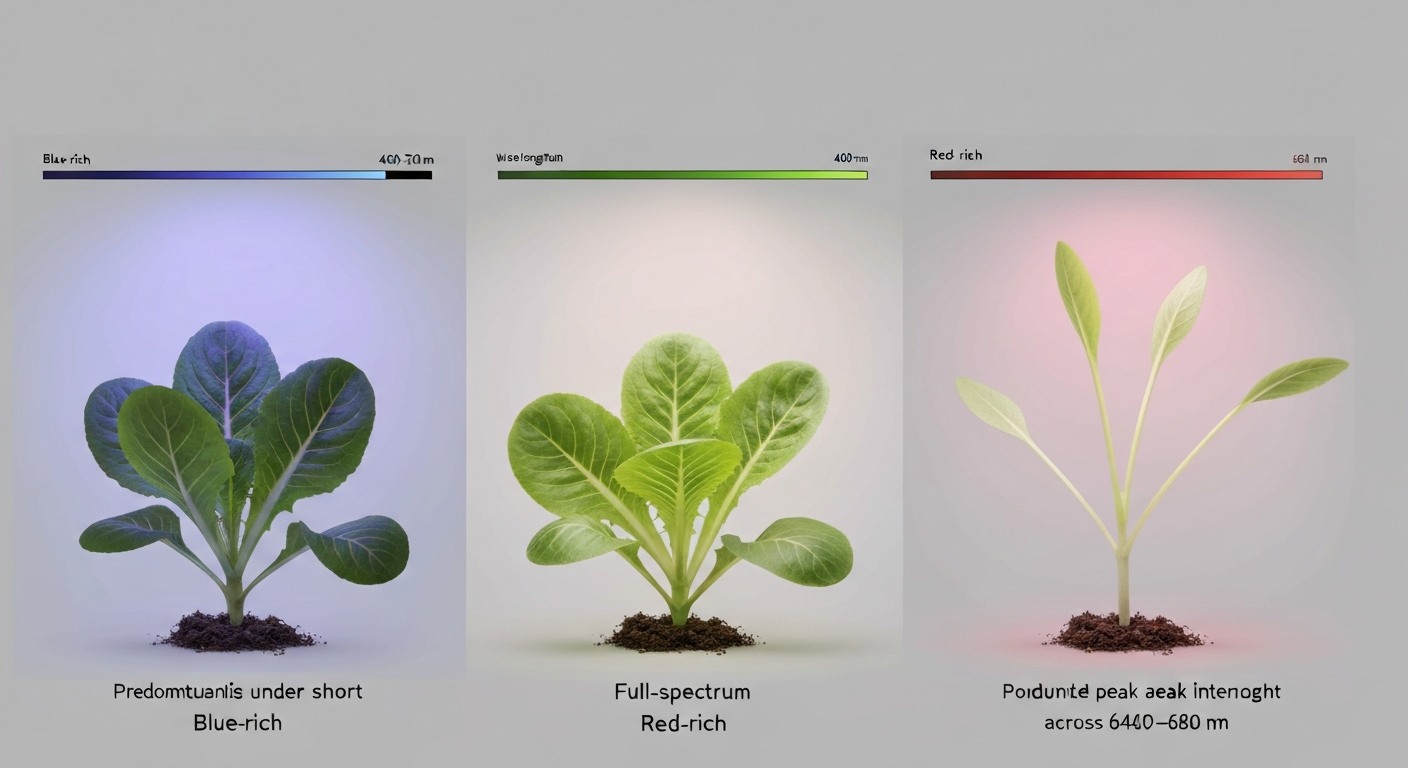
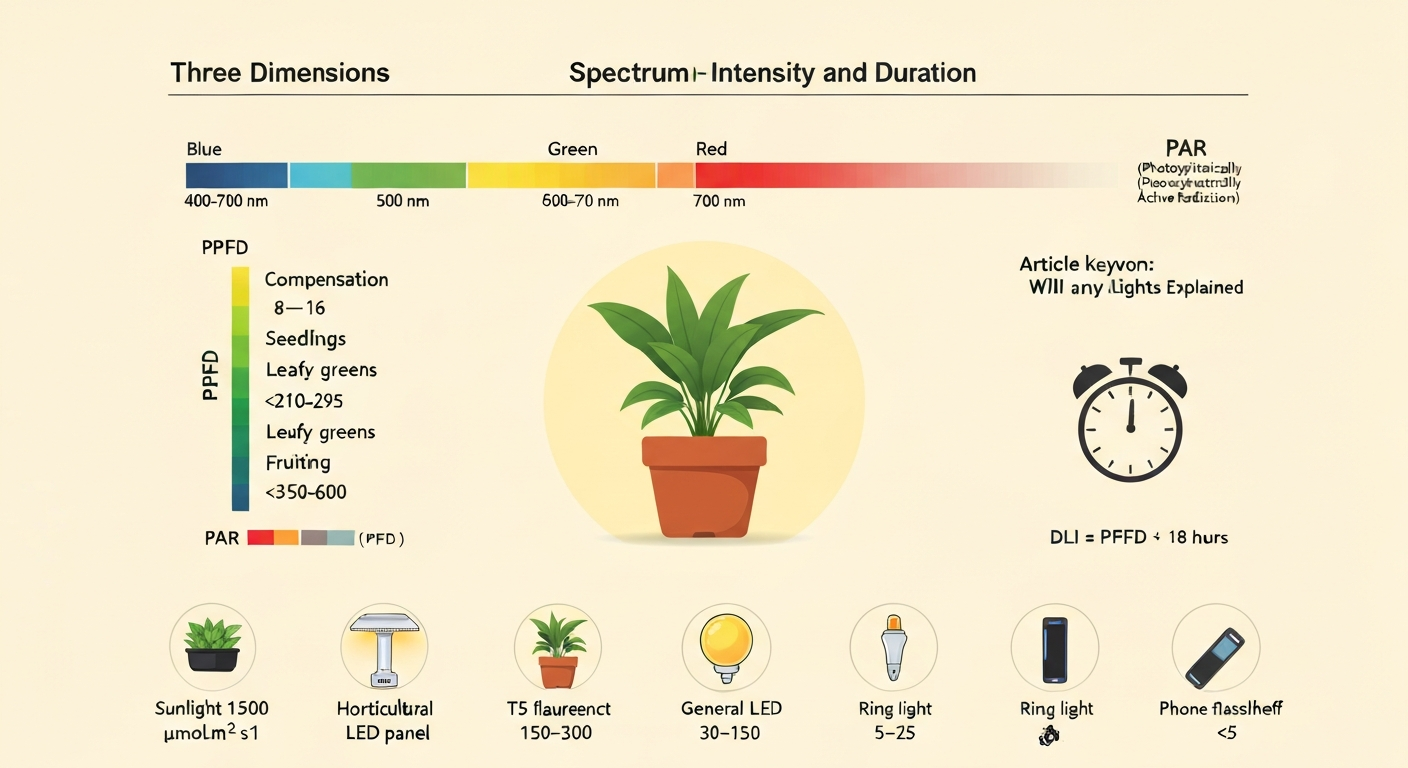
Plants don't care about lumens, which is the brightness measurement on bulb packaging aimed at human eyes. What they care about is photosynthetically active radiation, or PAR, which covers wavelengths from roughly 400 to 700 nanometers. Within that range, red light (around 600–700 nm) and blue light (around 400–500 nm) do the heaviest lifting. NASA's plant research has consistently pointed to blank" rel="noopener noreferrer">red and blue as the dominant drivers of photosynthesis and growth under artificial light. Blue light also plays a specific structural role: it can suppress stem elongation within seconds of exposure, which is why plants grown under blue-rich light tend to be more compact and sturdy rather than stretched and floppy.
There's also far-red light (730–800 nm), which sits just beyond the visible red range. Research shows that adding far-red to a red/blue or white LED source can actually improve photosystem efficiency, so it's not useless. It influences flowering timing and plant shape too. Most standard household bulbs don't output much far-red, which is worth keeping in mind if you're trying to trigger flowering or fruiting.
The intensity of light also matters enormously, and this is where most regular bulbs fall short. The correct measurement is PPFD (photosynthetic photon flux density), measured in micromoles per square meter per second (µmol/m²/s). Low-light plants like pothos or snake plants can manage on 50–100 µmol/m²/s. Herbs and leafy greens want 200–400 µmol/m²/s. Fruiting crops like tomatoes push toward 400–600 µmol/m²/s or higher. A standard 60W equivalent LED bulb might hit 100–150 µmol/m²/s at very close range, which tells you right away where regular bulbs fit (and don't fit) in the picture.
Which bulb types actually help
Not all regular bulbs are created equal when it comes to plant growth. Here's how the main types stack up:
| Bulb Type | Spectrum Quality for Plants | Heat Output | Energy Efficiency | Best Use Case |
|---|---|---|---|---|
| Incandescent | Poor (red-heavy, lacks blue) | High | Very low | Not recommended; heat risk near plants |
| CFL (compact fluorescent) | Moderate (some blue/red if daylight rated) | Low-moderate | Moderate | Low-light houseplants, short-term seedlings |
| Daylight LED (5000K–6500K) | Good (blue-rich, decent red) | Very low | High | Low-to-medium light plants, foliage growth |
| Full-spectrum LED | Very good (balanced PAR, often includes far-red) | Very low | High | Most indoor plants, seedlings, herbs |
| Dedicated grow LED bulb | Excellent (tuned red/blue/white ratios) | Low | High | Herbs, vegetables, fruiting plants |
Incandescent bulbs are the worst choice. They burn hot, waste most of their energy as heat rather than light, and their spectrum skews heavily toward red and infrared with very little blue. Research comparing incandescent supplements to fluorescent sources shows marginal growth benefits that don't justify the heat and energy cost. Skip them.
Daylight LEDs (labeled 5000K or 6500K) are the best 'regular' bulb option. They emit a blue-rich white light that overlaps meaningfully with the blue range plants need. They're efficient, run cool, and last a long time. Studies testing white LED types at different PPFD levels (200 and 500 µmol/m²/s) confirm that well-designed white LEDs can support plant growth comparably to dedicated red/blue arrays in some scenarios, particularly for leafy crops. That said, you need to position them correctly to hit useful intensity levels.
Full-spectrum LEDs go a step further by including wavelengths across a broader range, sometimes adding dedicated red and far-red diodes to a white base. Dedicated grow bulbs are essentially the same concept but engineered specifically around plant PAR needs rather than human vision comfort. If you're serious about results, a grow-specific bulb is worth the modest extra cost over a daylight LED.
How to set up regular bulbs (and grow bulbs) for plants
Distance from the plant
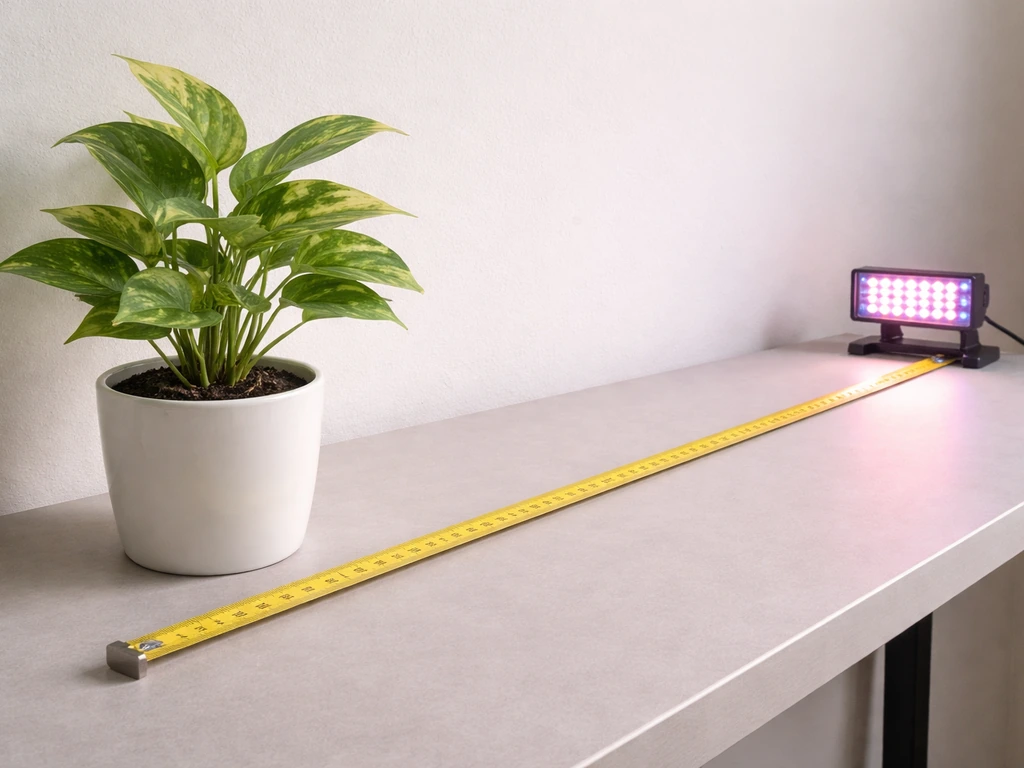
Distance is the single biggest variable most people get wrong. Light intensity drops off fast as you move away from the source (roughly following the inverse square law, meaning doubling the distance cuts intensity to about a quarter). For a standard daylight LED bulb, you want the bulb within 6–12 inches of the plant canopy to get meaningful PAR levels. At 18–24 inches, you're likely below the threshold for anything beyond very low-light plants. Dedicated grow bulbs are more powerful, so you have more flexibility, but 12–18 inches is still a reasonable starting point for most.
Hours per day (photoperiod)
Most plants need 12–16 hours of light per day under artificial sources to compensate for the lower intensity compared to sunlight. Low-light houseplants can get by on 10–12 hours. Seedlings benefit from 14–16 hours. Use a cheap outlet timer so you don't have to think about it. Consistency matters more than perfection: a steady 14-hour cycle beats irregular on-off schedules every time. Also give plants a true dark period of at least 6–8 hours; continuous light stresses most species.
How many bulbs you need
One standard LED bulb is rarely enough for anything beyond a single small plant. A 9W daylight LED producing roughly 800 lumens is convenient for one low-light houseplant. For a tray of seedlings or a small herb garden, you'll want at least 2–4 bulbs in a reflective fixture, or a proper grow light panel. The more plants you're covering, the more you should think about stepping up to a purpose-built grow light rather than clustering household bulbs.
What results to expect (and when regular bulbs won't cut it)
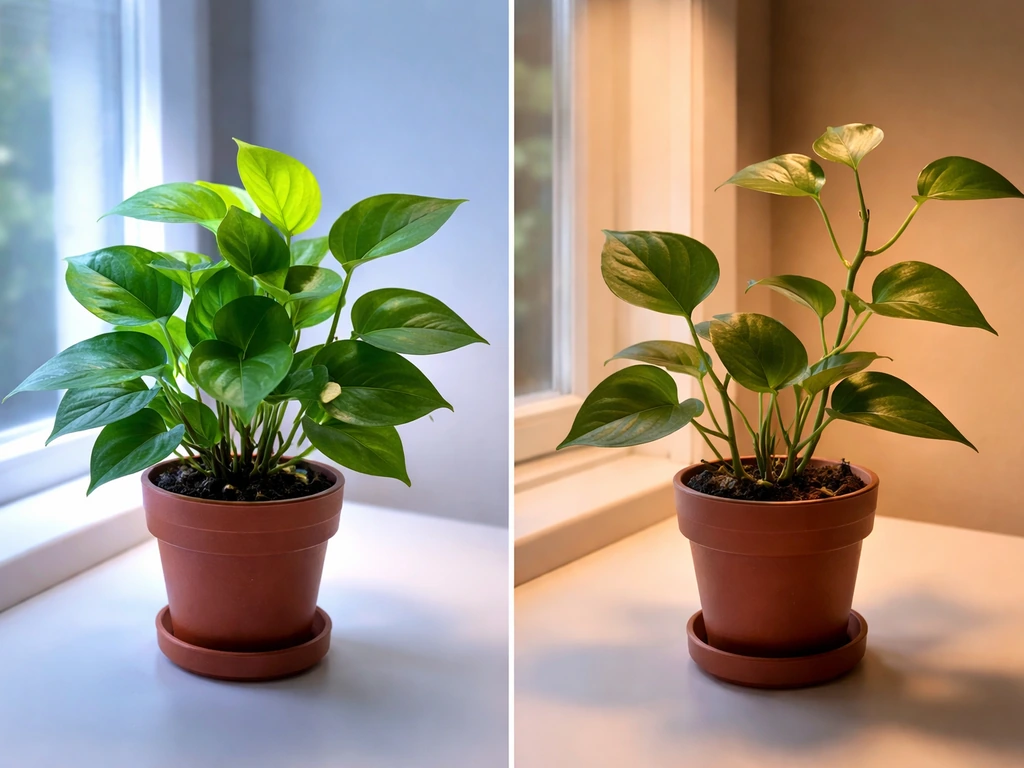
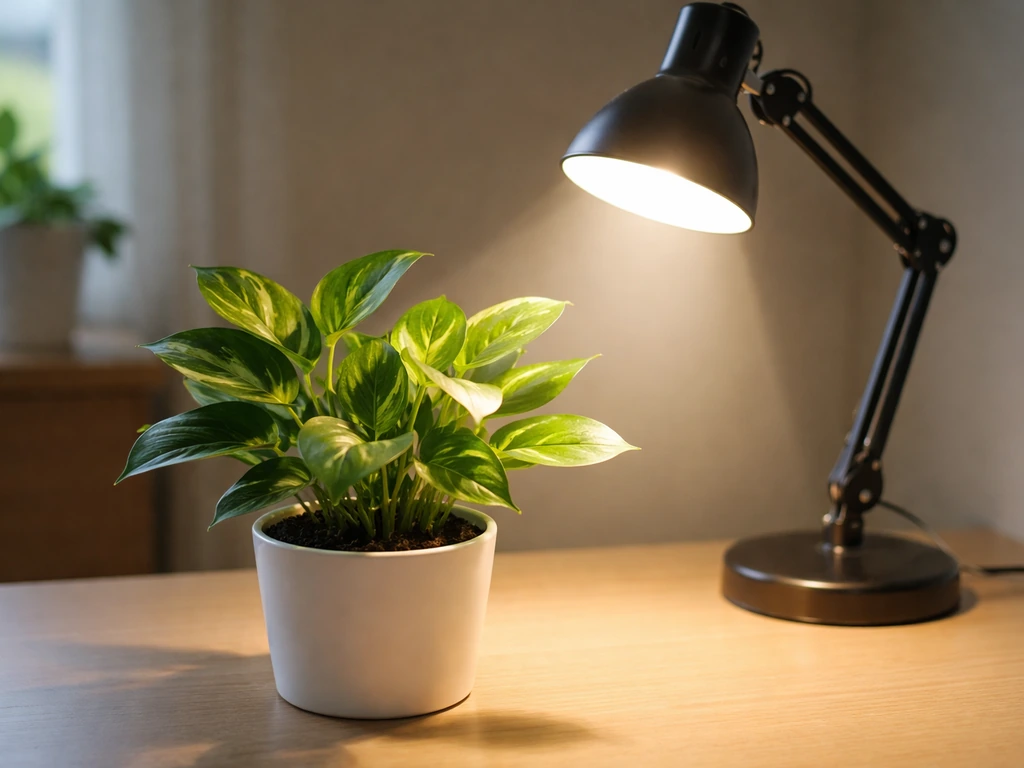
If you're using a daylight LED close to a low-light houseplant like a pothos, ZZ plant, or peace lily, you can expect the plant to maintain healthy color and put out new leaves at a reasonable pace. That's a genuine win, and regular bulbs work fine for this use case.
For seedlings, a daylight LED can get you through the first 2–3 weeks of germination and early growth, especially if the bulb is very close (4–6 inches). But seedlings need intensity, and once they're past the cotyledon stage and pushing true leaves, most will start to stretch toward the light if your bulb isn't powerful enough. Stretching (also called etiolation) is the plant's signal that it's not getting enough light. Stems get long and weak, leaves are spaced far apart, and the plant becomes structurally fragile.
For herbs, leafy greens, or any fruiting crop, standard household bulbs will generally underperform. Do office lights help plants grow, or will you need something stronger and more plant-focused like a daylight or grow bulb? You might get a scraggly basil plant that barely keeps itself alive, but you won't get the bushy, productive plant you're after. This is where a dedicated full-spectrum or grow-specific LED makes a meaningful difference. White versus red/blue grow lights can perform similarly for lettuce under controlled conditions, but both need to hit adequate PPFD levels that regular household bulbs struggle to deliver across a planting area. An industry-research discussion reports that blank" rel="noopener noreferrer">red plus blue is not automatically superior to white for lettuce growth, because performance can be comparable depending on spectrum and dose.
- Regular daylight LED: works well for low-light houseplants, basic foliage maintenance, very early seedlings
- Full-spectrum LED: good for herbs, leafy greens, seedlings through transplant stage
- Dedicated grow bulb or panel: best for fruiting plants, high-demand crops, serious indoor gardens
- Incandescent: avoid for plants entirely
Safety, heat, and keeping your plants (and yourself) healthy
Heat is the main practical safety concern with bulbs near plants. Incandescent bulbs can easily burn foliage if placed within a foot of a plant, and they're a fire risk near dry soil or flammable materials. LED bulbs run much cooler and are far safer at close range, which is one of the biggest reasons to choose LED over anything else. That said, even LEDs generate some heat at the driver, so make sure there's airflow around any enclosed fixture.
For your own eyes, brief glances at LED grow bulbs are generally fine, but staring directly into any bright light source is a bad idea. Grow lights with high blue or UV content fall under photobiological safety standards (IEC 62471 and UL 8800), which classify lamps by eye and skin hazard risk. Quality horticultural LED products are tested against these standards. If you're running lights for many hours a day in a small room where you spend a lot of time, position them so you're not looking directly into them during regular use. Dedicated grow bulbs certified to UL 8800 or listed on the DesignLights Consortium's horticultural qualified products list have met specific safety benchmarks beyond what a standard household bulb requires.
Energy use is worth a quick mention. A standard LED runs 8–12 watts and costs very little to operate. If you're running multiple grow bulbs for 14 hours a day, the cumulative electricity cost is still modest compared to traditional incandescent or HID lighting, but it adds up over a growing season. Modern LEDs last 25,000–50,000 hours, so the running cost over time is low even if the upfront price of a quality grow bulb is a bit higher than a generic household LED.
How to pick the right bulb
Here's a practical buying guide based on what you're actually trying to do:
- Identify your plant's light needs first. Low-light plants (pothos, snake plants, ferns) are forgiving. Herbs, vegetables, and fruiting plants are demanding. This single decision shapes everything else.
- For low-light houseplants: buy a daylight LED bulb rated 5000K–6500K, at least 800 lumens (roughly 9W equivalent). One bulb per plant, placed 6–10 inches above the canopy, run 12 hours per day.
- For seedlings and herbs: look for a full-spectrum LED grow bulb that mentions PAR or PPFD output on the packaging. Avoid bulbs that only list lumens with no spectrum information. Brands that publish PPFD charts are worth trusting more.
- For serious indoor growing (vegetables, fruiting plants): skip individual bulbs and invest in a panel or bar-style grow light rated for your coverage area. Look for fixtures listed on the DLC horticultural qualified products list or certified to UL 8800.
- Check the color temperature: 5000K–6500K for vegetative/foliage growth; red-enhanced or 'full spectrum' labeling for flowering and fruiting stages.
- Use a timer. A $10 outlet timer is one of the most impactful accessories you can buy alongside any grow bulb.
- Position before you buy: measure the distance from your light fixture to your plant canopy so you know whether a single bulb or multiple bulbs are needed to cover your growing area.
If you're comparing regular bulbs to other unconventional options, it's worth knowing that house lights, office lights, and even black lights get asked about a lot in this space. The consistent answer across all of them is that spectrum quality and intensity are what matter, not whether a light was marketed for plants or people. A high-quality daylight LED happens to cross into useful plant territory. Most other household lighting options don't get close enough to the right spectrum and intensity to matter. When in doubt, a purpose-built grow bulb is only a few dollars more than a premium household LED and removes all the guesswork.
FAQ
How can I tell if my regular light bulb is giving enough light for my plant?
The most reliable check is PPFD, but if you do not have a meter you can use a practical proxy: new growth should be compact (not stretched), leaf color should stay relatively deep, and you should not see large gaps forming between leaves. If your plant starts leaning or getting taller with spaced leaves, increase intensity by moving the bulb closer, adding another bulb, or switching to a higher-PPFD grow light.
Can I use a regular warm-white bulb (2700K–3000K) for plants?
Warm-white light has more red relative to blue, so it can support survival for some low-light houseplants, but it is much more likely to produce leggy growth than daylight or blue-rich LEDs. If you only have warm-white bulbs, keep expectations modest and plan on more frequent repositioning or using multiple bulbs to raise overall PPFD.
What distance should I use from a standard bulb to avoid leggy growth?
Distance is usually the biggest lever after bulb choice. As a starting point, place a daylight LED within about 6 to 12 inches of the canopy for meaningful results, then adjust based on plant response. If you see stretching, drop the bulb closer or add bulbs, because moving farther away can quickly cut intensity.
Do plants need complete darkness, or is it okay to leave the light on all night?
Most plants need an uninterrupted dark period, typically at least 6 to 8 hours, because continuous lighting can disrupt normal growth and stress many species. Use a timer rather than a manual switch so the dark period stays consistent day to day.
Will a single bulb work for multiple plants in the same area?
Often not. A typical household LED bulb spreads light unevenly, so plants near the center may get enough while those at the edges remain underlit. For several plants, use a reflective fixture or a panel setup and ensure coverage across the whole canopy, not just one spot.
Do I need a timer if I am using regular light bulbs indoors?
Yes, at least for consistency. Irregular on-off schedules can cause slower, uneven growth even if your bulb is otherwise adequate. An inexpensive outlet timer is usually the simplest way to keep a steady cycle, for example 14 to 16 hours for seedlings and around 12 to 16 hours for many leafy plants.
Are lumens enough information to choose a bulb for plants?
No. Lumens measure brightness for human vision, not the wavelengths and photon output plants use. Two bulbs with similar lumens can deliver very different PPFD. Look for PPFD-capable product specs when possible, or rely on proven daylight LEDs plus close positioning and plant-response adjustments.
How do I avoid heat damage when placing bulbs near plants?
Avoid incandescent bulbs because they run hot and can scorch foliage when placed close. With LEDs, heat is usually lower, but do not enclose fixtures without airflow. Also keep bulb-to-soil placement in mind, especially near dry soil and flammables.
Do far-red or full-spectrum bulbs actually improve results compared with daylight LEDs?
They can. If the bulb includes added far-red (or a plant-oriented spectrum), it may influence flowering timing and plant shape. However, the biggest difference still comes from getting enough PPFD at the canopy, so do not buy far-red expecting it to fix an underpowered setup.
Can regular bulbs help seedlings, or will they always stretch?
They can help only at first, typically through early germination and early growth, especially if the bulb is extremely close. Once true leaves start forming, stretching is common when intensity is insufficient. If you see etiolation, increase intensity by bringing the light closer or upgrading to a stronger grow light.
Is it safe to look at LED grow or daylight bulbs while they are on?
Do not stare directly into bright LEDs. If you are running lights for long hours in a small room, position them so your eyes are not repeatedly facing the emitter at close range. Plant-LED products are often tested for eye safety, but safe positioning still matters for day-to-day use.
Next Articles
Why Do Plants Grow Best in Blue Light? Science & Practical Guide
Explore why blue light boosts vegetative growth, ideal blue:red ratios, PPFD, photoperiods, fixtures, and setup tips.
What Artificial Light Will Grow Plants: Best Lights Guide
What artificial light will grow plants: practical guide to LED, CFL, HID spectra, PPFD targets, setup, cost & tips.
Will Any Light Grow Plants? Guide for Indoor Growers
Can any light grow plants? Clear yes/no, science-backed light specs, setup tips, and which household lights work.