For most vegetables, grow lights should be on for 14 to 18 hours per day. That's the practical range that covers almost everything you'll grow at home, from tomato seedlings under a shop light to mature pepper plants on a basement shelf. The exact number within that range depends on what you're growing, how far the light sits from your plants, and how bright that light actually is. Let me break all of that down so you can set a schedule with confidence rather than guessing.
How Long Should Grow Lights Be On for Vegetables
Marcus Holloway
24 Mar 2026
Basic daily timing for most vegetables
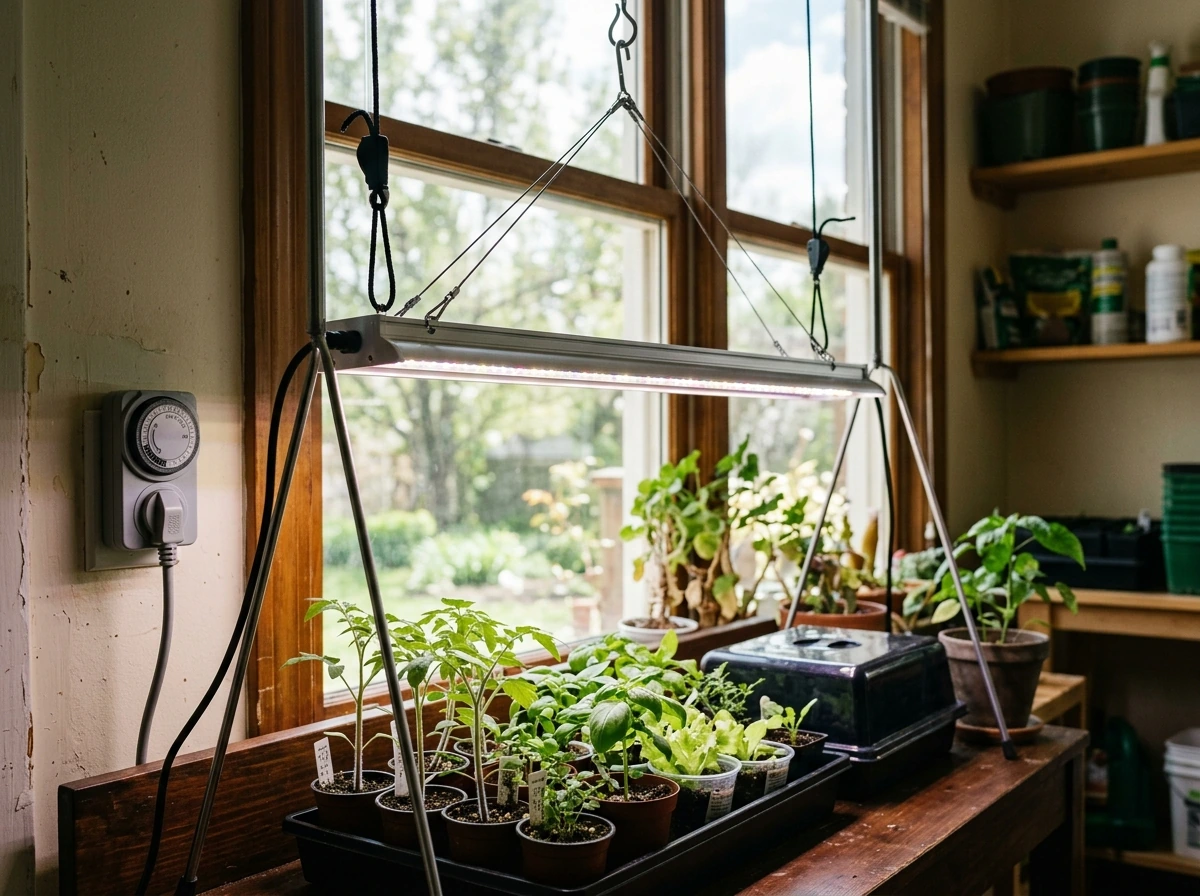
Most vegetable crops fall into a category called "day-neutral," meaning they don't need a specific day length to flower or fruit. They just need enough total light each day to grow well. For that reason, the go-to recommendation from extension programs like the University of Minnesota is 16 to 18 hours of grow light per day for seedlings, and 14 to 16 hours for established vegetative plants. UMN Extension’s “Starting seeds indoors” guidance also recommends giving seedlings 12 to 16 hours of light each day when relying on supplemental indoor lighting UMN Extension guidance for starting seeds indoors. I usually default to 16 hours for almost everything in my setup and then adjust from there.
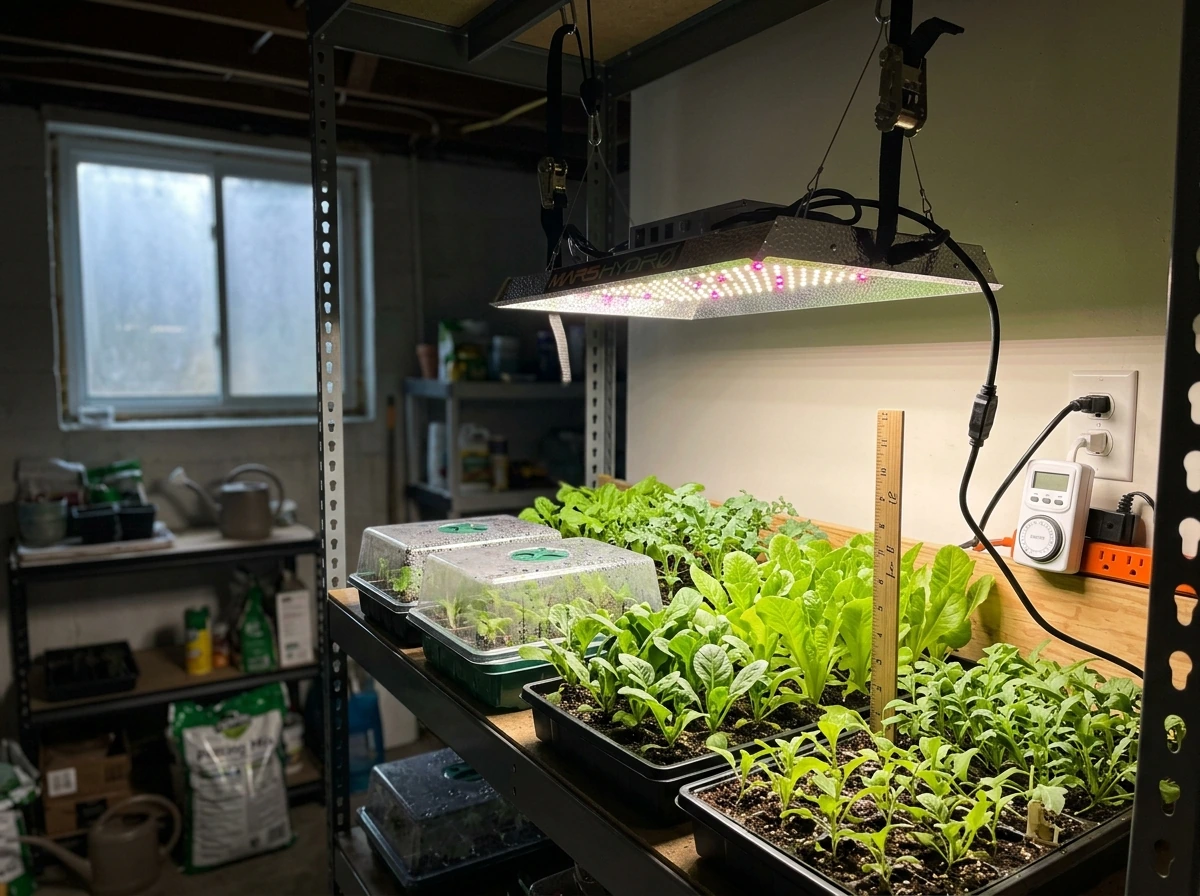
The dark period matters just as much as the light period. Plants use the hours of darkness to process what they've absorbed and to carry out metabolic work. Running your lights 24 hours a day sounds like more is more, but it actually stresses most vegetables and can cause nutrient uptake problems over time. Give them at least 6 to 8 hours of uninterrupted darkness every night. A simple plug-in timer set once is all you need to keep this consistent.
| Vegetable Type | Recommended Daily Light Hours | Notes |
|---|---|---|
| Leafy greens (lettuce, spinach, kale) | 12–16 hours | Lower end works fine at harvest stage; higher end speeds seedling growth |
| Tomatoes | 14–18 hours | Need more light especially when fruiting |
| Peppers | 14–18 hours | Slow growers; consistent 16-hour days help a lot |
| Cucumbers | 14–16 hours | Sensitive to overlong photoperiods |
| Herbs (basil, parsley, cilantro) | 12–16 hours | Basil loves the higher end; cilantro is fine at 12 |
| Root vegetables (radish, carrot) | 12–16 hours | Moderate needs; focus more on intensity than duration |
| Brassicas (broccoli, cabbage) | 14–16 hours | Strong light needs during head development |
How to set a schedule by plant type and growth stage
The growth stage matters more than most people realize. A tomato seedling in week two has very different light needs than a tomato plant setting fruit. Getting this wrong is one of the most common reasons indoor vegetable growing underperforms.
Seedling stage (weeks 1 to 4)
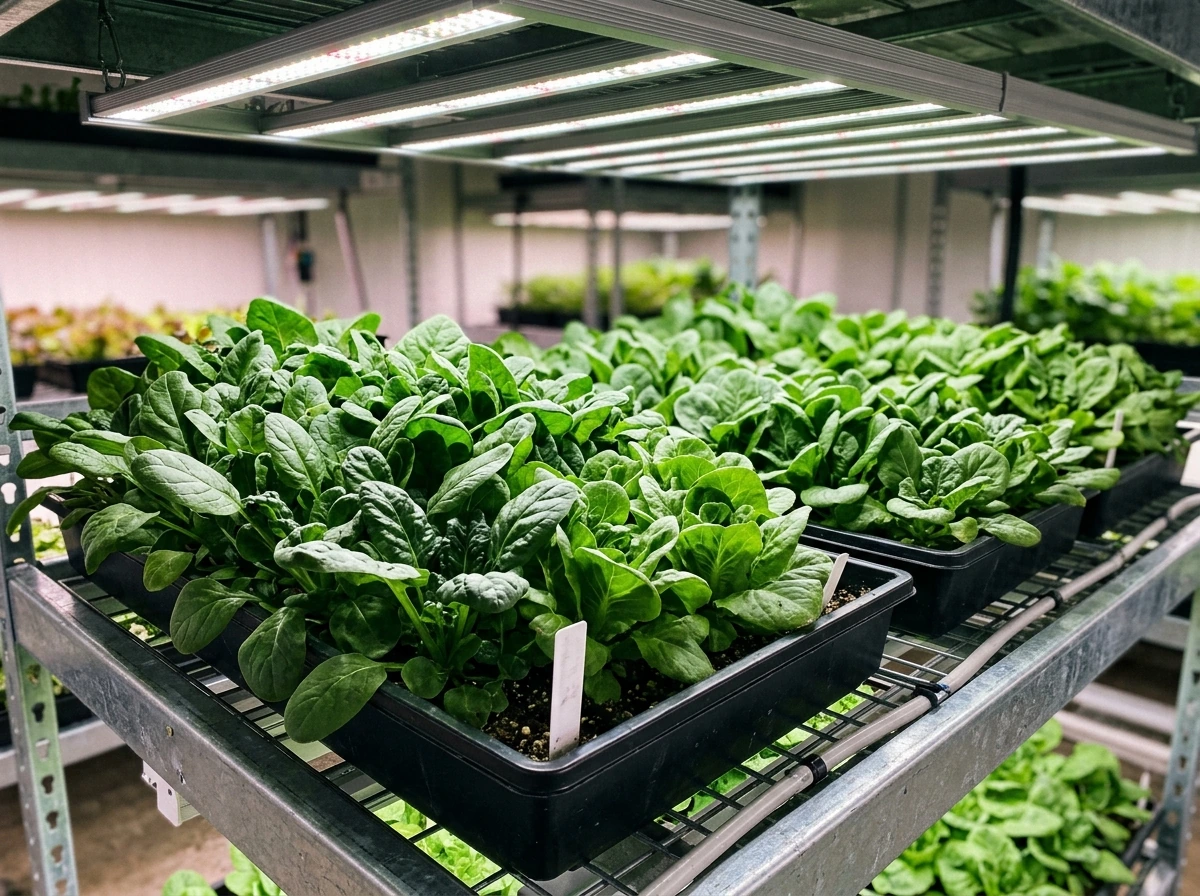
This is when you want the most light hours. New seedlings have small root systems and can't absorb water and nutrients at high rates yet, but they need to build leaf area fast to support future growth. blank" rel="noopener noreferrer">Run lights for 16 to 18 hours per day. If you want a tighter schedule for different conditions, including winter days, check how long to leave grow lights on in winter Run lights for 16 to 18 hours per day.. University of Minnesota Extension specifically calls out this 16 to 18 hour window for indoor seed starting, and from my own experience, seedlings grown at 16 hours are noticeably stockier and more transplant-ready than those grown at 12 to 14 hours.
Vegetative stage (weeks 4 onward, pre-flower)
Once plants are established and putting on leaf mass, 14 to 16 hours per day is the sweet spot. You can drop leafy greens to 12 to 14 hours if they're mostly grown and you're harvesting regularly. For fruiting crops like tomatoes and peppers that are still sizing up before flowering, keep them at 16 hours. This is the stage where strong vegetative growth sets you up for a good harvest later.
Fruiting and flowering stage
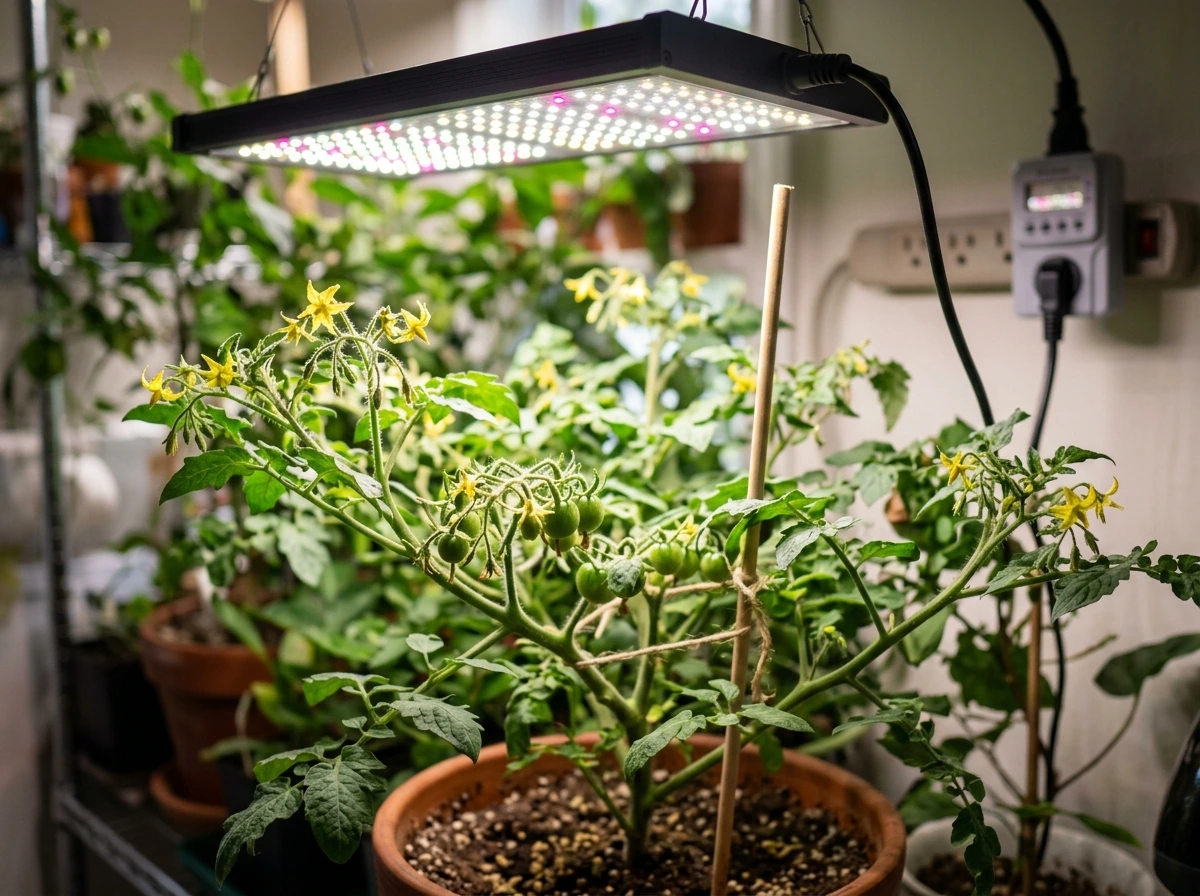
Most fruiting vegetables (tomatoes, peppers, cucumbers, squash) are day-neutral, so they'll flower based on maturity, not day length. Keep them at 14 to 16 hours. The bigger priority at this stage isn't hours, it's making sure the light is bright enough, which I'll cover in the next section. If you're growing short-day crops like some specialty peppers or certain herbs that tend to bolt, you may want to drop to 12 hours, but this is less common in typical home vegetable setups.
Light intensity, distance, and how they change your hours needs
Here's where a lot of beginners get tripped up. "Hours per day" doesn't exist in a vacuum. What your plant actually receives is a combination of light intensity and duration, and that total is called the Daily Light Integral, or DLI. University of New Hampshire Extension frames it this way: if your fixture is weaker or positioned farther away, you need more hours to hit the same effective daily light dose. If your light is very bright and positioned close, you might only need 14 hours to deliver what a dimmer setup delivers in 18.
The practical upshot: moving your light 6 inches closer to your canopy can have as much effect as adding 2 to 3 extra hours of runtime. Conversely, if your light is 24 inches away from your vegetable seedlings when it should be 6 to 12 inches away, running it for 18 hours still won't make up the difference. UNH Extension even provides a worksheet approach for calculating the required run time based on your specific fixture's output, which is worth doing if you're running a serious setup.
As a practical rule of thumb based on bulb type and intensity:
| Fixture Type | Typical Distance from Canopy | Suggested Daily Hours |
|---|---|---|
| Basic LED shop light (low output) | 4–6 inches | 16–18 hours |
| Mid-range LED grow light (moderate output) | 8–14 inches | 14–16 hours |
| High-output LED grow light (commercial-style) | 18–24 inches | 12–16 hours |
| T5 fluorescent (standard 4-tube) | 4–8 inches | 16–18 hours |
| T8 fluorescent (standard) | 2–4 inches | 16–18 hours |
If you're not sure how bright your light is, start at 16 hours and watch the plants. Their response over 7 to 14 days will tell you whether to adjust up or down, which brings me to the next section.
Signs your vegetables need more or less light
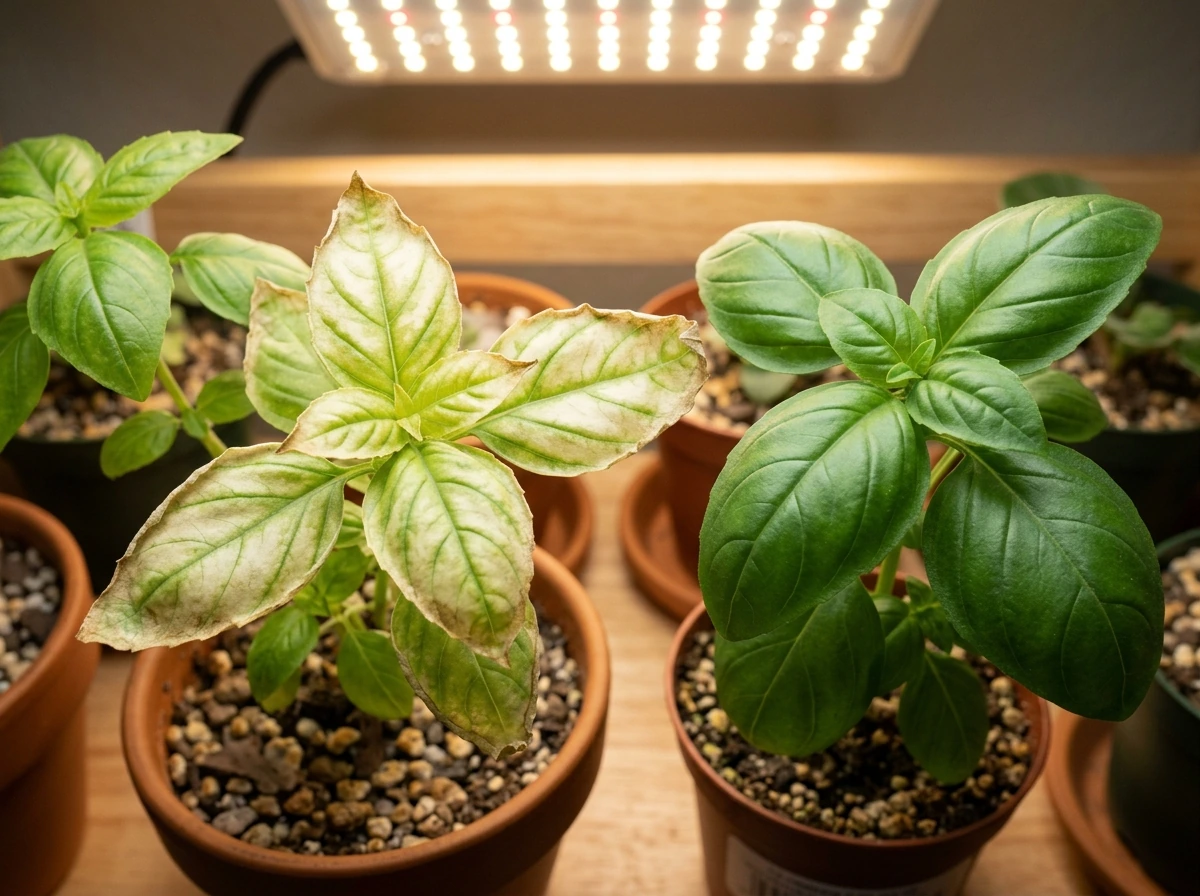
Plants are pretty good at communicating what they need, once you know what to look for. I've learned most of these signs the hard way from seedlings that stretched so tall they flopped over or tomato transplants that sat stunned for weeks after going into the garden.
Signs of too little light (increase hours or move the light closer)
- Leggy, stretched stems: the most classic sign. Seedlings reaching toward the light with long, thin stems and wide spacing between leaf nodes
- Pale or yellowing leaves, especially on new growth
- Slow overall growth that doesn't match expected timelines
- Leaves that are smaller than normal for the variety
- Delayed or absent flowering on fruiting crops
- Poor fruit set even when flowers appear
Signs of too much light (reduce hours or raise the fixture)
- Leaf edges curling upward or downward (light stress curl)
- Bleached or whitish patches on leaves directly under the light (photo-bleaching)
- Leaves that look dry or papery even when watering is consistent
- Stunted growth despite apparently good conditions (rare but happens with very high-intensity fixtures at close range)
- Crispy leaf tips, especially on leafy greens
When you see too-little-light symptoms, try adding 1 to 2 hours to your timer or dropping the light 2 to 4 inches closer before making both changes at once. Isolate one variable so you know what actually fixed it. For too-much-light symptoms, first raise the fixture before reducing hours, since distance is usually the bigger culprit than duration.
Adjusting for seasons, window light, and photoperiod experiments
If your grow space gets any natural light from a window, that counts toward your plant's daily total. A south-facing window in summer might be delivering 4 to 6 hours of usable light even if it's indirect. In that case, you can run your grow lights for fewer hours to make up the difference rather than layering on top of what the sun is already providing. A basic approach: if your window is delivering meaningful light (plants are leaning toward it, you can read a book comfortably by it), subtract 2 to 4 hours from your grow light timer.
In winter, the opposite applies. Days are short, window light is weak and low-angle, and most homes get almost no usable natural light for vegetables between November and February. This is when full-spectrum grow lights are doing all the heavy lifting, and running 16 to 18 hours is the right call. If you're growing in a basement or interior room with no windows at all, seasonality doesn't affect your setup much since the grow light is the only source anyway. For more detail on winter-specific timing considerations, the topic of how long to leave grow lights on in winter is worth a closer look.
One thing worth knowing: some gardeners experiment with photoperiod manipulation to accelerate growth or delay bolting. For most common vegetables, this isn't necessary, but if you're growing spinach (which bolts under long days) or trying to time a crop precisely, you can use shorter 10 to 12 hour days to slow the clock. This is a more advanced technique and not something you need to worry about when you're starting out.
Common mistakes and safe grow-light usage
Most grow-light problems come from a handful of very fixable mistakes. Here are the ones I see most often, and what to do about them:
- Running lights 24/7: this seems logical but hurts plants. Always give vegetables 6 to 8 hours of darkness. Set a timer the day you set up your light, not later.
- Hanging the light too high: the single biggest cause of leggy, weak seedlings. Most home grow lights need to be 4 to 14 inches from the canopy depending on output. Check your fixture's specs and start closer than you think you need to.
- Not adjusting as plants grow: seedlings start small, but as they grow toward the light, the distance changes. Check your canopy-to-light distance every few days during fast growth phases and raise the fixture as needed.
- Forgetting about heat: some older-style HID bulbs generate significant heat and can burn plants if positioned close. Most modern LEDs run much cooler, but always do a hand-check: hold your hand at canopy height for 30 seconds. If it's uncomfortably warm, the light is too close or too hot for that position.
- Assuming more expensive equals more hours: a high-output fixture at the right distance may need fewer hours than a cheap shop light. Invest in matching your light to your space rather than defaulting to maximum run time.
- Ignoring the timer after setup: seasons change, plants grow, and your setup needs occasional re-evaluation. Check your timer settings and fixture position at least once a month.
- Worrying unnecessarily about safety: modern LED grow lights are safe household appliances. They won't give you a tan, won't cause cancer, and only pose eye discomfort risk at very close range if you stare directly into the light. Treat them like any other bright light source: don't look directly at them for extended periods, and you're fine.
The bottom line is that grow lights are much simpler to use correctly than most beginners expect. Set your timer for 16 hours, get your light close enough to the canopy, give your plants 8 hours of dark, and then observe for two weeks. That one practice of watching your plants and adjusting based on what you see will teach you more than any chart, and it will get your vegetables growing strong under lights faster than any other approach.
FAQ
Can I leave grow lights on longer than 18 hours for vegetables if they seem to need more?
You usually should not. Even if plants look hungry, pushing past the typical range commonly reduces performance over time because the dark period is when plants recover and process nutrients. Instead, increase intensity (move the light closer within safe distance) or add a smaller bump like 1 hour, then reassess after 7 to 14 days.
Do all vegetables need the same light hours, or should I use different schedules in the same setup?
Different schedules are often unnecessary for common home vegetables because most are day-neutral, but fruiting crops and leafy greens can still differ. A practical approach is to keep most plants at 14 to 16 hours once established, then harvest leafy greens regularly and run them at the lower end if they are not growing new leaves fast.
How much darkness do vegetables actually need, and can I split it up during the night?
Aim for 6 to 8 uninterrupted hours of darkness. Splitting the dark period with on-off cycles often disrupts plant metabolism more than people expect. Use a single plug-in timer block rather than multiple short intervals.
Is it better to run fewer hours or use stronger lights for the same results?
It depends on your constraints, but generally stronger light lets you keep a shorter photoperiod while meeting the plants’ daily light needs. If you are forced to run lights longer, do so cautiously and confirm you are not also increasing heat. The best decision aid is to adjust based on plant response and, if available, your light’s measured output.
How close should grow lights be to seedlings, and how does distance change my required runtime?
Distance changes how much usable light reaches the canopy, so farther lights usually require longer runtimes, but they never fully compensate if the distance is too large. Use canopy height as your reference point and adjust gradually, for example moving the fixture closer by a few inches before adding hours.
What should I do if my plants are stretching, even though my timer is set correctly?
Stretching usually means the plants are not receiving enough intensity, not that they need more hours immediately. Raise intensity first by moving the light 2 to 4 inches closer and keep hours the same for a week, then only adjust runtime by about 1 to 2 hours if growth still lags.
What if my plants look bleached, scorched, or develop dark tips, even though I started in the right hours range?
That pattern often points to too much intensity or heat at the canopy. Start by increasing distance or raising the fixture, and only then consider reducing hours slightly. Make one change at a time so you know whether the light or duration was the culprit.
Do natural window light hours count toward the grow light schedule?
Yes, if the light is actually strong enough that plants respond to it. If window light is meaningful (for example, plants lean toward it, or it would be bright enough to work nearby), subtract a few hours from the grow lights rather than stacking full photoperiod on top of sunshine.
In winter, should I automatically increase grow light hours?
Not automatically, but in many homes you should because window light is weaker and days are shorter. If your room has little to no usable natural light, keep the typical full setup range (often 16 to 18 hours for seedlings) so your plants rely on consistent artificial light rather than fluctuating daylight.
How fast should I expect results after changing grow light timing?
Expect visible changes in 7 to 14 days, not overnight. If the issue is light intensity, you can sometimes see direction changes sooner, but growth rate and leaf posture usually take about a week to make the problem clear. Recheck your timer and fixture position before changing both variables again.
Are there times when I should intentionally use shorter photoperiods, like for bolting control?
Yes, but only for specific situations. Some crops can bolt under longer days, and for timing sensitive cases you may use shorter 10 to 12 hour days. For most typical home vegetable starts, stick to the standard schedule and only experiment if you repeatedly see bolting or have a precise harvest target.
What is the simplest setup if I want a reliable schedule without calculating DLI?
Start with 16 hours on for most vegetables, set a timer for 8 hours off, and place the light close enough to avoid stretching while not overheating the canopy. Then observe for two weeks and adjust in small steps (about 1 hour runtime or 2 to 4 inches distance) one at a time.
Next Articles
How Long Should Grow Lights Be On Each Day? (Guide)
Daily grow light timing for seedlings, veg, and flowering, plus rules to adjust for distance and intensity.
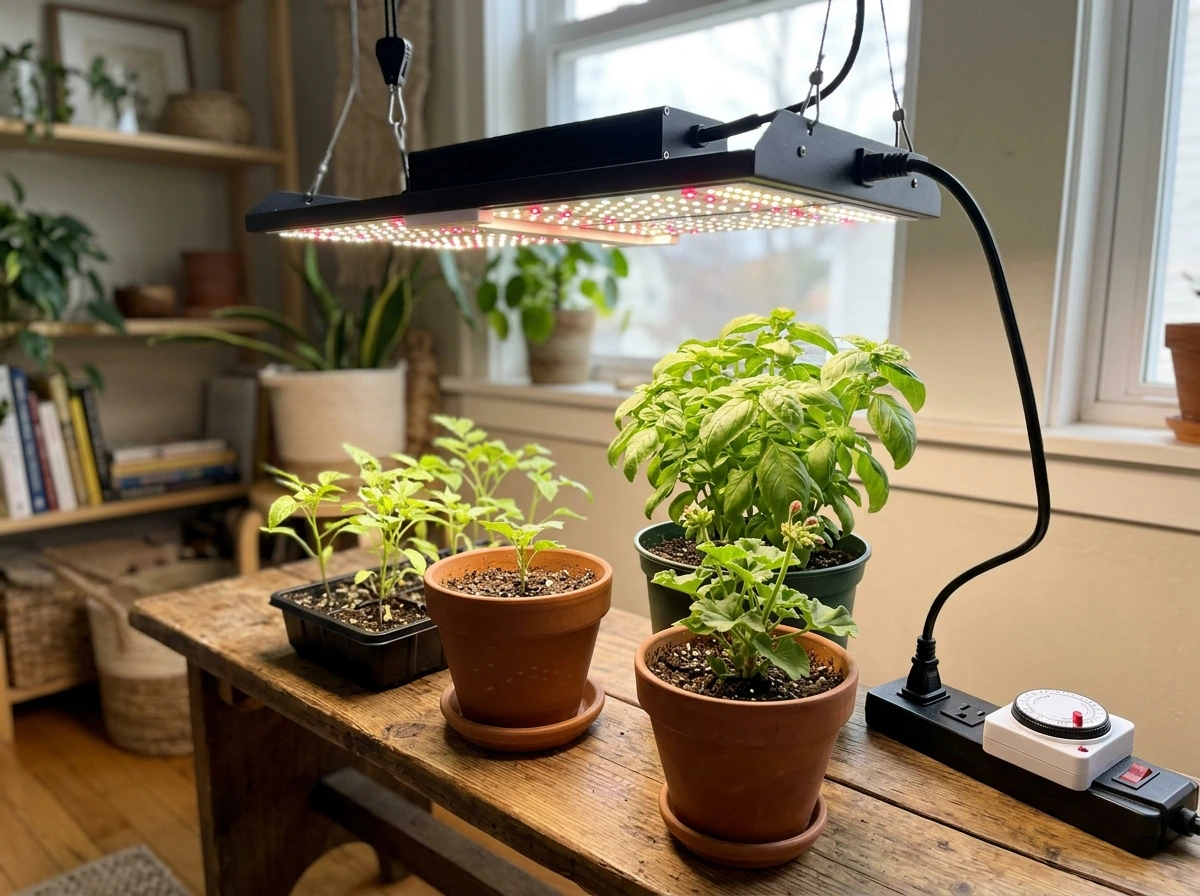
How Long to Keep Grow Lights On Indoor Plants
Daily grow light hours for indoor plants, how to set timers, adjust intensity by distance, and spot under or overlightin
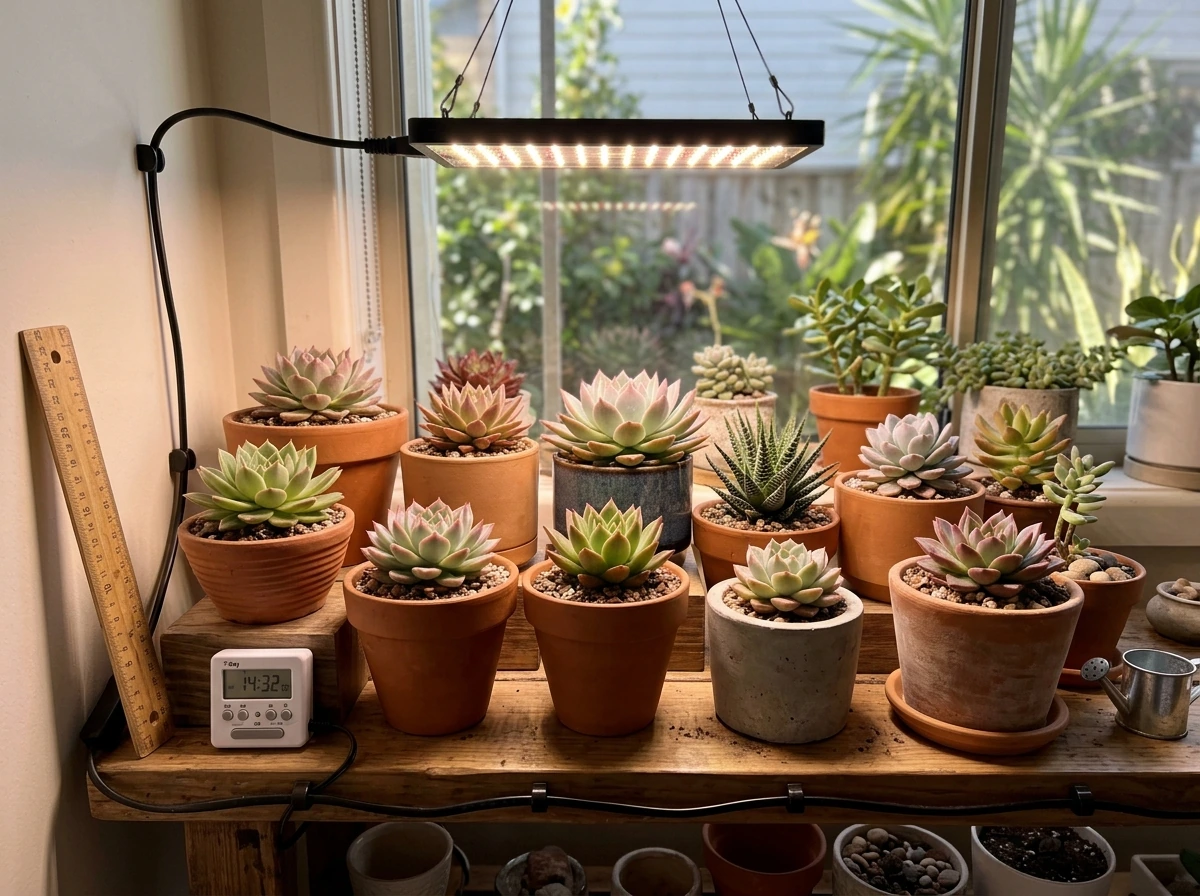
How Long to Leave Grow Lights On Succulents Daily
Get daily grow light hours for succulents, how to set timers, adjust for distance and strength, and avoid scorch.