Here's the short answer: run your grow lights for 12 to 16 hours per day for most indoor plants. If the grow light is your plant's only light source, lean toward the higher end of that range. If it's just supplementing a window, 12 to 14 hours is usually plenty. That single rule of thumb will get most people 90% of the way there, but the details matter once you factor in your plant's growth stage, how far the light hangs above the canopy, and what kind of fixture you're using. Let's work through all of that.
How Long Should Grow Lights Be On Each Day? (Guide)
Marcus Holloway
24 Mar 2026
Supplemental light vs. main light: the first thing to figure out
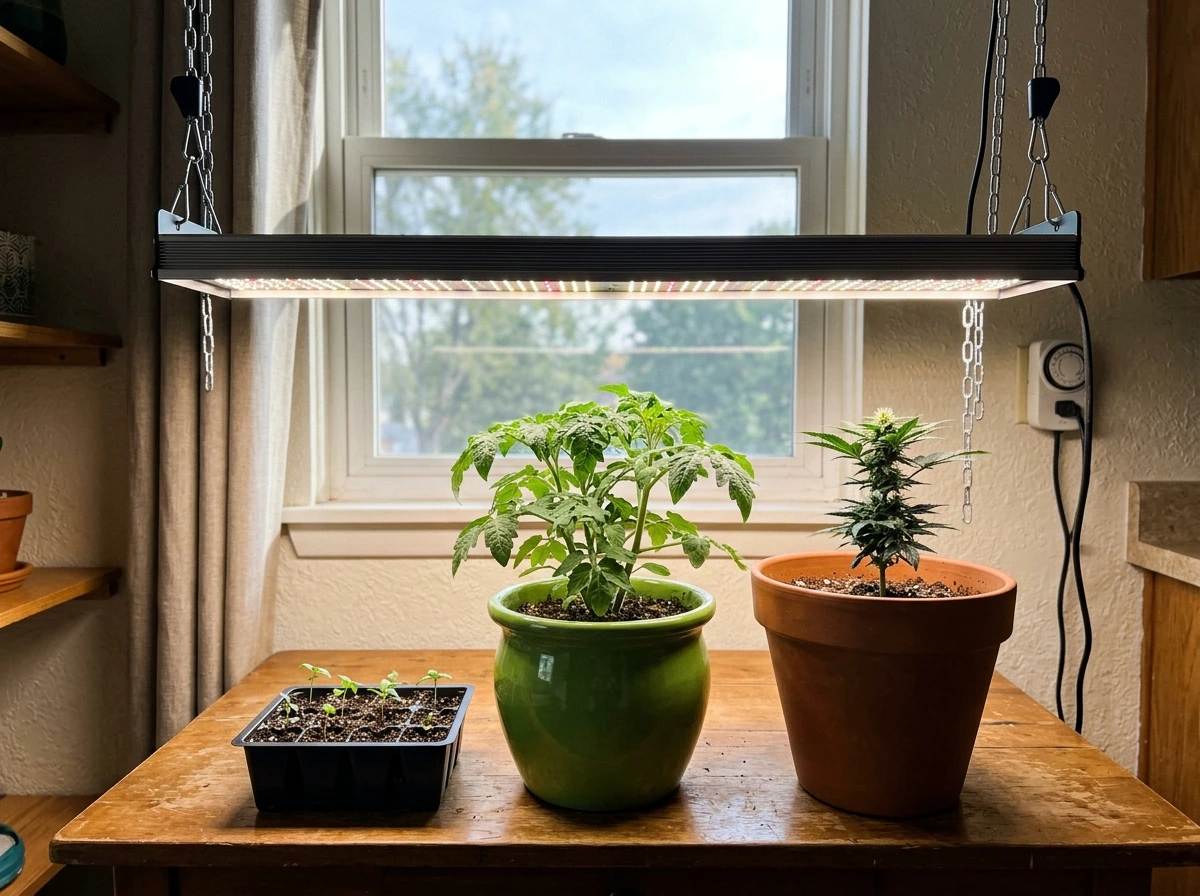
Before you set a timer, ask yourself one question: is this grow light the only light your plant gets, or does it also sit near a window? The answer changes everything about how many hours you need to run.
When your grow light is the sole light source, it has to deliver the plant's entire daily light budget on its own. Iowa State University Extension recommends 12 to 14 hours per day as a general default for supplemental indoor lighting, and that tracks with what I've seen work in practice for windowsill plants getting a boost. But UMaine Extension pushes the recommendation to 16 to 18 hours per day for plants relying entirely on artificial light, and that higher range is often necessary when you have a weaker fixture or a plant with higher light needs.
Think of it this way: a plant by a south-facing window might be getting 4 to 6 hours of real sunlight. A grow light running 12 hours on top of that gives it a solid combined day. A plant in a basement with zero natural light running a grow light for only 12 hours might be severely underlit if the fixture isn't powerful enough. So matching your hour count to your setup, not just a single number, is what actually matters.
| Light Role | Recommended Daily Hours | Typical Use Case |
|---|---|---|
| Supplemental (plant has window light) | 12–14 hours/day | Windowsill herbs, houseplants near a window |
| Primary (only light source) | 14–18 hours/day | Basement seedlings, no natural light available |
| Short-day flowering crops | 8–12 hours/day | Plants needing a long dark period to bloom |
Timing by growth stage: seedlings, vegetative, and flowering
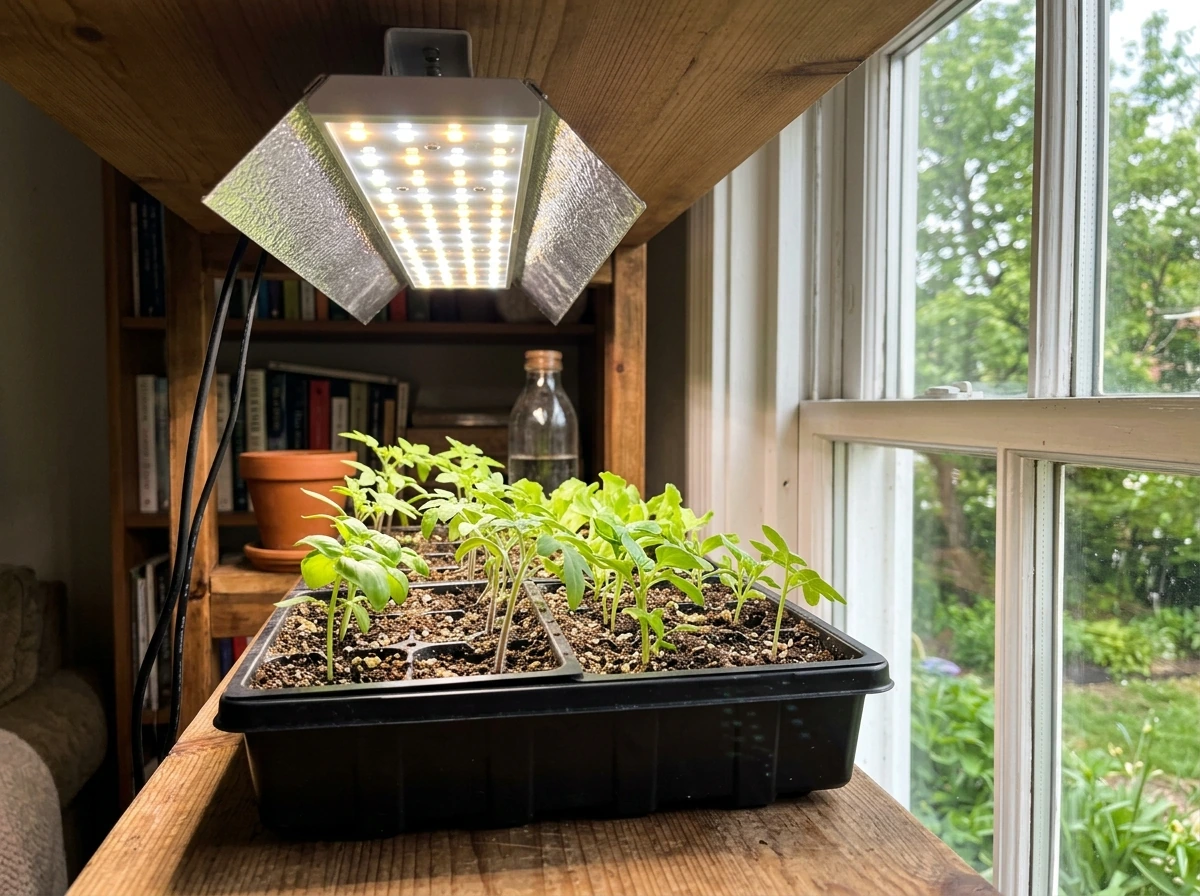
Growth stage is probably the biggest variable most beginners ignore. A seedling, a plant pushing out leaves, and a tomato trying to set fruit all have different light needs, and running the same schedule for all three is a common mistake.
Seedlings
Seedlings need a lot of light hours because they're small and their light-catching surface area is limited. NC State Extension also notes that newly germinated seed needs roughly 12, 16 hours of light, which aligns with starting seedlings on a daily light schedule in that range [seedlings need a lot of light hours](https://extensiongardener. ces. ncsu.
edu/gardening-publications-2/extgardener-previous-newsletters/extgardener-starting-vegetables-from-seeds/). University of Maryland Extension recommends 14 to 16 hours per day for seedlings, and [NC State Cooperative Extension puts the range at 12 to 16 hours per day for seed starting. ](https://chatham. ces.
ncsu. edu/vegetable-seed-starting-faqs/) I'd go with 14 to 16 hours as your target for most vegetable and flower seedlings. This is also the stage where the grow light is almost always the primary source, since you're usually starting seeds weeks before outdoor conditions allow.
Vegetative growth
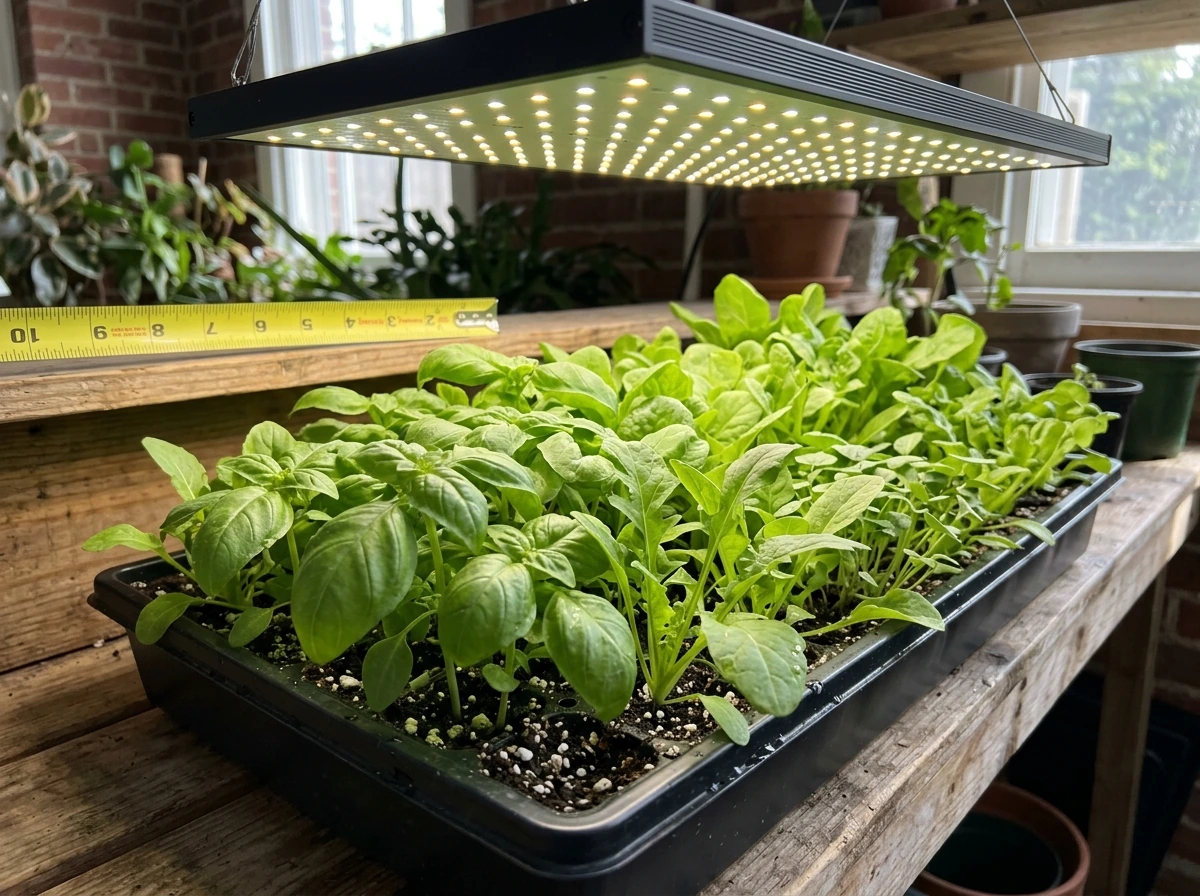
Once plants are established and pushing out true leaves and stems, the 14 to 16 hour range still works well. Many plants in active vegetative growth are day-length neutral, meaning they don't care whether the day is 12 hours or 16 hours as long as they're getting enough total light. For foliage houseplants in vegetative mode, UMN Extension recommends 12 to 14 hours per day, which is a comfortable, energy-efficient target for plants that aren't trying to flower.
Flowering and fruiting
This is where photoperiod gets interesting and also where most people run into trouble. Plants fall into three categories: long-day plants that flower when days are at least 14 to 15 hours, short-day plants that flower when days drop below a certain threshold (often 12 hours or less), and day-neutral plants that flower based on maturity rather than light duration. If you're growing tomatoes, peppers, or herbs like basil, you're mostly dealing with day-neutral crops and can keep running 14 to 16 hours. But if you're growing chrysanthemums or poinsettias, those need a long, uninterrupted dark period, and running your lights too long will prevent them from blooming entirely.
How light intensity and distance change the math
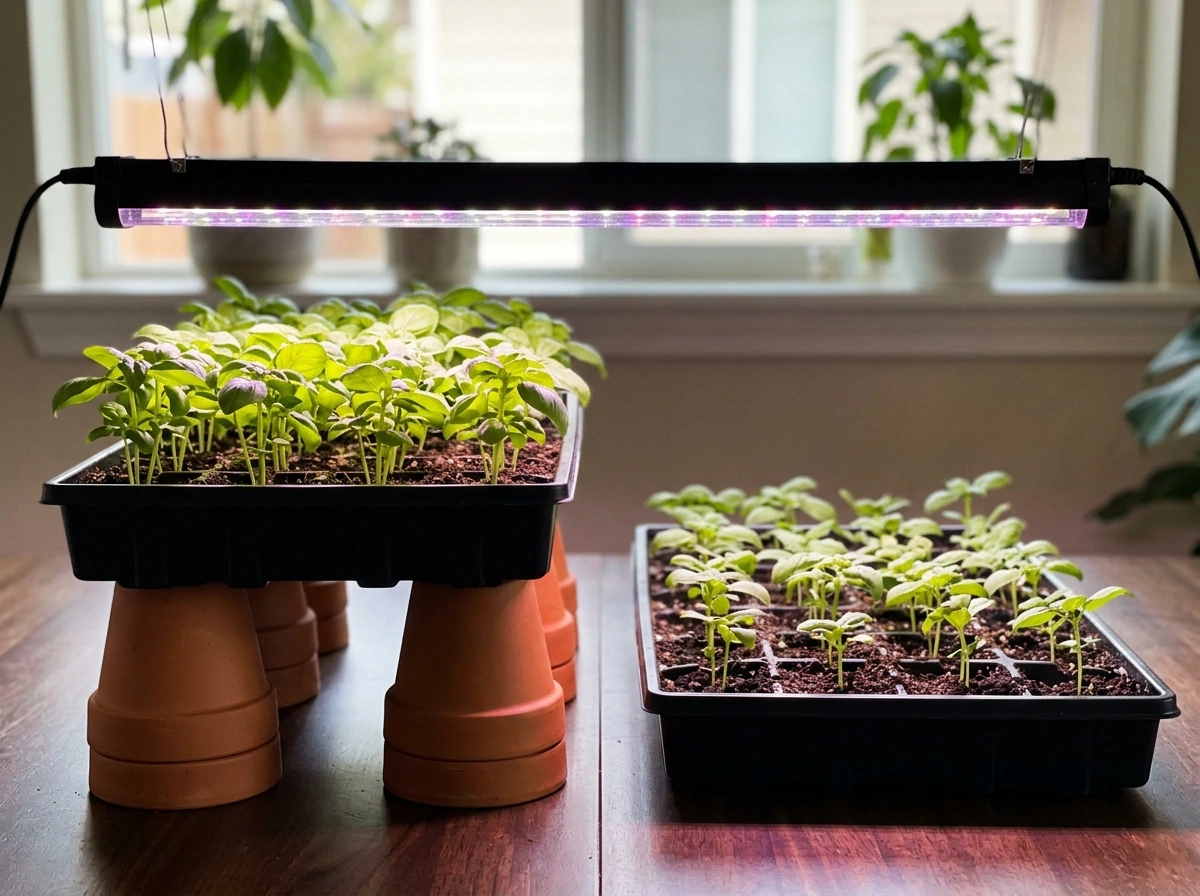
Here's something that surprises a lot of people: the number of hours you need to run your grow light is directly tied to how far away it hangs from the plant. This isn't a minor adjustment. UNH Extension's research on seedling lighting is really clear on this: the same LED fixture may only need 8 hours per day when mounted 8 inches above the canopy, but that same fixture mounted at 20 inches may need 16 hours per day to deliver the same total amount of light to the plant. That's double the runtime just from moving the light up a foot.
The underlying concept is called Daily Light Integral, or DLI. It's basically the total amount of usable light a plant receives over the course of a day, combining intensity (measured in PPFD, the number of light particles hitting the plant per second) with duration. You can hit the same DLI target with a bright light for fewer hours, or a dimmer or more distant light for more hours. Virginia Cooperative Extension notes that PPFD drops with distance, so a fixture that delivers plenty of light at 6 inches might be essentially useless at 24 inches.
Practically, this means: if your plants look like they're not getting enough light and you can't move the fixture closer, add an hour or two to your timer. If you move the light closer, shorten the schedule slightly to avoid overdoing it. And if you're using older T8 fluorescent shop lights, UNH Extension notes those can require up to 22 hours per day to hit ideal DLI targets for sun-loving plants, which is why LED upgrades usually make more sense.
Practical hour ranges by plant group
Not every plant wants the same schedule. Here's what the research supports as practical starting points for common indoor plant categories. You can dial these in further based on how your specific plants respond.
| Plant Group | Recommended Daily Hours | Notes |
|---|---|---|
| Vegetable seedlings | 14–16 hours/day | Grow light is primary source; higher end for weaker fixtures |
| Herbs (basil, parsley, mint) | 12–14 hours/day | Day-neutral; 14 hrs if no window light |
| Foliage houseplants | 12–14 hours/day | Low to medium light needs; UMN and Iowa State defaults |
| Fruiting vegetables (tomatoes, peppers) | 14–16 hours/day | Day-neutral; need high total DLI to fruit well |
| Succulents and cacti | 12–14 hours/day | Desert plants; don't necessarily need longer days |
| Short-day flowering plants | 8–12 hours/day | Must have 12+ hours of uninterrupted darkness to bloom |
| Long-day flowering plants | 14–16 hours/day | Need at least 14 hrs to trigger flowering response |
| Lettuce and leafy greens | 12–14 hours/day | UMN recommends 12–14 hrs for hydroponic lettuce too |
If you're growing succulents or cacti specifically, the question of how long to leave grow lights on is a common one since those plants are often kept in low-light homes. The 12 to 14 hour range works well as a starting point, and you generally don't need to push higher. For winter growing, the adjustment is usually to add a couple of hours to compensate for shorter natural days rather than change your approach entirely. For winter, that generally means you adjust your grow light hours to compensate for shorter daylight. how long to leave grow lights on in winter
Mistakes that mess up your plants' light schedule
Leaving lights on 24/7
Plants need darkness. This isn't optional. Even day-neutral plants that don't use photoperiod to trigger flowering still benefit from a true dark period for normal metabolic processes. Running your lights around the clock doesn't give plants more energy, it disrupts them. Get a simple outlet timer and set a consistent on/off cycle every day. This is one of those things that takes five minutes to set up and pays off for the entire growing season.
Interrupting the dark period
For short-day plants like poinsettias and chrysanthemums, even a small amount of light during the dark period can prevent flowering. UNH Extension specifically flags this: a poinsettia sitting in a living room can fail to bloom simply because the TV or a lamp is on in the room at night. If you're growing any short-day plants, their dark period needs to be genuinely dark. A dedicated growing space or a dark closet during off hours makes a real difference.
Running lights too few hours
Under-lighting is actually the more common mistake, especially for people who are cautious about electricity or heat. UMaine Extension directly states that insufficient light is one of the main reasons houseplants grow poorly, develop pale foliage, and produce weak, spindly growth. If you're running a grow light for 8 hours and wondering why your seedlings look terrible, the first fix is almost always to add more hours.
Heat and safety
Modern LED grow lights run cool enough that heat usually isn't the danger it used to be with HID or old-school HPS setups. That said, Virginia Cooperative Extension notes that PPFD levels can damage leaves if plants are too close to the light source. The risk isn't usually the hours, it's the combination of being too close and too intense. If you see bleaching or browning on the tops of leaves directly under the light, raise the fixture a few inches before anything else. Longer hours at a safe distance are safer than shorter hours at a damaging distance.
What to do when plants aren't growing well
If your plants are struggling under a grow light, the problem is almost always one of three things: not enough total light, too much light intensity at close range, or a photoperiod mismatch for the plant type, see photoperiod for guidance on keeping lights on the right schedule (how long should grow lights be on for vegetables). Here's how to diagnose which one you're dealing with.
Plants are leggy and stretching toward the light
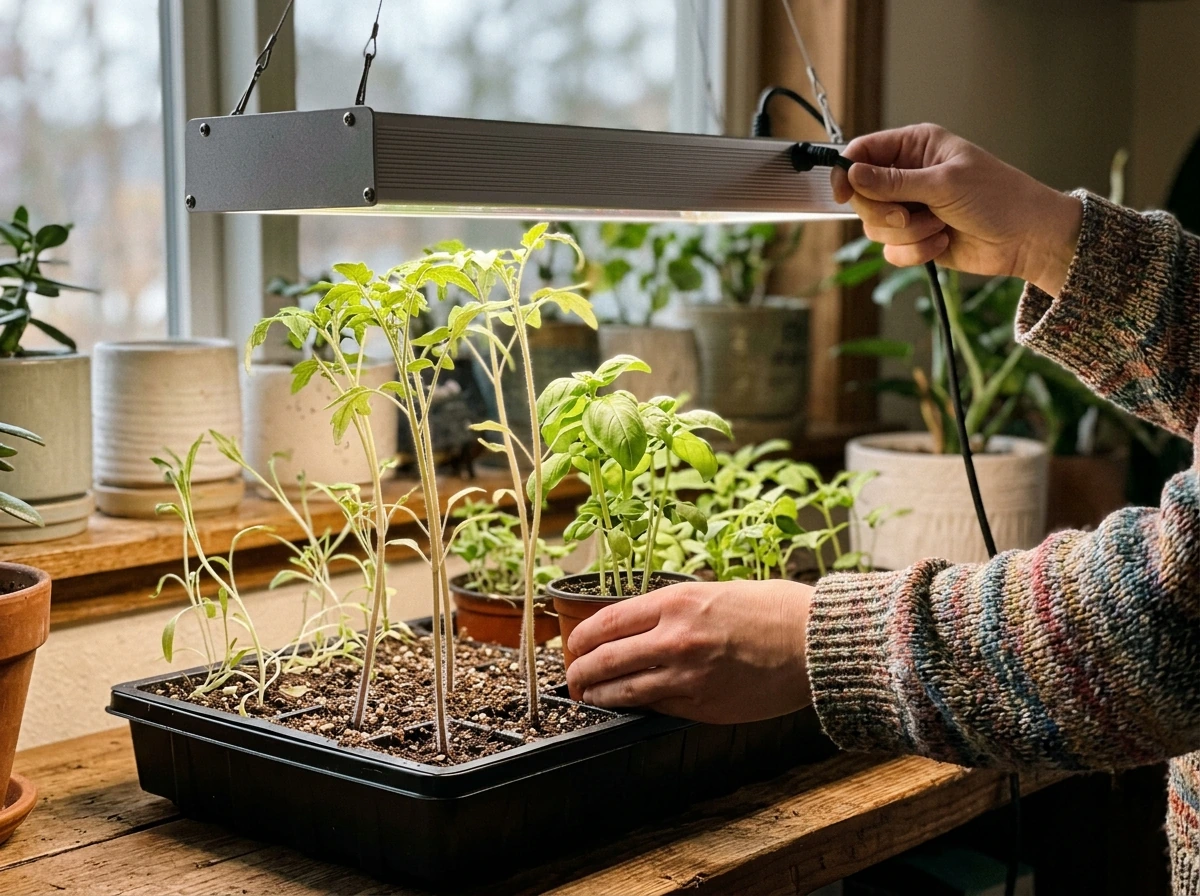
Stretching, also called etiolation, is a clear sign the plant isn't getting enough usable light. The plant is literally reaching for more. Your first fix should be to lower the light fixture to increase intensity at the canopy. If you can't go lower, add 2 hours to your daily photoperiod and reassess after a week. Seedlings are especially prone to this, and leggy seedlings rarely recover fully, so catching it early matters.
Growth is slow and leaves are pale or yellowish
Pale, washed-out foliage with slow new growth typically means the plant isn't hitting its DLI target. Check your fixture distance first. If it's already at a reasonable height (6 to 12 inches for most LED panels, 2 to 4 inches for T5 fluorescents), bump up your timer by 2 hours. If you're already at 16 hours and still seeing this, your fixture may simply be underpowered for the space, and upgrading the light source will do more than adding hours.
Plants aren't flowering when they should
If a plant that should be blooming isn't, photoperiod is the first suspect. Check whether the plant is a long-day or short-day type. Long-day plants (like many summer annuals) need at least 14 hours of light. Short-day plants need a consistent dark period of 12 or more hours. Adjust your timer accordingly and make sure no ambient light is sneaking in during the dark period. MSU Extension notes that artificial long days created by running lights 12 to 18 hours can advance or delay flowering depending on the crop, so getting the hours right for the specific plant type is what actually solves the problem.
Leaves are bleaching or burning at the tips
This is the opposite problem: too much intensity, usually from the fixture being too close. Raise the light first. You don't need to reduce your photoperiod hours; the issue is the PPFD level at the leaf surface, not the total daily duration. After raising the fixture, monitor for a week. If the damage stops spreading, you've found the right distance. If growth slows down after moving the light higher, add an hour or two to your timer to compensate for the reduced intensity.
The simplest setup that works
If I had to give someone starting from zero just one practical setup to follow, it would be this: LED fixture, 14 hours on per day, consistent daily cycle using an outlet timer, fixture positioned 6 to 12 inches above the canopy. That covers most houseplants, most seedlings, and most herbs without any complicated adjustments. From there, you tune up or down based on what your plants actually show you. Signs of stretching mean more light, either closer or longer. Signs of bleaching mean back off on intensity. No flowering when expected means check the plant type and adjust the photoperiod accordingly.
Grow lights really aren't complicated once you understand that hours and intensity work together. You're just trying to give your plant a consistent, appropriate daily light budget. Set your timer, check your distance, and let the plants tell you what needs adjusting.
FAQ
Should I leave grow lights on 12 to 16 hours every day, or adjust on weekends and days I forget?
Use a consistent daily cycle, since plants respond to the total daily light and to uninterrupted dark periods (especially for short-day bloomers). If you miss a day, do not “make up” by doubling the hours the next day. Instead, resume the normal schedule, and check signs like stretching (add light) or bleaching (raise the fixture/adjust intensity).
Do I need to turn grow lights off completely at night, even for day-neutral plants?
Yes. A true dark period helps plants run normal metabolic processes. Keep lights on an outlet timer for a predictable on/off window. For short-day plants, any light leak during the dark period (even room lamps or TV glow) can prevent flowering, so block ambient light or move plants to a dark space at night.
How can I tell if my problem is not enough light hours versus the light being too far away?
Check for “stretching,” which usually points to insufficient usable intensity at the leaf (often caused by distance). If the fixture is already at a reasonable height for your lamp type, add 1 to 2 hours. If the fixture is high above the canopy and cannot be lowered, increasing runtime is often the next lever because PPFD drops with distance.
What grow light height should I use, and how do I change the timer if I adjust the height?
Start with the common practical range in the article (roughly 6 to 12 inches above the canopy for most LED panels). If you lower the fixture, shorten the timer slightly to avoid over-intensity (watch for leaf bleaching). If you raise it, extend the timer to compensate, reassessing after about a week.
Is it better to run fewer hours at higher intensity, or more hours at lower intensity?
Either can work if the plant is reaching its daily light integral. However, intensity at the leaf matters for safety and quality, so do not use close distance to “cheat” the hours. If you can’t measure PPFD, use plant feedback: pale, slow growth suggests you need more total DLI, while bleached or browned tops suggest too much intensity.
Can I use one timer schedule for multiple plants with different light needs?
Usually not perfectly. If you mix seedlings, foliage plants, and flowering plants, one schedule may underlight some and overintensify others. A practical workaround is to group plants by stage (seedlings together, established vegetative plants together) and adjust fixture distance so they receive similar intensity across the canopy.
Do succulents and cacti need the same photoperiod as leafy houseplants?
They typically do better with the baseline lower end (around 12 to 14 hours). If you’re trying to prevent etiolated, weak growth, increase by small increments (like 1 to 2 hours) only if stretching appears. In winter, most adjustments should come from adding time gradually rather than switching to very long photoperiods.
Why are my seedlings leggy even though I’m running the lights for 14 hours?
Legginess usually means the seedlings are not getting enough usable light at their canopy level, which can happen if the light is too far away or the fixture is underpowered. First, verify distance to the canopy, then consider adding 1 to 2 more hours for a week while watching for any signs of excessive intensity.
What if my plants look pale but the leaves aren’t stretched?
Pale, washed-out foliage with slow new growth often indicates a DLI shortfall rather than just a distance problem. Check fixture height first, then increase the timer in small steps (about 2 hours) if the light is already in a reasonable position. If you’re already at longer schedules, it may be an underpowered fixture, in which case upgrading the light is more effective than further increasing hours.
If a plant should be flowering but isn’t, is it always a photoperiod problem?
Photoperiod is the first suspect for plants that require day-length or long dark periods, but confirm the plant type (long-day, short-day, or day-neutral). Also make sure the dark period is truly dark (no ambient light at night). If the photoperiod is correct and it still won’t bloom, the issue can also be maturity stage, temperature, or nutrient balance, so address those after confirming the light schedule.
How do I avoid leaf damage from grow lights if my fixture is accidentally too close?
If you see bleaching, browning, or scorched patches, raise the fixture first rather than reducing the photoperiod immediately. After increasing distance, monitor for about a week. If damage stops spreading but growth slows, you can increase runtime slightly to compensate for the lower intensity.
Next Articles
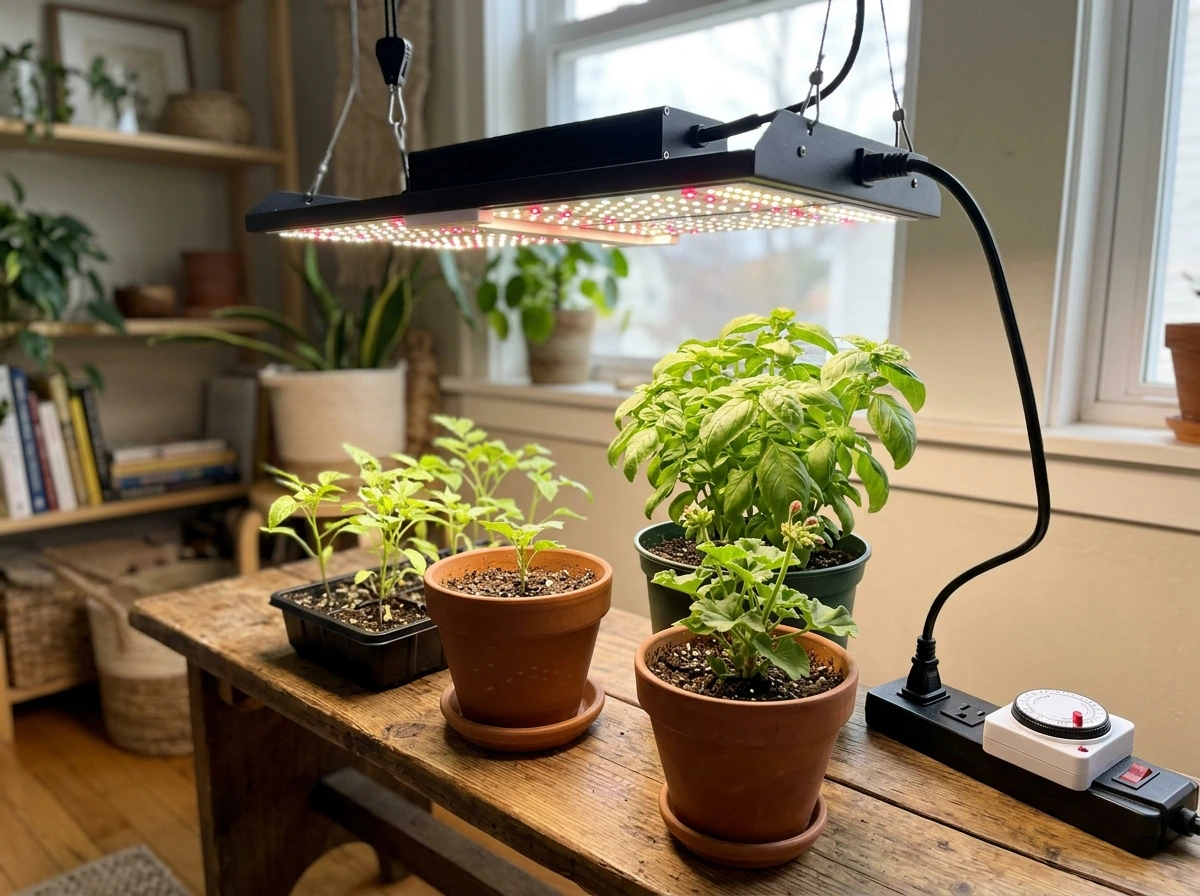
How Long to Keep Grow Lights On Indoor Plants
Daily grow light hours for indoor plants, how to set timers, adjust intensity by distance, and spot under or overlightin
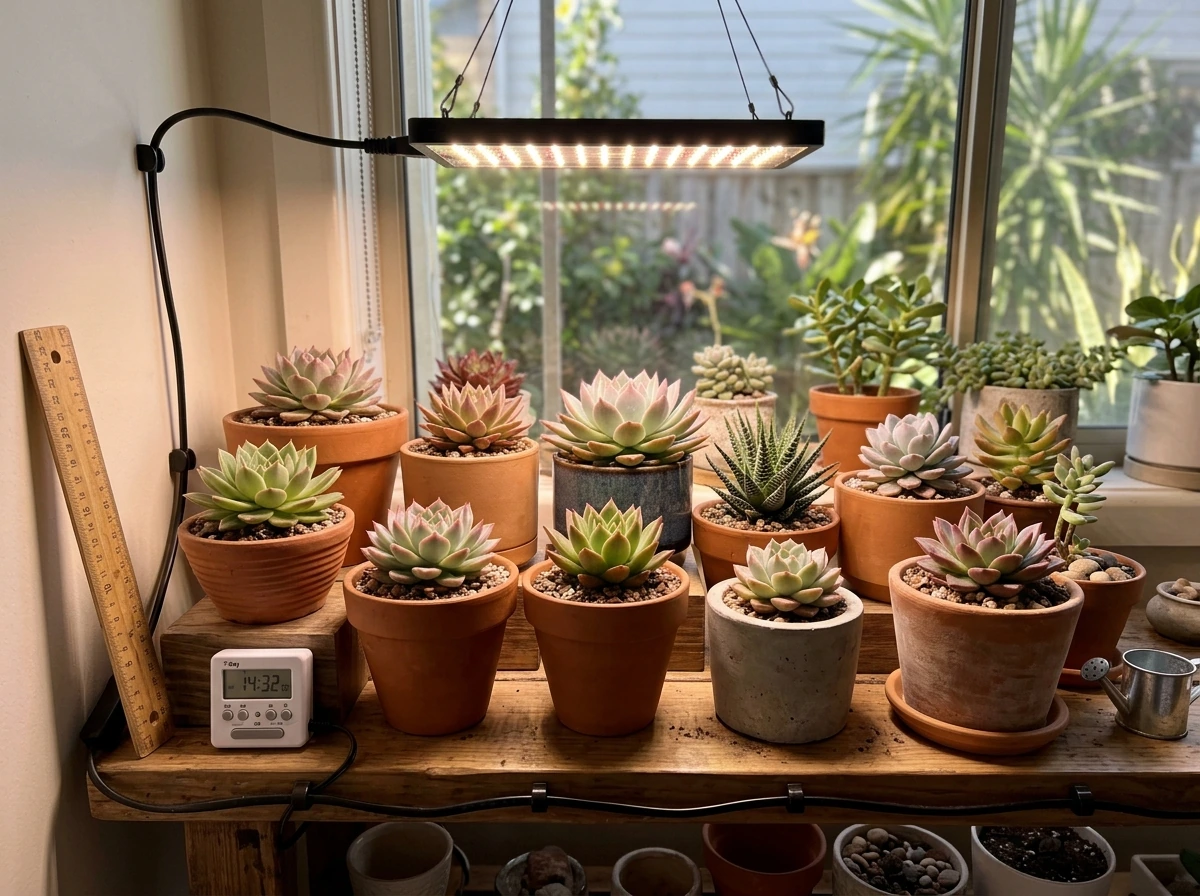
How Long to Leave Grow Lights On Succulents Daily
Get daily grow light hours for succulents, how to set timers, adjust for distance and strength, and avoid scorch.
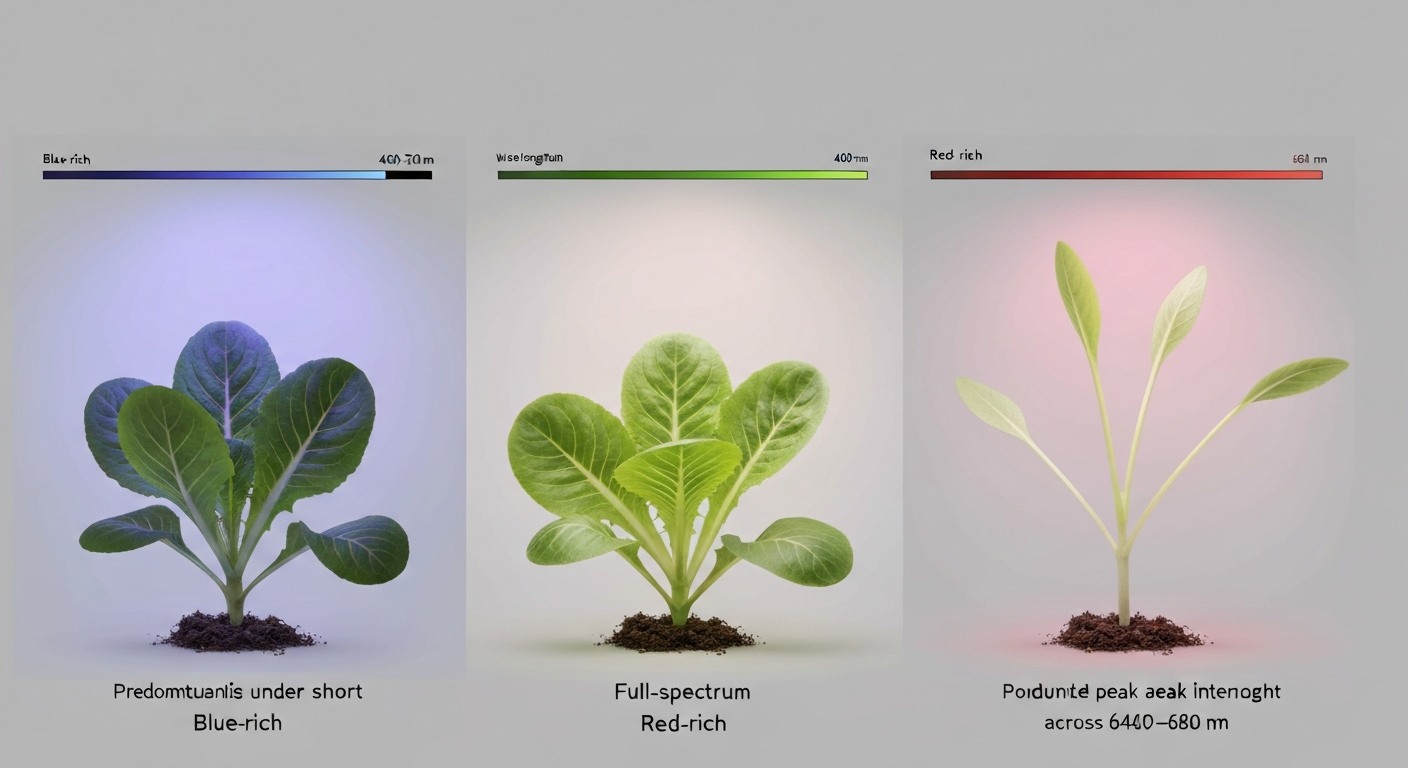
Why Do Plants Grow Best in Blue Light? Science & Practical Guide
Explore why blue light boosts vegetative growth, ideal blue:red ratios, PPFD, photoperiods, fixtures, and setup tips.