You do not need grow lights to germinate most seeds. Seeds sprout using stored energy, and many of them actually prefer complete darkness during that phase. Where grow lights become important, sometimes essential, is after germination, once seedlings emerge and start needing real light to build strong stems and leaves. If you have a bright south-facing window and you're starting a quick crop like lettuce in spring, you might be fine without a light at all. But if you're starting tomatoes or peppers weeks before your last frost, indoors in late winter, a grow light will almost certainly save you from a tray of weak, floppy seedlings.
Do You Need Grow Lights to Start Seeds? A Clear Guide
Marcus Holloway
27 May 2026
When grow lights are (and aren't) actually required
The honest answer is: it depends on what you're growing, when you're growing it, and how much natural light your space gets. For germination alone, the vast majority of common vegetables and flowers sprout just fine in the dark. In fact, some seeds like onions and pansies germinate better with some light, while others like pumpkins and most tomatoes prefer darkness until they pop. Once they've sprouted, the math changes fast. Seedlings need intense, consistent light to develop properly, and a window that feels bright to you might not cut it for a plant trying to photosynthesize and grow roots at the same time.
Here's a simple way to think about it. If you're starting short-season crops (lettuce, herbs, brassicas) close to your last frost date, and you have a genuinely sunny south-facing window, you can reasonably try without lights. If you're starting long-season crops like tomatoes, peppers, or eggplant, which need 6 to 10 weeks indoors before transplant, a grow light is not a luxury. If you are wondering, do you need a grow light for microgreens, the answer depends on how much direct light your setup gets once they sprout a grow light is not a luxury. It's the thing that keeps them from stretching out into pale, useless sticks before you ever get them in the ground.
Germination vs. the seedling stage: light needs are very different
During germination: mostly darkness, with a few exceptions
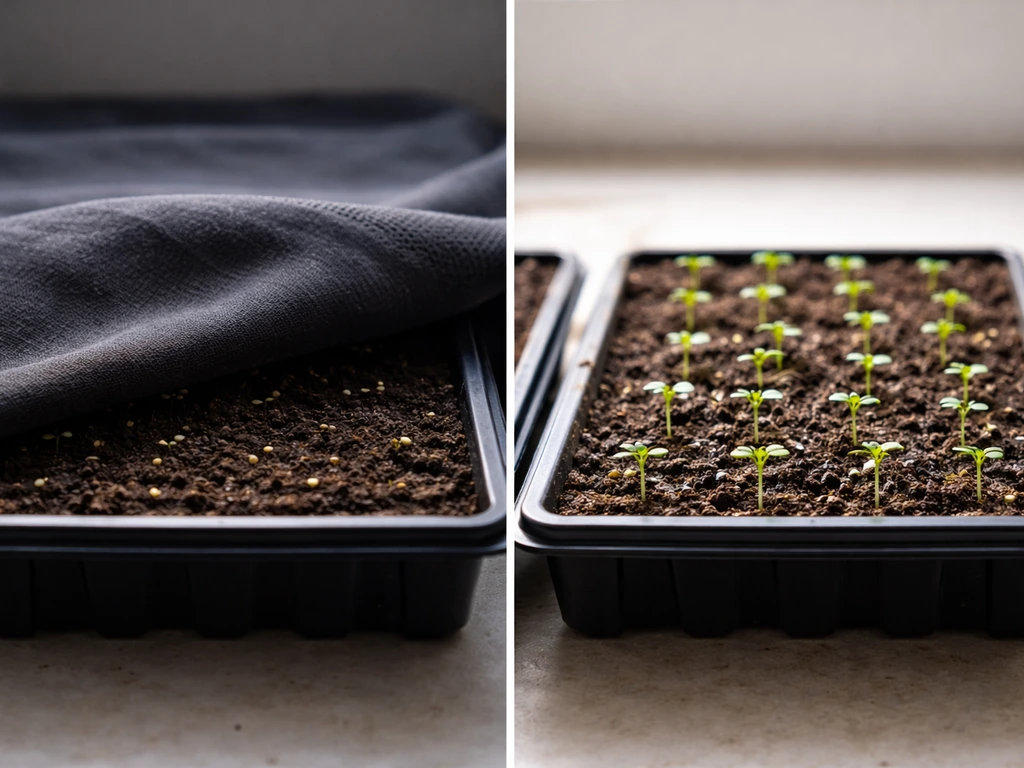
Seeds are essentially self-contained, and they don't photosynthesize during germination. They're running off stored nutrients until the first true leaves appear. Because of this, most seeds germinate best in a warm, moist, dark environment. UMN Extension recommends covering trays with dark plastic bags or several layers of newspaper to block light entirely. The key factors during this phase are temperature and moisture, not light. Many vegetable seeds, like tomatoes, germinate fastest around 80°F. Keep things warm and consistently damp, and you'll see sprouts in days to a couple of weeks depending on the crop.
A few crops are exceptions. Lettuce and petunias, for example, actually need light to trigger germination. For these, you use very little or no soil cover so light can reach the seed, and you can place them under a light or near a bright window from day one. Your seed packet should say if light is needed for germination. If it doesn't mention light, assume darkness is fine.
After sprouting: this is where light becomes critical
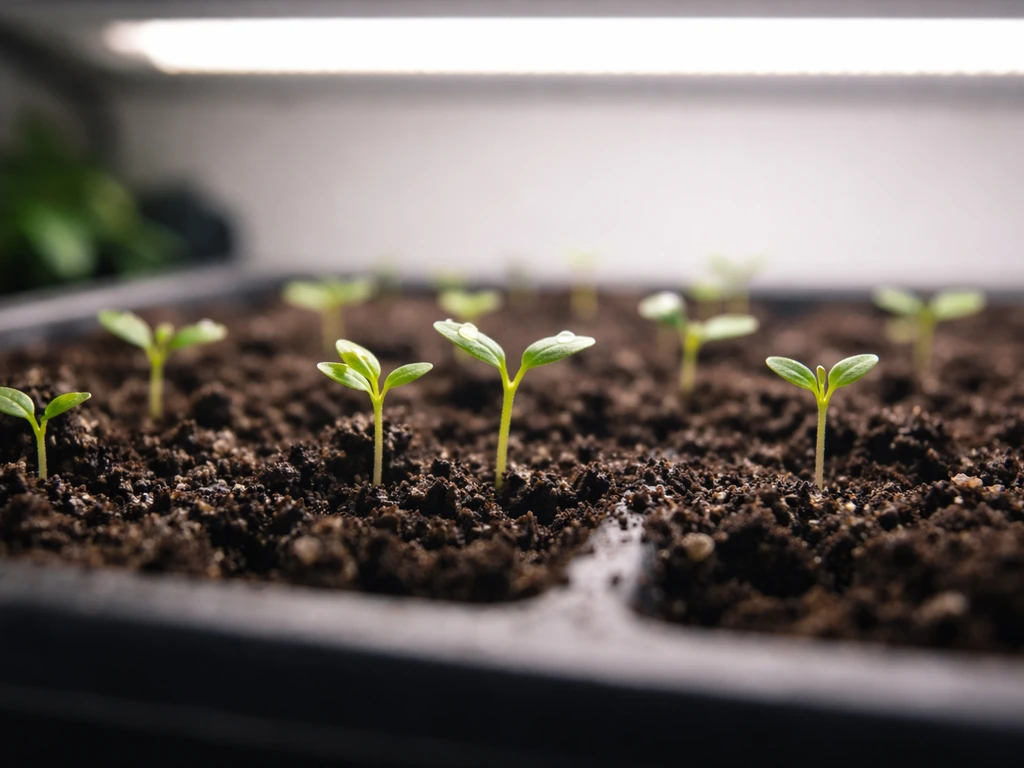
The moment you see seedlings pushing up through the soil, light becomes the most important factor in the room. That same rule applies when growing microgreens, because they need enough strong light to stay compact rather than stretch. A seedling with no grow light and a weak window will start stretching toward any available light source almost immediately. This is called etiolation, and it's what causes the leggy, long-stemmed, pale seedlings that flop over and never recover. The plant is essentially panicking, trying to grow taller to escape what it perceives as deep shade. Once you remove the germination cover and see green, get those seedlings under strong light right away. This is when a grow light, or at minimum a very bright window, earns its place.
Window alternatives that actually work (and their limits)
A south-facing window is your best natural option. UMN Extension notes it can work for small quantities of seedlings, particularly if the window is unobstructed and you're starting seeds in late winter or early spring when day length is increasing. But windows have real limitations. If you end up placing your seedlings in a greenhouse, grow lights can be a useful adjacent option when natural light is limited can you put grow lights in a greenhouse. Glass filters some of the light spectrum. Overcast days can drop usable light dramatically. And the further a seedling sits from the glass, the weaker the light gets. Here's what you can do to maximize a window setup:
- Place trays as close to the glass as possible, right on the sill if you can
- Use a south-facing window, or east/west as a backup (north-facing windows are rarely useful for seedlings)
- Rotate trays a quarter turn every day or two so seedlings don't lean permanently toward the light
- Put reflective material (white foam board, aluminum foil taped to cardboard) on the sides and back of the tray to bounce light back onto the plants
- Time your seed starting so germination happens just as spring light is strengthening, not in the dead of January
- Thin your seedlings so they're not shading each other
Even with all of that, a window setup has a ceiling. Illinois Extension is pretty direct about this: windows often can't deliver enough light duration or intensity for proper seedling development, especially for heat-loving crops. Illinois Extension notes that windows often cannot deliver enough light duration or intensity for proper seedling development windows often can't deliver enough light duration or intensity for proper seedling development. If you're seeing any of the warning signs below, no amount of rotating or foil will fix an underlit window.
Signs your seedlings aren't getting enough light
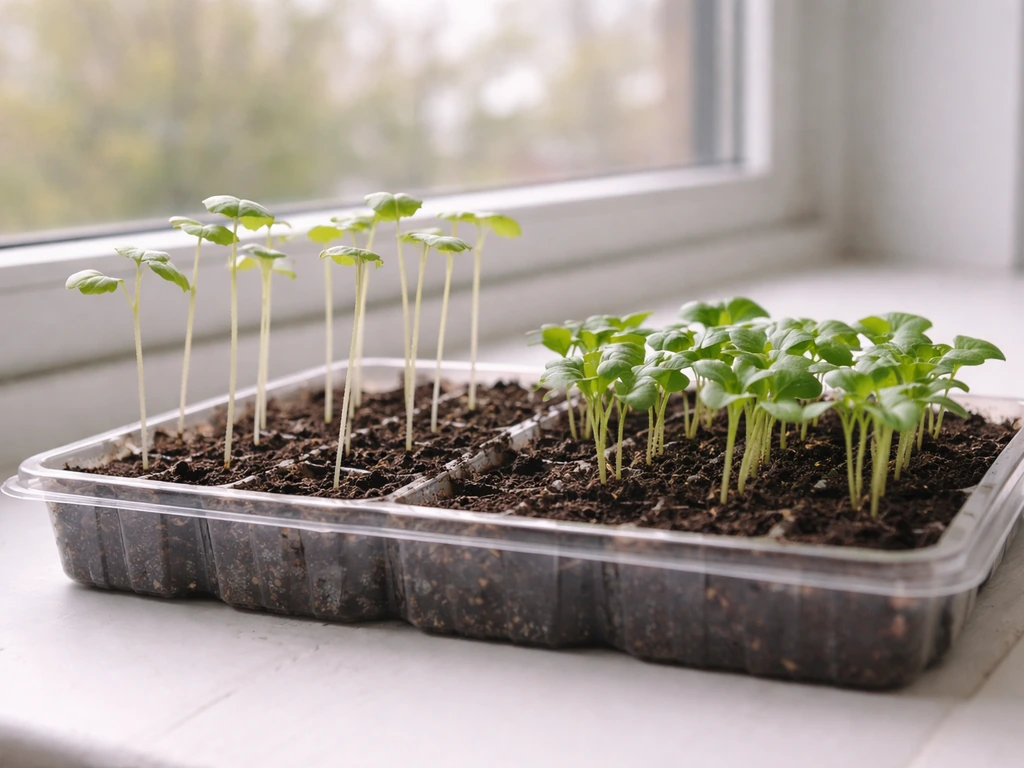
The most obvious sign is legginess. If your seedlings are tall, thin, and floppy with long gaps between the leaves, they're stretching for light they're not getting. Pale or yellow-green color is another red flag. Healthy seedlings under good light are compact and dark green. Slow growth combined with any of the above is a near-certain sign of light deficiency. A few quick checks you can do right now:
- Hold your hand about a foot above the seedling tray near a window. If your shadow is faint or barely visible, the light intensity is probably too low
- Check how many hours of direct sun the window actually gets on cloudy or winter days, not just your sunniest day of the year
- If seedlings are leaning toward the window at a sharp angle even after rotating, they're not getting enough from that direction
- If stems are thin enough to bend easily under their own leaf weight, that's etiolation in progress
Once seedlings are leggy, you can't really reverse it. You can bury more of the stem when transplanting tomatoes (they root along buried stems), but for most crops, a leggy start means a weaker plant. Prevention is the better approach, which means catching the light problem before it becomes obvious.
Setting up grow lights if you decide to use them
What kind of light to use
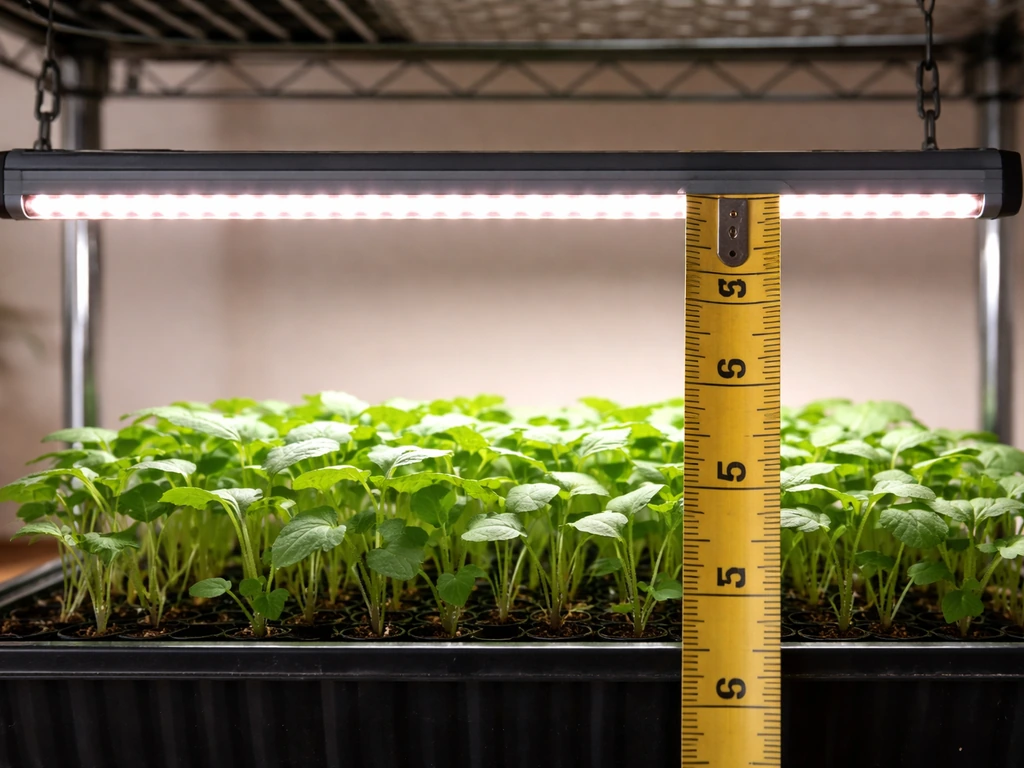
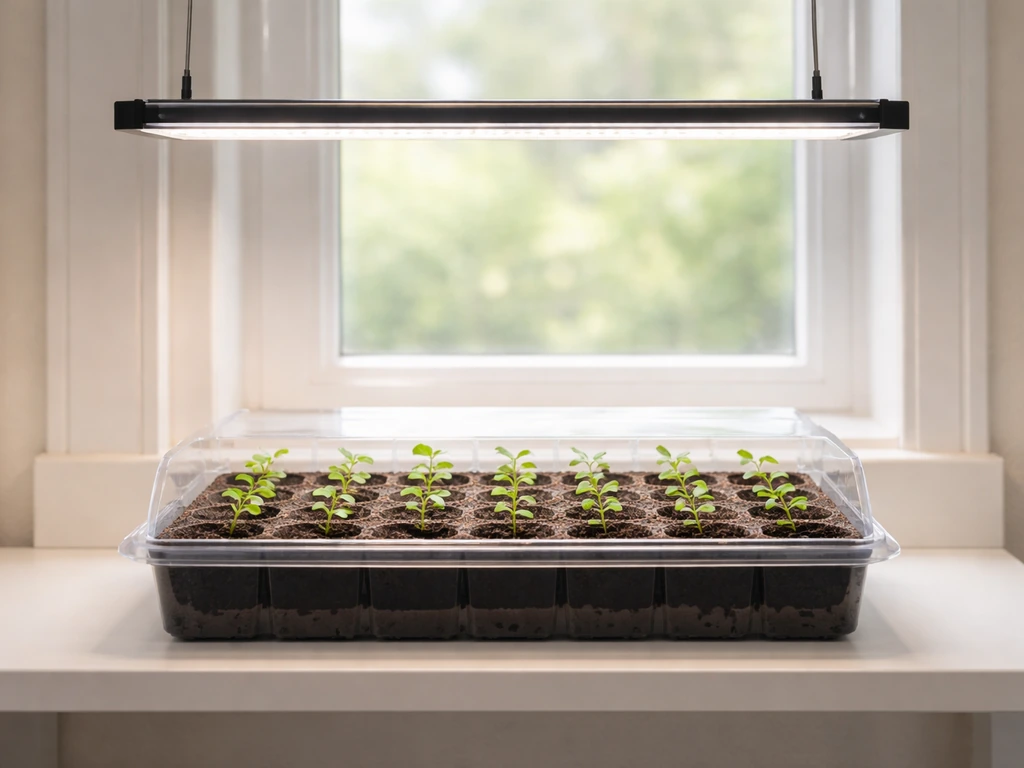
Full-spectrum LED grow lights or T8 fluorescent shop lights are the most practical choices for seed starting. You don't need anything fancy or expensive. A basic full-spectrum LED bar or a standard four-foot T8 shop light works well for trays of seedlings. The key isn't the type of bulb so much as how you position it and how long you run it. T8 shop lights can work if kept close (under a foot from the seedling tops) and run long enough, though they're less efficient than LEDs for the same output.
Distance from seedlings
This is where most people go wrong. They mount the light too high and then wonder why their seedlings are still leggy. UMN Extension recommends keeping lights roughly 4 to 6 inches above seedlings to start. As plants grow, you raise the light. The further away you move it, the more hours per day you need to run it to deliver the same amount of usable light. UNH Extension gives a clear example of this: an LED bar at 8 inches needed 8 hours per day to hit the target light level, but the same light at 20 inches needed 16 hours per day. Keep it close and you can run it for less time.
How many hours per day
Cornell recommends 16 to 18 hours of light per day with 6 to 8 hours of darkness. Illinois Extension says 14 to 16 hours is sufficient and advises not going beyond 16 hours because plants need a rest period. A good practical target is 16 hours on, 8 hours off, controlled by a cheap plug-in timer. Don't skip the dark period. Plants do physiological work at night, and running lights around the clock can actually stress them.
| Factor | Recommendation |
|---|---|
| Light height above seedlings | 4 to 6 inches to start; raise as plants grow |
| Daily light duration | 14 to 16 hours on, 8 to 10 hours off |
| Light type | Full-spectrum LED or T8 fluorescent |
| Timer | Strongly recommended; set and forget |
| Adjustment as plants grow | Raise light incrementally to maintain 4 to 6 inch gap |
Common mistakes and safety myths worth clearing up
Heat and burning seedlings
Standard LED and fluorescent grow lights produce very little heat compared to older HID or incandescent setups. At 4 to 6 inches above seedlings, a quality LED bar is very unlikely to burn leaves. That said, do a simple check: hold your hand at the height of the seedling tops for 30 seconds. If it feels uncomfortable, raise the light. For fluorescents, they run slightly warmer but are generally fine at a few inches. The bigger risk with any light near water trays is electrical, not heat. Keep connections away from moisture, use grounded extension cords, and don't let drips reach outlets or power strips.
Will grow lights give you a tan or cause cancer?
Standard LED and fluorescent grow lights do not emit meaningful UV radiation. They will not tan your skin and they will not increase your skin cancer risk from normal household use. UV radiation, specifically UVB, is what causes sunburn and raises skin cancer risk (and can damage eyes). The lights used for seed starting, full-spectrum LED bars, T8 shop lights, and similar horticultural fluorescents, are designed to deliver photosynthetically active light in the red and blue spectrum, not UV. Unless you're using a specialized UV grow light, which is niche and completely unnecessary for seed starting, this is not a concern. You don't need sunglasses to check on your tomato seedlings.
Other common mistakes
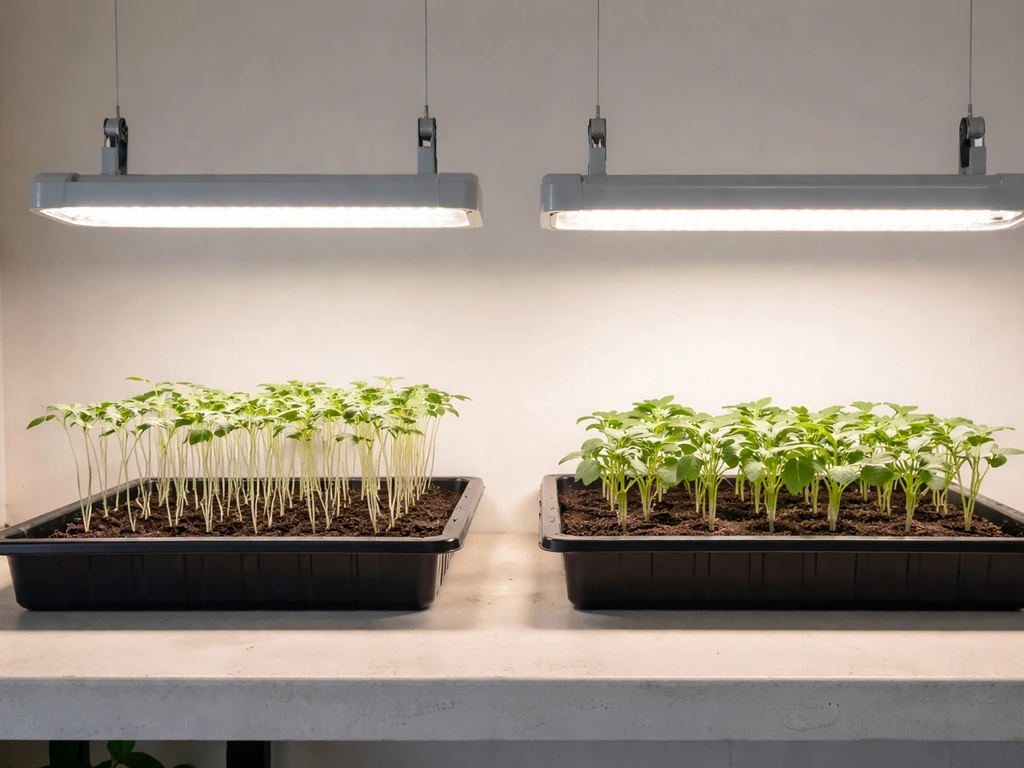
- Leaving the light too high: this is the single most common setup mistake and causes the same legginess as no light at all
- Not using a timer: inconsistent light schedules stress seedlings and make it hard to diagnose problems
- Covering seeds that don't need darkness: check your seed packet before you assume all seeds want a dark germination environment
- Forgetting to remove the cover: leaving humidity domes or newspaper on after sprouting blocks light and encourages damping off fungus
- Running lights 24 hours: plants need a dark period; more is not always better
What to realistically expect from a grow light setup
With a decent full-spectrum LED bar at the right height and 14 to 16 hours per day, your seedlings should be noticeably stockier and darker green compared to window-only starts. You'll see slower elongation, stronger stems, and better root development before transplant. Short-season crops like lettuce can be ready to transplant in 3 to 4 weeks under lights. Long-season crops like peppers may need 8 to 10 weeks indoors and will benefit the most from consistent artificial light throughout that period. Tomatoes sit in the middle, typically 6 to 8 weeks, and they're also the most visibly damaged by low light, so they're a good test case for whether your setup is working.
If your seedlings are compact, the color is a rich green, and new leaves are appearing at a steady pace, your light setup is doing its job. If growth seems slow, color is pale, or stems are reaching, bump up the hours or lower the light before you lose more time. The earlier you catch a light problem, the easier it is to fix.
A simple if/then starting plan
- If you're germinating seeds: skip the grow light, keep trays warm and dark (unless your seed packet says light is needed for germination), and add light the moment sprouts appear
- If you have a bright south-facing window and you're starting lettuce, herbs, or brassicas in late winter or spring: try the window first, rotate daily, and watch for legginess
- If you're starting tomatoes, peppers, or eggplant more than 6 weeks before your last frost: use a grow light from the moment sprouts emerge
- If you're unsure whether your window is enough: set up a grow light anyway; they're inexpensive to run and the difference in seedling quality is usually obvious within two weeks
- If seedlings are already leggy: get them under a grow light at 4 to 6 inches, 16 hours per day, and manage expectations; you can recover some crops but not all
FAQ
Do I need grow lights to start seeds if I’m using a window, but my room is “bright” only some of the day?
Maybe, but assume you will need supplemental light once seedlings emerge. A south-facing window can work for germination and some early growth, yet cloudy days, curtains, and shorter winter day length often reduce both light intensity and total hours. If you notice plants leaning toward the glass within a day or two of sprouting, switch to a grow light or move them closer to the window and shorten the distance to maximize usable light.
Will running a grow light during the germination phase help, or should I keep it dark?
For most seeds, keep it dark. During germination, seeds rely on stored energy, and light is not what drives sprouting for the majority of crops. If you’re covering trays with plastic bags or dark paper, that is usually the right approach until you see green shoots, then move them under strong light immediately.
How do I tell if my seedlings are under light versus having a temperature problem?
Light deficiency typically shows up as stretching with wide spacing between leaves, pale or yellow-green color, and slow, leggy growth. Temperature issues often cause uneven germination or stalling, and very cold conditions can delay sprouting even if the light seems adequate. If sprouts appear at normal speed but later turn leggy, that pattern points more toward insufficient light intensity or too much distance from the light.
What height should my grow light be for seed starting, and what’s the best way to measure it?
Position the light so it is roughly 4 to 6 inches above the seedling tops at the start, then raise it as plants grow. The most reliable measurement is from the light’s emitting surface to the tops of the tallest seedlings, not the soil line. If you need to raise the light higher, plan to increase the daily run time to compensate.
My seedlings are leggy, can I save them without starting over?
Sometimes you can reduce the damage, but prevention is easier. For many crops you can bury more stem during transplanting (especially tomatoes), which helps form new roots. However, if they are already stretched and pale, you should immediately lower the light distance and increase light hours to stop further etiolation, since the early weakness often cannot fully recover.
Do I need special “seed starting” grow lights, or will a regular LED bar work?
A standard full-spectrum LED bar or a common four-foot T8 shop light typically works for seedlings as long as you manage distance and run time. You do not need high-end features like UV or fancy controllers for seed starting. Focus on getting enough usable light to prevent stretching, and use a timer so you keep consistent daily cycles.
How many hours per day should I run grow lights for seedlings?
A practical target is about 14 to 16 hours on, plus a full dark period. Going beyond 16 hours can stress plants because they need a rest window for normal physiology. Use a plug-in timer so you do not accidentally forget to shut lights off, especially when adjusting setups.
Can I use grow lights around the clock for faster growth?
No, not for seedling development. Continuous light removes the required dark period, and plants do important biological work at night. If you want faster growth, the safer lever is to increase light intensity (by lowering the light) or adjust schedule within the recommended on/off range rather than running lights 24 hours.
Do I have to worry about heat from grow lights near my seed trays?
Most LED bars and T8 fluorescents stay cool enough for close positioning, but you should still check. Use the hand test at seedling height for about 30 seconds, if it feels uncomfortably hot, raise the light. The bigger real risk near water trays is electrical safety, keep cords and connections away from drips and use grounded extension cords.
Will grow lights produce harmful UV that could affect my skin or eyes?
Regular full-spectrum LED bars and standard T8 horticultural fluorescents are designed to deliver photosynthetically useful wavelengths, they are not meaningful UV sources for normal seed starting. You generally do not need protective eyewear or concern about sunburn from seedling lights, unless you are using a specialized UV system, which is not typical or necessary.
If my seedlings grow slowly but don’t look leggy, should I still add light?
Yes, it could still be light related, but check other factors too. Pale color and visible elongation point to under-lighting, while normal color with slow growth can also come from cool temperatures, inconsistent moisture, or age-related slow emergence. If you confirm pale or reaching behavior, lower the light or add hours right away, then re-evaluate after a few days.
Do all seeds need darkness to germinate, or are there common exceptions?
Most vegetable seeds germinate fine in darkness, but some do not. Lettuce and petunias are classic examples that need light to trigger germination, typically using minimal or no soil cover so light can reach the seed. When in doubt, follow the seed packet instructions, because the light requirement is crop-specific and not predictable by seed type alone.
For microgreens, do I need grow lights immediately after sprouting?
In most setups, yes, because microgreens can stretch quickly in dim light once they green up. If your area lacks strong direct light, place microgreens under your light as soon as they emerge to keep them compact. If your space is very sunny with direct light on the tray, you may be able to delay lights, but expect stretching on overcast days or in winter.
Next Articles
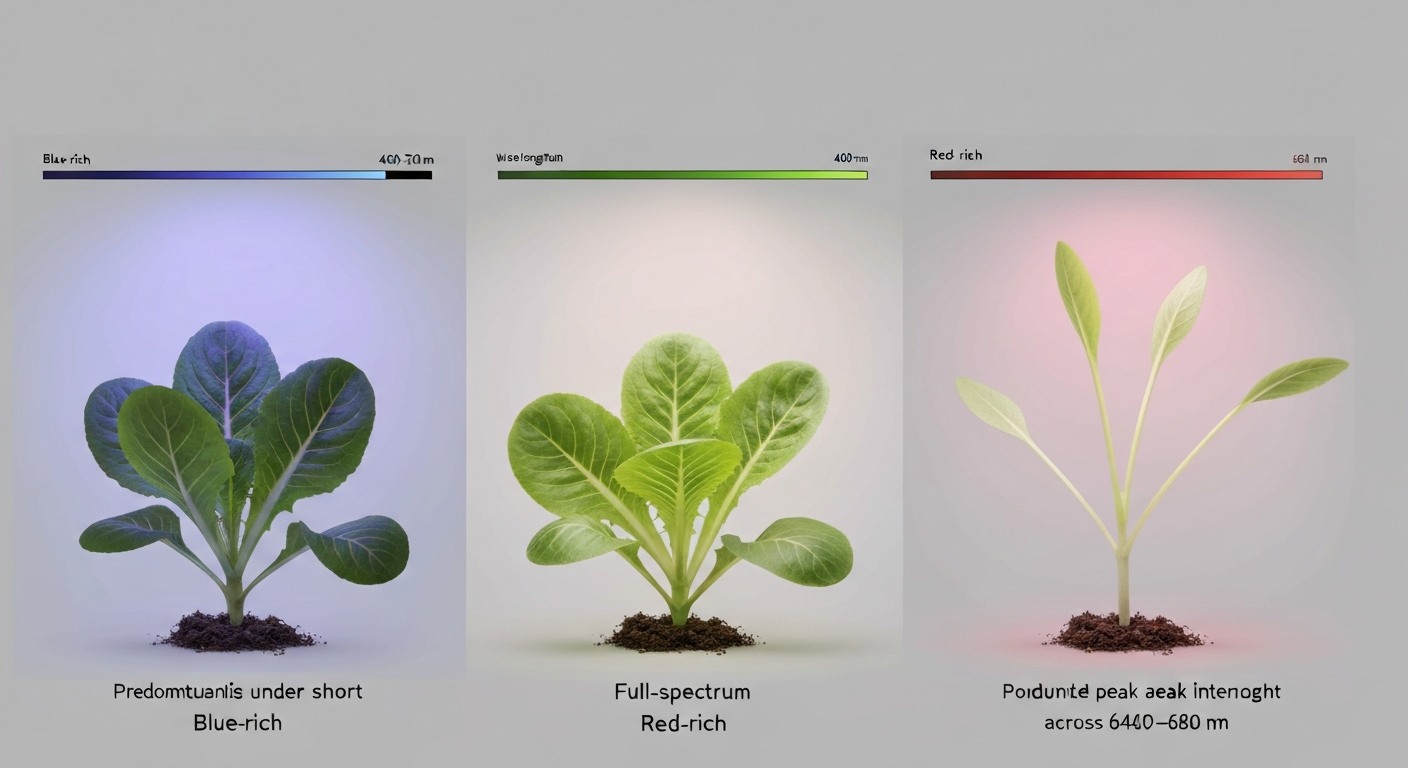
Why Do Plants Grow Best in Blue Light? Science & Practical Guide
Explore why blue light boosts vegetative growth, ideal blue:red ratios, PPFD, photoperiods, fixtures, and setup tips.
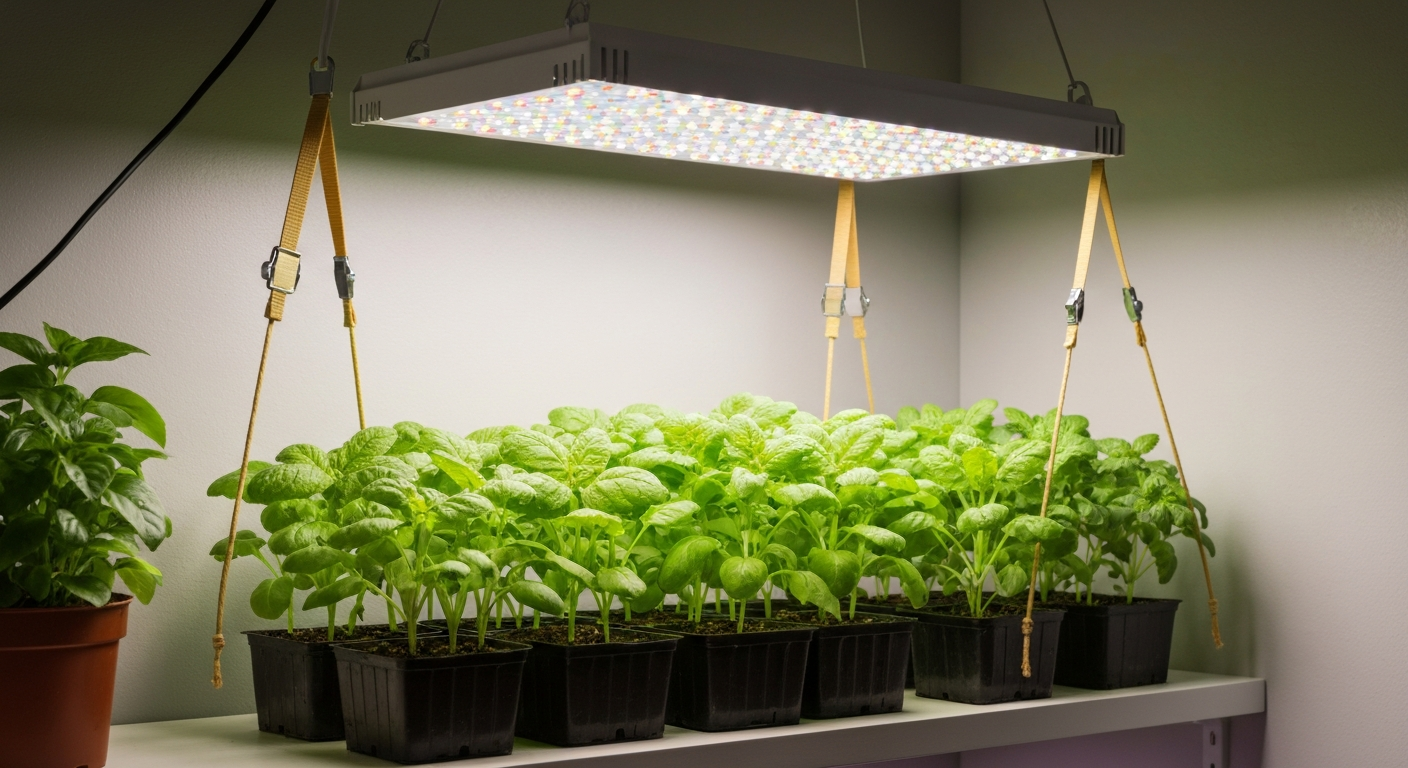
What Artificial Light Will Grow Plants: Best Lights Guide
What artificial light will grow plants: practical guide to LED, CFL, HID spectra, PPFD targets, setup, cost & tips.
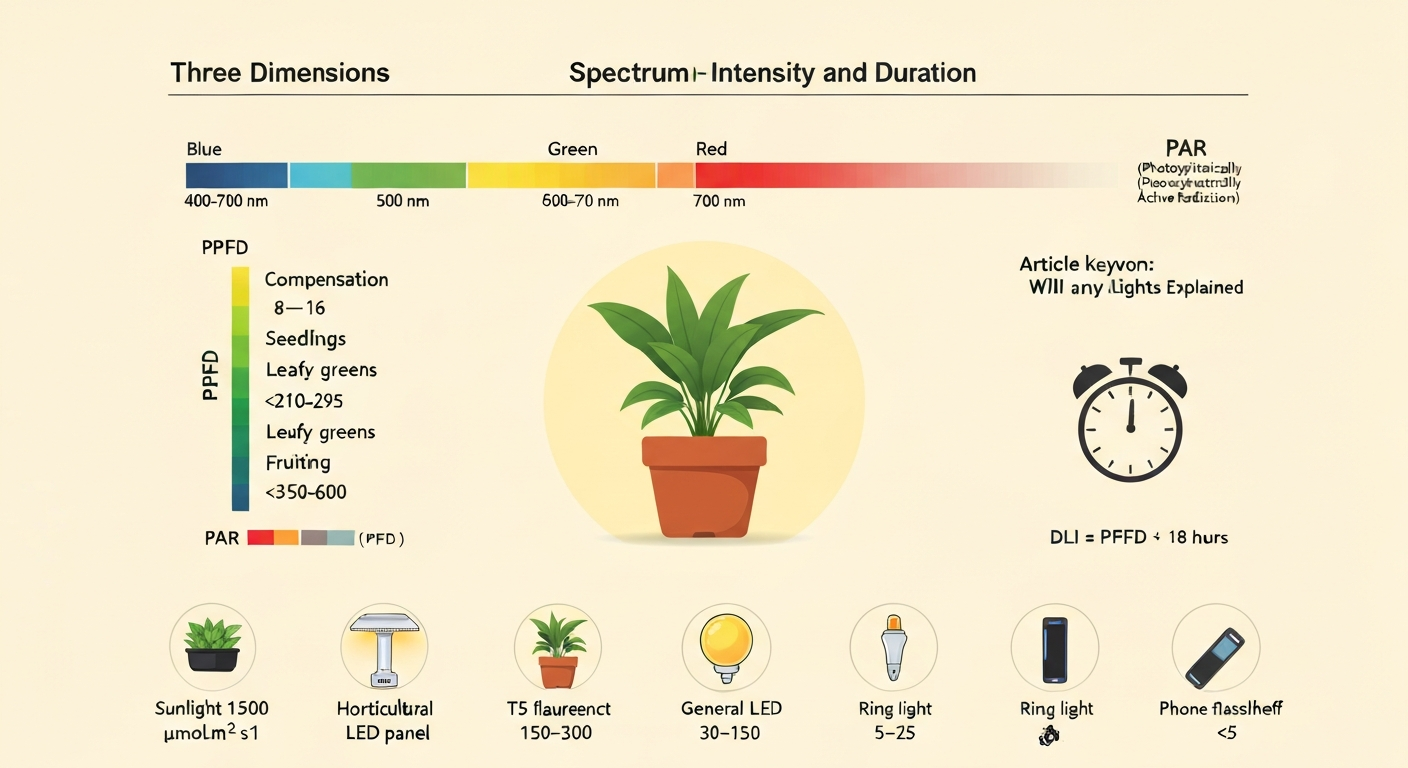
Will Any Light Grow Plants? Guide for Indoor Growers
Can any light grow plants? Clear yes/no, science-backed light specs, setup tips, and which household lights work.