Most seedlings started indoors do need grow lights, at least in the typical home setup. A sunny south-facing window can work in summer, but for the majority of gardeners starting seeds in late winter or early spring, natural window light is too weak, too short, and too variable to grow compact, healthy seedlings. The result without supplemental light is almost always the same: tall, floppy, pale stems that struggle to survive transplant. If you're starting vegetable or herb seedlings indoors right now and you don't have a genuinely bright, unobstructed south-facing window, a grow light is close to non-negotiable.
Do You Need Grow Lights for Seedlings? Quick Guide
Marcus Holloway
6 Jul 2026
When seedlings actually need grow lights
The honest answer depends on four things: the direction your windows face, what season it is, how close your seedlings are to the glass, and what you're growing. Here's how to think through each one quickly.
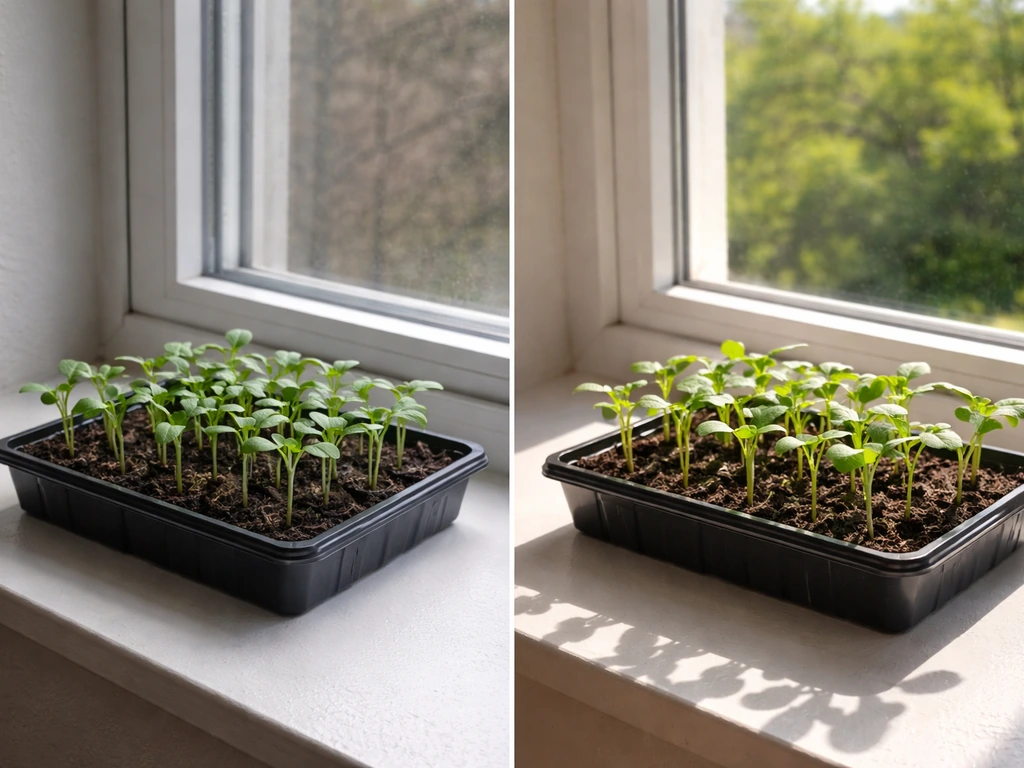
Window direction is the biggest factor. North-facing windows deliver the weakest light year-round, basically too dim for any seedling. East and west windows give you moderate light but only for part of the day. South-facing windows are the best natural option, but even those underperform in winter when the sun is low, days are short, and cloud cover is frequent. UMN Extension is clear that north-facing windows fall into the 'low light' category, and that most seedlings need something brighter than that to thrive. If you are wondering do microgreens need grow lights, the same light-amount rule applies: most indoor microgreens need supplemental lighting to avoid stretching and staying pale north-facing windows fall into the 'low light' category.
Season matters enormously. In December through February, even a south window can deliver fewer than 8 hours of usable light. That's well below the 14–16 hours per day that University of Maryland Extension recommends for seedlings, and even further from the 16–18 hours Cornell CALS suggests. Starting tomatoes, peppers, or brassicas in January without a grow light is a recipe for leggy, weak transplants. In June or July, near a bright south window, you might just barely get away with it for some crops, but you're still cutting it close.
Plant type also plays a role. Vegetable seedlings, especially tomatoes, peppers, and squash, are hungry for light from the moment they germinate. Herbs like basil are similarly demanding. Slower-growing or shade-tolerant starts like some flowers are more forgiving. But as a rule, if it's a food crop seedling, plan on using a grow light.
Natural window light vs. grow lights: what's actually different
Window light isn't bad light, it's just usually insufficient light for seedlings indoors. The problem is intensity and duration, not quality. Sunlight through a window gets filtered by the glass, reduced by the angle of the sun, and interrupted by clouds and short winter days. By the time it reaches a seedling sitting a few feet back from the sill, the light levels can be shockingly low.
Grow lights solve both problems. A decent LED fixture positioned 2–6 inches above seedlings (the distance UMD Extension recommends) delivers consistent, strong light directly where the plants need it, for exactly as long as you set the timer. There's no cloud interference, no short winter days, no gradual drop-off as you move from the window. You control the daily light integral, which is the total amount of light energy the plant receives in a day. Michigan State University Extension research shows that plant quality drops significantly when DLI falls below 10 mol/m²/day. A good LED grow light on a timer can reliably hit that target every single day.
Can you use window light as a supplement alongside a grow light? Absolutely, and it helps. If you have an east or west window, running your grow light during the hours when natural light is absent or weak means the plant gets the best of both. Some growers put seedlings on a south windowsill and only run the light in early morning and evening to extend the photoperiod. That's a smart, low-cost hybrid approach.
| Light Source | Typical Intensity for Seedlings | Day Length Control | Cost | Best Use Case |
|---|---|---|---|---|
| South window (winter) | Often too low | No (8–10 hrs usable) | Free | Supplemental only, not reliable alone |
| South window (summer) | Can be adequate | No (12–14 hrs usable) | Free | Works for some crops in peak season |
| North/east/west window | Too low for most seedlings | No | Free | Not recommended without supplemental light |
| LED grow light | Adjustable, consistent | Yes (timer-controlled) | Low running cost | Best standalone solution for indoor seedlings |
| Fluorescent (T5/T8) | Decent for seedlings | Yes (timer-controlled) | Low running cost | Good budget alternative to LED |
The recommendation here is clear: if you're starting vegetable seedlings indoors and can't guarantee 14+ hours of strong, unobstructed south-window light, use a grow light. So, are grow lights necessary? If you can’t provide 14+ hours of strong, unobstructed natural light, a grow light is the practical answer. It removes the guesswork entirely.
How to tell if your seedlings are getting enough light
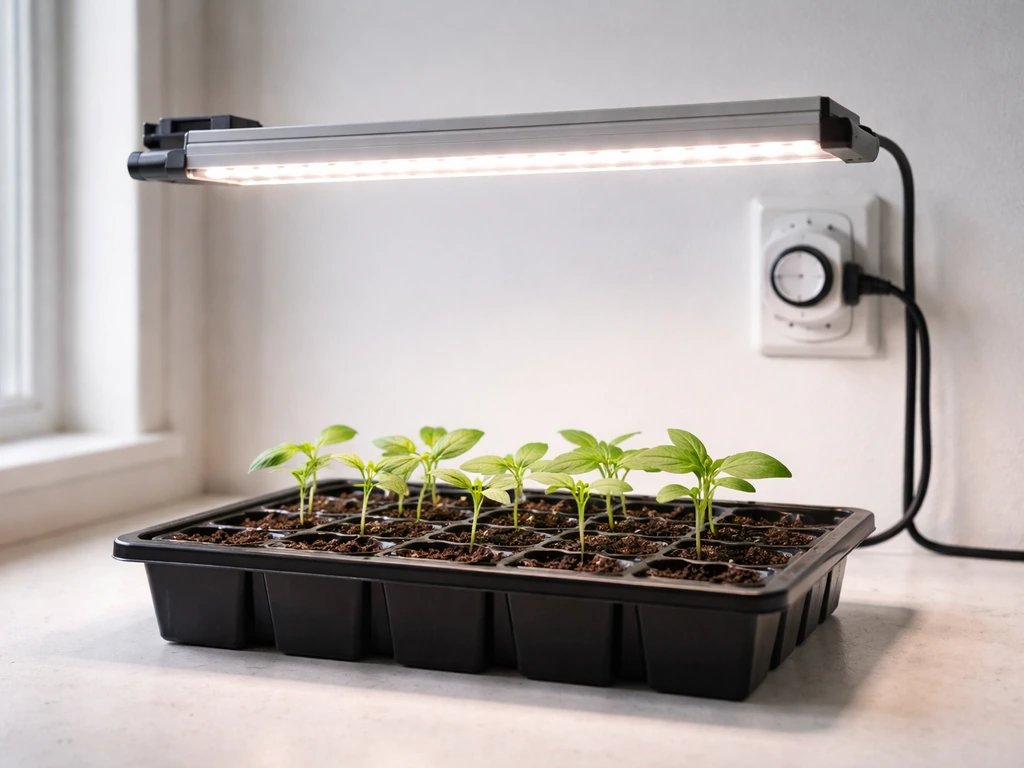
The good news is that seedlings tell you almost immediately when light is insufficient. You don't need fancy equipment to diagnose a light problem, though you can use a simple app if you want hard numbers.
Visual signs to check today
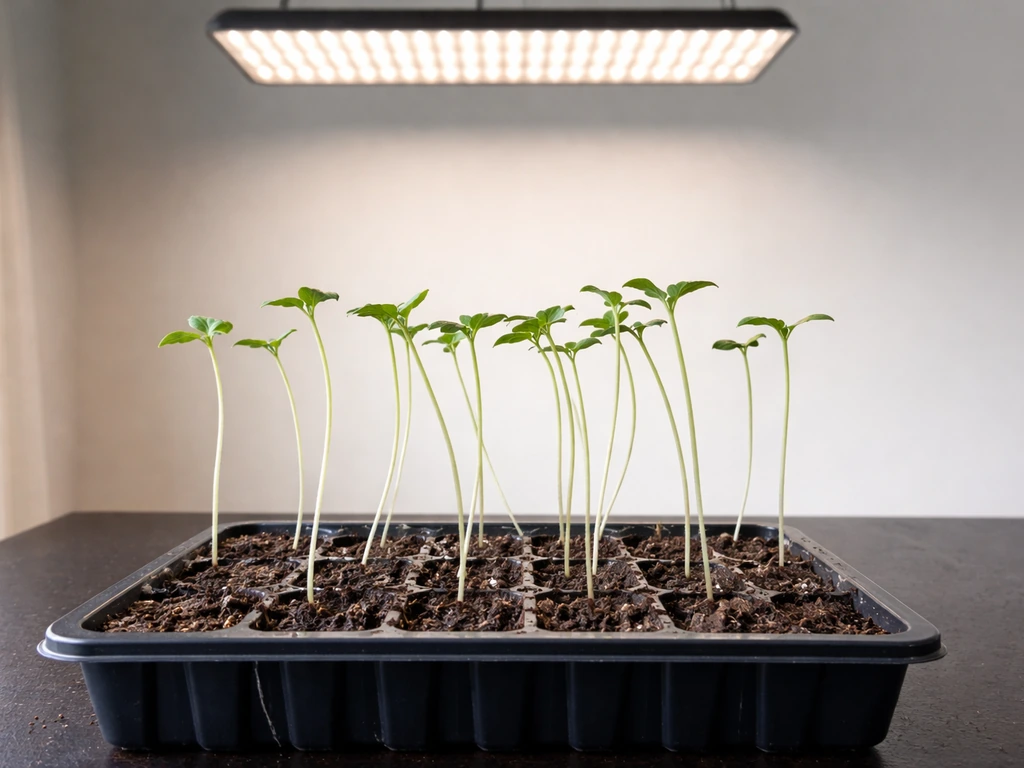
- Leggy, stretched stems: This is the clearest sign. If the stem between leaf nodes is long and thin rather than compact and sturdy, the seedling is reaching for more light. UMN Extension identifies this as a primary symptom of insufficient light.
- Pale green, yellow, or washed-out color: Chlorophyll production drops when light is low. Healthy seedlings should be vibrant, deep green. Pale or yellowish seedlings are usually light-starved, not nutrient-deficient (unless you've been feeding them).
- Leaning hard toward the window: Some lean is normal. Dramatic one-sided stretching toward a light source means the current light level is too low or uneven.
- Slow or stalled growth: Seedlings that germinated fine but barely seem to grow after the first week are often light-limited.
- Weak stems that flop over: Light-deprived seedlings don't develop strong cell walls. If a seedling can't hold itself upright, insufficient light is a top suspect.
A simple at-home light check
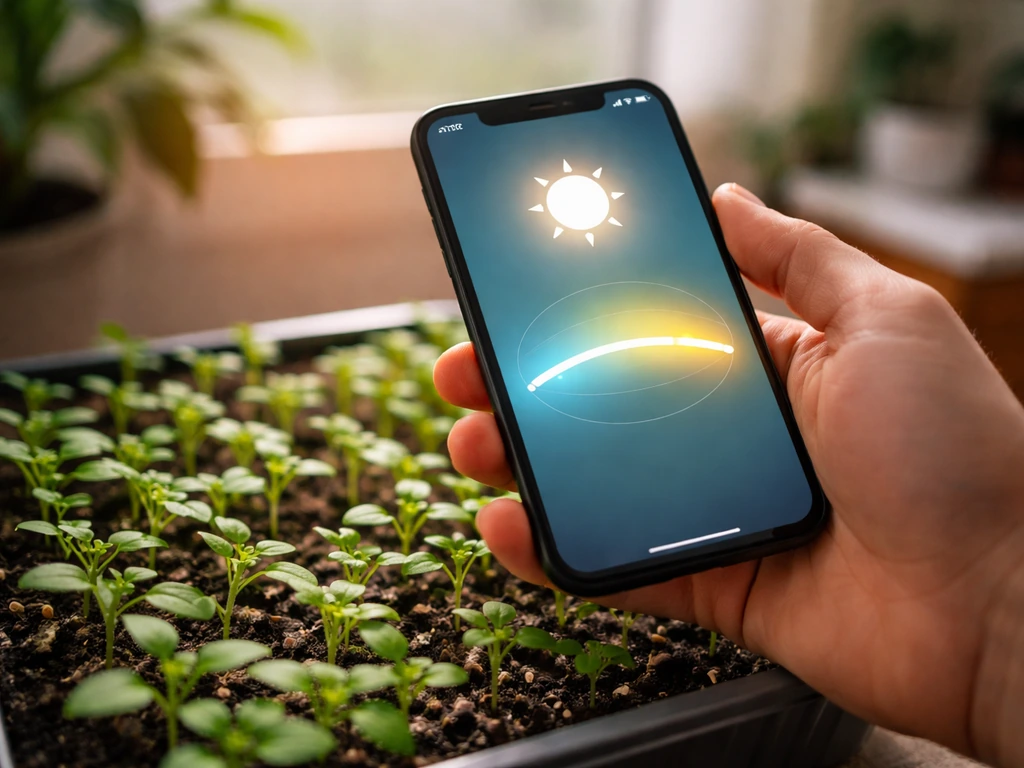
If you want a number instead of just a visual gut check, download the Photone app on your phone. It estimates PPFD (the measure of photosynthetically active light) using your phone camera. Note that Photone requires a small DIY diffuser (a piece of white paper or translucent tape over the lens works) for accurate readings. Point it at the seedling canopy level and check the reading. For most vegetable seedlings, you're aiming for at least 150–200 µmol/m²/s at the leaf surface. You can also calculate your DLI: multiply your PPFD reading by 0.0036, then multiply by the number of hours the light is on. Target at least 10 mol/m²/day for healthy young plants, with 12 being a more comfortable target based on MSU Extension research.
When you can actually skip grow lights
There are genuine situations where you don't need a grow light, and it's worth being honest about them so you don't spend money you don't need to. If you're wondering can you put grow lights in a greenhouse, the same principles apply: position them close enough for strong coverage and use a timer for consistent daily light.
- You have a large, unobstructed south-facing window and you're starting seeds in late spring or summer, when days are long and the sun angle is high. Under those conditions, natural light can realistically hit 14+ hours of usable intensity.
- You're direct-sowing outdoors or using a cold frame where seedlings get true outdoor light levels from the start. Outdoor light is far stronger than indoor window light.
- You're in a well-designed greenhouse with good glazing and no significant shading. Greenhouse light supplementation is a related but separate question.
- You're growing shade-tolerant crops (some lettuces, herbs like mint or cilantro) in a bright east or west window during late spring, and you're happy with slower, slightly less compact growth.
- You're starting seeds that will be transplanted outdoors quickly, in a season and location where natural light is genuinely strong and you can harden them off fast.
The key condition in almost every exception is that natural light has to be genuinely bright and available for enough hours. If you're hedging on that, lean toward using a light. The cost of running a small LED fixture for a few weeks of seed starting is minimal, and the difference in seedling quality is significant.
How to set up a grow light for seedlings correctly
If you've decided you need a grow light (or just want to do this right), the setup is simpler than most people expect. Four variables matter: placement, distance, duration, and intensity.
Distance from the seedlings
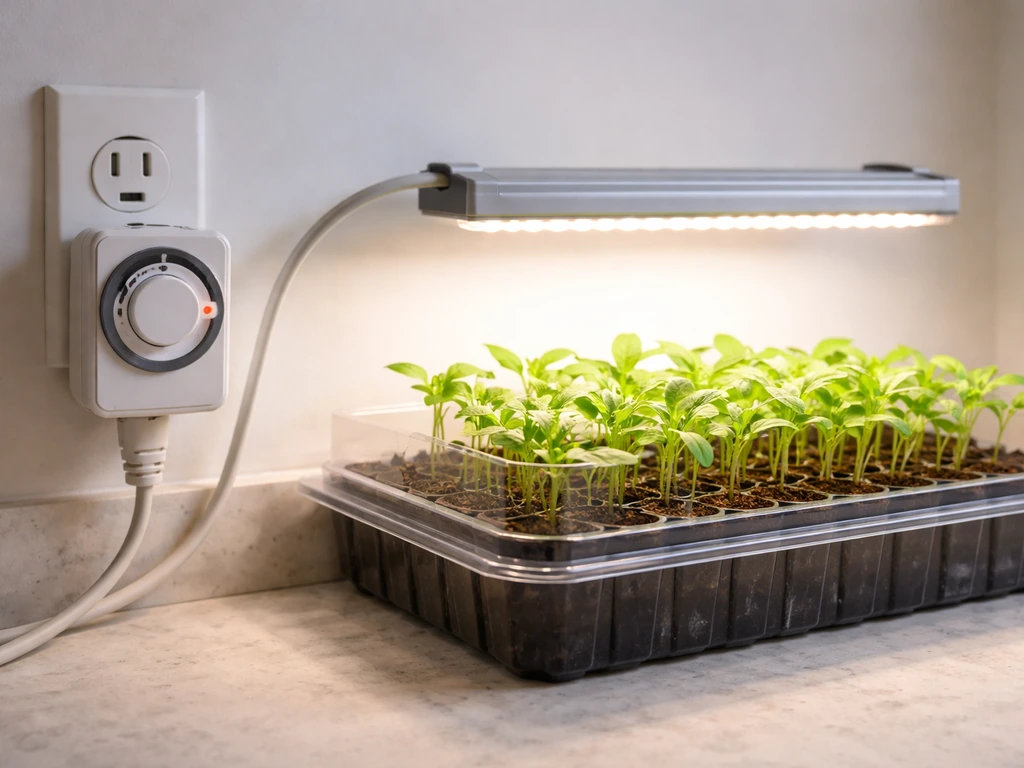
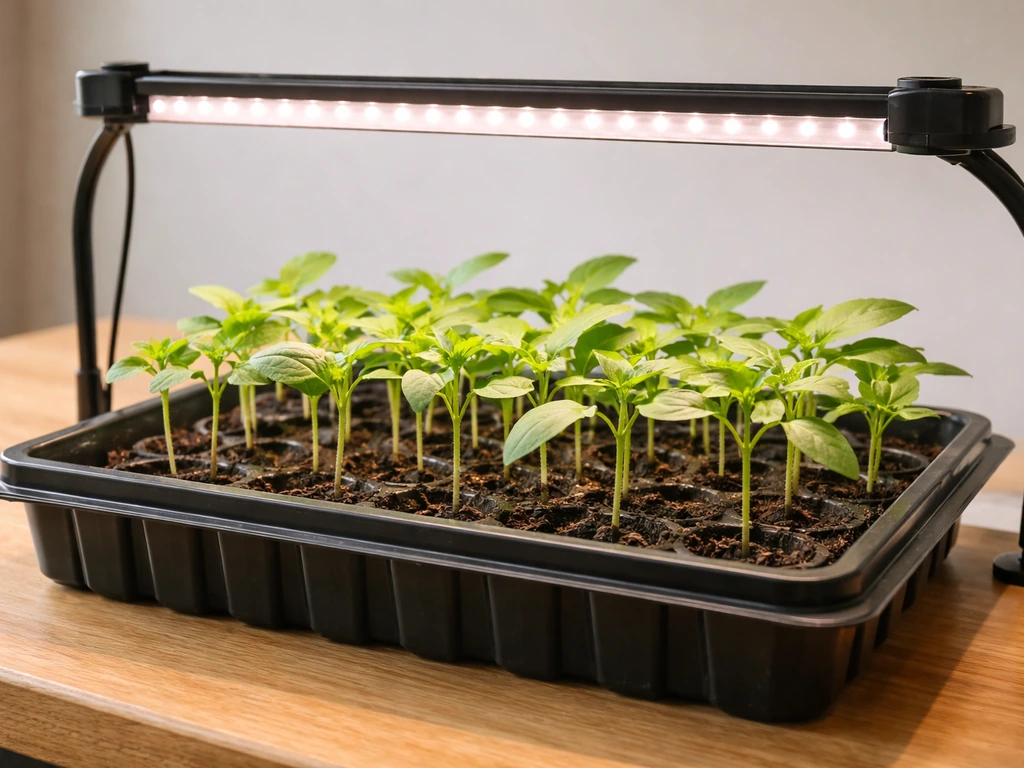
Position your LED or fluorescent fixture 2–6 inches above the tops of your seedlings. UMD Extension gives this as the practical range for starting vegetable seeds indoors. Closer means more intense light, which is generally what seedlings need. As seedlings grow, raise the light to maintain that gap. Most grow light setups use adjustable chains or hooks for exactly this reason. If your light is too far away, seedlings will stretch. If it's too close with a high-intensity fixture, you can cause bleaching or tip burn, but this is rare with the low- to mid-power lights most home gardeners use for seedlings.
How long to run the light each day
Run your grow light 14–16 hours per day for seedlings, based on UMD Extension guidance. Cornell CALS recommends 16–18 hours with a 6–8 hour dark period. The dark period matters: plants need some darkness for healthy development, so don't run the light 24 hours. Use a cheap outlet timer set to turn the light on in the early morning and off in the evening. This removes the guesswork entirely and costs almost nothing.
Intensity and coverage
For seedlings, you don't need a massive, high-intensity light. A modest full-spectrum LED panel or a couple of T5 fluorescent shop lights will do the job. Aim for 150–200 µmol/m²/s at the canopy, which is achievable with most entry-level LED grow panels at 2–4 inches. Check your coverage area too: a single small panel might only cover a 2x2 foot area adequately. If you have multiple seed trays, make sure the entire surface is within the light's effective footprint, not just the center. If you want to get precise, use the Photone app at multiple points across your trays to map where coverage drops off.
Quick setup summary
- Hang your LED or fluorescent fixture 2–6 inches above the seedling canopy.
- Plug it into an outlet timer set for 16 hours on, 8 hours off.
- Raise the light as seedlings grow to maintain the 2–6 inch gap.
- Check coverage with the Photone app if you have multiple trays.
- Watch seedlings for the first 3–5 days: compact, upright growth means your setup is working.
Common misconceptions and safety basics
Grow lights have a reputation for being complicated or dangerous that they really don't deserve. Most of the concerns people have are either overstated or easily managed. Let's go through the real ones.
Eye and skin safety
Standard full-spectrum LED grow lights sold for home seedling use are not going to damage your eyes with casual glancing. Photobiological safety for lamps is assessed under IEC 62471, and most consumer LED fixtures fall into low-risk categories under normal use. That said, you shouldn't stare directly into any bright light source, grow light or otherwise. Blue light is present in LED grow lights, and while Healthline and Cleveland Clinic both note that research on long-term blue-light harm is still evolving, the consensus is that occasional exposure during watering and maintenance isn't a meaningful risk. Cleveland Clinic similarly notes that more research is needed to determine whether and how blue light is harmful long term more research on long-term blue-light harm is still evolving. If you're working under your lights for extended periods every day, inexpensive safety glasses with blue-light filtering are a sensible precaution, not a necessity. Grow lights do not cause tanning or cancer. They are not UV sunlamps.
Heat and fire risk
Modern LED grow lights run much cooler than old HID (high-intensity discharge) lights. A basic LED seedling panel barely gets warm to the touch. The main electrical safety precaution is straightforward: don't overload an extension cord or power strip, buy lights from reputable brands with UL or ETL certification (the UL 8800 standard addresses horticultural lighting safety including heat and damp environments), and keep electrical connections away from water when you're watering your seedlings. Don't use LED bulbs in enclosed fixtures that aren't rated for them, as this can trap heat. For a simple seedling shelf with a plug-in LED panel, the fire risk is negligible if you use common-sense electrical practices.
Plant stress from grow lights
The most common grow-light mistake isn't overexposure, it's putting the light too far away and then wondering why seedlings are still leggy. Keeping a basic LED panel at 2–6 inches above seedlings is safe for the plants. Running the light 16 hours a day is safe. The problems that do occasionally happen, like tip burn or bleaching, usually come from positioning a high-intensity professional light inches from seedlings, which isn't a scenario most home gardeners encounter. If leaves look pale or slightly bleached near the center of the tray but fine elsewhere, raise the light an inch or two and check again in a couple of days. Trilux notes that luminaire photobiological safety ratings are based on IEC 62471 testing and aim to keep the maximum hazard at risk group RG1 in appropriate use (see Trilux guidance) Photobiological Safety of Luminaires | Trilux.
Electricity costs
A typical LED seedling panel draws 20–45 watts. Running it 16 hours a day for 8 weeks of seed starting costs roughly $2–5 in electricity at average US rates. It's not a meaningful expense. The cost of the light itself is the real consideration, and entry-level LED panels suitable for seedlings start around $20–40.
Your practical next steps checklist
Use this checklist to figure out exactly what your situation calls for and what to do today.
- Check your window: Which direction does your seedling spot face? If it's north, east, or west, plan on a grow light. If it's south, assess the season and how many hours of strong, unobstructed light it actually delivers.
- Check your seedlings right now: Are any stems looking tall and thin between leaf nodes? Is the color pale or yellowish? Is anything leaning hard toward the window? If yes to any of these, light is the likely problem.
- Measure if you want a number: Download Photone, make a quick diffuser from white paper, and check the PPFD at seedling canopy level. Under 100 µmol/m²/s means you definitely need supplemental light. 150–200 is the target zone.
- If you need a light: Get a full-spectrum LED panel rated for seedlings (look for UL or ETL listing), hang it 2–6 inches above your seedlings, and plug it into an outlet timer set for 16 hours on and 8 hours off.
- Raise the light as seedlings grow: Check every few days and adjust the height to maintain the 2–6 inch gap above the canopy.
- Watch for improvement: Within 3–5 days of proper light exposure, new growth should be noticeably more compact. If things are still stretching, lower the light slightly or check that your timer is actually running the full 16 hours.
- Safety check: Make sure your electrical connections are away from water, your power strip isn't overloaded, and your fixture is rated for the environment. Don't stare directly into the light during setup.
- Plan your schedule: If you're also starting seeds (not just caring for existing seedlings), germination doesn't require light, but turn the light on as soon as the first seedlings emerge from the soil.
If you're also wondering whether grow lights are worth it for more specific setups, the logic shifts slightly for microgreens, hydroponics, and greenhouse growing, where light needs and alternatives differ from standard seedling trays. If you’re wondering, “do you need grow lights in a greenhouse,” the answer depends on how much natural sun your greenhouse actually gets greenhouse growing. But for the typical home gardener starting seeds on a shelf or table indoors, the answer is almost always the same: get a decent LED panel, use a timer, keep it close, and your seedlings will reward you with the kind of compact, sturdy growth that actually survives transplanting.
FAQ
If I have a south window, do you still need grow lights for seedlings in winter?
Not always. If you have a genuinely bright, unobstructed south-facing window (especially during spring), and your seedlings sit close enough to receive strong light for enough hours, you may be able to grow compact starts without a light. If you cannot reliably hit about 14 to 16 hours of usable light, a grow light becomes the practical safety net.
Do you need grow lights for seedlings on a north-facing windowsill?
Yes, north windows are the most common reason seedlings turn leggy indoors. Even if plants look green, they are often stretching because intensity and duration are too low. If you use a north window anyway, treat it as supplemental and plan to run an LED fixture.
How close should a grow light be, and does distance matter more than wattage?
A small gap makes a big difference, so you should measure from the light to the top of the seedling canopy, not to the shelf. For typical home setups, keeping the light about 2 to 6 inches above the plants is the starting range, then raise the fixture as seedlings grow.
Can I run grow lights 24 hours a day for faster growth?
Use the light on a timer for a consistent daily schedule, and avoid 24-hour lighting. Seedlings usually do best with about 14 to 16 hours on and a real dark period overnight, since plants need that downtime for normal development.
Do you need grow lights if you already have an east or west window?
Yes, especially for east or west windows. A common approach is to run the grow light only during the hours when the window provides weak light, or to extend the day length by a few hours in the morning and evening.
What should I do if my seedlings look pale or leggy even though they get some window sun?
You can, and it often works better than relying on the window alone. If your seedlings are pale, stretched, or leaning, add light to reach the daily light they need, rather than trying to fix the issue with fertilizer.
Do you need grow lights in a greenhouse during winter?
It depends on how much natural light your greenhouse actually gets and how close the seedlings are to supplemental fixtures. In low-sun seasons, the same principles apply: if winter light duration and intensity are weak, adding LEDs still improves compactness and transplant strength.
Do you need grow lights for seedlings if you are only growing herbs like basil?
For many at-home growers, yes, when starting vegetables or herbs. Leafy greens and flowers can sometimes tolerate lower light more than hungry crops like tomatoes and peppers, but if you see stretching and pale growth, the situation is still likely too dim.
How do I know if my grow light covers all my seed trays?
You should not assume a larger fixture means better results. Coverage is a common problem, a single panel may be strong in the center and weak at the tray edges. If you have multiple trays, confirm the entire canopy is within effective coverage, not just the middle.
What are the most common reasons seedlings still get leggy after I buy a grow light?
Before buying more intensity, check for the simplest causes: the light may be too far away, the timer schedule may be too short, or the seedlings may be sitting too far from the glass. If you want a number, use a PPFD or DLI check at canopy level to guide adjustments.
Do you need a high-powered grow light for seedlings, or is an inexpensive LED enough?
Oftentimes you can get by with a modest full-spectrum LED for seedling stage, as long as it is run at the right distance and duration. If you consistently cannot reach the needed canopy light levels, then upgrading intensity or adding a second fixture is usually the next step.
Next Articles
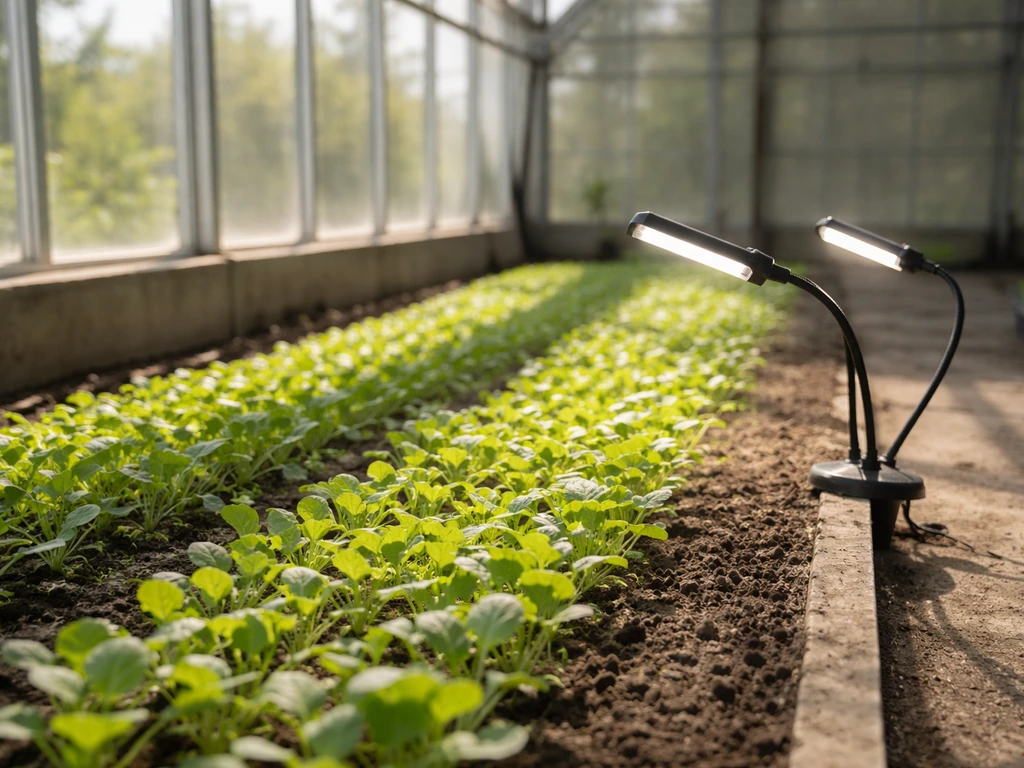
Do You Need Grow Lights in a Greenhouse? A Guide
Decide if your greenhouse needs grow lights by measuring sunlight, season, and plant needs, plus safe setup and schedule
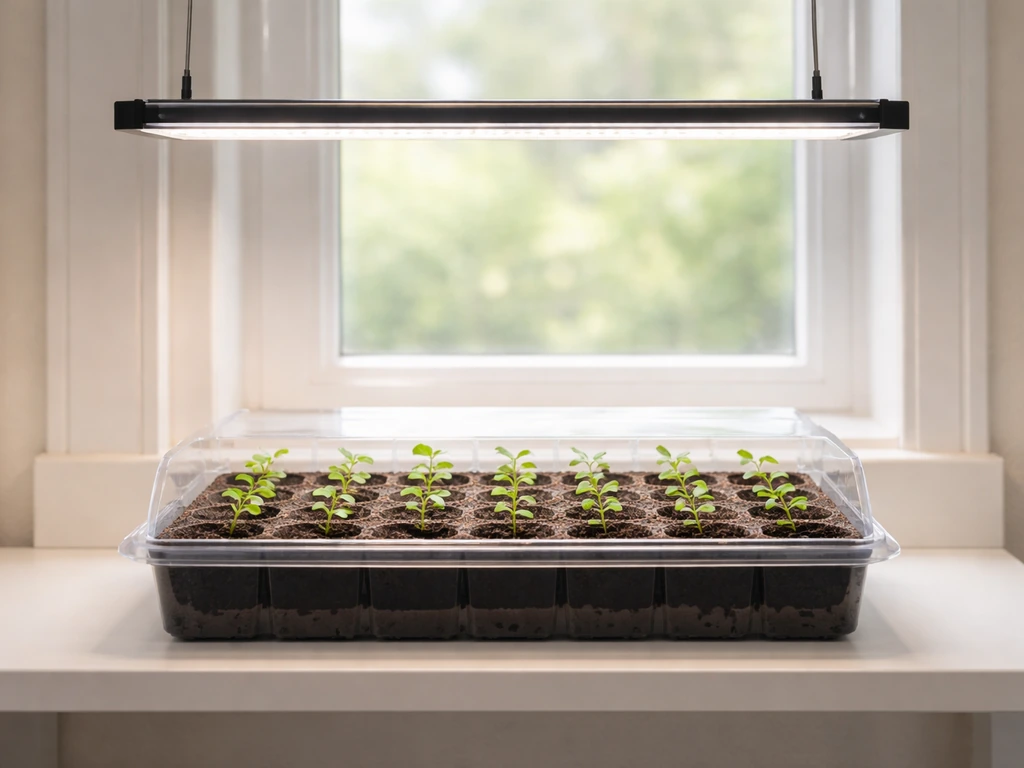
Do You Need Grow Lights to Start Seeds? A Clear Guide
Do you need grow lights to start seeds? Know when window light is enough, setup tips, and signs of too little light.
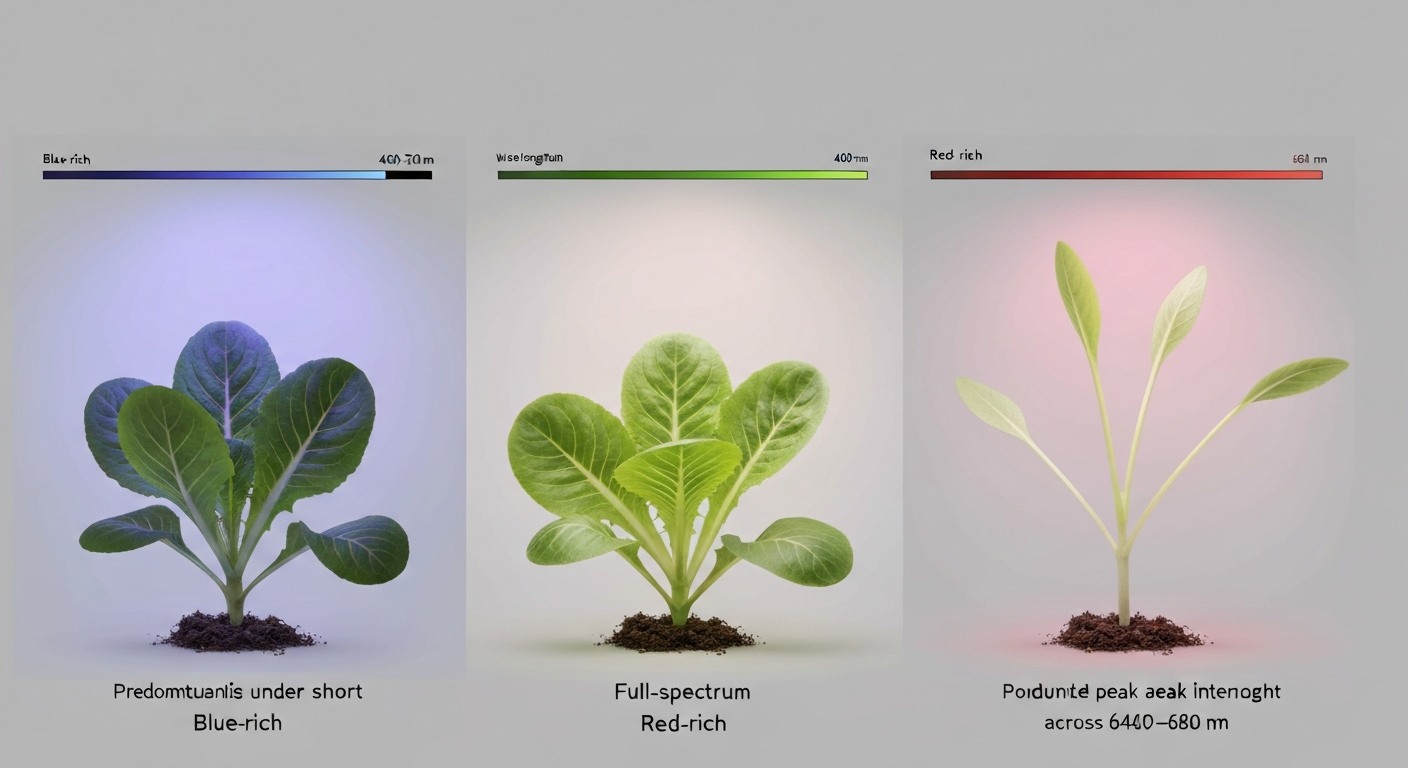
Why Do Plants Grow Best in Blue Light? Science & Practical Guide
Explore why blue light boosts vegetative growth, ideal blue:red ratios, PPFD, photoperiods, fixtures, and setup tips.