Yes, grow lights are safe to leave on, but with a few important conditions: the fixture needs to be certified (look for UL 8800 or equivalent listing), plugged directly into a properly rated outlet or power strip rather than a daisy-chained extension cord, positioned at the right distance from your plants, and run on a timer set to a schedule that actually matches what your plants need. Running a quality LED grow light for 12 to 18 hours a day in a typical home setup is completely fine. Leaving any grow light on 24 hours a day, every day, is where things get more complicated, and not just for electrical reasons. Plants need darkness too.
Are Grow Lights Safe to Leave On? Safe Use Guide
Marcus Holloway
28 Jun 2026
What 'safe' actually depends on here
When people ask if grow lights are safe to leave on, they usually mean one of two things: is it a fire or electrical hazard to run them for long periods, and is the light itself harmful to people in the room? Both are fair questions, and both have clear answers. The safety of continuous operation comes down to four things: the quality and certification of the fixture, how it's wired into your electrical system, how much heat it generates in your specific setup, and whether you're giving your plants appropriate dark periods. The light-exposure concern for people is mostly a non-issue with modern LEDs, but it's worth understanding so you're not anxious about walking past your grow shelf every day.
Electrical safety and fire risk: what to check right now
This is the most practical safety issue for most home setups, and it's also the easiest to get wrong without realizing it. Grow lights draw continuous load for hours at a time, sometimes 12 to 18 hours a day. That's very different from a lamp you flip on for an evening. Extended, continuous electrical loads are where bad cords, overloaded circuits, and cheap adapters cause problems.
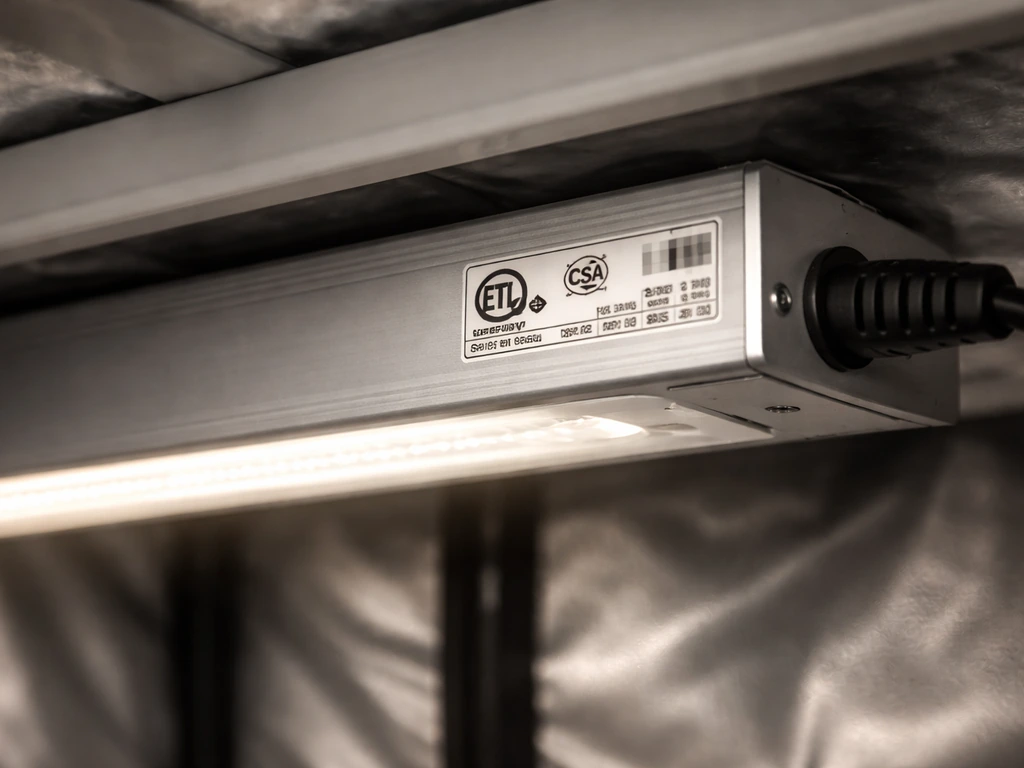
The first thing to check is whether your grow light fixture is Listed by a recognized national testing laboratory. In the U.S., UL 8800 is the specific safety standard for horticultural lighting equipment, and it covers everything from electrical construction to thermal performance. NEC Article 410 actually requires that lighting equipment identified for horticultural use be Listed. If your fixture has a UL listing mark (or equivalent from ETL or CSA), it's been tested for the kind of extended-run use you're putting it to. If it arrived in a plain box with no certification marks anywhere, that's a red flag.
Next, look at how it's plugged in. The CPSC is clear that extension cords present a fire and shock risk when they lack proper wire sizing, strain relief, or safety listings, and the risk comes from overheating at the plug, the socket, or along the cord itself. For a grow light running 16 hours a day, plugging directly into a wall outlet or a properly rated, Listed power strip is always better than routing through an extension cord.
If you do need to use an extension cord because your outlet is far away, use a heavy-duty, Listed cord rated for the wattage of your light, and never piggyback extension cords or plug one into a power strip. OSHA also recommends visually inspecting cords before use: look for cracked insulation, bent prongs, or any sign of heat damage near the plug.
Replace cracked, damaged, or loose cords and follow FEMA USFA home electrical fire safety guidance to avoid overheating hazards from cords and appliances.
If you see any of that, replace it before leaving anything running unattended.
- Check that your grow light fixture has a UL 8800, ETL, or CSA listing mark
- Plug directly into a wall outlet or a Listed, properly rated power strip
- Never use an extension cord that isn't rated for the wattage of your fixture
- Never chain extension cords together or plug one into a power strip
- Inspect cords and plugs before use: look for cracks, heat marks, or bent prongs
- Make sure the circuit isn't already heavily loaded with other appliances
- Keep the area around the fixture clear of fabric, paper, or anything that traps heat
Is the light itself harmful to people? Eyes, skin, and the cancer myth
This one comes up a lot, and it causes more anxiety than it deserves. People worry that grow lights will damage their eyes, give them a tan, or somehow increase cancer risk. Here's the reality: modern LED grow lights, which are what the vast majority of home growers use, are very different from the high-intensity discharge lamps used in commercial greenhouses decades ago.
UL 8800 includes photobiological safety requirements based on IEC 62471, which is the international standard for evaluating eye and skin exposure risks from light sources. Quality LED grow lights are evaluated against these standards as part of certification. For typical home use, walking past your grow shelf, spending time in the same room, or briefly tending your plants under the lights is not going to cause eye or skin damage. The light intensity at normal room distances is well within safe exposure limits.
That said, you should not stare directly into a running LED grow light at close range, especially boards that include a lot of deep-red or far-red wavelengths, because the brightness is uncomfortable and prolonged close-up staring isn't great for any light source. If you're working inside a grow tent with the light on at close range for an extended period, a basic pair of grow room glasses (which filter the specific wavelengths) is an inexpensive comfort measure. But for casual daily interaction with a grow shelf in your living room or spare bedroom, there is no credible evidence that normal LED grow light exposure at room distances causes cancer or meaningful skin effects. That fear is based on confusing full-spectrum LED grow lights with UV tanning devices or high-power laser diodes, which is a very different category.
How many hours to run grow lights for different plants
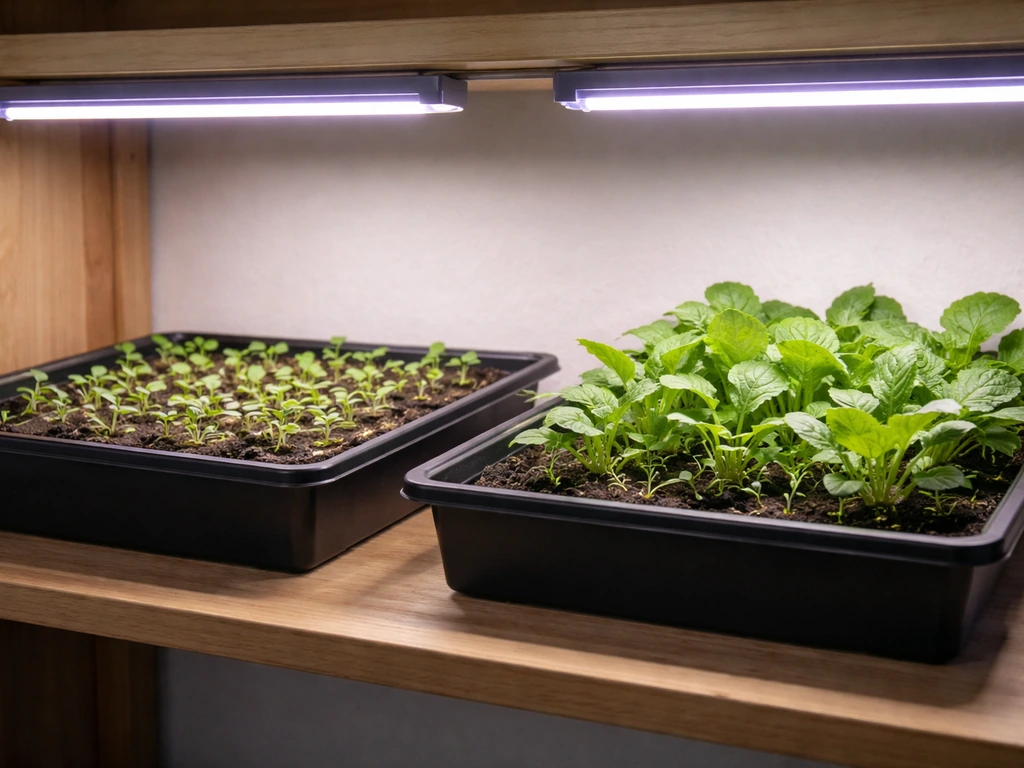
One of the most common mistakes beginners make is assuming that more light always means faster growth. It doesn't work that way. Plants have internal clocks, and most need a dark period to complete normal physiological processes, including flowering and fruiting. Running lights 24 hours a day is not automatically better, and for many plants it actively causes problems.
| Plant Type | Recommended Daily Light Hours | Notes |
|---|---|---|
| Seedlings (most species) | 14 to 16 hours | Consistent schedule is more important than hitting exact hours |
| Leafy greens (lettuce, spinach, herbs) | 14 to 16 hours | Tolerates longer periods but dark period still beneficial |
| Fruiting vegetables (tomatoes, peppers) | 14 to 18 hours | Need consistent schedule; don't respond well to erratic timing |
| Tropical houseplants | 10 to 14 hours | Most prefer moderate duration; bright indirect equivalent |
| Succulents and cacti | 10 to 14 hours | Adapted to strong light but not necessarily long duration |
| Short-day flowering plants (orchids, chrysanthemums) | 10 to 12 hours | Dark period is critical to trigger and sustain flowering |
| Autoflowering cannabis varieties | 18 to 24 hours | Do not require dark period to flower; 18-6 or 20-4 is most common |
The 24-hour question deserves its own honest answer: most plants do best with some darkness. Running lights continuously is occasionally useful for seedlings in the very early stages or for autoflowering varieties specifically bred to not require a dark period. So, yes, you can grow autoflowers on 24 hours of light, but it still helps to use the right setup and monitor how your plants respond autoflowering varieties. For almost everything else, 16 to 18 hours of light with 6 to 8 hours of darkness is the practical ceiling, and many plants do just as well on 14 and 10.
Use a timer, not manual schedules
A basic mechanical or digital outlet timer is one of the most useful things you can buy for an indoor grow setup, and it costs about the same as a bag of potting soil. Manually turning lights on and off is inconsistent, and plants genuinely respond to schedule consistency. An irregular photoperiod, where sometimes the light comes on at 7am and sometimes at 10am, creates stress signals in plants and can disrupt flowering cycles in sensitive species.
A timer also handles the safety angle automatically. Instead of leaving your grow light running indefinitely because you forgot to turn it off before leaving the house, the timer cycles it properly. This is especially important if you're growing in an enclosed tent where heat buildup during unexpectedly long light periods could become a problem. For most home setups, a simple 24-hour outlet timer set to your target on/off times is all you need. If you have multiple lights or want sunrise/sunset ramp effects, smart plugs with scheduling apps work well too.
If you're wondering about running lights 24/7 versus a structured schedule, the structured schedule wins for plant health in almost every case outside of autoflowering varieties or very early seedling stages. The practical guidance on whether 24-hour operation is ever appropriate depends heavily on what you're growing, and that's worth thinking through carefully before skipping dark periods entirely.
Distance, intensity, and airflow: setup details that prevent stress
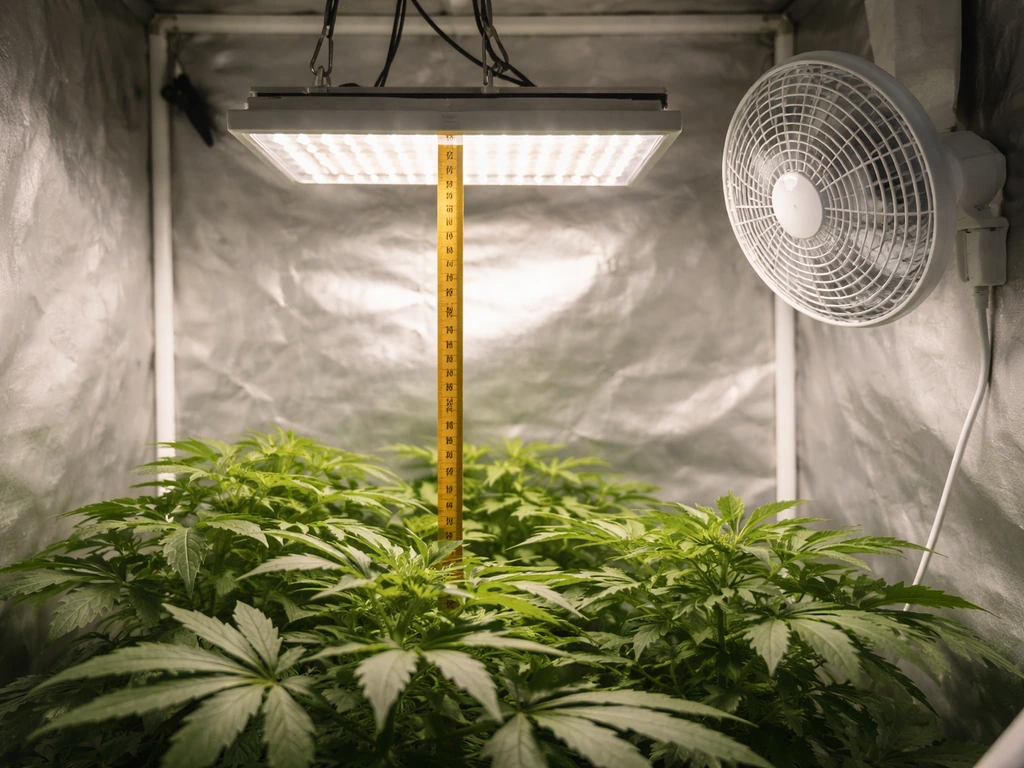
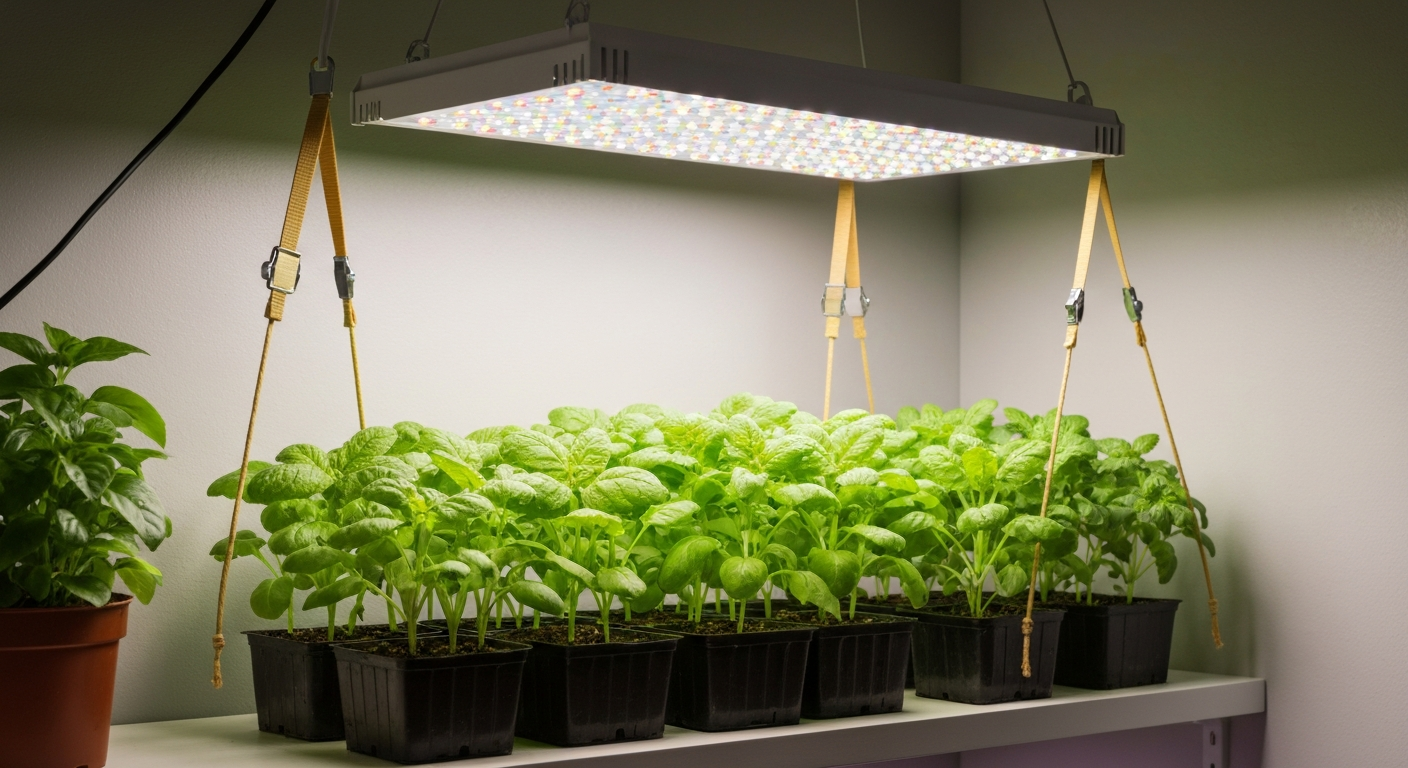
Getting the light-to-plant distance right is where most beginner heat and burn problems come from, not the electrical setup. LED grow lights are much cooler than older HID or fluorescent systems, but they still produce heat at the fixture itself, and too much intensity at close range causes photoinhibition (where the plant's photosynthesis actually shuts down from overload) and physical leaf burn.
As a starting point: most consumer LED grow panels should be 18 to 24 inches above seedlings and young plants, and can be moved to 12 to 18 inches for established vegetative plants if intensity is appropriate. High-intensity LED bars or quantum boards at full power should stay at the higher end of those ranges until you know how your specific plants respond. Always check the manufacturer's recommendation for your specific fixture, because a 45W panel and a 300W quantum board have very different intensity profiles.
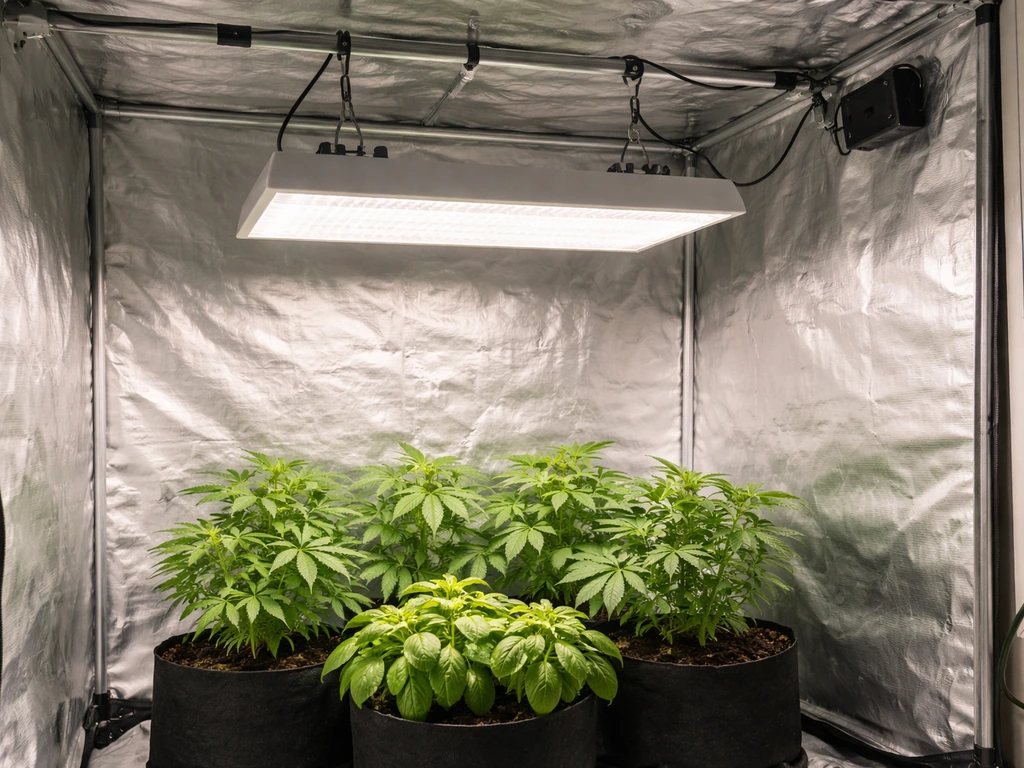
Airflow matters more than most beginners expect, particularly in grow tents. Heat accumulates near the canopy and around the fixture, and without air movement, even a moderate-intensity LED can create a hot zone right where your plants are growing. A small clip fan pointed to create gentle movement across the canopy addresses this, lowers ambient tent temperature, and has the added benefit of strengthening stems. If you're growing on open shelves, normal room air circulation is usually enough, but avoid placing lights in enclosed cabinet spaces without any ventilation.
- Start lights at 18 to 24 inches above seedlings and adjust based on plant response
- Use a small fan for air movement in tents or enclosed spaces
- If using a dimmer on your fixture, start at 50 to 75% intensity for new seedlings and ramp up
- Check canopy temperature with a cheap infrared thermometer: aim for 75 to 85°F at leaf level
- Keep the area above and around the fixture clear for heat dissipation
- Never place flammable materials (cardboard, fabric, paper) within 12 inches of the fixture
How to tell if something is wrong: too much or too little light
Plants are pretty honest about whether your setup is working. The signs are visible within a few days of a problem starting, so checking in daily for the first couple of weeks in a new setup is worth the habit.
Signs you need to back off (too much light or heat)
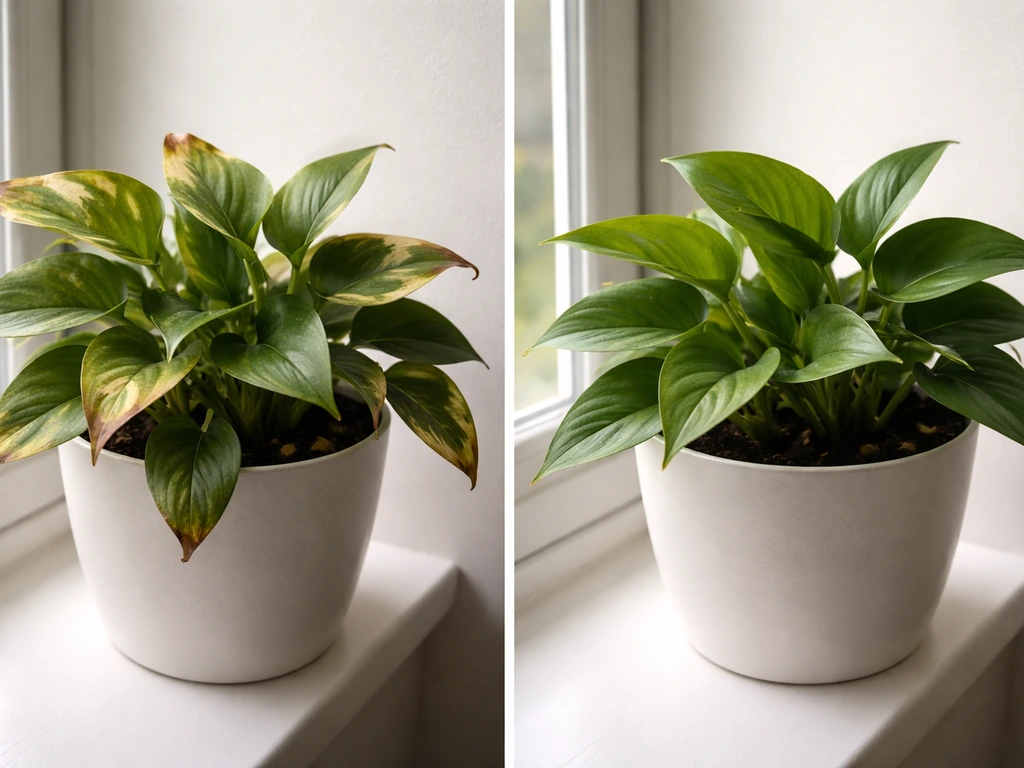
- Leaf edges or tips turning brown or crispy, especially on the uppermost leaves closest to the light
- Leaves curling upward or cupping (a heat stress response)
- Bleaching or yellowing at the top of the canopy while lower leaves stay green
- Wilting during the light period despite adequate watering
- Stunted new growth even though the plant looked healthy before
If you see these, raise the light by 4 to 6 inches first before doing anything else. If your fixture has a dimmer, reduce intensity by 20 to 25%. Check that your fan is actually moving air across the canopy and that the tent or room temperature isn't running above 85°F. In most cases, increasing distance solves the problem within a few days.
Signs you need more light
- Seedlings or stems stretching long and thin toward the light (etiolation)
- Pale, light green leaves when the plant should be deep green
- Slow growth despite healthy watering and feeding
- Lower leaves yellowing and dropping off faster than expected
- Flowering plants not setting buds despite being at the right age
For these, lower the light by a few inches, increase intensity if your fixture allows it, or consider adding more light hours up to the appropriate maximum for your plant type. Leggy seedlings are the most common symptom, and they almost always come from the light being too far away or too weak, not from any schedule issue.
Your safety checklist and what to do today
Here's the practical action list you can run through right now to confirm your setup is safe and properly configured. This covers everything from electrical basics to plant-appropriate scheduling.
- Check your fixture for a UL 8800, ETL, or CSA certification mark. If it has no listing mark, research the brand before continuing to run it unattended.
- Verify the wattage of your fixture and confirm the outlet, power strip, or extension cord you're using is rated to handle that load continuously.
- Inspect all cords and plugs right now: replace anything with cracked insulation, heat discoloration, bent prongs, or loose connections.
- Plug your grow light into a proper outlet or Listed power strip. Remove any chained extension cords.
- Set up a timer with an on/off schedule appropriate for your plant type (see the table above). Aim for consistency rather than perfection on exact hours.
- Measure or estimate your current light-to-canopy distance and adjust to the recommended starting range for your fixture and plant stage.
- If you're in a tent or enclosed space, confirm you have a fan creating air movement and that exhaust ventilation is working.
- Do a quick walkthrough of the space around your fixture: remove any fabric, paper, or flammable material within 12 inches.
- Note today as Day 1 of your monitoring period and check your plants for stress signs daily for the next week.
- If you notice any burning smell, unusual warmth from cords or plugs, or flickering you haven't seen before, unplug the fixture immediately and inspect before running it again.
Grow lights are genuinely safe for long daily runs when the setup is done right. A certified fixture, a proper electrical connection, a timer set to the right schedule, and the light positioned at an appropriate distance from your plants covers everything that matters. The goal isn't to leave them on as long as possible, it's to give your plants exactly the light period they need, reliably, day after day. Get those basics in place and you'll have nothing to worry about.
FAQ
Can I use an outlet timer to leave grow lights on safely while I’m away?
Yes, if the timer is rated for the light’s total wattage (and preferably higher), and the timer is certified/Listed for that type of load. If you are using multiple lights, add their wattage together, account for the power supply or driver losses, and confirm the timer’s maximum load before relying on it for unattended overnight use.
Is it okay to plug a grow light into a power strip instead of the wall outlet?
Avoid plugging a grow light into a power strip that is itself plugged into another strip (no daisy-chaining). If you need more outlets, use an appropriately rated power strip directly into the wall and confirm the strip’s total wattage rating covers everything you connect.
What should I do if my grow light’s plug or cord gets warm?
If the cord, plug, or connector feels warm during use, that is a stop-signal. Even if the light is certified, heat at the plug usually means the cord is undersized, damaged, or poorly seated, and you should replace the cord and ensure the outlet is in good condition before running it for long hours.
Are grow lights safe to leave on inside a grow tent?
Most LED fixtures are fine to run in a tent, but enclosed spaces reduce heat dissipation. Keep the intake area unobstructed, add a small fan for gentle canopy airflow, and double-check the fixture’s manufacturer spacing guidance because the safest “distance” can change when the surrounding air gets warmer.
What happens to plant health if my timer resets after a power outage?
For safety and consistency, use the same stable on/off schedule every day. If your timer skips or resets due to power outages or cheap “no-name” timers, you can end up with broken photoperiods that stress plants, even if the electrical side is fine, so consider a timer with memory or a reliable smart plug.
If I’m concerned about heat, should I dim the light or raise it?
If your light has a dimmer or driver control, adjust intensity gradually and then re-check plant response. Turning intensity down may be safer than moving the light too close, but don’t assume lower power is always equal, because some fixtures still generate heat and can create hot spots if airflow is poor.
Are grow lights safer if I keep them on for fewer hours, even if the fixture is certified?
Don’t assume a longer runtime is safer for the bulb or LEDs. For most plants, too much light time increases stress even when the fixture is electrically safe. Use the plant type’s recommended photoperiod, and treat 24 hours as an exception, not a default.
Is it safe to place a grow light inside an enclosed cabinet or behind a cover?
Yes for most modern LEDs, but do not mount them in a way that blocks the driver’s ventilation. Some fixtures rely on free airflow around the heatsink and driver, so if you fully enclose the back or cover the vents, you can overheat parts that are not actively cooled.
What should I do if I see leaf burn after leaving lights on?
If the plant is showing leaf burn or photoinhibition, the fix is usually mechanical: increase distance first or reduce intensity, and verify airflow and ambient temperature (keeping the space below the mid-80s Fahrenheit range). Repeated close-range exposure can damage leaves, and leaving the same settings on can worsen symptoms.
Can I use a regular LED light bulb instead of a grow light and leave it on safely?
Usually no, because “daylight spectrum” alone does not guarantee horticultural-level intensity or safety certification. A grow light should be Listed for horticultural lighting (UL 8800 or equivalent) to match extended-run expectations, and the right lamp distance depends on the fixture’s actual output.
Next Articles
Why Do Plants Grow Best in Blue Light? Science & Practical Guide
Explore why blue light boosts vegetative growth, ideal blue:red ratios, PPFD, photoperiods, fixtures, and setup tips.
What Artificial Light Will Grow Plants: Best Lights Guide
What artificial light will grow plants: practical guide to LED, CFL, HID spectra, PPFD targets, setup, cost & tips.
Will Any Light Grow Plants? Guide for Indoor Growers
Can any light grow plants? Clear yes/no, science-backed light specs, setup tips, and which household lights work.