No, grow lights should not stay on 24 hours a day for most plants. The sweet spot for the majority of indoor plants and seedlings is 14 to 18 hours of light followed by a proper dark period. Running lights around the clock is technically possible with most modern LED fixtures, but it usually works against you, slowing flowering, stressing plants, and wasting electricity in the process.
Do Grow Lights Stay On 24 Hours a Day? When to Use Timers
Marcus Holloway
7 Jul 2026
Can grow lights run 24/7 (and what "safe" really means)
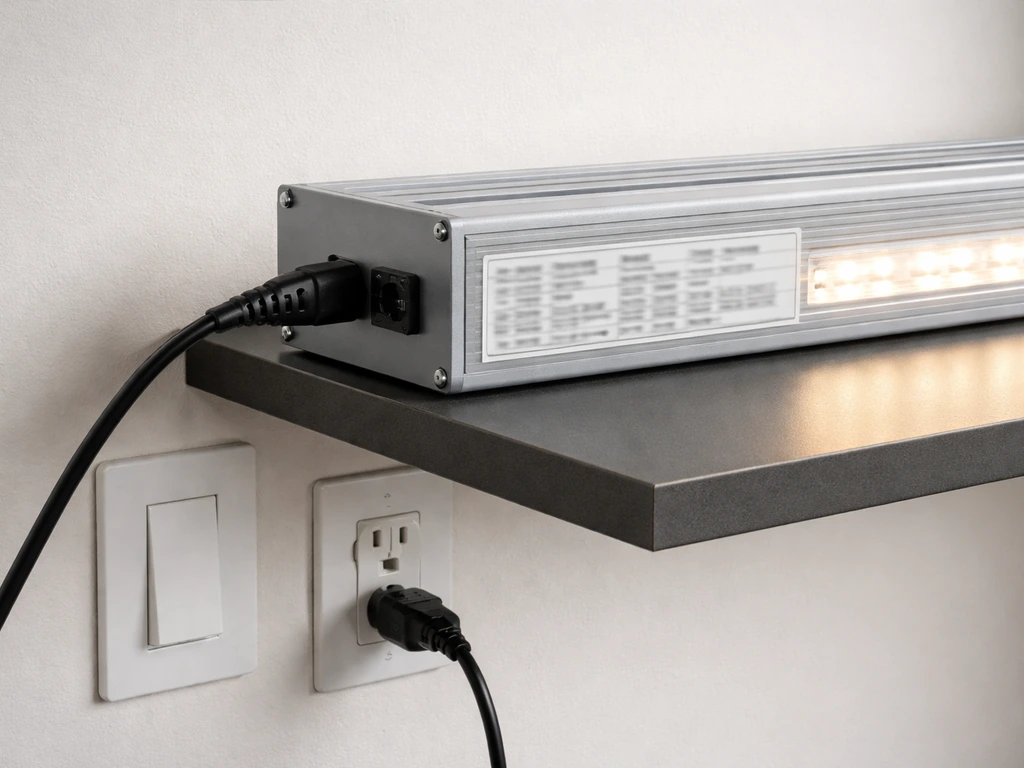
From a pure hardware standpoint, most quality LED grow lights can physically run continuously. A well-made LED fixture rated at 50,000 hours isn't going to burst into flames because you forgot to set a timer. The electrical risk from continuous operation is generally low when your fixture is properly certified (look for ETL, UL, or CE marks), your wiring is sound, and you're not stacking too many fixtures on a single outlet. If you're adding a grow light to a damp space like a basement or laundry room, a GFCI outlet is a smart move regardless of how many hours you're running it.
But "safe for the fixture" and "safe for your plants" are two different things. Running lights 24/7 can shorten bulb lifespan through continuous thermal cycling, and more importantly, it will stress or outright stall many plants by denying them the dark period they need to complete basic biological processes. If you want to leave grow lights on 24/7, remember that even though the hardware may tolerate it, most plants still need a daily dark period to stay healthy 24 hours a day. So when people ask "can you leave grow lights on 24 hours a day," the honest answer is: yes, the light probably won't start a fire, but your plants will likely suffer for it.
Why plants need a dark period
Plants aren't just passively soaking up photons. They're using the light/dark cycle as a clock, and that clock drives some of their most important decisions, including when to flower. This response to day length is called photoperiodism, and it's built into the DNA of most plants you're likely to grow indoors. Penn State Extension explains that photoperiod refers to the time plants are exposed to light during a 24-hour period and that plants are often grouped as long-day, short-day, or day-neutral based on their response to photoperiod photoperiodism.
The key insight from plant science research is that it's the length of uninterrupted darkness, not just the amount of light, that plants actually detect. Short-day plants like poinsettias need a long, unbroken dark period to trigger flowering. Even a brief flash of light during that dark window, like a lamp clicking on in the same room, can reset the clock entirely and delay blooming. Long-day plants flip this around: they flower when the dark period is shorter than a critical threshold. Day-neutral plants (many herbs, tomatoes, peppers) don't care much about photoperiod at all, but they still benefit from a rest period each night.
Beyond flowering, darkness matters for general plant health. Respiration, cellular repair, and the movement of sugars through the plant all happen more efficiently during the night phase. University of Minnesota and University of Vermont Extension both explicitly advise against continuous lighting for this reason: plants need darkness to develop properly, not just light.
Light schedules by plant type and growth stage
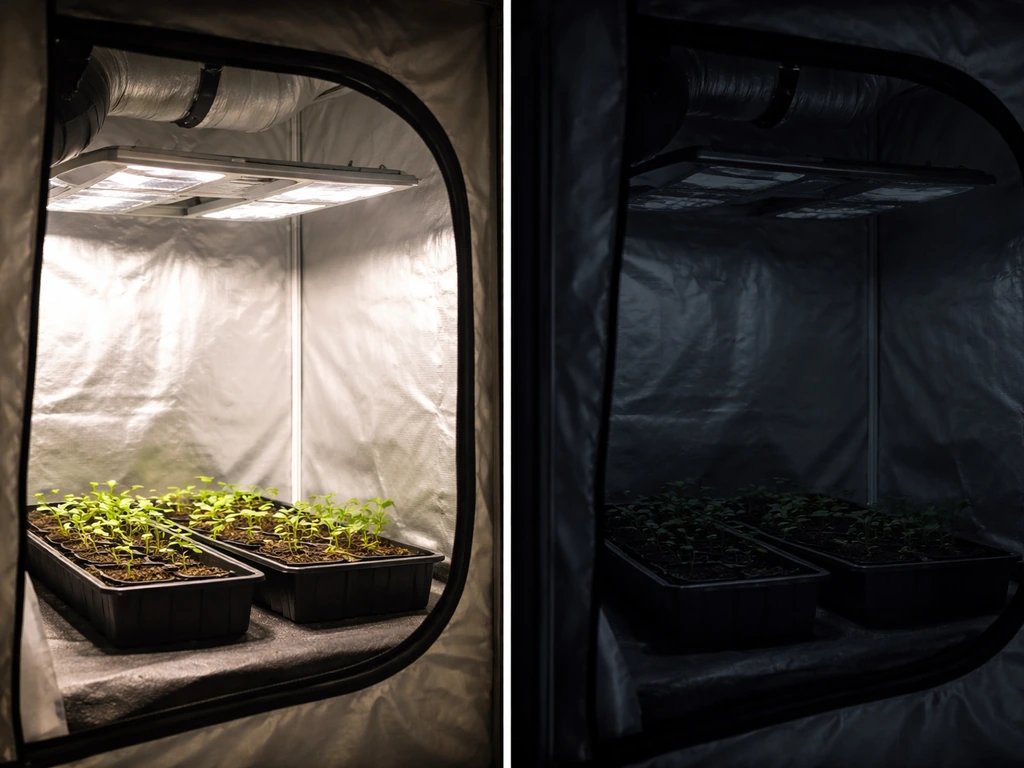
The right schedule depends on what you're growing and where it is in its life cycle. Here's how to think about it practically.
Seedlings and cuttings
Seedlings are where most beginners get tempted to run lights all day and night, thinking more light equals faster growth. For autoflowers, it still helps to avoid running 24 hours of light and to provide a regular dark window so the plant can follow a healthier light cycle. It doesn't work that way. The consensus from university extension programs is 14 to 16 hours of light per day, with 8 to 10 hours of darkness. Cornell Cooperative Extension, the University of Maryland Extension, and University of Minnesota Extension all land in this range. Cuttings being propagated are even more sensitive: the recommended DLI (daily light integral, basically the total dose of light per day) for propagation is quite low, around 4 to 6 mol per square meter per day, which means dialing back both intensity and duration.
Vegetative growth
Once plants are established and pushing out new leaves, you can stretch the light period a bit. 16 to 18 hours is a common vegetative schedule for most herbs, leafy greens, and long-day crops. This mimics the long summer days that tell the plant to keep growing. Most bedding plants and potted crops need a DLI of at least 10 to 12 mol per square meter per day at this stage to perform well. You hit that number through a combination of intensity and duration, which is why just running a dim light for 24 hours often underperforms a brighter light run for 16.
Flowering and fruiting
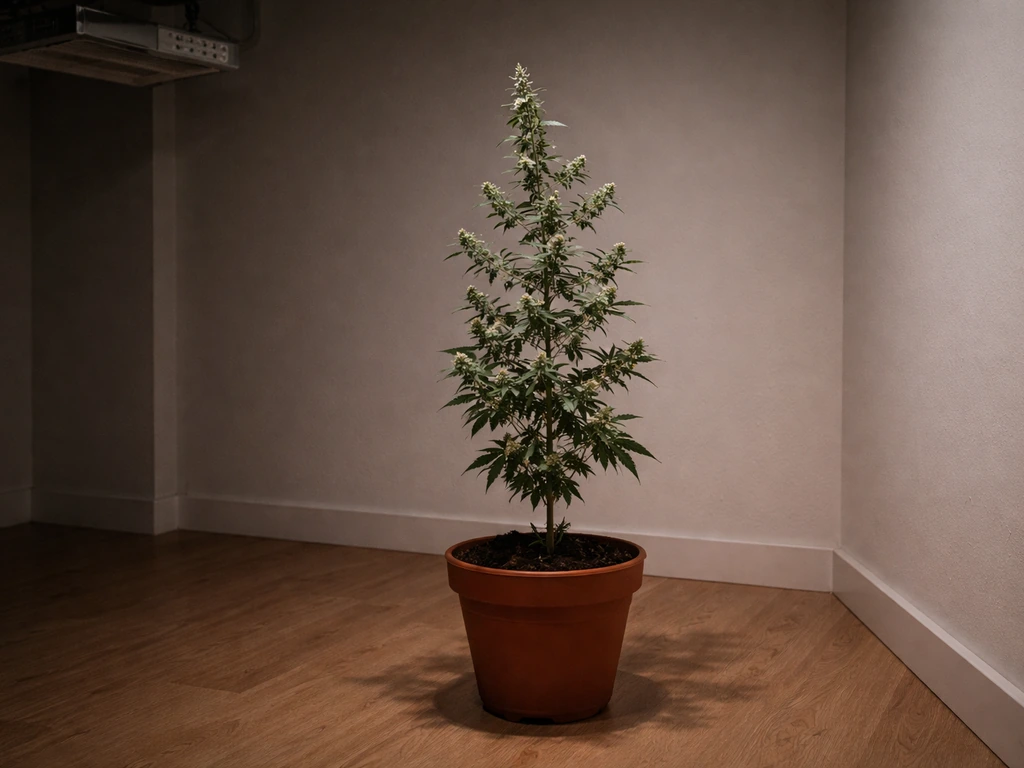
This is where the photoperiod becomes most critical. For short-day plants (chrysanthemums, poinsettias, some strawberries), you need to deliberately shorten the light period to around 12 hours or less, with a solid 12-plus hours of complete, uninterrupted darkness. For cannabis and similar crops, the traditional indoor flip to a 12/12 (12 hours light, 12 hours dark) schedule is used specifically to trigger flowering in photoperiod strains. Research has even questioned whether 12 hours is truly optimal, with some evidence suggesting other ratios may work better for certain cultivars, but 12/12 remains the standard starting point. Day-neutral plants that flower regardless of photoperiod (like many tomatoes and peppers) still generally do best with 14 to 16 hours rather than continuous light.
| Stage / Plant Type | Recommended Light Hours | Dark Period | Notes |
|---|---|---|---|
| Seedlings / cuttings | 14 to 16 hours | 8 to 10 hours | Low DLI needed; avoid high intensity |
| Vegetative growth | 16 to 18 hours | 6 to 8 hours | Matches long-day summer conditions |
| Short-day flowering plants | 12 hours or less | 12+ hours (unbroken) | Any light leak during dark period delays blooming |
| Long-day flowering plants | 14 to 18 hours | 6 to 10 hours | Flower when dark period is below critical threshold |
| Day-neutral plants (herbs, tomatoes) | 14 to 16 hours | 8 to 10 hours | Photoperiod-insensitive but still benefit from darkness |
| Autoflowering varieties | 18 to 20 hours | 4 to 6 hours | Some growers run 20/4; true 24/7 rarely adds benefit |
What happens when you leave lights on too long
The problems from too much continuous light tend to creep up gradually, which is why it's easy to miss at first. Here's what to watch for if you've been running your lights too many hours per day.
- Leggy, stretched stems: Counterintuitively, this is often a sign of too little light intensity rather than too many hours, but continuous low-intensity light can produce the same result. Plants stretch toward what feels like insufficient light even if the timer says it's on constantly.
- Delayed or no flowering: For photoperiod-sensitive plants, running lights beyond the critical dark period simply prevents the plant from ever receiving the signal to bloom. You can wait weeks and wonder why nothing's happening.
- Leaf curl, tip burn, or bleaching: These are signs of light stress, especially with high-intensity LEDs mounted too close. Running a powerful light for 24 hours dramatically increases the cumulative dose (DLI) beyond what the plant can use, and the excess becomes damaging.
- Slow overall growth despite lots of light: Plants denied a proper dark period often can't efficiently move sugars from leaves to roots and developing tissue. Growth stalls or becomes uneven even though the light looks right.
- Interveinal chlorosis or unusual leaf patterns: Chronic light stress can interfere with nutrient uptake, causing symptoms that look like deficiencies even when the soil or nutrient solution is correct.
One accidental overnight run because a timer malfunctioned is unlikely to cause lasting harm. Continuous operation day after day is a different story, and the effects compound over time.
Safety, heat, and electricity for continuous use
Let's address the practical safety stuff directly, because it's a real concern when you're leaving any electrical device running for long stretches.
Heat is the biggest operational concern with grow lights. LEDs run much cooler than HID (high-intensity discharge) or older fluorescent setups, but they still generate heat, and that heat needs somewhere to go. In a small tent or closet, continuous operation without adequate ventilation can push temperatures high enough to stress plants and, in extreme cases, create fire risk at the fixture or nearby materials. Check that your fixture has adequate clearance, your grow space has airflow, and the light itself isn't running hotter than its rated temperature range. If the driver or heatsink is uncomfortably hot to the touch after an hour, that's a sign to reassess your setup.
Electricity use adds up fast. A 600-watt LED running 24 hours a day uses 14.4 kWh per day. At the US average electricity rate, that's roughly $1.50 to $2.00 per day per light, just for one fixture. Cutting to an 18-hour schedule drops that by 25 percent immediately, and your plants will likely grow better anyway.
Fixture lifespan is also affected by continuous operation. A light rated for 50,000 hours reaches that end-of-life point in about 5.7 years at 24 hours a day, versus nearly 7.6 years at 18 hours a day. It's not a dramatic difference, but it's real. More importantly, some drivers and ballasts have duty-cycle ratings that assume a daily off period. Running them continuously can void warranties and shorten component life faster than the LED chips themselves.
Eye safety is worth a quick note. Grow lights, especially full-spectrum LEDs, can cause eye strain and discomfort with prolonged direct exposure. This is more of a comfort issue for the person tending the plants than a serious medical risk, but avoid staring directly at high-intensity fixtures, and consider UV-blocking safety glasses if you're spending extended time under broad-spectrum or UV-heavy lights.
Setting up timers, dialing in distance, and building your schedule
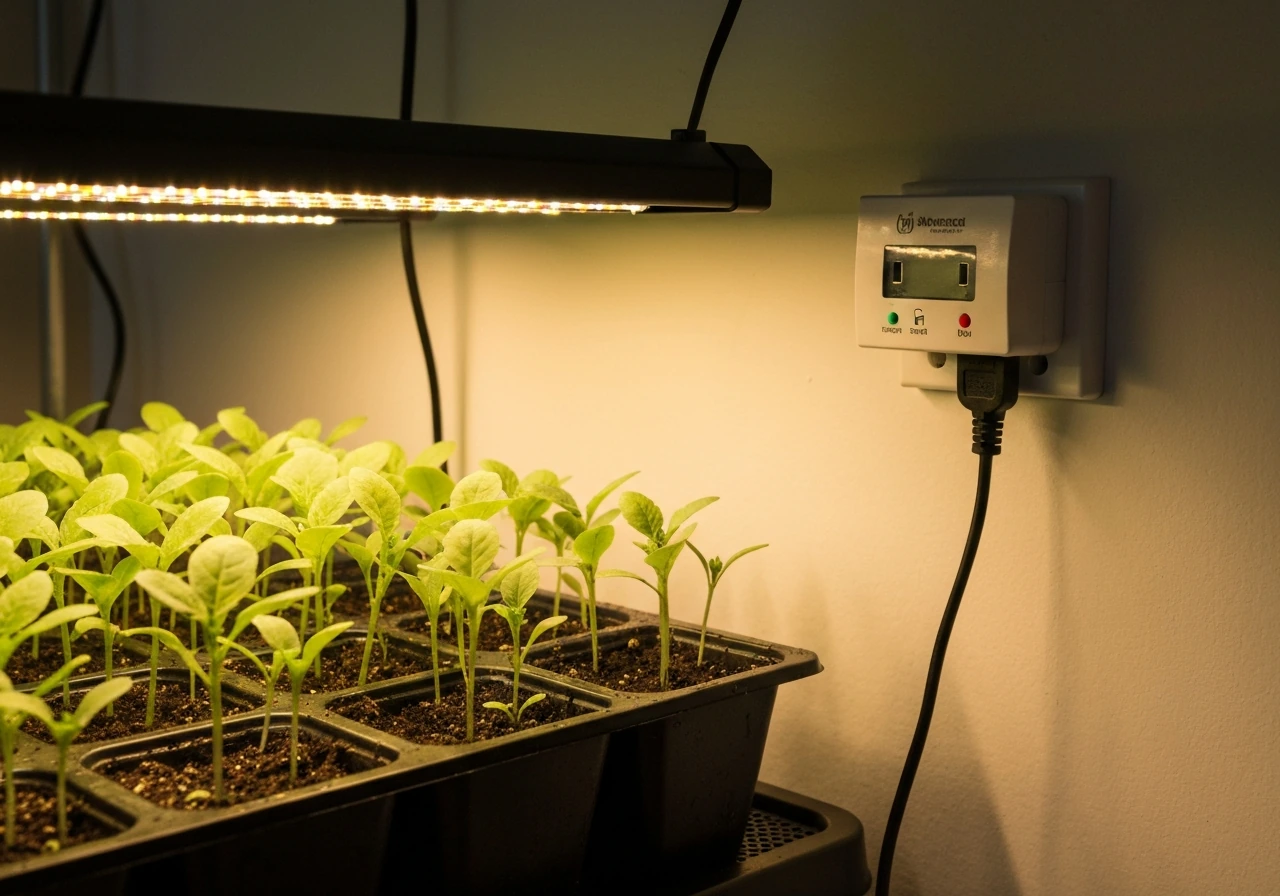
A basic mechanical outlet timer is the single most useful tool in any grow light setup. Set it, confirm it's working on day one, and stop thinking about it. Most consumer grow lights even come packaged with one for this reason: manufacturers know nobody should be manually switching lights on and off at 6 a.m. and 10 p.m. every day. Smart plugs with scheduling apps work just as well and let you adjust from your phone.
Distance matters as much as duration. The same LED bar might need to run 8 hours a day at one mounting height to deliver the right DLI, or 16 hours a day at a greater distance to achieve the same total light dose. This is why the UNH Extension specifically flags distance as a variable when calculating how long to run your lights. Start with the manufacturer's recommended hanging height, then observe your plants over the first week. Stretching toward the light means move it closer or add hours. Bleaching or tip burn means move it farther away or reduce hours.
A practical DLI target gives you a real number to work toward rather than just guessing at hours. For seedlings, aim for 10 to 15 mol per square meter per day. For established vegetative plants, 15 to 25 is a reasonable range for most crops. Flowering plants often want 25 to 40, though this varies significantly by species. You can get a rough DLI estimate from a cheap PAR meter app on your phone (not perfectly accurate but useful for ballpark comparisons) or invest in a dedicated quantum flux meter if you're growing at scale.
- Pick a schedule appropriate for your plant type and growth stage (see the table above).
- Set a timer and confirm it's cycling correctly on day one.
- Hang the light at the manufacturer's recommended height for your plant size.
- Observe plants after 5 to 7 days for stretching (too little light) or bleaching/curling (too much).
- Adjust distance first, then duration if needed, to hit your target DLI.
- Revisit the schedule when you transition between growth stages (seedling to veg, veg to flower).
Troubleshooting when growth looks off
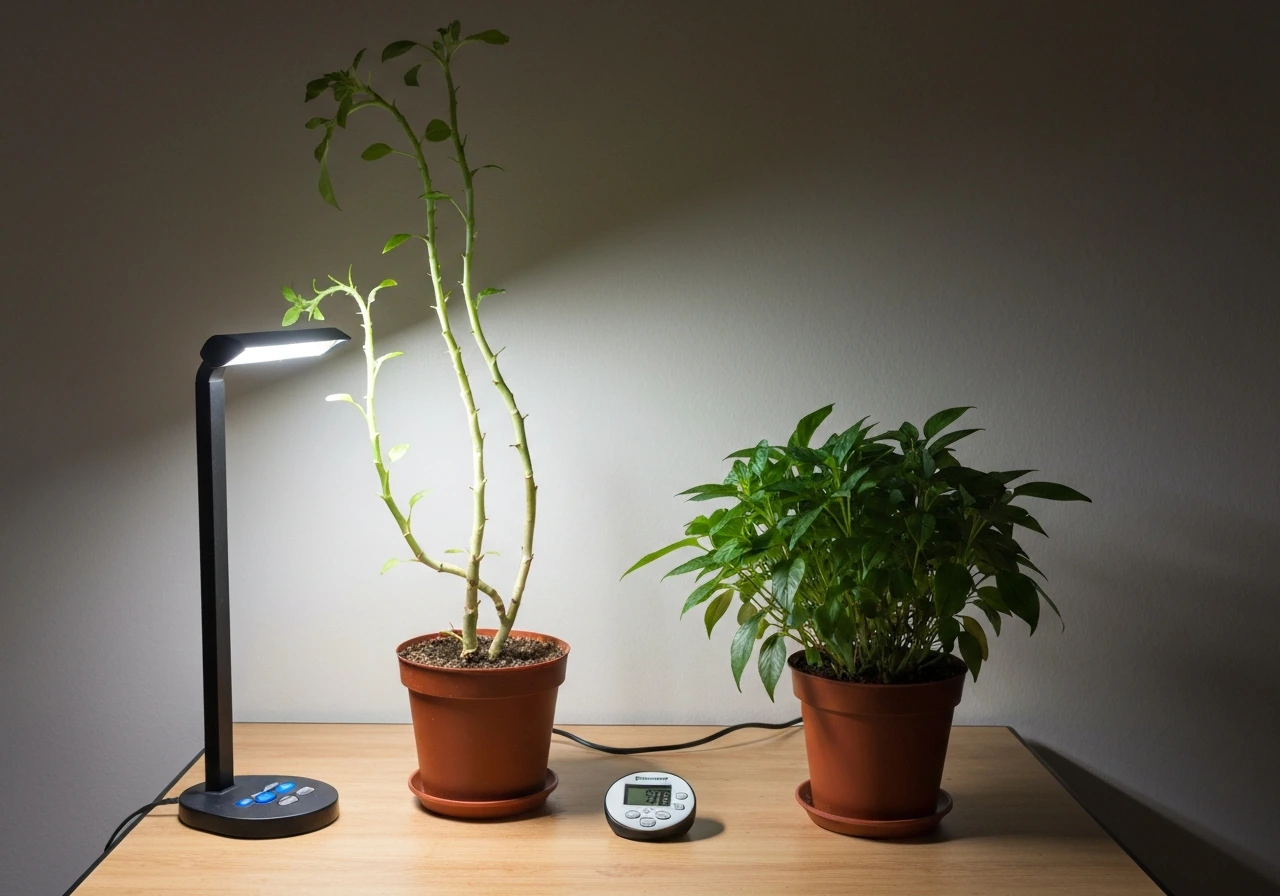
If your plants aren't performing the way you expect, the light schedule is one of the first things to check before chasing nutrient deficiencies or watering problems. Here's a quick diagnostic framework.
Tall, weak, pale stems that lean toward the light almost always point to insufficient light intensity or duration, even if the light is technically running for many hours. Move the fixture closer by 2 to 4 inches and check again after a week. If the stems were already stretched when you got the seedlings, they won't fully fix themselves, but new growth will be more compact.
Plants that simply won't flower despite looking otherwise healthy usually have a photoperiod issue. Confirm your timer is actually shutting off the light at the scheduled time. Check for light leaks in your grow tent or room, things like phone charger LEDs, power strips with indicator lights, or light coming under a door can all be enough to disrupt a short-day plant's dark period. For cannabis or other strict photoperiod plants, even a small, consistent light leak during the dark window can prevent flowering indefinitely.
Leaf curling, bleaching near the top of the canopy, or crispy tips on leaves closest to the light mean the intensity or cumulative dose is too high. Raise the fixture, reduce hours, or use a dimmer if your light supports it. Many modern LED fixtures have a built-in dimming function precisely for this reason.
If you've accidentally left your lights on overnight once, don't panic. One unplanned long run is very unlikely to cause lasting damage. Reset your timer, double-check it's functioning correctly, and keep moving. The plants will be fine.
Whether you're troubleshooting your first seedling tray or dialing in a more serious indoor setup, the core principle stays the same: grow lights are a tool, not a switch you flip to full power and ignore. A consistent, appropriate schedule with a proper dark period will outperform continuous operation every time.
FAQ
If I leave the lights on too long once, will it permanently damage my plants?
Use a quick test: set the timer to your planned schedule, then confirm the light is truly off during the dark window (stand in the grow area at mid-dark and look for any glow, or cover the sensor on smart plugs that have indicator LEDs). If you suspect light leaks, block gaps at the tent seams and around cords, and avoid using outlet or power-strip indicator lights in the same space.
What is more harmful, occasional extra hours or keeping lights on 24/7 consistently?
It can, even if nothing looks “burned.” Continuous light can prevent the plant’s internal light clock from completing the nightly cycle (dark-period biology), which can delay flowering and slow overall recovery. For plants that rely on uninterrupted darkness (short-day types), a brief but repeatable on-time during the dark window matters much more than occasional daytime overlap.
Can I replace a timer with a smart plug schedule, and is there anything to watch out for?
Avoid it. Even if you want “continuous growth,” use a timer (mechanical or smart) to guarantee an off period every day. If you use smart schedules, verify time zone and daylight saving settings, because an automatic time change can accidentally extend the dark window or remove it on a specific day.
Does it make a difference if I use a dimmer light for 24 hours versus a brighter light for fewer hours?
No, but proximity can trick you. Two setups can deliver similar total light dose while one is held longer and dimmer, and the plant response differs because intensity drives stress and the heat load at the canopy. If leaves curl or bleach, first adjust intensity (raise the fixture or dim it) rather than only increasing or decreasing hours.
If my lights are dimmed, can I keep them on all day and night without messing up the photoperiod?
For most fixed-output fixtures, you cannot safely compensate for a missing dark period just by reducing intensity. Plants detect the length of uninterrupted darkness, so reducing intensity while keeping lights on 24/7 still removes the dark window. The fix is to restore a true off period on a daily cycle.
I need a light source to check the plants at night. Will a phone light or headlamp affect flowering?
If you must use an always-on light for safety or monitoring, separate the source from the grow canopy and keep it out of the dark window entirely. A better approach is using a headlamp with a red or very low-intensity setting only when you enter, and keep your visits brief, because even small flashes can reset photoperiod timing for strict short-day plants.
If I change the mounting height, should I adjust the timer length or the brightness?
Not usually. The key measurement is how much light the plants receive at the canopy, distance, and your DLI target, rather than the fixture’s listed wattage alone. If you change mounting height, re-check signs like stretching (too little dose) or bleaching (too much dose), then adjust either hours or intensity to hit your DLI goal.
My grow light has auto modes. How do I make sure it still follows my light schedule?
Yes, and it’s a common mistake: some “auto” or “brightness” modes behave like continuous lighting if the schedule is misconfigured or if the fixture overrides the timer. Always test by running the schedule for at least one full cycle and verify the fixture turns off completely, not just “dims.”
Should the schedule change when I move plants from a seedling tray to the main grow area?
Not in the same way. Seedlings and cuttings often need more conservative DLI and gentler schedules than mature vegetative plants, and they can be more sensitive to both stress and stretching. If you are transitioning from seedlings to veg, change one variable at a time (for example, add one or two hours after the first week) so you can tell what the plants respond to.
Is there a practical way to tell if my setup has enough cooling if I accidentally ran the lights too long?
Aim for reliability and plant safety: do a hardware check by confirming ventilation (fans, intake, and exhaust), verifying the heatsink/driver temperature after continuous operation, and ensuring the fixture has enough clearance around it. If you are running near a tent with limited airflow, an off schedule often reduces heat peaks, which helps prevent both stress and nuisance failure.
Next Articles
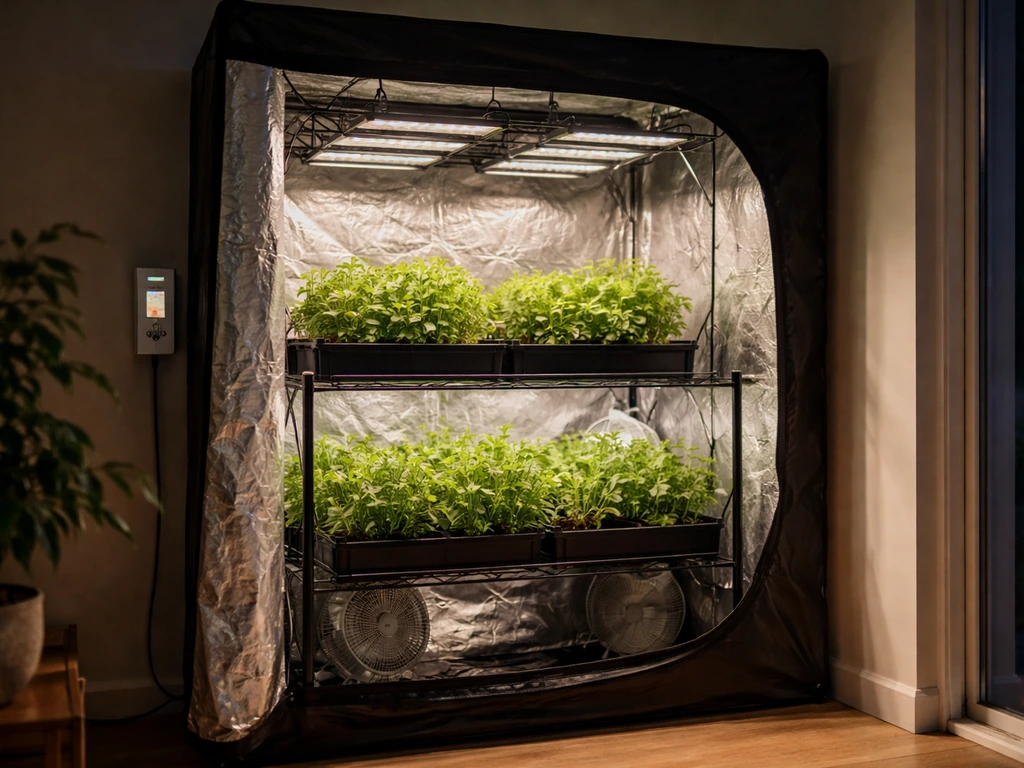
Do You Leave Grow Lights On 24/7? Best Schedules
Do not leave grow lights on 24/7. Get proven schedules, timer setup, and safe intensity settings for healthy indoor plan
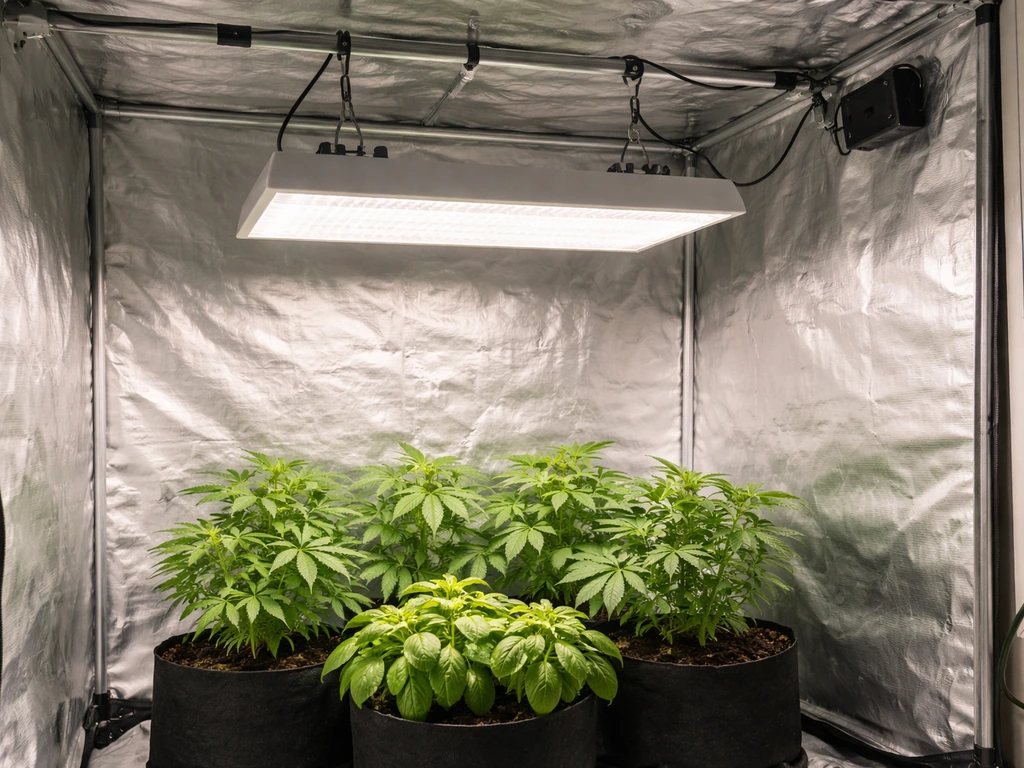
Are Grow Lights Safe to Leave On? Safe Use Guide
Learn if grow lights can run all day safely, covering fire and heat risks, electrical safety, timers, and safe distance.
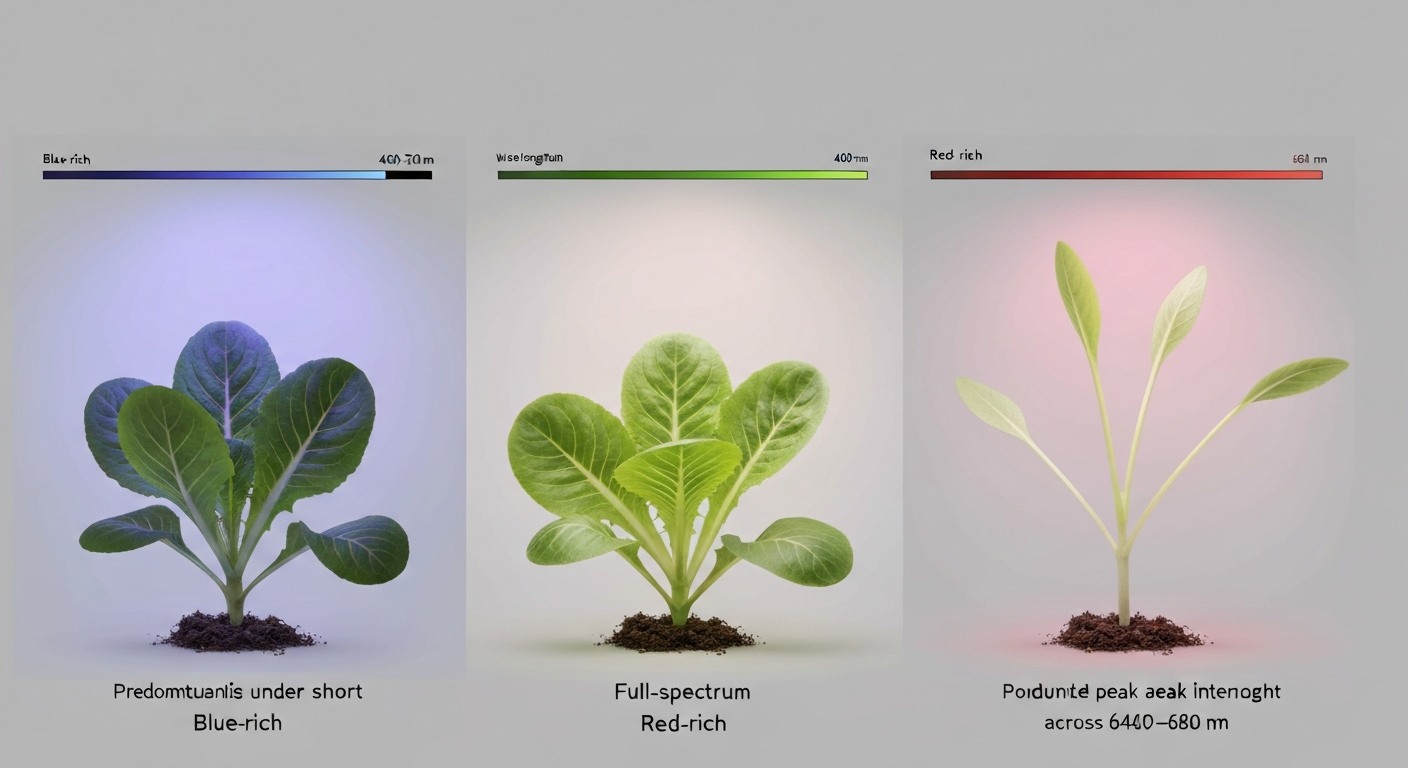
Why Do Plants Grow Best in Blue Light? Science & Practical Guide
Explore why blue light boosts vegetative growth, ideal blue:red ratios, PPFD, photoperiods, fixtures, and setup tips.