Yes, you can grow autoflowers under 24 hours of light and many growers do it successfully. For practical guidance on whether you can use grow lights 24 hours a day, see the linked article can you use grow lights 24 hours a day. For practical guidance and safety tips, see the internal guide 'Do you leave grow lights on 24/7'. Because autoflowering cannabis flowers based on age rather than day length, it does not need a dark period to trigger bloom the way photoperiod strains do. That said, 24/0 is not a guaranteed improvement over 18/6 or 20/4. The science flags some real risks around photoinhibition and oxidative stress, grower reports are genuinely mixed, and running lights all day has meaningful electrical, heat, and cost implications. Whether 24/0 is worth it depends on your specific goals, your strain, and how well your setup handles the extra load.
Can You Grow Autoflowers on 24 Hours of Light? Guide
How autoflowers differ from photoperiod strains
Most cannabis strains are photoperiod plants. They measure night length to decide when to flower. Indoors, that means keeping them on 18 hours of light during veg, then manually flipping to a 12/12 schedule to force bloom. If they get light during the dark period, flowering stalls or herms. Those strains genuinely need darkness.
Autoflowers work differently at a genetic level. Researchers have now mapped specific loci, referred to as Autoflower1 and Autoflower2, in Cannabis sativa that make modern autoflowering cultivars day-neutral. Autoflower1 and Autoflower2 loci have been mapped in Cannabis sativa, showing many modern autoflower cultivars are genetically day‑neutral (flower by age) rather than photoperiod‑sensitive. These loci, inherited from Cannabis ruderalis, uncouple flowering from photoperiod. The plant simply starts flowering after a set number of weeks of growth, regardless of how many hours of light it gets. That single genetic difference is what makes 24/0 a realistic option in the first place.
The practical implication is straightforward: you will not accidentally prevent an autoflower from flowering by keeping lights on around the clock. Bloom will still begin on schedule. What you are testing with 24/0 is not whether the plant will flower, but whether non-stop light helps or hurts the overall grow.
What the science actually says (and where it goes quiet)
I want to be honest about the evidence gap here, because a lot of forum advice glosses over it. As of mid-2026, there are no peer-reviewed controlled trials that directly pit 24/0 against 18/6 or 20/4 on modern autoflowering cannabis cultivars. Most published cannabis lighting research focuses on photoperiod changes in the 12 to 13-hour range, or on varying PPFD and DLI across shorter schedules. That does not mean 24/0 is a bad idea; it means anecdote is filling a space that formal studies have not yet occupied.
What research does tell us: a peer-reviewed study by Šrajer Gajdošik et al. (2022) found that prolonged photoperiods in cannabis increased biochemical markers of photoinhibition and oxidative stress, including elevated reactive oxygen species and lipid peroxidation, compared to shorter photoperiod controls. See the peer‑reviewed study 'Effect of Prolonged Photoperiod on Light‑Dependent Photosynthetic Reactions in Cannabis' (Šrajer Gajdošik et al., 2022) for the experimental evidence of increased reactive oxygen species, lipid peroxidation, and altered chlorophyll fluorescence under prolonged photoperiods. That is genuine plant-biology evidence that non-stop light is not entirely harmless, even for day-neutral plants.
Separately, controlled trials on cannabis (photoperiod strains) show that yield tends to increase with higher daily light integrals, with PPFD up to 700 µmol/m²/s producing roughly linear increases in flower production across DLI ranges of about 15 to 41 mol/m²/day. The mechanism behind a potential 24/0 benefit is really just a higher DLI, not the absence of darkness itself. You can achieve the same DLI with 20/4 at a higher intensity, which is a key trade-off worth keeping in mind.
On the anecdotal side, GrowDiaries threads and discussions on forums like r/Autoflowers show a split picture. Some growers report faster early growth and comparable or slightly larger yields under 24/0. Others document leaf yellowing, stress symptoms, and no meaningful yield advantage. Strain matters enormously in these reports, and grow conditions vary so much that direct comparisons are hard to make.
Reported effects of 24/0 on autoflowers
Based on the combination of plant-physiology research and grower-reported patterns, here is what you can reasonably expect under 24/0, with appropriate caveats about the evidence quality.
Growth rate and veg phase
Many growers report noticeably faster early vegetative growth under 24/0, which makes intuitive sense. More daily light hours means a higher DLI, which feeds faster photosynthesis. If your main goal is compressing the grow timeline or maximising canopy size before flowering kicks in, the extra hours can help. This is probably the most consistently reported benefit in grower communities.
Flowering and overall yield
Flowering still initiates on time, typically around weeks 3 to 5 depending on the strain. Yield outcomes in grower reports are genuinely mixed. Some see heavier harvests; others see no difference or worse results compared to 20/4. Without controlled trials targeting autoflowers specifically, I cannot give you a confident yield prediction. What the research does suggest is that diminishing returns on DLI are real, and that photoinhibition at continuous high light can reduce, rather than increase, photosynthetic efficiency.
Cannabinoids and terpenes
Spectral quality studies in cannabis show that light spectrum and photoperiod interact to affect secondary metabolite production. Continuous light, especially if it induces stress, could theoretically affect terpene and cannabinoid profiles. In practice, grower reports do not show a clear direction here and there is no specific controlled data on 24/0 versus cyclic schedules for autoflower secondary metabolites. Handle any claims about improved potency under 24/0 with scepticism.
Pros and cons of 24/0 lighting for autoflowers
- Faster early vegetative growth reported by many growers, compressing the overall timeline
- Higher daily light integral without needing to run lights at extreme intensities
- No dark period management needed, simpler scheduling
- Potentially useful when you are trying to maximise canopy size before autoflower bloom begins
- Works in spaces where temperature control during lights-off is a problem (lights provide warmth)
- Documented risk of photoinhibition and oxidative stress at continuous high light levels
- Leaf chlorosis (yellowing) reported by a meaningful number of growers, especially at higher intensities
- Uses roughly 33% more electricity per day than an 18/6 schedule
- Higher heat load requires more robust ventilation and cooling
- LED drivers and fixtures rated for continuous operation still degrade faster under thermal stress if cooling is inadequate
- Yield advantages over 20/4 or 18/6 are not reliably demonstrated by controlled research
- No dark period means the plant loses any potential restorative or metabolic cycling benefits
Lighting schedules explained: 18/6, 20/4, and 24/0
The three schedules most commonly discussed for autoflowers each have a logic behind them. Understanding what each actually does helps you pick the right one for your situation rather than copying whatever someone else used.
18/6 is the most widely used all-purpose schedule for autoflowers. Six hours of darkness gives the plant some circadian rhythm, reduces stress risk, keeps heat load manageable, and cuts your electricity bill relative to 24/0. For most home growers growing most strains, 18/6 is a safe, proven choice with a solid body of grower experience behind it.
20/4 is a popular middle ground. You get a noticeably higher DLI than 18/6 while still giving the plant a short rest period. Many experienced autoflower growers rate this as their preferred schedule because it combines the growth benefits of extra light hours with lower stress risk than 24/0. If you are trying to push yield without going full continuous, this is where I would start.
24/0 maximises total daily photon delivery and eliminates scheduling complexity. It works for many growers and many strains. But it carries the highest cost, heat, and stress risk of the three. It is most defensible when you have verified your strain handles it well, your ventilation is solid, and you have a reason to want the extra growth speed.
Schedule comparison: 18/6 vs 20/4 vs 24/0
| Factor | 18/6 | 20/4 | 24/0 |
|---|---|---|---|
| Light hours per day | 18 h | 20 h | 24 h |
| Relative daily energy use | Baseline | +11% | +33% |
| DLI at 400 µmol/m²/s | ~26 mol/m²/d | ~29 mol/m²/d | ~35 mol/m²/d |
| Flowering trigger (autoflower) | Age-based, unaffected | Age-based, unaffected | Age-based, unaffected |
| Photoinhibition/stress risk | Low | Low to moderate | Moderate to high |
| Heat load | Moderate | Moderate-high | High |
| Circadian rest period | 6 h | 4 h | None |
| Complexity/scheduling | Simple timer | Simple timer | None needed, or timer optional |
| Best for | Most growers, most strains | Yield-focused grows with good cooling | Fast veg boost, cold rooms, tested strains |
| Evidence base | Strong anecdotal + some research | Strong anecdotal | Mixed anecdotal, no direct controlled trials |
My recommendation: start with 20/4 if you want to push performance beyond 18/6. Only move to 24/0 after you have confirmed your strain, your cooling setup, and your electrical circuit can handle the load.
When 24/0 makes sense and when to skip it
Scenarios where 24/0 is worth considering
- You are growing in a cold environment (basement, garage in winter) where the light's heat output is needed to maintain temperature during what would otherwise be a dark period
- You want to maximise early vegetative mass before autoflower bloom kicks in and have a strain known to tolerate continuous light
- You are running a short, single-crop grow and want to compress the timeline rather than optimise per-watt efficiency
- You have already tested the strain at 20/4 without stress symptoms and want to push further
Scenarios where you should skip 24/0
- Your grow space already runs hot; 24/0 will make temperature management significantly harder
- You are on a tight electricity budget; the 33% extra hours versus 18/6 add up fast
- You are using an underpowered or uncertified LED fixture not rated for continuous duty
- Your circuit is not sized for a continuous load (more on this below)
- You are growing a strain you have not tested before; introduce continuous light only once you know how the cultivar responds
- Legal or lease considerations apply; running high-draw equipment 24/7 can flag utility anomalies in some jurisdictions
Step-by-step 24/0 grow plan from seed to harvest
- Germination (days 1 to 3): Germinate in a moist medium or paper towel method. No light needed at this stage. Place seedlings under light once the taproot is 0.5 to 1 cm.
- Seedling stage (days 4 to 14): Start at a lower PPFD of around 150 to 200 µmol/m²/s to avoid bleaching tender seedlings. Keep the fixture 45 to 60 cm above the canopy. If you notice any cupping or bleaching, raise the light immediately.
- Early veg (weeks 2 to 3): Gradually increase PPFD to 300 to 400 µmol/m²/s. Monitor canopy temperature (target 24 to 28°C) and check for any leaf yellowing, which is an early sign of photoinhibition.
- Late veg and pre-flower (weeks 3 to 5): Most autoflowers begin showing pistils here. Bump PPFD to 400 to 600 µmol/m²/s if plants look healthy. Ensure relative humidity is between 50 and 65%.
- Full flower (weeks 5 to 9): Maintain PPFD in the 500 to 700 µmol/m²/s range. Lower RH gradually to 40 to 50% to reduce mould risk. Continue 24/0 if plants show no stress; if yellowing or light-burn symptoms appear, consider dropping to 20/4.
- Late flower and flush (weeks 8 to 11, strain-dependent): Some growers switch to 18/6 in the final two weeks to reduce stress and allow metabolic cycling. Evidence for this practice is anecdotal but low-risk if you want a conservative finish.
- Harvest: Most autoflowers finish in 70 to 90 days from seed. Check trichomes under a jeweller's loupe rather than relying solely on the breeder's timeline.
Practical setup checklist for a 24/0 grow
- LED fixture: Use a quality LED rated for continuous duty from a reputable manufacturer. Check the datasheet for ambient operating temperature limits and derating curves.
- Circuit sizing: Treat the lighting load as a continuous load. Per NEC guidelines, conductors and breakers must be sized at 125% of the continuous load amperage. A dedicated 20-amp circuit is the minimum for most home grows.
- Surge protection: Use a quality surge-protected power strip or whole-circuit protection. Voltage spikes degrade LED drivers over time.
- Timer (optional for 24/0 but useful): Even if running 24/0, a programmable timer lets you introduce a rest period quickly if plants show stress, without manual intervention.
- Exhaust fan: Size your exhaust fan to exchange the grow space air volume at least once every 1 to 3 minutes. Match CFM to your room volume, then add 20 to 25% for heat load.
- Oscillating circulation fan: Run at least one internal fan to prevent hot spots and strengthen stems.
- Thermometer and hygrometer: Place a combo unit at canopy level. Check readings every day, especially in the first week of 24/0 running.
- PPFD meter (recommended): A PAR meter or apogee sensor removes the guesswork about whether your light intensity is in the right range at canopy level.
- CO₂ monitor (optional): If you are in a sealed or near-sealed space, CO₂ can deplete under continuous photosynthesis. Aim to keep it above 400 ppm; supplementing to 700 to 800 ppm can help at higher DLIs.
- Safety: Ensure all electrical connections are properly insulated and accessible, fixtures are mounted securely, and there are no water sources near live connections.
Electrical and fire safety: what running lights 24/7 actually means for your wiring
This is where grow light advice often gets vague, and it should not. Running lights 24 hours a day classifies your setup as a continuous load under U.S. electrical code. The National Electrical Code requires that conductors and overcurrent protection devices be sized at 125% of the continuous load current, not just the nameplate wattage. So if your lights draw 10 amps continuously, your circuit needs to be rated for at least 12.5 amps of continuous capacity, and your breaker and wire gauge must match.
In practice, this means a dedicated 20-amp circuit is the sensible minimum for a serious home grow, and you should not load it above 16 amps (80% of 20 amps) for continuous operation. If you are running multiple fixtures or combining lights with fans and pumps on one circuit, do the math before you switch to 24/0.
On the fixture side, look for LED drivers with certifications from UL, ETL, or equivalent agencies. Manufacturer datasheets include temperature derating curves that show how much you need to reduce the driver's output as ambient temperature rises to maintain rated lifetime. See the MEAN WELL XLG‑100 Series: 100W Constant Power Mode LED Driver Datasheet (technical manual) for example, which includes temperature‑vs‑output derating curves and continuous‑operation guidance. Running a driver in a hot, poorly ventilated space at full power 24/7 significantly shortens its life and raises fire risk. Adequate cooling around the driver is not optional, it is a safety requirement.
If you are leaving lights on continuously and you are away from the grow, a working smoke detector in the grow space is common sense. So is using GFCI-protected outlets in any space where water and electricity coexist.
Energy use and running costs under continuous lighting
Running lights 24/0 instead of 18/6 uses exactly 33% more electricity. That sounds straightforward, but it compounds across the entire grow. A 200-watt LED running 18 hours uses 3.6 kWh per day. The same fixture running 24 hours uses 4.8 kWh per day. Over a 70-day grow, that is 252 kWh versus 336 kWh, a difference of 84 kWh. At the mid-2025 U.S. average residential electricity rate of around 16 to 18 cents per kWh, that is roughly $13 to $15 extra per 200-watt fixture per grow. Scale up to a 600-watt setup and the difference is $40 to $45 per harvest.
That is not a massive number in isolation, but the cost compounds with the increased cooling demand. More heat from longer light hours means your exhaust fan and any air conditioning run more, adding to the total. Before committing to 24/0, estimate your total electrical load including lights, fans, and any active cooling, then decide whether the potential yield benefit justifies the ongoing cost difference.
If cost reduction matters to you, 20/4 gives you most of the high-DLI benefit at only an 11% increase in light hours over 18/6, with a proportionally smaller cost and heat premium.
Timers, duty cycles, and smart control options
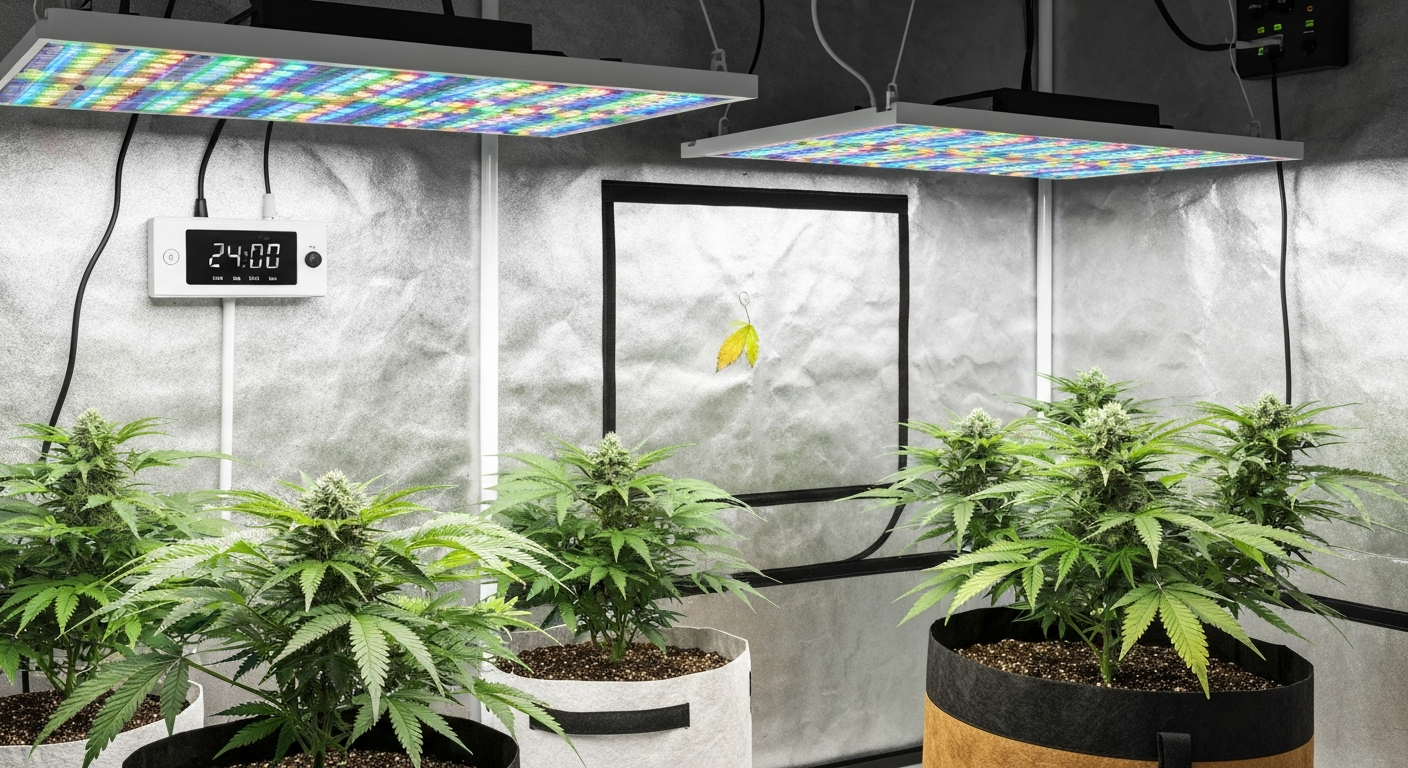
Even for a 24/0 grow, a programmable timer is worth having. It lets you switch to 20/4 or 18/6 instantly if you spot stress symptoms, without manual guesswork about when you last turned the lights on. Digital timers are cheap and reliable enough to justify the few dollars they cost.
Smart controllers with dimming capability offer the most flexibility for continuous lighting. A common approach is to run lights at 70 to 80% power for 24 hours rather than 100% for 18 hours. This keeps DLI high while reducing peak thermal stress on both the LED driver and the plant. Some growers implement a bump schedule: 20 hours at full power, 4 hours at 30 to 40% rather than complete darkness. This provides a softer light cycle without the full metabolic disruption of a dark period.
Soft-start features on LED drivers help extend driver lifespan by reducing inrush current at startup. If your fixture or driver supports it, use it, especially if you are cycling power manually rather than with a timer.
Heat management and ventilation for continuous lighting
Heat is the single biggest operational challenge with 24/0. Unlike an 18/6 or 20/4 schedule, there is no lights-off cooling window to let the space recover. Heat builds continuously, and if your exhaust and circulation are not up to the task, temperatures creep up during the grow.
The most important number to monitor is canopy temperature, not ambient air temperature. Leaves sitting in the path of a warm LED at 28 to 30°C ambient can easily hit 32 to 35°C surface temperature, which accelerates moisture loss and stress. Keep a thermometer at canopy level and aim for 24 to 28°C during the light period.
Exhaust sizing is critical. Calculate your grow space volume in cubic feet, then size your inline fan to exchange that volume every 1 to 3 minutes. For continuous light, I add 25 to 30% on top of that baseline to account for the higher continuous heat load. A carbon filter adds resistance and reduces effective CFM, so factor that into your fan selection.
If your grow space is in a naturally warm location (a closet in a warm climate, for example), active cooling with a small portable AC or mini-split may be necessary for 24/0. A grow space that manages fine at 20/4 can become uncomfortably hot under 24/0 in summer. Plan for the hottest ambient conditions you expect, not average conditions.
Light intensity, spectrum, and canopy distance under continuous lighting
Under continuous light, PPFD (the measure of photosynthetically active photon density at canopy level) becomes more important than ever to get right. Higher DLI from 24/0 is only beneficial up to the point where the plant can actually use the photons. Beyond that, you risk photooxidative stress, which is what the Šrajer Gajdošik study was documenting.
For autoflowers, research on cannabis generally supports targeting 300 to 700 µmol/m²/s at canopy level during flowering, with diminishing returns and increasing stress risk above that range. Under 24/0, I would suggest targeting the lower to middle part of that range (400 to 550 µmol/m²/s) rather than pushing to 700 continuously. You will still achieve a very high DLI of around 35 to 48 mol/m²/day, which is well within productive territory.
Spectrum matters too. Red-dominant spectra drive flowering and yield; blue keeps internodes compact. Under continuous light, a full-spectrum LED with a balanced red-to-blue ratio is preferable to a very blue-heavy spectrum, which can add vegetative stress. Far-red supplementation at end-of-day (or end-of-cycle) has been shown to alter morphology and flowering responses in cannabis, so if your fixture includes far-red, be aware it interacts with your schedule.
For light-to-canopy distance, use your manufacturer's PPFD charts as a starting guide, then verify with a PAR meter. Under 24/0, err on the side of slightly more distance than the manufacturer's maximum-yield recommendation, especially for seedlings and during early veg.
Target monitoring metrics for a 24/0 grow
| Metric | Target Range | Notes |
|---|---|---|
| PPFD at canopy | 150–200 µmol/m²/s (seedling), 300–450 µmol/m²/s (veg), 500–700 µmol/m²/s (flower) | Verify with a PAR meter; do not rely solely on manufacturer charts |
| Canopy temperature | 24–28°C | Measure at leaf surface, not ambient air |
| Ambient air temperature | 22–26°C | Higher ambient will drive canopy temps above safe range |
| Relative humidity (RH) | 65–70% (seedling), 50–65% (veg), 40–50% (flower) | Lower RH in flower reduces mould risk under continuous light |
| VPD (vapour pressure deficit) | 0.4–0.8 kPa (veg), 0.8–1.2 kPa (flower) | Combines temp and RH into one plant-stress metric |
| CO₂ concentration | 400–800 ppm (ambient to supplemented) | Continuous photosynthesis can deplete CO₂ in sealed spaces |
| LED driver/fixture temperature | Within manufacturer derating limit (typically <50°C case temp) | Check datasheet; overheating shortens driver life and is a fire risk |
| Circuit power draw | No more than 80% of breaker rating continuously | E.g., max 16A continuous on a 20A circuit per NEC guidance |
Troubleshooting common problems under 24/0
Leaf yellowing and chlorosis
Yellowing leaves, particularly between the veins on upper leaves, is one of the most commonly reported issues with continuous light and is consistent with the photoinhibition markers documented in cannabis research. First, rule out nutrient deficiency (check pH and feeding schedule). If nutrients look fine and the yellowing is on well-lit upper leaves, reduce PPFD by raising the fixture 10 to 15 cm or introduce a 4-hour dark period (switch to 20/4). The plant usually recovers within a week.
Stretching and loose internodes
Paradoxically, some growers see stretch under 24/0 even at reasonable PPFD levels. This is often a spectrum issue (too much blue or insufficient red-to-far-red ratio) rather than a light duration problem. Check your fixture's spectrum output. Adding a small amount of far-red at the end of a manual dimming cycle can help tighten internodes.
Light burn
Light burn shows up as bleached or pale patches on the topmost leaves, typically directly under the fixture. Under 24/0, you have no dark period to let the plant recover from borderline-high intensity exposure. If you see bleaching, raise the light immediately. Under continuous operation, it is better to run at 80% of the maximum recommended PPFD than to push to the ceiling.
Reduced yield compared to expectations
If you switch to 24/0 expecting a big yield bump and it does not materialise, the most likely causes are heat stress reducing photosynthetic efficiency, photoinhibition from excessive PPFD under continuous exposure, or simply that your strain responds better to a cyclic schedule. Try dropping back to 20/4 for your next run with the same strain and compare. If yield improves, you have your answer.
Strain-specific caveats and what to look for
Not all autoflowers respond the same way to continuous light, and this is where grower experience genuinely matters until more research fills the gap. Strains with a heavier ruderalis background tend to be more stress-tolerant in general and often handle 24/0 better than highly bred, large-yielding modern autos that have been pushed far from their genetic origins. Compact, fast-finishing strains from established autoflower breeders (think original Northern Lights Auto, Lowryder descendants, or classic Afghan-derived autos) generally show more tolerance in community reports.
Before committing a full crop to 24/0, run a test with one or two plants from a batch. Give them 24/0 while the rest of the batch runs at 20/4. Compare growth rate, stress symptoms, and final yield. That is worth more than any forum recommendation for your specific strain and environment.
Also check breeder notes. Some breeders now specify recommended light schedules based on their in-house testing. A breeder recommending 20/4 is not being conservative without reason; they have seen what their specific genetics do under various conditions.
Should you actually run 24/0? A practical decision checklist
Work through these questions before committing to a continuous light schedule.
- Is your circuit sized for continuous load? (Can handle 125% of your light draw without exceeding 80% of breaker capacity?) If no, fix this first.
- Is your LED fixture from a reputable manufacturer with a continuous-duty rating and certifications? If no, do not run it 24/7.
- Can your grow space maintain canopy temperatures below 28°C with lights running continuously? If no, address cooling first or drop to 18/6.
- Have you grown this specific strain before and confirmed it does not show stress symptoms at your target PPFD? If no, start with 20/4.
- Is there a specific reason you need 24/0 (cold room, timeline compression, tested strain)? If no real reason, 20/4 gives 90% of the benefit with less risk.
- Are you comfortable monitoring the grow daily in the first two weeks of 24/0 operation? If no, a simpler 18/6 schedule is more forgiving of inattention.
- Have you calculated the energy cost difference and confirmed it fits your budget? If not, run the numbers before starting.
If you answered yes to all of the above, 24/0 is a reasonable choice to experiment with. If you answered no to any of them, address those issues first or drop to a safer schedule.
What to do next
For most growers, 20/4 is the best starting point for autoflowers. It delivers a high DLI, keeps stress risk low, and costs only modestly more to run than 18/6. If you try 20/4 for a full grow and your plants look healthy with no stress symptoms, you can experiment with 24/0 on the next run while keeping 20/4 as your benchmark. If yields and plant health are better or equal under 24/0, keep it. If they are worse or stress symptoms appear, go back to 20/4.
If you are brand new to autoflowers or to growing indoors, start at 18/6. Get comfortable with temperature management, feeding, and reading plant health before adding the complexity of continuous lighting. The gains from 24/0 are real but modest, and the pitfalls of a poorly ventilated or overloaded setup are more consequential than the schedule difference. Get the fundamentals solid first, then optimise.
For anyone thinking about whether grow lights are safe to leave on continuously from an electrical and home-safety perspective, the core rules are: use certified fixtures, size your circuit correctly for a continuous load, maintain proper ventilation around drivers and fixtures, and do not exceed 80% of your breaker's rated capacity. Follow those guidelines and running LEDs around the clock is a manageable practice, not a dangerous one. See the related guide Are grow lights safe to leave on for expanded electrical and home‑safety advice and practical checklist items.
FAQ
Can you grow autoflowers on 24 hours of light?
Yes — autoflowering Cannabis (day‑neutral varieties) will grow and flower under 24/0 light because flowering is triggered by plant age/genetics rather than nightly darkness. However, scientific and practical evidence shows mixed results: some growers report good yields, but physiological studies and cross‑species research warn continuous light can induce photoinhibition, oxidative stress, chlorosis and reduced photosynthetic efficiency in some cultivars. There are few peer‑reviewed trials directly comparing 24/0 vs cyclic schedules for modern autoflowers, so outcomes are strain‑dependent and context‑sensitive.
Why do autoflowers respond differently than photoperiod plants to lighting schedules?
Autoflowers carry ‘autoflower’ (ruderalis‑derived) alleles mapped in Cannabis genomes that make flowering age‑dependent rather than day‑length dependent. Photoperiod varieties use circadian and night‑length cues to initiate bloom, so removing a dark period prevents flowering in those strains. For more background see photoperiod vs autoflowering explanations (internal link opportunity).
What does the peer‑reviewed research say about continuous‑light effects on plants and Cannabis specifically?
Plant physiology literature shows many species exhibit negative effects under continuous light (CL): photoinhibition, leaf chlorosis/necrosis, circadian disruption and lowered photosynthetic efficiency. A 2022 Cannabis study found prolonged photoperiod increased markers of photoinhibition and oxidative stress versus shorter photoperiods. Controlled cannabis lighting trials generally focus on PPFD/DLI or modest photoperiod changes; direct 24/0 vs cyclic trials on modern autoflowers are limited. Where evidence is limited, anecdotal grower consensus is mixed and strain‑dependent.
What are the pros of running autoflowers on 24/0?
Potential advantages reported by growers and suggested by lighting theory: - Higher daily light integral (DLI) for the same PPFD, possibly increasing biomass and yield if plants can use the extra photons. - Simpler scheduling (no timer switching). - Faster calendar days to maturity in some anecdotal accounts because plants never ‘rest’ between photosynthetic periods. These benefits are conditional on plants tolerating continuous light without stress and on having adequate cooling, electrical capacity and economics.
What are the cons and risks of 24/0 lighting for autoflowers?
Known and reported downsides: - Photoinhibition, oxidative stress and leaf damage in sensitive cultivars. - Potential reduced photosynthetic efficiency and lower cannabinoid/terpene quality. - Higher energy costs and continuous electrical load implications. - Greater heat load requiring more cooling. - Void or limitations in some fixture warranties if run outside specified ambient/derating specs. - Strain variability: some autos tolerate CL, others show leaf chlorosis, reduced yield or stretch issues.
Which lighting schedules are commonly recommended for autoflowers?
Common effective schedules with practical tradeoffs: - 18/6 (light/dark): widely used, good balance of DLI, plant recovery and energy cost. - 20/4: common compromise to boost DLI while keeping a short dark period. - 24/0: used by some growers to maximize photon-hours; higher risk of stress and increased running costs. See table comparison below for direct contrasts.
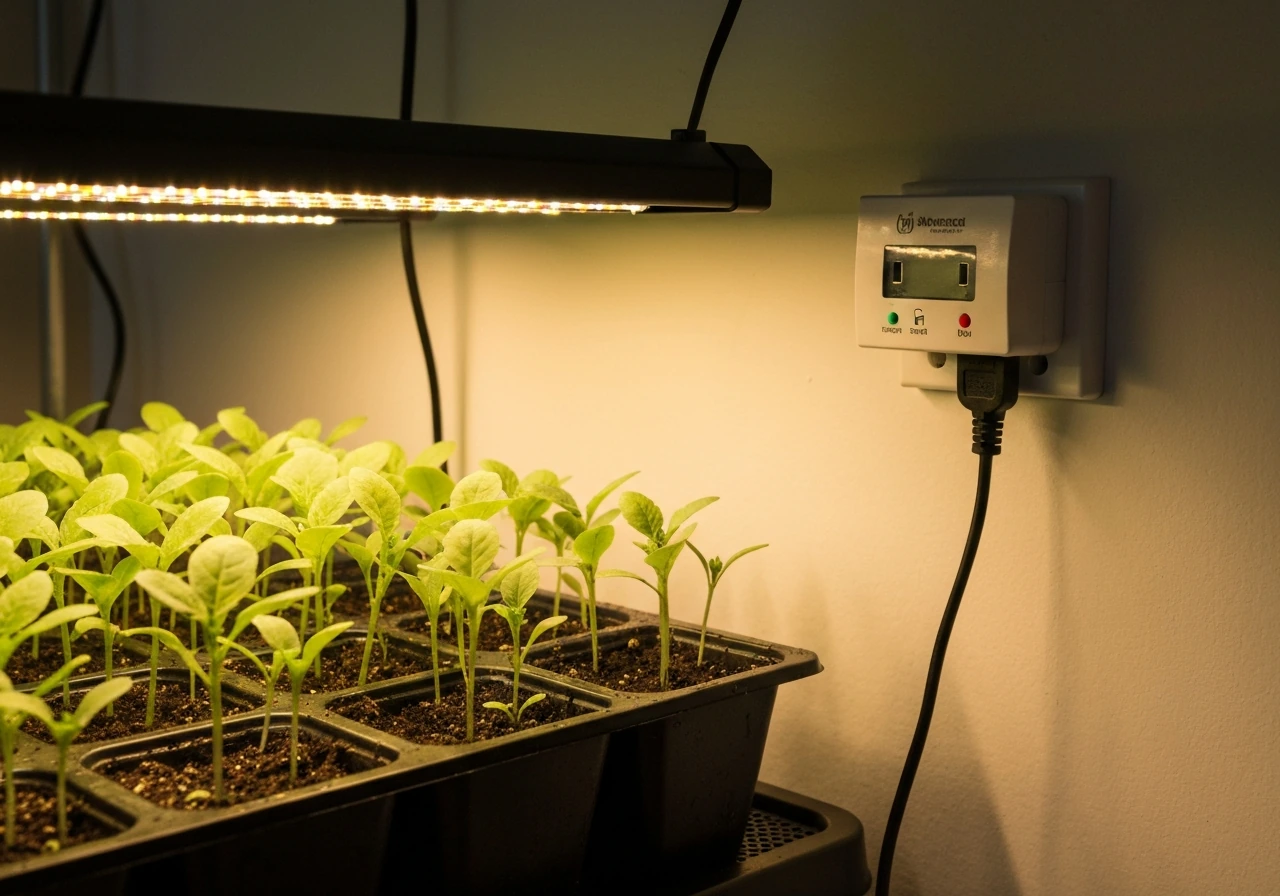
Learn if grow lights should run 24/7, safe timer tips, and plant schedules for seedlings, veg, and flowering.
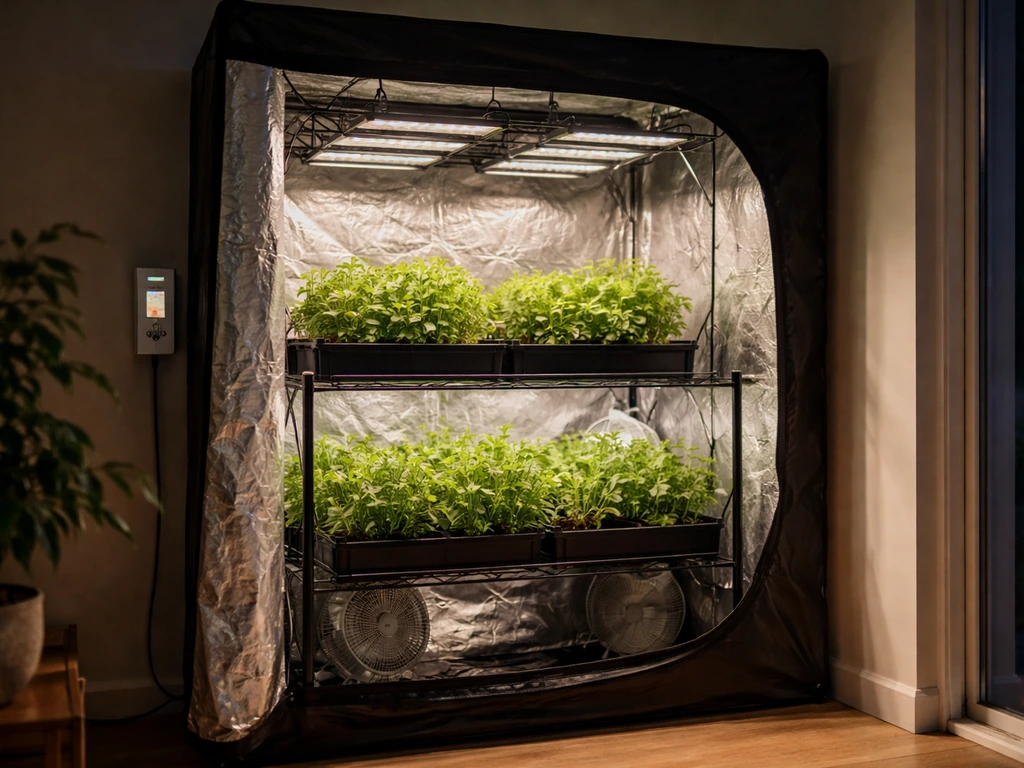
Do not leave grow lights on 24/7. Get proven schedules, timer setup, and safe intensity settings for healthy indoor plan
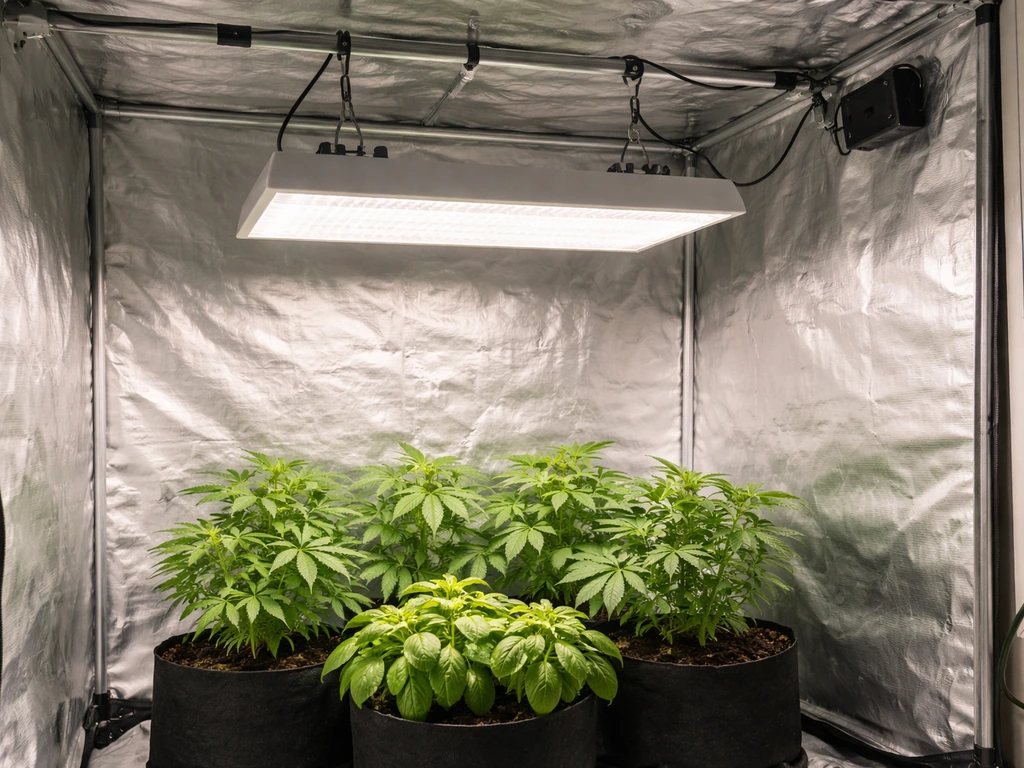
Learn if grow lights can run all day safely, covering fire and heat risks, electrical safety, timers, and safe distance.