Most indoor plants benefit from grow lights when your home doesn't get enough natural light to keep them healthy. That includes seedlings at any stage, vegetable starts, herbs, tropical foliage plants in dim rooms, and anything that flowers or fruits indoors. Plants that are genuinely low-light tolerant (like pothos, snake plants, or ZZ plants) can often manage without supplemental lighting, but even they'll grow faster and look healthier under a grow light. The short version: if your plant is stretching toward a window, dropping leaves, or just sitting there doing nothing for months, it probably wants more light than your space is giving it.
What Plants Like Grow Lights: Match Light to Your Needs
Marcus Holloway
30 Jun 2026
How to tell if your plant actually needs a grow light
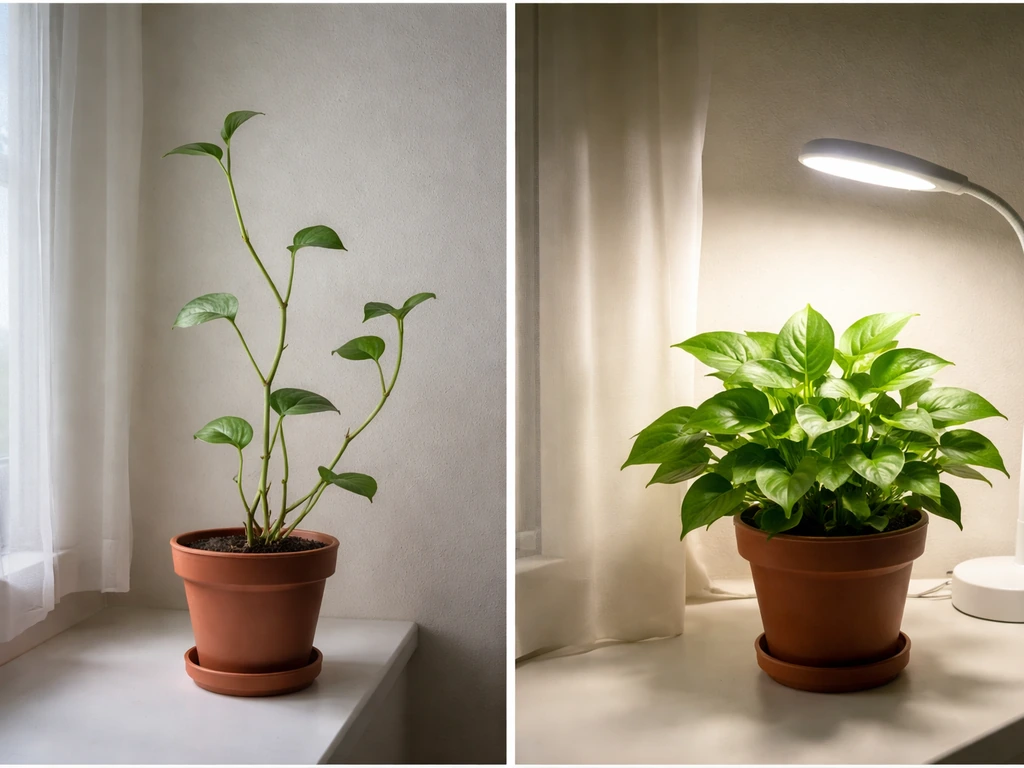
The most obvious sign is something called etiolation. University of Maine Extension describes “etiolation” as insufficient chlorophyll caused by low-light conditions, which shows up as elongated or spindly stems and pale leaves blank" rel="noopener noreferrer">etiolation, elongated or spindly stems and pale leaves. That's what happens when a plant doesn't get enough light: the stems get long and spindly, the leaves space out, the plant leans hard toward any light source, and blank" rel="noopener noreferrer">the color washes out to pale yellow-green instead of a rich, saturated green. Etiolation happens because the plant is basically stretching itself out searching for light it isn't finding, and it can't produce enough chlorophyll without adequate photons coming in. University of Maine Extension describes it plainly: insufficient light leads to elongated stems and pale leaves. Once you've seen it once, you'll recognize it immediately.
There are a few other signs that are easy to miss. If your plant has barely grown in several months during what should be its active season, that's often a light problem. If it's dropping lower leaves faster than it's making new ones, same deal. Flowers that never open, or that drop off as buds, are another flag. University of Maryland Extension research confirms that plants respond directly to light availability by changing stem length and growth rate: too little and they stretch or stall, too much and they get squat and stunted. If your plant is doing either extreme, light is the first thing to check.
- Stems are getting longer but not fuller (leggy, stretched growth)
- Leaves are unusually pale, yellow-green, or small compared to new growth
- The plant leans or twists strongly toward a single light source
- Little to no growth during spring or summer when it should be actively growing
- Flower buds drop before opening, or the plant never blooms despite good care
- Lower leaves yellow and fall off consistently
Plant light needs: low, medium, and high light (what those labels actually mean)
When a plant tag says "low light," it doesn't mean no light. It means the plant can survive and even look decent in conditions where many others would fail. In practical terms, low-light plants can manage in a spot that gets bright indirect light for just a couple of hours, or is fairly far from a window. Yes, many plants can survive with only grow lights, as long as the light intensity and daily hours match what they need can plants survive with only grow lights. Medium-light plants want consistently bright indirect light, ideally most of the day. High-light plants need direct or very bright light for several hours daily and will struggle without it.
In grow-light terms, these categories translate directly to how much light intensity (measured in PPFD, or micromoles per square meter per second) and how many hours per day a plant needs. PPFD is just a count of how many light particles actually hit the leaf surface. Low-light plants are happy around 50 to 150 PPFD. Medium-light plants want roughly 150 to 400 PPFD. High-light plants like fruiting vegetables, herbs in full production, and most flowering plants push toward 400 to 800 PPFD or more. Knowing your plant's category tells you exactly what kind of grow-light setup you need. If you're wondering what indoor plants like grow lights, matching their light level needs to the right intensity is the key to healthier growth.
| Light Category | Examples | Grow Light Need | Target PPFD Range | Daily Hours |
|---|---|---|---|---|
| Low light | Pothos, ZZ plant, cast iron plant, snake plant | Optional but helpful | 50–150 PPFD at canopy | 10–12 hours |
| Medium light | Monsteras, peace lily, ferns, spider plants, prayer plants | Strongly beneficial in dim rooms | 150–400 PPFD at canopy | 12–14 hours |
| High light | Herbs, succulents, cacti, tomatoes, peppers, orchids | Usually necessary indoors | 400–800+ PPFD at canopy | 14–16 hours |
Which plants benefit most from grow lights
Seedlings (basically every plant)
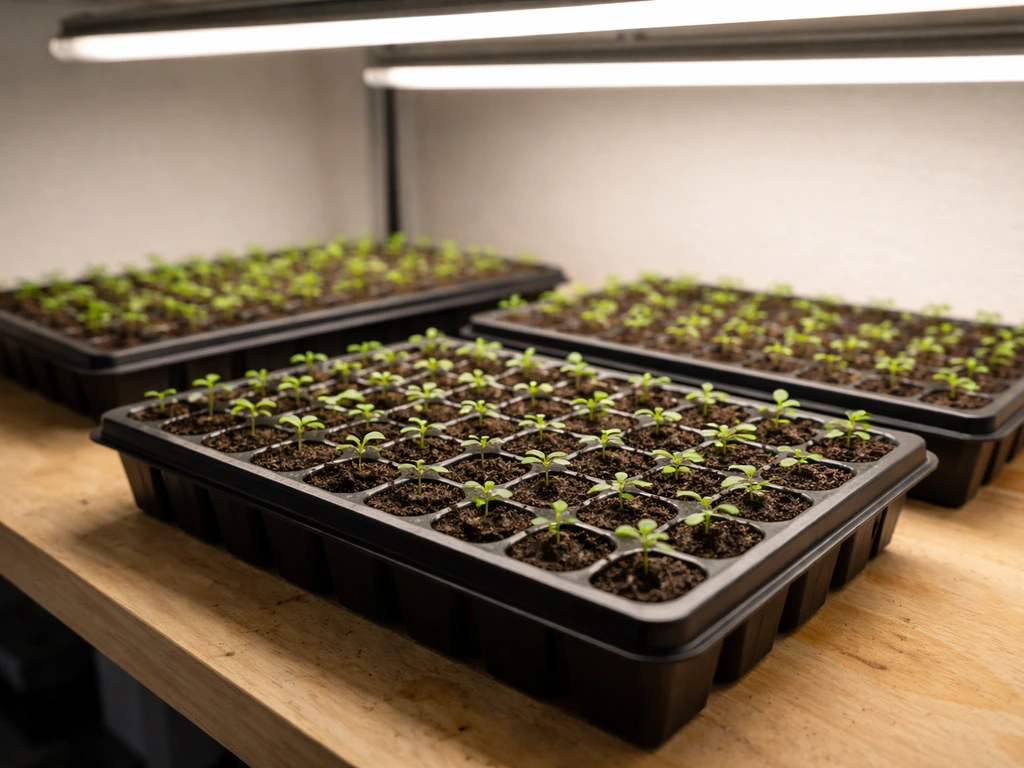
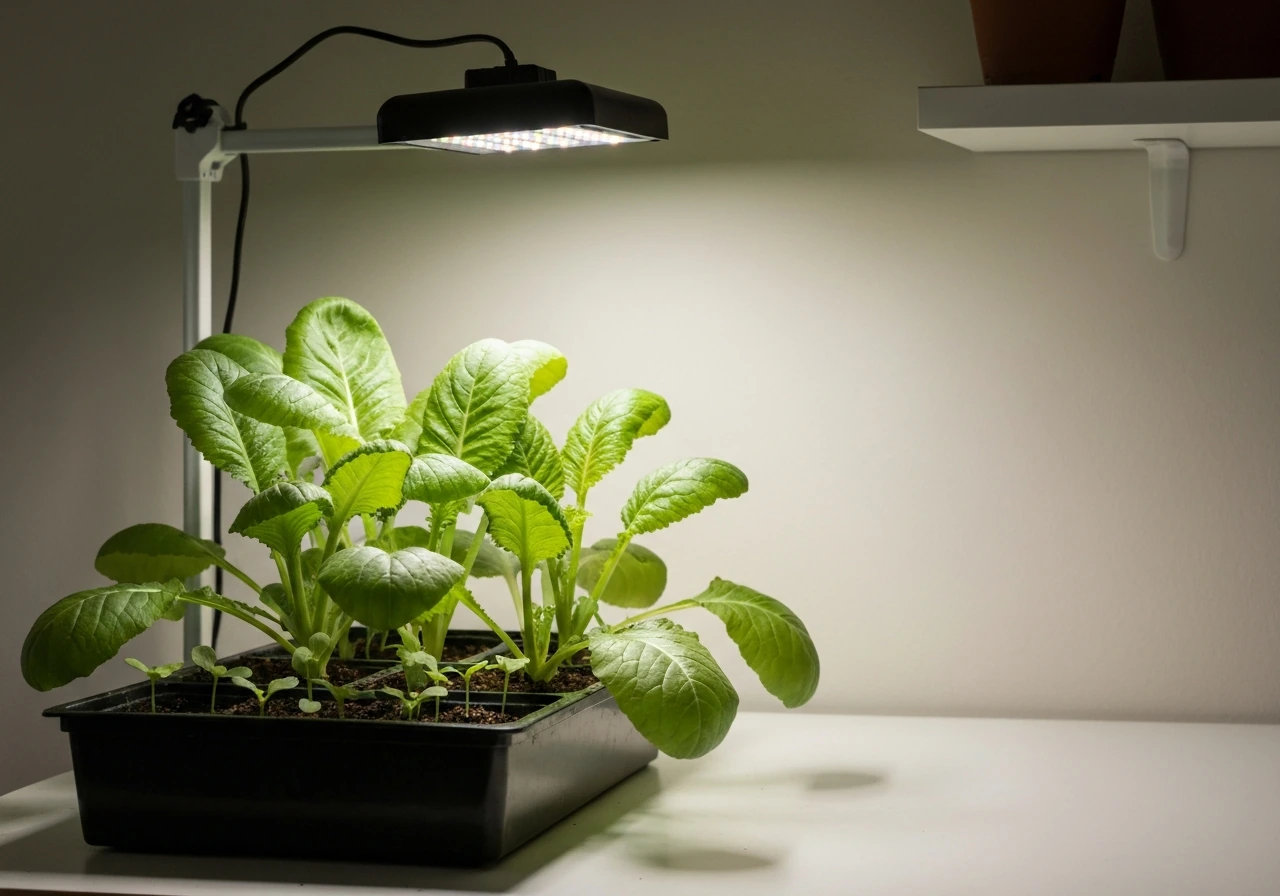
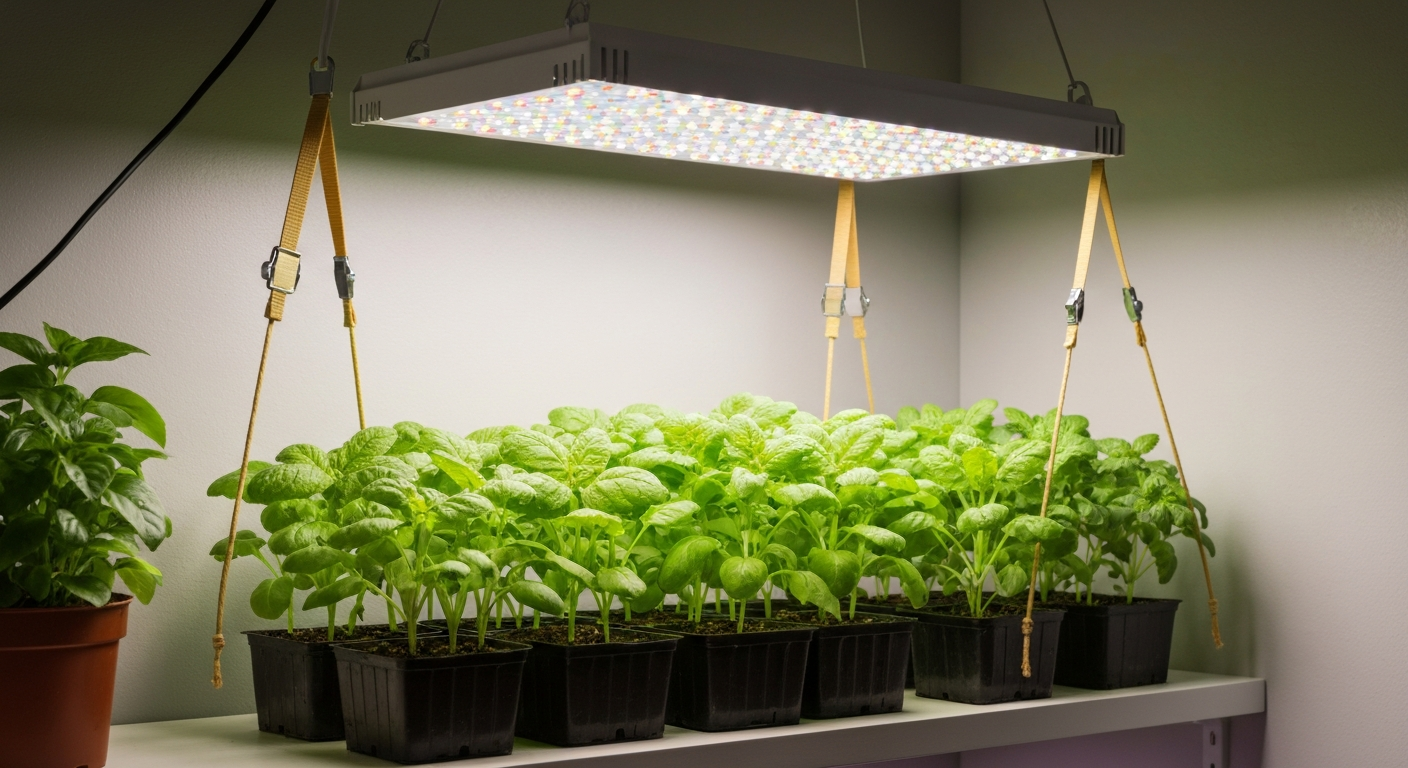
Seedlings are the single best case for grow lights, no debate. Every seed you start indoors, regardless of what it becomes as a mature plant, needs intense, consistent light right from germination. A seedling sitting in a window gets uneven, directional light, and the result is almost always a leggy, floppy stem that struggles to support itself. Under a grow light placed 2 to 4 inches above the seedling tray, running 14 to 16 hours a day, you get compact, thick-stemmed starts that actually survive transplant. This is where grow lights pay for themselves immediately.
Leafy foliage plants
Tropical foliage plants like monsteras, philodendrons, pothos, and spider plants are extremely popular indoor plants, and most of them fall into the medium-light category. In a bright room near a large south- or west-facing window, some of them get by fine without supplemental light. But in a typical apartment or office with limited natural light, they grow slowly, produce smaller leaves, and lose that lush, full look over time. A modest grow light (even a small LED panel) running 12 to 14 hours a day turns them into genuinely thriving plants instead of just surviving ones. So, if your spider plants are in a dim room, a grow light can help them grow faster and stay lush.
Flowering and fruiting plants
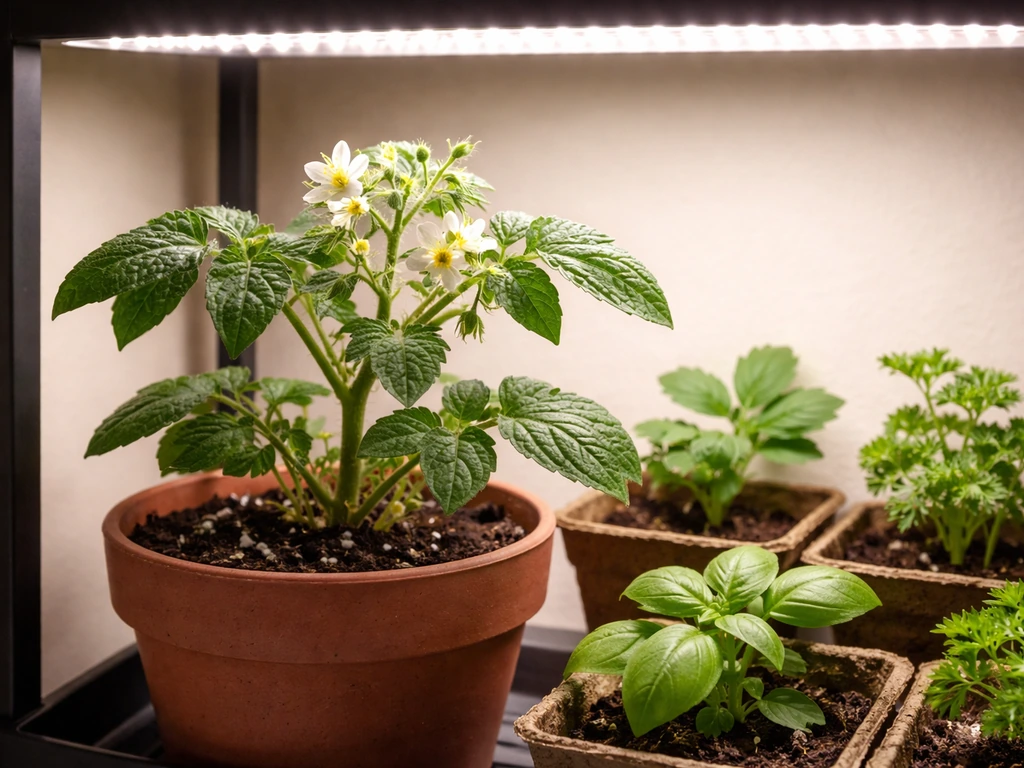
If you're growing herbs for actual harvest, vegetables indoors, or flowering plants like orchids or African violets, grow lights stop being optional and start being necessary in most homes. These plants need high PPFD levels and long photoperiods to produce flowers and fruit. If you are choosing plants that do well under grow lights, prioritize those that need higher light and longer daily exposure to thrive. Tomatoes and peppers indoors without supplemental lighting are basically science experiments in disappointment. Herbs like basil, cilantro, and mint will bolt or stall without strong light. Orchids need bright indirect light for months to rebloom. A full-spectrum LED grow light placed at the right distance makes the difference between a plant that performs and one that just occupies space.
What light plants actually need: spectrum, intensity, and distance
Plants primarily use red and blue wavelengths of light to power photosynthesis. Blue light (around 400 to 500 nanometers) drives compact, leafy growth and is especially important for seedlings and foliage. Red light (around 600 to 700 nanometers) supports flowering, fruiting, and overall energy production. Full-spectrum LED grow lights, which cover both ranges and everything between, are the practical choice for most home growers because they work well across plant types without needing to swap bulbs. You don't need to obsess over spectrum ratios as a beginner. Just buy a quality full-spectrum LED and you're covered.
Intensity is where most beginners get tripped up. PPFD drops significantly with distance from the light source, which means a light that's perfectly adequate at 6 inches might be nearly useless at 24 inches. University of Minnesota Extension specifically flags this: always measure or estimate PPFD at the leaf canopy level, not at the fixture. Most LED grow light manufacturers publish a PPFD chart showing output at different distances. Use those charts. For seedlings, you want the light close (4 to 8 inches for most LEDs). For mature foliage plants, 12 to 24 inches is typical. For high-light plants like fruiting vegetables, stay within the manufacturer's recommended distance to hit that 400 to 800 PPFD target.
How long to run grow lights and how to avoid common problems
Runtime matters as much as intensity. Iowa State University Extension explains that what really counts is the total light a plant receives over the day, a concept sometimes called the daily light integral. A moderate-intensity light running 16 hours can deliver more total energy than a strong light running 6 hours. For most houseplants, 12 to 16 hours of grow light per day is the practical range, with a true dark period of at least 6 to 8 hours. Plants need darkness for certain metabolic processes, and running lights 24 hours a day stresses them rather than helping. Get a $10 outlet timer and set it. That single step eliminates most runtime problems.
The two most common problems I see are under-lighting and inconsistent scheduling. Under-lighting shows up as the leggy, stretching etiolation described earlier, and it usually means either the light is too far away, too low-powered for the plant's needs, or running for too few hours. Inconsistent scheduling (lights on at random times, sometimes forgotten for days) confuses plants that use light cues to regulate flowering. Keep the schedule consistent every day. The other issue worth mentioning is light burn from placing high-powered lights too close, especially with succulents or cacti. Signs include bleached or tan patches on leaves nearest the light. If that's happening, raise the fixture 4 to 6 inches and watch for improvement over a week or two.
Practical grow-light setup checklist for today
- Identify your plant's light category (low, medium, or high light) from the care tag or a reliable care guide.
- Choose a full-spectrum LED grow light sized for your space. For a single plant or small shelf, a 20W to 45W LED panel is plenty. For a full seed-starting shelf, look at 200W+ or T5 fluorescent strip setups.
- Check the manufacturer's PPFD chart and set the fixture at the distance that delivers your target PPFD at canopy level (not at the light itself).
- Plug the light into a mechanical or digital outlet timer. Set it to match your plant's needs: 12–14 hours for medium-light plants, 14–16 hours for high-light plants and seedlings.
- After 1 to 2 weeks, check for signs of stress: stretched growth means move the light closer or add hours; bleached patches mean raise it or reduce hours.
- If growing seedlings, keep the light 4 to 8 inches above the tray and raise it as they grow to maintain that distance.
- Make sure air can circulate around the light and plants. A small USB fan helps prevent heat buildup and strengthens seedling stems.
Safety and common misconceptions about grow lights
A few concerns come up constantly, and they're worth addressing directly. First: grow lights will not give you a tan or cause skin damage under normal use. The UV output of standard LED grow lights is negligible. You're not standing under a tanning lamp. Second: they will not cause cancer. There's no meaningful carcinogenic risk from the type and intensity of light that consumer grow lights produce. Third: looking directly into a high-powered grow light for extended periods can cause eye discomfort or temporary strain, so don't stare into it while it's on, especially close-range LED arrays. A quick glance to check positioning is fine. Wearing sunglasses if you're working under bright grow lights for extended periods is a reasonable precaution, not a necessity.
Heat is a more realistic concern than most people expect. LED grow lights are far cooler than older HID (high-intensity discharge) or incandescent setups, but they still generate some heat, especially in enclosed spaces or grow tents. Keep fixtures from sitting directly on surfaces, make sure there's airflow, and check that your electrical outlet and extension cord are rated for the wattage you're running. Don't daisy-chain multiple grow lights on a single cheap power strip. This isn't a scary thing to set up, it just takes the same common sense you'd apply to any appliance. Modern LED grow lights are genuinely beginner-friendly, and the only real mistake most people make is buying something too weak and then blaming the technology when their plants don't respond.
One more thing worth knowing: not every indoor plant needs a grow light to survive, but almost every indoor plant performs better with one. If you're specifically growing plants that are known to do well under grow lights, or trying to figure out whether a specific plant like a spider plant or prayer plant will respond well to supplemental lighting, the answer for most common houseplants is yes. The difference between a plant that's just alive and a plant that's actually thriving often comes down to light quality, and a good LED grow light is the most direct way to fix that.
FAQ
Which plants need the most grow light indoors, compared with low-light houseplants like pothos or snake plants?
Fruit and flower producers, especially tomatoes, peppers, and most flowering plants, typically need higher PPFD (often 400 to 800 or more) and longer daily exposure. Low-light foliage plants may survive on indirect window light, but they usually look slower and less full without supplemental intensity.
Can I use one grow light setup for many different plants with different light needs?
You can, but you need to stage them by distance or use multiple fixtures. A single light at one height will not reliably hit the same PPFD across plants that want different ranges, so place high-light plants closer and low-light plants farther from the fixture.
How do I know if my grow light is too far away for my plant?
If you see new growth that is pale, stretched, or slower than expected for several weeks, the intensity at the leaf canopy is likely too low. Use the manufacturer’s PPFD vs distance chart (or a PPFD meter if you have one) because the fixture distance alone is not the full story.
Is it better to run grow lights longer or increase brightness for faster growth?
Often it is better to get the total daily light close to what the plant needs first. A moderate intensity running longer can deliver more total energy than a strong light for too few hours, but do not eliminate the dark period. For most houseplants, aim roughly 12 to 16 hours per day with at least 6 to 8 hours off.
Do plants really need a dark period, or can I run grow lights 24/7?
They need a true dark period. Continuous lighting can stress plants because some metabolic and growth-regulation processes depend on darkness, and it often increases the chance of weak, irregular growth rather than improving it.
Can grow lights cause leaf burn, and what should I do if I suspect it?
Yes, especially with high-powered LEDs placed too close, the newest leaves near the fixture can bleach or develop tan patches. Raise the light by about 4 to 6 inches, keep runtime consistent, and reassess after 1 to 2 weeks rather than changing multiple variables at once.
What wattage or fixture size should I buy if I do not know PPFD?
Use PPFD and distance, not wattage. If the brand provides a PPFD chart, match your plant’s PPFD target at your intended hanging height. If it does not, choose a reputable full-spectrum LED with published PPFD output or consider getting a simple PPFD meter.
Should I rotate plants under grow lights?
It helps, especially if your fixture creates a strong light gradient. Rotating every few days encourages more even growth and reduces leaning, because plants can still respond to directionality even under artificial lighting.
Do full-spectrum grow lights eliminate the need for spectrum planning?
For most home growers, yes. A quality full-spectrum LED covers the blue and red ranges plants use for photosynthesis and typically works across foliage, seedlings, and flowering. You still need the correct intensity and duration, spectrum alone will not fix under-lighting.
Are grow lights safe for pets and small children near the setup?
They are generally safe, but guard against accidental contact and eye exposure. Use a stable mount, avoid leaving fixtures where curious hands can tip them, and do not stare into the beam at close range. If pets chew cords, switch to a cord-protecting sleeve and consider outlet placement.
Do I need special grow lights for succulents, and how should I place them?
Many succulents want bright conditions and can be sensitive to being placed too close. Start by placing the fixture at the manufacturer’s recommended distance for high-light plants, then adjust upward if you see bleaching or downward curling from light stress.
Will grow lights over time make leaves look different in color or size?
That is possible, and it is often a good sign. With adequate light, foliage typically becomes richer and more compact. If leaves become smaller, darker, or grow slowly despite correct runtime, the intensity may be higher than needed for that species, so back off distance slightly.
Next Articles
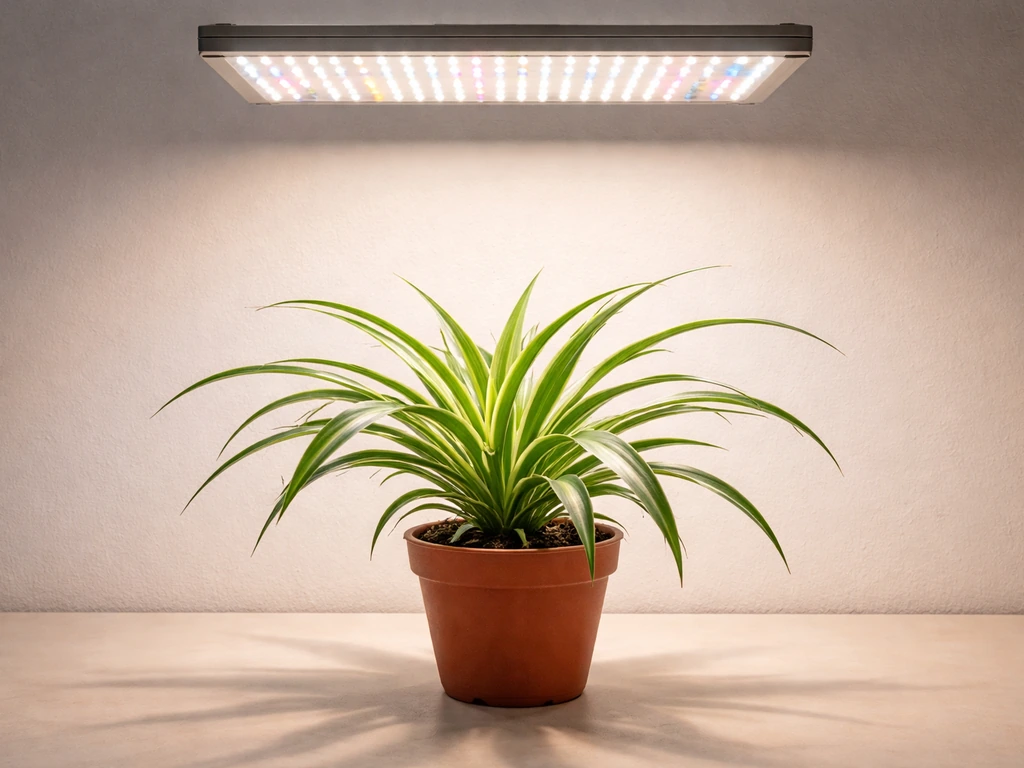
Do Spider Plants Like Grow Lights? How to Set Up LED
Yes, spider plants can use LED grow lights. Learn setup distance, timing, and fixes for leggy growth and leaf burn.
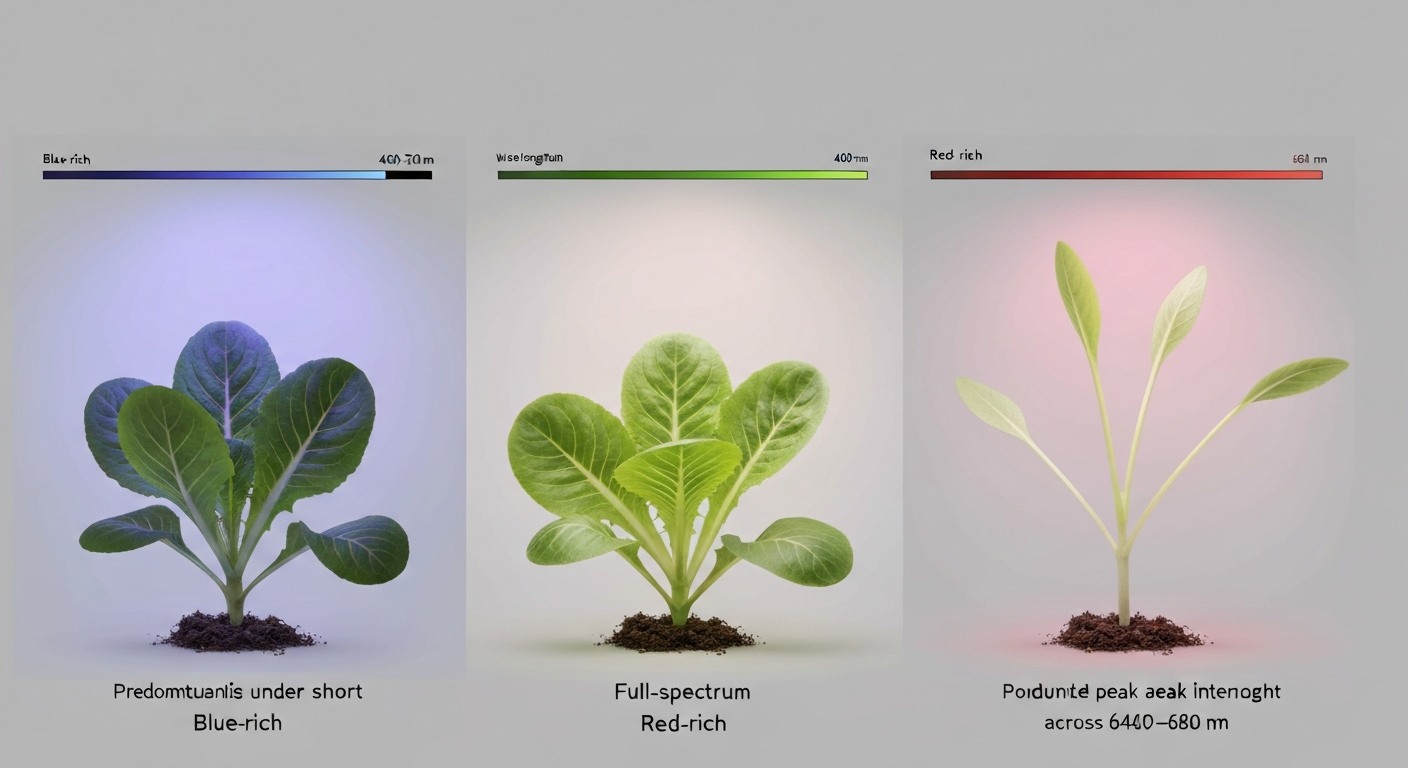
Why Do Plants Grow Best in Blue Light? Science & Practical Guide
Explore why blue light boosts vegetative growth, ideal blue:red ratios, PPFD, photoperiods, fixtures, and setup tips.
What Artificial Light Will Grow Plants: Best Lights Guide
What artificial light will grow plants: practical guide to LED, CFL, HID spectra, PPFD targets, setup, cost & tips.