Spider plants do like grow lights, and they respond well to them when natural light falls short. They're not demanding plants, but they do need bright, indirect light to stay lush, keep their variegation vivid, and push out those trailing babies. A windowsill works great in the right conditions. But if your spider plant is stretching toward the light, losing its stripes, or just sitting there doing nothing, a grow light is one of the most direct fixes you can make.
Do Spider Plants Like Grow Lights? How to Set Up LED
Marcus Holloway
27 Jun 2026
Do spider plants actually need grow lights?
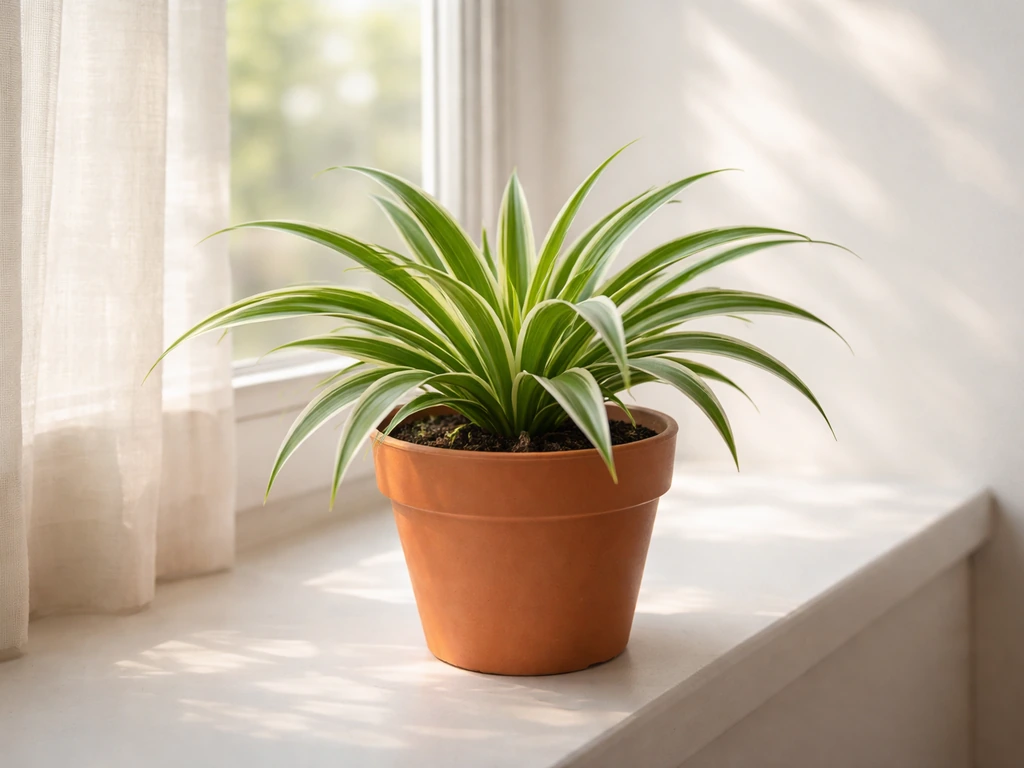
Not always. Spider plants are tolerant enough that a bright window, especially one that gets a few hours of indirect sun, can be completely sufficient. A south- or east-facing window in a room that actually gets daylight is usually enough to keep a spider plant healthy through most of the year.
Where grow lights become genuinely useful is in three situations: you don't have a bright window to spare, you're heading into winter when daylight hours shrink and light intensity drops, or your plant is showing signs of light stress (more on what those look like below). But the more important question is whether can plants survive with only grow lights, and what light intensity and duration they’ll need to stay healthy. Illinois Extension specifically flags winter as the time to consider supplemental lighting for houseplants, and that tracks with what I've seen firsthand. A spider plant that looked fine in October can start stretching and fading by January if it's relying solely on a northern window.
The other scenario where grow lights shine is rooms without good natural light at all. In other words, grow lights can be a practical solution for spider plants when your home setup lacks natural light grow lights shine. A home office with a small window, a hallway, a basement setup. Spider plants won't thrive long-term in genuinely dim conditions, and no amount of "they're low light plants" marketing changes that. A grow light bridges that gap cleanly.
What grow light to choose for a spider plant
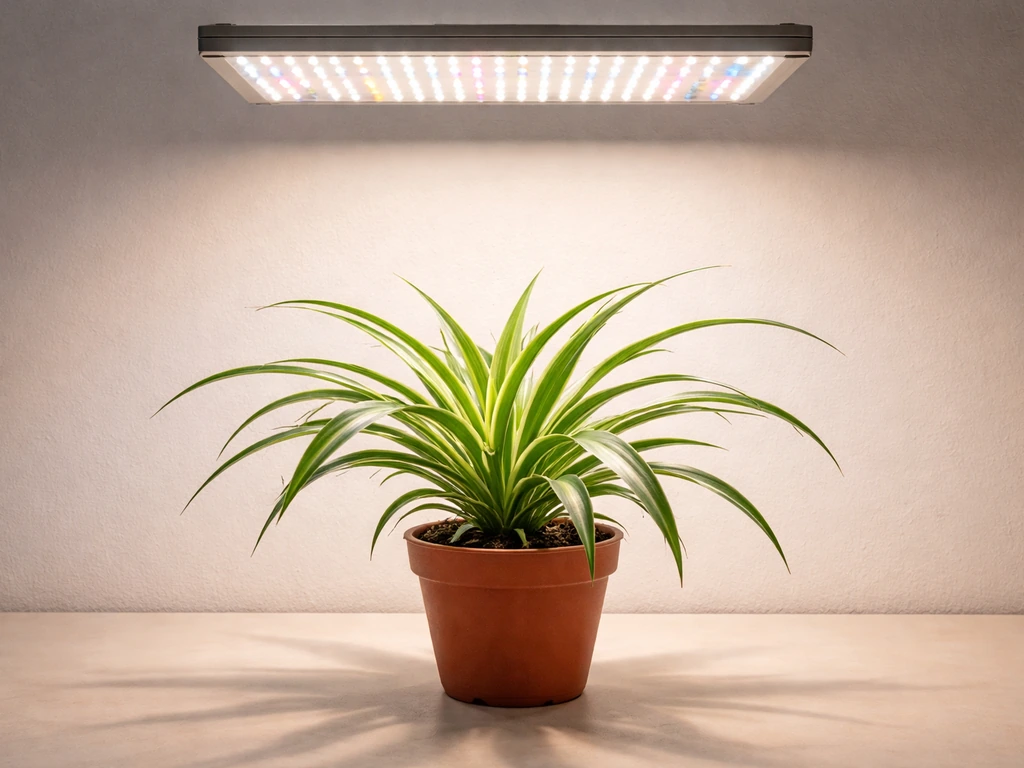
For most home growers, a full-spectrum LED is the right call. LEDs run cool, use less electricity than fluorescent or HID options, and modern full-spectrum white LEDs cover the 400–750 nm wavelength range that plants actually use. You don't need anything fancy or expensive. Avoid the old-style purple/blurple LEDs that combine only red and blue diodes. They work, but full-spectrum white LEDs tend to produce better overall growth and are more comfortable to be around.
Fluorescent fixtures (T5 or T8 tubes) are a solid budget option that extension researchers have confirmed work well for foliage houseplants. The downside is heat output and the fact that they need to sit closer to the plant than LEDs to deliver useful light. If you already have a fluorescent shop light, it'll work. But if you're buying new, LED is the better long-term investment.
When shopping for an LED, look for these things: a listed PPFD output at a stated distance, a full-spectrum or "white" design, a built-in timer or compatibility with an outlet timer, and low flicker. Flicker in LED fixtures can be a visual comfort issue, especially if the light is running near your workspace. Quality LED drivers minimize this significantly, so checking manufacturer specs is worth a few minutes.
| Light Type | Best For | Distance to Plant | Running Cost | Verdict |
|---|---|---|---|---|
| Full-spectrum LED | Most home setups | 12–24 inches depending on wattage | Low | Best overall choice |
| Fluorescent (T5/T8) | Budget setups, seed starting | 4–6 inches from plant tops | Moderate | Works well, less flexible |
| Purple/blurple LED | Some growth support | Variable | Low-moderate | Skip it if buying new |
| Incandescent | Not recommended | N/A | High | Too much heat, poor spectrum |
Distance, brightness, and how long to run the light
These three variables (distance, intensity, and duration) are where most beginners go wrong, either by guessing or by assuming more is always better. Here's a practical framework.
Distance
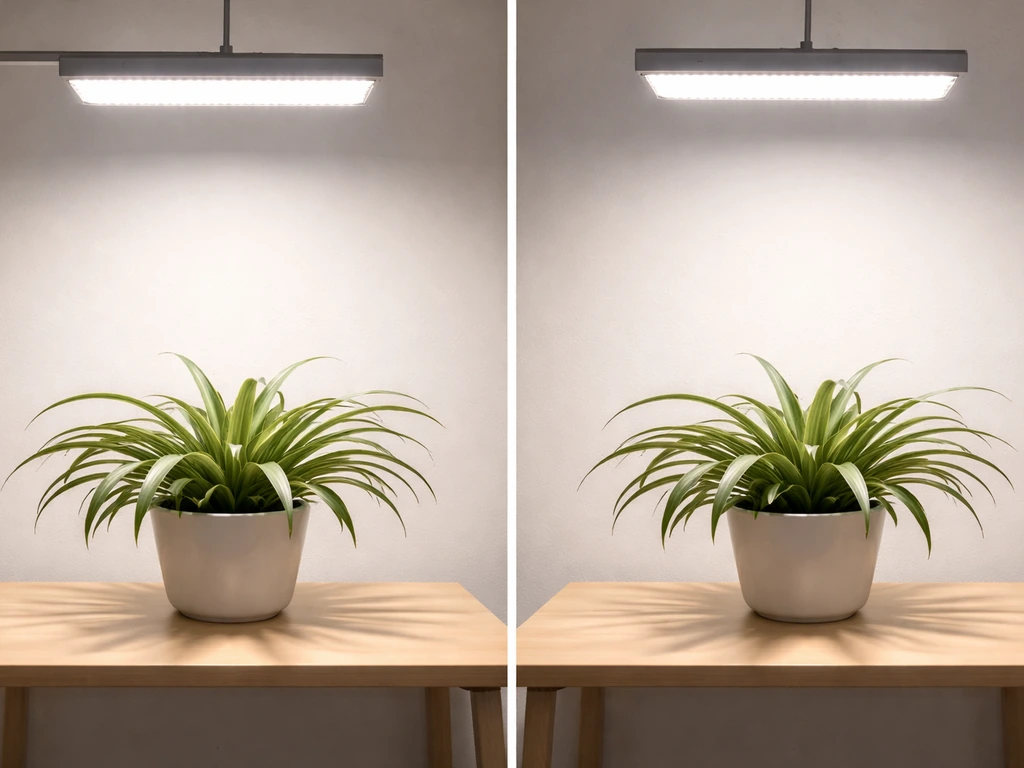
Light intensity drops fast as distance increases. This is physics, not a grow-light-brand claim. For a typical mid-range LED panel, a starting distance of 18–24 inches above the plant is a reasonable default for a foliage plant like a spider plant. That's enough to provide useful light without risking burn. If you're using a lower-wattage LED bulb rather than a panel, you may need to bring it closer, around 12 inches. For fluorescent fixtures specifically, Iowa State Extension's guidance puts useful intensity at roughly 4–6 inches from the plant tops. If you have a PPFD meter (they're now under $30 for basic models), measure at the leaf surface. You're aiming for 100–250 micromoles per square meter per second (µmol/m²/s) for a foliage houseplant like a spider plant.
Duration
For spider plants under supplemental grow lights, 12–14 hours of light per day is the standard recommendation backed by university extension guidance. UNH Extension’s growing-seedlings-under-lights fact sheet also discusses blank" rel="noopener noreferrer">supplemental lighting timing and highlights that matching lamp output to plant-used wavelengths helps plants use their light more efficiently. Plants that do well under grow lights are usually the ones that benefit from consistent intensity and a proper light schedule. This is the photoperiod that works for most foliage houseplants. Don't run the light 24 hours a day. Plants need a dark period. Running lights continuously doesn't help and can actually stress the plant. Set a timer and forget it.
Intensity
Spider plants are not heavy light users. You don't need a high-intensity growing setup. If your light feels extremely bright to your eyes from across the room, it's probably fine for the plant from 18+ inches away. If you want to be more precise, PPFD is the right measurement tool: it tells you exactly how much usable light is hitting the leaf surface. Some smart LED controllers let you dial in a target PPFD directly, which removes the guesswork entirely. For a maintenance-mode spider plant, aim lower in the 100–200 PPFD range. If you want active growth and baby production, push toward 200–250.
What goes wrong and how to fix it
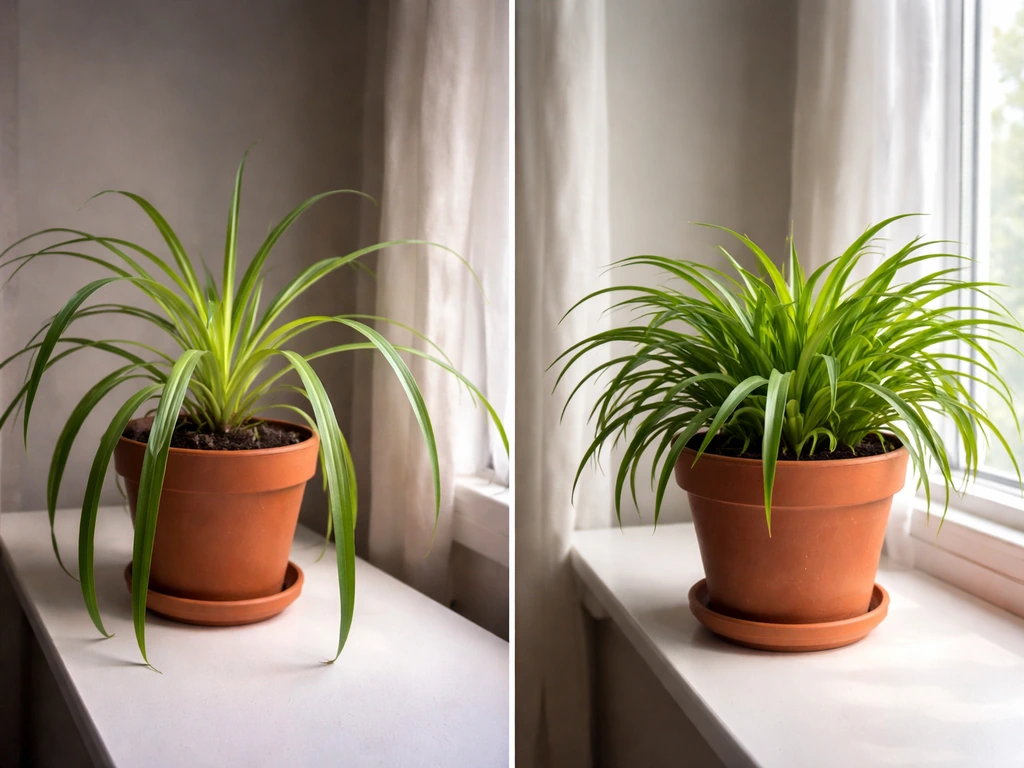
Most problems with spider plants under grow lights fall into one of three categories. Knowing which one you're looking at makes the fix straightforward.
Stretching and legginess
If your spider plant is growing long, floppy stems and the leaves are spaced far apart instead of forming a dense rosette, it's not getting enough light. This is called etiolation, and it's the plant physically reaching for more light. The fix is simple: move the light closer, increase the intensity, or add more hours. Move in small steps, check after a week, and look for new leaves that are denser and better proportioned. The stretched growth won't reverse, but new growth will look better.
Pale or yellowing leaves
Yellowing in spider plants is one of those symptoms that can have several causes, and blaming the grow light first is usually wrong. Yes, too little light can gradually weaken the plant and cause pale, faded leaves, and in that case more or better light helps. But overwatering, fluoride in tap water, and mineral salt buildup from fertilizer are also very common causes of yellowing in spider plants. Before adjusting your light setup, check whether your soil has been consistently wet, and consider switching to filtered or distilled water if you've been using tap. Diagnose carefully before changing multiple things at once.
Brown leaf tips
Brown, crispy leaf tips on spider plants are so common that most experienced growers accept a little of it as normal. The main culprit is almost always fluoride or mineral salt accumulation from tap water, not the grow light. That said, if the light is too close to the plant, the heat and intensity can cause marginal leaf burn. UMaine Extension's houseplant guidance explicitly calls out proximity to the light source as a cause of leaf damage. If you moved a light closer recently and brown tips appeared on the leaves facing the light, back the fixture up a few inches and see if new growth looks cleaner. If the tips were there before the grow light came into the picture, your water chemistry is the more likely culprit.
Beginner setup tips that actually make a difference
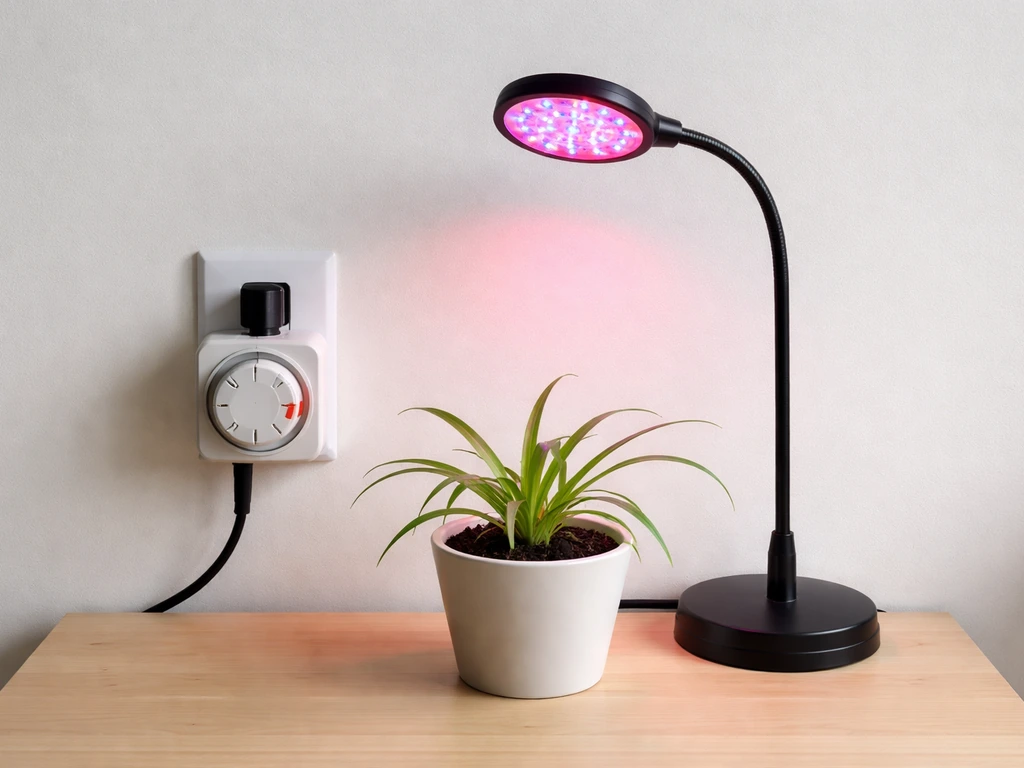
- Use a timer from day one. Plug your grow light into an outlet timer set for 12–14 hours on, then off. It costs a few dollars and removes the most common error (forgetting to turn it off, or running inconsistent hours).
- Start with the light higher than you think you need. It's easier to lower a light and add intensity than to deal with burn from starting too close. Begin at 20–24 inches for a panel LED, observe for a week, then adjust.
- Rotate your plant every week or two. Even a good grow light has hotspots and edge falloff. Rotating the pot 180 degrees regularly ensures all sides of the plant get similar exposure and prevents lopsided growth.
- Don't change multiple things at once. If you're troubleshooting, adjust one variable (distance, duration, or watering) and wait 1–2 weeks before changing something else. Spider plants respond slowly enough that impatient adjustments just add confusion.
- Keep the light and plant at consistent relative positions. If you move the plant for watering, bring it back to the same spot under the light. Small positional changes matter less for an established spider plant, but consistency helps when you're dialing in a new setup.
Will the grow light hurt you? Safety and common misconceptions
This comes up a lot and it's worth addressing plainly. Standard full-spectrum LED grow lights designed for plants do not emit meaningful UV radiation. They will not give you a tan, and there is no credible link between using a household plant grow light and cancer risk. The UV concerns you may have read about apply to sunlamps and tanning devices, which the FDA specifically categorizes separately from grow lights because they are deliberately designed to emit UV for skin exposure. Plant grow lights are not.
That said, staring directly into any bright light, including a powerful LED panel, is not a good idea. It's the same common sense as not staring at the sun. If you're working near the light for extended periods, the DOE's research on LED flicker is worth knowing about: lower-quality fixtures with poor drivers can produce flicker that causes eye fatigue and headaches over time. Buying from reputable manufacturers that spec low-flicker drivers largely sidesteps this. Otherwise, grow lights used normally (above your plants, not aimed at your face) are a practical and safe tool.
What to expect and when to adjust
Spider plants are not fast growers, so temper your expectations for the first few weeks. When you add a grow light to a struggling spider plant, you won't see dramatic improvement overnight. What you should see over 3–6 weeks is: new leaves that are wider and more upright, better color saturation and stripe definition in variegated varieties, and possibly the start of new stolons (the trailing stems that produce baby plants). If none of that is happening after 6 weeks with consistent care, the first thing to check is whether your light is actually delivering enough intensity at the leaf surface. Many cheap LED bulbs marketed for plants don't produce meaningful PPFD even from a short distance. A quick check with a PPFD meter, or even a basic lux meter as a rough proxy, can confirm whether your light is doing its job.
Spider plants are a good entry point for learning grow lights because they're forgiving and give clear feedback. The same principles that apply here, distance, photoperiod, intensity, and spectrum, apply across most foliage houseplants. Do prayer plants follow the same general approach, and do they need grow lights when windows are weak prayer plants do prayer plants like grow lights. If you want to expand your indoor setup beyond spider plants, many of the same LED settings and timer schedules will transfer directly.
FAQ
How far should I place a grow light from my spider plant if I am using a single LED bulb instead of a panel?
A bulb usually needs to be closer than a panel. Start around 12 inches from the leaf surface, then adjust in small steps (a few inches at a time) based on new growth and leaf spacing. If you can, confirm using PPFD at the leaf, since “closer” is only safe up to the point where marginal burn starts.
Can I run a grow light 24/7 to speed up growth or baby production?
No. Spider plants need a dark period, even under LED. Use a timer for about 12 to 14 hours of light daily, then allow uninterrupted darkness the rest of the time. Continuous light can stress the plant and slow improvements you would normally see over 3 to 6 weeks.
Do I need a full-spectrum light, or will basic red-and-blue grow lights work?
Full-spectrum or “white” LEDs are the simplest choice because they tend to support balanced growth and usually feel less harsh to be around. Red-and-blue (blurple) lights can work, but they often provide a less complete output for foliage needs and may require more careful placement and longer runtimes to get results.
If my spider plant is yellowing, how do I tell whether it is the grow light or watering and water quality?
Yellowing is frequently unrelated to light. Check whether the soil stays consistently wet, review how often you water, and consider whether you are using tap water with fluoride or mineral salts. A good rule is to look at multiple symptoms at once, because changing light settings and watering simultaneously can muddy diagnosis.
Why do my spider plant leaf tips turn brown under a grow light, and what should I change first?
Brown, crispy tips are commonly caused by fluoride or mineral salt buildup from tap water. If the brown tips appeared after you moved the light closer, leaf burn is possible, so back the fixture up a few inches and observe new growth. If tips were already present before the light, water chemistry is the likelier culprit.
My spider plant looks stretched even with the light on, what is the most common setup mistake?
Most often it is insufficient intensity at the leaf surface. Distance reductions alone can help, but the reliable fix is to measure PPFD at the leaves and adjust to a target range (roughly 100 to 250 µmol/m²/s depending on whether you want maintenance or active baby production).
Is lux a useful measurement for setting up a spider plant grow light?
Lux can help as a rough proxy, but it is not as precise as PPFD for plants. If you do not have a PPFD meter, lux can be a starting point to confirm the light is not “decorative.” For best results, use PPFD when possible, especially because different LEDs can produce very different usable light for the same lux reading.
What light schedule should I use if my home has weak natural light year-round?
Use a consistent photoperiod, typically 12 to 14 hours daily, and keep the light positioned to deliver steady intensity at the leaves. The key is consistency, not chasing higher brightness. If your plant still stretches after several weeks, adjust distance and intensity rather than changing the schedule frequently.
How long will it take to see improvement after installing a grow light?
Plan for a lag. With consistent care, expect new growth changes in about 3 to 6 weeks, such as denser, more upright leaves, improved stripe definition on variegated types, and possibly new stolons. If nothing improves by 6 weeks, verify that the light is actually delivering adequate PPFD at the leaf surface.
Will a spider plant grow well under a grow light in a basement or hallway with no real daylight?
A grow light can bridge the gap short of full indoor “daylight,” and spider plants can do reasonably well when intensity and timing are correct. However, if the space is truly dim, you will still need proper PPFD and a stable 12 to 14 hour schedule. If you cannot maintain intensity, the plant may not thrive long-term.
Do grow lights emit UV that I should worry about for spider plants or my skin?
Typical full-spectrum LED plant grow lights are not significant UV sources, so they will not tan you. Normal use means placing the fixture over the plant, not aiming it at your face. Also avoid staring directly into a bright panel for extended periods, since glare can contribute to eye strain.
Why do I feel eye fatigue when my LED grow light is on, even if the plants seem fine?
That can be related to flicker from lower-quality drivers. Choose fixtures that explicitly mention low flicker and use a reputable manufacturer. If symptoms persist, try changing the fixture quality or position, and consider avoiding working close to the light for long stretches.
Next Articles
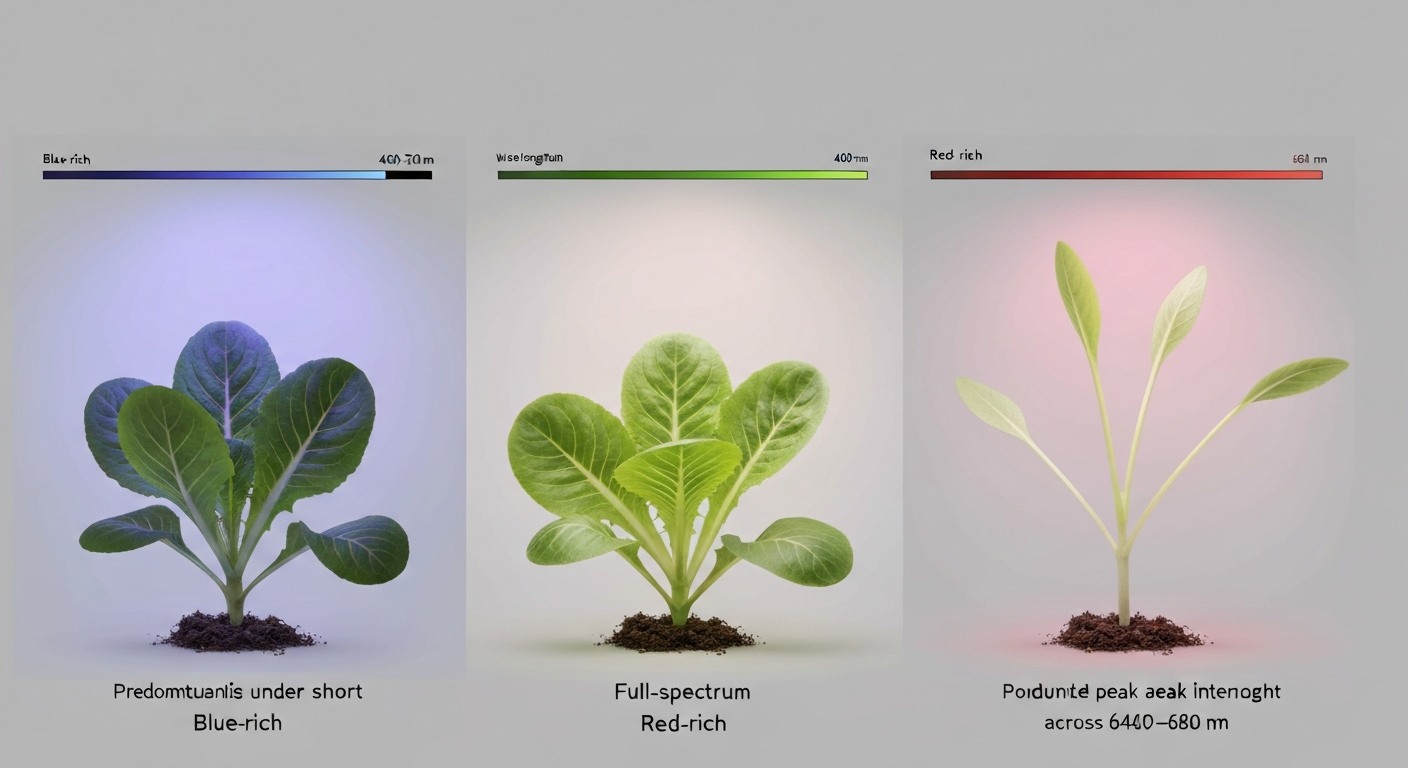
Why Do Plants Grow Best in Blue Light? Science & Practical Guide
Explore why blue light boosts vegetative growth, ideal blue:red ratios, PPFD, photoperiods, fixtures, and setup tips.
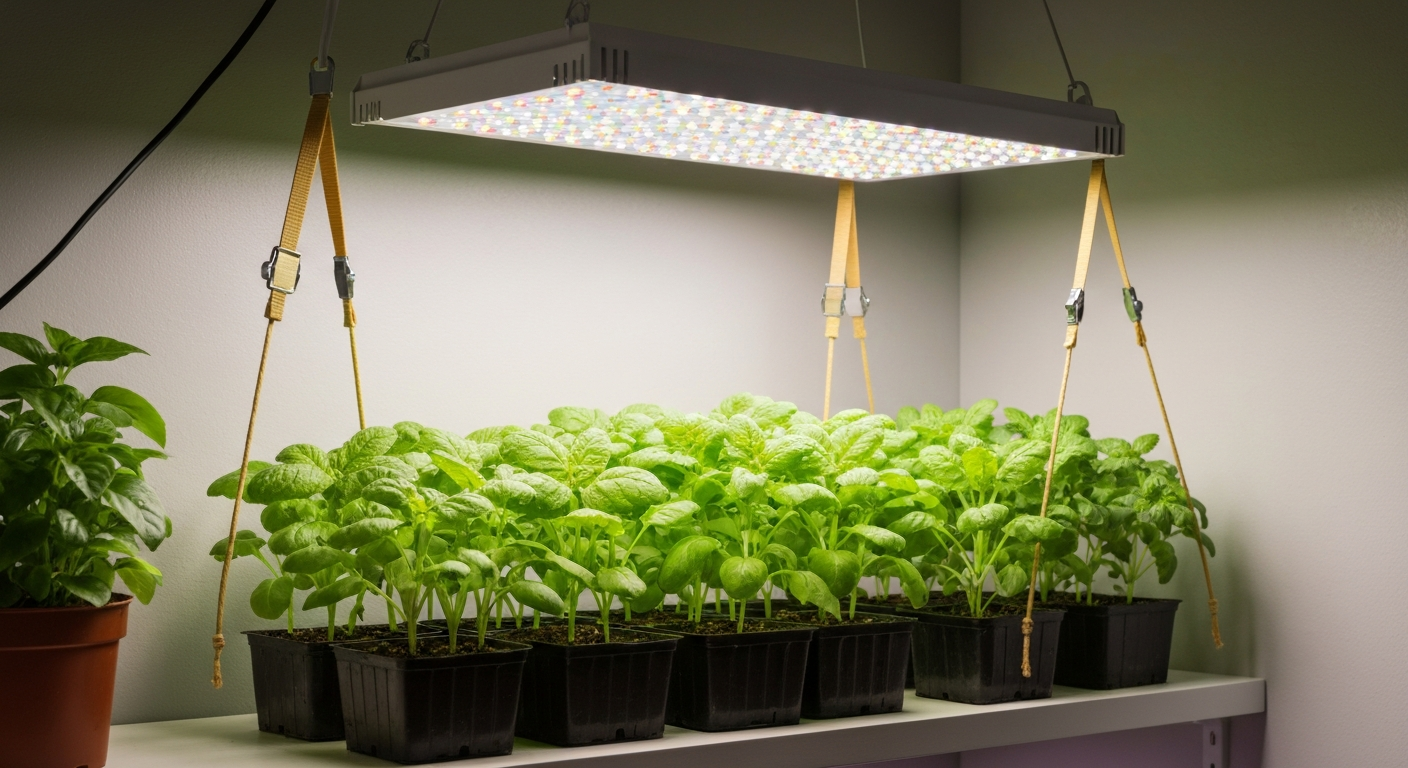
What Artificial Light Will Grow Plants: Best Lights Guide
What artificial light will grow plants: practical guide to LED, CFL, HID spectra, PPFD targets, setup, cost & tips.
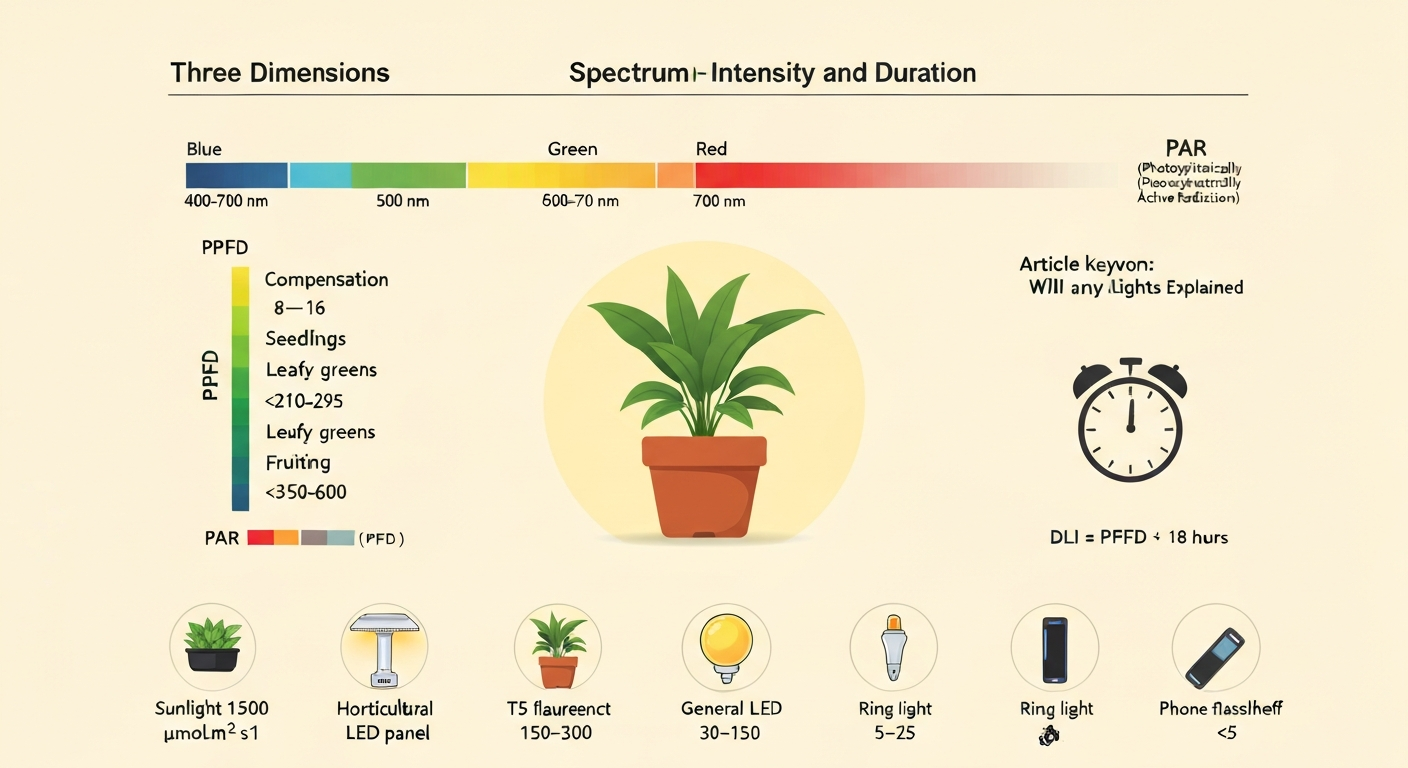
Will Any Light Grow Plants? Guide for Indoor Growers
Can any light grow plants? Clear yes/no, science-backed light specs, setup tips, and which household lights work.