Yes, grow lights absolutely work for indoor plants. When you put the right light close enough to a plant and run it long enough each day, the plant photosynthesizes just like it would near a sunny window. You may be surprised by the benefits of grow lights for indoor plants, especially when you understand how much usable light they deliver. I've grown herbs, succulents, pothos, and even tomato seedlings under grow lights with no natural light at all, and they thrived. The catch is that "works" depends on your setup: the type of light, how close it is, how long you run it, and what you're actually growing. Get those details right and you'll see real, healthy new growth. Get them wrong and your plant will tell you, usually by stretching toward the light or slowly declining.
Do Grow Lights Work for Indoor Plants? How to Know and Set Up
What "working" actually means for a grow light
Plants need light to power photosynthesis, but not just any light. Once you know that, you can choose a grow light that matches the right wavelengths and intensity for indoor growing what type of light do plants need to grow indoors. They specifically use wavelengths in the red and blue parts of the spectrum, and research from NASA confirms these have the greatest impact on plant growth. NASA eClips states that red and blue light have the greatest impact on plant growth, which matches the spectrum design of many grow lights blank" rel="noopener noreferrer">red and blue parts of the spectrum. A grow light "works" when it delivers enough of those usable wavelengths, at enough intensity, for enough hours per day that a plant can build sugars, grow new leaves, and stay healthy.
The measurement that matters most here is PPFD (photosynthetic photon flux density), which tells you how many photosynthetically usable photons land on a square meter of plant canopy every second. It's a far better number to look at than lumens or lux, which measure light the way human eyes perceive it, not the way plants absorb it. The daily total of that light delivery is called DLI (daily light integral), and you can calculate it simply: PPFD multiplied by hours of light per day, multiplied by 0.0036. So a light delivering 150 PPFD for 14 hours gives your plant a DLI of about 7.6, which is enough for most low-to-medium light houseplants.
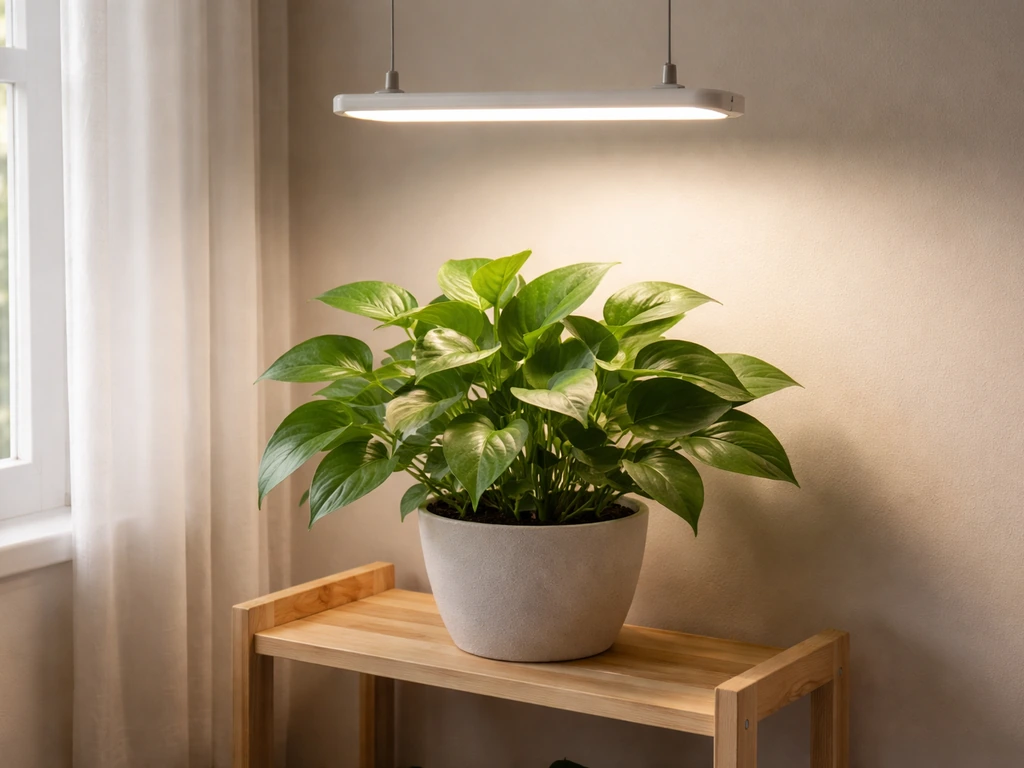
What "enough light" looks like also depends entirely on the plant. Low-light plants like pothos and philodendrons can get by with a PPFD of 50 to 250. Succulents generally want 100 to 200 PPFD. African violets and similar flowering plants want more intensity and longer days. Sun-hungry plants like fruiting vegetables need significantly more. If you're asking whether your specific plant will do well under a grow light, start by knowing whether it's a low, medium, or high light species, then match your light and schedule to that.
Choosing the right grow light for your home
For most home gardeners, LED grow lights are the clear first choice. They're energy-efficient, run cool, last a long time, and modern ones deliver a solid spectrum including the red and blue wavelengths plants need most. Some also include green, white, and far-red wavelengths, which round out the spectrum in ways that support more complete plant growth. NASA's plant biology research actually uses LED assemblies with exactly these wavelength combinations in controlled plant growth environments, which tells you the technology is genuinely capable.
Fluorescent lights (especially T5 high-output tubes) are also effective and more affordable upfront. A standard two-tube 40-watt T5 fixture placed 6 to 12 inches from your foliage can provide enough supplemental light for medium to high light houseplants. They work well for seedlings and low-light tropicals. The downside is they're bulkier and less energy-efficient over time compared to LEDs.
High-intensity discharge lights (HID, like metal halide or high-pressure sodium) are overkill for most homes. They generate significant heat, require special fixtures, and are really designed for commercial or serious hobbyist setups. Unless you're running a large indoor garden, skip them. When choosing any bulb or fixture, look for a color temperature near 6500K, which mimics natural daylight and is well-suited for vegetative plant growth.
| Light Type | Best For | Typical Distance from Plants | Energy Efficiency | Heat Output | Cost |
|---|---|---|---|---|---|
| LED grow light | Most houseplants, seedlings, herbs, succulents | 12–24 inches (varies by wattage) | High | Low | Medium–high upfront, low running cost |
| T5 fluorescent | Seedlings, low-to-medium light houseplants | 6–12 inches | Moderate | Low–moderate | Low upfront, moderate running cost |
| HID (metal halide / HPS) | Large plant rooms, fruiting crops | 5+ feet above canopy | Low | High | High upfront, high running cost |
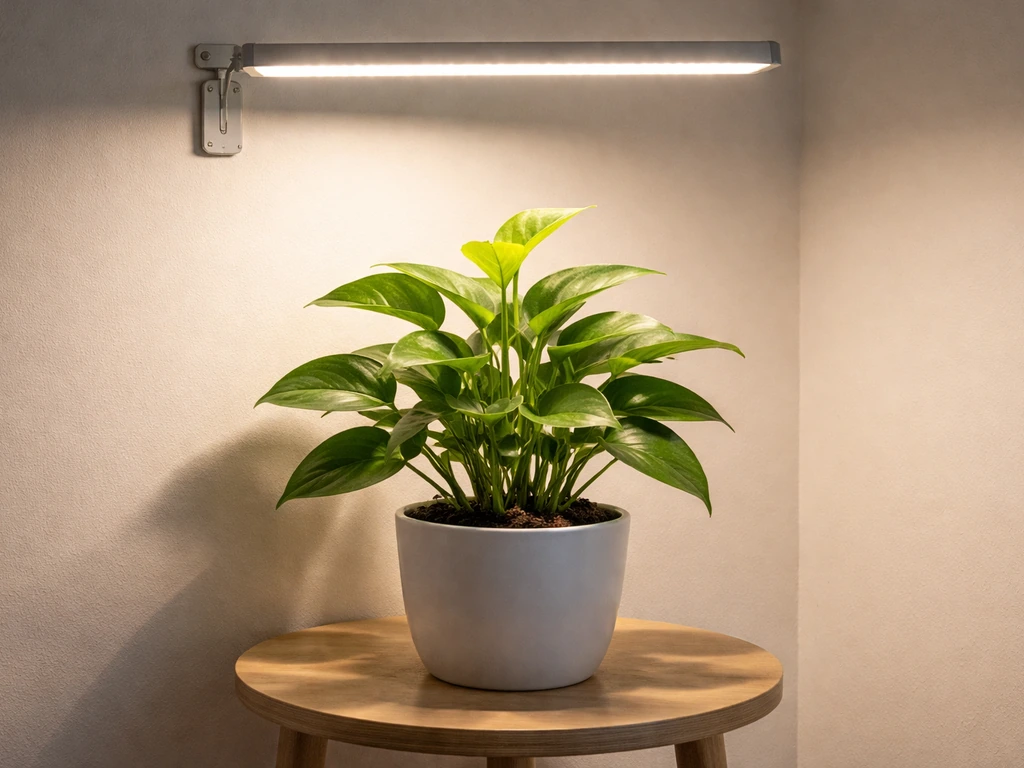
For a typical home setup, a quality LED panel or bar light designed specifically for plants is the easiest win. Look for one that lists PPFD output and spectrum details rather than just wattage, because wattage alone tells you very little about how useful the light is for plants.
How to actually set up and run your grow light
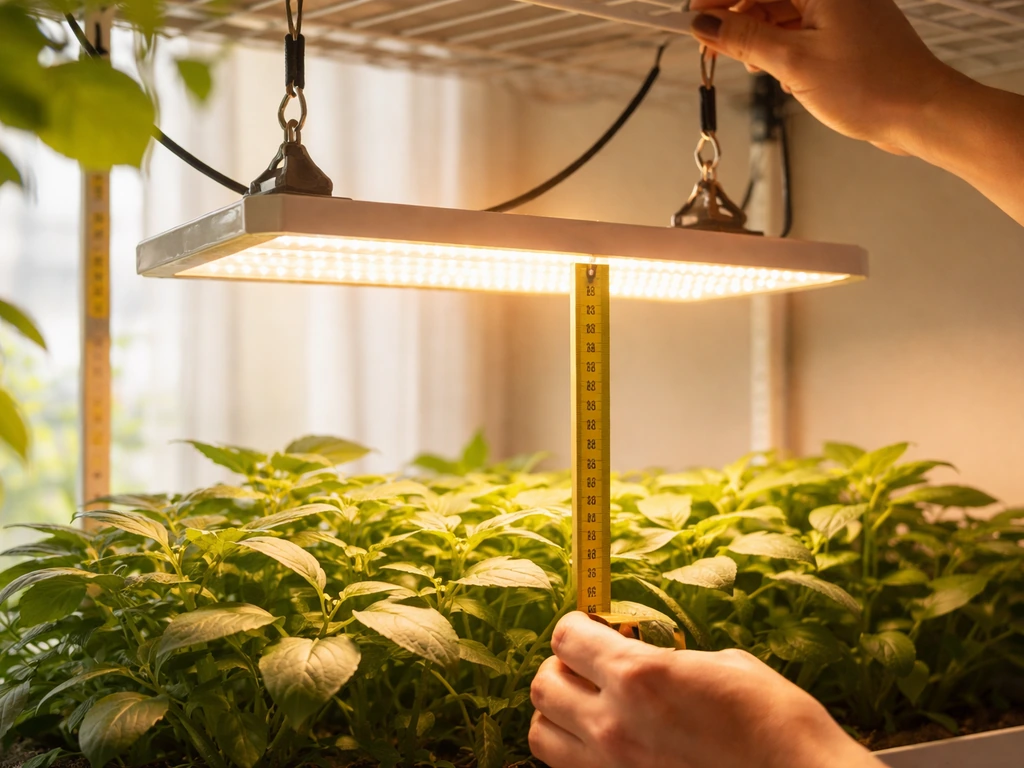
Distance from your plants
Distance is one of the most important variables and one of the most overlooked. PPFD drops significantly as you move the light farther from the canopy. This is physics: light intensity follows an inverse square relationship with distance, so even a few extra inches makes a real difference. As a starting rule, place LEDs 12 to 24 inches above foliage depending on their output, and fluorescent fixtures 6 to 12 inches above foliage. If you have lower-light plants, you can go farther. If you're growing seedlings or something that needs more intensity, bring the light closer. Watch your plants and adjust from there.
How long to run the light each day
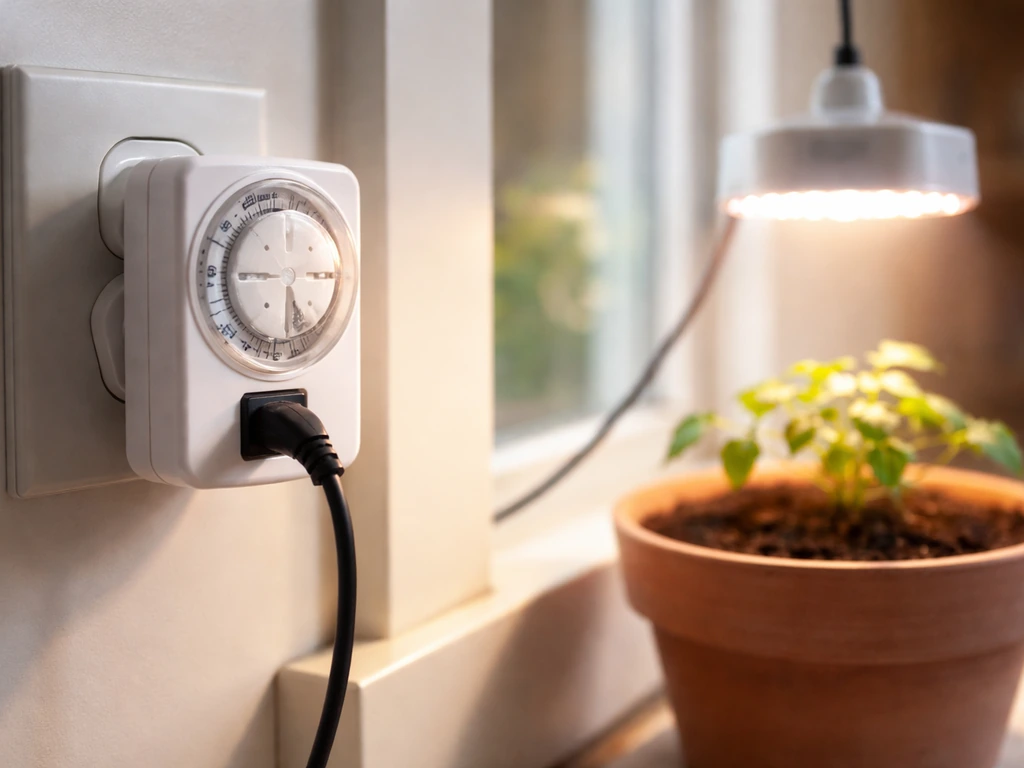
Most houseplants do well with 12 to 16 hours of light per day under supplemental grow lighting. Seedlings often benefit from up to 18 hours. A 14-hour photoperiod is a solid general starting point for medium-light plants. Use a plug-in timer so you're not relying on memory, and try to run the light during daytime hours. Plants still benefit from a dark period, so don't run a grow light 24 hours a day thinking more is always better.
Room placement
Where you put your setup matters beyond just the light. Avoid placing plants directly over or next to heating vents, which can dry them out quickly. If your grow space is enclosed or has poor air circulation, add a small fan to move air around the canopy. This prevents humidity buildup and helps strengthen stems. Also remember that grow lights add a small amount of heat to a room, which is usually fine but worth monitoring if you're running multiple fixtures in a small space.
How to tell if your grow light is working (or isn't)
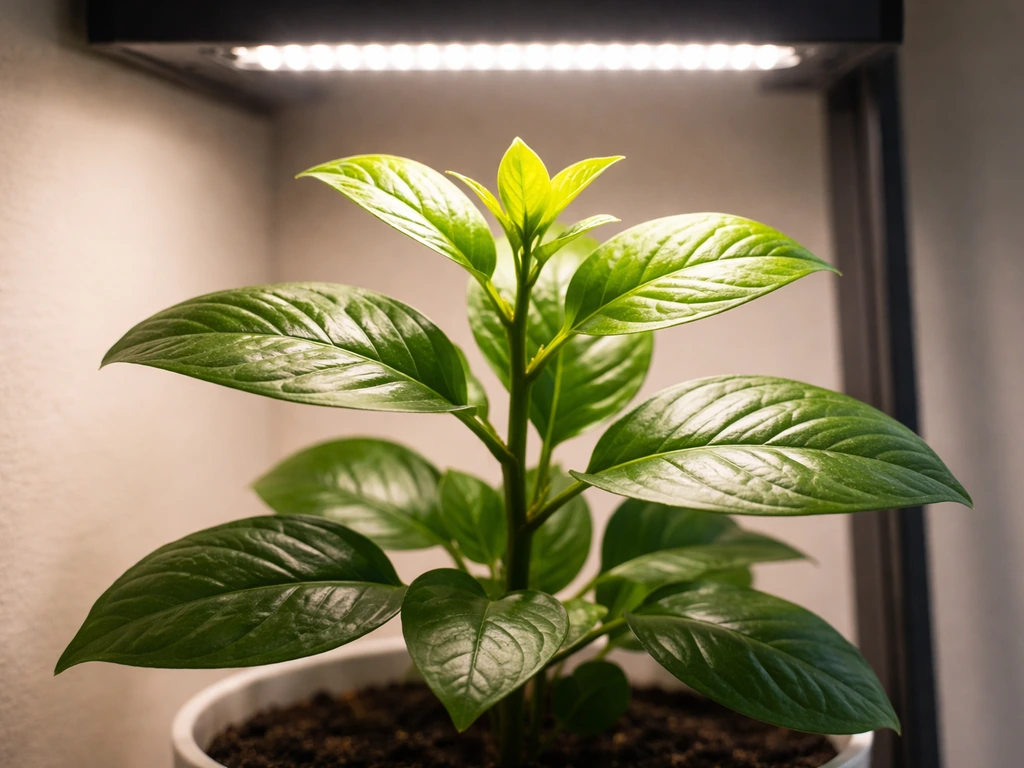
Plants are honest communicators. Once you know what to look for, it's easy to read whether your setup is delivering enough light or falling short.
Signs the light is working well
- New leaves are emerging at a reasonable pace and are similar in size to mature leaves
- Leaves are a healthy, deep green (appropriate to the species)
- Stems are compact with short distances between leaf nodes (internodes)
- The plant is holding its normal upright or spreading shape
- Flowering plants are producing buds and blooms on a normal cycle
Signs the light isn't delivering enough
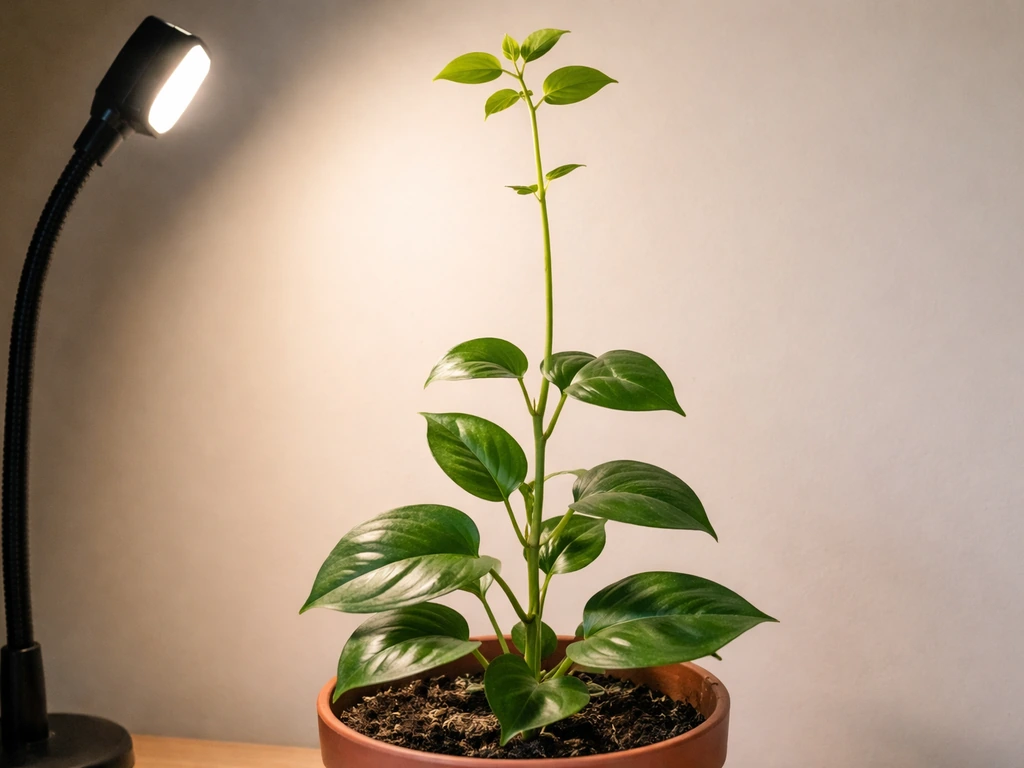
- New growth is thin, weak, and stretching toward the light (etiolation)
- Internodes are noticeably longer than on mature growth
- New leaves are smaller and lighter green than established ones
- Leaf petioles (stems) are abnormally long
- Growth has slowed dramatically or stopped entirely
These stretching symptoms are the clearest signal that your plant isn't getting enough usable light. The fix is almost always to move the light closer or increase the photoperiod. On the flip side, if you see browning on leaf tips or edges, it can mean the light is too close and the plant is getting scorched. Raise the fixture a few inches and see if new growth comes in clean.
Safety, health myths, and what you actually need to worry about
This is where a lot of people get nervous, so let's go through the real concerns plainly.
Can grow lights cause cancer?
The grow lights sold for home plant use are not a cancer risk. UV radiation is the primary light-related skin cancer concern, according to the American Cancer Society, and standard LED or fluorescent grow lights emit very little to no meaningful UV radiation. The types of bulbs that have posed real UV burn risks are unshielded metal halide and mercury vapor fixtures, not the LED panels or fluorescent tubes most home growers use. If you're using a typical consumer-grade LED or T5 grow light, UV exposure is not something you need to stress about.
Will a grow light give you a tan?
No. Tanning requires UV radiation, specifically UVB. LED and fluorescent grow lights don't produce enough UV to tan your skin. You could sit under a standard grow light all day and you wouldn't tan or burn. This is a very common misconception, likely because grow lights look bright and feel warm. But brightness to your eyes and UV output are completely different things.
Eye safety
This one deserves a bit more attention. High-intensity LEDs, including grow lights, can cause eye strain and temporary discomfort if you stare directly into them. The ICNIRP (the international body on non-ionizing radiation) notes that white and blue-rich LEDs are generally safe under normal use conditions for preventing acute retinal damage, but they do recommend avoiding extended exposure to blue-light-rich sources in the evening because of potential circadian rhythm effects. Practically speaking: don't stare directly at your grow lights, consider wearing sunglasses if you're working near a very bright fixture for extended periods, and avoid running bright grow lights in your bedroom late at night.
Fire risk and electrical safety
Quality LED grow lights run cool and carry very low fire risk when used correctly. The main rules are simple: use lights rated for the wattage you're running, don't overload power strips, keep lights away from flammable materials, and check cords and connections periodically for damage. Cheap, unbranded grow lights with poor build quality are more of a concern here than reputable products.
Pets and kids
The main hazard for pets and kids is the same as for adults: don't let them stare directly into a bright light. Beyond that, keep cords managed and out of reach of pets who might chew them. The light itself is not toxic, and most grow lights don't emit heat hot enough to cause burns on contact. Just set up your grow area so cords are tidy and nothing can knock fixtures over onto plants or furniture.
Troubleshooting when things aren't going right
If your plants aren't responding the way you expected, here's a practical order of things to check and adjust.
- Move the light closer first. This is the most common fix. If you're seeing stretching or slow growth and your light is more than 18 to 24 inches away, drop it to 12 to 16 inches and observe for two weeks.
- Increase photoperiod. If you're running the light for 10 hours, bump it to 14 or 16. Use a timer to keep it consistent.
- Check your spectrum. If your light doesn't include red and blue wavelengths specifically, it may not be doing much for photosynthesis regardless of how bright it looks.
- Watch for heat stress. If the room or grow area is getting noticeably warm (above 80°F consistently), add airflow or move the setup to a cooler spot. Heat stress slows growth just like low light does.
- Consider electricity cost. Running a 45-watt LED grow light for 16 hours a day costs roughly $2 to $4 per month depending on your local rates, which is very manageable. Higher wattage setups for multiple plants cost more, so factor that in when scaling up.
- Reassess whether you need a grow light at all. If your plant is near a bright south or west-facing window and growing well, a grow light may be unnecessary. Supplemental lighting matters most in winter, in rooms with limited windows, or for plants with high light needs.
If you're still not seeing improvement after adjusting distance and photoperiod, the issue might not be light at all. Check watering habits, soil drainage, and whether the plant is pot-bound. Grow lights solve light deficiency, not everything else. But in my experience, most struggling indoor plants are suffering from too little light, and a properly placed grow light on a timer fixes the problem faster than almost anything else.
Whether you're deciding if grow lights are even necessary for your setup, figuring out which type of light makes the most sense for your specific plants, or dialing in the details of spectrum and intensity, the fundamentals here stay the same: deliver the right wavelengths, at enough intensity, for enough hours. Get those three things right and grow lights genuinely work. Most people who say they don't are running the light too far away or too few hours. For most indoor houseplants, you only need a grow light if natural light is too weak or too inconsistent to support steady growth do i need a grow light for houseplants. Close the distance, set a timer, and give it two to three weeks. You'll know quickly whether it's working.
FAQ
What if my grow light only lists watts, not PPFD or spectrum details, does it still work?
Many “grow light” products list only wattage or marketing phrases. For faster decision making, look for PPFD output at a stated distance (for example, PPFD at 12 inches) and a photoperiod recommendation. If the listing does not provide PPFD or any usable intensity info, plan on conservative placement (closer) and expect you may need trial and adjustment.
How many hours a day should I run grow lights, and is longer always better?
Use your daily light integral mindset: most houseplants do fine with a 12 to 16 hour photoperiod, but if you run longer you can still run out of “quality” if intensity is low. A practical rule is to start with 14 hours at the recommended height, then adjust one variable at a time (distance first, then hours) over 2 to 3 weeks.
How do I set the correct distance when my plants are on multiple shelves or varying heights?
Aim for a consistent setup so you can measure results. If plants are on shelves, the light’s effective height varies by shelf level, so keep distances measured to the actual canopy on each shelf. A good approach is to measure from the light lens or top-emitting surface to the tallest leaves the plant will reach, then fine-tune after you see stretch or leaf-edge changes.
Can I combine natural window light with grow lights without overdoing it?
Yes, but you need to avoid “shade gardening” effects. If you have a bright window plus a grow light, you can reduce the grow light hours or intensity to avoid overdoing the light. Watch for excessive thick, compact growth or leaf-edge browning, then scale back by shortening the timer or raising the fixture a few inches.
What should I check if my plant still isn’t improving after I adjust the light distance and timer?
Light deficiency is the common cause, but not the only one. If you see no change after you adjust distance and timing, check watering (overwatering and poor drainage can mimic low-light decline), temperature swings, and whether the plant is rootbound (which limits growth even with good light).
How can I tell whether my light is too far, too weak, or too close if I don’t have a PPFD meter?
If you cannot measure PPFD, use an “adjust-and-observe” protocol: start at a typical height, run 14 hours, and reassess weekly. Stretching that worsens means move closer or add hours. Browning at leaf tips or edges means back off distance (raise the light) and avoid increasing hours until new growth looks normal.
Do grow lights work for flowering plants and fruiting vegetables the same way as for foliage houseplants?
For flowering and fruiting, “works” depends on whether you meet both intensity and the species’ light schedule. Many fruiting plants want higher PPFD than typical foliage houseplants, and some benefit from longer summer-like days depending on the crop. If you’re growing tomatoes or peppers for fruit, plan for a higher-output setup and expect a different target than pothos.
Are grow lights safe for skin and eyes, and what common practices should I avoid?
Grow lights are safe in the sense that typical home LED and fluorescent fixtures produce negligible UV for tanning or UV burns. The more realistic concern is glare if you stare directly into high-intensity LEDs, and circadian disruption if you run bright lights late in the evening. Use a timer, avoid aiming fixtures toward eye level, and schedule the “on” window earlier in the day.
Do I need UV protection or special covers for grow lights?
You usually do not need a special UV-blocking cover for consumer LED or standard T5 fixtures. However, if you add diffusers, glass, or tinted covers, you can reduce usable intensity, which raises your required hours and distance tolerance. If you do use a cover, re-check plant response and be prepared to move the light slightly closer.
What’s the simplest way to test whether my grow lights are working for my setup?
Start with one plant group and one lighting zone so you can isolate variables. If you’re testing whether lights are “working,” set them up to deliver consistent distance and photoperiod, then observe new growth over 2 to 3 weeks. If you change multiple things (height, timer, watering, fertilizer) at once, it becomes hard to know what actually fixed the problem.
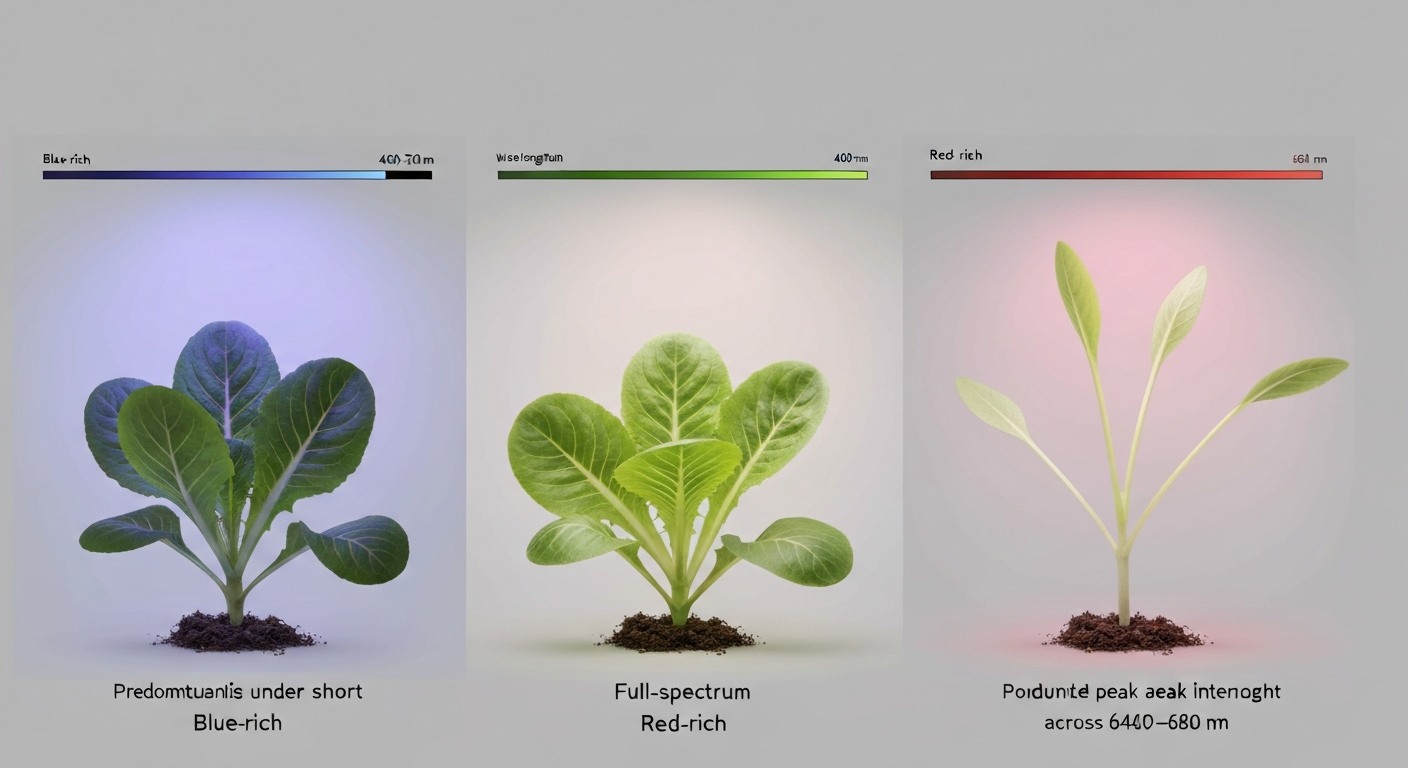
Explore why blue light boosts vegetative growth, ideal blue:red ratios, PPFD, photoperiods, fixtures, and setup tips.
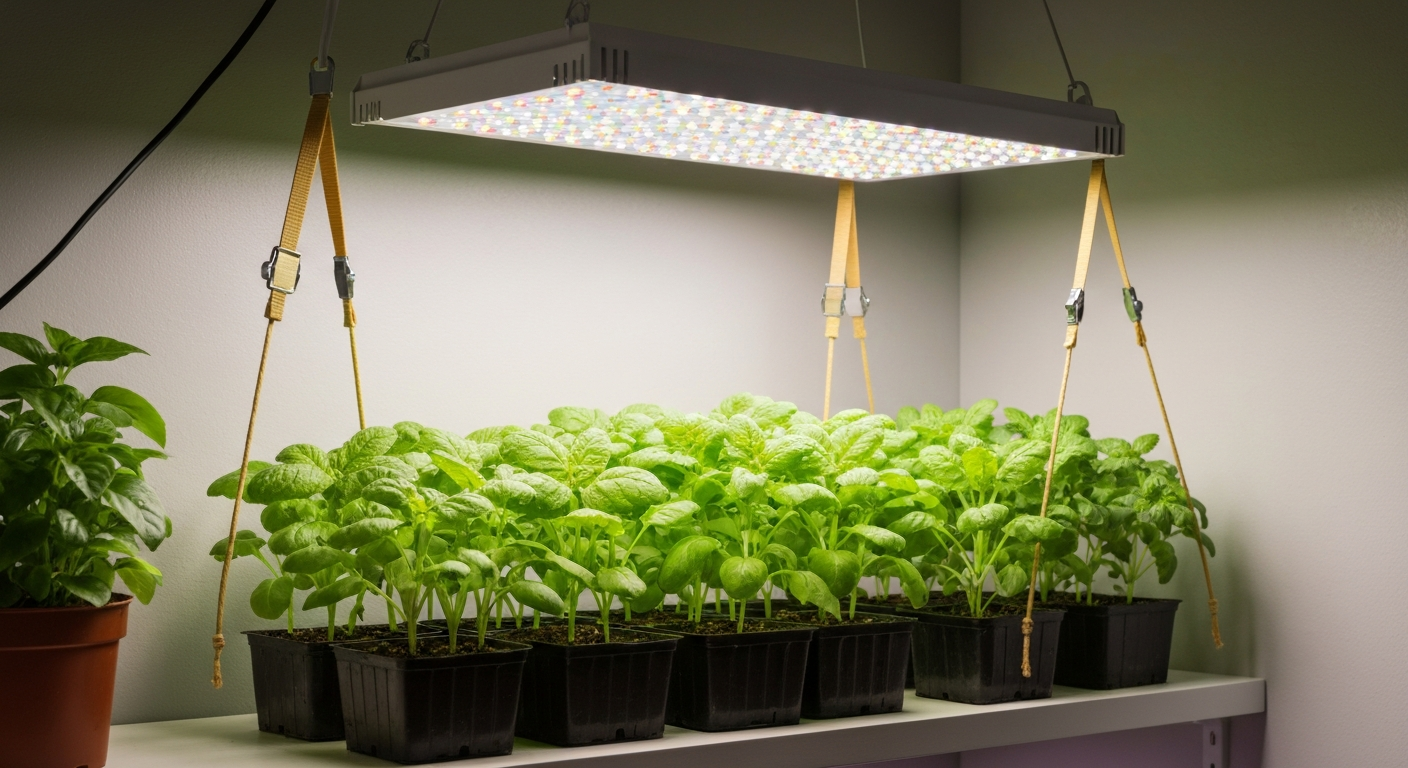
What artificial light will grow plants: practical guide to LED, CFL, HID spectra, PPFD targets, setup, cost & tips.
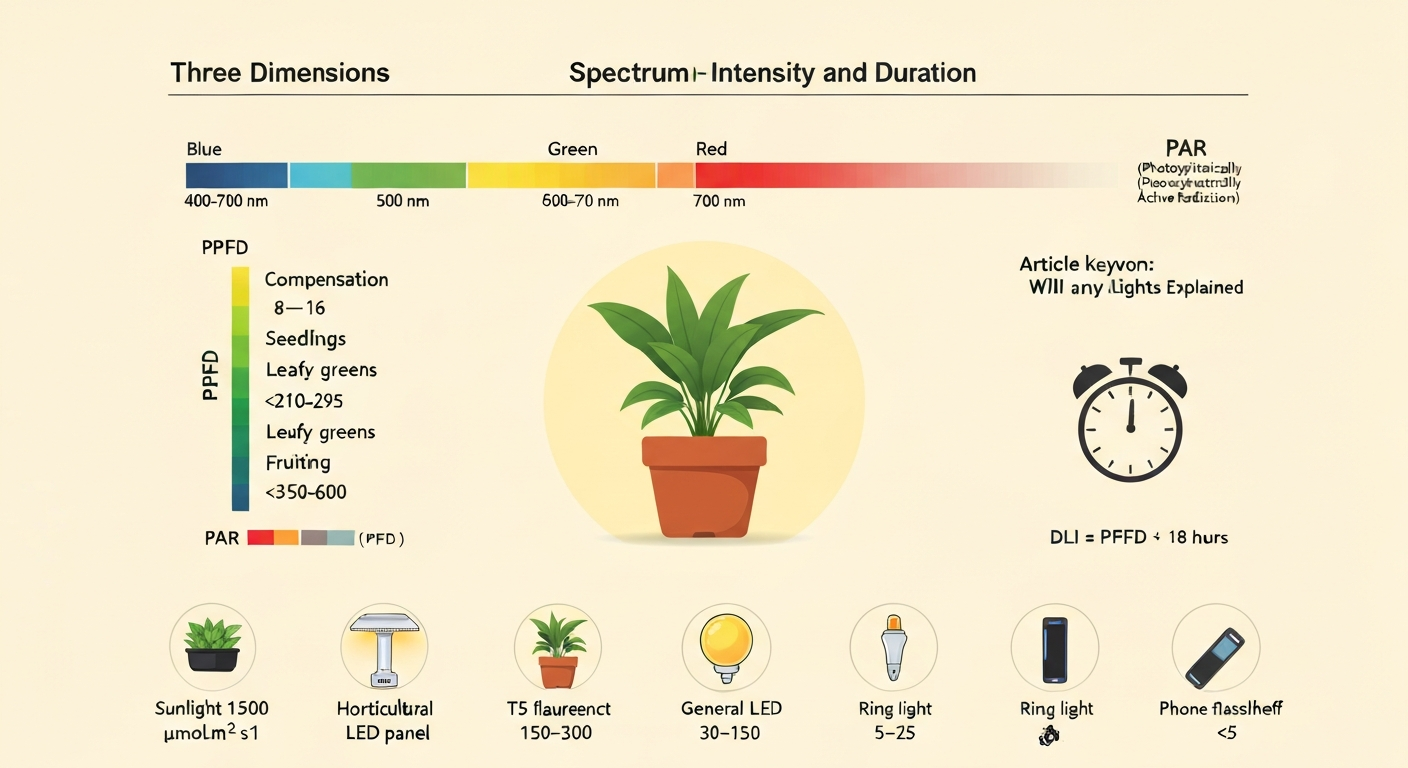
Can any light grow plants? Clear yes/no, science-backed light specs, setup tips, and which household lights work.