Whether you need grow lights for indoor plants depends almost entirely on how much natural light your space actually gets. If you have a bright south- or west-facing window with direct sun for four or more hours a day, most common houseplants will do fine without any artificial help. But if your home has dim rooms, north-facing windows, or you're trying to grow herbs, vegetables, or flowering plants in a space with limited sunlight, a grow light is not optional, it's the difference between a plant that thrives and one that slowly declines.
Do I Need Grow Lights for Indoor Plants? A Quick Guide
Marcus Holloway
14 Jun 2026
When you actually need grow lights (and when you don't)
Let's make this simple. You probably need a grow light if any of these apply to your situation:
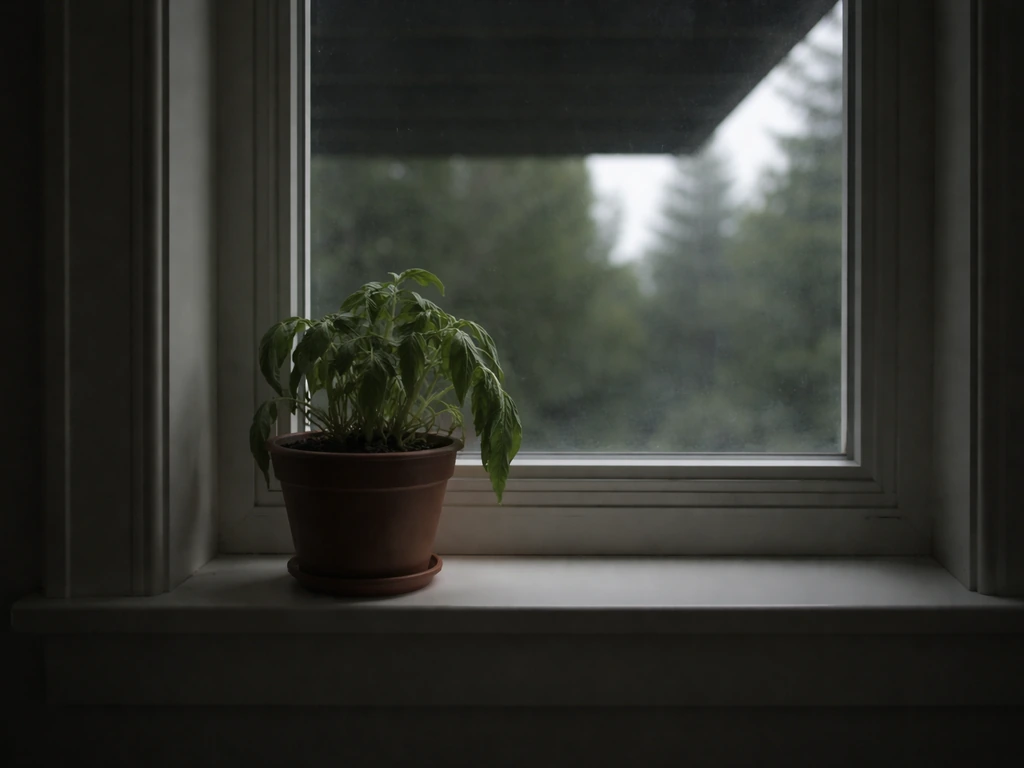
- Your brightest window faces north or gets blocked by trees, buildings, or an overhang
- You're growing herbs, vegetables, or fruiting plants like cherry tomatoes indoors
- You're starting seeds indoors and want strong, healthy seedlings (not leggy, stretched ones)
- You're in a northern climate where winter daylight drops to under 9 or 10 hours a day
- You've noticed your plants slowly getting weaker, leaning hard toward the light, or dropping leaves despite good watering and care
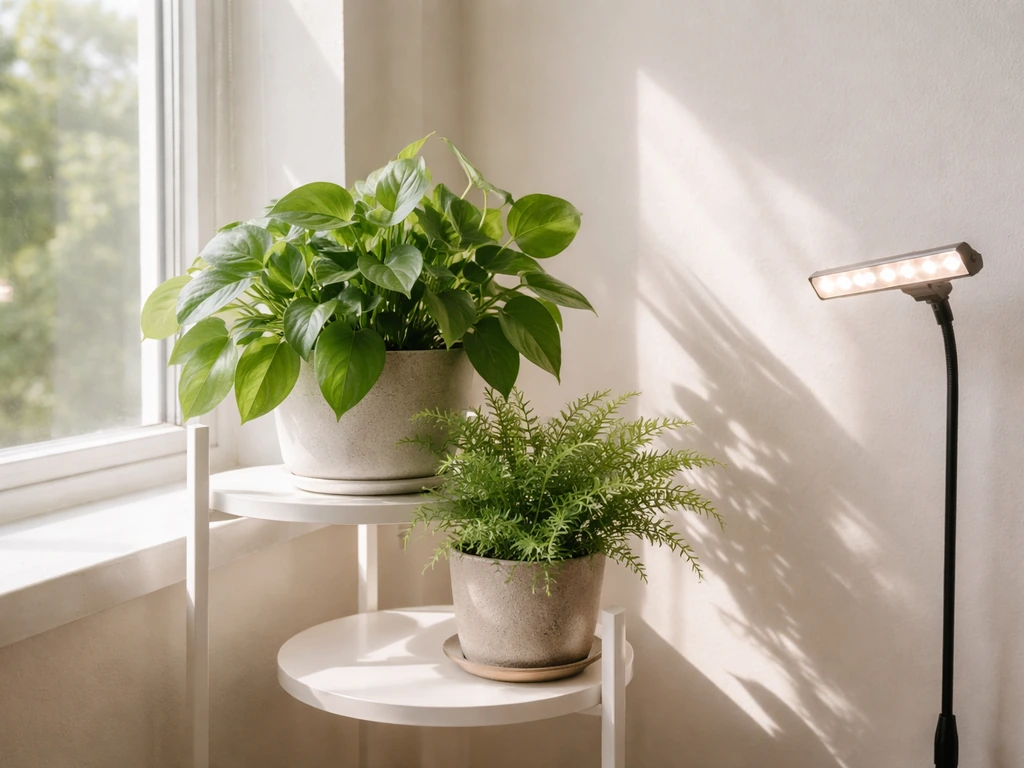
You probably don't need a grow light if you have a genuinely bright south- or west-facing window, you're growing low-light tolerant plants like pothos, snake plants, ZZ plants, or peace lilies, and your plants look healthy and are putting out new growth at a normal pace. If you still find yourself wondering whether does indoor lighting help plants grow, the quick light check mentioned next will tell you if a grow light is actually necessary for your plants grow light if. A lot of people buy grow lights for plants that don't actually need them, so it's worth doing a quick light check before spending the money.
How to tell if your indoor plants are getting enough light
Your plants will usually tell you before any app does. The most reliable signs of low light are slow or stopped growth, long stretched stems reaching toward the window (called etiolation), leaves that are smaller and paler than normal, lower leaves yellowing and dropping, and a general lack of vigor even when watering and humidity are fine.
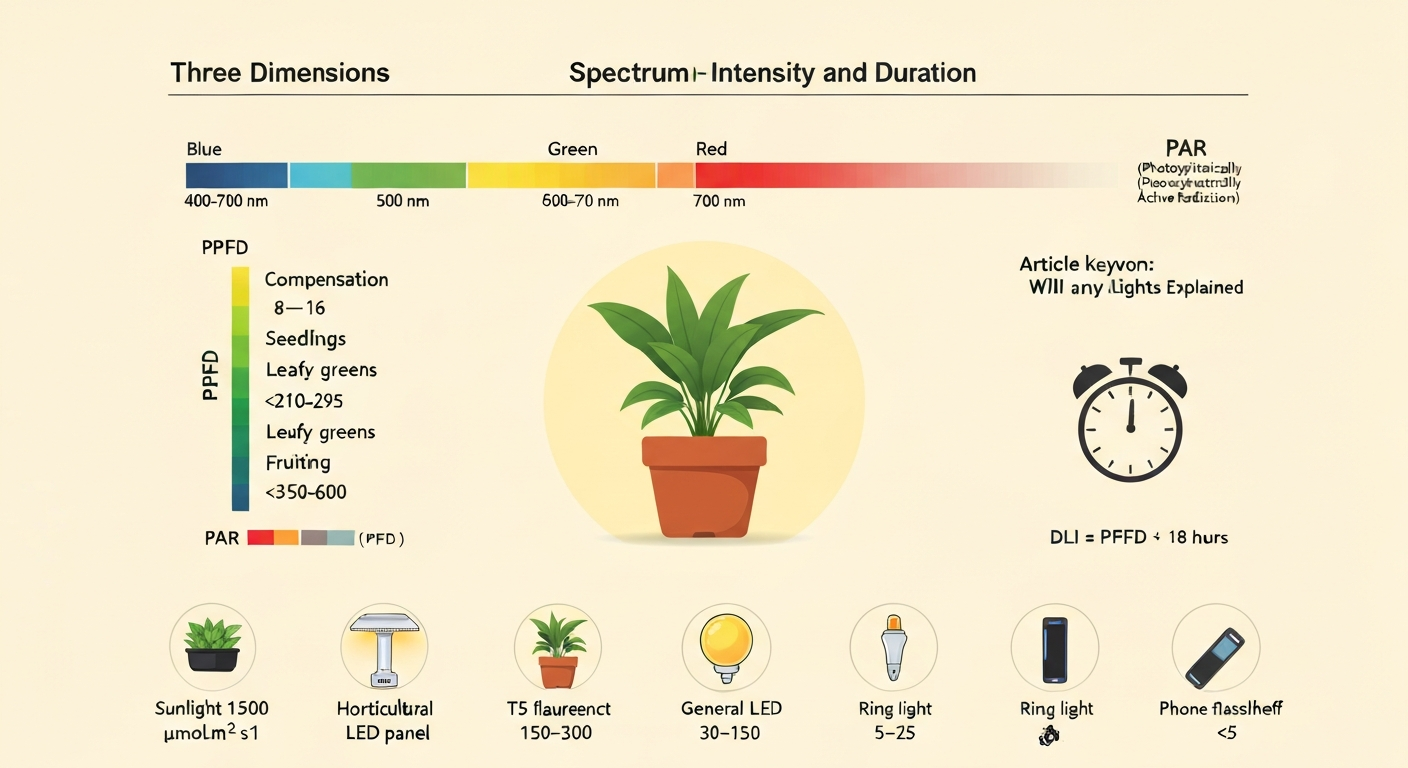
If you want a number to work with, the measurement you're looking for is PPFD (photosynthetic photon flux density), measured in micromoles per square meter per second. It sounds intimidating but it's just a precise way to describe how much usable light is hitting your plants. Low-light houseplants like philodendrons can get by on 50–250 PPFD. Succulents want 100–200 PPFD at minimum. Herbs and vegetables in their vegetative stage typically want 100–500 PPFD, and once they're flowering or fruiting, closer to 400–1,200 PPFD.
The cheapest way to check your light levels is a free or low-cost phone app like Photone, which uses your phone's camera sensor to estimate PPFD, lux, and foot-candles. It's not as accurate as a dedicated quantum sensor (those cost $300+), but it gives you a usable ballpark reading. One foot-candle, for context, is roughly the amount of light cast by a single candle on a surface one foot away, not a lot. Most window situations give you somewhere between 50 and 500 foot-candles, while a sunny south-facing window in summer might hit 1,000 or more.
The other practical check: hold your hand about a foot above a piece of white paper in the spot where your plant lives. A crisp, clear shadow means bright light. A faint, soft shadow means medium light. No shadow at all means low light, and that's where most plants begin to struggle.
Sunlight vs grow lights: what's actually different
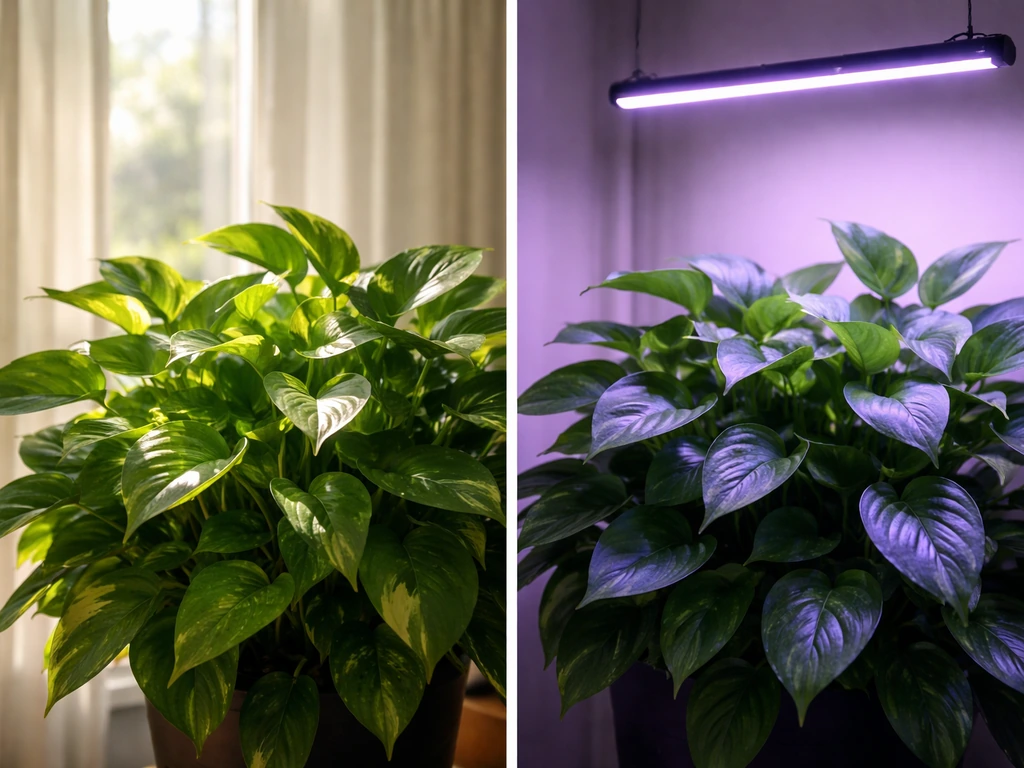
Natural sunlight is broad-spectrum, consistent (weather aside), and free. It covers all the wavelengths plants use, including the blue light that drives leafy vegetative growth and the red light that triggers flowering and fruiting. In many cases, the right grow light is the easiest way to provide the blue and red wavelengths plants need, even when natural window light is limited blue light that drives leafy vegetative growth. Grow lights can replicate these wavelengths intentionally, which is actually one of their advantages: you can dial in the spectrum and the duration in ways a window can't.
The key wavelengths plants care about most are red (around 630–700nm) and blue (around 400–500nm). Blue light promotes compact, leafy growth. Red light combined with blue encourages flowering. A peer-reviewed study on Hippeastrum ‘Red Lion’ also found that changing red:blue ratios significantly affected vegetative growth and flowering quality under forcing conditions red light combined with blue encourages flowering. Oregon State University Extension notes that red light combined with blue light specifically encourages flowering in plants, which is why a lot of grow lights marketed for fruiting and flowering have a heavier red spectrum. Full-spectrum LED lights cover both effectively, and for most houseplant situations that's exactly what you want.
What grow lights can't replicate perfectly is the intensity of direct outdoor sun, which can reach 50,000–100,000 lux on a clear day. But for most indoor plants, you don't need that level, and the grow lights available today are more than capable of hitting the PPFD targets that houseplants, herbs, and even many vegetables need. In practice, that means do grow lights work for indoor plants because they can deliver the intensity plants need without relying on direct sun.
What you should realistically expect from a grow light: healthier, more compact growth; plants that actually put out new leaves at a consistent pace; herbs that stay bushy instead of leggy; and seedlings that grow straight and strong rather than falling over. What you shouldn't expect: it won't fix a plant that's already severely root-bound, overwatered, or dealing with pests. Light is one variable, not the whole picture.
Choosing the right grow light
The three main types
| Type | Best for | Pros | Cons |
|---|---|---|---|
| LED panels/bars | Most indoor plants, herbs, seedlings, general use | Energy efficient, low heat, long lifespan, full-spectrum options widely available | Higher upfront cost than fluorescents |
| Fluorescent (T5/T8) | Seedlings, low-to-medium light plants, small setups | Affordable, even light spread, good blue spectrum | Less efficient than LED, shorter lifespan, bulkier fixtures |
| HID (HPS/MH) | Large indoor gardens, fruiting plants at scale | Very high output | Generate a lot of heat, high electricity use, overkill for most home setups |
For the vast majority of home gardeners and houseplant enthusiasts, a full-spectrum LED is the right call. They're efficient, run cool, last for years, and the options at every price point have improved dramatically. Unless you're running a large indoor vegetable setup, skip HID lights entirely, they're overkill and the heat management alone makes them frustrating to use in a home.
Spectrum: what to look for
Look for a light marketed as 'full spectrum.' That means it covers both the blue and red wavelengths plants need, plus some green and white to fill in the gaps. University of Maine Extension recommends a full-spectrum balance over narrow-band lights for houseplant growth. Avoid lights that only emit a single narrow band (pure red or pure blue only), research on Arabidopsis has shown that red light alone without any blue can cause delayed flowering and abnormal leaf development. A balanced full-spectrum LED avoids all of that without any extra effort on your part.
Brightness and coverage
Pay attention to the coverage area listed on the light's specs, and check that the PPFD at your intended mounting height matches your plants' needs. University of Missouri Extension advises measuring PPFD at actual plant height and checking the distribution map for the light you're considering, because intensity drops off significantly at the edges of coverage zones. A light rated for a 2x2 foot area will deliver much lower PPFD at the edges than at the center. For a small shelf of houseplants or a herb garden, a single LED bar or panel in the 20–40W range is usually plenty. For a 4x4 foot seed-starting table, you'll want something rated at 200W or more.
How to set up and use grow lights without causing problems
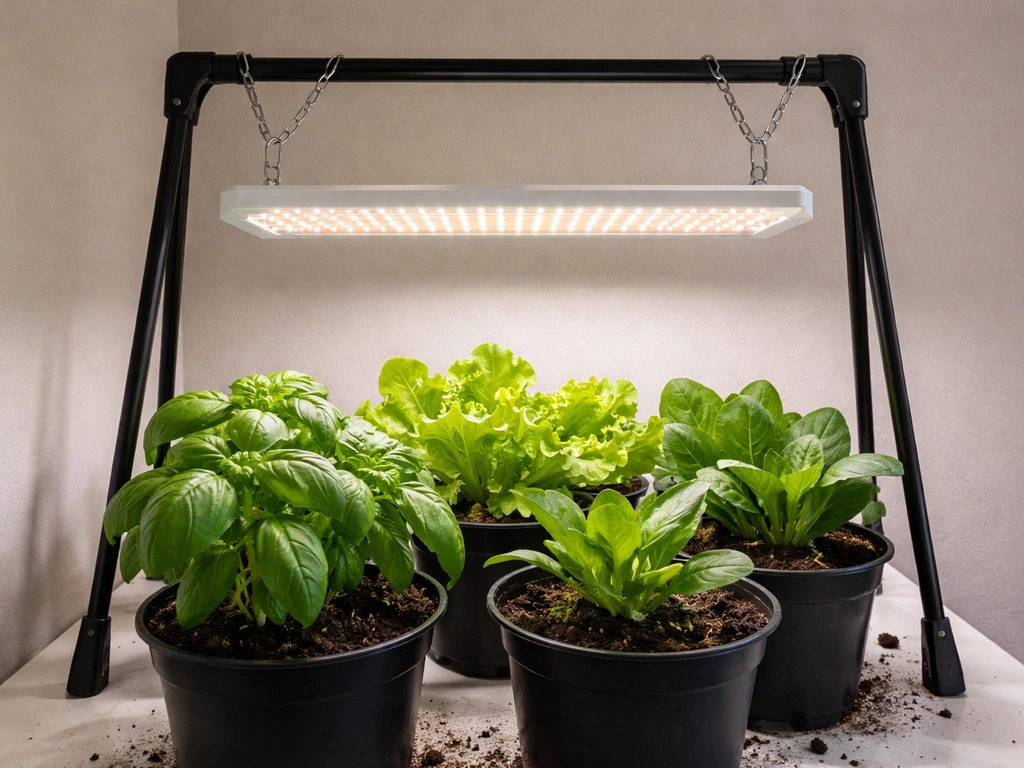
Distance from plants
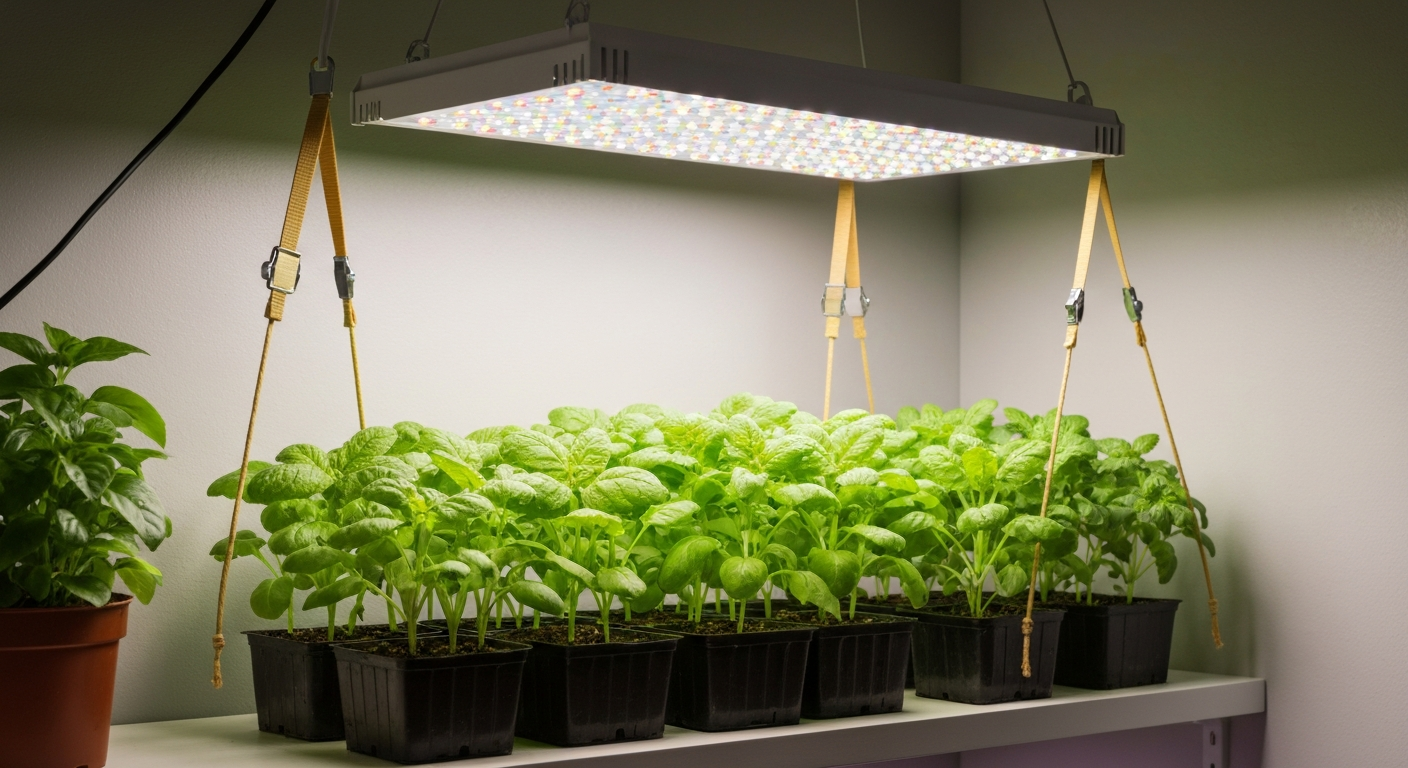
This is where most beginners go wrong, either hanging the light too high (which tanks your PPFD to useless levels) or too close (which causes light bleaching or heat stress). For LED panels, a general starting point is 12–24 inches above the plant canopy for most houseplants and herbs. Seedlings under fluorescent tubes can be as close as 2–4 inches. Check your specific light's manufacturer guidelines, then watch your plants for the first week: bleached or pale yellow patches at the top of the plant usually mean too close, while continued stretching and leaning means still too far. Adjust in 2-inch increments.
Duration and photoperiod
Plants need a dark period too, not just light. For most houseplants and herbs, 12–16 hours of light per day is the right range. Seedlings do well at 14–16 hours. Low-light houseplants can get by on 10–12 hours. Flowering plants often need a specific photoperiod (short days to trigger blooming in some species), so check requirements for your specific plants. The most important thing: keep the schedule consistent. Plants regulate their internal cycles by day length, so random on/off times cause stress.
Use a timer, seriously
A basic plug-in outlet timer costs about $10 and is genuinely one of the most useful things you can buy alongside a grow light. Set it once and forget it. Trying to manually turn the light on and off every day is inconsistent and you will forget. Consistent photoperiod matters more than most people realize, University of Maryland Extension specifically highlights photoperiod as a key factor in plant growth alongside light intensity.
Common concerns, myths, and actual safety notes
Will a grow light give you a tan or cause cancer?
Standard LED and fluorescent grow lights used for houseplants do not emit meaningful UV radiation. They won't tan your skin or cause sunburn. UV-related risks (including the type of UV that the CDC and FDA flag for skin and eye damage) come from UV-specific lamps, not the full-spectrum LED or T5 lights you'd use for plants. That said, UV light does exist in some specialized horticultural and germicidal lamps, and those absolutely can cause eye and skin injury. NCBI Bookshelf (Prudent Practices in the Laboratory) notes that UV light hazards can cause serious skin and corneal burns when UV lamps are present in enclosed equipment and not properly managed UV-related risks come from UV-specific lamps. The FDA and OSHA both note that UV exposure can damage eyes and skin, sometimes without immediate symptoms. The practical rule: if your grow light is marketed as a UV-B or germicidal lamp, don't look directly at it. If it's a standard LED grow light for plants, normal common sense is enough.
Is it safe to look at grow lights?
Staring directly at any bright light for extended periods is a bad idea, not because of cancer, but because intense light can strain or damage your eyes. High-output LED grow lights can be genuinely bright and uncomfortable. Don't stare directly at them when they're on. For most household setups this isn't a serious issue, but if you're running a high-powered light in a small room, you might want to angle it downward and avoid looking directly at it when you're working nearby.
What about pets?
Pets that spend time near grow lights are generally fine as long as the lights are positioned sensibly. The main concern is heat from older-style or high-wattage lights, a cat sleeping directly under a hot HID lamp for hours is not ideal. Modern LEDs run much cooler. Keep cords managed so pets can't chew them, and make sure the light fixture is secure so it can't fall.
Heat and electricity safety
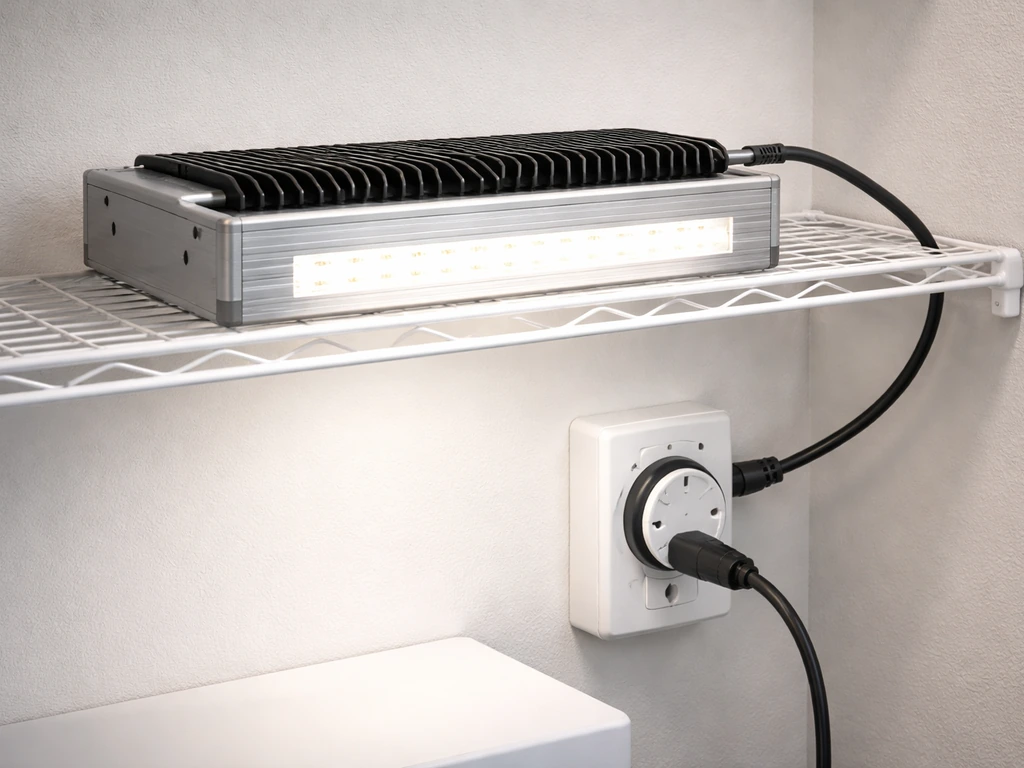
LEDs are the safest option here too. They run far cooler than HID or incandescent lights, which can get hot enough to ignite nearby materials. Oregon State Fire Marshal guidance on electrical fire safety specifically flags high-power demand overheating extension cords and bulbs near flammable materials. If you're running multiple grow lights on a single power strip, make sure it's a rated surge protector and that you're not overloading the circuit. Plug high-draw lights directly into wall outlets when possible, and keep them away from curtains, paper, or anything flammable.
Will it spike your electricity bill?
A 20–40W LED running 14 hours a day uses about 0.3–0.6 kWh per day. At average US electricity rates that's roughly $1–3 per month per light. Running a 200W setup for a seed-starting table bumps that to around $10–15 per month. It's a real cost, but not dramatic. High-wattage HID setups are a different story, another reason LEDs make more sense for home use.
A simple plan based on where you're starting
Here's how to move forward based on your current situation, without overcomplicating it.
- Check your light right now: Use the shadow test or a free app like Photone to measure your actual light levels in the spot where your plants live. If you're getting consistent bright light (strong shadow, 500+ foot-candles, or plants are actively growing and healthy), hold off on buying anything.
- Identify what you're growing: Low-light tolerants like pothos, snake plants, and ZZ plants can survive in dim spots. Herbs, vegetables, and flowering plants almost always need supplemental light in typical indoor conditions. Succulents need more than most people realize — a north-facing windowsill usually isn't enough.
- If you decide to buy, start simple: A single full-spectrum LED bar or panel in the 20–45W range covers a small shelf or countertop herb garden and costs $25–60. Don't over-buy for your first setup.
- Set up with a timer immediately: 14 hours on, 10 hours off is a safe starting schedule for most plants. Adjust based on plant type if needed.
- Position the light at the right height and adjust: Start at 18 inches above the canopy for most LED panels. Watch plants for 7–10 days and adjust based on what you see.
- Reassess in 3–4 weeks: Healthy new growth, compact stems, and good leaf color are signs it's working. Continued stretching, pale leaves, or bleached patches mean you need to adjust distance, duration, or intensity.
Grow lights aren't complicated once you've got the basics down. Whether you ultimately decide your plants need one or not, the most important thing is making that call based on your actual light conditions, not guessing or hoping for the best. Most indoor plant struggles come down to light, and now you have what you need to figure out which side of that line your setup falls on.
FAQ
How do I tell if my grow light is helping within the first week?
Look for changes that start fast, new leaf growth, less stretching, and sturdier stems. If you see new growth but it is still reaching and leaning, the light is likely too far away or too dim at canopy height. If you see sudden pale, bleached patches on upper leaves, it is probably too close or too intense for that species.
Do I need grow lights in a bathroom or laundry room windowless space?
Yes, in a windowless room you will need a light that provides both enough intensity and a daily schedule. A simple rule of thumb is to treat it like low natural light, then use a full-spectrum LED, aim for a 12 to 16 hour consistent photoperiod, and measure placement because coverage drops off quickly at the edges.
Will a grow light “fix” a plant that is already overwatered or infested?
No. Light can improve growth, but it does not correct root rot, nutrient problems caused by excess water, or active pest damage. If leaves are yellowing with mushy stems, or you see pests, address watering and the infestation first, then add light once the plant can recover.
Is it better to run grow lights longer or increase brightness?
For most home plants, consistency matters more than extreme duration. If growth is weak, first adjust to the right intensity at canopy height (or use a stronger/wider light). Increasing hours beyond recommended ranges can stress plants and sometimes worsen issues like leggy growth if the light is still insufficient.
What height should I start with if my light has no clear “mounting height” guidance?
Start with a conservative distance, for many LED panels that is around 18 inches above the canopy. Then fine-tune in small steps by observing leaf color and stretching over 3 to 7 days. If you cannot safely use distance guidance from the manufacturer, prioritize lower placement with careful monitoring to avoid bleaching.
Should I rotate my plants under a single grow light?
Often yes, especially if you only have one panel for multiple plants. Because LEDs have uneven intensity across the footprint, rotating the plant every few days helps prevent one side from getting stronger light and encourages more uniform growth.
Do I need grow lights for succulents in winter?
Usually, yes if your winter window light is not truly bright or if growth slows and stems start to stretch. Succulents need more light than many tropical houseplants, so if your phone/app shows low PPFD or you see pale growth, add a full-spectrum LED and keep the photoperiod within a typical range rather than running it all day.
Can I use regular daylight bulbs instead of grow lights?
Sometimes, but not reliably. Many standard bulbs do not provide enough intensity at the correct blue and red balance for plants, and power output may be too low for the distance you need. If you try them, use a brightness check at plant height, and expect slower results compared with a purpose-built full-spectrum LED.
Do grow lights need a “dark period,” and what happens if I leave them on 24/7?
Yes, most plants need a dark period to maintain normal internal cycles. Keeping lights on continuously can lead to stress and poor growth, even if plants look green. Use an outlet timer and keep daily schedules consistent, typically 10 to 16 hours depending on the plant type.
What if my plants are growing but the leaves are small and pale, do I still need a stronger light?
Small, pale leaves often indicate insufficient usable light rather than a watering issue. First confirm you are not underfeeding and that watering is correct, then increase light intensity, typically by lowering the light a bit or selecting a wider light footprint to deliver more uniform PPFD.
How close is too close for LED grow lights on houseplants?
If new growth develops pale or bleached patches on the highest leaves within a week, the light is likely too close or too intense. Raise the fixture slightly and reassess. Also watch for heat discomfort at the plant level, but with most LEDs overheating is less common than bleaching.
Is a higher color temperature (like 6500K) the same as “full spectrum”?
No. Color temperature is only a rough description of the bulb’s appearance, it does not guarantee the red and blue balance plants need. A light marketed as full spectrum and designed for plant growth is usually the safer choice than relying on K values alone.
Can I grow vegetables from seed with a single LED, and how do I choose coverage?
Yes, but choose based on the table or tray size and the manufacturer’s coverage area, then verify intensity at seedling height. Seedlings need the light close enough to deliver adequate PPFD, but not so close that they bleach, so plan to adjust height as the canopy grows.
Are grow lights safe around kids and pets, and what’s the main risk to manage?
Most of the main practical risks are electrical and positioning, not UV. Secure the fixture so it cannot fall, manage cords so they cannot be chewed, and avoid overloading power strips with multiple high-draw lights. Also discourage direct eye contact when lights are at peak output.
How can I reduce electricity cost without under-lighting my plants?
Use a timer and set the shortest daily photoperiod that still matches your plants’ needs. If you are running longer than necessary, cut back gradually based on plant response. Also avoid oversized lights mounted too high, because wasting distance reduces efficiency and can force longer runtimes to compensate.
Next Articles
Do Grow Lights Work for Indoor Plants? How to Know and Set Up
Yes, grow lights can power indoor photosynthesis. Learn how to choose, set distance and schedule, and troubleshoot resul
What Artificial Light Will Grow Plants: Best Lights Guide
What artificial light will grow plants: practical guide to LED, CFL, HID spectra, PPFD targets, setup, cost & tips.
Will Any Light Grow Plants? Guide for Indoor Growers
Can any light grow plants? Clear yes/no, science-backed light specs, setup tips, and which household lights work.