Turn your grow lights on when natural light alone isn't enough to keep your plants healthy and growing at the right pace. For most indoor setups, that means running lights 12 to 16 hours per day, starting them in the morning alongside (or in place of) natural sunrise, and shutting them off in the evening to give plants an uninterrupted dark period overnight. The exact schedule depends on what you're growing and what stage it's in, but those numbers are a solid, research-backed starting point you can use today.
When to Turn On Grow Lights and When to Turn Off
Marcus Holloway
2 Jul 2026
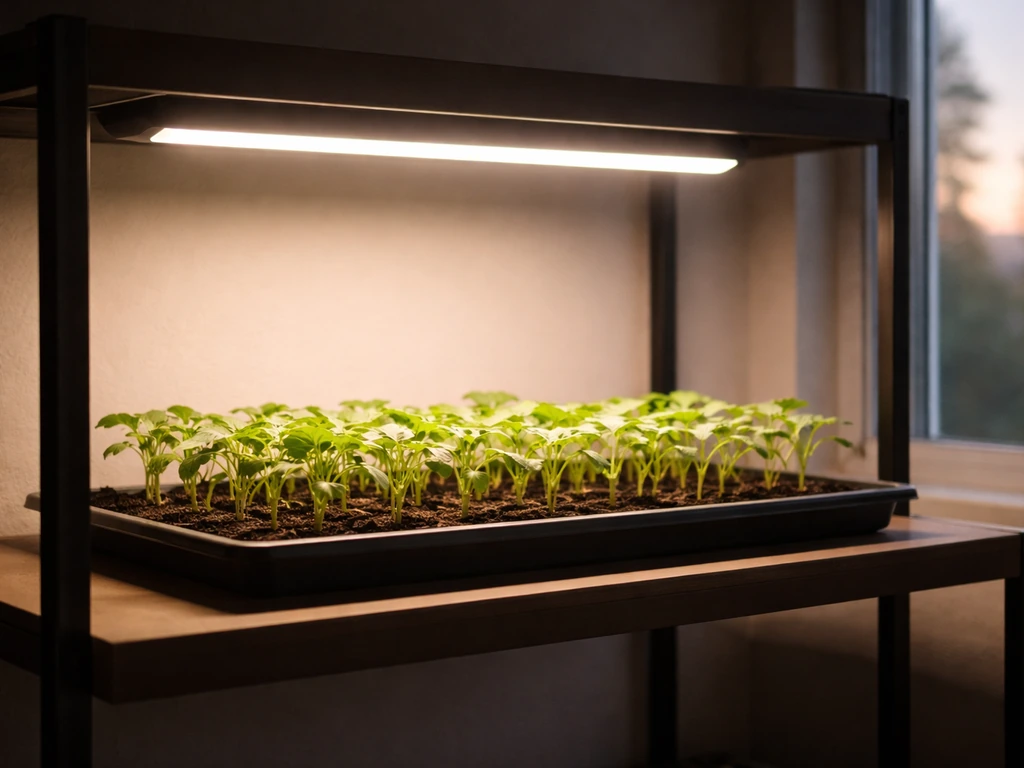
Light schedules by plant type and growth stage
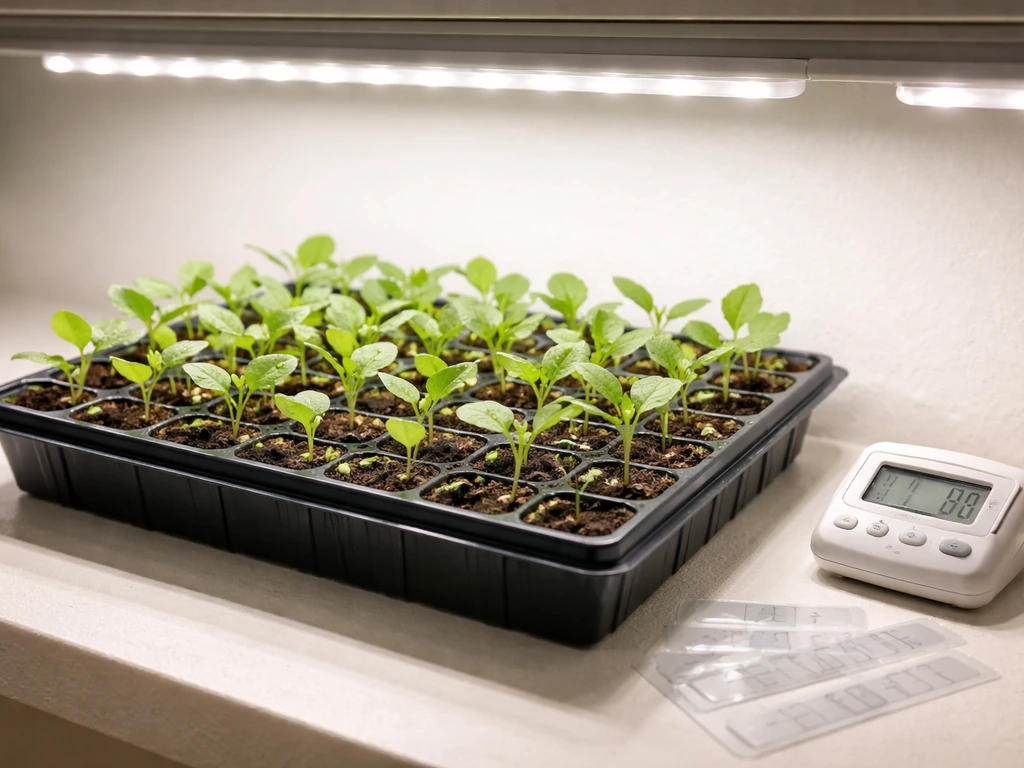
Not every plant wants the same number of light hours, and the growth stage matters just as much as the species. A tray of tomato seedlings has completely different needs than a mature pothos sitting on a shelf. Here's how to think about it.
| Plant Type / Stage | Recommended Hours Per Day | Notes |
|---|---|---|
| Seedlings (vegetables, flowers, herbs) | 16–18 hours | Keep lights very close, within 1–2 inches for fluorescents or per manufacturer spec for LEDs |
| Vegetative herbs and leafy greens | 12–16 hours | Hydroponic setups can run 12–14 hours; supplemental lighting in low-light winter may need 14–16 |
| Foliage houseplants | 12–14 hours | Most tolerate a wide range; err toward the lower end if you're also getting some window light |
| Flowering/fruiting houseplants (long-day types) | 14–16 hours | Onions, most fruiting vegetables, and long-day ornamentals need longer photoperiods to trigger flowering |
| Short-day flowering plants (poinsettia, Kalanchoe, Christmas cactus) | 8–12 hours light, then uninterrupted dark | These flower in response to long, unbroken nights, so night length is the real variable to control |
The short-day plant category trips a lot of people up. Poinsettias, Kalanchoe, and Christmas cactus don't flower because they get less light total. They flower because the nights get longer and, critically, stay uninterrupted. Even a brief exposure to light mid-night can reset the flowering trigger. So if you're trying to get a poinsettia to bloom, the question isn't just when to turn lights on. It's also making sure nothing flicks on during those long dark hours, including a hallway light or a phone screen.
How to know when to actually turn them on
There are two ways to think about the timing of that first daily light-on moment: mirroring sunrise, or anchoring to a fixed clock. I prefer the clock approach, and here's why. Plants respond to consistent photoperiods, not perfect alignment with the sun. If you turn your lights on at 7 AM and off at 9 PM every single day, your plants benefit from that predictability more than they would from a schedule that drifts because you slept in.
A good rule of thumb for timing the on-period: start lights in the morning (anywhere from 6 to 8 AM works well) and let them run through the day into early evening. If you are wondering exactly when to turn on grow lights each day, start in the morning when natural light is low and keep the timing consistent when to turn on grow lights for indoor plants. Avoid running lights deep into the night if you can, since keeping a natural-feeling light/dark rhythm tends to reduce stress. That said, if your setup requires running lights from noon to midnight to avoid interfering with other schedules, most plants will adapt fine as long as the total hours and dark period are right.
Beyond clock timing, watch your plants for cues. If you're wondering when to use LED grow lights, start by matching the schedule to your plant type and growth stage, then fine-tune it based on their responses. If seedlings are stretching tall and thin (getting leggy), they're not getting enough light per day, and you should add more hours before assuming the light itself is the problem. If leaves are cupping, bleaching near the center, or showing crispy edges, those are signs the lights may be too close or running too long. Timing and distance work together, and you can't fix an intensity problem just by cutting hours.
How many hours per day: where to start and how to adjust
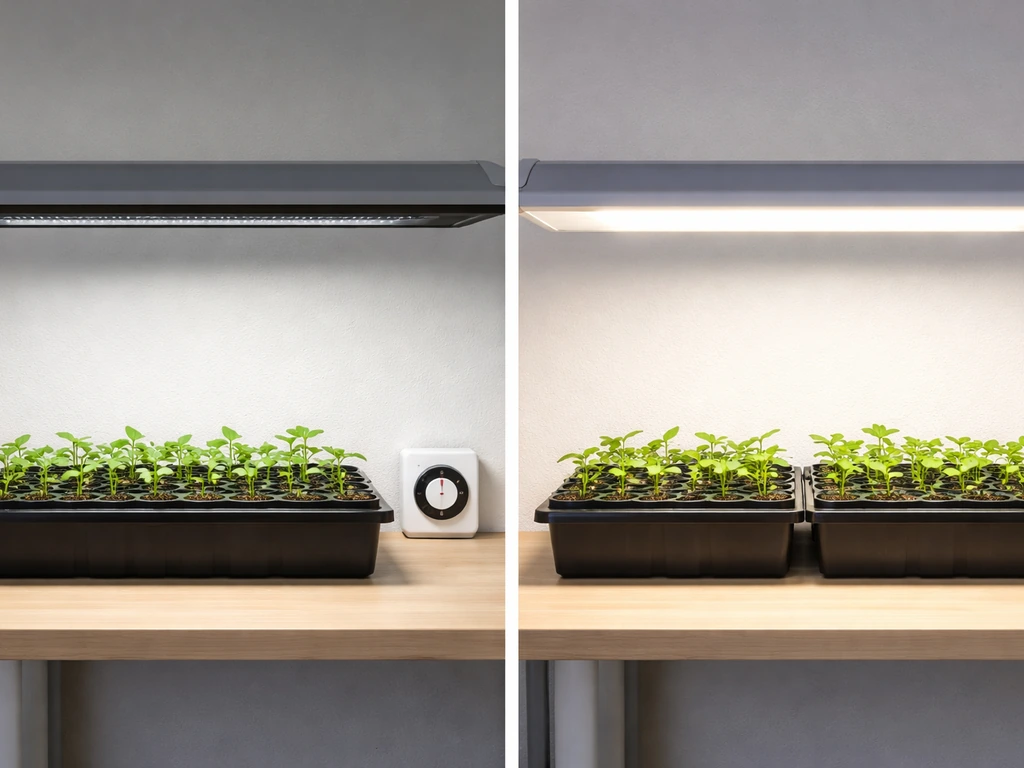
Start conservatively and adjust up rather than going full blast from day one. Here's a practical framework: seed starting and young seedlings respond best at 16 hours per day. Herbs, leafy greens, and foliage plants do well at 12 to 14 hours. Flowering plants that need encouragement usually want 14 to 16 hours.
If you're using supplemental lighting to boost natural light in a dim winter window, a rough guide from University of Illinois Extension suggests about two hours of supplemental light for every one hour of natural light you're missing, which in a low-sun winter setup can push your total runtime to 14 or even 16 hours a day. In winter, a grow light can be worth it when natural daylight is too weak for healthy growth dim winter window.
If you're transitioning from winter low-light to spring, don't jump straight to maximum hours. A strategy shared by experienced home growers is to increase by about one hour per day per week. So if you've been running 12 hours through January and February, step up to 13 hours in early March, then 14 hours the following week, and so on. This gradual increase lets plants acclimate without stress, similar to how they'd respond to a natural lengthening of days.
When to turn grow lights off: last-light rules and dark period basics
The off time matters almost as much as the on time, especially for flowering plants. Most plants need at least 6 hours of uninterrupted darkness per day, and many do better with 8 to 10. Darkness isn't just a rest period. It's when a lot of important biochemistry happens, including the hormonal signaling that drives flowering in photoperiod-sensitive plants.
For non-flowering plants and seedlings, the main rule is simple: don't run lights 24 hours a day. Even though some growers push seedlings to 22 hours under very low-intensity fluorescent lights (a technique that works in narrow circumstances with the right fixture and distance), most home setups benefit from at least a couple of hours of darkness. Running lights continuously long-term stresses most plants and can cause leaf bleaching, tip burn, and slowed growth, the opposite of what you want.
For short-day plants specifically: turn lights off early enough to guarantee at least 12 to 14 uninterrupted hours of darkness if you want them to flower. If lights go on at 7 AM, turn them off no later than noon to hit a 12-hour dark window. Any stray light during that dark period can prevent flower formation entirely.
Distance, intensity, and timers: the other half of the timing equation
Here's something that surprises a lot of beginners: changing how many hours your lights run is only one way to adjust how much light your plants actually receive. The total daily light dose (often called DLI, or daily light integral) is a product of both intensity and duration.
Purdue’s home hydroponics guide explains that for leafy greens you can think in terms of DLI, generally aiming for about 12 to 17 moles of light per day and increasing light intensity and/or duration if growth is too slow DLI is a product of both intensity and duration.
A light running at higher intensity for 12 hours can deliver more usable light than a weak light running for 18 hours. Knowing this gives you more flexibility when troubleshooting.
As a concrete example: to hit a moderate DLI target for leafy greens, you could run a light delivering 300 micromoles per square meter per second for about 11 hours, or run a weaker 210 micromol light for 16 hours. Same result, different schedule. This is why it's worth knowing your light's output, even roughly, rather than just guessing based on hours alone.
Distance is the most hands-on variable. Fluorescent shop lights should hang within about one foot of seedlings to deliver enough intensity. LEDs vary, but most consumer grow light instructions specify a range of 6 to 24 inches depending on the plant stage, with seedlings typically needing closer placement than mature foliage plants. If you move a light farther away to avoid heat or burning, understand that you may need to add more hours to compensate for the reduced intensity. And if your plants are getting leggy despite long photoperiods, distance is usually the first thing to check.
Please use a timer. I can't stress this enough. Relying on yourself to flip a switch at the same time every day will eventually fail, and inconsistent photoperiods stress plants and, for photoperiod-sensitive species, can throw off flowering entirely. A basic plug-in mechanical timer costs a few dollars and solves the problem permanently. Set it once, check it occasionally, and let it run.
Troubleshooting: what your plants are telling you about your schedule
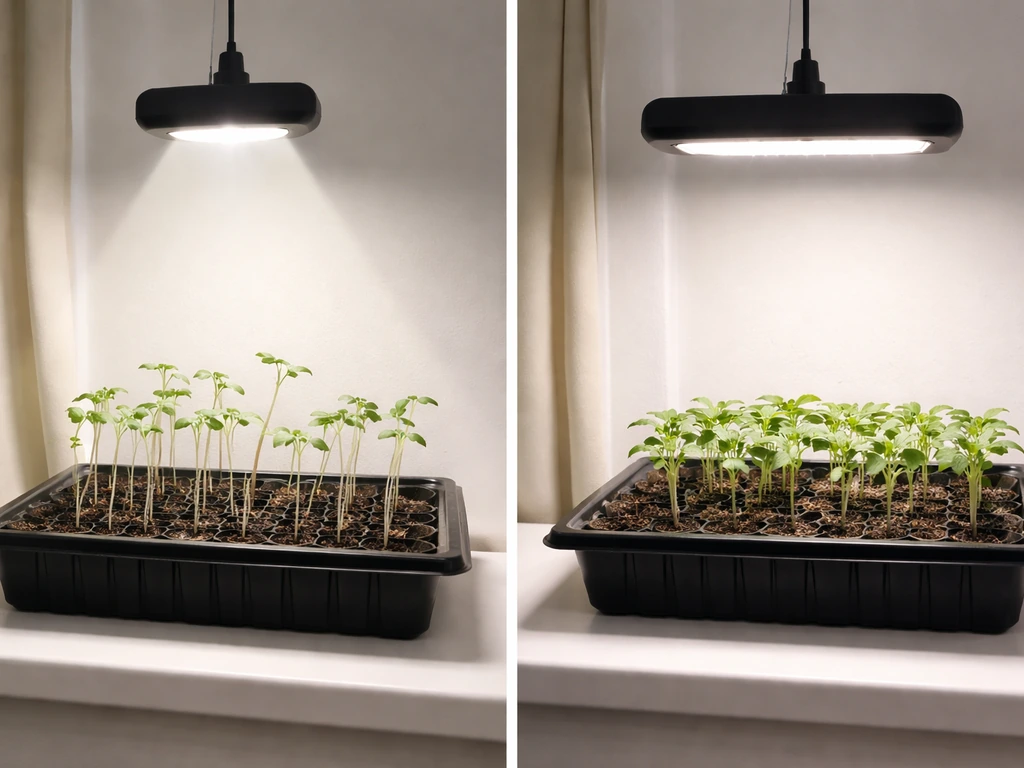
Plants give pretty clear feedback if you know what to look for. Here's a breakdown of the most common signals and what to actually do about them.
Signs your lights are on too little or are too far away
- Seedlings stretching tall and thin (leggy growth): usually a distance problem first, then a duration problem. Move the light closer before adding more hours.
- Slow growth or small leaves on plants that should be vigorous: try adding 2 hours per day for one week and see if the growth rate improves.
- Pale, washed-out leaf color on plants that should be deep green: low light over time. Increase hours or intensity, or both.
- Herbs and leafy greens producing slowly in winter: this is almost always a seasonal light deficit. Add supplemental hours to hit 14–16 total light hours per day.
Signs your lights are on too long or are too close
- Leaf bleaching or whitish patches near the center of leaves closest to the light: intensity is too high for that distance. Move the light farther away rather than cutting hours.
- Leaf curling, cupping, or edges turning crispy: heat or light stress, often from a fixture that's too close. Check distance first, then consider cutting 1–2 hours from the daily schedule.
- Short-day plants that refuse to flower despite good care: almost always a dark-period interruption. Audit your room for any stray light sources during the dark window, including timers on other devices, nightlights, and windows.
- Foliage houseplants showing tip burn or stunted new growth despite healthy lower leaves: this can indicate too many hours at high intensity. Cut back to 12 hours and reassess after two weeks.
When to re-evaluate your schedule
Give any schedule change at least one to two weeks before judging results. Plants respond slowly, and a change you make today may not show up visibly for 10 to 14 days. The exception is acute light burn, which can appear within 24 to 48 hours and should be addressed immediately by increasing distance.
For seasonal transitions, reassess your runtime as the seasons change: what works in a December window will almost certainly need adjustment by March, when natural light quality and quantity start climbing again. If you're also curious about the broader questions of when to use grow lights indoors throughout the year, or specifically whether grow lights are worth running through winter, those questions tie directly into how you set your seasonal schedules.
That context helps you dial in the right daily schedule for your plants as daylight shifts across the seasons when to use grow lights indoors throughout the year.
FAQ
Do I need to keep my grow-light schedule exactly the same on weekends, or can I shift it?
For most indoor crops, yes, you can keep the grow lights on a weekend-altered schedule as long as you maintain the same daily on window and especially the same uninterrupted dark hours. If the lights run later than usual, do it by shifting the start and stop together, and avoid breaking the dark period for photoperiod-sensitive plants (like poinsettias).
What should I do if the lights accidentally turn off for part of the day?
A blackout is more risky than a short delay. If the lights go off mid-cycle (for example due to a power issue or timer failure), reset to your next planned on window and do not try to “make up” lost time immediately by extending into the night. For plants that rely on long uninterrupted darkness, a late or unexpected light can be more harmful than having slightly fewer light hours earlier.
Should I adjust grow-light timing every day based on how bright it is outside?
No. If you want consistent results, use one fixed daily photoperiod (on and off times) rather than reacting to moment-to-moment changes in daylight. The plants respond to a predictable light/dark rhythm, while changing the schedule daily can create uneven photoperiods even when total hours look similar.
What timer settings can accidentally mess up the on and off times?
If the timer has a built-in seasonal or random setting, disable it. Use a standard repeat cycle (same on/off times daily). Also confirm the timer’s time zone and whether it automatically switches for daylight saving time, because those one-time hour shifts can disrupt flowering plants.
My plants look stressed. How do I know whether it’s a timing problem or a distance/intensity problem?
If leaves are paling or bleaching, and especially if bleaching shows up near the top or center of the canopy, increase light distance or reduce daily hours rather than only adjusting the start time. Changing “when” you turn them on helps with photoperiod, but bleaching and crispy edges usually point to too much intensity (or heat), which is distance and fixture output first, timing second.
If my seedlings are getting leggy, should I immediately add more grow-light hours?
Generally, if your lights are causing leggy growth, adding hours is not always the first fix. Check distance and reflector placement first, because intensity drops fast with distance. If the light setup is already close enough for your stage, then increase runtime gradually (about one hour per day every few days), and wait 10 to 14 days before judging.
How dark does the room need to be during the lights-off period?
For most non-flowering plants, you typically want a regular dark period each day, and “darkness” means the lights are truly off. Avoid placing them near bright windows at night or using reflective surfaces that keep light around plants. For short-day flowerers, also prevent any stray light from hallway lamps, TV glow, or phone screens during the dark window.
Can I run grow lights later in the day, like afternoon to midnight, if my schedule is busy?
A good approach is to plan a stable on window (often morning to early evening) and then keep it steady. If you must run lights late, make sure you still preserve the required uninterrupted dark block for the plant type. Many plants adapt to unusual on hours when the dark interval is intact, but photoperiod-sensitive plants are much less forgiving.
What’s the best way to increase grow-light hours when moving from winter to spring?
Increase gradually. Jumping from a low-winter runtime to the maximum right away can lead to bleaching near the top, leaf edge burn, or slowed growth due to stress. A safer method is stepping up by about one hour per day per week, then reassessing after 1 to 2 weeks.
How close should LEDs be, and how do I prevent heat from confusing the symptoms?
Measure for safety and consistency. If you use LEDs, check the fixture manual for the recommended mounting range, and confirm that your plants can’t reach the hot spot or touch the housing. If you notice heat-related droop plus whitening, raise the light or reduce hours temporarily, because intensity and temperature together can cause symptoms that look like “too much light.”
Next Articles
When to Use Grow Light: Signs, Timing, and Setup Tips
Learn when to use grow lights indoors, spot light-stress signs, and set timing, placement, and distance for healthier gr
When to Turn On Grow Lights for Indoor Plants: A Guide
Clear schedule for when to turn on grow lights, by plant, light type, season, distance, and troubleshooting signs indoor
Why Do Plants Grow Best in Blue Light? Science & Practical Guide
Explore why blue light boosts vegetative growth, ideal blue:red ratios, PPFD, photoperiods, fixtures, and setup tips.