Yes, you can put a grow light bulb in a regular lamp, and for most home gardeners this is genuinely the easiest and cheapest way to get started with indoor plant lighting. The key is using a bulb that is actually designed for plants (not just any bright bulb), making sure the socket type and wattage match your lamp, and understanding that fitting in the socket is only half the job. The bulb also needs to put out the right kind of light at the right intensity, or your plants will just sit there looking sad.
Can You Put a Grow Light in a Regular Lamp? Yes
Marcus Holloway
31 May 2026
Quick answer: can you use a grow light bulb in a regular lamp?
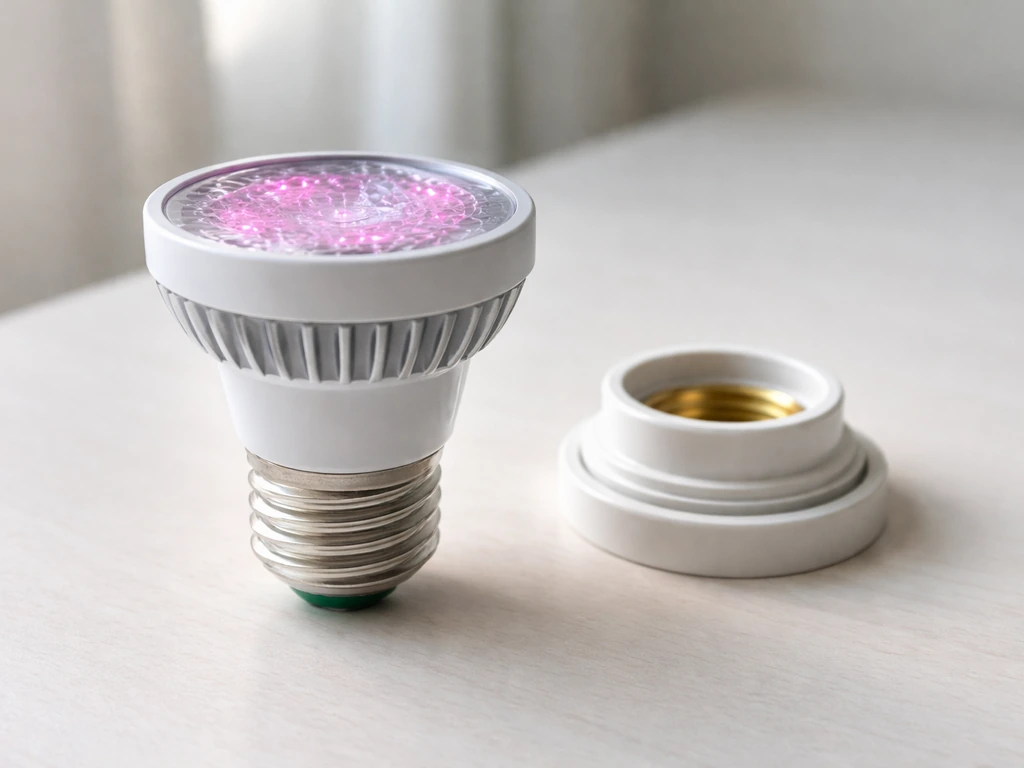
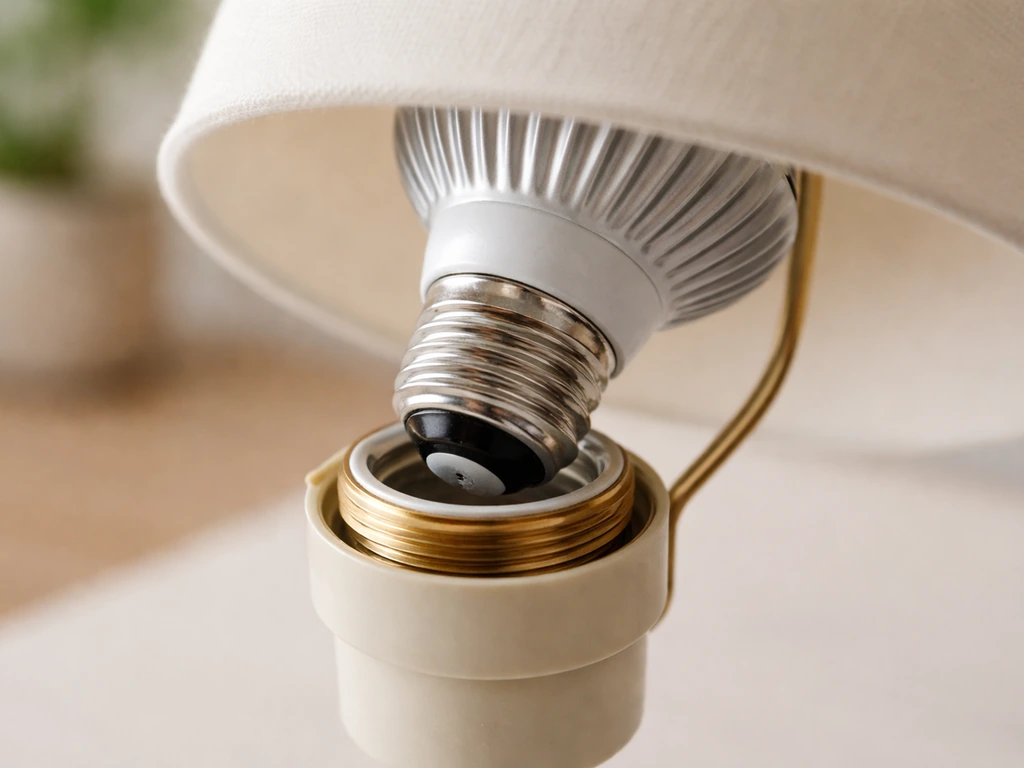
Yes, with conditions. Most consumer grow light bulbs are designed with standard bases specifically so they fit into regular lamps. Philips GreenPower LED grow bulbs use E26 bases (North America) and E27 bases (Europe), which are the same screw bases on virtually every household lamp you already own. SATCO's S11440 plant grow lamp is also an A19 shape with a medium E26 base, so it drops right into a standard desk lamp or floor lamp. The housing of the lamp is almost never the barrier. What matters is the socket type, your lamp's wattage rating, and whether the fixture is enclosed or open, dimmable or not. Get those right and a regular lamp works just fine as a grow light fixture.
Lamp compatibility checklist before you screw anything in
Before you put a grow bulb in your lamp, run through these checks. Skipping them is how you end up with a tripped breaker, a fried bulb, or a lamp that flickers all night.
- Socket type: Most North American lamps use E26 (medium screw base). European lamps typically use E27, which is nearly identical in size. Smaller lamps or specialty fixtures may use E14 (small screw), GU10 (twist-lock), or other bases. Check what your lamp takes before buying a bulb.
- Wattage rating: Every lamp has a maximum wattage printed inside the socket or on a label near it. A 9W grow bulb like the SATCO S11440 is well within the limits of almost any household lamp, but always confirm. Running a bulb above the lamp's rated wattage is a fire hazard.
- Voltage: Standard North American household voltage is 120V. The SATCO S11440 is rated 120V. If you're in Europe or using a travel lamp, confirm the bulb voltage matches your outlet.
- Enclosed vs. open fixture: This is the one people miss most often. Many LED bulbs, including most grow bulbs, generate heat that needs to dissipate. If your lamp has a fully enclosed globe or shade that traps heat, you need a bulb explicitly rated for enclosed fixtures. The SATCO S11440 and Feit BR30 grow bulbs are both rated for enclosed fixtures, so they're safe options if your lamp has a closed shade.
- Dimmable or not: Most grow bulbs, including the SATCO S11440 and Feit BR30 grow version, are non-dimmable. If your lamp is on a dimmer switch, either use a dimmable bulb specifically, or bypass the dimmer entirely. Running a non-dimmable LED on a dimmer can cause flickering, reduced output, or premature bulb failure.
Using a grow bulb in a regular lamp vs. using a regular bulb as a grow light
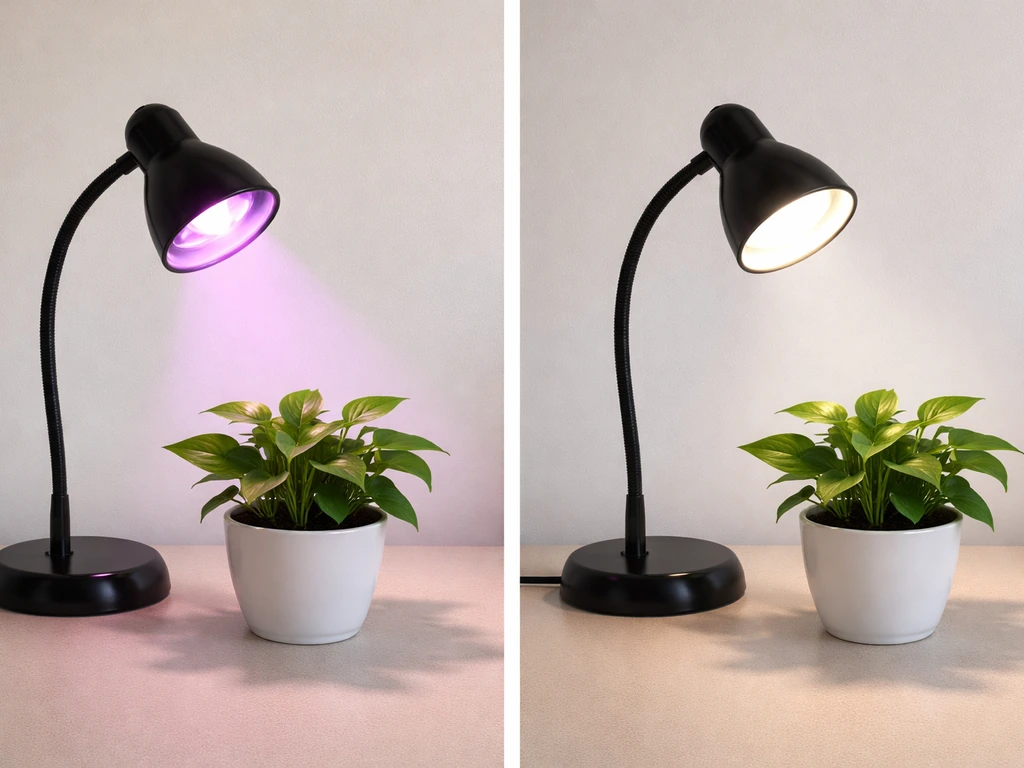
These two things sound similar but they're very different, and this is where most beginners go wrong. If you are specifically asking about gel nails, a grow light can sometimes be used depending on the nail curing tech and lamp output, but it is not the standard choice can you use a "grow light" for gel nails. A grow bulb in a regular lamp works because the bulb is engineered to emit the specific wavelengths plants use for photosynthesis, primarily in the red and blue regions of the visible spectrum. The lamp is just the housing delivering electricity to the bulb. A regular household bulb in a lamp does not work as a grow light, even if it looks bright to your eyes, because it's optimized for human vision, not plant photosynthesis.
The relevant measure here is PAR (photosynthetically active radiation) and photon flux, specifically PPF (photosynthetic photon flux), measured in micromoles per second. The Philips GreenPower LED grow lamp puts out 25 µmol/s of plant-usable light. The SATCO S11440 lists a PPF of 12.2. A standard warm-white LED of the same wattage might list only lumens, which measures brightness for human eyes, and could have a very low PAR output despite looking plenty bright in your living room. As Feit's guidance points out, full spectrum color temperature alone doesn't guarantee usable photosynthetic photons. If a bulb's spec sheet doesn't include PPF, PAR, or µmol/s data, it's almost certainly not a real grow bulb.
| Bulb type | Socket | PPF/PAR data? | Enclosed fixture rated? | Works for plants? |
|---|---|---|---|---|
| Dedicated grow LED (e.g., SATCO S11440) | E26 standard | Yes (12.2 µmol/s PPF) | Yes | Yes |
| Philips GreenPower LED grow | E26 / E27 | Yes (25 µmol/s) | Check spec sheet | Yes |
| Feit BR30 Grow LED | E26 medium | Yes | Yes | Yes |
| Standard warm-white LED | E26 standard | No (lumens only) | Varies | No |
| Standard daylight LED | E26 standard | No (lumens only) | Varies | No |
Safety: heat, enclosed fixtures, and dimmers
LED grow bulbs run much cooler than old HID or incandescent grow lights, but heat is still something to think about, especially with enclosed lamp shades that trap air around the bulb. The safest move is to choose a grow bulb explicitly listed as enclosed-fixture rated, as both the SATCO S11440 and Feit BR30 grow bulb are. If your lamp is open-shade, you have more flexibility, but it's still worth checking the bulb's max operating temperature in the spec sheet if you're running the lamp for 16 or more hours a day.
The dimmer issue is worth repeating because it's easy to overlook. Most household grow bulbs on the market right now are non-dimmable. If your lamp has a built-in rotary dimmer or is plugged into a wall dimmer, and you put a non-dimmable grow bulb in it, you're going to get instability, flickering, and possibly a shortened bulb lifespan. GE and Cync's own dimmer guidance reinforces this: LED bulbs need LED-compatible dimmers, and even then, only dimmable-rated bulbs should be used on those circuits. The simplest solution is to plug your lamp into a timer outlet instead of relying on dimming to control light duration. Timers are cheaper, safer, and give you precise control over photoperiod, which is what plants actually need.
One more practical safety note: make sure the lamp is stable and won't tip over when positioned close to plants. You'll often need to lower the lamp shade or reposition the lamp to get the bulb close enough to the canopy. A toppled lamp near a water source is a real hazard. Use a lamp with a weighted base, or clip-on desk lamps that attach to a shelf.
Setting up your lamp for actual plant results
Distance from the canopy
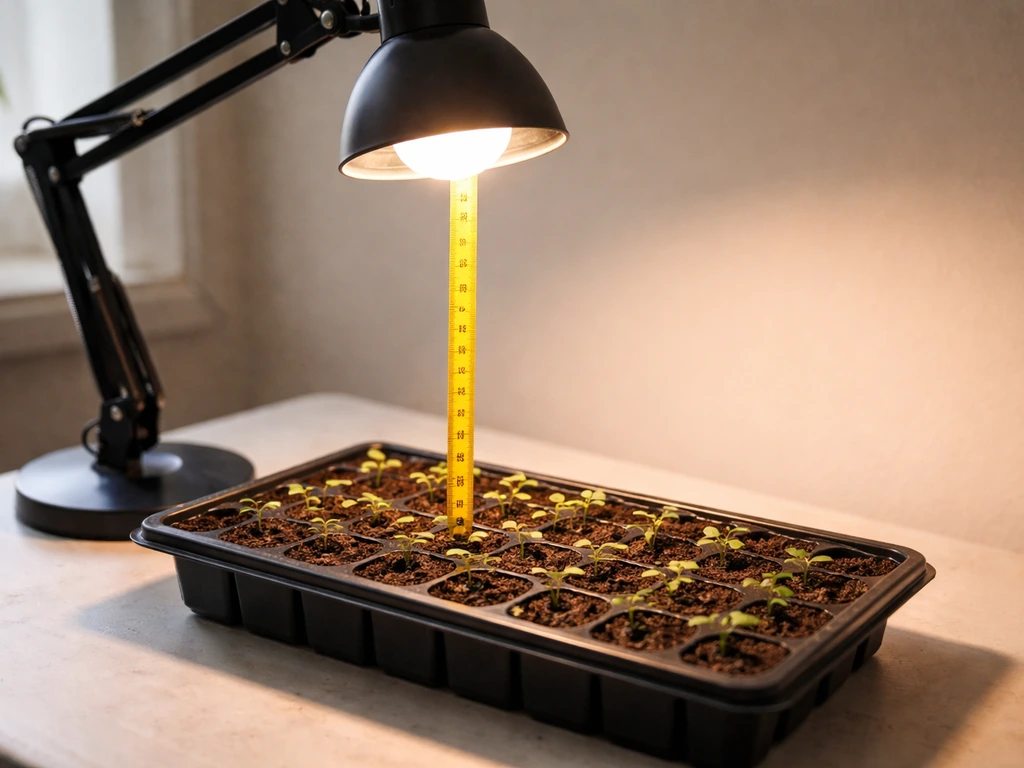
This is where a lot of setups fail. Light intensity drops off dramatically as distance increases, and a single grow bulb in a desk lamp has a limited spread. Missouri Extension data on typical lamp output illustrates exactly this: a bulb that measures adequately bright at 6 inches can fall well below useful levels at 18 inches. For most consumer grow bulbs used in regular lamps, starting at 6 to 12 inches above the plant canopy is a reasonable baseline. As a general rule, raise the lamp if leaves look bleached or curl upward, and lower it if growth is slow or stems are stretching toward the light.
Duration: how many hours per day
Most seedlings and actively growing plants need 16 to 18 hours of light per day under artificial lighting, especially if the lamp is the sole light source and not supplementing a bright window. University of Minnesota Extension gives 16 to 18 hours as a practical range for seedlings. For low-light houseplants, 12 hours is often enough. Use a cheap outlet timer so you're not relying on remembering to switch the lamp on and off. Consistency matters more than perfection.
Coverage and intensity: fitting in the socket isn't enough
A single 9W grow bulb in a desk lamp covers roughly one small plant or a tray of seedlings within a 6 to 12 inch footprint directly below the bulb. Oklahoma State University Extension suggests roughly 25 watts of grow light output for high-light plants in a 1 square foot space, and about 16 watts for low-light plants. That means one 9W grow bulb is on the low end for a sun-loving plant but workable for low-to-medium light plants like herbs, lettuces, or shade-tolerant houseplants. If you're trying to grow tomatoes, peppers, or fruiting plants under a single desk lamp, you will not have enough intensity regardless of how many hours you run it. Scale up with a larger dedicated grow fixture for those crops.
UNH Extension makes a point worth internalizing: you can run a low-intensity lamp for 15 hours a day and still not hit the daily light integral plants need to thrive. Hours on the timer are not a substitute for adequate intensity. Both matter.
Troubleshooting when plants aren't responding
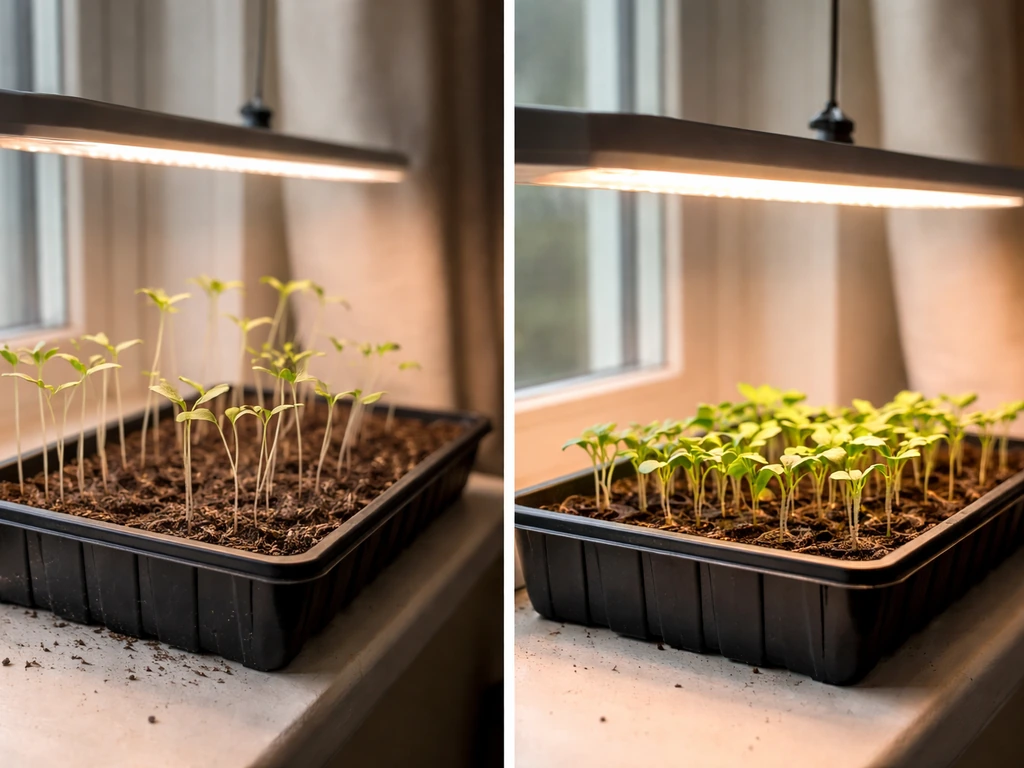
If your plants look leggy (tall, thin, stretching toward the light with wide gaps between leaves), pale, or are growing painfully slowly, work through these fixes in order before giving up on the setup.
- Move the light closer. This is the most common fix. Drop the lamp to within 6 to 8 inches of the canopy and observe for a few days. Leggy, stretched growth is almost always a sign the plant isn't getting enough intensity, not enough hours.
- Increase hours. If you're running the light for 10 to 12 hours and growth is slow, push to 14 to 16 hours with a timer. Many indoor setups underperform simply because the light isn't on long enough.
- Check that you're using a real grow bulb. If you grabbed a 'daylight' or 'full spectrum' household LED thinking it would work, that's likely the problem. Swap it for a bulb that lists PPF, PAR, or µmol/s in its specs.
- Consider coverage area. One small bulb can only support one small plant well. If you have a tray of seedlings or multiple plants, add a second lamp or switch to a bar-style grow light that covers more area evenly.
- Check for dimmer interference. If the lamp is on a dimmer circuit and you're seeing slow or weak growth, the bulb may not be operating at full output. Move the lamp to an undimmed outlet and retest.
- Rule out other issues. Light is rarely the only factor. Check soil moisture, pot drainage, and temperature before assuming the lamp is the sole problem. A plant sitting in soggy soil or cold drafts won't respond to better light.
University of Minnesota Extension and UNH Extension both flag leggy seedlings as the classic symptom of insufficient light, and it's almost always correctable by adjusting distance or duration rather than buying an entirely new setup. Start with the cheapest fix first.
What this setup is and isn't good for
A grow bulb in a regular lamp is a genuinely practical solution for low-to-medium light houseplants, herb seedlings, lettuces, and starting seeds indoors in late winter. It's affordable, uses existing equipment, and works without any special wiring or mounting. It's not the right tool for high-light fruiting plants, large growing areas, or any situation where you need to cover more than a square foot or two of canopy. If you're also curious about other fixture options, the same logic around socket type and grow-specific bulbs applies to recessed lighting and ceiling fans, which are worth exploring if you want a more integrated look in your space. If you’re specifically wondering about can you put grow lights in recessed lighting, the key is choosing the right trim and ensuring proper heat and coverage. If you are wondering whether you can put grow lights in your ceiling fan, the same rules about using a grow-specific bulb and matching the socket apply recessed lighting and ceiling fans. And if you want to avoid any visible hardware entirely, a dedicated bar-style grow panel is more efficient per dollar of electricity than multiple single-bulb setups at scale.
For most beginners, though, the desk lamp and a purpose-made grow bulb is the perfect low-commitment starting point. Get the socket right, ditch the dimmer, set a timer for 16 hours, and keep the bulb within 10 inches of your plants. That's genuinely enough to grow healthy herbs, keep tropical houseplants thriving through winter, and start seedlings without a south-facing window.
FAQ
What if my regular lamp uses a different bulb base than E26/E27?
If your lamp already uses a standard screw base (E26 in North America, E27 in Europe), most “grow” bulbs are made to match that. If your lamp uses a different base type (like a pin base), you usually cannot swap in a grow bulb safely without changing the socket or using an adapter designed for that exact base. Check the bulb base label on both the lamp and the grow bulb before buying.
How can I tell if a bulb is actually strong enough for plants, not just bright?
Choose the grow bulb based on plant-photon specs (PPF or µmol/s) and distance, not on how bright it looks in the room. If the product listing does not include PAR/PPF/µmol/s (or similar plant-light metrics), treat it as “maybe bright,” not “likely usable” for photosynthesis, even if it’s marketed as full spectrum.
Can I put a grow light bulb in a dimmable lamp?
Do not assume you can use a dimmer. If your grow bulb is labeled non-dimmable, pairing it with a rotary dimmer or a wall dimmer can cause flicker, unstable output, and premature failure. The simplest workaround is to bypass dimming entirely and control on/off with a plug-in timer outlet.
Is it safe to use a grow bulb in an enclosed lampshade?
Yes, but only if both the bulb and the fixture are rated for enclosure use and the bulb’s max operating temperature will be safe in that trapped-air space. If your shade is enclosed or uses a tight cover, verify the grow bulb is explicitly listed as enclosed-fixture rated. Otherwise, heat buildup can shorten bulb life and reduce performance.
How much space will one grow bulb in a regular lamp actually cover?
A single grow bulb in a desk lamp typically covers a small area directly underneath it. If you spread plants out beyond that footprint, the edges will under-light and become uneven. For a mat of seedlings, keep them centered under the bulb and do not expect one bulb to evenly cover a large tray.
What distance should I keep the grow bulb from the plants?
If your plants are stretching, bleaching, or growing slowly, distance is usually the first lever. Lowering the lamp can increase intensity at the canopy, but lowering too far can also stress leaves, especially in hot fixtures. Aim for a close mounting range and adjust gradually, then observe leaf color and stem thickness over several days.
If my plants aren’t thriving, is more hours on the timer the fix?
On/off timing affects growth, but it cannot fix low intensity. If you run a weak setup for extra hours, plants may still stall because they are not receiving enough daily light. Use a timer for consistency (often 16 hours for seedlings), but prioritize a bulb with adequate PPF and correct placement.
Can I grow tomatoes or peppers using a grow bulb in a regular lamp?
Fruit and other high-light crops usually need more intensity and broader coverage than a single 9W-style bulb in a desk lamp can deliver. You can try it for very small trials, but expect slow growth or poor yields. For tomatoes, peppers, and similar plants, plan on a larger dedicated grow fixture rather than relying on longer duration.
What are the biggest safety risks with using a grow bulb in a regular lamp near plants?
If the lamp can tip or gets bumped while you’re watering, it becomes a real safety issue. Prefer a heavier base, stable floor lamp, or a clip-on desk lamp secured to a shelf. Also keep the bulb and shade from contacting wet surfaces, and route cords so they cannot be pulled.
Can I use any wattage grow bulb as long as it fits the socket?
Yes, but you need to match the lamp’s power and wiring design. Verify the lamp’s maximum wattage rating and use the specified wattage grow bulb intended for that base. If the grow bulb draws more power than the fixture allows, you risk overheating or tripping breakers.
Next Articles
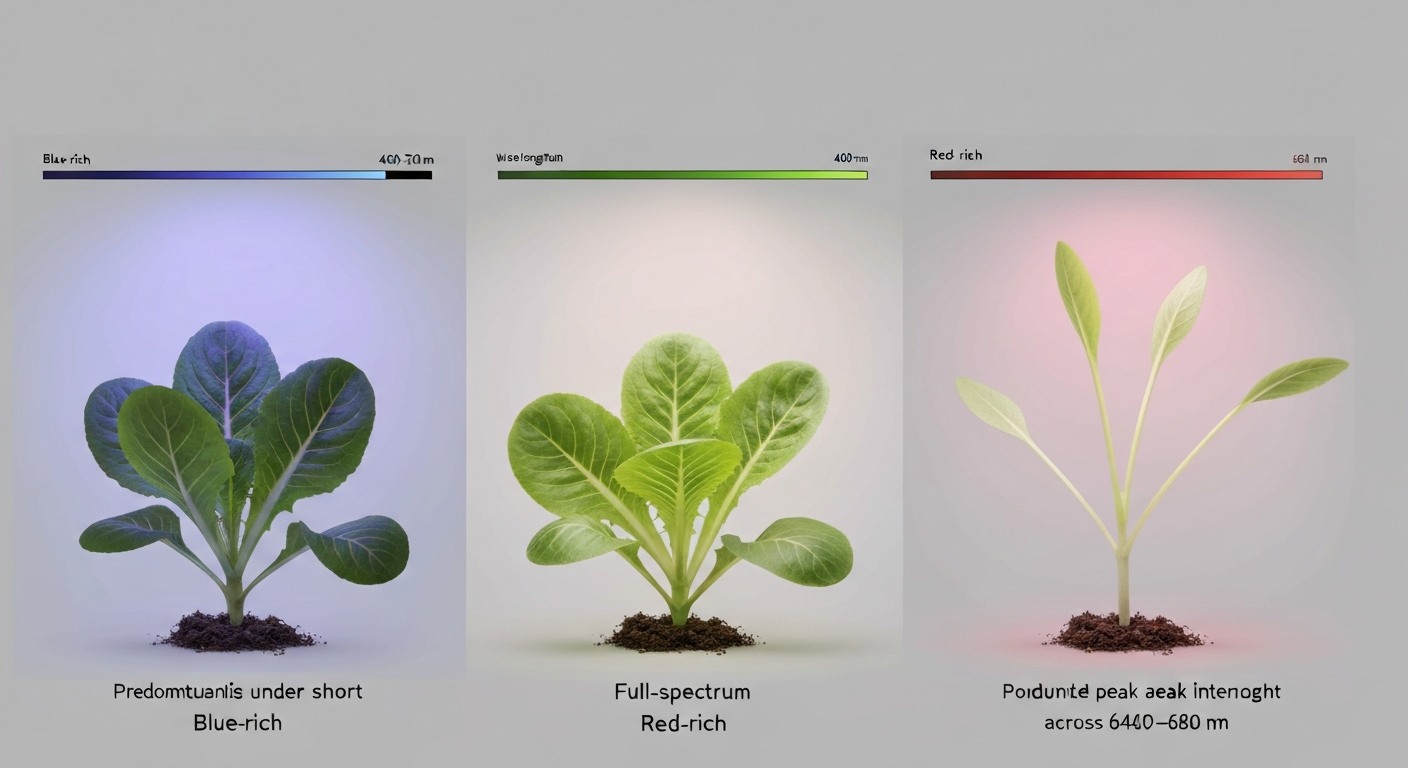
Why Do Plants Grow Best in Blue Light? Science & Practical Guide
Explore why blue light boosts vegetative growth, ideal blue:red ratios, PPFD, photoperiods, fixtures, and setup tips.
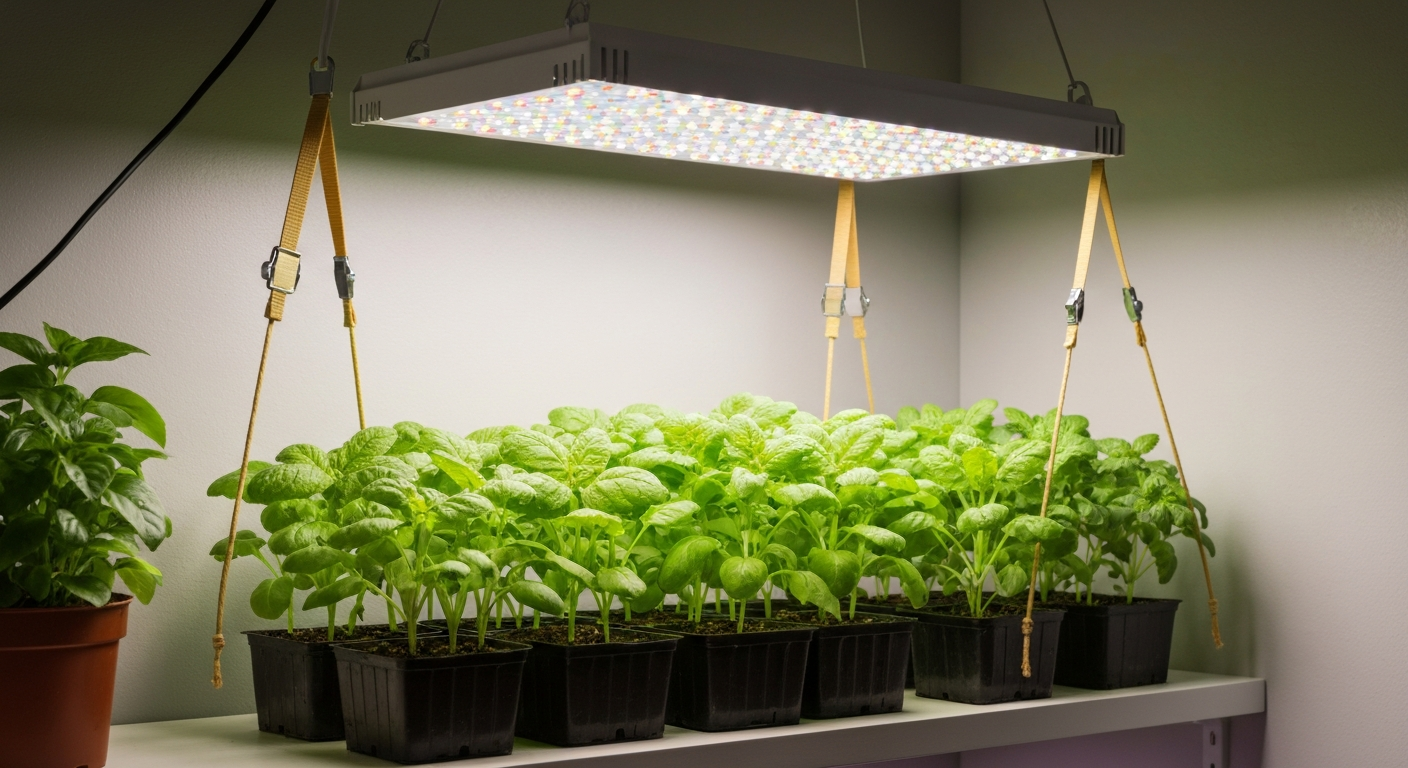
What Artificial Light Will Grow Plants: Best Lights Guide
What artificial light will grow plants: practical guide to LED, CFL, HID spectra, PPFD targets, setup, cost & tips.
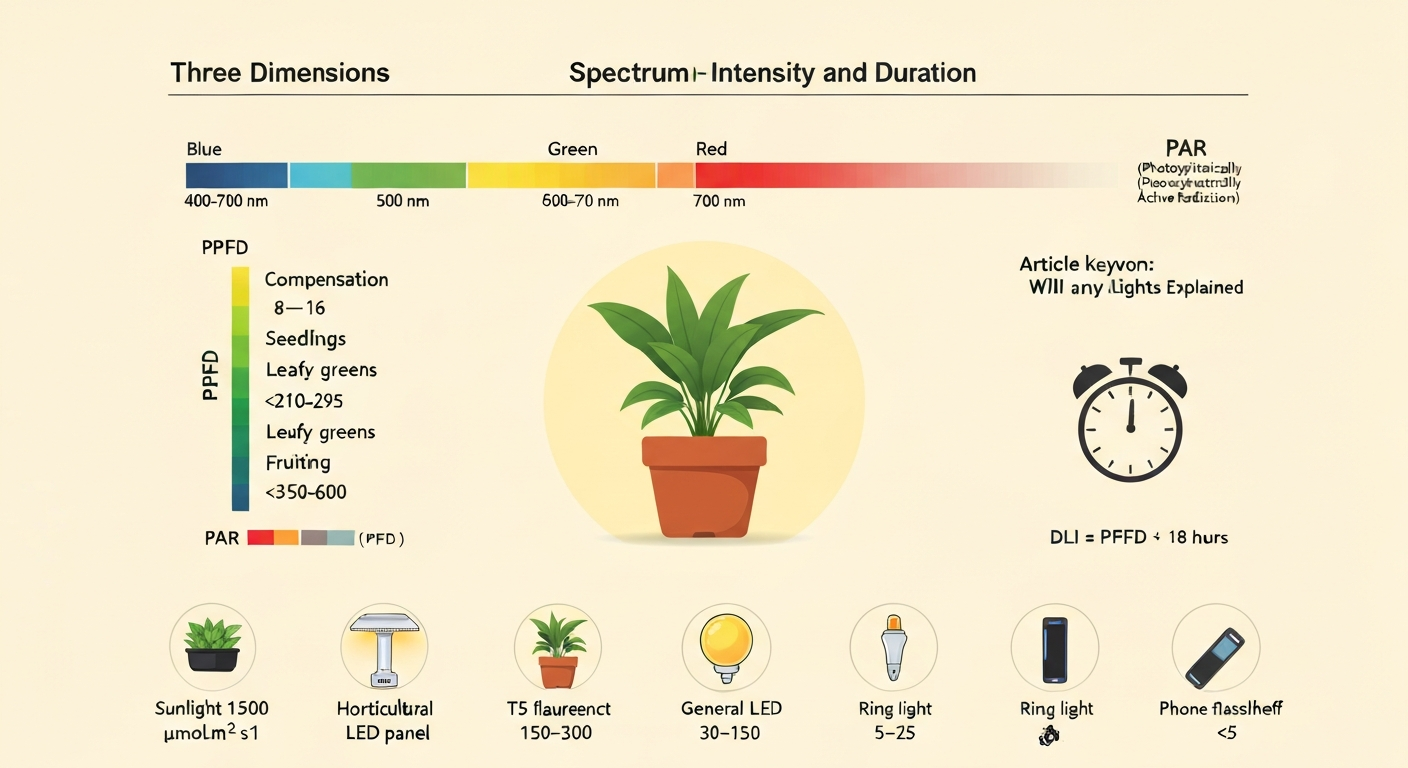
Will Any Light Grow Plants? Guide for Indoor Growers
Can any light grow plants? Clear yes/no, science-backed light specs, setup tips, and which household lights work.