
Yes, you can put a grow light in or near a ceiling fan setup, but whether it's actually a good idea depends on a few specific conditions: the fan's wattage rating, how the light kit is designed, how far the light ends up from your plants, and whether you're planning to swap bulbs into an existing kit or mount a separate grow light fixture nearby. Most home gardeners get better results by mounting a dedicated grow light close to the fan rather than trying to integrate one into the fan's housing itself. Here's how to figure out which approach works for your space.
Can I Put Grow Lights in My Ceiling Fan Safely?

Marcus Holloway
1 Jul 2026
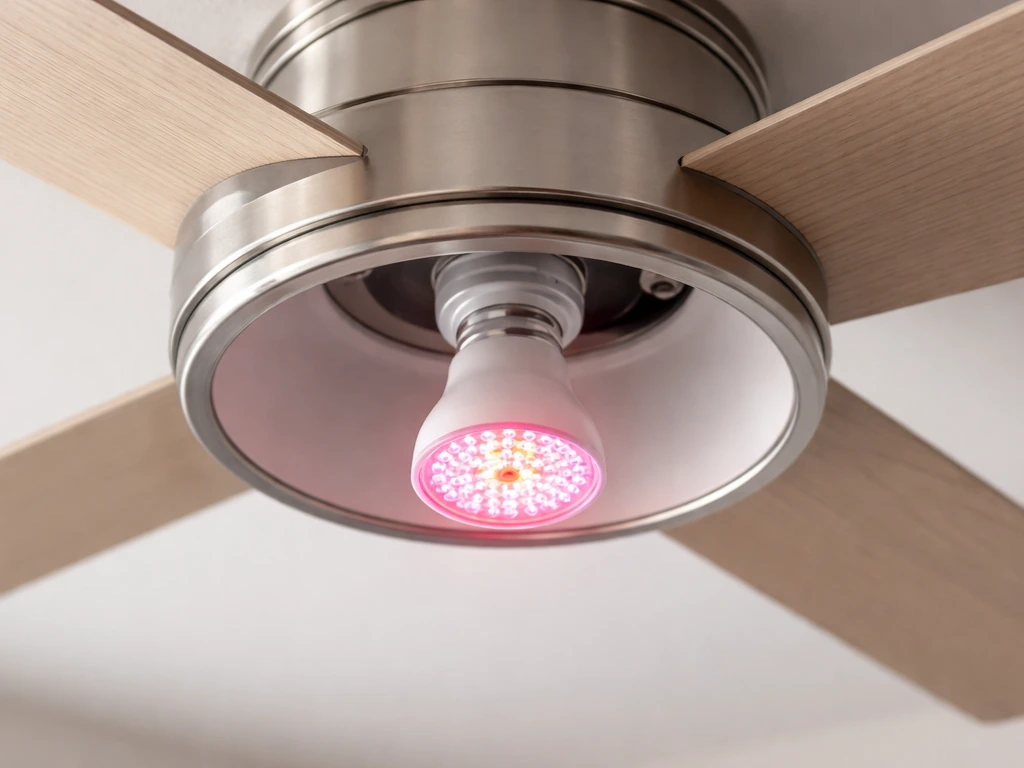
Is it safe to put grow lights in a ceiling fan?
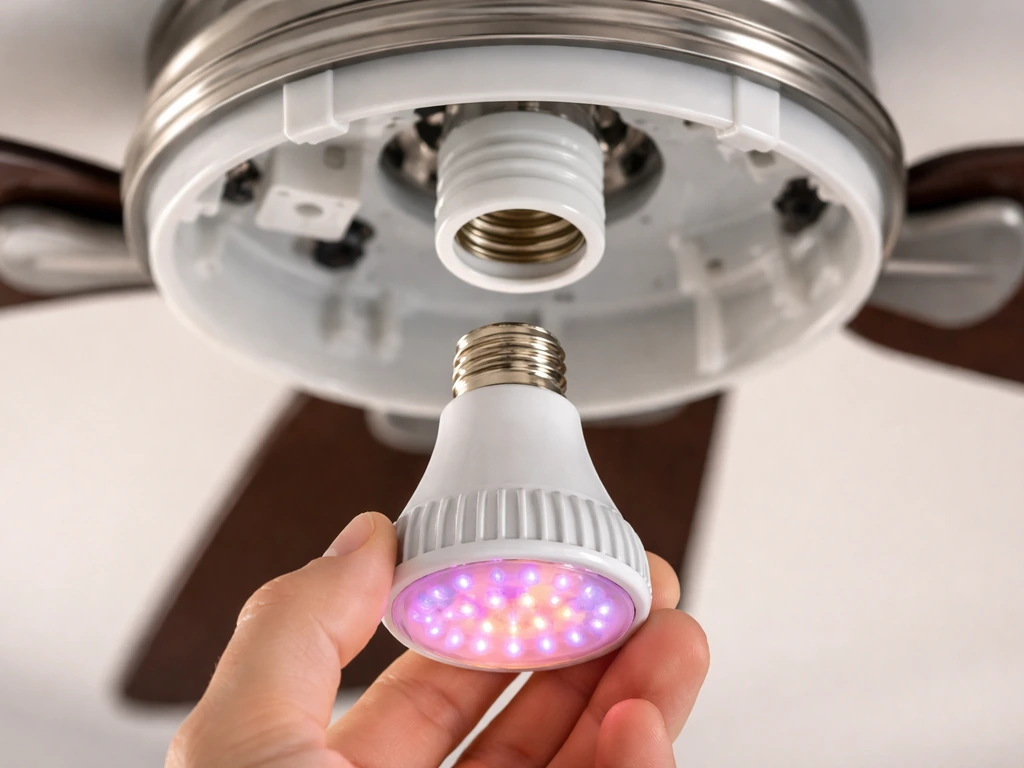
The honest answer is: it depends on what you mean by 'put grow lights in a ceiling fan.' If you mean swapping a grow-spectrum LED bulb into your ceiling fan's existing light kit, that can work safely as long as the bulb stays within the fixture's maximum wattage rating. If you mean wiring in a high-powered grow light driver or replacing the whole fixture with a commercial grow bar, you're getting into territory that most ceiling fan housings simply aren't built for.
The key safety conditions to check before you do anything: your fan's light kit must actually be rated to accept a replacement bulb (not all kits are interchangeable, and blank" rel="noopener noreferrer">manufacturers like Hunter explicitly state their light kits should only be installed on specific listed models with removable switch housings). The blank" rel="noopener noreferrer">socket's maximum wattage label is a hard limit, not a suggestion. Going over it creates a real fire risk. And if your fan is on a dimmer switch, you need to confirm the grow-spectrum LED you're using is dimmer-compatible, because many aren't and the mismatch can cause flickering, overheating, or premature bulb failure.
- Swapping in a grow-spectrum LED bulb: safe if the bulb wattage stays at or below the fixture's max watt rating
- Installing a full grow light driver inside the housing: not safe for most standard ceiling fan enclosures
- Mounting a separate grow light bar near the fan: safe and usually more effective than either fixture-based option
- Using a dimmer-controlled fan switch with a non-dimmable grow LED: not safe, causes heat and compatibility issues
Ceiling fan vs grow light reality: how integration would actually work
Most ceiling fans with light kits use standard E26 or candelabra sockets. Some newer fans take integrated LED modules that can't be swapped at all. What this means in practice: if your fan uses standard sockets, you can drop in a full-spectrum grow LED bulb the same way you'd swap any other bulb. The fan's housing, wiring, and switch are all designed around that socket type, so the electrical side is straightforward as long as you respect the wattage cap.
The harder reality is that most ceiling fan light kits weren't designed with thermal management for high-output lighting. A commercial grow light driver generates heat that needs active cooling or a well-ventilated enclosure. A standard fan globe or housing doesn't provide that. Some ceiling fan light-kit manuals even include an automatic shutoff protection, cutting power when the load exceeds a set wattage threshold (often around 190W in documented examples). That's the fixture protecting itself, not giving you headroom for a grow light upgrade.
The fan's airflow is actually a small bonus here. Grow lights, especially higher-wattage LEDs, benefit from air movement to dissipate heat from the fixture and the plant canopy. A ceiling fan running on low while a nearby grow light operates does help keep temperatures stable. But the fan blades themselves don't interact with the light output in any meaningful way.
Electrical and heat safety checklist
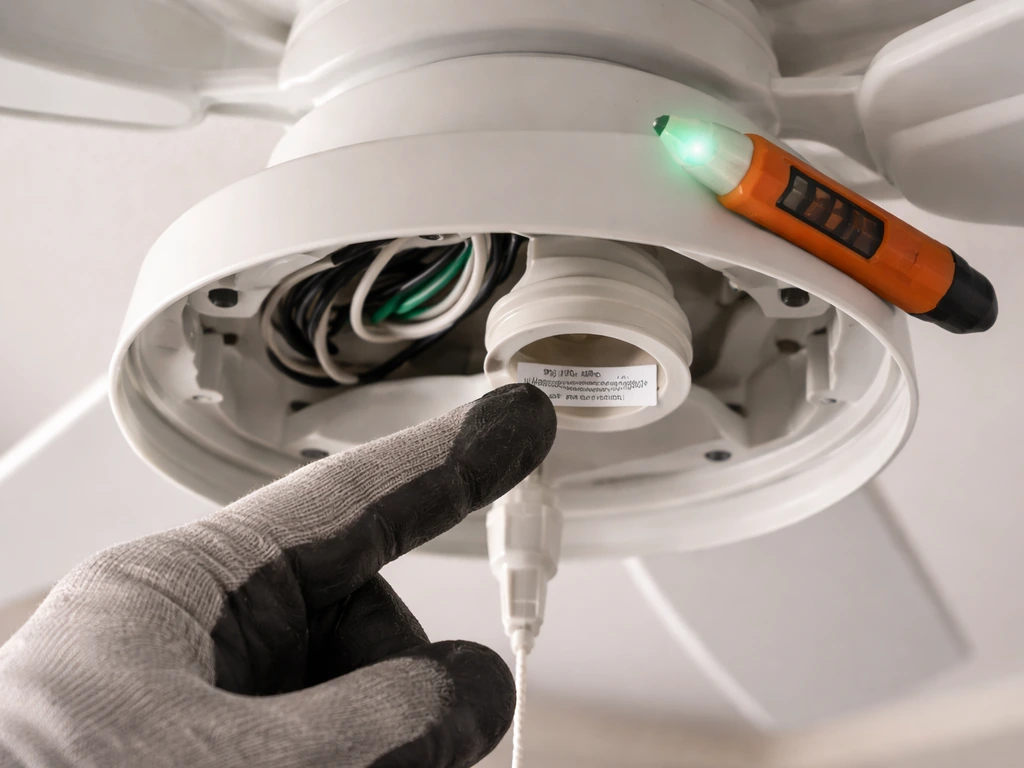
Before you buy anything or touch any wiring, go through this checklist. Most problems people run into are preventable with five minutes of checking.
- Find the max watt label on your fan's light kit socket or housing. This is a firm ceiling for any bulb you install.
- Check whether your fan is on a dimmer switch. If it is, only use LED bulbs explicitly rated as dimmer-compatible.
- Confirm your fan model has a removable, user-serviceable light kit. Some fans have integrated LED modules that cannot accept replacement bulbs.
- Check that the total amperage draw of fan motor plus light bulb stays within your circuit breaker's rating (most residential ceiling fan circuits are 15A).
- If the bulb or fixture generates noticeable heat (more than warm to the touch at the base), verify there's at least 1 inch of airspace around the socket for convection.
- Never install a grow light driver (the external power supply on strip or bar-style grow lights) inside an enclosed fan housing. Drivers need open air, not a sealed globe.
- Use only replacement parts and bulbs that are compatible with your specific fan model. Hunter, for example, explicitly instructs users to use only Hunter replacement parts in their light kits.
Light effectiveness for plants: distance, intensity, and coverage
Here's where ceiling-mounted grow lights, whether in a fan or elsewhere near the ceiling, often disappoint people. The problem is distance. Most residential ceilings sit 8 to 9 feet off the floor. Plants on a table or shelf might be 3 to 4 feet off the floor, putting them 4 to 5 feet below the light. Light intensity (measured as PPFD, or photosynthetic photon flux density) drops dramatically with distance. A bulb delivering decent light output at 12 inches might deliver only a fraction of that at 48 inches.
For most leafy houseplants and low-light tropical species, a ceiling-mounted grow light can work if the bulb is reasonably bright (at least 800 lumens, ideally in the full-spectrum range that includes blue and red wavelengths). For anything that needs high light, like fruiting vegetables, herbs in active growth, or seedlings, ceiling height usually isn't close enough. You'd want the light 12 to 24 inches above the plant canopy for meaningful results.
Coverage area is also a real constraint. A single grow-spectrum bulb in a fan socket might adequately support plants within a 2 to 3 foot radius directly below. Outside that cone, intensity drops fast. If you have multiple plants spread across a room, one ceiling fan bulb won't cut it. You'd need either a higher-wattage fixture or multiple light sources.
| Setup | Typical Distance to Plants | Suitable Plant Types | Coverage Area |
|---|---|---|---|
| Grow bulb in ceiling fan light kit | 4-6 ft (ceiling height) | Low-light houseplants, pothos, ferns | 2-3 ft radius directly below |
| Grow light bar mounted near ceiling | 3-5 ft | Medium-light tropicals, herbs | 3-4 ft spread depending on wattage |
| Adjustable pendant grow light | 12-24 inches adjustable | Most vegetables, seedlings, high-light plants | 1-4 ft depending on fixture |
| Clip-on or shelf-mounted grow light | 6-18 inches | Seedlings, succulents, herbs | Targeted, 1-2 ft radius |
Installation and aiming tips for a fan-mounted or near-ceiling setup
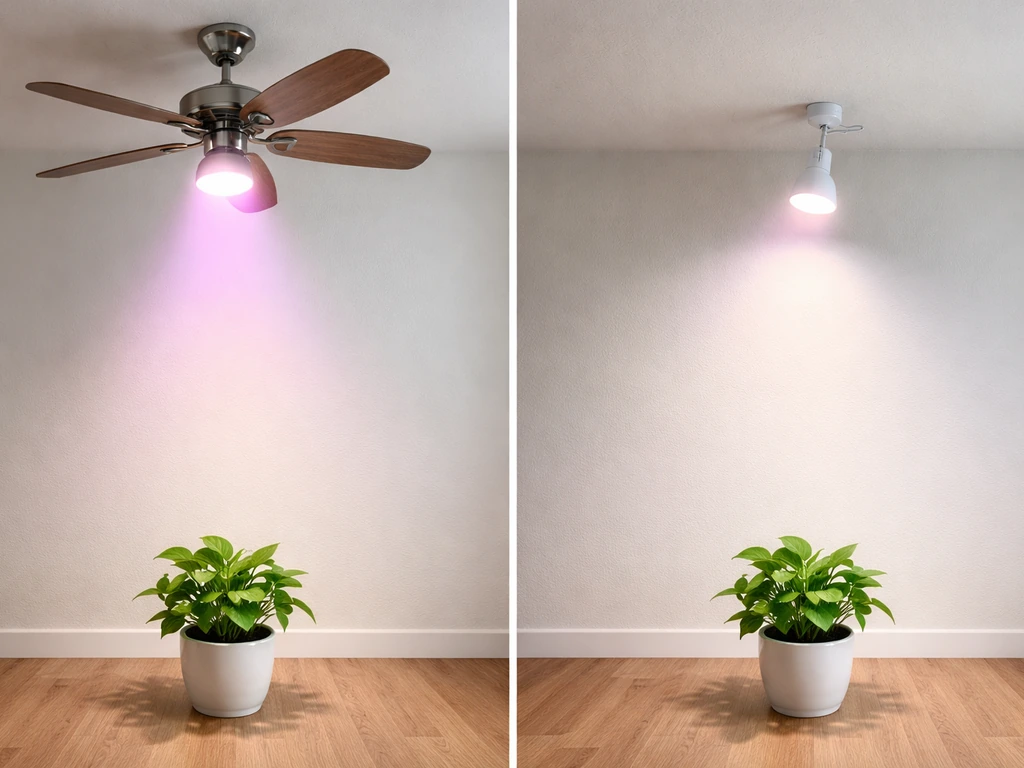
If you're going with a grow-spectrum bulb in the fan's existing socket, aiming is fixed. The light points down, which is actually ideal. Ceiling fans are usually centered in a room, so place your plants directly beneath the fan for maximum benefit. A cluster of pots within a 2 to 3 foot radius directly below the fan will get the most useful light output.
If you're mounting a separate grow light near the ceiling (on a track, a ceiling hook, or a wire suspension system), you have more flexibility. Hang the fixture as low as your space allows to get closer to the plant canopy. A pendant-style LED grow light on an adjustable cord lets you start high and lower it as you observe how plants respond. Watch for bleaching or leaf curl at the tips, which means you're too close; watch for stretching or leaning toward the light, which means you're too far or the coverage angle is too narrow.
For timing, most indoor plants under supplemental ceiling light need 12 to 16 hours of the grow light running per day if they're getting little to no natural window light. If they're in a room with decent indirect sunlight, 6 to 8 hours of supplemental light is often enough. A simple plug-in timer on whatever circuit powers the fan's light kit (or a separate outlet for a nearby fixture) makes this completely hands-off.
Health and home-safety concerns: what's real and what isn't
Grow lights get a lot of undeserved fear attached to them, so let's clear a few things up. A standard full-spectrum grow LED in a ceiling fan socket does not emit UV radiation at levels that cause skin damage or tanning. Most residential grow LEDs emit negligible UV. The blue and red light in grow spectrums can feel intense to look at directly, so don't stare into any light source, grow or otherwise. But casual exposure while tending your plants is not a health hazard.
The real home-safety concerns are electrical, not biological. Exceeding the socket's wattage rating is the single biggest risk. It stresses the wiring insulation and socket contacts, and over time that creates a fire hazard. The same goes for using a non-dimmable LED on a dimmer circuit. These aren't theoretical risks; they're the reason manufacturer labels specify maximum wattage so clearly. Stick within those limits and you've eliminated the actual danger.
Heat is less of a concern with modern LEDs than it was with older HID or fluorescent grow lights, but it's still worth monitoring. Run your setup for a full day and check the socket and wiring at the canopy for warmth. Warm is fine. Hot to the touch at the connection points means you have a problem.
Better alternatives if the ceiling fan setup doesn't work for you
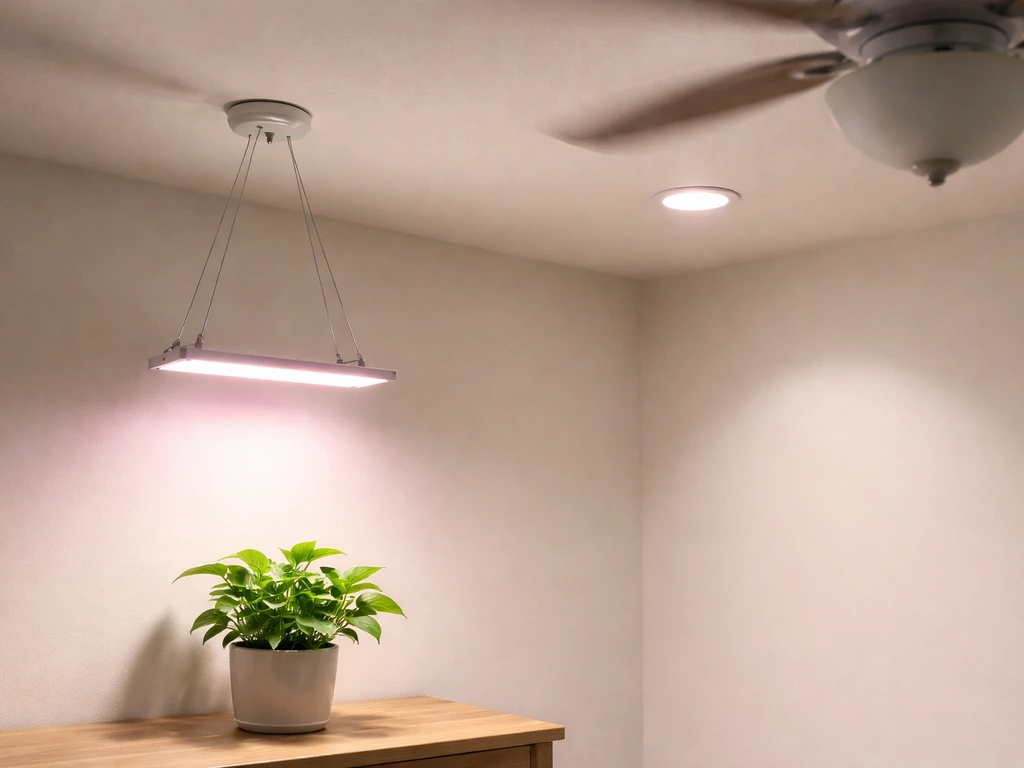
If your fan has an integrated LED module you can't swap, the wattage limit is too low for your plants, or the ceiling height puts too much distance between the light and your plants, here are the options that work better in practice. If you're also wondering can you use a "grow light" for gel nails, the safer approach is to match the light to the job and keep wiring, heat, and exposure limits in mind.
Recessed lighting fixtures in the ceiling are actually a closer parallel to the ceiling fan question, and a grow-spectrum PAR bulb in a recessed can sits flush to the ceiling and points straight down with no housing interference. It's worth considering if you have recessed cans in the room already. If you’re specifically wondering whether you can put grow lights in recessed lighting, start by matching the bulb and wattage to what your recessed can is rated to handle.
- Adjustable pendant grow light: hangs from a ceiling hook on a cord or cable, lets you position the light 12-24 inches above plants, by far the most effective ceiling-based option
- Ceiling-mounted LED grow bar: a flat panel or strip mounted directly to the ceiling or a ceiling-mounted bracket, better coverage than a single bulb, works well for a dedicated plant shelf or table below
- Track lighting with grow-spectrum PAR bulbs: uses existing track lighting rails if you have them, bulbs can be aimed and adjusted
- Clip-on LED grow lights: attach directly to shelves or plant stands, put the light exactly where you need it without any ceiling mounting at all
- Floor or table lamp with a grow-spectrum bulb: a practical option if you don't want to deal with ceiling mounting at all, similar in concept to putting grow lights in a regular lamp
For most home gardeners, the fastest solution is a clip-on or pendant grow light positioned close to the plants rather than fighting ceiling height. If you are wondering whether you can put a grow light in a regular lamp, you can often use the same basic idea: use the right bulb for the fixture and stay within the lamp's wattage and wiring limits can you put a grow light in a regular lamp. The ceiling fan with a grow bulb swapped in works as a low-effort supplement for easy-to-please houseplants, but if you're serious about growing herbs, vegetables, or seedlings, getting that light source closer to the canopy makes a bigger difference than any other single factor.
Quick checklist before you buy or install
- Check your ceiling fan model for a removable, user-serviceable light kit and note the maximum wattage rating on the socket or housing
- Confirm whether the fan circuit uses a dimmer switch, and if so, only purchase dimmer-compatible LED grow bulbs
- Measure the distance from your ceiling fan light to the top of your plant canopy to reality-check whether ceiling height will give you useful light intensity
- If the distance is more than 3-4 feet and your plants need moderate to high light, plan for a lower-mounted option instead
- Choose a full-spectrum LED bulb (labeled 3000K-6500K or 'full spectrum' or 'grow spectrum') that fits your socket type and stays under the max watt limit
- Set a timer for 12-16 hours per day for low natural light rooms, or 6-8 hours as a supplement in rooms with decent window light
- After the first full day of operation, check the socket and housing for excessive heat and confirm plants show no signs of light stress (bleaching, curl, or dramatic stretching)
FAQ
If my ceiling fan has a dimmer, can I use a grow light bulb in it?
Yes, but only if the fan light kit is rated for that exact bulb type and wattage. Integrated LED modules are often not user-replaceable, and some kits only accept specific listed replacements. If your switch or socket is designed around a certain bulb shape, color, and dimming behavior, using an incompatible grow LED is more likely to cause flicker or overheating at the socket.
How do I tell whether a grow LED bulb will work correctly with my ceiling fan light switch?
If your grow LED is not dimmer-compatible, you can see flickering, reduced lifespan, and extra heat at the connection. Before buying, check the bulb’s packaging or specs for “dimmable” and the type of dimmer it supports, then test at a moderate setting first (for example, 40 to 60%) before running it long-term.
What wattage limit should I follow when putting a grow bulb in my ceiling fan?
Start by checking the fixture’s socket rating on the label, not the bulb’s claimed “equivalent” brightness. For ceiling fan light kits, the socket’s maximum wattage is the real limit. If the fan globe or shade traps heat, even LEDs that seem cool may warm more than expected, so verify by running it for several hours and checking that the socket and wiring stay only mildly warm.
Can I wire a full grow light into my ceiling fan instead of using the existing bulb socket?
You usually cannot. High-power grow drivers and grow bars typically require dedicated wiring, correct voltage/current specs, proper heat management, and sometimes different mounting hardware. Ceiling fan housings and fan-rated light kits often have limited internal space and no ventilation path for a high-output driver, which raises safety and reliability risks.
Will one grow light bulb in a ceiling fan cover a whole tabletop or plant shelf?
Often you will not get useful light for multiple plants spread across a room from a single fan-mounted bulb. A bulb in a socket mainly covers a cone beneath the center, and intensity falls off quickly outside a roughly 2 to 3 foot radius. If your plants are farther apart, you may need multiple bulbs or a separate overhead fixture with wider coverage and adjustable height.
My plants aren’t right under the fan, will the grow light still work?
If the room ceiling is high or your plants sit on a stand, you may end up too far from the light. A practical rule is to prioritize getting the light 12 to 24 inches above the plant canopy. If you cannot lower a pendant or clip-on light, ceiling-fan mounting often works only for low-light plants or a small cluster positioned directly under the fan.
How many hours per day should I run a ceiling fan grow light?
Use a timer that matches your plant needs and your room’s natural light. Many houseplants do well with 12 to 16 hours daily under supplemental light when there is little window light, while bright indirect daylight often means 6 to 8 hours is enough. Avoid running it longer just because the light is easy to switch on, since too much can stress plants.
What visual signs mean my ceiling-fan grow light is too strong or too weak?
Don’t ignore performance signs. If you see bleaching (light-colored patches) or leaf tips curling upward or clawing, you are likely too close or the output is too strong. If plants stretch, lean, or look pale and leggy, you are probably too far or the coverage is too narrow.
Do grow lights in a ceiling fan create UV or tanning risk?
Yes, but most of the biological safety concerns are overstated. LEDs used for indoor grow purposes typically have negligible UV, and casual exposure while tending plants is not a skin-damage issue. The practical caution is eye safety, so avoid staring directly into the beam and use your regular grow-light handling habits.
How can I check if my ceiling fan grow bulb setup is getting dangerously hot?
If the socket or wiring feels hot, stop using it and do not “power through.” Run the setup for a full day and check warmth at the socket and where wires connect, mild warmth is normal. Hot-to-the-touch connection points usually indicate overloading, poor contact, or an incompatible bulb size or wattage rating.
What are the best alternatives if my ceiling fan won’t work for grow lights?
If you cannot swap the light kit bulb, if the maximum wattage is too low, or if your ceiling height prevents useful distance, switch to a dedicated grow light positioned closer to the canopy. Clip-on, pendant with adjustable cord, or a ceiling-mounted fixture (track or wire suspension) usually gives better results than trying to force a high-performance setup through a fan’s limited light housing.
Next Articles
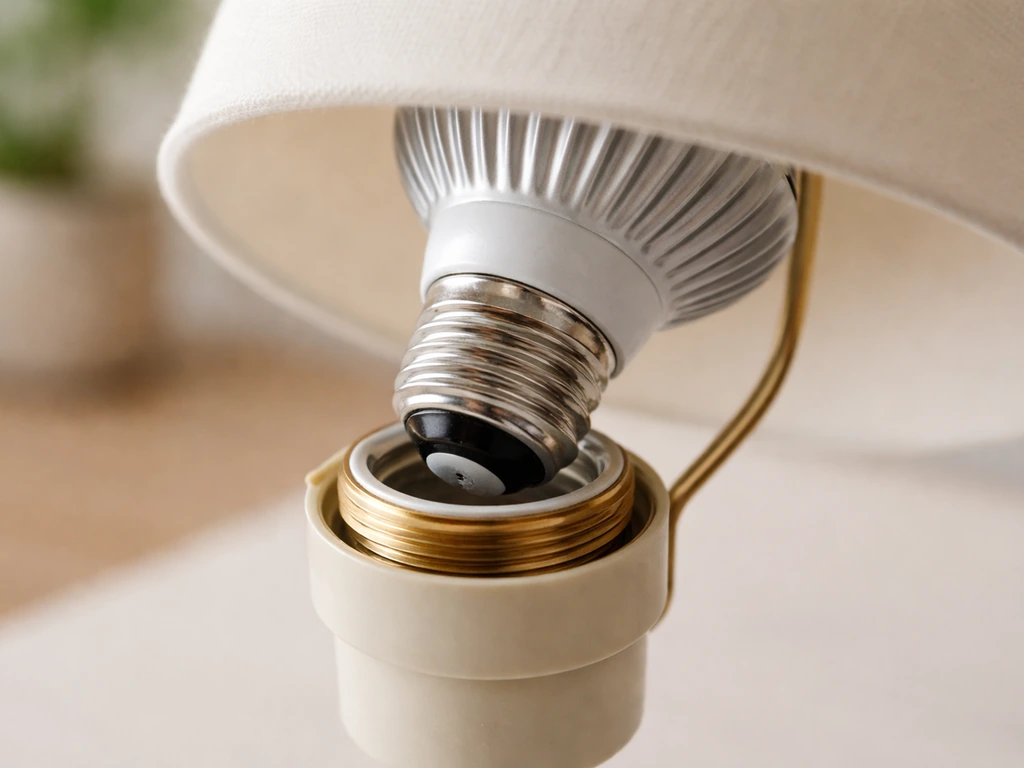
Can You Put a Grow Light in a Regular Lamp? Yes
Yes, if the bulb fits the socket and wattage safely. Learn setup, distance, hours, spectrum, and troubleshooting.
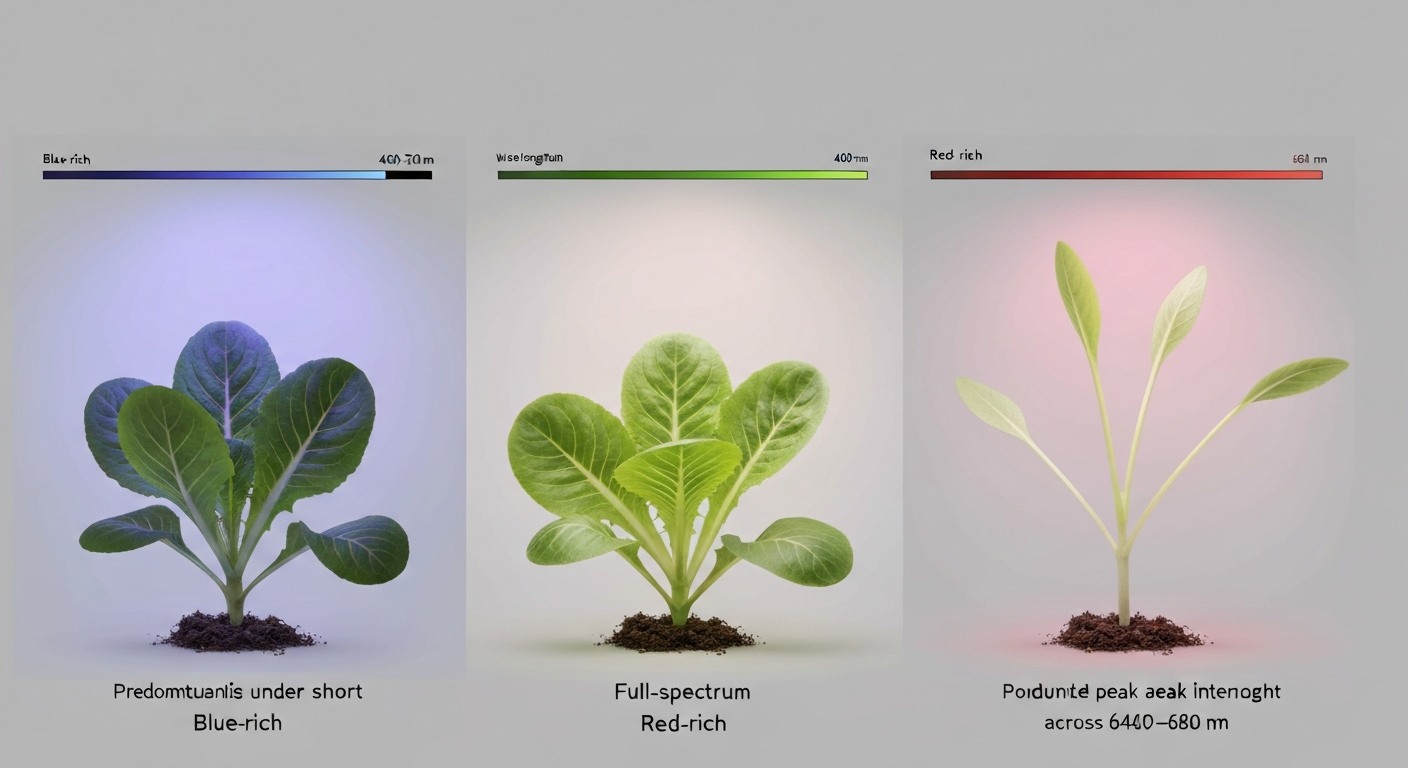
Why Do Plants Grow Best in Blue Light? Science & Practical Guide
Explore why blue light boosts vegetative growth, ideal blue:red ratios, PPFD, photoperiods, fixtures, and setup tips.
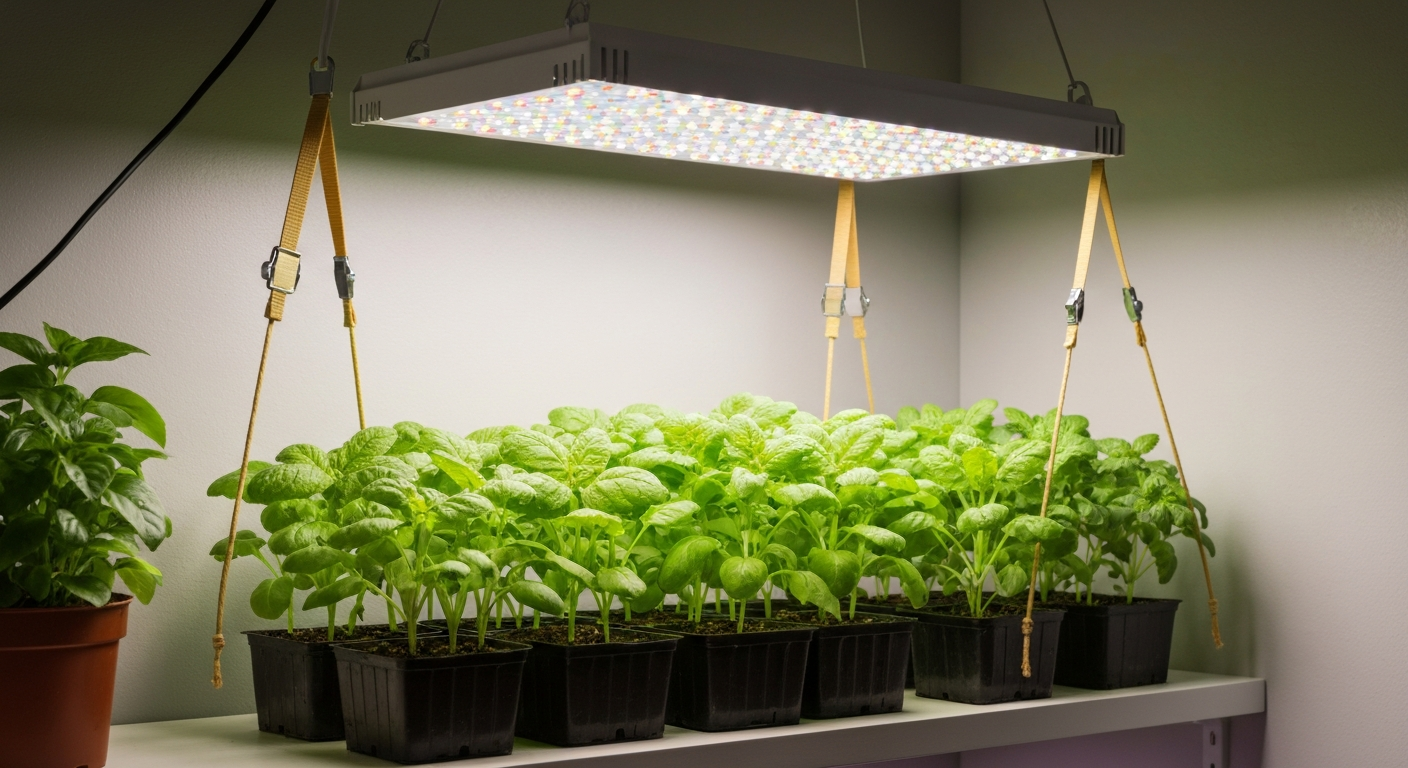
What Artificial Light Will Grow Plants: Best Lights Guide
What artificial light will grow plants: practical guide to LED, CFL, HID spectra, PPFD targets, setup, cost & tips.