A typical plant grow light can produce enough brightness to potentially take the edge off SAD symptoms, but it is not a reliable substitute for a proper light therapy box. The clinical standard for SAD is 10,000 lux delivered at eye level for 20 to 30 minutes each morning, and most grow lights were never designed to hit that target at a safe, comfortable sitting distance. That said, if you already own a high-output full-spectrum grow light and you use it correctly, with a lux meter, proper timing, and consistent daily sessions, you may get some real benefit. You just need to go in with clear expectations and know exactly what you are working with.
Do Grow Lights Help With SAD? What to Use and How
Marcus Holloway
4 Jun 2026
What SAD is and why light is the treatment
Seasonal Affective Disorder is not just "feeling down in winter." In the DSM-5, it is classified as Major Depressive Disorder or Bipolar Disorder with a seasonal pattern specifier, meaning it follows a predictable cycle: depressive episodes emerge in late fall or early winter and lift in spring. To qualify as SAD rather than the milder "winter blues," the seasonal pattern has to repeat over at least two years and meet full criteria for a major depressive episode. Symptoms typically persist for around four to five months. We are talking about low energy, loss of interest, sleep changes, difficulty concentrating, and in some cases significant impairment in daily life.
Light works as a treatment because your eyes contain specialized cells called intrinsically photosensitive retinal ganglion cells (ipRGCs) that feed directly into the suprachiasmatic nucleus (SCN), your brain's master circadian clock. Bright morning light suppresses melatonin, resets circadian timing, and appears to modulate serotonin-related pathways. In plain terms: getting enough bright light at the right time of day tells your brain it is morning, not perpetual dusk. That signal is what goes missing in short-day months, and replacing it with artificial light is the core mechanism behind light therapy.
Do grow lights actually help with SAD? The honest answer
There is no clinical research that directly tests plant grow lights as a SAD treatment. Some readers also wonder whether ceiling lights help plants grow, but plant growth depends on factors like PAR and spectrum rather than SAD-style lux targeting grow lights actually help with SAD. The evidence base for light therapy is built almost entirely around purpose-built light boxes delivering UV-filtered bright white or cool-white light at 10,000 lux at eye level. Grow lights were engineered around plant photobiology, not human circadian photoreception. They are rated in PPFD (micromoles of photons per square meter per second) and PAR (the 400 to 700 nm range plants use for photosynthesis), not in lux, which is the human-vision-weighted unit that clinical SAD protocols rely on. You cannot reliably convert a PPFD number into therapeutic lux without knowing the exact spectral power distribution of that specific light, and even then you would want to verify it with an actual lux meter at your seating position.
Here is the practical reality though: some high-output grow lights, especially broad-spectrum LED panels, do produce very high lux output. Measured values in horticultural settings have shown lux readings of 15,000 or more at close range on the plant canopy surface. That number is above the 10,000 lux therapeutic threshold. But those readings are at the canopy, not at comfortable seated eye level with appropriate coverage for a person's face. Distance, beam angle, and the light's actual spectral composition all shift the numbers. So while it is physically possible for a powerful grow light to hit 10,000 lux at your eyes, you cannot assume it does without measuring it. If you can confirm the output with a lux meter and set it up consistently, there is a reasonable case that you could get meaningful benefit. If you are guessing, you are probably not hitting the mark.
How to set up a grow light for SAD: distance, timing, and duration
If you want to try using a grow light for SAD, treat it like you would a clinical light box and build your setup around the same parameters clinicians use. Here is how to approach it practically.
Measure your lux first
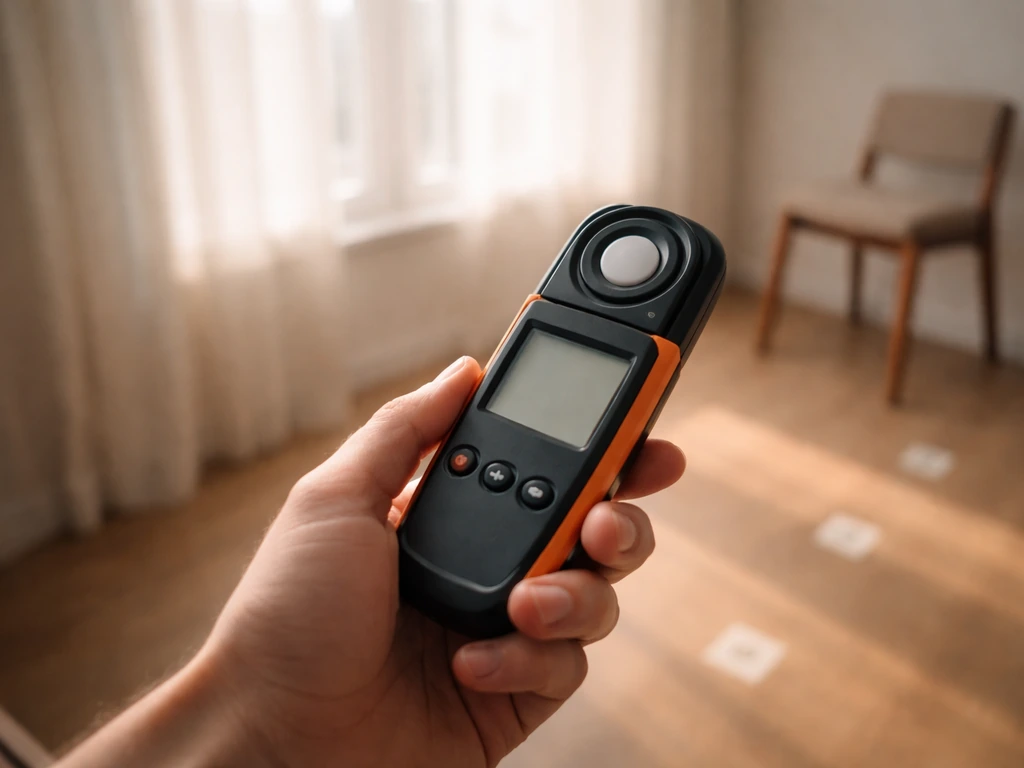
Before anything else, buy or borrow a lux meter (they are inexpensive, often under $20). Hold it at seated eye level, facing the light, at the distance you plan to sit. You need to see 10,000 lux. Most clinical light boxes are placed 40 to 80 cm (roughly 16 to 31 inches) from the face. With a grow light, you may need to be closer or further depending on the fixture's output and beam spread. Adjust until the meter reads at least 10,000 lux, then mark that spot. This is the only way to know your setup is actually doing something.
Use it in the morning, right after you wake up
Timing is not optional here. Clinical protocols consistently use early morning exposure, typically within the first hour after waking, because the circadian reset effect depends on light hitting your eyes at the right phase of your biological clock. One well-designed trial used 10,000 lux from 6:00 to 6:30 AM. Aim for a similar window: soon after you get up, every single day. Sit comfortably in front of the light while eating breakfast, reading, or looking at your phone. You do not need to stare at the light directly, and you should not.
Start with 30 minutes and assess after 2 to 4 weeks
The standard starting point is 30 minutes per session at 10,000 lux. Some protocols extend to 45 or 60 minutes if 30 minutes is not producing results after a couple of weeks. If morning sessions alone are not fully effective after two to four weeks, some clinical guidance suggests adding a short evening session (around 8:00 PM is one example used in practice) rather than just increasing morning duration indefinitely. Do not try evening sessions close to bedtime, as that can shift your circadian clock in the wrong direction and disrupt sleep.
Choosing the right kind of grow light for this purpose
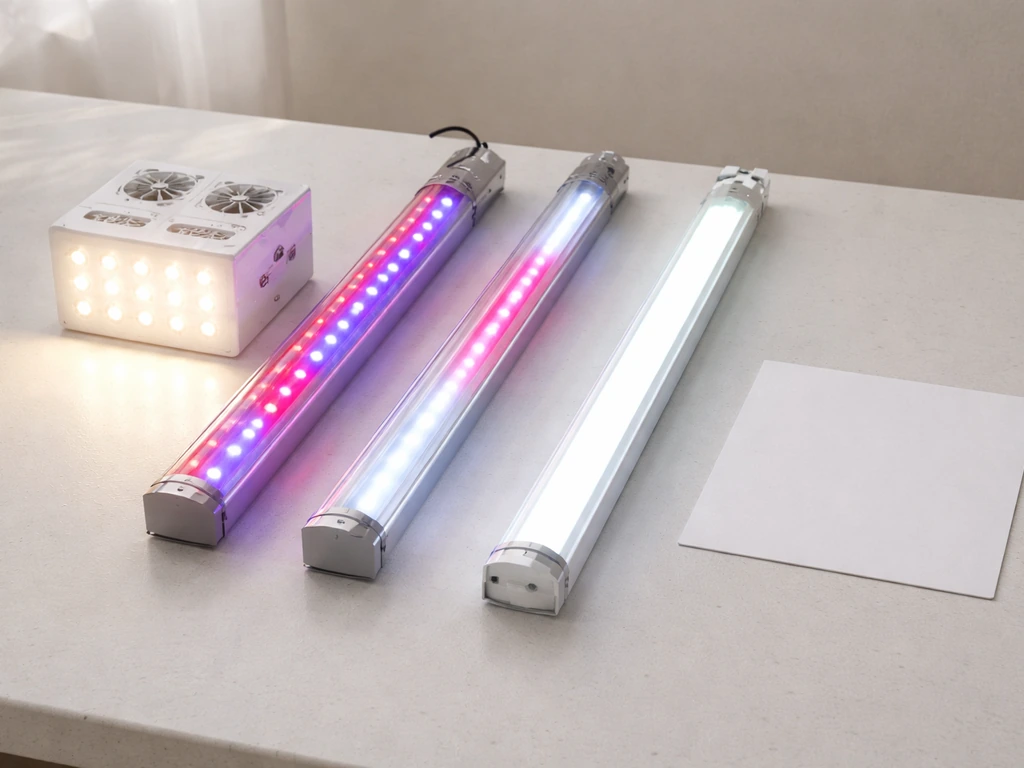
Not all grow lights are equal when it comes to SAD. The spectral content and total output matter a lot.
| Light Type | Lux Output Potential | Spectrum Suitability for SAD | Notes |
|---|---|---|---|
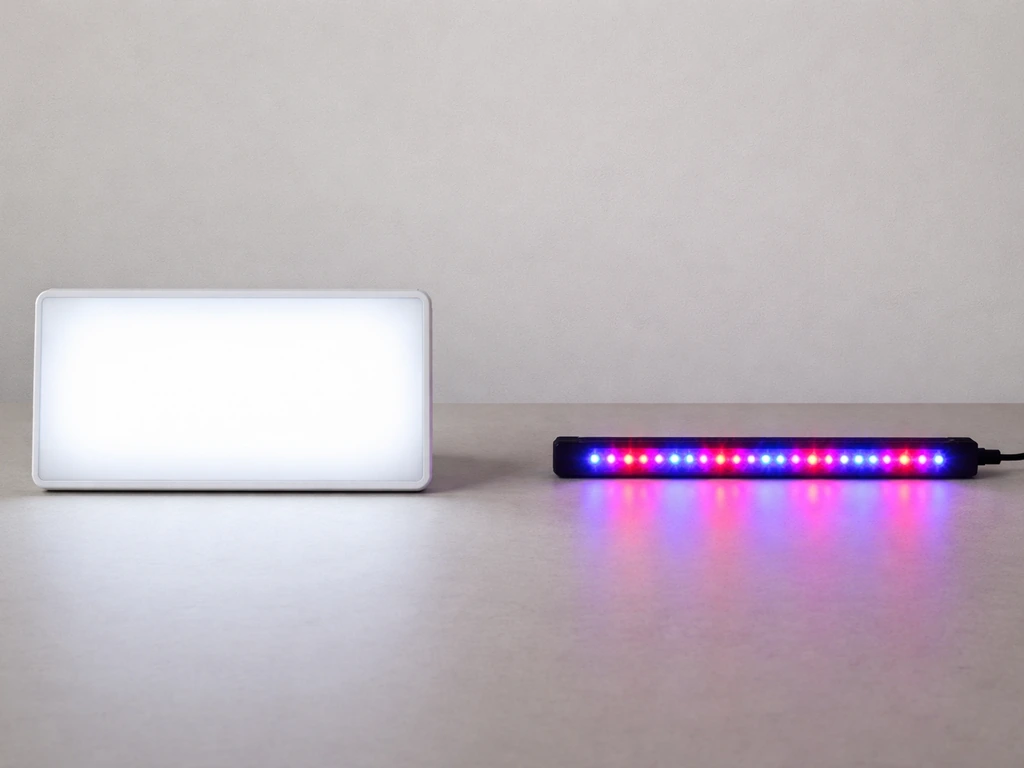
| Full-spectrum white LED grow lights | High (if high-wattage) | Good: mimics daylight, includes visible range | Best option for SAD use among grow lights; look for 5000K to 6500K color temperature |
| Blurple LED (red + blue only) | Moderate lux but poor for eyes | Poor: heavy red/blue bias, not validated for SAD | Uncomfortable to sit under; not recommended |
| High-pressure sodium (HPS) | Very high lux | Moderate: warm/orange-heavy spectrum | Runs hot; not practical in a home sitting setup |
| Dedicated SAD light boxes | 10,000 lux at specified distance | Excellent: UV-filtered bright white, evidence-based | The gold standard; directly validated in clinical trials |
For SAD purposes, a full-spectrum white LED grow light with a color temperature in the 5000K to 6500K range is your best bet among grow light options. This spectrum is closest to the cool-white light used in clinical light boxes and is more comfortable for sustained eye exposure than the purple-toned blurple lights typically used for seedlings and flowering plants. You also want a broad beam pattern that covers your face without creating a harsh hot spot. Narrow-beam spotlights designed to concentrate light on a small plant canopy are not ideal for this.
One thing worth noting: there is ongoing research into whether blue wavelengths specifically drive the SAD benefit, given that ipRGCs are most sensitive to blue light around 480 nm. Some studies have tested narrow-spectrum blue-LED devices for SAD with promising results. This does not mean your blurple grow light is a good SAD tool (it is not designed for eye exposure and the coverage is poor), but it does mean "full-spectrum" is not magic on its own. What matters most is hitting the lux target at eye level with a comfortable, broad beam. A related question some readers have is whether SAD lamps can help plants grow, which goes in the opposite direction and depends entirely on the lamp's PAR output rather than its lux rating. A common related question is whether you can use a SAD light to grow plants, which depends on the lamp's PAR output rather than its lux rating. That is why it is important to focus on the lamp’s plant-focused PAR output when you are trying to help plants grow, not its SAD lux rating SAD lamps can help plants grow. If your goal is plant growth, focus on the lamp's PAR and overall light intensity for the plants you are growing SAD lamps can help plants grow. Room lights can be useful for keeping houseplants healthy, but whether they help plants grow well depends on how much PAR they provide do room lights help plants grow. So if you are also wondering whether can happy lights help plants grow, remember plants respond more to the light’s plant-focused output than to lux meant for people.
Safety: what you actually need to watch out for
Eyes and UV
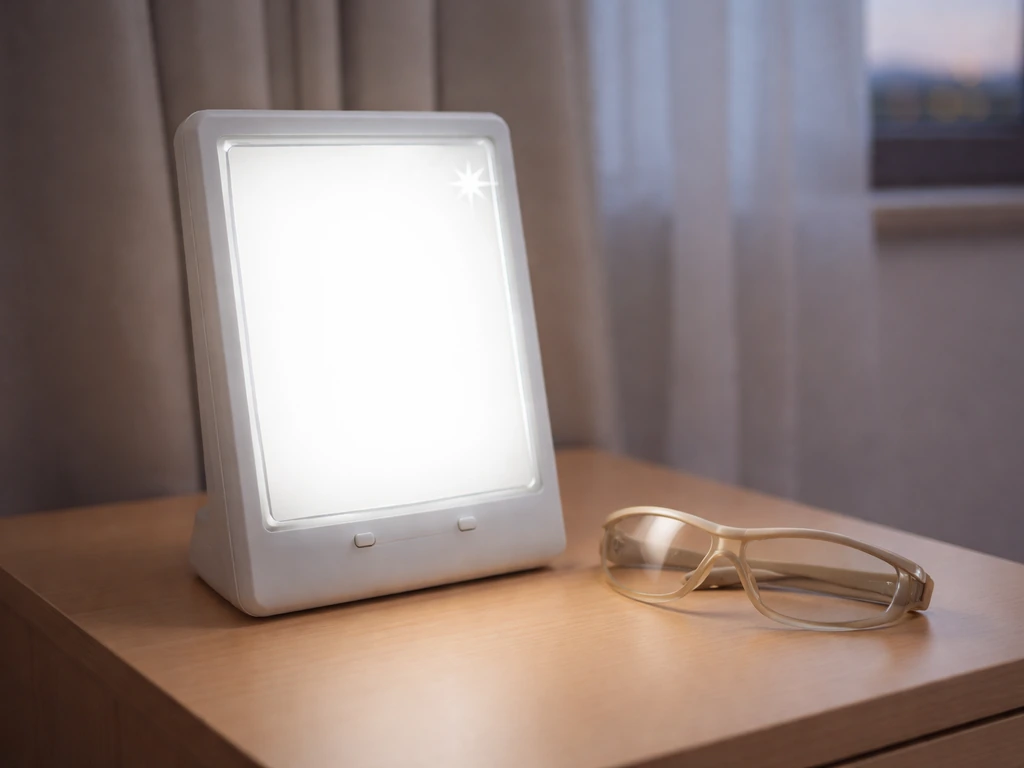
The most important safety point: UV light is not necessary for SAD light therapy and adds risk to eyes and skin with prolonged exposure. Purpose-built SAD light boxes filter out UV. Many grow lights, especially broad-spectrum LEDs, emit very little UV, but if you are using a grow light that includes UV-emitting diodes (some orchid or reef-style lights do), do not use it for SAD exposure. People with retinal conditions, macular degeneration, or diabetes-related eye disease should not attempt light therapy with any device, including grow lights, without consulting an ophthalmologist first. Do not stare directly into the light; you should be able to sit with the light in your field of vision without discomfort.
Sleep disruption and circadian timing
Using bright light too late in the day can delay your circadian clock rather than reset it, making sleep harder to come by. Keep your sessions in the morning. If you ever feel wired or have trouble falling asleep after starting light therapy sessions, pull your exposure time earlier in the morning or shorten the session.
Headaches and eye strain
Some people experience headaches or mild eye strain during the first few days of light therapy at 10,000 lux. This is a documented side effect even in controlled clinical trials. It usually settles down after a few sessions. If it persists or is severe, reduce session length and build up gradually.
Medications that cause light sensitivity
Certain medications make your eyes and skin more sensitive to light, and sitting in front of a very bright light for 30 minutes a day is real exposure. Photosensitizing drugs include some common ones like doxycycline (a frequently prescribed antibiotic), hydrochlorothiazide (a common blood pressure medication), and several antipsychotics and antidepressants. If you take any medication and are not sure whether it increases light sensitivity, ask your pharmacist or doctor before starting sessions. This is not a fringe concern.
Bipolar disorder: talk to your doctor first
Bright light therapy is considered contraindicated during current or recent mania, hypomania, or rapid cycling in bipolar disorder. Clinical guidance from the International Society for Bipolar Disorders is explicit on this. If you have a bipolar diagnosis, do not start any form of light therapy, including DIY grow-light setups, without first speaking with your psychiatrist or treating physician.
One common myth worth addressing: grow lights do not cause cancer and they will not give you a tan under normal use. The UV output of most LED grow lights is negligible, and even if UV were present, a 30-minute morning session at a comfortable distance is not remotely comparable to the UV doses associated with skin damage. The concern about photosensitizing medications above is a separate, real issue, but it is about drug interactions, not radiation risk from the light itself.
What to expect and how to track whether it is working
Light therapy for SAD is not overnight. Clinical reviews and protocols consistently use two to four weeks as the minimum evaluation window before deciding whether a protocol is working. Within that window, look for gradual shifts: sleeping a little better, finding it slightly easier to get up in the morning, noticing small improvements in energy or motivation. These tend to come before the mood lift itself.
Keep a simple daily log. Rate your energy, mood, and sleep quality on a 1 to 10 scale each morning before your session. It takes less than a minute and makes it much easier to see whether there is a real trend over two to four weeks versus random day-to-day fluctuation. If nothing has changed at the four-week mark, either your lux levels are not hitting the target (recheck with your meter), your timing is off, or light therapy alone is not enough for you, and that is when to escalate.
If mornings feel only marginally better after four weeks, try extending sessions to 45 minutes before adding a second session. If you add an evening session, keep it before 9:00 PM and keep it shorter (15 to 20 minutes) so it does not interfere with sleep.
Where grow lights fall short, and when to go see someone
The fundamental problem with using a grow light for SAD is that the clinical evidence is tied to a very specific delivery: 10,000 lux at eye level, UV filtered, with a broad comfortable beam, used on a consistent morning schedule. Grow lights were not designed around any of those parameters for human use. They may lack UV filtering documentation, they may not produce the right beam pattern for face-level exposure, and their lux output at a comfortable sitting distance is often unknown and unverified. A purpose-built SAD light box, which costs roughly $30 to $80 for a decent entry-level model, handles all of this out of the box. It is a much cleaner solution.
Beyond the equipment question, there is also the clinical one. SAD is a real mood disorder, and light therapy, while effective as a first-line treatment, is not always sufficient on its own. If your symptoms are severe, if you have missed significant work or social functioning, if you have any thoughts of self-harm, or if four to six weeks of consistent light therapy has produced little improvement, you need to see a doctor or mental health professional. Antidepressant medication (particularly SSRIs and bupropion) has strong evidence for SAD, and psychotherapy is also effective. Light therapy works best as part of a coordinated plan, not as a workaround.
- See a doctor if symptoms are severe or significantly impairing your daily life
- See a doctor if you have any thoughts of self-harm or suicidal ideation
- Consult a psychiatrist before starting light therapy if you have bipolar disorder
- Talk to your doctor if you take any medication that causes light sensitivity
- Seek professional evaluation if four to six weeks of consistent light therapy produces no meaningful improvement
- Consult an ophthalmologist before starting if you have retinal disease, macular degeneration, or diabetic eye disease
Using a grow light is a reasonable experiment if you already own one, you verify the lux output with a meter, you follow morning timing protocols, and you treat it as a supplement rather than a definitive solution. But if you are serious about treating SAD, a dedicated light therapy device is worth the investment, and a conversation with a healthcare provider is worth even more.
FAQ
If my grow light is strong enough for plants, can I assume it’s strong enough for SAD at my eyes?
Yes, but only if it actually reaches the therapeutic brightness at your eyes. If you use a grow light, measure lux at seated eye level (not at the plant canopy) with the same distance and beam angle you will use daily, and aim for at least 10,000 lux for the full session window.
My grow light’s PPFD/PAR looks high. Do I still need a lux meter for SAD?
No, because plants and SAD use different measurement systems. If you only have PPFD or PAR numbers, you still need a lux meter to confirm the human-therapeutic target at your face, since converting those values to SAD-relevant lux requires the exact spectrum and usually still benefits from direct measurement.
What if I have a different schedule on weekends or I don’t wake up at the same time?
Use it like a clinical morning session: within about the first hour after waking. If you get up and your morning light exposure is inconsistent, consider anchoring the session to a fixed wake time (even on weekends) so circadian reset cues do not drift.
I’m not improving yet, should I add more time in the evening?
Do not increase evening exposure first. If mornings are only marginal after a couple of weeks, extend morning time toward 45 minutes, then consider a brief early-evening session only if needed, staying well before 9 PM to avoid delaying sleep timing.
What should I do if light therapy makes me feel “wired” or messes up my sleep?
If you feel wired, more anxious, or have trouble falling asleep, shift earlier rather than longer. Try moving the session start 30 to 60 minutes earlier and shorten the session until sleep stabilizes, then reassess with a consistent schedule.
I got headaches at the start. Is that a sign the grow light is unsafe or just an adjustment period?
Headaches or mild eye strain early on are fairly common. Start with a shorter session (for example, 15 to 20 minutes) at verified brightness, then build toward 30 minutes over several days if you tolerate it.
Do I need UV for SAD benefits, and how do I know if my grow light is safe?
UV is usually not necessary, and many grow lights contain little to no UV. However, if your specific fixture uses UV-emitting LEDs, stop using it for eye-level SAD exposure unless a qualified clinician tells you it is appropriate, and confirm your device is designed to keep UV exposure low.
Can I use a grow light if I have eye problems or I take medication that makes me more light sensitive?
Yes, certain conditions and medications can make light therapy risky. If you have retinal disease, macular degeneration, diabetes-related eye issues, a history of ocular problems, or take photosensitizing medications (common examples include doxycycline and hydrochlorothiazide), talk to a clinician before starting.
I have bipolar disorder. Is it safe to try a grow light for SAD?
If you have bipolar disorder, light therapy can be contraindicated during or near mania, hypomania, or rapid cycling. Do not start a DIY grow-light approach without discussing it with your psychiatrist or prescribing clinician first.
How long should I give it, and how do I know it’s not working?
Track response gradually. Look for early changes like easier mornings or better sleep quality, then mood improvements. If there is no noticeable trend after 2 to 4 weeks of verified 10,000 lux morning sessions, recheck lux and timing, and consider that light therapy alone may not be enough.
Do I need the rest of the room dark when using a grow light for SAD?
Yes, you can use normal ambient lighting in your home, but it does not replace the targeted exposure. The key is your eye-level brightness from the device during the session, so make sure the grow-light session still hits the lux target even if other lights are on.
How close should I sit, and do I need to look directly at the grow light?
Avoid staring at the light and keep it in your field of vision while you do something else. Also make sure the beam is broad enough to prevent hotspots on your face, since narrow beams can create uncomfortable glare without delivering even therapeutic exposure.
Next Articles
Do Grow Lights Help with Seasonal Depression (SAD)?
See if grow lights can help SAD, how they differ from medical light therapy, setup tips, and when to use a lightbox.
Why Do Plants Grow Best in Blue Light? Science & Practical Guide
Explore why blue light boosts vegetative growth, ideal blue:red ratios, PPFD, photoperiods, fixtures, and setup tips.
What Artificial Light Will Grow Plants: Best Lights Guide
What artificial light will grow plants: practical guide to LED, CFL, HID spectra, PPFD targets, setup, cost & tips.