Grow lights do help seeds germinate, but not always in the way most beginners expect. For the majority of common vegetables and herbs, germination itself is driven more by soil temperature and moisture than by light. What grow lights genuinely help with is keeping the seedlings healthy the moment they break the surface, and for a specific group of light-requiring seeds (like lettuce, impatiens, and begonias), light actually is a direct trigger for germination. So yes, a grow light is worth using during germination, as long as you understand what job it's doing.
Do Grow Lights Help Seeds Germinate? Setup and Tips
Marcus Holloway
11 Jul 2026
When grow lights do (and don't) speed up germination
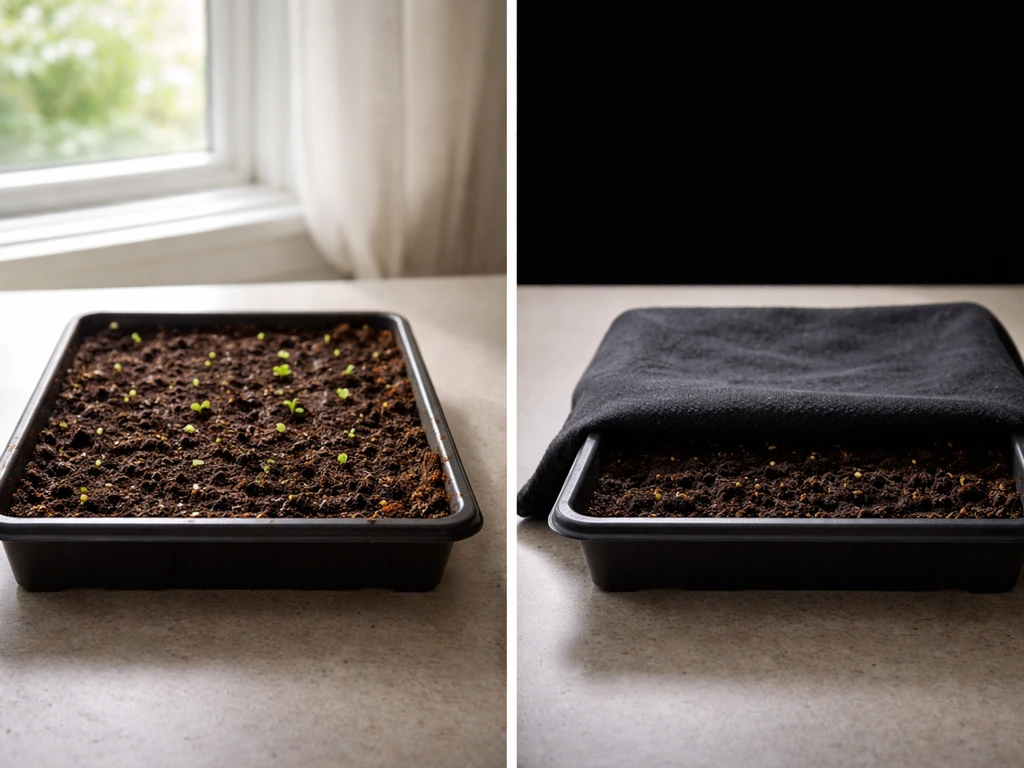
Seeds fall into two broad camps. Some are photoblastic, meaning they need light exposure to trigger germination. Lettuce is the most common garden example, and it's joined by flowers like ageratum, begonia, browallia, impatiens, and petunia. For these, placing a grow light directly over uncovered (or lightly covered) seed trays genuinely speeds things up because you're giving the seed a biological signal it needs. Skip the light for these species and germination can be erratic or fail entirely.
Most other popular crops, including tomatoes, peppers, cucumbers, basil, and most brassicas, are light-independent at the germination stage. A dark, warm, moist environment works just as well for cracking the seed coat. That said, light still matters the second the shoot emerges. A seedling that wakes up to dim light immediately starts stretching toward whatever source it can find, producing the weak, leggy stems that are so frustrating to deal with later. Running a grow light from day one means you're ready the moment germination happens, which is the single most practical reason to keep lights on throughout the process.
Where grow lights don't help: if your seed trays are too cold, too wet, or too dry, no amount of light will fix poor germination rates. Tomatoes want soil temperatures around 70 to 80°F (21 to 27°C) to germinate reliably, and peppers want it even warmer. A grow light produces some warmth but rarely enough to solve a cold-room problem on its own. Check your seed packet first, because variety-specific requirements matter more than lighting for the actual germination trigger. Extension (UNH) notes that for many common home-garden crops, seed companies and extension guides distinguish between light-requiring (photoblastic) seeds and light-independent seeds, and you should follow crop-specific instructions rather than assume all seeds respond the same to light Check your seed packet first.
How to set up grow lights for germinating seeds
The setup doesn't need to be complicated. Here's a practical approach that works for most home gardeners starting seeds on a shelf, table, or in a small grow tent. If you’re wondering can you put grow lights under plants, the setup depends on fixture type and clearance so the light reaches the seedlings without overheating or uneven coverage.
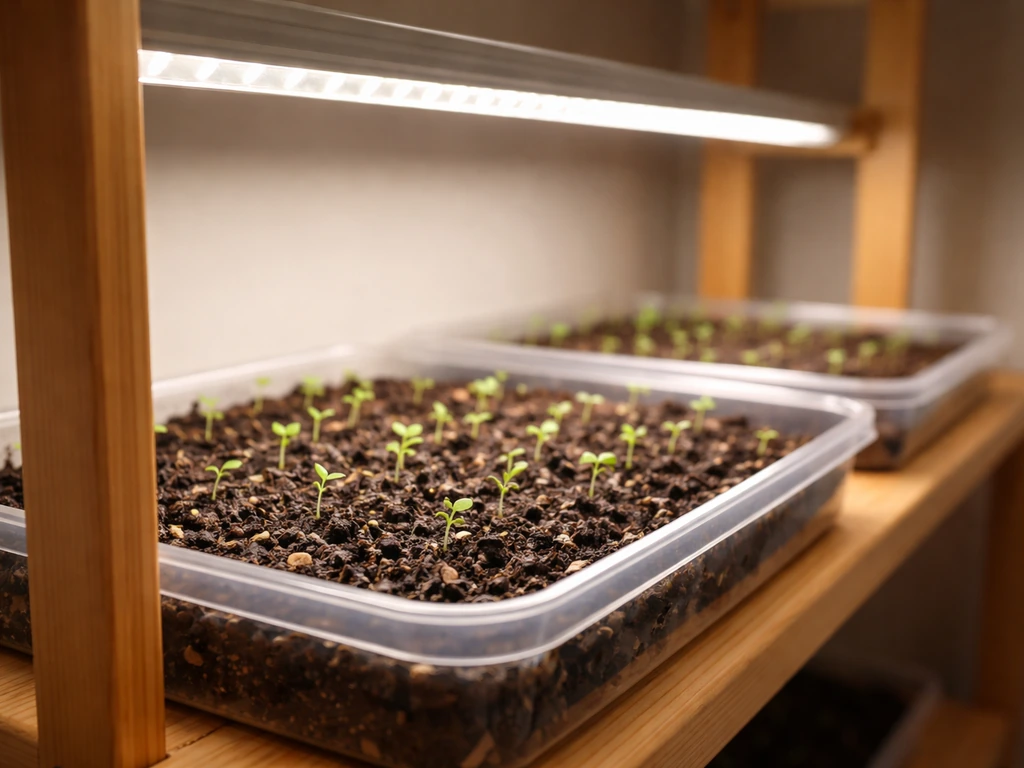
- Choose a full-spectrum LED panel or T5 fluorescent strip designed for seedlings. Full-spectrum LEDs that cover the 400 to 700 nm range are widely available and energy-efficient. You don't need anything expensive for germination and early seedling stages.
- Position the light directly above the trays, not to the side. Seeds and new sprouts respond to light from above, and side lighting produces bent, misshapen seedlings.
- Set the light at the right height (see the intensity and distance section below) before you plant anything, so you're not scrambling to adjust after seeds sprout.
- Plug the light into a timer. Manual schedules almost always slip, and consistent photoperiods matter more than perfect spectrum or wattage.
- Place the entire setup away from cold drafts, heating vents, and direct outdoor airflow. Temperature stability is more important than most beginners realize.
- Check the trays daily once seeds are sown. You want consistent moisture but not soggy soil, and you want to catch germination early so you can adjust light height if the seedlings grow faster than expected.
Light requirements: intensity, distance, spectrum, and photoperiod
Distance from the light to the tray
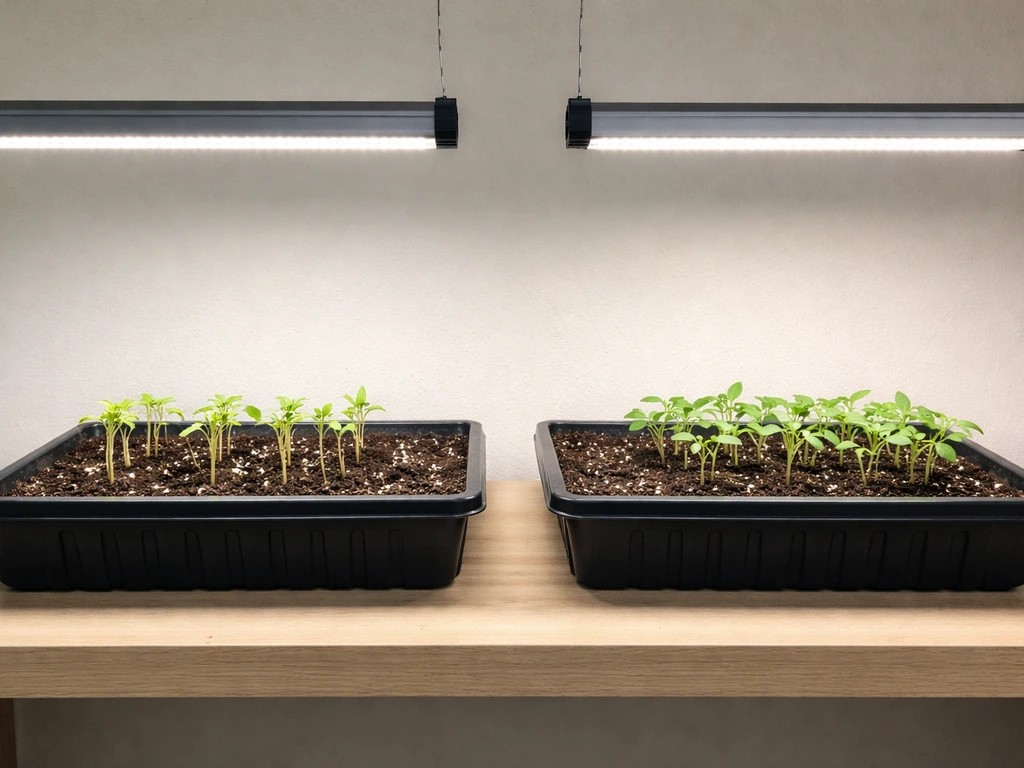
This is where most beginner mistakes happen. Too close and you risk heat stress or light burn on tender sprouts. Too far and seedlings get leggy almost immediately. For T5 fluorescent strips, 2 to 4 inches above the seedling canopy is the typical sweet spot. For LED panels, the recommended distance varies more by fixture output, but a common starting point is 4 to 6 inches for low-power panels and 12 to 18 inches for higher-powered grow lights. Always check the manufacturer's recommendation for your specific light, then adjust based on how your seedlings look. If stems are stretching and pale, bring the light closer. If leaves are curling, yellowing at the tips, or look bleached, raise it.
Spectrum: what actually matters here
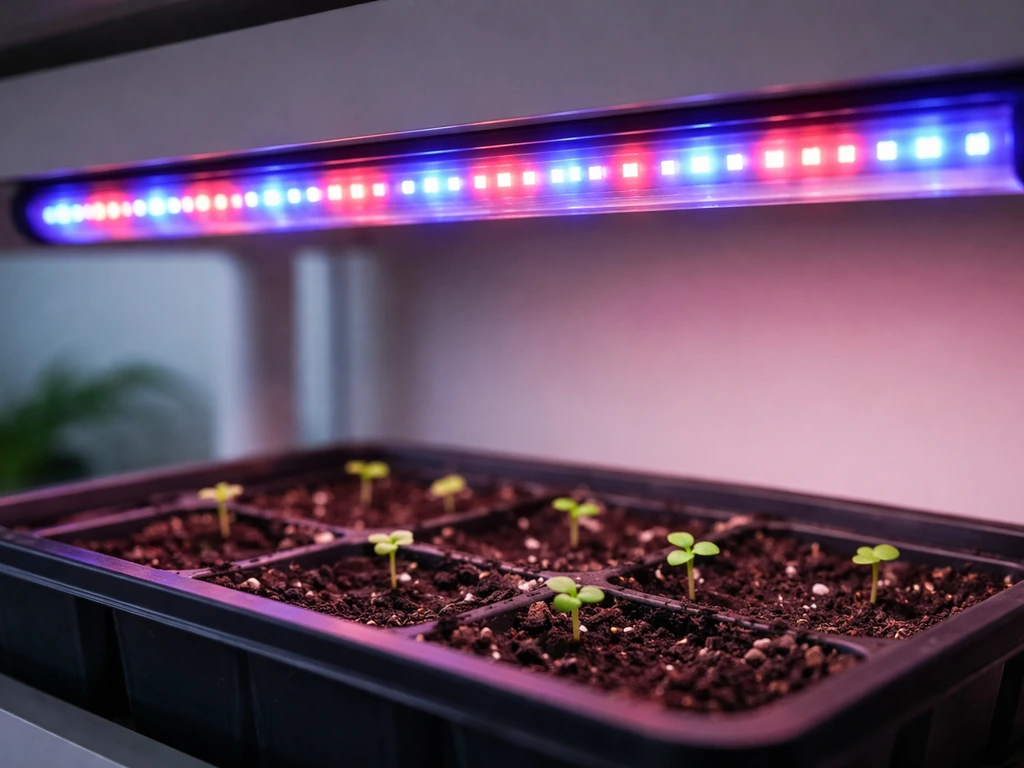
For germination and early seedling growth, you don't need a specialized or expensive spectrum. A standard full-spectrum LED or T5 that covers blue (around 400 to 500 nm) and red (around 600 to 700 nm) wavelengths is genuinely good enough. Blue light encourages compact, sturdy stem development, which is exactly what you want in a seedling. The purple or "blurple" LEDs that mix red and blue LEDs are functional at this stage even if they look strange. The fancy broad-spectrum or "sunlight spectrum" fixtures cost more and give you more headroom as plants mature, but for seeds and sprouts, basic full-spectrum coverage does the job.
Photoperiod: how many hours per day
Run the lights for 14 to 16 hours per day during germination and early seedling development. If you’re wondering about timing, placement, and how long to keep them on, the rest of these light tips will help you decide how many hours per day. This mimics a long summer day and gives seedlings enough energy to develop without depleting reserves. Going beyond 18 hours is generally unnecessary and can actually stress some plants. The dark period matters too, so don't just leave lights on 24/7 thinking more is better. Set a timer for 16 hours on and 8 hours off as a reliable starting point, then adjust for specific crops if needed (some short-day plants need more darkness, but that's a later-stage concern, not a germination issue).
Quick reference for setup
| Setting | T5 Fluorescent | Low-Power LED Panel | Higher-Power LED |
|---|---|---|---|
| Height above seedlings | 2 to 4 inches | 4 to 6 inches | 12 to 18 inches |
| Hours per day | 14 to 16 hours | 14 to 16 hours | 14 to 16 hours |
| Spectrum needed | Full spectrum / 6500K | Full spectrum | Full spectrum |
| Best for germination stage | Yes, widely used | Yes, easy to find | Yes, but keep height in check |
Temperature and moisture basics that matter as much as light
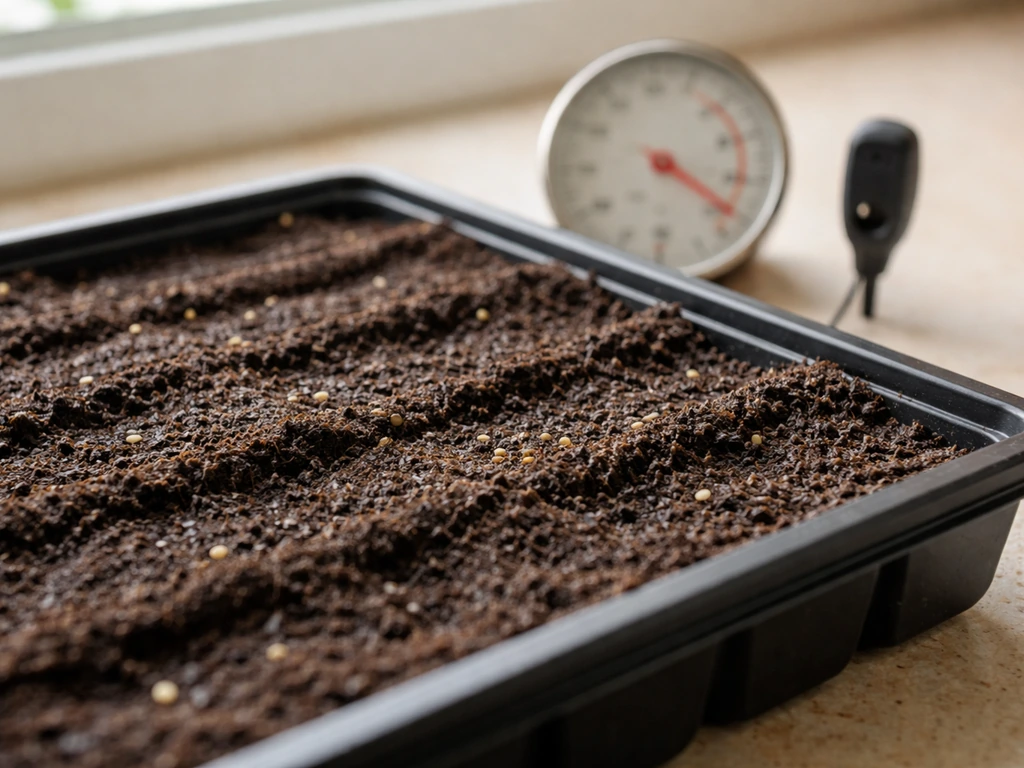
If your germination rates are poor and you assume the light is the problem, check these first. Temperature is usually the actual culprit. Most vegetable seeds germinate best in a soil temperature range of 65 to 80°F (18 to 27°C). Peppers want the high end of that range (ideally 80 to 85°F). A seedling heat mat under your trays is often more impactful than any light upgrade, especially if you're starting seeds in a basement or cool room in winter or early spring.
Moisture needs to be consistent but not excessive. The goal is soil that feels like a wrung-out sponge: damp throughout but not waterlogged. Covering trays with a clear plastic dome helps maintain humidity until germination, and most plastic domes are removed once seedlings emerge to prevent damping off (a fungal issue caused by too much moisture and poor airflow). A thin layer of vermiculite over the seed surface holds moisture well without compacting. Once you remove the dome, a small fan on low creates gentle air circulation that strengthens stems and reduces fungal problems significantly.
What to expect: typical germination timelines and troubleshooting
With a proper grow light setup, good temperature, and consistent moisture, most common vegetable and herb seeds germinate within 5 to 14 days. If you want the healthiest starts, focus on how you grow pros under canopy lights by dialing in distance, timing, and consistent conditions. Fast germinators like radish, cucumber, and basil can sprout in 3 to 7 days. Slower seeds like peppers, parsley, and celery can take 14 to 21 days even under ideal conditions. The grow light doesn't compress these timelines dramatically for light-independent seeds, but it does mean the seedlings are in good shape the moment they emerge rather than already stretching toward a window.
If seeds aren't sprouting on schedule, work through this checklist before changing your light setup.
- Soil temperature too low: use a thermometer to check. If it's below 65°F, add a heat mat.
- Soil drying out between checks: germinating seeds need constant moisture. Check twice daily if needed.
- Seeds buried too deep: most seeds do best at a depth of 2 to 3 times their diameter. Very small seeds (like those of petunias and begonias) need light to germinate and should be pressed onto the surface, not covered.
- Seeds too old: germination rates drop significantly as seeds age past their recommended storage life. Test old seeds by wrapping 10 seeds in a damp paper towel for a few days to check viability.
- Overwatering causing rot: if seeds germinate but die before emerging, this is usually the cause. Improve drainage and reduce watering frequency.
- Light too intense or too close causing surface soil to dry rapidly: raise the light slightly and mist more frequently.
Once seedlings are up, leggy growth (long, thin stems reaching toward the light) tells you the light is too far away or the photoperiod is too short. Compact, sturdy stems with dark green leaves mean the setup is working. You can read more about how grow lights affect seedlings specifically in related guides on this site, including guidance on whether seedlings grow well under LED lights and whether grow lights can burn seedlings if placed too close.
Safety, placement, and avoiding common indoor growing mistakes
Grow lights are genuinely safe for home use when set up with basic care. The main practical concerns are heat management, electrical safety, and eye comfort. LEDs run significantly cooler than older HID (high-intensity discharge) grow lights, so overheating is rarely a problem with a modern LED panel in a normal room. Still, don't enclose the fixture without ventilation, and don't leave it resting directly on fabric or paper surfaces.
On eye safety: looking directly into a bright grow light, especially a high-powered LED, is uncomfortable and not something you want to do repeatedly. The same common sense applies as with any bright light source. You don't need special equipment for basic seedling setups, but if you're working under a high-output light for extended periods, inexpensive grow-light glasses (around $10 to $20) reduce eye strain. This is a comfort issue more than a serious hazard for typical home setups, and the fears around grow lights causing eye damage are largely overstated for the kind of fixtures home gardeners use.
For placement, keep a few practical points in mind. Water and electricity are a bad combination, so position your lights so that watering the trays doesn't risk splashing the fixture. Use a surge-protected power strip with a timer, and run cords in a way that they won't be tripped over or pulled by a tray shifting. If you're using a wire shelving unit, zip-tie the cord to the frame so it's tidy and out of the way. Finally, make sure the light is truly level over the trays so coverage is even. Uneven light leads to uneven germination and seedling development across the tray, which gets frustrating fast when half your starts are ahead of the others.
The bottom line is that a grow light is one of the best investments a beginning indoor gardener can make, not because it magically speeds up germination for every seed, but because it bridges the gap between sprouting and healthy early growth, which is often where indoor seed starting falls apart. Do grow lights help cuttings root? Light can support healthy growth, but rooting cuttings depends more on temperature, humidity, and the cuttings’ environment. Get the temperature and moisture right first, choose a basic full-spectrum light, set it on a timer, and you'll have a reliable system that works across nearly any crop you want to start.
FAQ
Do grow lights help seeds germinate faster even if the room is warm and the soil is already at the right temperature?
They might, but only for photoblastic seeds (lettuce and similar light-triggered varieties). For light-independent seeds, a properly warm, moist, oxygen-friendly medium is the main factor, and the light mostly helps once the seedling emerges to prevent early stretching and to keep growth sturdier.
Should I keep the grow light on during the germination dark period if my seeds are not photoblastic?
You generally can, but consistency matters more than strict darkness. If your seedlings are stretching pale, use the light on a timer schedule and avoid long gaps. For some crops that are sensitive later, darkness requirements are more important after emergence, but for germination itself the key drivers are temperature and moisture.
How do I know if my seedlings are getting too much light versus too little light?
Too little shows up as stretching and pale, weak stems. Too much often looks like leaf-tip yellowing, bleached or washed-out leaf color, curling, or slow, stressed growth even when watering and temperature are correct. Adjust height in small steps, then re-check after a day or two so you do not overcorrect.
Can grow lights cause poor germination because they dry out my seed trays?
Yes, indirectly. Strong airflow from domes being removed too early, or a light fixture that increases evaporation, can make the surface dry out while seeds need steady moisture. Keep the surface at wrung-out-sponge dampness, and if using domes, remove them promptly at emergence to reduce damping off while still maintaining humidity.
What’s the best way to set light height if my tray has uneven seedlings (some sprouted, some not yet)?
Start with a height that is safe for the smallest, newly emerged seedlings, then adjust as they grow. If you see taller ones stretching, raise the tray slightly or lower the fixture a little, but avoid locking in a height that would over-stress the first sprouts. Uneven light coverage across the shelf is also a common cause of tray-to-tray differences.
Do I need a special spectrum, or will any LED light work for seed starting?
For germination and early seedlings, a full-spectrum LED or T5 with meaningful blue and red output is usually sufficient. What matters most is the dose (distance and hours), not marketing terms like “sunlight spectrum.” If your seedlings are leggy, the first fix is changing distance and photoperiod, not switching to a more expensive spectrum.
How many hours per day should I run grow lights if I am only trying to get sprouts up?
A practical starting point is 14 to 16 hours on per day, with a clear off period. Running 24/7 often adds stress without improving germination for light-independent seeds, and for photoblastic seeds it does not replace the need for correct moisture and temperature. Use a timer so you do not drift into inconsistent schedules.
Will a grow light replace a heat mat for cold rooms?
Usually not. Light can add a small amount of warmth, but soil temperature is what reliably controls germination. If you are below the seed packet’s target range, prioritize a heat mat or a warmer location, then tune light distance for sturdy growth after emergence.
Why are my seeds sprouting but then damping off or collapsing?
That pattern usually points to excess moisture and poor airflow rather than insufficient light. Use the dome only until germination, remove it at emergence, and add gentle low-speed air movement. Also avoid overwatering and keep the medium damp, not waterlogged.
Can I germinate seeds in total darkness under a grow light system?
If the seeds are photoblastic, total darkness can prevent or delay germination even if temperature and moisture are perfect. For light-independent seeds, darkness is fine for the cracking stage, but once you see sprouts, you should turn on the light promptly to prevent immediate stretching toward windows or the fixture.
Do grow lights help root cuttings the same way they help seeds germinate?
Not in the same direct way. Rooting is more dependent on the cutting environment, especially temperature, humidity, and medium moisture. A light can support leaf health and overall vigor, but it is not the primary “germination trigger” the way it can be for photoblastic seeds.
Are grow lights safe for seedlings and for me, and what should I watch out for?
For safety, focus on avoiding splash risk near water, using a surge-protected outlet, and preventing cords from being pulled. For seedlings, the most common issue is fixture placement too close, which can overheat or bleach tissue. For you, avoid staring into high-output LEDs for long periods, take breaks, and position the setup so you can work without repeatedly looking into the beam.
Next Articles
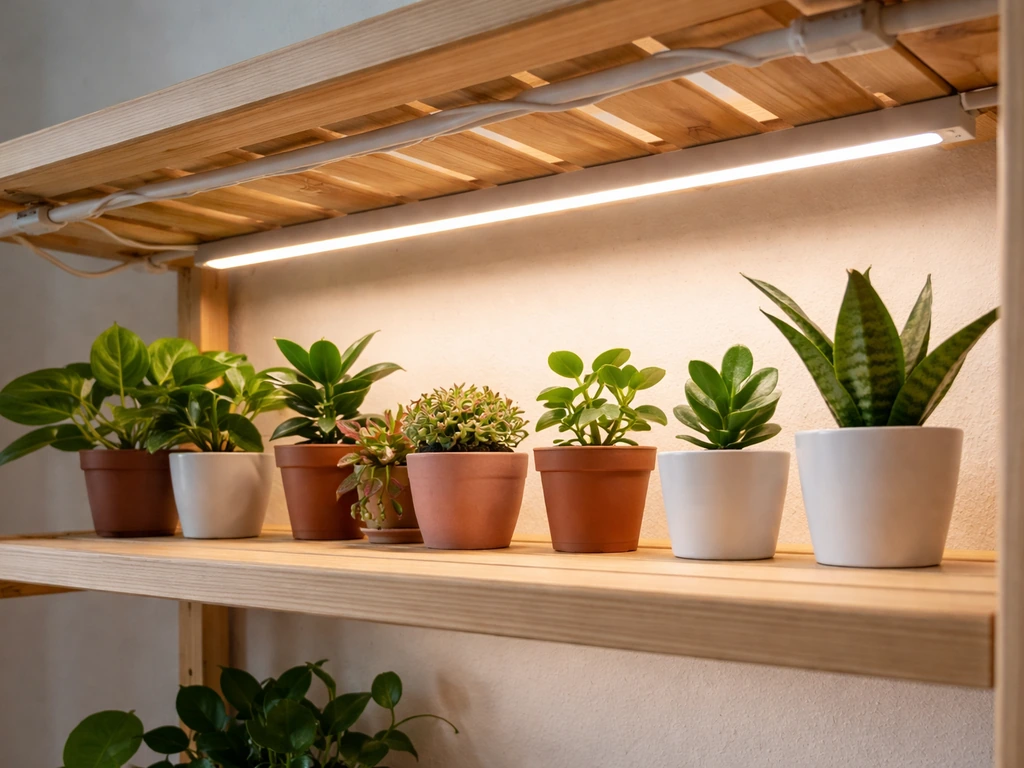
Can You Put Grow Lights Under Plants? Yes With These Steps
Learn when you can place grow lights under plants and how to set distance, coverage, and safety for even growth.
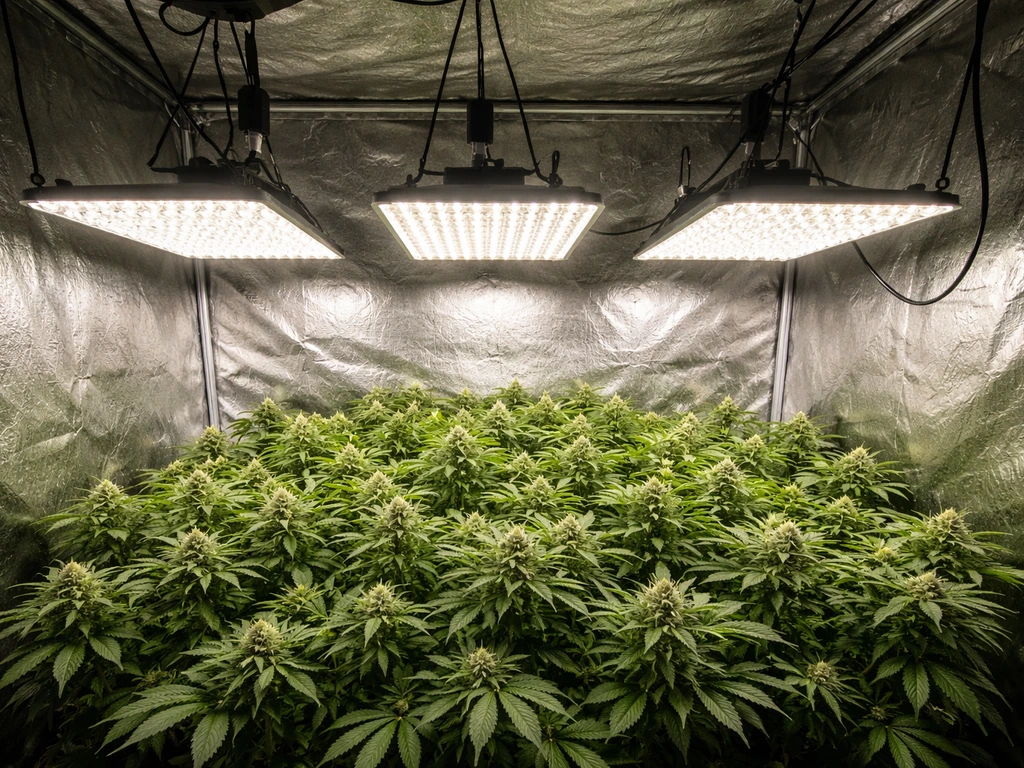
Grow Pros Under Canopy Lights: Setup, Spacing, and Fixes
Guide to set up canopy lights: placement, spacing, height, spectrum, timers, and fixes for weak, stretched, or bleached
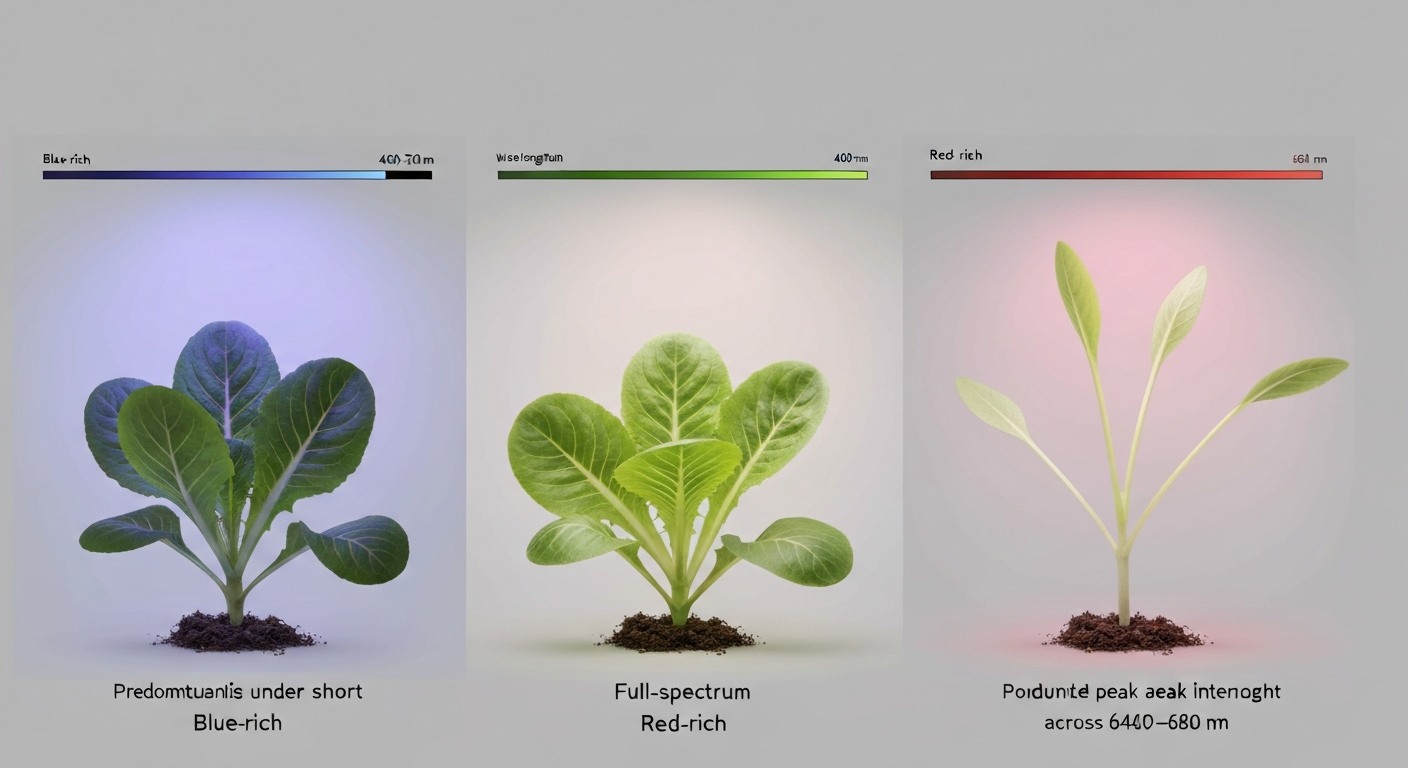
Why Do Plants Grow Best in Blue Light? Science & Practical Guide
Explore why blue light boosts vegetative growth, ideal blue:red ratios, PPFD, photoperiods, fixtures, and setup tips.