Yes, fluorescent lights can grow plants, and they do it well enough to be genuinely useful for seedlings, herbs, leafy greens, and low-light houseplants. They won't replace the sun for tomatoes or peppers pushing through to fruit, but for starting seeds indoors, keeping herbs alive on a countertop, or growing lettuce year-round, a couple of fluorescent tubes hung close to your plants will absolutely get the job done. The key is getting the lights close enough, running them long enough, and choosing the right bulb type for what you're growing.
Do Fluorescent Lights Grow Plants? How to Use Them
Marcus Holloway
14 May 2026
Regular fluorescent lights vs. purpose-built grow lights
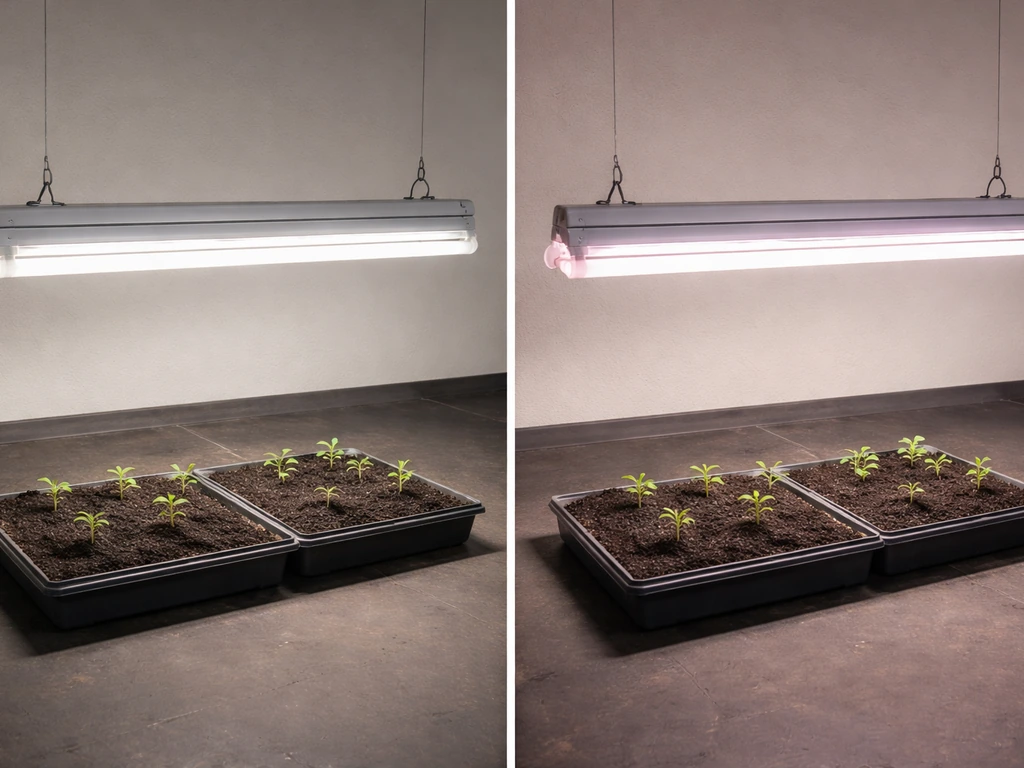
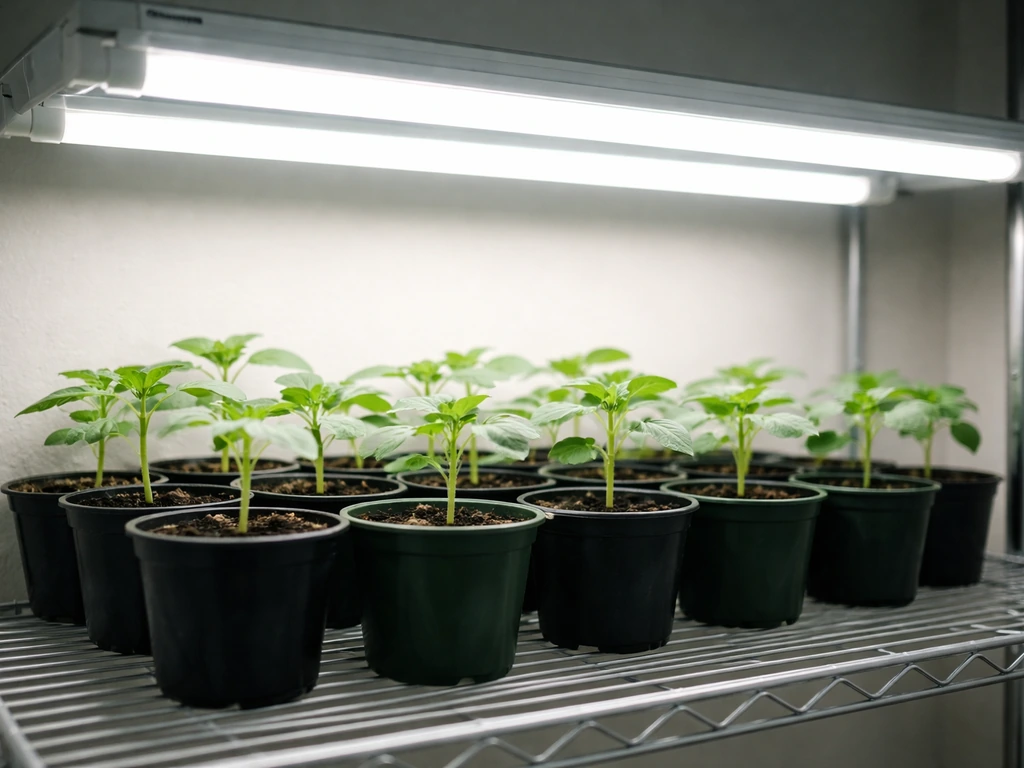
Here's the honest answer: not all fluorescent lights are equal for plants, but regular fluorescent shop lights work better than most people expect. A standard two-tube T8 fixture from a hardware store can grow healthy seedlings to transplant stage. The catch is that cool-white tubes alone skew heavily toward blue light and are relatively low in red light. Plants need both red and blue wavelengths for complete, healthy growth, so a basic cool-white tube is decent for leafy, vegetative growth but falls short for flowering and fruiting.
Purpose-built fluorescent grow lights (often labeled 'full-spectrum' or 'plant and aquarium' tubes) add more red wavelengths to balance out the spectrum. University of Maryland Extension research confirms that full-spectrum fluorescent tubes produce thicker stems and better foliar growth compared to cool-white tubes alone. If you're starting seeds or growing herbs, a standard shop light works fine in a pinch. If you're serious about it or want the best results, grab full-spectrum or grow-labeled tubes for the same fixture.
It's also worth knowing how fluorescents fit into the wider picture. Regular incandescent and halogen bulbs are generally poor choices for growing plants because they produce too much heat and not enough useful light. Fluorescents are a real step up from those options. LEDs have now overtaken fluorescents as the most efficient indoor grow light, but fluorescents are cheaper upfront, widely available, and perfectly capable for the right applications.
Picking the right fluorescent bulb: type, color temp, and wattage
Bulb types: T5, T8, T12, and CFLs
The 'T' number refers to the tube diameter in eighths of an inch, so a T8 is one inch in diameter and a T5 is about 5/8 of an inch. T5 tubes are the most efficient fluorescent option for plant growing. A single 54-watt T5 tube produces around 5,000 lumens and is about 9% more efficient than a comparable T8, according to University of Maryland Extension. T8 shop-light fixtures are the most common and affordable setup, and they work well for seedlings and herbs. T12 tubes are the older, thicker format and are the least efficient. One important note: T5 tubes won't fit in a T12 fixture, so match your tubes to your fixture.
Compact fluorescent lamps (CFLs) are the screw-in spiral bulbs you might already have around the house. They work for small setups and single plants but are harder to position optimally because they emit light in all directions. For a dedicated growing setup, a T5 or T8 tube fixture aimed directly down at your plants is far more efficient.
Color temperature: what cool white vs. warm white actually means for plants
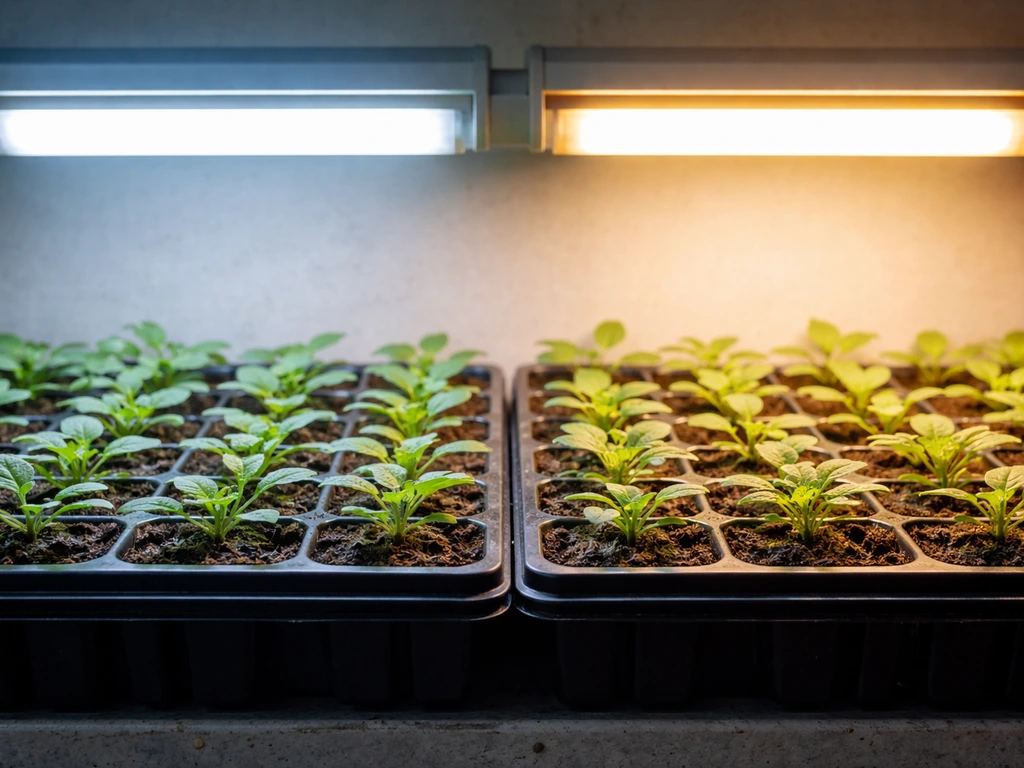
Color temperature is measured in Kelvin (K). Cool-white tubes (5,000-6,500K) produce more blue light, which drives vegetative growth and compact, leafy plants. Warm-white tubes (2,700-3,000K) produce more red light, which supports flowering. If you're only running one type, a 6,500K cool-white tube is the standard recommendation for seedlings and leafy greens. For flowering plants, pair a cool-white tube with a warm-white tube in the same fixture, or choose a full-spectrum tube rated around 5,000K that balances both. That balanced spectrum is what separates a decent grow setup from a basic shop-light hack.
| Bulb Type | Best For | Efficiency | Key Limitation |
|---|---|---|---|
| T5 (54W, full-spectrum) | Seedlings, herbs, leafy greens | Highest among fluorescents | Higher fixture cost upfront |
| T8 shop light (cool + warm combo) | Seedlings, seed starting, herbs | Good | Need two tube types for full spectrum |
| T8 cool-white only | Basic seedlings, vegetative growth | Good | Low in red light; weak for flowering |
| CFL (6,500K) | Single plants, small spaces | Moderate | Hard to position; limited coverage |
| T12 | Not recommended | Lowest | Inefficient; being phased out |
How to actually set up fluorescent lights for growing
How close to hang the lights
Distance is probably the single most important variable, and most beginners hang their lights way too high. Purdue research showed that at 12 inches above plants, a cool-white fluorescent fixture delivered only about one-quarter of the light measured at 2 inches. That's not a small difference; it's the difference between healthy seedlings and spindly, pale ones. Illinois Extension recommends keeping fluorescent tubes 2 to 4 inches above seedling tops. UNH Extension uses a practical rule of 4 to 6 inches for household setups, with the understanding that you adjust as the plants grow. Start at 4 inches and watch how your plants respond.
Use a chain or adjustable hanging system so you can raise the fixture as your plants grow taller. The goal is to keep that 2 to 6 inch gap consistent throughout the growth cycle, not just at the beginning.
How many hours per day
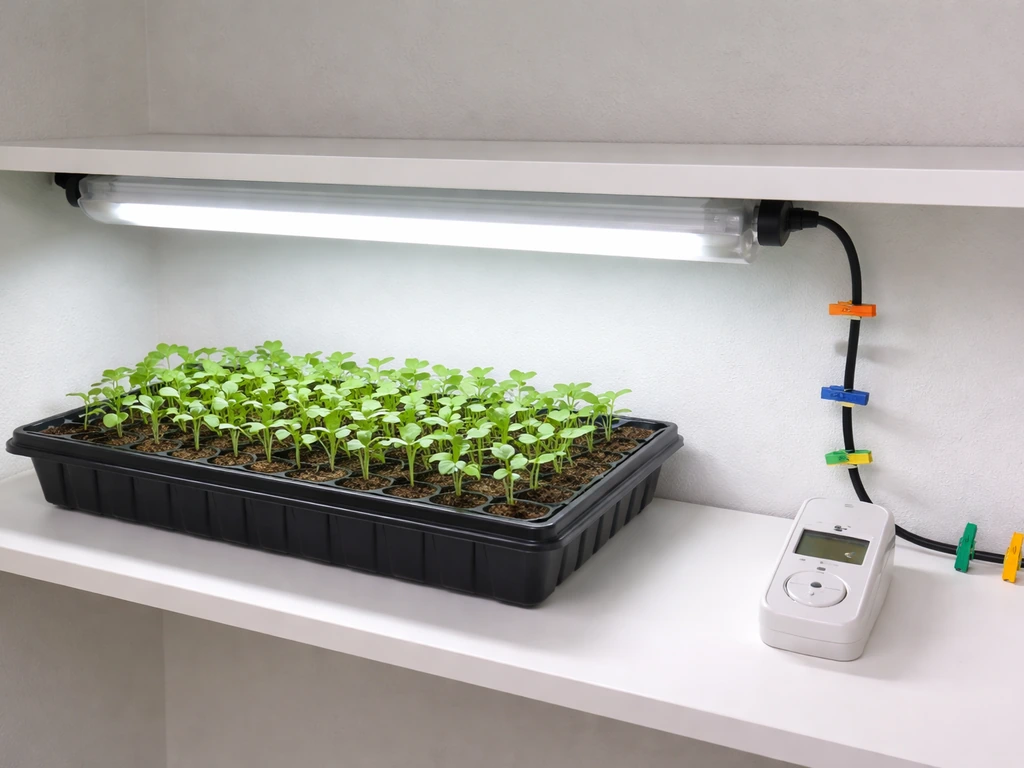
Fluorescent lights are not as intense as sunlight, so plants need longer exposure to accumulate the same total daily light. UNH Extension explains this through the concept of Daily Light Integral (DLI), basically a 'daily photon budget' for your plants. A tomato seedling might fill that budget in 5 hours of full sunlight; under a fluorescent fixture hung about a foot away, it could take up to 22 hours to hit the same target. For most seedlings and herbs, running your fluorescent lights 14 to 18 hours a day is the practical sweet spot. UMN Extension recommends 12 to 16 hours for seedlings; UNH Extension suggests 18 hours as supplemental light guidance. Use a timer so you don't have to think about it, and make sure plants get at least 6 hours of darkness per day.
Fixture placement and plant rotation
Position your fixture directly above the plants, not off to the side. Fluorescent tubes emit most of their light downward and to the immediate sides, so a horizontal fixture hung above a flat tray of seedlings gives you the most even coverage. If you're growing in a wider space, use multiple fixtures side by side with minimal gap between them. Rotate your plants every few days if you notice one side leaning toward the light or growing unevenly. Plants in the center of a long tube fixture tend to get slightly more light than those at the ends, so rotating ensures even growth across the tray.
Which plants actually do well under fluorescent lights
Fluorescent lights are genuinely good for a specific category of plants and genuinely limited for others. University of Alaska Fairbanks Extension sums it up cleanly: houseplants, seedlings, and low-light flowering plants can flourish under fluorescent lighting, but fluorescents fall short of what's needed for most mature flowering and fruiting plants.
- Seedlings: Excellent. Most vegetable and flower seedlings can be grown all the way to transplant stage under T8 shop lights or T5 fluorescents.
- Leafy greens (lettuce, spinach, arugula): Excellent. These are low-light crops that don't need intense light to produce usable harvests.
- Herbs (basil, parsley, cilantro, mint): Very good. Herbs thrive under fluorescent lighting and don't need the high intensity required by fruiting crops.
- Low-light houseplants (pothos, peace lily, ferns): Good. These plants naturally grow under canopy shade, so fluorescent output is more than enough.
- Compact flowering plants (African violets, begonias): Decent, especially with full-spectrum tubes. Results are slower than with LEDs or HID lights.
- Tomatoes, peppers, cucumbers (fruiting stage): Poor. These need 400 to 1,200 PPFD during flowering and fruiting, which fluorescents struggle to deliver consistently at scale.
If you want to grow cannabis or other high-light fruiting crops under artificial light, fluorescent bulbs are generally not the right tool for the main grow cycle. If you’re thinking about cannabis specifically, plan on using much stronger lighting than a fluorescent setup for the flowering stage grow cannabis. They can work for seedling and clone stages, but you'll want something more powerful for the flowering phase.
Signs your fluorescent setup is working
Healthy seedlings under fluorescent lights will be compact and stocky with deep green leaves. Herbs will produce dense, flavorful growth. Lettuces will fill out without bolting prematurely. If things are going well, you won't see stems stretching toward the light, and new leaves will be the same size or larger than older ones.
Troubleshooting common problems
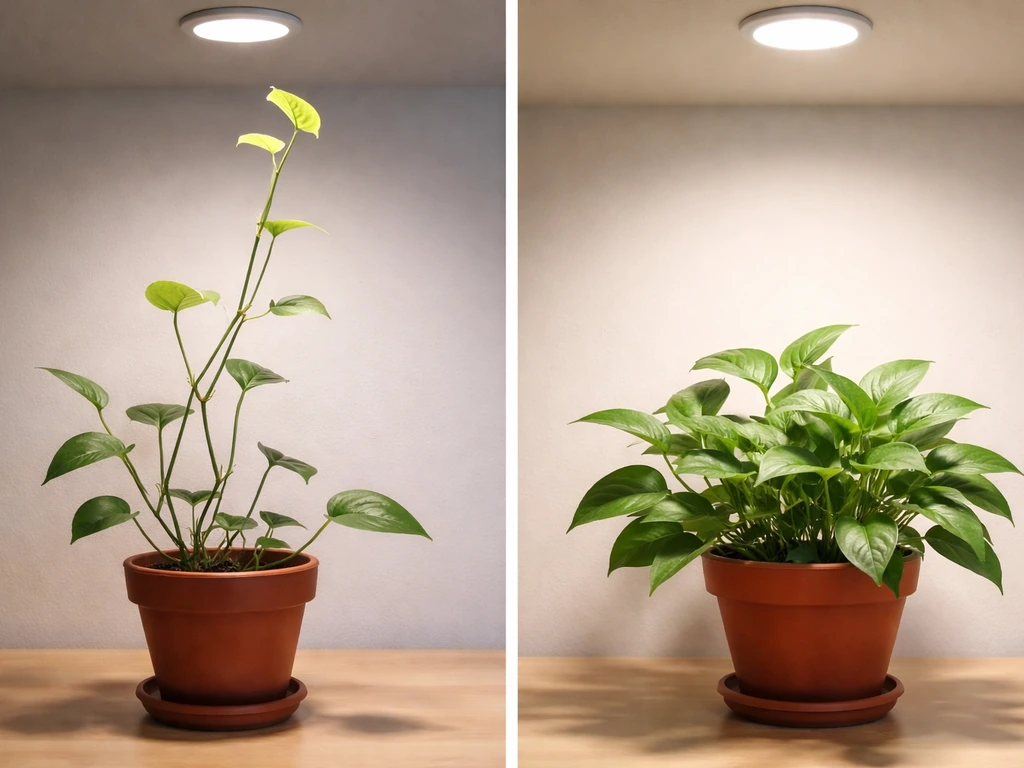
Leggy, stretched growth
Long, thin stems reaching toward the light are the clearest sign that your plants aren't getting enough light intensity. This is almost always a distance problem. Move the fixture closer, aiming for 2 to 4 inches above seedling tops. If the fixture is already close and you're still seeing leggy growth, you may need more tubes, a higher-output bulb, or longer daily run time. Running 16 to 18 hours per day gives fluorescent lights the best chance to compensate for their lower intensity versus sunlight.
Pale or yellowing leaves
Pale leaves with reduced green color (chlorosis) signal insufficient light for photosynthesis. Plants literally can't produce enough chlorophyll when light is too low. Check your distance first, then your daily photoperiod. If you're running cool-white tubes only, the lack of red wavelengths may also be a factor for some plants. Swapping in a warm-white tube or upgrading to full-spectrum tubes can help, especially for flowering plants.
Slow or stalled growth
Fluorescent lights inherently deliver less total light than sun or high-intensity LEDs, so some slowness is expected. If growth is dramatically slower than expected, check whether you have enough total fixtures for the canopy area you're covering. A single two-tube T8 fixture covers roughly a 2 by 4 foot area well. If you're cramming too many plants under one fixture, the ones at the edges or bottom of a crowded tray will compete for light and grow poorly.
Heat issues
Fluorescent lights run much cooler than incandescent or halogen bulbs, so heat damage is rarely a serious problem. If you press your hand against the tops of your plants and the heat from the fixture feels uncomfortable after a few seconds, raise the light an inch or two. In practice, the 2 to 4 inch distance recommendation already accounts for the mild warmth fluorescent tubes produce.
Spectrum issues for flowering plants
If your plants are healthy and leafy but refuse to flower or are flowering poorly, spectrum is likely the culprit. Cool-white fluorescents are low in red light, which plants need to trigger and sustain flowering. Adding a warm-white tube (2,700K) to your fixture, switching to full-spectrum tubes, or supplementing with a red-spectrum CFL near flowering plants can meaningfully improve results. If you're hitting a wall with fluorescents on flowering crops, it's also an honest signal that this may be the use case where upgrading to a purpose-built LED grow light makes more sense.
Safety and practical tips before you start
Eye safety
Fluorescent lights are not dangerous to look at briefly in normal use. They do emit some UV light, but the FDA notes that most people can use CFLs at the same distance as traditional incandescent bulbs without concern, unless they have unusual sensitivity to UV or visible light. If you're spending long periods very close to your lights (adjusting fixtures, hand-watering under a low-hung tube), it's sensible to avoid staring directly at lit tubes. This is basic common sense with any bright light source, not a serious hazard specific to fluorescents.
Mercury and breakage
Fluorescent tubes and CFLs contain a small amount of mercury vapor. OSHA documents this as a workplace concern in bulk handling, but for home growers the risk is minimal as long as you handle bulbs carefully and know what to do if one breaks. If a tube breaks, ventilate the room, avoid touching the debris with bare hands, and dispose of the glass and any powder carefully. Don't vacuum up broken fluorescent glass directly; it can spread mercury dust. Check your local recycling program for proper bulb disposal, since fluorescent tubes shouldn't go in regular trash.
Electrical safety
Keep your fixtures away from direct water spray, especially if you're growing in a humid space or misting your plants. Use fixtures rated for damp locations if your setup is in a basement or greenhouse. Plug your timer and fixture into a grounded outlet, and don't overload a single circuit with multiple high-wattage fixtures. A standard 4-foot two-tube T8 shop light draws around 60 to 80 watts, so running several is manageable on a normal 15-amp circuit.
Energy and running costs
Fluorescents are reasonably efficient, but running lights for 16 to 18 hours a day does add to your electricity bill. A single 4-foot two-tube T8 fixture at roughly 64 watts, running 16 hours a day, uses about 1 kWh per day. At $0.15/kWh (a rough US average), that's around $0.15 per day or about $4.50 per month per fixture. If you're running multiple fixtures, multiply accordingly. T5 fixtures cost a bit more upfront but run more efficiently, so they can save money over time in a larger setup. LEDs are even more efficient and would be the next step up if energy cost becomes a real concern.
Where to go from here
If you're starting seeds, growing herbs, or keeping low-light houseplants happy, a basic fluorescent setup is all you need to get going today. Grab a 4-foot T8 shop light (two tubes), swap in one cool-white and one warm-white tube for a balanced spectrum, hang it 3 to 4 inches above your plants, and set a timer for 16 hours on and 8 hours off. That setup will cost you well under $50 and will genuinely grow plants. That same kind of fluorescent setup can also work for figuring out whether will halogen lights grow plants in your space will halogen lights grow plants (halogen lights). As you get more confident, you might step up to T5 full-spectrum fixtures for better efficiency, or explore whether an LED grow light makes more sense for your specific crops. But don't wait for the perfect setup: a basic fluorescent fixture hung close and run long enough will get seeds sprouting and herbs thriving faster than you might think.
FAQ
Can I use just one fluorescent tube (only cool-white or only warm-white) for seedlings?
You can, and many people start with a single cool-white tube, but growth quality may vary by crop. If stems get a bit stretchy or plants look pale, add a second tube for red balance, or switch to a full-spectrum tube. One common workaround is keeping cool-white as the main tube and adding a warm-white tube only when you approach the time you want more compact growth.
How long should I run fluorescent lights, and do I need a full dark period?
Use a timer and keep darkness consistent. A typical starting point is 14 to 18 hours on with at least 6 hours off. If you run lights 24/7, plants can show stress like slower growth or leaf issues, so aim for a real night cycle rather than continuous lighting.
What distance should I use after my seedlings sprout, and do I adjust as they grow?
Start around 4 inches above the seedling tops and adjust to keep the gap in the 2 to 6 inch range as they grow taller. If you cannot raise the fixture easily, consider raising the entire plant tray instead, because the distance issue is the most common reason fluorescents underperform.
Do fluorescent lights work for flowering plants, or will they never flower?
They can support some low-light flowering, but true flowering and fruiting are where fluorescents often disappoint. If a plant refuses to flower or flowers poorly, spectrum is usually the first suspect, so try adding a warm-white tube or switching to a grow-labeled or full-spectrum tube before abandoning the setup.
Is it better to use a tube fixture (T8/T5) or my existing CFL screw-in bulbs?
For small single plants CFLs can work, but tube fixtures are usually more forgiving and easier to position for even coverage. Tubes also let you control the spectrum and spread by swapping tube types, which CFLs cannot do as neatly. If you use CFLs, reflectors and close mounting become more important for results.
How do I know if I need more bulbs or if it’s a spectrum problem?
Leggy, reaching growth usually points to insufficient light intensity, typically distance or not enough total tube output. Pale or washed-out green leaves also often mean too little light. If plants look healthy and leafy but flowering is weak, spectrum is more likely. In that case, add warm/red-containing tubes or move to full-spectrum rather than just hanging the light lower.
How many fluorescent tubes do I need for a given grow area?
A common rule is that a single two-tube 4-foot fixture covers about a 2 by 4 foot area well. If your canopy is wider than that, you will get edge plants that grow slower because they receive less usable light. For a larger tray, use multiple fixtures side by side with minimal overlap gaps.
Will fluorescent lights burn or overheat seedlings?
They usually run cool, but you can still cause stress if the fixture is extremely close. If the area above the plants feels uncomfortably hot to your hand after a few seconds, raise the light. In most normal 2 to 6 inch setups, heat damage is uncommon compared with intensity and spectrum issues.
Are fluorescent lights safe to use indoors, especially for kids or pets?
They are generally safe for casual viewing, but avoid staring directly at lit tubes during adjustments. Also keep fixtures out of reach and use a stable hanging method. If you have a very curious pet, consider a protective cover or cage so they cannot knock the fixture down.
What should I do if a fluorescent tube breaks at home?
Ventilate the room, avoid sweeping dry debris directly, and do not use a vacuum that will spread fine particles. Wear gloves if possible, pick up glass carefully, and bag it for disposal per your local recycling or hazardous waste guidance. The key is careful cleanup and correct disposal, not panic.
Can I use fluorescent fixtures in a humid room or near misting plants?
Avoid direct water spray on any household fixture. If you need higher humidity or frequent misting, use fixtures rated for damp locations and keep the plug connections protected. If condensation drips near the ballast or socket, repositioning or better shielding is safer than just hoping it will be fine.
Next Articles
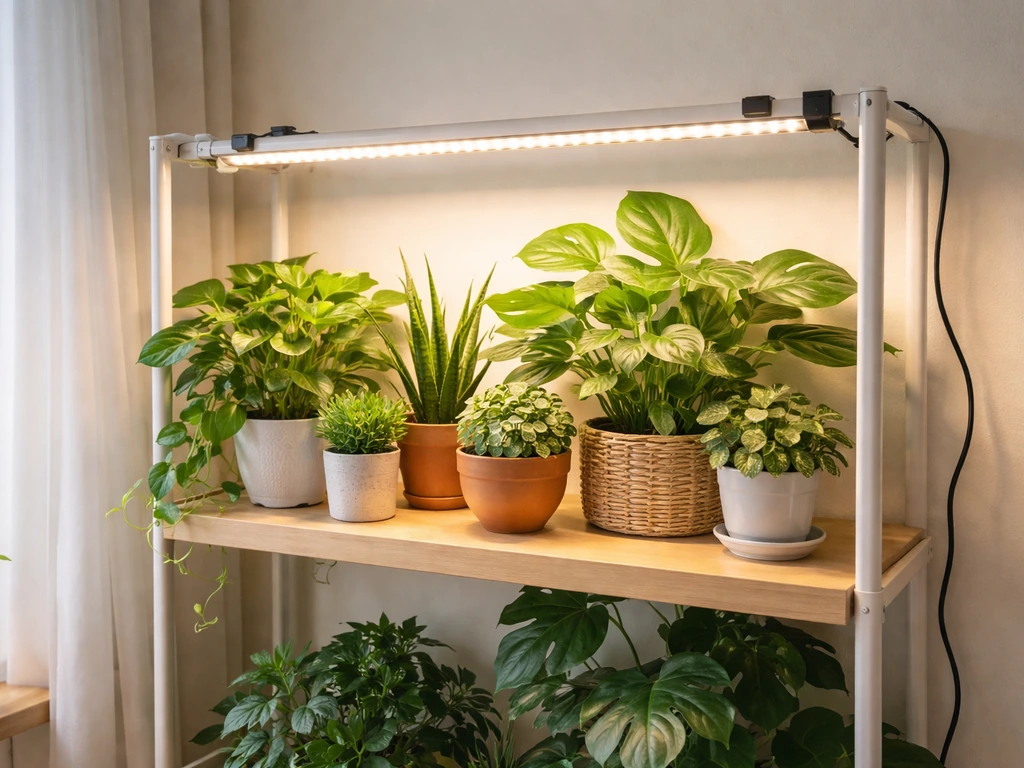
How to Use Grow Lights for Indoor Plants Step by Step
Step-by-step guide to set up and use grow lights indoors, including placement, timers, schedules, and safety tips.
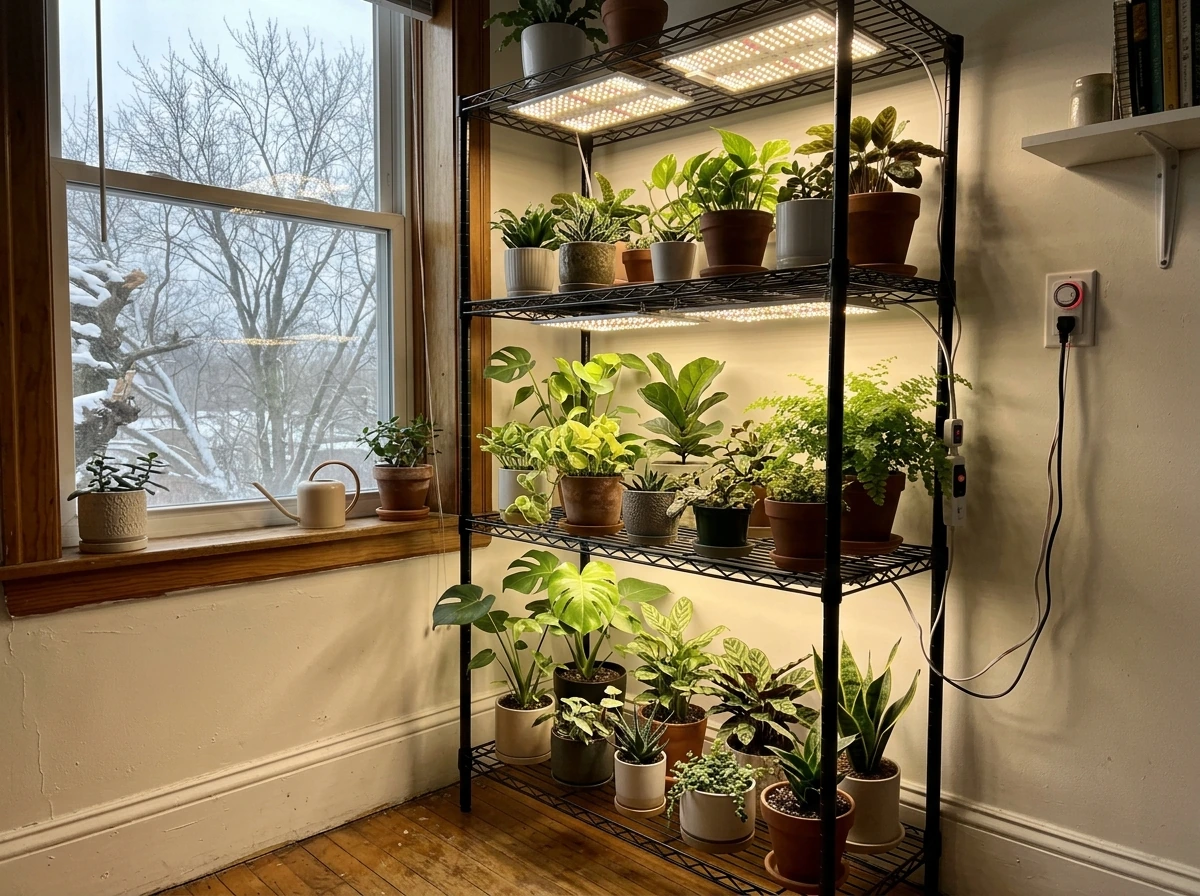
How Long to Leave Grow Lights On in Winter: A Guide
Set winter grow light runtime by plant type and lamp distance. Includes timer schedule, troubleshooting, and safety tips
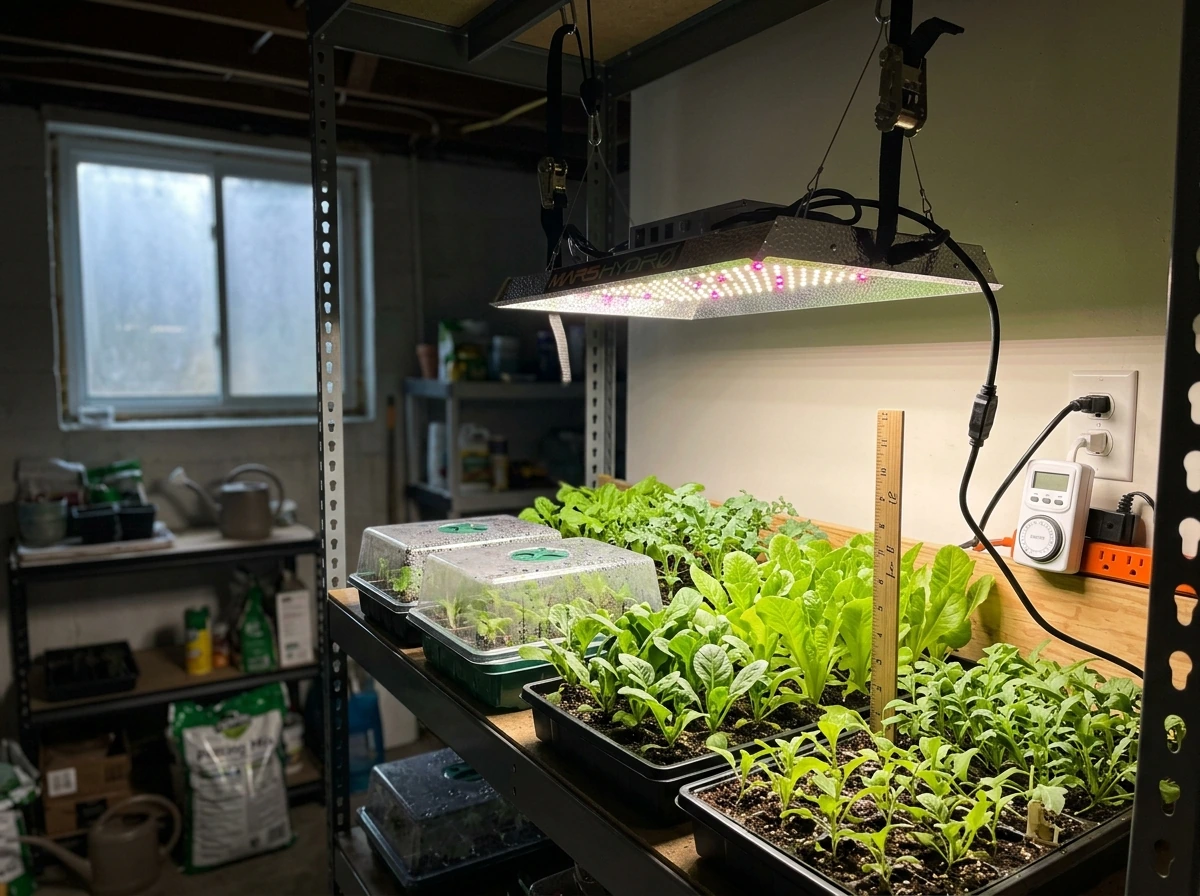
How Long Should Grow Lights Be On for Vegetables
Learn how many hours per day to run grow lights for vegetables, adjusted by crop stage, intensity, distance, and window