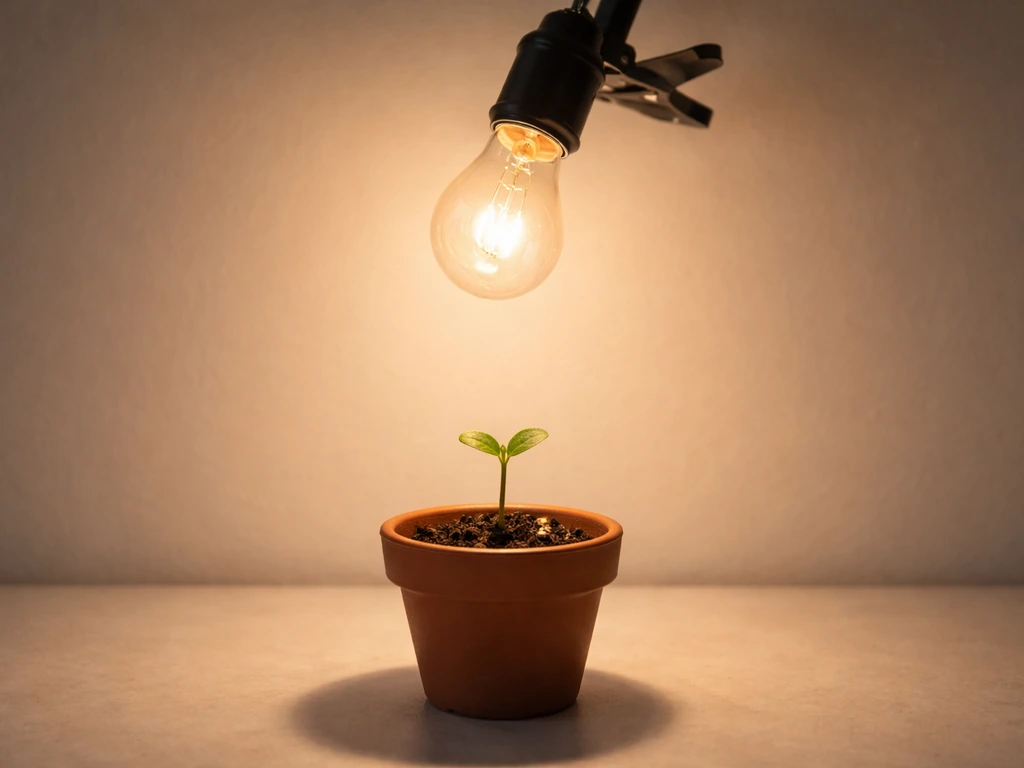
A regular household light bulb can keep a plant alive, but it almost certainly won't grow one well. The honest answer is: it depends heavily on which type of bulb you're using, how close you place it, and what you're trying to grow. A standard incandescent bulb is essentially useless for plant growth and will mostly just make heat. A modern LED bulb is a better story, but still falls short of a purpose-built grow light in most cases. If you're in a pinch and want to try, you can get marginal results with the right setup, but you should know exactly what you're signing up for before you start.
Can Normal Light Bulb Grow Plants? What to Expect and How
Marcus Holloway
15 May 2026
Why regular bulbs usually fall short
The core problem isn't brightness as your eyes measure it. Plants don't care about lumens, which is the unit on the bulb box and which reflects how bright light looks to human eyes. What plants actually need is photosynthetically active radiation (PAR), meaning photons in the 400 to 700 nanometer wavelength range. UNH Extension’s lighting guidance explains PAR as photosynthetically active radiation and notes it is measured with PAR or PPFD meters to quantify light useful to plants, with DLI used for target planning PAR as photosynthetically active radiation and measured with PPFD meters. The useful metric for plants is PPFD (photosynthetic photon flux density), measured in micromoles per square meter per second. For improved plant growth, horticulturalists typically target somewhere in the 400 to 800 µmol·m⁻²·s⁻¹ range. A regular bulb is spec'd in lumens, not PPFD, so right away you're comparing the wrong numbers to the wrong needs.
Beyond the measurement mismatch, household bulbs are simply not designed to output much light in the specific red and blue wavelengths that drive photosynthesis hardest. A typical incandescent bulb pushes out a lot of energy as infrared heat (which plants can't use at all) and has very low luminous efficacy, around 16 lumens per watt. That means most of the electricity you're paying for is being converted directly into heat, not light. Even the light it does produce isn't weighted toward the spectrum your plants want most.
The second issue is intensity. Even if the spectrum were perfect, a single household bulb just doesn't produce enough photons at usable distances to support vigorous growth. Without enough light, plants stretch toward whatever source they can find, growing tall and spindly (what gardeners call "leggy") rather than short and compact. This is one of the most common signs that your lighting is insufficient, and it happens fast, especially with seedlings.
Incandescent vs. regular LED: which is less bad
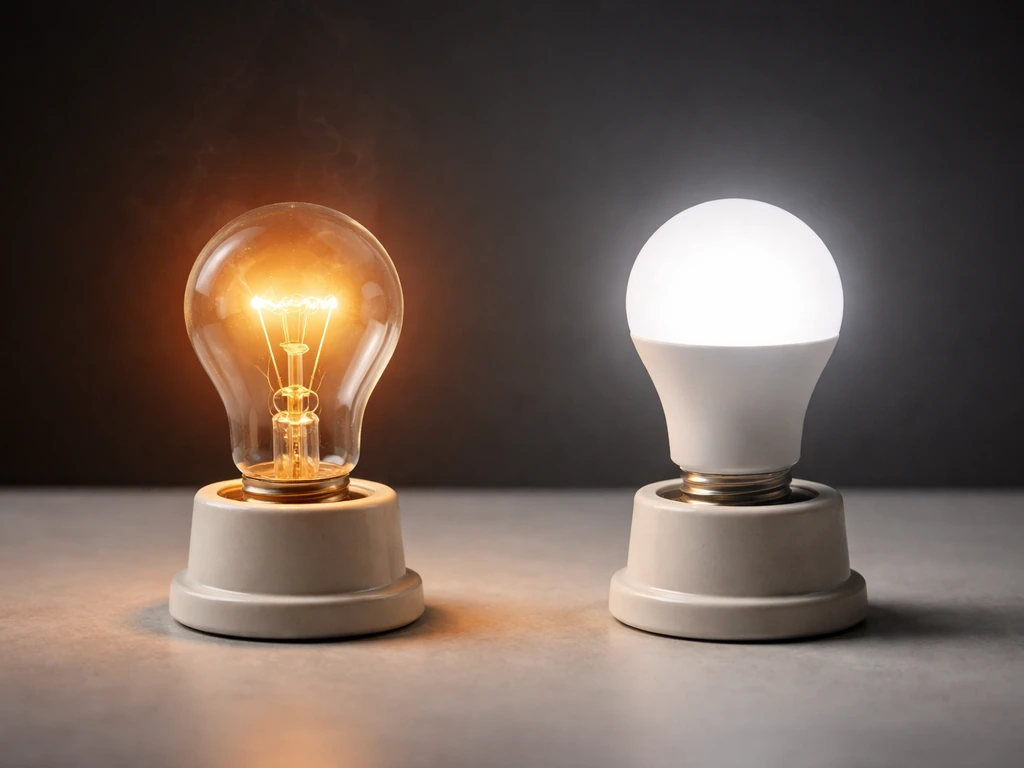
Not all "normal" bulbs are created equal when it comes to plant growth. Here's how the two most common types compare honestly.
| Feature | Incandescent Bulb | Standard LED Bulb |
|---|---|---|
| Spectrum | Heavy in red/infrared, weak in blue; too much heat energy | Broader spectrum, some blue and red, but not PAR-optimized |
| Efficacy | ~16 lm/W (very inefficient) | ~80–100 lm/W (much better, still not grow-light level) |
| Heat output | Very high, real fire and burn risk near plants | Low to moderate, much safer for close placement |
| Useful for plants? | Barely, not recommended | Marginally yes, for low-light tolerant plants |
| Can you run it 16+ hrs/day? | Costly and risky due to heat | Yes, reasonably safe and affordable to run |
| Best use case | None for plant growth | Low-light houseplants, short-term seedling supplementation |
The verdict: if you absolutely must use a household bulb, use an LED. Incandescent bulbs produce so much heat relative to usable light that they're more of a liability than an asset in plant growing. A standard warm-white or daylight LED (5000K–6500K color temperature) at least outputs some blue-spectrum light and won't cook your seedlings if you position it correctly. It still won't match a dedicated grow light, but it's the only household option worth trying. Halogen lights can work in a pinch, but they still typically fall short of purpose-built grow lights for consistent plant growth Halogen bulbs. Fluorescent tubes occupy a middle ground worth mentioning too, and halogen bulbs share the heat problems of incandescents. Fluorescent lights can also work well for growing plants, especially when you choose tubes designed for plant growth and position them close enough to deliver enough PAR.
How to actually set this up today
If you want to try growing with a regular LED bulb right now, here's the setup that gives you the best realistic shot. The goal is to maximize the amount of PAR that actually reaches your plant by getting the light as close as safely possible and running it for long enough each day.
- Choose the right bulb: Use a daylight LED (5000K–6500K), ideally 15 watts or higher. Avoid warm white (2700K) and avoid any incandescent or halogen.
- Position it close: For small seedlings or microgreens, you can go as close as 3 inches above the plant canopy. For larger plants, 6 to 12 inches is more practical. The closer you get (without overheating), the more photons reach the leaves.
- Run it long: Compensate for low intensity with more hours. Aim for 16 to 18 hours per day for seedlings, or about 15 hours for things like microgreens. Use a cheap outlet timer so you don't have to remember to switch it on and off.
- Focus the light: Use a reflective surface (aluminum foil taped to cardboard, or a white-painted wall) behind and around your setup to bounce stray light back toward the plant instead of letting it scatter into the room.
- Raise the light as plants grow: Check every few days. If the plant is stretching toward the bulb, it needs more light or a closer placement. If leaves look bleached or curled, back off a little.
One practical note on duration: plants also need a dark period. Running your light 24 hours a day doesn't help and can actually stress some plants. Stick to a consistent on/off schedule, 16–18 hours on for seedlings, 12–14 hours on for flowering or mature plants.
What results to actually expect
Let's be real about what a regular LED bulb will and won't do, depending on what you're growing.
Seed germination
Seeds germinate based on moisture, temperature, and sometimes a light cue, not on intense PAR. A regular LED bulb is fine for triggering germination in most vegetable and herb seeds. Don't expect the bulb to carry you beyond that stage, though.
Seedlings
This is where things get disappointing fast. Once a seedling is up and trying to photosynthesize, it needs real photon delivery. Under a regular LED bulb, most vegetable seedlings will become leggy within a week or two: tall, pale, and weak-stemmed. They won't die immediately, but they're not thriving. If you're starting tomatoes, peppers, or herbs for transplant, a standard bulb will likely produce subpar transplants that struggle after they go in the ground.
Low-light houseplants
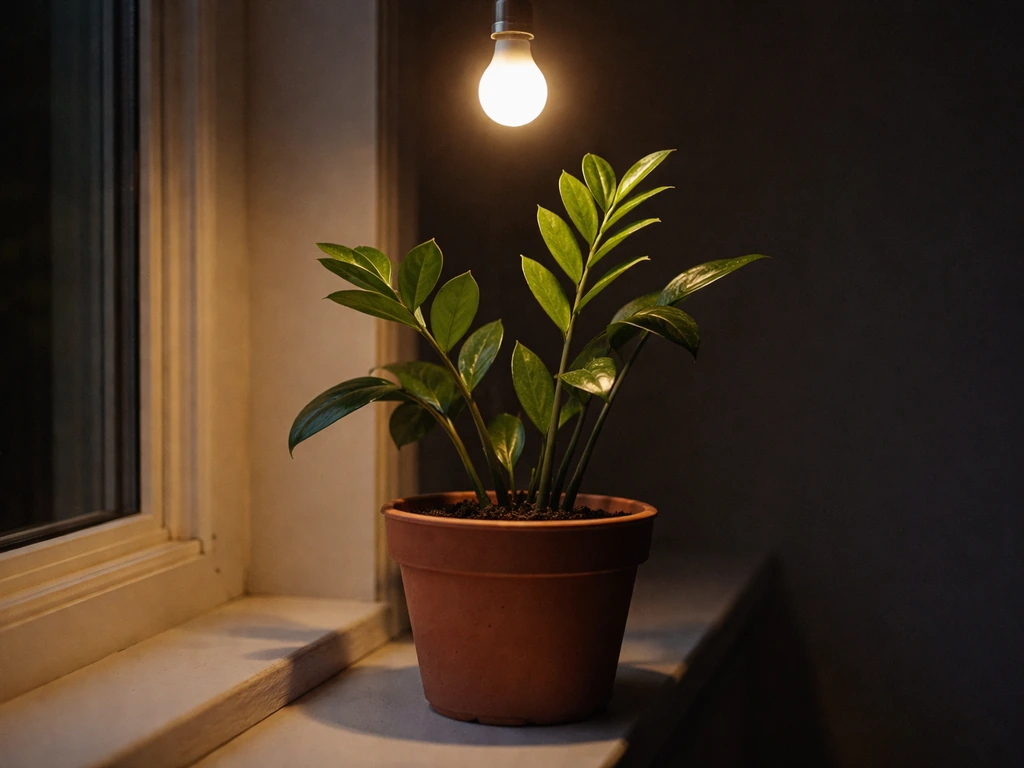
This is actually the scenario where a regular LED bulb can legitimately work. Plants like pothos, snake plants, ZZ plants, and peace lilies are adapted to low-light conditions and don't need high PPFD to survive and even grow slowly. A daylight LED running 14–16 hours a day positioned close to these plants can maintain them and support modest growth. You're not going to push them into overdrive, but they'll do fine.
Vegetables, fruiting plants, cannabis
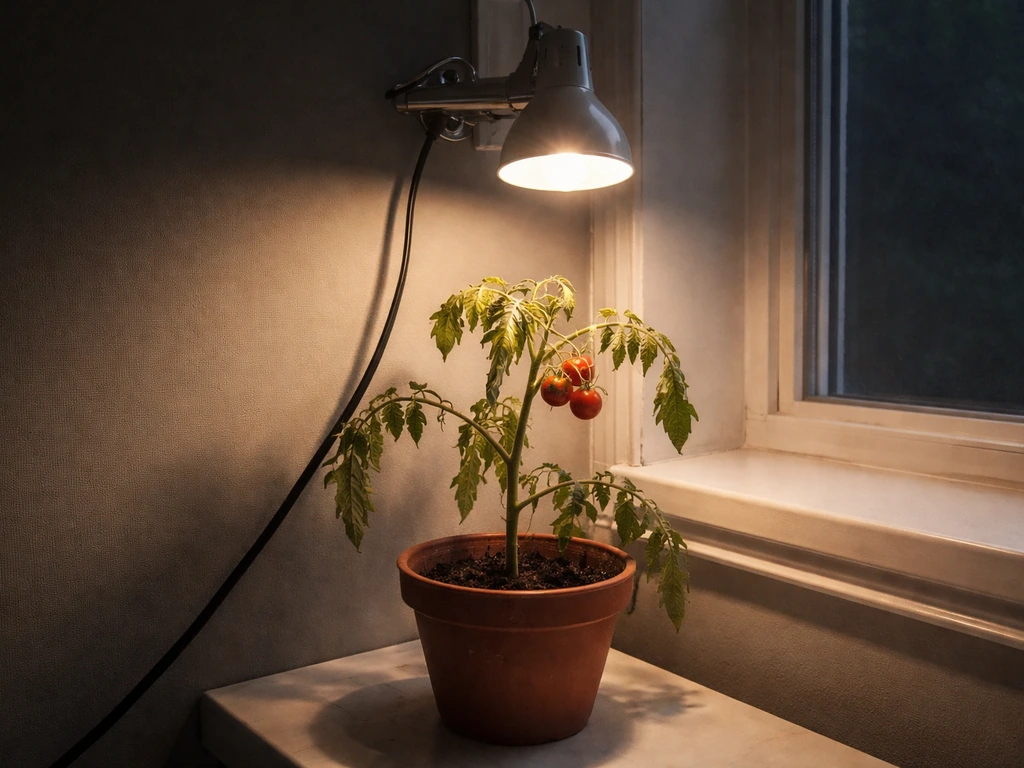
Forget it with a standard household bulb. High-demand plants like tomatoes, peppers, lettuce in production mode, or cannabis need PPFD levels that no single household LED can sustain across a plant canopy. You'll get stretched, unproductive growth and almost certainly no fruiting or flowering. If you're specifically trying to grow cannabis with regular bulbs, the results will be even more discouraging since that plant is particularly sensitive to light intensity during its growth and flowering phases.
Safety stuff and myths worth clearing up
Heat and fire risk
Incandescent and halogen bulbs run extremely hot. Halogen lamp surfaces can reach temperatures approaching 1,000°F, and even standard incandescent bulbs get hot enough to damage plant tissue on contact and pose a real fire risk if placed near dry growing medium, cardboard reflectors, or any combustibles. This is a genuine concern. If you go the incandescent route (which I'd strongly advise against), keep at least 12 inches of clearance from any flammable material and never leave it unattended for long periods. LEDs run much cooler and are far safer for close placement.
Will a grow light (or regular bulb) give you a tan or cause cancer?
No, a regular household LED or incandescent bulb will not tan you or give you a UV-related skin cancer risk in any meaningful sense. UV radiation that causes tanning and DNA damage to skin is in the UV-A and UV-B bands (below 400 nm), which is below the visible spectrum. Standard household bulbs emit negligible UV. Even purpose-built grow lights generally do not emit significant UV unless they're specifically designed to do so. The concern about grow lights and skin cancer is essentially a myth for the vast majority of home growing setups.
Leggy growth isn't a pest problem
A lot of beginners see their seedlings stretching and assume something is wrong with the soil, watering, or temperature. Usually it's just light. Tall, thin, pale seedlings leaning toward a light source are a near-certain sign of insufficient photon delivery. More hours or a closer, more intense light source is the fix, not fertilizer or a different potting mix.
When to stop experimenting and just get a grow light
If you're seeing leggy seedlings, plants that aren't producing, or growth that's just barely keeping pace, that's your signal. The cost of a basic grow light is genuinely low now, and a purpose-built LED grow light will outperform any household bulb by a wide margin because it's designed to output light in the specific red and blue wavelengths plants use most, measured and rated in the PPFD units that actually matter to photosynthesis.
Here's a simple selection framework for beginners picking their first real grow light:
- For seed starting and herbs: A small LED panel or T5/T8 fluorescent-style fixture (2 to 4 feet) rated for plant growth will cover a standard seed tray easily. Look for fixtures that advertise PPFD output, not just wattage or lumens.
- For a 2x2 ft grow space (vegetables, herbs, small fruiting plants): Look for a full-spectrum LED panel rated at roughly 200–400W equivalent draw, with a stated PPFD of 400+ µmol·m⁻²·s⁻¹ at canopy height.
- For low-light houseplants: Even a basic grow bulb in an adjustable clamp fixture is a meaningful upgrade over a standard LED and costs under $20.
- Check for spectrum info: Good grow lights will mention "full spectrum," red/blue ratios, or show a spectral output chart. If the listing only mentions lumens, it's probably not optimized for plants.
- Consider T8 fluorescent tubes if you have a shop-light fixture already: They're a reasonable step up for seedlings and don't require a big investment.
The bottom line is that real grow lights aren't exotic or expensive anymore. A purpose-built LED grow panel that actually delivers usable PAR to your plants will cost you less than a single trip to a garden center, and it will work dramatically better than any household bulb arrangement you can rig up. Use the regular bulb as a temporary bridge if you have to, but plan to upgrade as soon as you can, especially if you're growing anything that needs to actually produce: seedlings destined for the garden, fruiting vegetables, or anything you're relying on for food.
FAQ
How close should a normal LED bulb be to seedlings?
For seedlings, the distance matters more than the bulb wattage. As a practical rule, start with the bulb as close as you can keep it without overheating leaves, then raise it gradually as plants grow. With household LEDs, you should expect limited PPFD at any realistic distance, so staying close is key to avoiding leggy, weak stems.
Can I improve results with a normal bulb by changing the room or container setup?
Bulb output is only part of the equation, because your plant canopy also “steals” light. If other surfaces in the room are dark, less light reflects back onto leaves. Using a simple reflective surface around the setup, like white board or a dedicated reflective grow lining, can noticeably improve how much usable light reaches the lower parts of plants.
How can I tell if my household bulb is too weak without PPFD meters?
If you cannot measure PAR or PPFD, use plant behavior as your guide. Leggy, pale growth, slow development, and plants leaning strongly toward the light usually mean intensity is too low. If you see these symptoms, increasing daily hours often helps only a little, the better fix is closer placement or a stronger light.
Is it helpful to run a regular bulb 24 hours a day to grow faster?
Yes, but only up to a point. Running light longer than the recommended day length can stress some plants and disrupt growth patterns. Seedlings typically respond better to 16 to 18 hours on, mature or flowering-type plants often do best around 12 to 14 hours, then you adjust based on the specific crop.
What color temperature LED should I choose if I’m using a normal bulb?
The best “normal bulb” is still constrained by spectrum and photon delivery. Warm-white LEDs often skew more yellow and can worsen stretching compared with daylight/cool-white. If you try a household LED, choose a daylight or cool-white option (roughly 5000K to 6500K) rather than very warm decorative bulbs.
Why do my plants at the top look better than the ones in the lower canopy?
Most household bulbs are not uniform emitters, so the top of the plant may be fine while lower leaves get too little light. To reduce unevenness, use a fixed height, rotate trays if needed, and consider using multiple bulbs or a wider light source so coverage matches the plant footprint.
Can normal bulbs work for vegetables that I actually want to harvest?
If the goal is fruiting or flowering, a single household bulb setup rarely delivers enough PPFD across the canopy. You can sometimes keep low-light houseplants alive, but for vegetables in production mode you usually need a real grow light panel with proper PAR output. If your priority is yield, plan to upgrade sooner rather than later.
Do I need a timer, and how strict is the dark period?
Plants need darkness, but the exact timing matters. A timer is important for consistency, because erratic on/off schedules can stress light-sensitive plants. For seedlings, aim for a stable schedule (example, lights on in the same window each day) rather than manual switching.
What signs mean my normal bulb is too close or overheating plants?
If your light is too close and too hot, leaves can show stress, like browning tips or wilting that looks worse right after lighting. LEDs are cooler than incandescent, but close placement can still cause leaf burn if the bulb is powerful or enclosed. Monitor your plants daily, then back the light up slightly if you see heat stress.
Is it safe to use incandescent or halogen bulbs for indoor plant growth?
Incandescent and halogen options create a second problem besides light quality, fire risk and tissue damage from heat. Even with clearance, hot surfaces can ignite dry materials, and reflected heat from improvised reflectors can also increase risk. If you use any hot bulb, keep it outside contact range, away from paper or dry soil mix, and never leave it unattended.
Will a normal household bulb cause tanning or skin cancer risk?
Most common “regular bulb” UV claims are overstated for home growing. Typical household bulbs are not strong UV sources, and harmful tanning-related wavelengths are below visible light and generally negligible from standard fixtures. If you’re concerned, the bigger practical issue is heat and light intensity, not UV exposure.
My seedlings are leggy, should I change the soil or fertilizer first?
More fertilizer rarely fixes leggy growth because the limiting factor is usually photons, not nutrients. If seedlings are stretching, the order of operations is: confirm light source and distance, shorten the gap by moving the light closer or increasing light strength, then only adjust watering or feeding after you see sturdier stems.
Next Articles
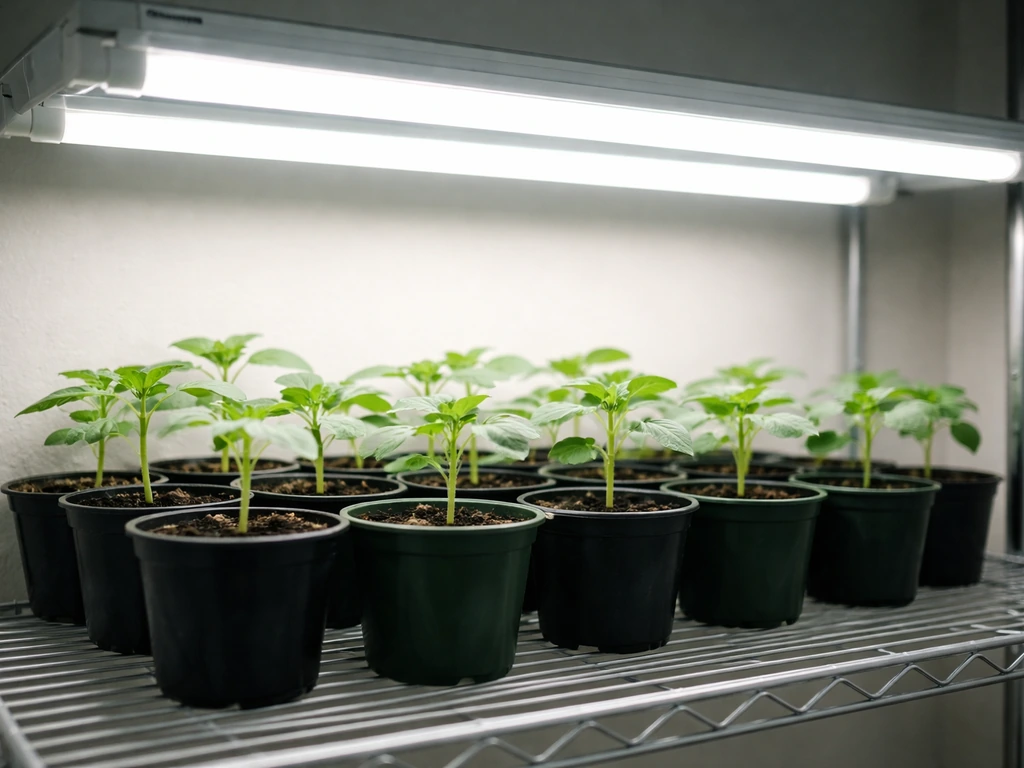
Do Fluorescent Lights Grow Plants? How to Use Them
Yes, fluorescent lights can grow plants. Learn which bulbs to use, setup distance and hours, and limits for best results
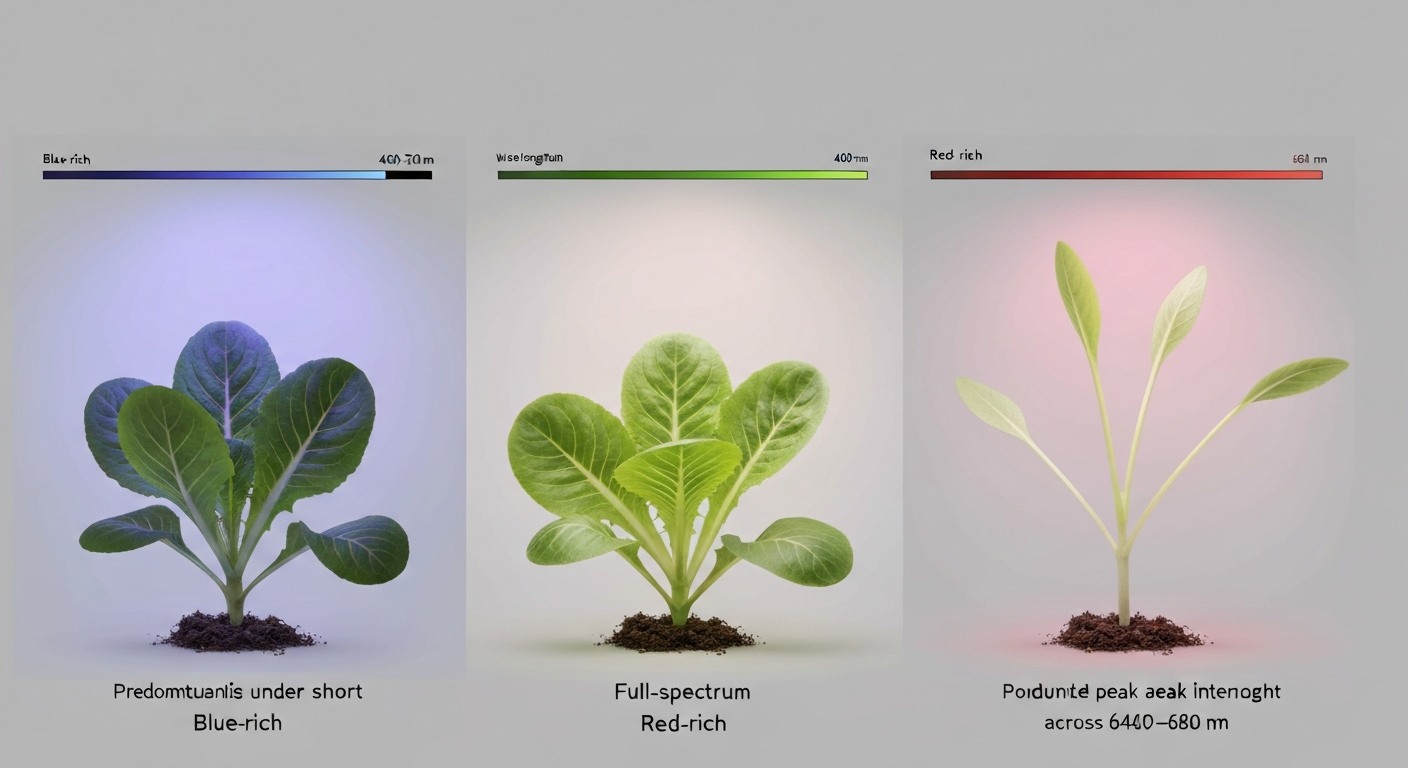
Why Do Plants Grow Best in Blue Light? Science & Practical Guide
Explore why blue light boosts vegetative growth, ideal blue:red ratios, PPFD, photoperiods, fixtures, and setup tips.
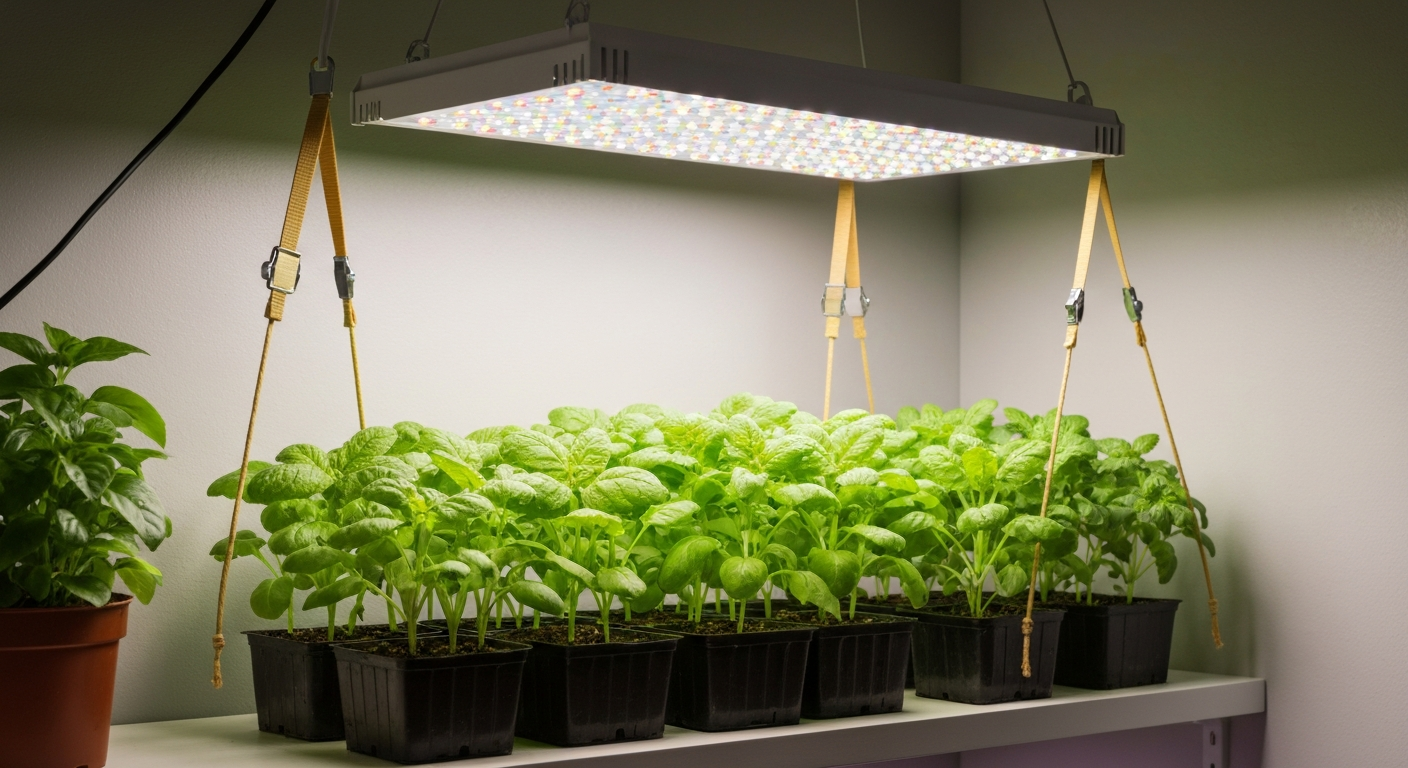
What Artificial Light Will Grow Plants: Best Lights Guide
What artificial light will grow plants: practical guide to LED, CFL, HID spectra, PPFD targets, setup, cost & tips.