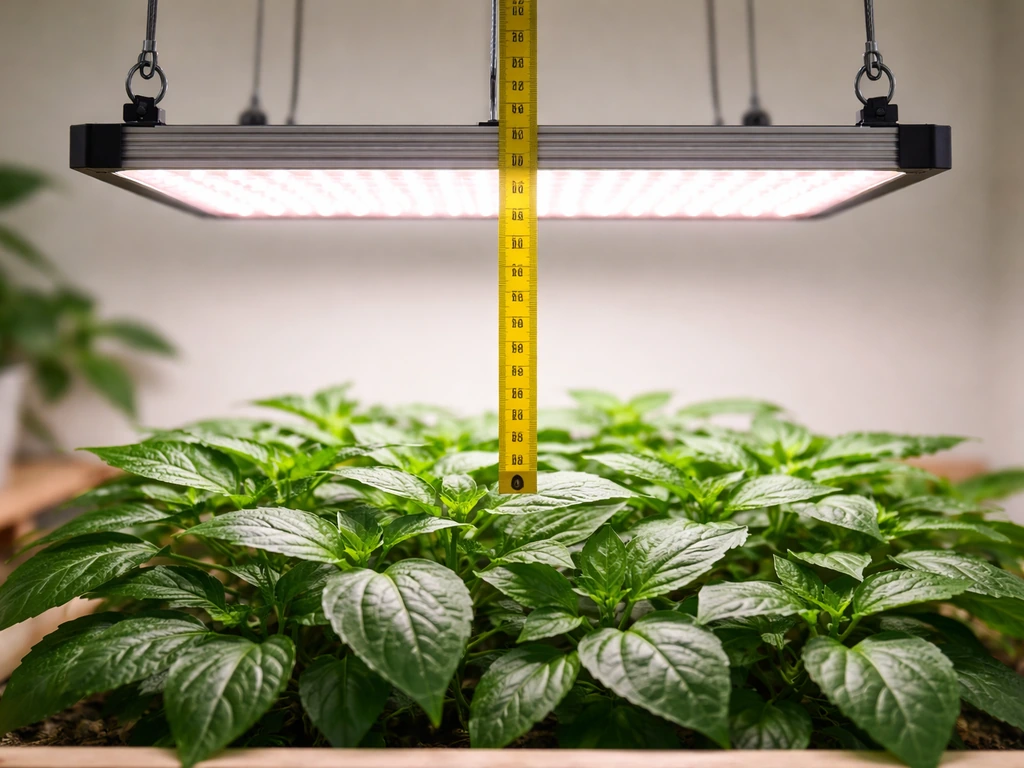
For most LED grow lights, start at 18–24 inches above your plant canopy and adjust from there. For fluorescent tubes, especially T5s and T8 shop lights, get much closer: 4–12 inches is the sweet spot for seedlings. Those are your starting points, but the real answer depends on your light type, your plant's growth stage, and what your plants are actually telling you. Here's how to dial it in without burning your plants or watching them stretch for the ceiling.
How Close Should Grow Lights Be to Plants? Distances
Marcus Holloway
13 May 2026
How Close Is 'Close'? The Distance Basics
Distance matters because it controls how much light energy actually hits your plants. There's a physics principle called the inverse-square law that explains why: every time you double the distance between a light and your plant, the intensity at the canopy drops to about one-quarter of what it was. So moving a light from 12 inches to 24 inches above your plants doesn't cut the intensity in half; it drops it to roughly 25%. That's a dramatic change, and it's why a few inches can make or break your results.
The metric that actually matters is PPFD (photosynthetic photon flux density), measured in micromoles per square meter per second (µmol·m⁻²·s⁻¹). It tells you how much usable light is landing on your plants, and it changes with distance. Manufacturers use PPFD to calibrate their hanging-height recommendations, which is why those numbers vary by fixture and why there's no single universal distance that works for every light. When you see a manufacturer say 'hang at 18 inches,' they're saying that at 18 inches, their fixture delivers roughly the right PPFD for a given growth stage. Follow those as your starting point, then tune based on what you see.
Distance by Light Type: LED vs. Fluorescent
LED Grow Lights
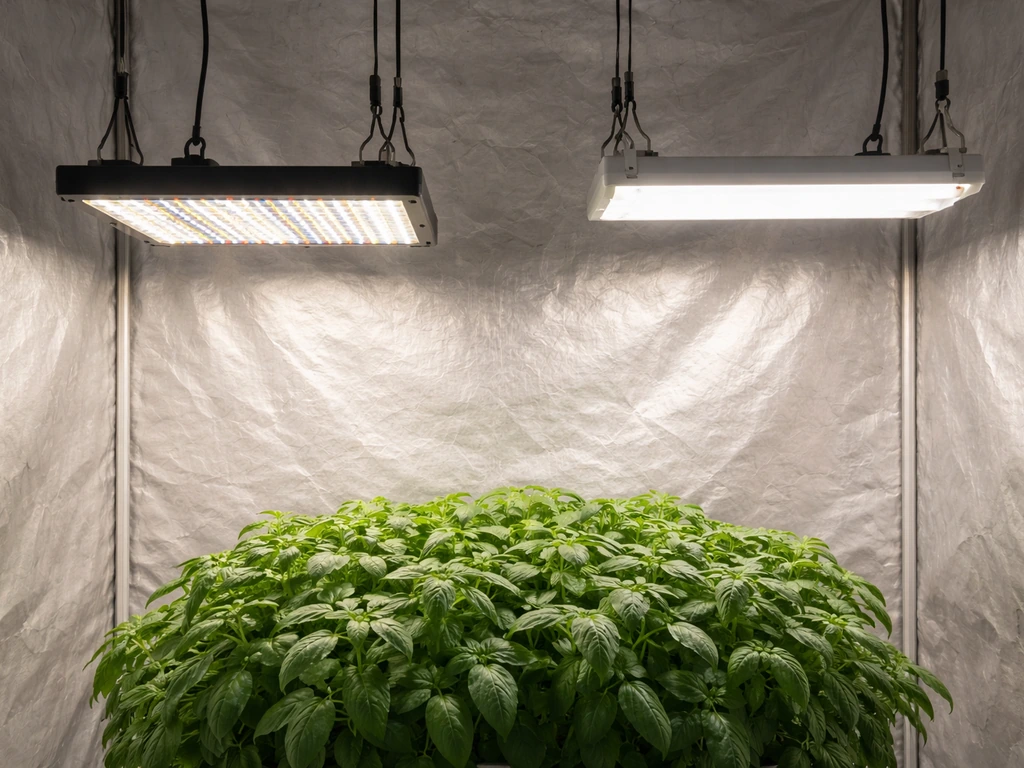
Modern LEDs are punchy. A quality panel can deliver a lot of PPFD at a wider range of distances, which is why manufacturers typically recommend 18–24 inches as a starting point for the vegetative stage, and sometimes 12–18 inches for flowering when plants need more intensity. High-wattage fixtures sometimes need to be hung even higher to avoid light stress. Always check your specific model's documentation: manufacturers like Spider Farmer and Budmaster publish hanging-height charts tied to their fixtures' outputs because the right distance genuinely varies between a 100-watt panel and a 600-watt one.
One thing LEDs have going for them is lower heat output compared to older HID lights, which means you can often get closer without worrying about heat damage as much. That said, intensity stress is still real. Too close, and you'll see the same bleaching and tip burn you'd get from any overpowered light source. If you keep a grow light too close, the excess intensity can stress plants even if the fixture runs cooler than older HID options bleaching and tip burn.
Fluorescent Grow Lights (T5 and T8)
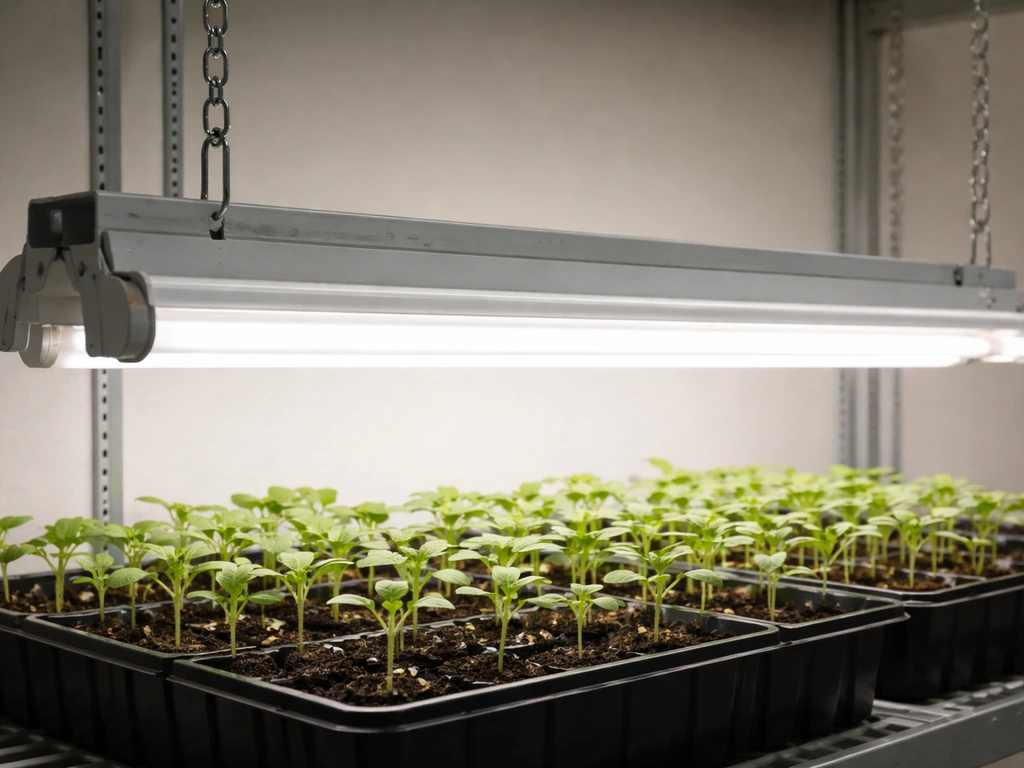
Fluorescent tubes, including T8 shop lights and T5 high-output fixtures, are lower intensity than LEDs. That's not a knock against them for seedlings and low-light houseplants, but it does mean you need to compensate by getting much closer. University of New Hampshire Extension recommends keeping fluorescent lamps less than one foot from your seedling tops for adequate results. University of Minnesota Extension puts the seedling starting point at 4–6 inches and says to move the fixture up as plants grow.
T5 high-output (HO) tubes are a step up in intensity and worth noting separately: they run hotter than standard T8 shop lights, so you need a little more clearance to avoid heat stress. The University of Vermont flags this specifically, noting that T5 HO fixtures can generate enough heat to damage seedlings at very close range. A practical starting range for T5s is around 12 inches above the canopy, with more intense models sometimes pushed a bit farther.
| Light Type | Recommended Starting Distance | Notes |
|---|---|---|
| T8 fluorescent (shop light) | 4–12 inches | Keep under 12 inches for seedlings; move up as plants grow |
| T5 fluorescent (standard) | 6–12 inches | Good for seedlings and low-light plants |
| T5 HO fluorescent | 12–18 inches | Runs hotter; watch for heat stress at close range |
| LED grow light (mid-range) | 18–24 inches | Adjust per manufacturer specs and growth stage |
| LED grow light (high-wattage) | 24–36 inches | More powerful; start farther and work closer carefully |
How to Actually Dial In the Right Height
The best method is a combination of measuring and watching. Oklahoma Cooperative Extension Service (OSU) notes that LED grow lighting is commonly managed using photosynthetic photon flux (PPF), photosynthetic photon flux density (PPFD), and daily light integral (DLI), rather than lumens or watts.
If you have a PAR meter or a smartphone app that estimates PPFD, use it. Hold the sensor at canopy level and aim for these targets based on growth stage: seedlings and clones do well at around 100–300 µmol·m⁻²·s⁻¹, vegetative plants at 400–600, and flowering plants at 600–900. These are the ranges used by researchers at places like Michigan State and referenced by grower-facing resources consistently.
MSU’s indoor lighting guide for seedling production under LEDs aligns with using canopy-level light targets such as PPFD/DLI as a baseline and then adjusting as plants grow These are the ranges used by researchers at places like Michigan State.
If your canopy PPFD is too low, lower the light. Too high, raise it.
If you don't have a meter, use your plants as a guide. Healthy growth with compact spacing between nodes, good color, and no visible stress means your distance is working. Leggy, pale plants reaching upward are asking for more light (lower the fixture or check if it's just too far away). Crispy leaf edges, bleaching at the top of the plant, or leaves curling upward are signs you're too close or the intensity is too high. Make adjustments in 2-inch increments and give plants 2–3 days to show you whether it helped.
One thing that often gets overlooked: distance and hours both determine how much light a plant actually gets each day (measured as DLI, or daily light integral). If you can't lower your light any further without burning plants, you can increase your daily light hours to compensate, and vice versa. It's a balance, not a single fixed setting.
Height Guidance for Specific Plants
Seedlings
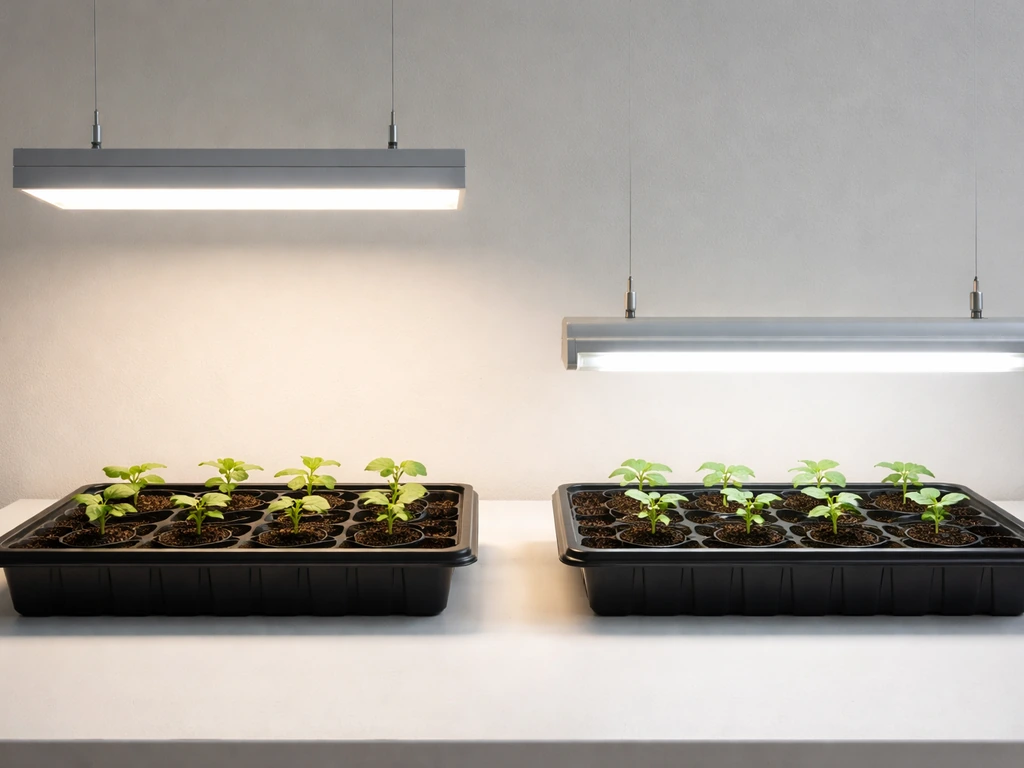
Seedlings need moderate light, not maximum intensity. Start fluorescents at 4–6 inches and LEDs at 18–24 inches. The key with seedlings is to raise the fixture as they grow so you maintain the same canopy-to-light distance as the plant height increases. If you set the light and forget it, your seedlings will eventually get too close and stress out. Check them every few days, especially during fast growth spurts.
Common Houseplants
Most houseplants are low-to-medium light plants, which means they're not chasing high PPFD numbers. For things like pothos, peace lilies, ferns, or snake plants, a standard LED panel at 24–36 inches is typically fine. You're supplementing what comes through a window, not replacing full-sun field conditions. If you're growing succulents or cacti indoors, they want more light, so moving closer to 18 inches with a decent LED is reasonable.
Cannabis and Other High-Light Plants
Cannabis is a high-light crop. During vegetative growth, aim for 400–600 PPFD at the canopy, which for most mid-range LED panels works out to around 18–24 inches. During flowering, you want 600–900 PPFD, so you'll bring the light closer, often to 12–18 inches depending on the fixture's output. The specific distance varies a lot by wattage and fixture design, so treat manufacturer charts as your first reference, then tune using plant response. Training techniques like low-stress training (LST) also affect how you manage canopy distance because the plant's height becomes more uniform.
The Two Mistakes That Wreck Grows: Too Close and Too Far
Too Close: Burn and Light Stress
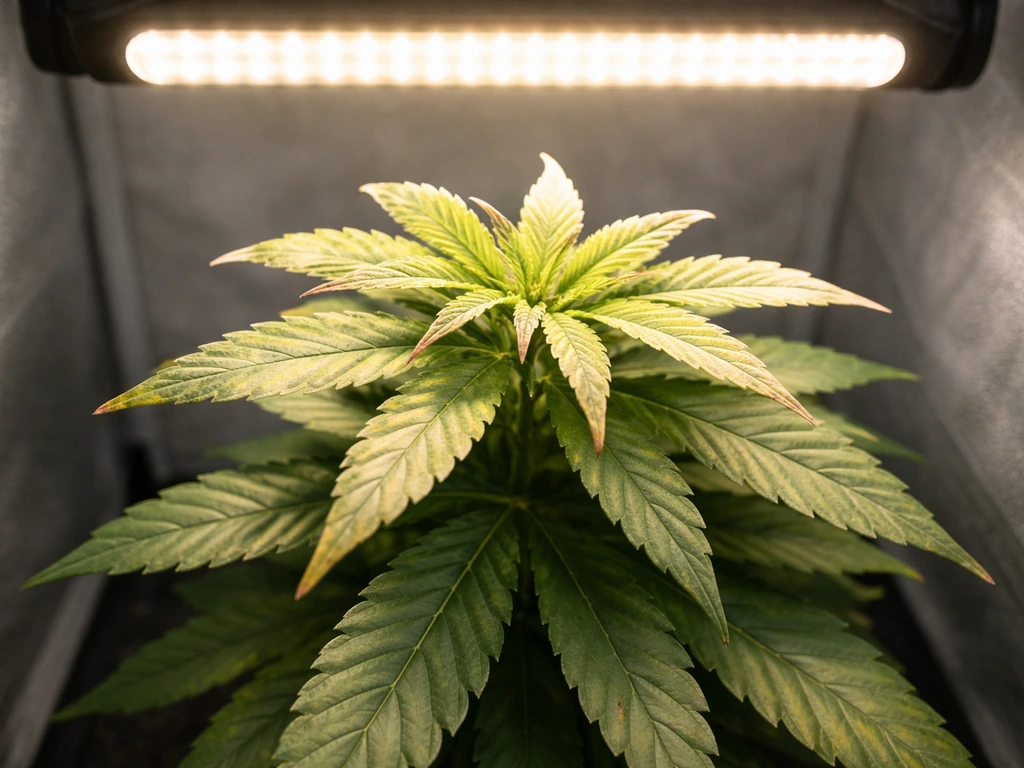
When a light is too close, you'll see the top leaves of your plant start to bleach or turn yellowish-white. If you notice bleaching, tip burn, or crispy leaf edges, your can grow lights may be too bright and you should raise the fixture or dial back intensity light is too close. Leaf edges may crisp up, and leaves might cup upward as if trying to shield themselves.
With fluorescents, heat damage shows up first as wilting or scorching on the leaves nearest to the tube. With LEDs, heat is less of a culprit, but intensity stress looks almost identical: bleaching and tip burn without the warmth you'd feel from an HID light. If you see any of these signs, raise the fixture by 2–4 inches immediately and wait a few days.
Too Far: Stretching and Weak Growth
If your light is too far away, plants go looking for it. The technical term is etiolation, but you'll just notice that stems get long and spindly between nodes, leaves stay small, and the whole plant looks like it's reaching upward. Seedlings are especially vulnerable to this: a few days of insufficient light and they'll grow tall, weak stems that can't support themselves. The fix is straightforward: lower the fixture, or if that's not possible, add a second light or switch to a higher-output fixture. Don't try to compensate solely by running the light for more hours if the PPFD is severely inadequate.
Hot Spots
Hot spots happen when light intensity is concentrated in the center of the coverage area and falls off sharply at the edges. This is partly a beam angle and fixture design issue, and partly a height issue. Raising the fixture spreads the beam out and evens the intensity across more of your canopy. If your center plants look stressed while edge plants look healthy, try raising the light a few inches to get more uniform coverage.
Spacing Multiple Grow Lights
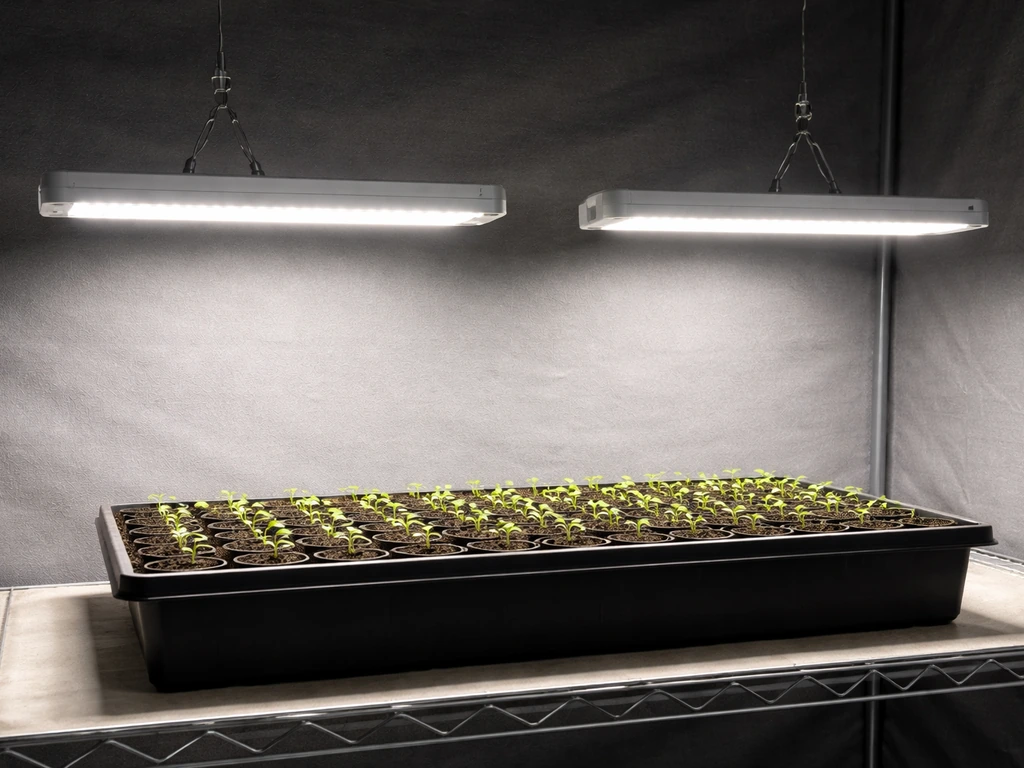
When you're running more than one fixture, spacing between lights matters as much as height above the canopy. The goal is even PPFD across the entire growing area without dark spots or areas where coverage overlaps so heavily that the center gets double the intensity of the edges. As a general rule, fixtures should be spaced so their coverage footprints just overlap slightly, rather than sitting far apart with gaps or stacked directly on top of each other.
The right spacing depends on each fixture's beam angle and rated coverage area at your chosen mounting height. A fixture designed to cover a 4x4-foot area at 18 inches will cover a different footprint at 24 inches. Higher mounting height spreads coverage wider but reduces intensity. If you have multiple lights and want to be methodical about it, take PPFD readings at several points across the canopy and look for major inconsistencies. Adjust fixture positions and height until the readings are reasonably uniform. For most home setups, getting within 20% consistency across the canopy is a realistic and good target.
If you're trying to figure out whether lights need to be directly above plants or can be positioned at angles, that's a related question with its own nuances, and the beam angle of your specific fixture is the key factor to check. In practice, most growers can start by aiming the fixture directly above the canopy, then adjust the height based on PPFD and plant response directly above plants.
Safety, Heat, and Setup Tips
Heat management is the most overlooked part of grow light setup. Even LEDs, which run cooler than older HID lights, generate some heat, and in an enclosed space like a grow tent that heat accumulates. A small oscillating fan keeps air moving across the canopy, helps prevent hot spots from developing, and strengthens stems as a bonus. If your growing space gets noticeably warm to the touch near the fixture or the air temperature rises above 85°F consistently, that's a ventilation problem to fix, not just a light-distance problem.
Always follow the manufacturer's clearance guidelines for your specific fixture. Mounting a high-wattage LED closer than recommended doesn't just risk plant damage; it can also affect the thermal performance of the fixture itself. Use proper hanging hardware rated for the weight of your light, especially for heavier panels.
On the topic of human safety: grow lights won't give you a tan or cause cancer from normal incidental exposure, but some fixtures do emit light that's uncomfortable to look at directly. Looking directly into a high-intensity LED panel is unpleasant and can cause temporary visual discomfort, similar to looking at any bright light source. If you're spending extended time working in your grow space, a pair of simple UV-filtering safety glasses is a sensible and inexpensive addition. It's not a crisis-level concern, but it's worth the small precaution if you're adjusting lights frequently.
Keep an eye on whether lights can ever be too bright for your specific plants, especially if you're running high-wattage LEDs at close range. Light stress from excess intensity is a real phenomenon, and knowing the signs keeps you from chasing a distance problem that's actually an intensity problem in disguise. If you notice your plants bleaching, curling, or otherwise showing light stress, it can be a sign you might have too much light in your grow tent and need to raise the fixtures or reduce hours too much light in a grow tent.
Quick Reference: Starting Heights by Situation
| Situation | Recommended Starting Distance | What to Watch For |
|---|---|---|
| Seedlings under T8/T5 fluorescent | 4–6 inches | Raise as seedlings grow; check every few days |
| Seedlings under LED | 18–24 inches | Leggy growth = move closer; bleaching = move farther |
| Vegetative houseplants under LED | 24–36 inches | Most houseplants want moderate light; don't overdo it |
| Vegetative cannabis/high-light plants under LED | 18–24 inches | Target 400–600 PPFD at canopy |
| Flowering cannabis under LED | 12–18 inches | Target 600–900 PPFD; check for bleaching at top |
| T5 HO over any plant | 12–18 inches | Watch for heat stress; keep airflow going |
FAQ
If my grow light has a hanging-height chart, should I still use inches from the article (18–24, 12–18, etc.)?
Treat “distance” as a starting point, then confirm with PPFD at canopy level. If the manufacturer’s chart is for one specific height and you are measuring at a different mounting point (or with the light dimmed), the recommended inches may not apply because intensity changes quickly with distance under the inverse-square effect.
What if the overall distance seems right, but only the center of my plants looks stressed?
If your PPFD is within target but leaves still show stress, check for light distribution issues. A fixture can be “right on average” but still create hot spots from beam angle or reflector design, so take readings at several canopy points (center and edges) and adjust height or position to even it out.
My plants look stressed, but the light won’t go higher, can I just run it longer?
If you cannot raise the light further, increase daily light integral by extending photoperiod, but only if the PPFD is not already above the top end of the target range for that growth stage. If you are already near the upper PPFD limit and still seeing stress, longer hours can worsen bleaching or tip burn instead of fixing the problem.
Can I use a dimmer instead of raising or lowering the grow light?
Yes, especially for LEDs when dimmers are involved. A lower dim setting can mimic greater distance because it reduces output, but it will not match the exact spectrum or driver behavior at full power, so re-check PPFD after changing brightness rather than assuming a distance equivalent.
Should I measure distance from the soil, the pot, or the canopy?
Yes, use the canopy, not the soil. If you mount the light at the start and later transplant or reshape the canopy (training, pruning, filling in), your effective distance changes, which can push you out of your growth-stage PPFD target.
How fast should I change the hanging height when I see the plants reacting?
Use a staged approach. Start at the recommended height for your light type, then adjust in small steps (about 2 inches) and re-evaluate after 2 to 3 days because visible symptoms lag behind actual intensity changes, especially when plants are slowly growing.
Do I need to change light distance when I switch from seedlings to vegetative to flowering, or can I keep it fixed?
Switching plant types or growth stages changes the target PPFD. If you move from seedlings or low-light houseplants to higher-light plants, do not keep the same height, because the higher PPFD targets generally require either a different distance or more light hours to achieve the same DLI safely.
Does adding a second light change how close the lights should be?
Yes, unless the fixture is designed for full-coverage at your mounting height. If you use multiple lights, overlapping too much can double intensity in the middle and underexpose the edges, so measure multiple points and aim for roughly consistent PPFD (within about 20%) across the canopy.
My plants are stretching (etiolation), should I add hours or lower/raise the light?
If your plants are etioliating, they need more usable light at the canopy, not just more “time.” Raising intensity via height change or switching to a stronger fixture can be more effective than increasing hours, particularly when PPFD is far below target for seedlings.
How do I tell whether the problem is light too close versus heat or airflow?
Air temperature and airflow can mask or worsen symptoms. Even with correct distance, poor ventilation in an enclosed space can lead to stress that looks similar to light stress, so check canopy temperature and keep airflow steady, especially if the grow area runs warm near the fixture.
Are there special distance rules for T5 HO fluorescent tubes compared with T8 shop lights?
Different fixture types need different “safe closeness” ranges. Fluorescents generally tolerate closer mounting, while high-output tubes may require extra clearance because heat damage shows up first on the leaves nearest the tubes, especially for seedlings.
If distance is correct, how do I choose light hours without risking too much total daily light?
For time-based automation, use PPFD or canopy-based targets first, then set hours so you hit a reasonable DLI for the crop and stage. If you only react to symptoms without tracking DLI, you may end up with either chronic under-lighting (stretching) or cumulative over-lighting (bleaching over time).
Next Articles
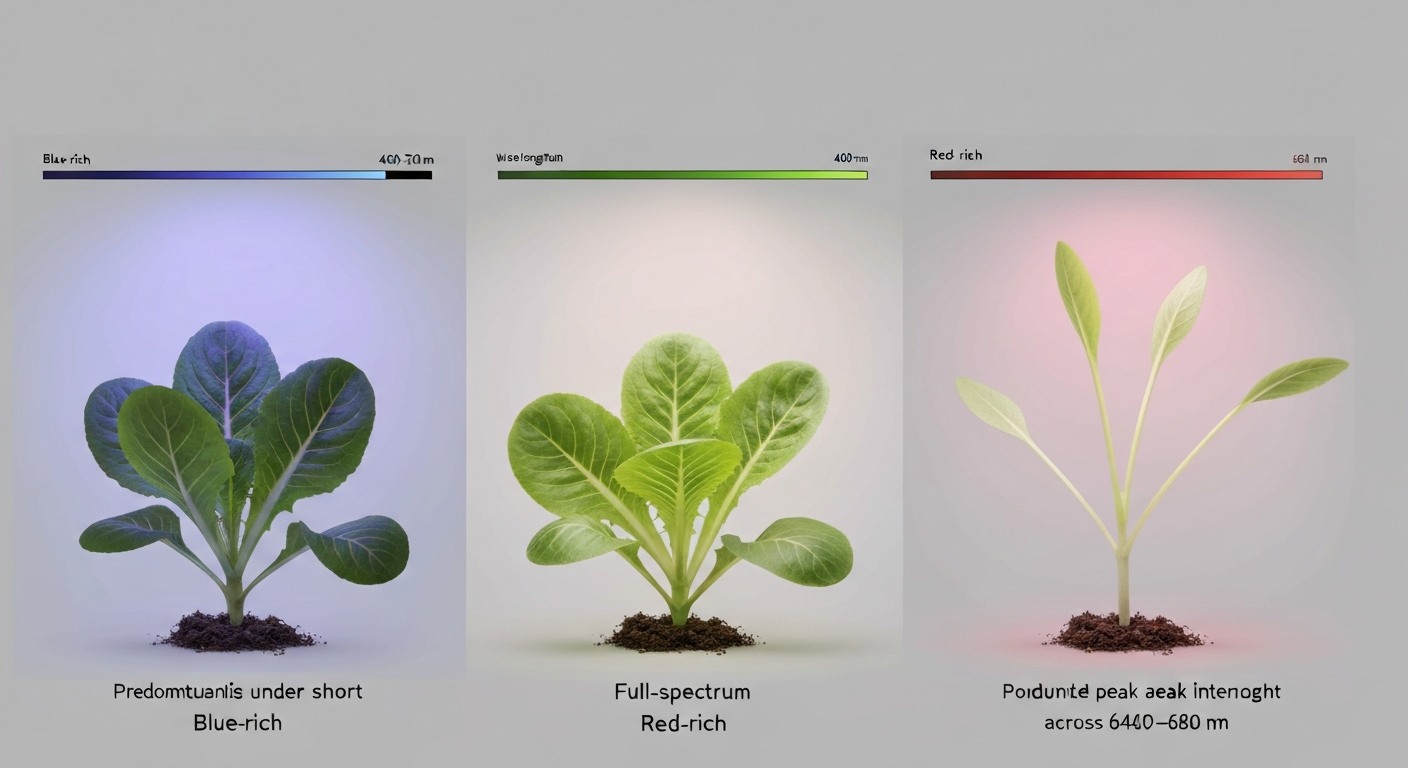
Why Do Plants Grow Best in Blue Light? Science & Practical Guide
Explore why blue light boosts vegetative growth, ideal blue:red ratios, PPFD, photoperiods, fixtures, and setup tips.
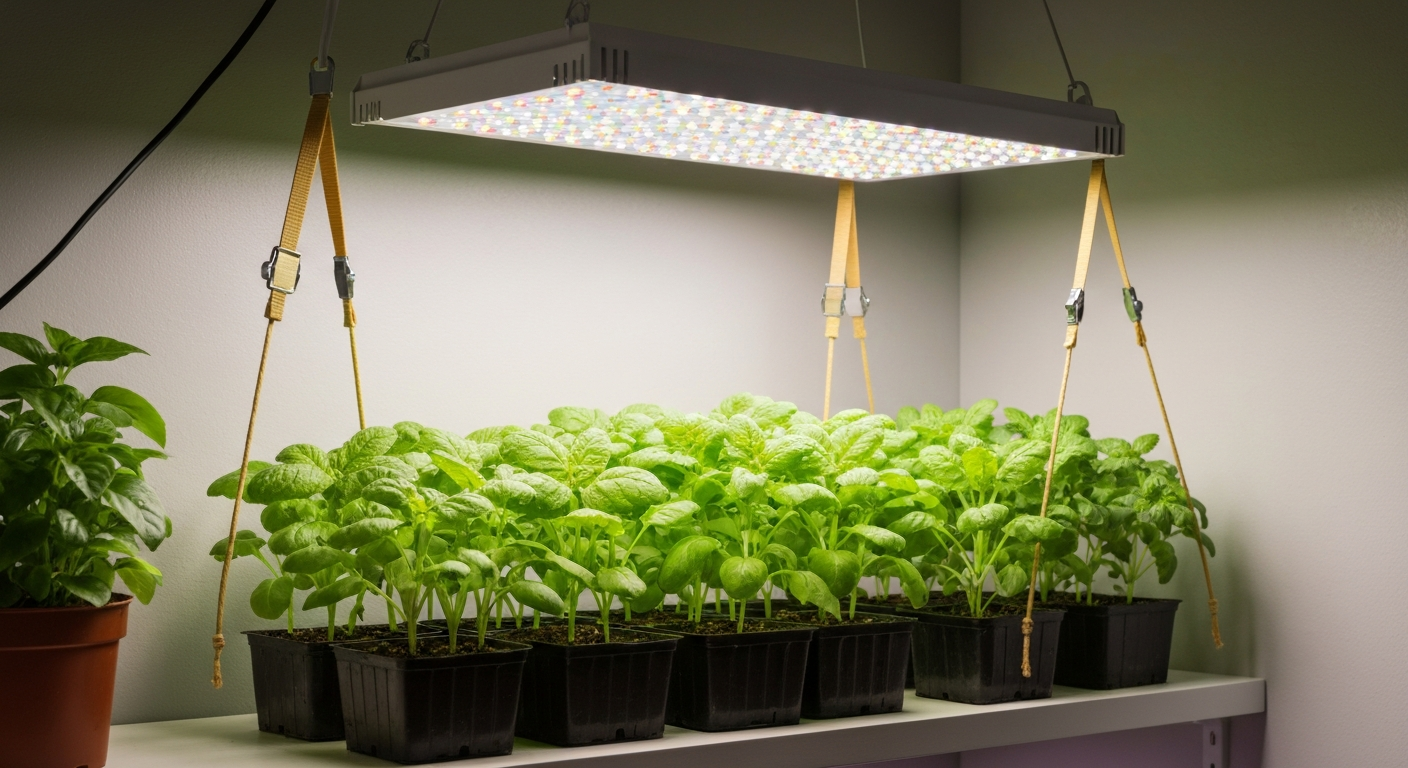
What Artificial Light Will Grow Plants: Best Lights Guide
What artificial light will grow plants: practical guide to LED, CFL, HID spectra, PPFD targets, setup, cost & tips.
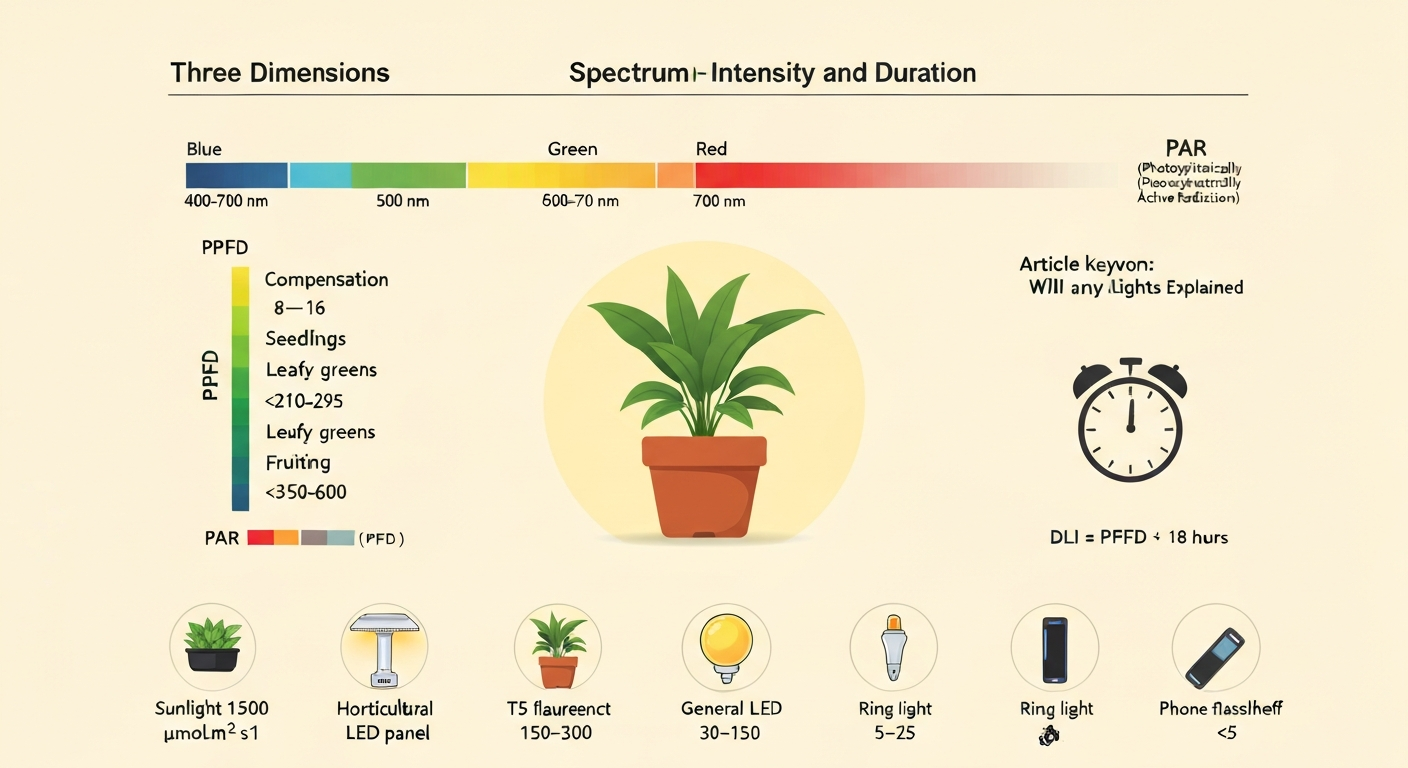
Will Any Light Grow Plants? Guide for Indoor Growers
Can any light grow plants? Clear yes/no, science-backed light specs, setup tips, and which household lights work.